Advancements in Brain-Computer Interface: Benefits & Challenges
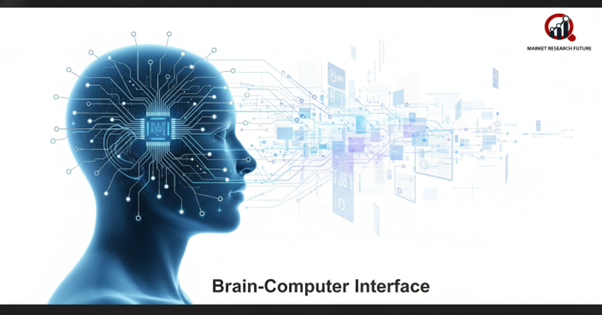
Imagine controlling a computer, a car, or even a prosthetic limb just by thinking about it. Something that didn’t seem possible a few decades back is becoming a reality, all because of brain-computer interfaces.
Unlike any mechanism, a brain is a highly advanced processor. Apart from thoughts and emotions, it governs nearly all functions of the body. When communication between the brain and body is disrupted because of a stroke or severe brain injury, the impact is usually devastating.
Such conditions are candidates for brain-computer interface solutions that BCI technology is meant to address.
What Is a Brain-Computer Interface?
A Brain-Computer Interface (BCI) -- or a Brain-Machine Interface (BMI) -- serves as a communication pathway between the human brain and a computer or other peripheral devices. A BCI interprets and (brain) neural activities in a range of (electric) signals, which a BCI converts appropriately, and executes brain commands and instructions.
In more straightforward terms, brain commands control technology.
Much as a computer or robotic device receives a (lower case) neural or brain signal, an (upper case) command signal will be executed. Several electrodes implanted in the brain surface or in a brain neural network will read, decode (through a computer algorithm), execute a command and send instructions and neural signals back in a round of signal.
In the early 2000s, a major pioneer work was done at Cyberkinetics which made a BCI called the BrainGate System, the first device which allowed a paralyzed computer user to direct computer cursor movements to other parts of the screen. This work revolutionized both neuroscience and the assistive technology domains.
How Technology Is Evolving
The ability of today's BCIs shows us what the future of movement restoration and covert communication will be; innovation accelerates every day. Consider the following advancements in brain-computer interfaces:
- Thought-to-Text Technology
Consider a world in which you communicate without speaking. Thought-to-text brain-computer interfaces (BCIs) will be a game changer in the world of communication technology. These systems will be able to interface neural systems that link to in-text BCIs neural commands associated with inner speech. For people with speech and motor disabilities, this technology will be a breakthrough.
- Increasing Workplace Productivity
What if you had a brain-computer interface (BCI) that could monitor your cognitive fatigue and concentration levels? You would be prompted to take a break if your attention levels lower significantly. These BCIs can be designed to monitor cognitive fatigue and concentration levels to help stave employee burnout and improve productivity, and some companies now investigate these cognitive BCIs and wearables.
- Saving Lives on the Road
In brain-computer interfaces (BCIs), technology could monitor neural systems to predict when a driver will get fatigued. It will provide and automate life saving measures, such as stopping a fatigued driver. The BCIs that detect mental fatigue could be life-saving as a high percentage of road accidents are caused by driver fatigue.
- Mind-Controlled Gaming
Gaming has entered a new dimension with control through thought alone. Gaming with BCI technology has new potential through deeper integration of Focus, Creativity, and healing and educational rehabilitation potentials.
Benefits of BCI Technology
BCI technology has the most potential to positively impact health care, accessibility, and enhancement of the human experience. They can restore movement to paralyzed individuals who undergo neuro-prosthetics, reconnect lost neural pathways resulting from disease or injury, and even improve cognitive abilities with brain stimulation and feedback. People with disabilities regain the ability to communicate, and interact, fully and independently.
Mental health patients also benefit from neural BCIs with the ability to control depression, PTSD, and anxiety.
Barriers BCI Technology
Every technology has its growing pains, and ethical issues that must be worked out for BCI technology to become more widely used. Will brain implants be safe, or cause inflammation and scar tissue? So far, non-invasive BCIs are safe, but also, less accurate. BCIs have at best, moderate accuracy, so the problem of interference BCI, brain, skull, and signal, remains.
Because of the high, long-range, and expensive research, materials, data analysis, and development needed for BCIs, the profit margins also need to be high.
Loss of control, and or, safety will, become the BCI implant issue.
A Glimpse into the Future
Many markets are developing non-intrusive Brain-Computer Interfaces (BCIs) and advanced neuro-technologies, AI, wearables etc. Brain-Computer Interfaces are commercially and safely medically viable. Governments, Neuralink, Blackrock Neurotech, and Synchron have all been putting resources towards BCIs.
The possible applications of BCIs APIs during neurorehabilitation and schooling are endless and will expand to BCI enabled workplaces and entertainment. Integrating biological and digital systems will allow the mind to be the ultimate user interface and provide limitless potential.
Related Report


Leave a Comment