Smart Parking: Turning Urban Chaos into Order
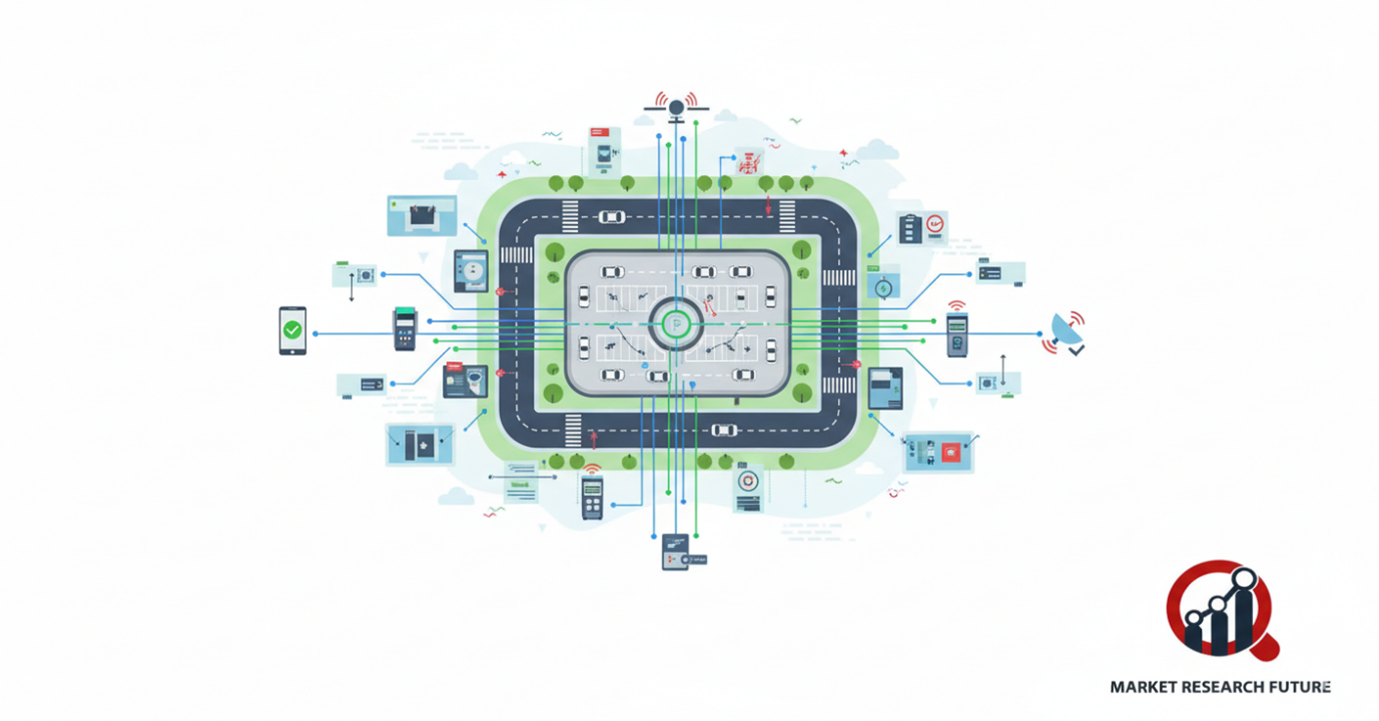
The Smart Parking System provides relief for the problem of locating unoccupied parking spaces. Utilizing sensors, software, and mobile applications, these systems track available spaces and aid drivers in real time. The technology that enables the evolution of these smart parking systems consists of mobile systems, Bluetooth beacons, and devices for ultrasonic sensing, RFID communication, ANPR and machine vision, along with computer vision.
Smart Parking Accelerating
Expansion of urban areas and the development of smart cities entail the rising challenges of traffic congestion and limited parking spaces. However, smart parking technology is quickly alleviating these issues, most notably in airports, shopping centers, and urban areas around universities. Cheap, low-power consumption sensors connected to the Internet of Things (IoT) framework form sensors and assist in occupancy monitoring, capturing movement and parking space status. These sensors automate the guidance system and reservation process, simplifying parking.
Adopting smart parking technology enables cities to improve space efficiency, minimize curb-side clutter, and enhance movement flow within the city.
Shifting Preferences & Demand
The demand for more parking infrastructure is being fueled by changing preferences and a shift in Smart Parking technology. The cost and land available to traditional forms of parking infrastructure are finite, propelling the demand for smart systems.
Mobile applications provide real-time access to available parking spaces, provide reservation options, and enable digital payment systems. This innovation dramatically improves the user and cost efficiency of the entire parking process.
Smart parking systems are going to be more integrated with the transport system, with the increase in connected vehicles and autonomous mobility.
Government & Policy Momentum
NIST (National Institute of Standards and Technology) is building frameworks for smart city interoperability and standards for integrated systems like smart parking.
Several European nations (the UK, Spain, Italy, Austria, and the Nordics) are expanding Smart City initiatives, and as a result, there is increased demand for parking technology.
Chinese ministries and regulatory agencies (NDRC, MIIT) and other government ministries have prompted investments within the border for the deployment of smart city technologies, including parking systems.
To promote the demand for smart parking technologies, the smart city and mobility technology investments by Japan’s METI and local authorities are also substantial.
Regional Landscape
With aggressive Smart City rollouts (China, India, Japan) and rapid vehicle sales and dense urban centers, the Asia-Pacific region has the largest potential for future growth, and is already leading in the adoption of smart parking technologies.
Large, digitized, and retrofitted parking systems, along with the adoption of new technologies and the integration of new parking technologies in older systems, provide retrofitting opportunities.
Fostering integrated urban transit and traffic management smart mobility systems is supported by new environmental, data protection, and smart mobility initiatives in Europe.
Latest Technologies & Innovations
- Vision-based detection & AI models: Advanced deep learning systems, particularly new versions of YOLO, continue to improve detection of vehicles, even within the most complex environments.
- Beacon / BLE-based sensing: Bluetooth Low Energy beacons placed above parking spots and paired with a smartphone signal facilitate detection of available parking spots and provide location guidance.
- Cloud + RFID + IoT Integration: Some systems allow drivers to reserve a parking spot remotely via the Cloud and then provide access through RFID-enabled gates.
Privacy-preserving systems & blockchain: Some configurations use distributed, anonymized access controls with patented blockchain systems for safeguarding reservations.