The Smart Gas Meter: A New Product on the Market
Smart gas meters are slowly taking the place of old-fashioned mechanical meters all over the world. They are an important step toward more efficient digital energy systems. These meters let end users see how much gas they are using in real time, get accurate bills, and better control their usage. Smart gas meters are different from regular ones because they can talk to a central system in both directions. This lets both providers and consumers share important information, which makes sure that everything is clear and under control.
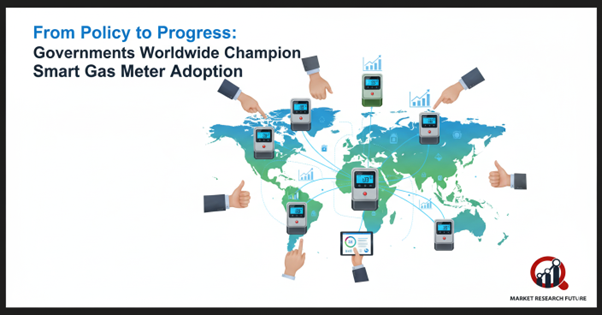
The Smart Gas Revolution is powered by Governments
Smart gas meters are no longer just a futuristic idea; they are changing how people use energy right now. These devices replace old-fashioned meters and bring homes and businesses into a new age of monitoring, control, and efficiency. Smart meters let the meter and central systems talk to each other in both directions, giving users the power to keep a close eye on their gas usage and bills. Because of better design, they support energy savings, quick alerts, and detailed insights—things that were hard to do with older analog meters.
Global Policy Push: Speeding up the Use of Smart Gas
Smart gas meters are now being used by governments all over the world as basic parts of their efforts to modernize their energy systems. National programs have gone from small pilots and localized trials to huge rollouts that affect millions of homes and businesses. This change shows that more and more people are realizing that smart metering is necessary to reach sustainability goals, cut down on waste, and make the energy system more resilient.
Smart gas meters are being pushed forward not only by policy but also by political will in places where regulation requires modern energy infrastructure. The goals of energy ministries, regulatory agencies, and public utilities are all the same: to modernize metering systems, make them more accountable, and help with the switch to cleaner energy. These efforts are no longer just in cities; they are also happening more and more in rural and semi-urban areas. Manufacturers, system integrators, and digital service providers are being asked to help by giving technology, deployment models, and ongoing maintenance.
Customer Empowerment and Policy Mandates: A Great Pair
Two things that are very closely linked are the voice of the customer and government rules. These are at the heart of the smart gas meter revolution. Smart meters are appealing to many homes and businesses because they can help people understand how they use energy, give them real-time feedback, and help them save money. Users now want interfaces that are easy to understand, usage dashboards that show them how to change their habits, and alerts that let them know when they should stop wasting time or move their consumption to off-peak hours.
As part of energy policy, regulatory agencies are making these expectations stronger by requiring the installation of advanced metering infrastructure. These rules often include rules for how to communicate, keep data private, and work with other systems. Suppliers are under more and more pressure to make sure that smart meters work with any energy provider. This means that if you switch providers, the meter shouldn't become less "smart" or stop working altogether. More and more, governments are asking that systems be vendor-neutral, user-centered, and give consumers clear benefits.
Emerging Markets: The Next Big Thing for Smart Meter Growth
Smart gas meter makers, service providers, and utilities are finding a lot of opportunities in emerging economies and cities that are growing quickly. Demand is growing because cities are growing quickly, people want reliable energy more than ever, and people are becoming more aware of how their actions affect the environment. In a lot of places, reforms in the energy sector and growth in industry are making it possible for governments and private companies to work together to build infrastructure.
New technology breakthroughs, like cheaper sensors, better connectivity, edge computing, and cloud-based analytics, are making it possible to create smarter and more adaptable solutions. Device designs are changing to work in different places, like off-grid or semi-rural areas, places with harsh climates, and places with poor digital or communication infrastructure. Hybrid communication architectures, which combine cellular, radio frequency, and mesh networks, are becoming more popular to ensure coverage and strength. Many governments have made it mandatory to protect consumer data and ensure that businesses can survive cyber attacks.
Mapping the Future: A Smarter, Greener Future
Smart gas meters have come a long way, but there is still a lot of work to be done to make the vision fully customer-friendly and work for everyone. Some of the biggest problems are making sure that meters work with all suppliers, building or improving communications networks, keeping data safe and trustworthy, making sure that all customers can afford the service, and dealing with technical problems in remote or resource-poor areas
Many people need to work together for success, including governments, regulators, utilities, manufacturers, technology companies, and consumers. Public policy should keep pushing for clear rules, open access, and fair treatment for everyone. Technology needs to make strong, flexible devices and safe data pipelines.
The smart gas meter market is set to grow even more in the years after 2025, with products that are smarter, systems that learn, and energy use that can be seen and controlled. The goal is not just to replace old meters, but to rethink how people use energy in a way that is smart, fair, and efficient.