Smart Bathroom Market Overview
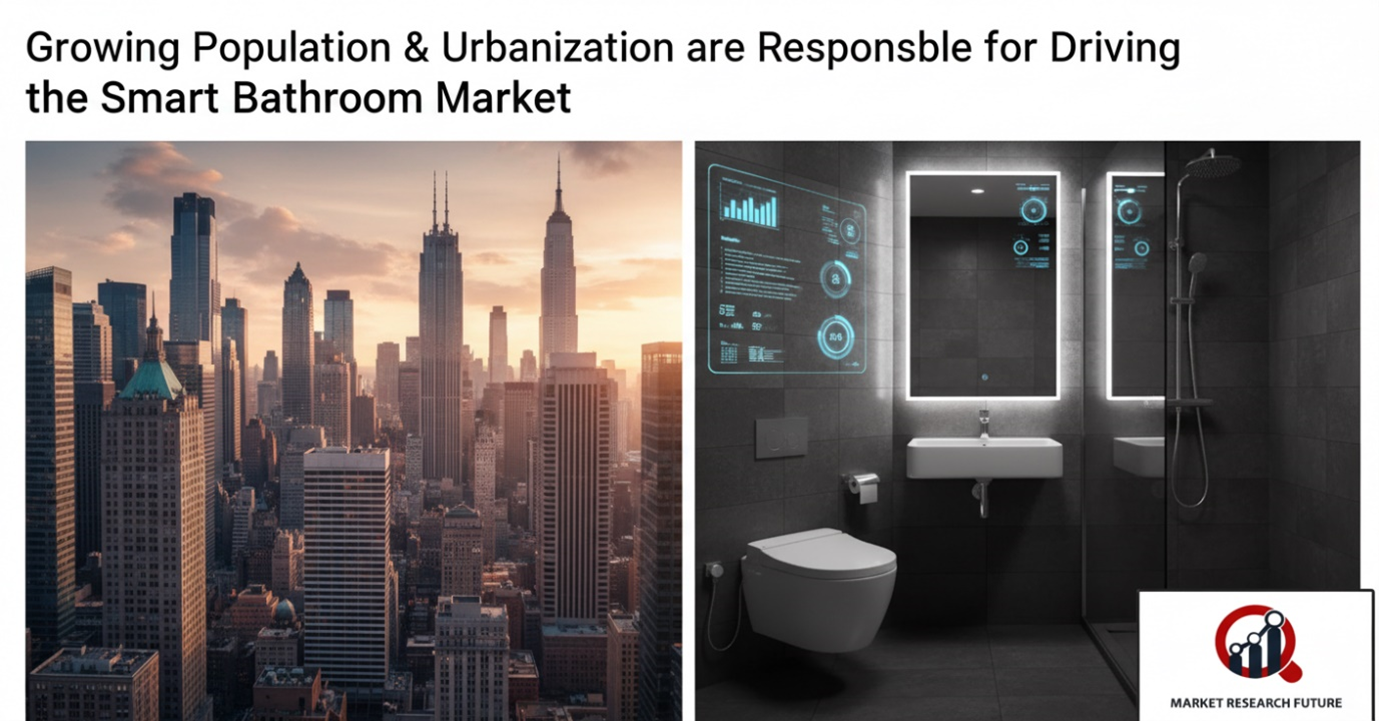
Smart bathrooms are leading the way in changing cities as they grow and become more technologically advanced. The need for high-tech, efficient, and clean sanitary solutions is growing quickly as cities get bigger, people make more money, and they want a better quality of life. Smart bathrooms are no longer just a luxury for rich people; they are becoming a must-have in smart homes, hotels, businesses, and public places.
Urban density presents distinct challenges, such as spatial limitations, resource scarcity, and infrastructure stress. Smart cities want to solve these problems with new ideas like smart transportation, buildings that use less energy, and digital healthcare. Smart bathrooms are an important part of this ecosystem because they provide automated and sanitary sanitation solutions that make cities more liveable, save resources, and make cities more efficient overall.
More people are moving from rural to urban areas, which is making the need for modern sanitation systems greater. People are becoming more aware of smart sanitation solutions because cities offer better housing, healthcare, and amenities. As more people move to cities, more people are using smart toilets, smart faucets, and connected bathroom systems. This is especially true in big cities.
Growing Concern About Saving Energy and Keeping Things Clean
The smart bathroom market is growing because people around the world are more concerned about cleanliness and sustainability. Small and medium-sized businesses are putting money into this area, and big names like Kohler, ROCA, TOTO, and LIXIL are adding smart technology to their products. Automated faucets, liquid soap dispensers, and self-cleaning toilets not only make things cleaner, but they also use less water and energy, which is a major environmental issue.
In many parts of the world that are still developing, basic sanitation is still not good enough. Smart bathrooms help solve these problems by having automated cleaning, water-saving systems, and touchless operations. These features reduce contamination and raise health standards. Self-cleaning toilets and smart water management systems are becoming important parts of city infrastructure because they are both convenient and good for the environment.
The Other Side of Easy
Even though they have benefits, the high costs of putting them into action are still a big problem. To make smart bathrooms work, you need to spend a lot of money on things like connecting multiple devices and adding sensors. High-tech toilets, digital faucets, smart mirrors, and soaking tubs are all expensive and need technical know-how to work. Depending on the features they come with, high-end smart toilets can cost anywhere from a few hundred to a few thousand dollars.
It also takes longer for people to switch to new bathrooms because they are so common. Many people don't know about the benefits of smart bathrooms, and making regular bathrooms smart can be expensive and hard to do. It is hard for many people to use because of the high capital needs, structural changes, and maintenance issues.
However, the adoption is slowly increasing thanks to the development of modular smart bathroom accessories, such as personalized showers, energy-efficient faucets, and intelligent tubs. People in cities, who are used to using technology, are leading the way, while people in rural and less developed areas are slower to adopt it. Awareness campaigns and easy-to-use solutions should help the market grow faster.
Conclusion
The smart bathroom market is doing well because more people are moving to cities, new technologies are being developed, and people are becoming more aware of how important hygiene is. The need for bathrooms that are energy-efficient, clean, and automated will keep growing as cities grow and people's lives change.
Smart bathrooms have many benefits, including being more environmentally friendly, cleaner, more convenient, and more personalized, even though they can be expensive and require new ways of doing things. Smart bathrooms will soon be a must-have in modern city living because of constant innovation and more people being aware of them. They combine luxury, efficiency, and eco-friendly design.