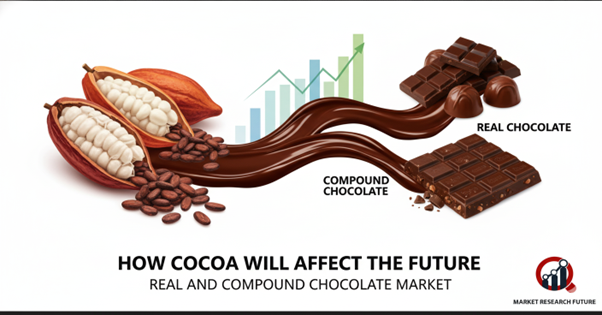
Trends and Outlook for the Global Real and Compound Chocolate Market
Chocolate is still one of the most popular treats in the world because of its taste, versatility, and sensory appeal. The cocoa content in chocolate products is what mostly divides the industry. Real and compound chocolates are two different types of products. Real chocolate has more cocoa and a more authentic taste. Compound chocolate, on the other hand, is often mixed with vegetable fats and is a cheap and flexible option for baking and candy making.
The chocolate market has seen a big rise in demand for high-quality and dark chocolate in the last few years. This is especially true in developed areas where people are becoming more aware of the health benefits of high-cocoa products. People like real chocolate not only because it tastes good, but also because it has health benefits like antioxidants and benefits for the heart. While this is going on, compound chocolate is still the most popular choice for uses that need to be easy to process, cheap, and stable, especially in syrups, coatings, and candy fillings.
Chocolate consumption is growing quickly in emerging markets in the Asia-Pacific region. Major companies in the industry, such as Barry Callebaut, Cargill, and Olam International, are expanding into countries like China and Indonesia. These businesses are putting money into processing plants and improvements to their supply chains to keep up with rising consumer demand while making sure that the quality and consistency of their products.
Market Dynamics: Cocoa is the Main Driver
The future of real and compound chocolate around the world depends a lot on how easy it is to get cocoa and how long it lasts. Climate change, pest infestations, and uneven government support in key cocoa-producing countries, especially Côte d'Ivoire and Ghana, all make it harder to grow cocoa. Any problems with the cocoa supply can affect chocolate production, making manufacturers change their recipes, look for new ingredients, or raise prices.
The market is also being shaped by what people want. Milk chocolate is still the most popular type of chocolate because it has a smooth texture and a balanced sweetness. Dark chocolate is becoming more popular because more people are learning about its health benefits. People who care about their health are looking for chocolate products that do more than just taste good. They want functional nutrition, high-quality ingredients, and ethical sourcing.
Compound chocolate is still very popular in the industry because it is cheap and can be used in a lot of different ways. This is especially true in industrial settings where flavor consistency and ease of use are important. It will always go well with the real chocolate segment because it is used in syrups, toppings, and mass-produced candy.
How Different Parts of the World Affect Chocolate Demand
Europe is still a big part of the demand for high-end chocolate. Consumers are increasingly interested in specialty and ethically sourced products. The European market puts a lot of emphasis on sustainability, fair trade, and being open about where cocoa comes from, which affects the choices of picky buyers. Ivory Coast and Ghana are two African countries that still send a lot of cocoa to Europe and North America. But chocolate makers have had to look for new sources in Latin American countries like Brazil, Ecuador, and Mexico because of problems like bad weather, changing crop yields, and political instability.
People in North America eat more milk chocolate than dark chocolate, but they are becoming more interested in artisanal and high-cocoa products. More people are learning about the health benefits of dark chocolate, and there is a demand for tasty but healthy options. This has opened up new markets for high-end chocolate products.
New Ideas and Eco-Friendliness in Making Chocolate
Innovation and eco-friendly practices are the keys to the future of the chocolate business. Scientists and big chocolate companies are looking into new farming methods to protect cocoa crops from climate change and diseases. New technologies, like precision agriculture and tools for improving crops, are being used to make cocoa plantations more productive, higher quality, and more resilient.
Researchers are looking into gene-editing methods like CRISPR to make cacao trees that can survive in changing climates and are resistant to disease. Companies like Mars Inc. and research groups like the Innovative Genomics Institute are leading the way in these efforts to make sure that cocoa is always available while keeping the quality of the products high.
Analyst Viewpoint on Market Growth
Experts say that the global chocolate industry will keep growing because more people want high-quality, ethically made chocolate. There may be short-term problems with cocoa production, but new ways to make crops more resilient and find sustainable sources of cocoa are expected to make supply chains more stable. The market will probably become more stable, with a few big players in charge and smaller artisanal and niche brands taking over specific high-end segments.
People are becoming more interested in functional foods and prefer high-quality, ethically sourced chocolate. This gives chocolate makers a chance to set their products apart by highlighting health benefits, flavor profiles, and eco-friendly practices.
Final Thoughts
In conclusion, the future of the real and compound chocolate market is closely linked to the future of cocoa production. Climate change, crop diseases, and supply chain instability are all problems that could hurt the economy. On the other hand, innovation, sustainability, and changing consumer tastes are all things that could help the economy grow. The market is moving toward high-quality, health-conscious, and ethically sourced chocolate. This will make sure that chocolate continues to please people all over the world while also being good for the environment in the long term.