Outlining the Pre-Engineered Building Sector and Its Objectives
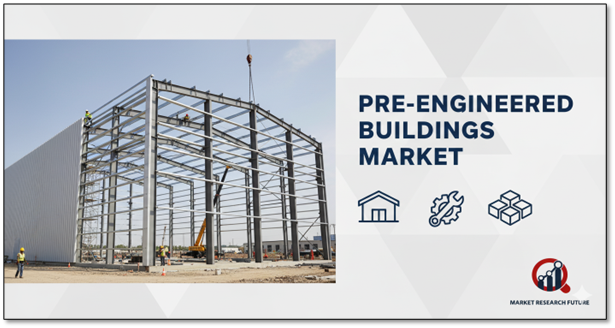
Pre-engineered buildings, or PEBs for short, are contemporary constructions that are mostly constructed off-site with steel frames and prefabricated elements like beams, joists, and trusses. These buildings have become extremely popular in the commercial, residential, and industrial sectors due to their precise design and efficient engineering. PEBs are attractive due to their affordability, ease of assembly, and short construction times.
PEBs are unique because of their adaptability. From garages and retail areas to manufacturing facilities and warehouses, these structures can be tailored to the particular requirements of any project. They are a sensible option for developing companies and industries since their modular design makes it simple to expand or modify them in the future. In addition to their usefulness, PEBs are acknowledged for being more ecologically friendly than conventional building techniques, producing less waste and using fewer resources.
Market Prospects for Pre-Engineered Buildings: A Summary of Present and Upcoming Trends
The market for pre-engineered buildings is still expanding as a result of rising demand for time- and money-saving construction methods. PEBs provide the speed and flexibility needed to handle the complexity of today's construction projects. PEBs offer the ideal mix of robustness, effectiveness, and visual appeal for any size commercial building or expansive industrial complex.
These buildings, which were designed with light steel frames and cutting-edge construction methods, are renowned for their durability, resilience to extreme weather, and strength. They are perfect for workplaces and industrial applications because they have better structural strength, fire resistance, and thermal efficiency than conventional brick-and-mortar buildings. Pre-engineered buildings are becoming more and more popular due to their ability to maintain cozy interior spaces while using the least amount of energy.
In order to satisfy consumer demand, PEB industry vendors are always coming up with new ideas. Projects can move more quickly than with traditional methods because prefabricated components are delivered straight to construction sites and assembled quickly. These factory-tested parts simplify the building process overall, guarantee dependability, and lower construction errors. Moreover, a lot of suppliers provide customized solutions to meet particular project needs, enabling engineers and architects to effectively realize their ideas.
The market for pre-engineered buildings is being shaped by emerging trends. Developers are increasingly using eco-friendly techniques and green materials in their designs, putting sustainability and energy efficiency front and center. Precision engineering and modular assembly are two examples of advanced manufacturing techniques that are lowering costs and timelines while increasing overall construction quality. The use of PEBs is growing in popularity as more companies and sectors realize their advantages.
Analyzing How Technological Developments Affect Industry Value
The pre-engineered building sector has undergone significant change due in large part to technology. These structures are now of higher quality, efficiency, and aesthetic appeal thanks to advancements in design, construction methods, and materials. The capabilities of PEBs have been redefined by technology, which now includes weather-resistant coatings, energy-efficient insulation, and lightweight steel frames.
The use of green building materials, which improve energy efficiency, lessen their impact on the environment, and lengthen the lifespan of structures overall, is one of the most noteworthy developments. Without sacrificing strength or durability, these materials enable architects and builders to design environmentally conscious structures. Furthermore, the planning and manufacturing processes have been completely transformed by computer-aided design (CAD), 3D printing, and automated fabrication technologies, which have made it possible to create extremely precise and customized components.
With contemporary PEBs made to reduce heat loss, control indoor temperatures, and maximize energy use, energy efficiency has also emerged as a key priority. Pre-engineered buildings are now more than just useful structures; they are ecologically responsible areas that support international sustainability objectives thanks to the integration of solar panels, effective HVAC systems, and sustainable materials.
Improvements in technology also improve structural integrity and safety. With the use of sophisticated design tools, engineers can simulate different building scenarios, guaranteeing that every PEB can endure environmental stresses while still being reasonably priced. Pre-engineered buildings are positioned as a progressive option for contemporary construction projects due to their innovative, accurate, and environmentally friendly solutions.
Examining How Government Regulations Affect Market Growth
The market for pre-engineered buildings is significantly impacted by government regulations. In order to guarantee the dependability and caliber of these structures, safety, compliance, and building standards are essential. Large-scale projects benefit greatly from pre-engineered buildings because of their standardized components, which make it easy to comply with codes and regulations.
Among the most important regulatory factors in the PEB sector are fire safety, structural integrity, and material specifications. Builders can produce safe, long-lasting, and effective structures that satisfy both client demands and legal requirements by adhering to these regulations. The adoption of pre-engineered structures is further encouraged by regulatory frameworks that foster innovation in the use of sustainable materials and energy-efficient design.
PEB adoption is actively encouraged by governments in many areas as a means of cutting costs and speeding up construction. Companies find it simpler to select pre-engineered buildings over conventional construction techniques when they are offered incentives like tax breaks, subsidies, or expedited approvals. The market is still expanding as a result of this favorable regulatory environment and the intrinsic benefits of PEBs.
Conclusion: Considering the Future
The market for pre-engineered buildings is expected to grow steadily due to factors like efficiency, innovation, and changing building requirements. PEBs are becoming the go-to option for contemporary construction projects as companies and industries place a greater emphasis on sustainability, speed, and flexibility.
Businesses can produce pre-engineered buildings that are not only economical but also ecologically conscious and aesthetically pleasing by embracing new technologies, sustainable materials, and design innovations. PEBs are perfect for both temporary and permanent applications because of their unmatched level of convenience, which is added by their quick assembly, modification, and relocation capabilities.
Businesses that prioritize innovation, quality, and customer-centric solutions stand to gain a competitive advantage as the market grows. Pre-engineered buildings are revolutionizing construction by providing a more intelligent, quicker, and environmentally friendly option to conventional methods for everything from commercial buildings to residential projects to industrial warehouses.
Pre-engineered buildings are the way of the future for construction in a world where time, efficiency, and sustainability are more crucial than ever. They are adaptable, long-lasting, and made to satisfy the changing needs of communities and businesses alike.