Beyond Vision: How Optical Coherence Tomography Is Transforming Eye Care
Revolutionizing Eye Imaging Technology
Logging into Digital Healthcare Space, and for diagnostics, this means Speed, Precision, non-invasive and less costly. For this, Optical Coherence Tomography (OCT) is a pioneering modality.
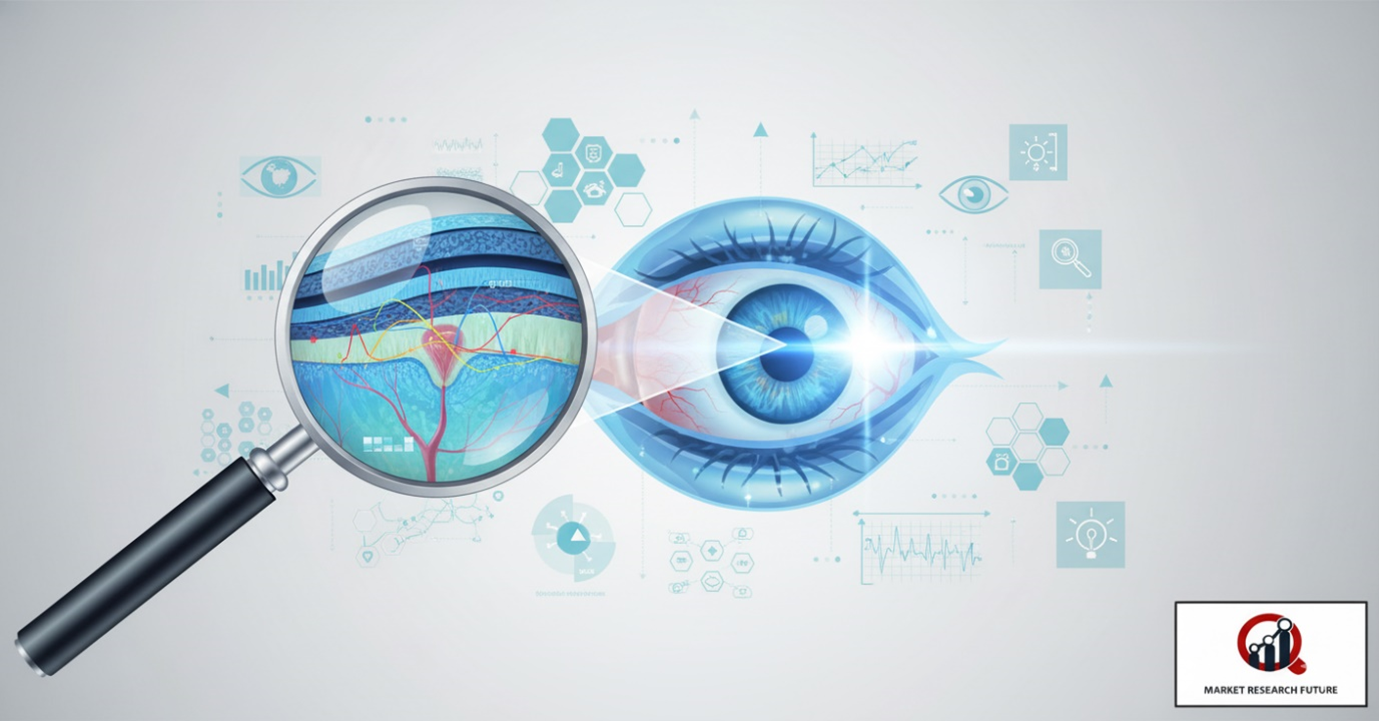
OCT is a non-invasive procedure, which means that it does not pose safety and emotional risks, while it uses beams of light, and, like a highly specialized ultrasound, captures and generates real-time, cross-sectional images of the retina. OCT procedures last under 10 minutes, and they provide 3D SCANS of the retina, which allows the healthcare professional to retrieve most information to plan a better clinical course for their patients suffering from glaucoma, diabetic retinopathy, age-related macular degeneration (AMD) and many more.
OCT Market Drivers
Multiple Clinical needs and significance from technology advancements are driving the world of OCT like never before.
Increases in OCT System dependence - In OCT systems, dependence is largely due to the steep increases in diabetic complications, glaucoma, and retinal disorders. Receding OCT systems depend largely on the steep increases of diabetic complications, glaucoma, and retinal disorders. Growing Aging Population: With an increasing number of people in the world getting older, the number of people developing vision disorders increases. This means there is an ongoing need for regular vision check-ups.
- Technological Advancements: New technology continues to improve vision imaging by increasing precision, speed, and availability of the tools, which is why OCT is used more often in clinics and in research.
- Rising Awareness and Early Diagnosis: The world is adopting more and more programs focused on preventative and early interventional eye care, and these programs fuel the growth of the industry.
- Healthcare Digitization and Accessibility: The developing world is growing its healthcare systems, and therefore, it is becoming more focused on implementing OCT systems.
Cutting-Edge Technologies Reshaping the OCT Landscape
OCT technology keeps improving and allows ophthalmologists to better assess and manage eye diseases. New systems provide more detailed images, quicker scans, and increased precision, which leads to better care for patients.
- Swept-Source OCT (SS-OCT): SS-OCT uses a large range of lasers, which means it can get images of deeper tissue layers and capture them quicker than older OCT systems. It can see the choroidal tissues and perform a detailed constructor on the retina for complete visualization, which is important for the care of complex retinal disorders.
- Fourier-Domain OCT (FD-OCT): FD-OCT uses advanced spectral analysis to gain the highest speed and resolution images. It is more sensitive and quicker than the time-domain OCT and is therefore the top choice for diagnosing macular holes and other disorders like AMD.
- Adaptive Optics OCT (AO-OCT): The use of adaptive mirrors enables AO-OCT to photograph the cellular layers of the retina. This tech advancement is extremely helpful in the research of retinal diseases and in developing individualized treatment strategies.
These advancements have allowed ophthalmologists to diagnose eye diseases earlier with increased precision and minimal invasiveness than ever before.
The Market Dynamics: What’s Shaping the Future
The performance of the OCT market is influenced by multiple macroeconomic and microeconomic factors that impact its adoption and growth.
- Prevalence of Vision Disorders: The growing global incidences of myopia and diabetic retinopathy, and the growing incidence of glaucoma, are increasing the use of OCT.
- Aging Demographics: As the population ages, there is an increase in the incidence of chronic eye diseases, which increases the need for timely screening.
- Regulatory and Reimbursement Landscape: Government strategies for early screening drive subsidized reimbursements for OCT devices, which increases market uptake.
- Economic Conditions: Increased disposable income and insurance coverage expand patients' use of diagnostic imaging.
- Healthcare Accessibility: Inequitable distribution of resources in impoverished areas will likely continue to limit the uptake of OCT.
- Competitive Innovation: Strategic R&D and product innovation from market leaders drive adoption of OCT.
Competitive Landscape and Main Players
The OCT market leaders and top companies in the sector, like Carl Zeiss Meditec AG, Topcon Corporation, and Nidek Co. Ltd, win the game thanks to constant innovations, mergers, and a broad offering of products. They focus on the development of:
- AI-based image interpretation tools
- Telemedicine-ready portable OCT and dual-use systems.
- Comprehensive ophthalmology platforms that integrate OCT, fundus photography, and angiography.
The coming decade will be driven primarily by strategic partnerships, clinical study productivity, and AI adoption.
Future Outlook: Beyond the Retina
The future of OCT technology goes well beyond ophthalmology to areas such as dermatology, cardiology, oncology, and dentistry. This will facilitate brilliant cross-disciplinary relationships and opportunities. The potential role of OCT technology in next-generation precision medicine becomes clearer when one considers AI-powered analytic wearables, cloud-based image sharing systems, and the OCT technology itself.
The expectations for OCT systems by 2030 include faster systems that real real-time diagnostics, smart systems that will automate processes, and access at the point of care in hospitals, as well as home screening devices.
Conclusion: The Visionary Path Ahead
We have seen the OCT technology begin to aid in the detection of the early stages of some diseases. This has helped in the advancement of precision ophthalmology and changed the way practitioners “see” the human eye. The pathway for the rising estimate of value in the market is driven by innovation in technology, greater awareness of healthcare, and the fact that more and more predictive eye care is preventative. Increased connectivity is the main focus for the future. Vision health will be clearer and faster because of the advancements led by OCT technology.