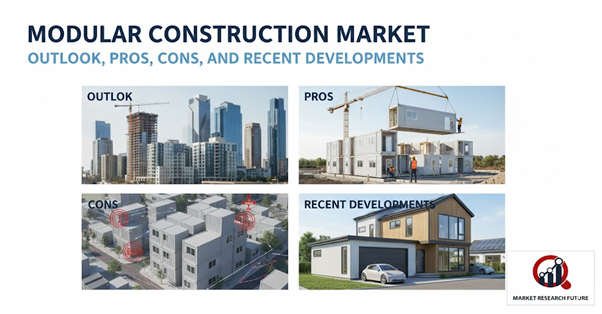
Introduction to the Modular Construction Equipment Market
Rising demand for affordable housing has spurred the demand for modular construction, promising a better future for the global modular construction market. The valuation of the sector, which was valued at USD 102.5 billion in 2024, is anticipated to reach USD 205.54 billion by 2035. The landscape promises to navigate through 2035 at a CAGR of 6.57%.
For centuries, traditional building practices required transporting raw materials, such as 2x4s, flooring, and beams, to construction sites, where skilled laborers would cut and assemble them manually. However, with the advent of modular construction, this long-standing approach has undergone a dramatic transformation.
Modular construction refers to the process in which buildings are manufactured off-site in controlled factory environments while adhering to the same building codes and quality standards as conventional methods. These structures are fabricated in smaller modules or units, which are then transported to the site and assembled.
The rising popularity of modular construction is primarily driven by its faster completion timelines, cost efficiency, and higher productivity compared to traditional methods.
Positives of Modular Construction
- Saves Time
Modular construction allows simultaneous progress, while site work and foundation are completed on-site, the modules are fabricated in a factory. This parallel workflow reduces overall construction time by 30–60% without compromising efficiency or quality.
- No Weather Delays
Because the modules are produced in climate-controlled environments, there are virtually no delays caused by adverse weather conditions. Workers operate under safer and more comfortable conditions, resulting in higher-quality output.
Additionally, modules often arrive with pre-installed flooring, cabinets, electrical fixtures, and plumbing, reducing on-site finishing time.
- No Need for Material Storage
Space limitations at urban construction sites can make material storage and handling challenging. With modular construction, most fabrication occurs off-site, reducing clutter and safety risks. This keeps job sites cleaner, safer, and more efficient, especially in dense cities.
- Reduced Labor Expenses
Labor shortages and rising wage costs continue to challenge the construction industry. Modular construction mitigates this issue by centralizing skilled labor in controlled factory settings, where efficiency and safety can be optimized.
Strategic factory locations near key logistics routes and raw materials further reduce operational costs. Studies suggest that overall construction costs can be lowered by up to 25% through this model.
- Lower Waste Volume
As sustainability becomes a core focus in modern construction, modular methods help minimize waste and maximize material reuse. Many modular factories have established recycling systems to further reduce their environmental footprint, supporting the global shift toward greener construction practices.
Drawbacks of Modular Construction
- Mass Production and Limited Variety
Modular construction favors standardization. It is most effective for projects with repetitive layouts, such as apartments, offices, and hotels. Custom or highly unique designs tend to increase costs and complexity, reducing the economic benefits of modularity.
- Transportation Costs and Risks
Modules must be transported from factories to job sites, often across long distances. This introduces risks such as damage during transit or delays in installation if a module is mishandled. Transport logistics and rigging costs can also increase overall project expenses.
- Difficult Financing
Modular construction often requires significant upfront investment since materials and components must be fabricated early in the project timeline. This accelerated cash flow structure can be challenging for investors and lenders accustomed to conventional financing schedules.
Conclusion
According to the latest modular construction market analysis, the sector continues to gain traction due to its efficiency, cost-effectiveness, and sustainability benefits. While it may not suit every type of project, modular construction is increasingly viewed as a key solution to housing shortages, labor constraints, and rising construction costs.
With continuous technological innovation, improved logistics, and expanding adoption in urban infrastructure, modular and off-site construction are set to play a transformative role in the global construction industry’s future.