Redefining Modern Medicine: How Technology Is Transforming the Medical Device Industry
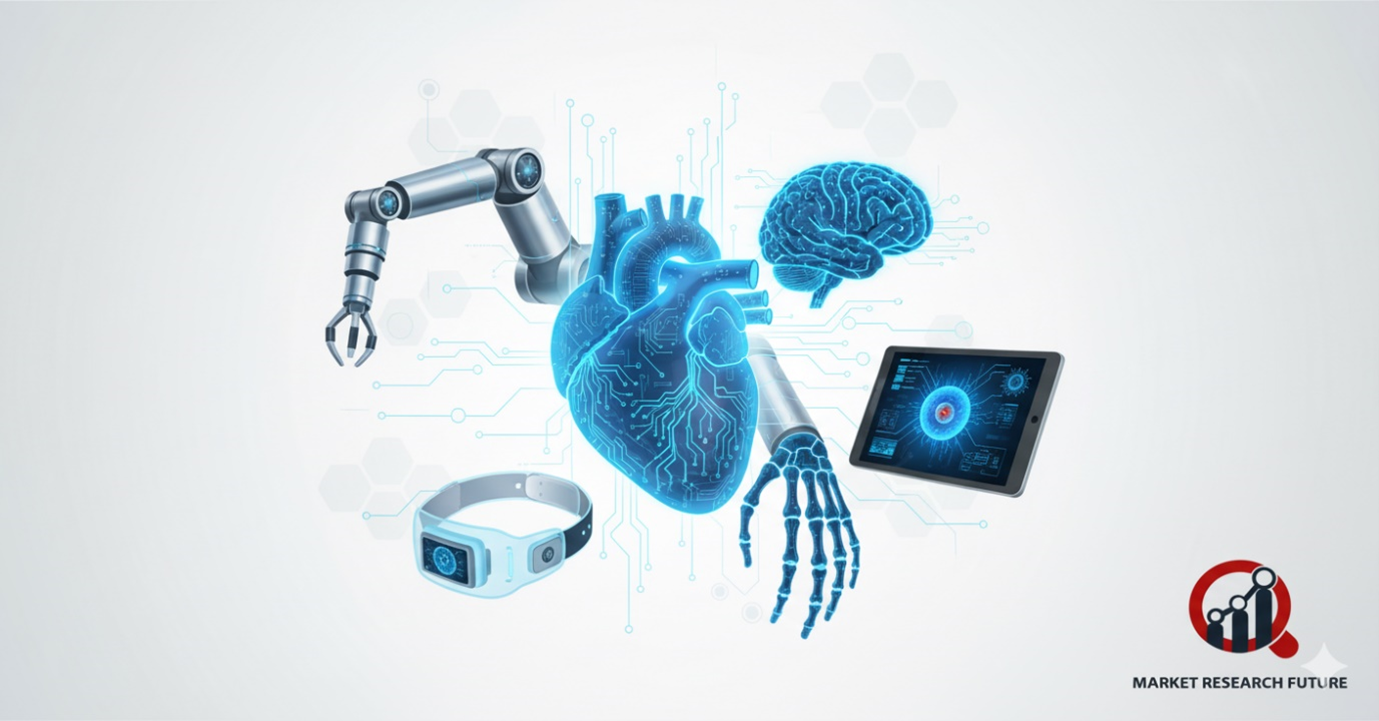
The global medical devices and accessories market has grown to be the centerpiece of the world's healthcare revolution. Medical devices comprise the foundational elements of advanced diagnostics and precision tools for treatments available today. They help modern medicine improve the results of treatments, shorten the time patients spend in hospitals, and change how health care professionals manage and diagnose diseases.
Currently, the market is growing more rapidly than at any time in history because of the blending of digital health, robotics, AI, and non-invasive procedures and technologies advanced around the world.
Market Overview: A Transforming Sector in Motion
Medical devices can include instruments, apparatus, or software, and materials because any of them can be used to diagnose, monitor, or treat a person’s health condition. They can include dealings with the heart, brain, diabetes, cancer, or any of the disorders in the gastrointestinal system.
- Rise in chronic and lifestyle disorders
- The global population is aging
- The government is spending more on healthcare, and there are initiatives to aid healthcare.
- Patients’ willingness to accept and adopt recent technology
- Rapid changes in R&D and the global digitization
These factors indicate the market is developing in complexity along with the size, owing to innovation.
Non-Invasive Devices: The Game Changer in Modern Healthcare
The non-invasive medical devices are a technological advancement in improving modern healthcare. They put the patients’ concerns to rest since patients would no longer have to go through the painful experience of surgery, and the recovery time is reduced.
The evolution of medical devices in the market helps provide more reasonable and faster treatment. With devices like non-invasive imaging and robot-assisted diagnostics, healthcare practitioners are able to provide precise and accurate results without the painful experience of surgery. This is why the modern healthcare sector is changing.
Current Market Trends: Technology at the Core
The medical device market is undergoing a digital rebirth. Automation, AI, and data-centric techniques are changing both the execution and observation of medical operations. Key trends that are influencing the market as we witness it today are:
- Robot-Assisted Surgeries: The robotic surgical systems market is valued at close to 1 billion dollars, and it is helping to expand the market by improving precision and cutting recovery times.
- Bioresorbable Vascular Scaffolds (BVS): These next-gen coronary implants, which dissolve after blood flow is restored, are a modern innovation in cutting-edge cardiovascular medicine, are being developed by Abbott Laboratories.
- Smart Medical Devices and the Internet of Medical Things: These innovations are enabling in-depth, continuous data collection of patients, which aids in advanced remote healthcare that improves patient health.
The integration of AI, machine learning, and device miniaturization is improving precision and usability and is transforming competition in the market.
Future Outlook: Innovation Meets Opportunity
The future of the medical device market is promising and full of possibilities. Healthcare systems are rapidly digitalizing and transforming, and governments are now supporting local innovation as well as manufacturing.
Key future trends are:
- Disruption in diabetes management via smart, wearable, real-time, continuous monitoring systems.
- 3D printing in prostheses, implants, and patient-specific solutions.
- AI-driven surgical robotics and automated diagnostics.
- Engineered blood vessels and bio-constructed materials.
- Exponential growth of medical tourism in the Asia-Pacific and global demand are in parallel.
The increased valuing of the intersection of healthcare, technology, and affordability allows manufacturers to serve emerging economies where access and affordability of healthcare are the most pressing factors.
Challenges: Cost and Compliance
The growth of the medical device industry is slowed due to a lack of a cohesive strategy to tackle a myriad of obstacles.
- Increased global regulations: Quality and safety regulations and standards, which aim to lower the risk of device infection and promote patient safety, have increased on a global scale and, in turn, dissipated device manufacturer profit margins.
- High Cost of the Device: The subsequent research, development, and manufacturing processes of a medical device are highly complicated, resulting in high price tags. This is exaggerated further with advanced integrations of systems via cross-platform compatibility and the addition of AI, which is very costly.
Also, the lack of the latest medical technology in small-scale clinics and clinics and cheaper healthcare providers in poor countries is due to budget and primitive/older infrastructure.
Devising processes to lower costs, enable local manufacturing, and implement educational programs will unlock tremendous value.
Conclusion: The Future is Connected, Intelligent, and More Patient-Centric Than Ever
We are witnessing extraordinary innovations within the medical devices and accessories industry. The unobtrusive, AI-enabled devices and custom care are on the rise, providing manufacturers the opportunity to revolutionize global care.
With a focus on affordability, accessibility, and digital convergence, the industry can bridge the divide and engineer a reality where every patient, anywhere in the world, enjoys modern, safe, and efficient medical care.