Technological Advancements Shaping the Future of the Foley Catheters Market
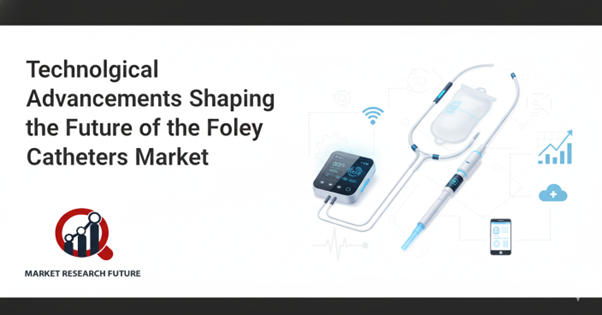
The global Foley catheters market is witnessing steady growth, driven by the rising prevalence of urinary retention, post-surgical care requirements, and the increasing geriatric population. As the demand for efficient urinary drainage solutions continues to rise, technology is emerging as a key enabler of safer, more comfortable, and infection-resistant catheter systems.
Innovations in materials, coatings, and design are transforming traditional Foley catheters into more patient-centric and clinically effective devices.
How Technological Advancements Have Shaped Foley Catheters
Catheters with Smart and Sensor Technology
Smart catheters with sensors and monitoring systems are one of the most exciting new things in the Foley catheter industry. These gadgets can keep track of how much urine is coming out, find blockages, and let doctors know when there are early signs of infection.
Smart catheters lower the incidence of catheter-associated urinary tract infections (CAUTIs), which are a big problem in hospitals and long-term care facilities. Continuous data monitoring also lets doctors make decisions based on data more quickly, which makes patients safer and leads to better treatment outcomes.
Improvements in Antimicrobial and Hydrophilic Coatings
New antimicrobial coatings, such as silver alloy and nitrofurazone, help keep bacteria from sticking to the catheter surface and forming biofilms. These coatings make catheters last longer and lower the risk of infections that happen in hospitals.
They make patients more comfortable by making it easier to insert and remove the device. This makes the experience smoother and less unpleasant, and it also means fewer problems, especially for people who need to use a catheter for a long time.
Innovation in materials and biocompatibility
Silicone catheters are becoming more popular because they are flexible, long-lasting, and have a minimal chance of causing allergic responses. These materials help fluids drain better and provide less discomfort to tissues.
Ongoing research and development are focused on making materials that are both strong and soft, so that patients are comfortable and the materials are reliable in the clinic.
Changes to design and customization
Foley catheters are now being made to fit the needs of each patient. New features like multi-channel catheters, designs that can sense temperature, and adjustable balloon volumes make these devices more accurate and useful. Optimizing pediatric and female-specific catheters for anatomical comfort and safety is also being done. Also, improvements in sterile packaging and disposable designs are helping healthcare facilities follow infection control rules.
Increasing Focus on R&D and innovation in the Foley Catheter Market
Several global and regional manufacturers are focusing on innovation and R&D to enhance catheter performance, comfort, and safety. The rising incidence of catheter-associated urinary tract infections (CAUTIs) has made technological advancement a top priority.
Key areas of company focus include:
- Antimicrobial and hydrophilic coatings to reduce infection risks.
- Smart Foley catheters with sensors that monitor urine flow, detect blockages, and alert caregivers.
- Eco-friendly and biocompatible materials like silicone and latex-free polymers.
- Customized catheter designs for pediatric, female, and long-term care patients.
- Improved packaging and sterilization technologies to maintain hygiene and usability.
Top device manufacturers and startups are also working with hospitals and research institutes to test and improve innovative catheter technology. The demand for home-based and outpatient care has sped up innovation even more, as companies create catheters that are easier to use and care for outside of clinical settings.
The Future of Foley catheter market
The future of the Foley catheter market lies in continued innovation and patient-centered technology. With rising healthcare standards and growing awareness of infection prevention, manufacturers are focusing on smarter, safer, and more comfortable catheter solutions. As digital health and material science converge, the next generation of Foley catheters will redefine urinary care—enhancing quality of life and clinical outcomes worldwide.