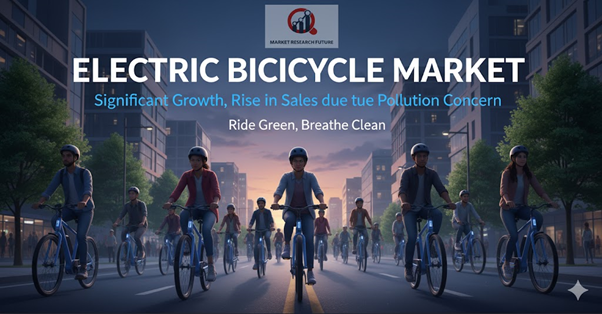
Electric Bicycles Overview
Consumers have become aware of environmental deterioration, which has ignited the demand for sustainable products. This sparked the growth of the e-bicycle market, upholding the sector’s progress at a CAGR of 10.11% through 2035. The size of the realm of e-bikes is set to rise from USD 34.2 billion in 2024 to USD 98.68 billion by 2035.
Electric bicycles, commonly known as e-bikes, feature integrated electric motors used for propulsion. They come in several types- pedal assist, power-on-demand, and hybrid models combining both features.
E-bikes typically run on rechargeable batteries, capable of speeds ranging between 25 and 32 km/h, depending on local government regulations.
Growing Demand for Electric Bicycles
Rising environmental awareness, coupled with increasing urban pollution, has fueled global interest in e-bikes as a sustainable and efficient means of transportation. Cities across the world are promoting cycling infrastructure and encouraging citizens to adopt eco-friendly mobility options.
E-bikes have also become popular in tourism, recreation, and personal mobility segments. Travelers prefer e-bikes for short-distance exploration, offering both convenience and a reduced carbon footprint.
The growing adoption of e-bike sharing programs in urban areas, especially in Asia and Europe, has significantly contributed to this growth.
Additionally, the increasing cost of fuel, traffic congestion, and growing health awareness among consumers are accelerating the transition toward electric bicycles. Governments and municipalities are introducing incentives, rebates, and dedicated cycling lanes to encourage the shift from conventional vehicles to electric mobility.
Government Initiatives
Many governments are implementing policies to support the transition toward zero-emission transport systems. Subsidies for electric two-wheelers, investment in green infrastructure, and emission control targets are driving e-bike adoption.
Public campaigns highlighting the benefits of sustainable mobility and growing emphasis on cleaner transport have further boosted the market.
In addition to reducing carbon emissions, e-bikes help promote healthier lifestyles and provide an affordable commuting option. Several regions, including parts of Asia-Pacific and Europe, have already integrated e-bikes into their broader public transportation frameworks.
Restraints in the E-Bicycle Industry
While the e-bike market is growing rapidly, certain challenges persist. The higher cost of lithium-ion batteries and electric drive systems can increase overall pricing, limiting affordability for some consumers. Moreover, the underdeveloped aftermarket for repair and maintenance services remains a concern in several emerging markets.
However, as battery technology advances and local service networks expand, these challenges are expected to ease in the coming years. The increasing involvement of local manufacturers and the rise of standardized components are also contributing to improved cost efficiency.
Regional Analysis
Asia-Pacific continues to dominate the global electric bicycle market, led by countries such as China and India. China remains a key manufacturing hub for e-bikes and their components, including motors and battery cells.
India’s growing middle-class population, rising disposable income, and increasing environmental awareness have also driven significant adoption.
In Europe, a growing emphasis on reducing vehicle emissions and promoting eco-friendly transport options has further accelerated e-bike usage. Major cities are investing in cycling infrastructure, while consumers are turning toward e-bikes for short-distance travel.
Industry Developments
Leading global e-bike manufacturers continue to focus on innovation, smart connectivity, and rider comfort. Newer models are equipped with GPS-based navigation, app integration, and regenerative braking systems.
Companies are also exploring the use of solar-assisted charging and lightweight materials to enhance efficiency and sustainability.
The industry’s focus remains on developing affordable, durable, and energy-efficient products to support global decarbonization goals. With consistent technological innovation and strong policy support, the e-bicycle market is expected to witness substantial growth over the next decade.