Dynamite Market Overview
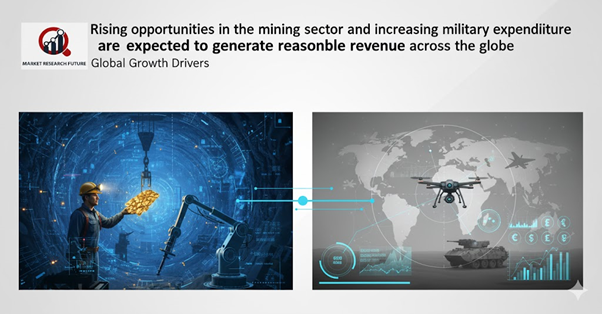
The rising opportunities in the mining sector have sparked the demand for dynamites in the industry, uplifting the global dynamite market from USD 9.01 million in 2024 to USD 17.9 million by 2035. This progress will adhere to a moderate CAGR of 6.44% through the forecast period.
Dynamite, available in solid or liquid forms, is designed to release energy through heat, sound, gas, or smoke under high pressure and temperature. The dynamite market is segmented into commercial (civil) and military explosives.
Commercial explosives cater primarily to mining, quarries, and civil engineering projects, using materials like ANFO, black powder, and nitroglycerine. These explosives are essential for breaking rocks or oil extraction, making civil explosives directly dependent on the evolution of construction and mining activities.
Military explosives, such as HMX, RDX, PETN, and Semtex, are widely used in defense applications for demolition, while ANFO also finds limited military use. The combination of increasing infrastructure projects, mining activities, and rising military expenditure is boosting regional and global revenues for the dynamite market.
Mining Sector Driving Demand
The mining industry’s growth is propelled by high demand for minerals and metals in end-use industries. Technological advancements, including bioleaching and automated remote monitoring, are enhancing operational efficiency and safety.
China dominates the mining market, consuming around 50% of global coal and leading in mineral extraction. Major infrastructure projects, including Dubailand (UAE), London Crossrail (UK), and Jubail II Industrial City (Saudi Arabia), are expected to drive demand further.
Similarly, India’s mineral-rich districts offer lucrative opportunities, particularly in coal mining, which accounts for 70% of explosives consumption. Liberalization policies, longer lease agreements, and 100% FDI in mining are expected to fuel growth.
Military Expenditure Boosting the Explosives Market
Military explosives such as RDX, TNT, and HMX are critical for defense and mining operations. Rising political unrest, cross-border activities, and increased defense budgets are positively impacting the market.
Key spending nations include China, India, the US, Russia, and France. Advanced weaponry and smart explosives further support market expansion. However, fluctuations in oil prices can influence defense budgets, indirectly affecting explosives demand.
Competitive Landscape
The global dynamite market is fragmented, with strong presence from both international and regional players. Leading companies include Hanwha Corp., Incitec Pivot Ltd., Pakistan Ordnance Factory, Austin Powder GmbH, Eurenco SA, Orica Limited, Solar Industries India Ltd., MAXAMCorp, and IDL Explosives, among others.
Key strategies adopted by these players include:
- Product Innovation: Orica launched the Vistis Bulk System to meet growing mining demand in Australia.
- Geographical Expansion: Hanwha acquired LDE Corporation to strengthen its mining presence in Australia; Orica and Eurenco operate in over 100 countries.
- Defense Market Focus: Solar Industries has expanded into defense since 2011, supplying HMX and propellants, with an expected 45-fold revenue growth in this segment.
Market Challenges
Despite growth, the market faces challenges such as stringent regulations, high initial investments, insurance requirements, and safety costs during production. These barriers mainly affect mid-size regional players, while established companies leverage technology and innovation to maintain dominance.
Conclusion
The dynamite market is poised for growth, driven by expanding mining activities and increasing military expenditures. Technological advancements, product innovation, and strategic geographic expansion will be key factors for market players to capitalize on the rising demand in both civil and defense sectors.