Transformation of the Crop Sprayer Market with New Technology and Precision Agriculture
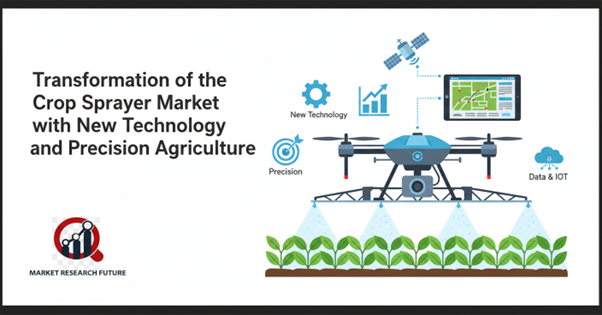
New technology and precision agriculture are changing the crop sprayer market .The use of cutting-edge technologies in crop sprayers has changed precision agriculture by making it more efficient, sustainable, and productive. These new technologies help farmers use inputs more accurately, cut down on waste, and, in the end, get better crop yields.
Growth Drivers of the Crop Sprayer Market
Key growth factors driving the adoption of technology and precision agriculture in the Crop Sprayer Market:
Growing Need for Food Production: Farmers are using precision technologies to get more crops because the world's population and food demand are both rising.
Technological Progress: AI, IoT, GPS, drone technology, and robotic sprayers all make things work better, more accurately, and with fewer resources.
Shortage of Workers: Automation and self-driving sprayers make it less necessary to hire people, which helps with workforce problems in agriculture.
Cost Efficiency: Using fertilizers, pesticides, and herbicides in the right amounts lowers input costs and cuts down on waste.
Environmental sustainability: Smart spraying cuts down on chemical runoff, water use, and soil degradation, which encourages farming that is good for the environment.
Data-Driven Farm Management: By connecting with farm management systems, you can keep an eye on things in real time, use predictive analytics, and make better choices.
Adoption of Technology in the Crop Sprayer Market
Smart Sprayers with AI: AI is a big part of how crops are sprayed these days. AI algorithms look at data from sensors and cameras in real time to find places that need treatment.
Spraying with drones and UAVs: Drones with GPS and multispectral sensors can quickly cover large areas and evenly apply chemicals.
They can get to hard-to-reach places and cover more ground. Spraying with drones also uses less water and chemicals, which helps save money and support sustainable farming.
Variable Rate Technology (VRT): VRT uses data from soil sensors and satellite images to change application rates based on how the field is doing.
This makes sure that inputs are used in the best way possible in each zone, which improves crop health, yield, and resource use while having the least effect on the environment.
Integration of Farm Management Information Systems and Crop Sprayers: Modern sprayers frequently connect to Farm Management Information Systems (FMIS). This makes it easy to collect, analyze, and coordinate data with other farm operations, which helps with making smart decisions, better use of resources, and better overall farm management.
Opportunities of the Crop Sprayer Market
Smart and self-driving technologies, drones, and precision farming tools are opening up a lot of possibilities in the Crop Sprayer Market. The market is growing because more people want sustainable farming, better use of resources, and higher food yields.
The global growth potential is further increased by new markets, help from the government, and integration with farm management systems.
The Future of the Crop Sprayer Market
More progress in AI, machine learning, and data analytics will lead to the next generation of crop sprayer technology. As these technologies get better, sprayers will become smarter, more independent, and more effective.
The continued use of precision agriculture methods will help make farming more sustainable, making sure that food is always available while protecting the environment.