The Future of CROs: AI, Decentralized Trials, and the Next Phase of Clinical Research
What CROs Do & Why It Matters
CROs (Contract Research Organizations) provide outsourced R&D and operations support for the pharmaceutical and biotech industries, as well as the medical device industry and other related industries. CROs provide outsourced research and operations support for the pharmaceutical, biotech, and medical device industries, as well as other related industries. They become the backbone of modern clinical research and support the aforementioned industries in cost and time innovation. They offer crucial research-based services required during the clinical development of medicines and therapies, such as data management, clinical operations, regulatory/quality assurance, and trial submissions. Common services they perform include:
- Design and validation of clinical databases and management of clinical data
- Consulting and/or preparing documentation for regulatory agencies
- Trial management, project management, quality control, and reporting of trial metrics
- Statistical analysis and preparation of safety and efficacy of drug summaries
- Providing specialized services for biologics and cell & gene therapies
By helping navigate complicated regulatory and operational procedures, these organizations greatly assist in lowering development costs and reducing time-to-market.
Main Trends & Innovations
- Decentralized & Patient-centric Trials
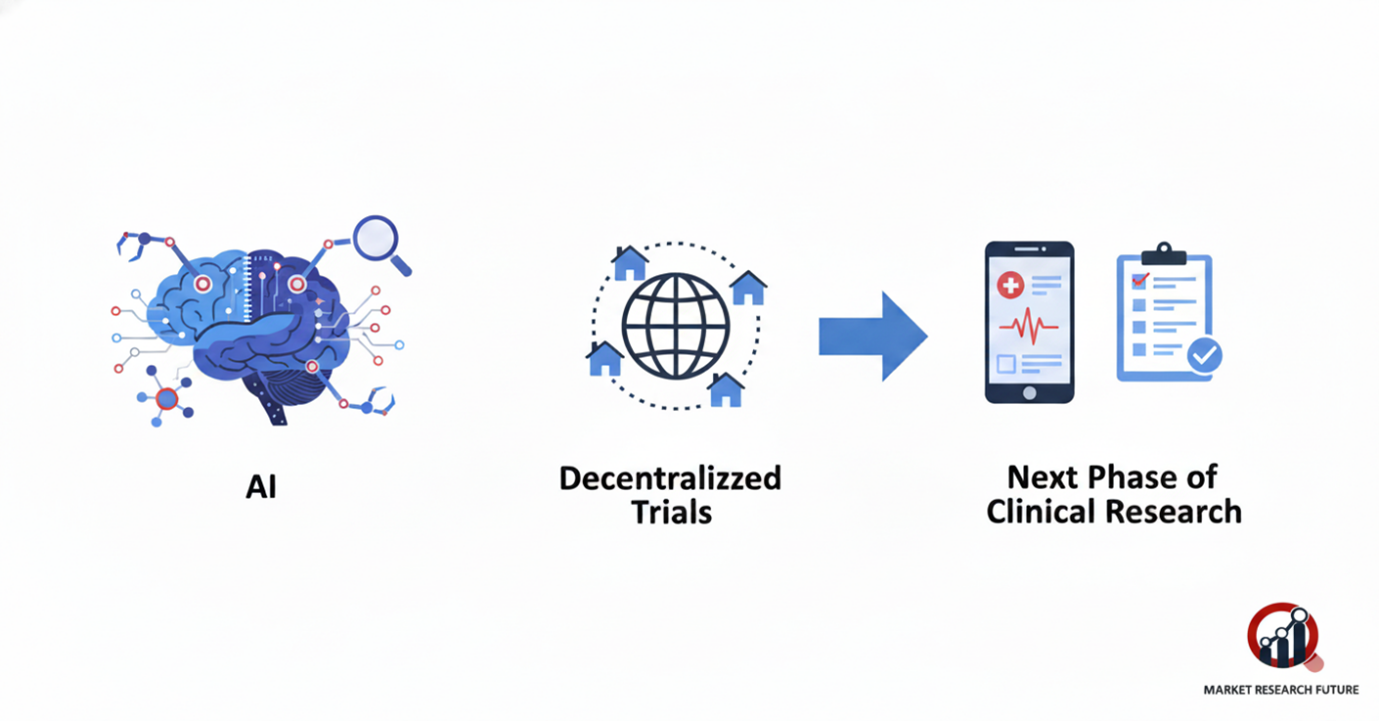
CROs use hybrid models with remote & in-person visits, mobile health applications, remote participant monitoring, multilingual eConsent, & eConsent. They aim for improved recruitment, participant retention, & diversity in geographic & demographic backgrounds through other methods.
- Celebrity-endorsed, biomarker-driven, specialized therapy trials
Precision medicine continues to gain traction. For proteomic & genomic oncology studies, proteomics is becoming common. The CRO cell & gene therapy market is blooming with prospects.
- Artificial Intelligence, machine learning & Digital Tools
Automation is now common for data entry, predictive models related to site selection, recruitment, & safety-signal detection. Tools that minimize the manual workload & magnify precision generate a competitive lead for them.
- Sustainability, DEI & Compliance
The environment is driving some CROs to offer remote site monitoring & telemedicine = site visits. Inclusion of diversity, equity, & inclusion for participants, deep DEI, is also becoming the established standard with tighter global, legal expectations, & controls related to data compliance.
- Deep Specialization & Strategic Alliances
Depth of knowledge is encouraged for CROs in high-complexity niches (cell & gene therapy, dermatology, & rare diabetes, rare diseases). For scale & integrated end-to-end service, partnerships & alliances with academic, tech, & commercial market players increase for acquisitions.
Challenges and Strategic Shifts
With growth comes trouble, and for CROs, this means low profits, not enough people to hire, and weak supply chains. Nevertheless, the adoption of digital strategies and the diversification of the services offered continue to adapt to the changes. The remote monitoring and the use of wearables to replace clinical research and on-site visits has shifted the DCT paradigm. This hybrid model of research improves real-time data accuracy, patient participation, and has become the standard.
Strategic Intelligence in Outsourcing
In the upcoming decade we will witness the commencement of the era of intelligent outsourcing. It includes the evolution of CROs from traditional service providers into strategic partners for clinical, regulatory, commercial, and integrated function solutions. CROs will become value-driven partners for outsourcing needs. In no particular order they include:
- Artificial intelligence (AI) for bio-simulation and predictive modeling as means for rapid trial design.
- Utilization of real-world evidence (RWE) for regulatory submission.
- Focus on niche areas such as oncology, gene modifications, rare diseases and therapeutics.
- Employing encryption technologies for safe and clear transfer of data between partners in outsourcing.
Finally, the integration of new research models will deliver high value, adaptive, responsive, personalized and potentially lifesaving research solutions.
Conclusion
Hybrid trial models are set to become the norm as the combination of virtual and in-site elements increases efficiency and patient access. CROs will integrate AI/ML for not only operational efficiency but also for design and decision-making (e.g. trial protocol, predictive enrolment, and safety). Increased focus on services for RWE, post-market surveillance, and evidence requirements driven by payers, regulators.
Increased focus on global access and trial diversity, inclusion of historically marginalized populations, and geographic relevance of the trials. Increased industry consolidation through M&A and partnerships, particularly by CROs pursuing operational specialization or technology access.