Impact of 3D Imaging and AI Integration on the Cone Beam CT Market
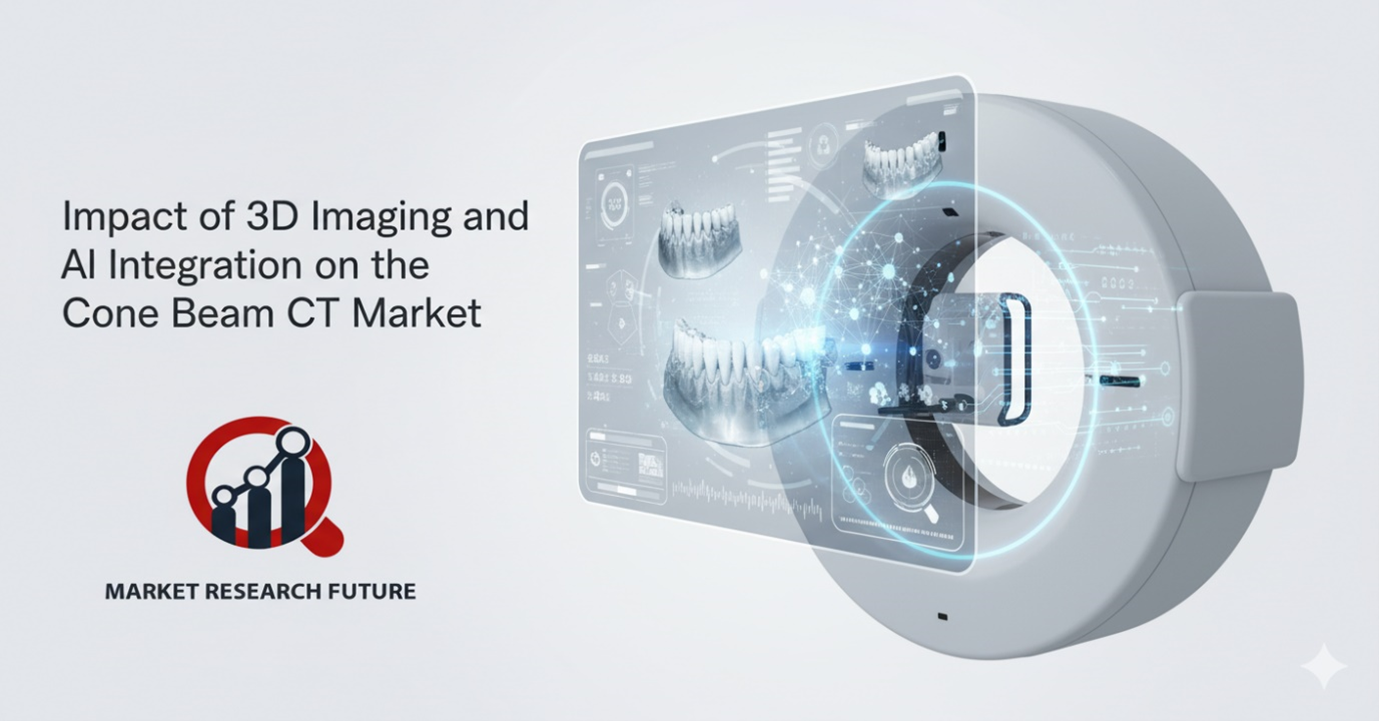
The combination of 3D imaging and artificial intelligence (AI) in Cone Beam CT devices is changing the use of imaging in Healthcare. These new technologies give very comprehensive, three-dimensional pictures of teeth, jawbones, and the structures around them, which helps doctors make accurate diagnoses and plan treatments.
AI makes image analysis even better, finds problems automatically, and speeds up the process, which makes dental procedures more accurate, faster, and easier for patients.
What Growth Factors are Driving the CBCT Market?
In 2025, the Cone Beam CT market is developing quickly because more people want accurate images of their teeth and faces. Improvements in 3D imaging and AI integration make diagnoses more accurate.
The market is growing because more people are using it in ENT, orthodontics, and surgical planning. Widespread awareness about the importance of early diagnosis, the growing number of older patients, and the expansion of healthcare infrastructure in emerging markets.
The combination of 3D imaging and AI is a major factor in the growth of the CBCT business. Demand is rising since more dental clinics, ENT practices, and hospitals are using it. Emerging markets are also helping growth by improving healthcare infrastructure and making more people aware of modern imaging solutions.
Enhanced Diagnostic Precision with Cone Beam CT
Cone Beam CT improves the accuracy of diagnoses. 3D imaging gives you very clear, three-dimensional pictures of the teeth, face, and head. Clinicians may now find bone deformities, infections, cancers, and other problems far more accurately than with typical 2D imaging.
The clear images make it easier to evaluate and plan, which lowers the number of wrong diagnoses and improves patient outcomes overall. This level of information is very useful for complicated operations like orthodontic treatments and dental implants.
AI-Powered Image Analysis with Cone Beam CT
Artificial intelligence enhances CBCT imaging by automating data analysis. AI algorithms can easily identify anatomical structures, detect abnormalities, and evaluate bone density. All these detection methods lead to a thorough and detailed understanding of the patient’s condition. This enables both the doctors and the patients. By reducing human error, AI also improves workflow efficiency. The integration of AI in CBCT systems enables real-time interpretation, which is essential for rapid and precise diagnostics.