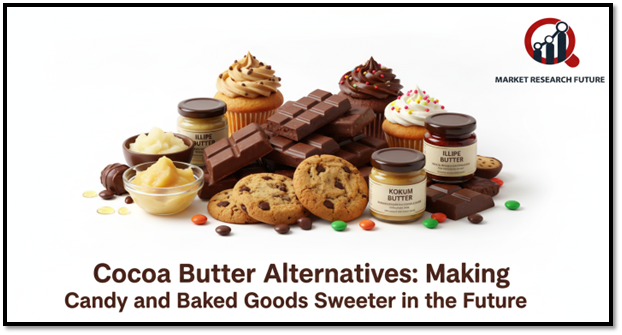
Trends and Outlook for the Global Cocoa Butter Alternatives Market
The confectionery and bakery industries are looking into cocoa butter alternatives because cocoa butter prices are going up, and people want healthier, cheaper options. Alternatives are now being used in a lot of products instead of cocoa butter, which is known for giving chocolate its smooth texture and shiny finish. There are three main types of these alternatives: cocoa butter equivalents (CBEs), cocoa butter substitutes (CBSs), and cocoa butter replacers (CBRs). There are both lauric and non-lauric vegetable fats that can be used instead of cocoa butter. These fats have the same physical and chemical properties as cocoa butter, so they can be used in chocolate and other related products.
The Rise of Cocoa Butter Alternatives around the World
As manufacturers look for cheap alternatives to cocoa butter that don't lower the quality of their products, the demand for these alternatives has steadily grown around the world. Europe is still a big market because people there eat a lot of chocolate, but strict rules about how much vegetable fat can be used affect the industry. North America is still the most important region, thanks to the growing chocolate and bakery industries. Canada is also becoming a major player in the market for alternative cocoa butter. The Asia-Pacific region is growing quickly because countries like India and Malaysia are able to make more cocoa butter alternatives, which are used in baked goods and candy.
Different kinds of cocoa butter alternatives and how to use them
Cocoa butter equivalents (CBEs) are fats that don't have lauric acid and can be mixed with cocoa butter in any amount without changing the taste or texture of the chocolate. CBEs can be broken down into cocoa butter extenders (CBEXs) and cocoa butter improvers (CBIs). This gives manufacturers more options when making products. Hydrogenated fractions of oils like palm, soybean, cottonseed, corn, and sunflower oil are often used as cocoa butter replacers (CBRs). They are a cheap way to replace cocoa butter. Cocoa butter substitutes (CBSs) are made from palm kernel or coconut oil that has been fractionated and hydrogenated. They are high in lauric acid and myristic acid. CBSs are better for candy because they need a firmer texture and to stay stable when heated.
How North America Affects Market Growth
North America has become an important force in the cocoa butter alternatives market. The growth of the chocolate and bakery industries has increased the need for CBEs, especially those made with shea butter, which has a higher melting point and a firmer texture than cocoa butter. More and more, chocolate and candy makers are using shea and other exotic fats to make high-quality products while keeping costs down. Canada, in particular, has become a hot spot for the use of cocoa butter substitutes in the bakery and candy industries.
Analysts' Market Insights
Chocolate products usually have about 20% cocoa butter in them, so companies in Europe and Asia are looking for partial replacements to lower costs without lowering quality. The price of cocoa, regional rules, and the availability of rare fats all affect cocoa butter alternatives. Turkey, Malaysia, and Russia are increasing their processing capacities for CBEs, while West Africa and Southeast Asia are important sources of raw materials like shea butter. India focuses on sal, kokum, and mango kernel sources, while Indonesia and Malaysia provide illipe and palm kernel stearin. Africa is a major supplier of shea nuts. This variety of sources makes sure that cocoa butter alternatives are always available to manufacturers around the world.
Opportunities in the bakery and candy industries
The bakery and candy markets are getting bigger, which is opening up new markets for cocoa butter substitutes. CBEs and CBSs are flexible enough for manufacturers to make chocolate and candy that tastes, feels, and looks good to customers. Also, companies can save money and deal with changes in cocoa prices by being able to replace some of the cocoa butter with these other ingredients.
What Will Happen to Cocoa Butter Alternatives
The cocoa butter alternatives market is likely to keep growing because people want high-quality chocolates and baked goods at low prices. Investing in new ways to process things, finding new sources of exotic fats, and following the rules will all help this industry come up with new ideas. Cocoa butter alternatives are becoming more popular in both the candy and bakery industries. They are shaping the future of the global chocolate and baked goods industry and are now an important part of modern food manufacturing.