Advanced Software Integration Is Transforming Cardiovascular Diagnostics
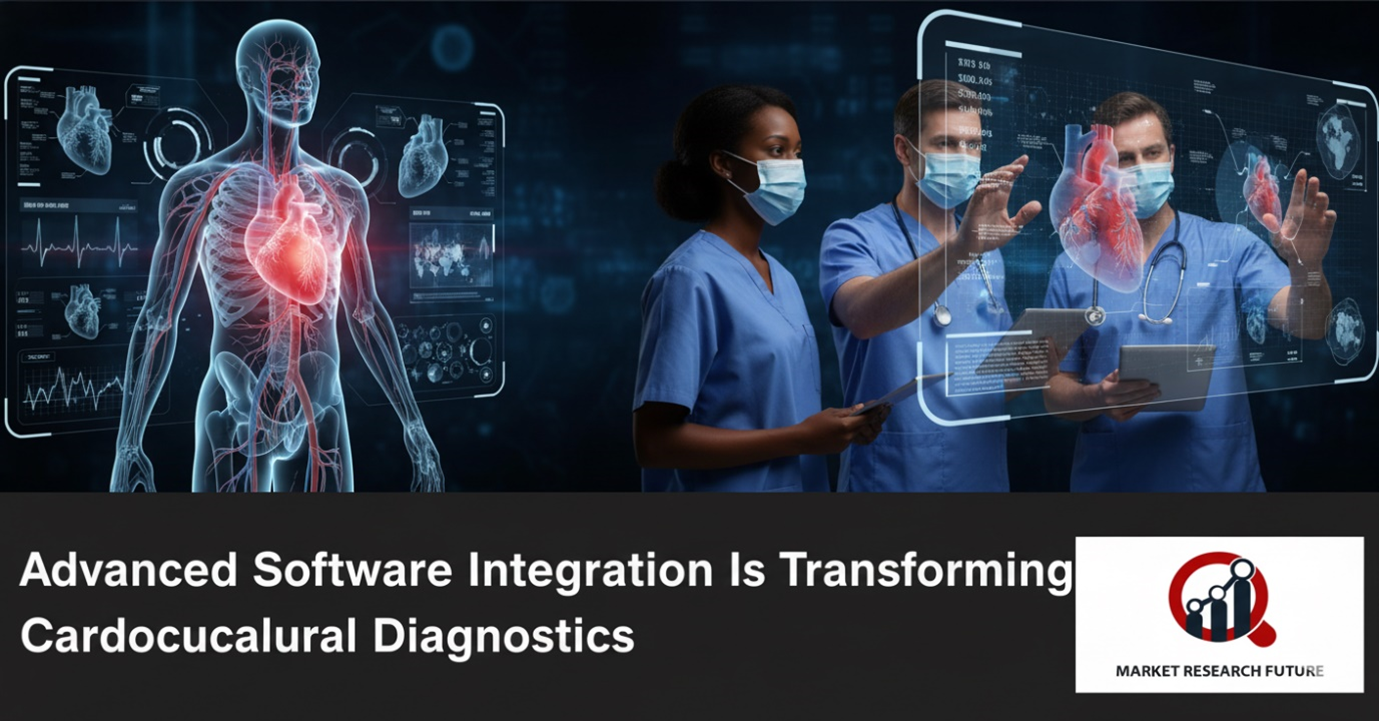
In the last ten years, the field of cardiovascular diagnostics and imaging has changed dramatically. Rather than solely manual interpretation of images, static images, and device-based workflows, diagnostics is increasingly using dynamic software. Central to this change is the concept of advanced integration: the unifying of different imaging modalities, AI and Machine Learning, computational modeling, and interoperable systems to speed up, automate, and enhance diagnosis and intervention planning.
Developing Software and Imaging Technology for Cardiovascular Care
Imaging will always be central to cardiovascular diagnostics, whether it be echocardiography, nuclear imaging, or more modern MRI and CT scans. However, the imaging software is only the second component. It is the software that processes the basic imaging data to pull clinical insights. Today, and for some time now, radiologists and cardiologists, imaging specialists, do a lot more than just “read scans.". They are:
- Plan the use of new algorithmic tools.
- Work with device manufacturers and software developers.
- Ensure consistency, reproducibility, and early detection.
- Tie imaging results into wider clinical and workflow systems.
In essence, the role has changed from being solely a diagnostician to an orchestrator of integrated systems.
Understanding the Reasons and Needs for Integration
- Cardiovascular burden, Imaging demand and pressure on throughput and consistency a functions of increases in aged populations, sedentary lifestyles, and metabolic diseases cardiovascular diseases.
- Complex disease Phenotype: Simple structural imaging is far from enough, and software needs to interpret multiscale functioning, tissue, and perfusion for ischemia, microvascular disease, fibrotic remodeling, and valve diseases.
- Interventional Planning Demands: TAVR and MitraClip heart procedures demand sophisticated software for precise modeling of anatomy, dynamics, and interaction of implanted devices.
- Efficiency and Throughput: Automation for segmentation, quantification, and report generation is crucial to relieve service providers of burnout and control spiraling costs.
- Software integration means imaging no longer takes static snapshots, but supports a continuous decision-making process. Key Use Cases and Advancements Pioneered by Software
Some advancements software has made specific to technology diagnosing hearts are outlined below:
Artificial Intelligence and Deep Learning
- A lot of echocardiographers use systems that automate segmentation, chamber quantity determination, wall-motion abnormalities detection, and diagnostic valvular disease assessment, as almost instant echocardiograms become available.
- When assessing plaques, AI identifies, detects, and automatically scores coronary calcium plaques with up to 96% accuracy.
- AI systems also automatically segment and characterize cardiac MRI tissues, and categorize tissues as fibrosis and scar, achieving scores as high as 0.90 or more in validations.
- New applications, such as the web platform IntelliCardiac, automate segmentation and disease classification with up to 98% accuracy in plaques and cardiomyopathy.
- AI brings the time cardiologists spend on diagnosis to seconds instead of minutes. It also reduces variability in diagnosis, allowing medical professionals to focus on big decisions.
Computational Modeling & Simulation
- Innovations like finite element analysis, fluid–structure interaction, and computational fluid dynamics are becoming highly impactful in planning and customizing structural heart procedures for TAVR, mitral interventions, and LAA occlusion.
- Using imaging data for patients, Simulation imaging technologies predict device complications, tissue interaction, and complications, including paravalvular leak, and predict optimal device placement.
- Evolution of such models is becoming “digital twins” or live simulators capable of real-time adaptations and offering interactive preoperative rehearsal of surgical plans.
Multimodal & Extended Integration
- New imaging technologies are combining multiple modalities such as echo, CT, MRI, and perfusion to create a singular construct of a patient’s anatomy, biological function, tissue and hemodynamics.
- New technologies are facilitating surgical planning, allowing visualization to extend to 3D printing, virtual reality (VR), and mixed-reality holograms to assist surgeons and interventionalists to “see inside” the patient.
- Emerging standards such as PRIME 2.0 provide cross-imaging systems checklists and standardized protocols to encourage modular, scalable integration.
- Addressing data privacy, bias, and regulations, federated learning, human-in-the-loop systems, and explainable AI are in the limelight.