Calcium Propionate: The Affordable Ingredient Powering Market Growth
Calcium Propionate Market Overview
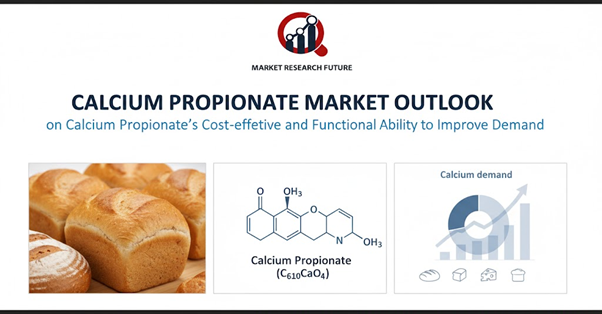
To cater to the growing consumer concerns for healthy food, the demand for calcium propionate is increasing, fueling the valuation of the global calcium propionate market from USD 360 million in 2024, which is expected to reach USD 610 million by 2035. This progress will occur at a steady CAGR of 4.88% through 2035.
Consumers have become increasingly aware of the importance of health in recent years. With the rising demand for nutritional products, the calcium propionate market is expected to grow at a significant pace.
The growing preference for natural and organic foods over artificial alternatives has further increased the need for calcium propionate. Known for its safety in consumption, calcium propionate is widely used as a natural component in the food industry.
The food sector continues to adopt advanced technologies such as Modified Atmosphere Packaging (MAP), bacteriophages, and various preservation methods to ensure food safety and quality. In addition to its use in food processing, calcium propionate also serves as an important additive in animal feed.
The market’s growth is primarily driven by its rising adoption as a food preservative, thanks to its affordability compared to alternatives such as sorbates and sulfites. These factors collectively contribute to the steady expansion of the calcium propionate market.
The demand for calcium propionate is rapidly increasing due to its unique applications in baked goods, dairy products, and animal feed.
As a cost-effective organic salt (E282), calcium propionate plays a key role in extending the shelf life of numerous food products. The market is further supported by rising health consciousness and evolving consumer lifestyles.
Increasing Vegan Population Boosts Calcium Propionate Demand
Owing to its high calcium content, calcium propionate not only preserves food but also helps maintain its nutritional value. With the growing popularity of veganism and plant-based diets, consumers are increasingly turning to calcium propionate, as it is considered a vegan-friendly ingredient.
For example, natural calcium propionic acid is found in Swiss cheese, and its commercial counterpart is manufactured to be suitable for vegan consumption.
In addition to its food applications, calcium propionate is gaining traction among livestock farmers. The global demand for animal feed continues to rise with the expansion of the livestock industry, driving the market further.
Calcium propionate enhances the nutritional value of feed, inhibits mold growth, and improves feed digestibility, thereby supporting overall animal health. It also serves as an additional source of energy and calcium, helping reduce issues such as milk fever in dairy cows.
The Asia-Pacific region, led by India and Brazil, accounts for a significant share of the global calcium propionate market, supported by large-scale livestock production and growing agricultural activities.
Impact of COVID-19
Calcium propionate plays a key role as an antimicrobial agent in products such as bread, processed meats, dairy items, and baked goods. It helps eliminate harmful microorganisms, including bacteria and fungi, which has strengthened its demand across the food processing and animal nutrition sectors.
However, the COVID-19 pandemic significantly disrupted the global supply chain and affected food consumption patterns. Lockdowns, border restrictions, and economic uncertainties led to reduced meat consumption and trade delays.
These factors temporarily influenced the market’s growth trajectory, although the long-term outlook remains positive as the food and feed industries rebound.
Recent Developments
In September 2025, Kemin Industries highlighted its latest bakery solutions at IBIE 2025, including the launch of SHIELD Pure. This clean-label mold inhibitor is designed to extend the shelf life of breads, baked goods, and more, providing a natural alternative to synthetic preservatives.
In January 2024, Perstorp, a leading producer of propionic acid, a key raw material for calcium propionate, announced a strategic collaboration with DSM to develop a bio-based production process for propionic acid. This partnership aims to reduce the environmental footprint of calcium propionate synthesis by shifting away from fossil-based inputs toward more sustainable, renewable alternatives.
In April 2024, Sunson launched NaturalGARD cultured wheat flour, a natural and effective way to preserve baked goods. This product can be labeled as cultured wheat or fermented wheat flour, aligning with clean-label trends and offering an alternative to synthetic preservatives like calcium propionate.