Arterial Blood Collection Devices Market-Growth, Segmentation, and Impact
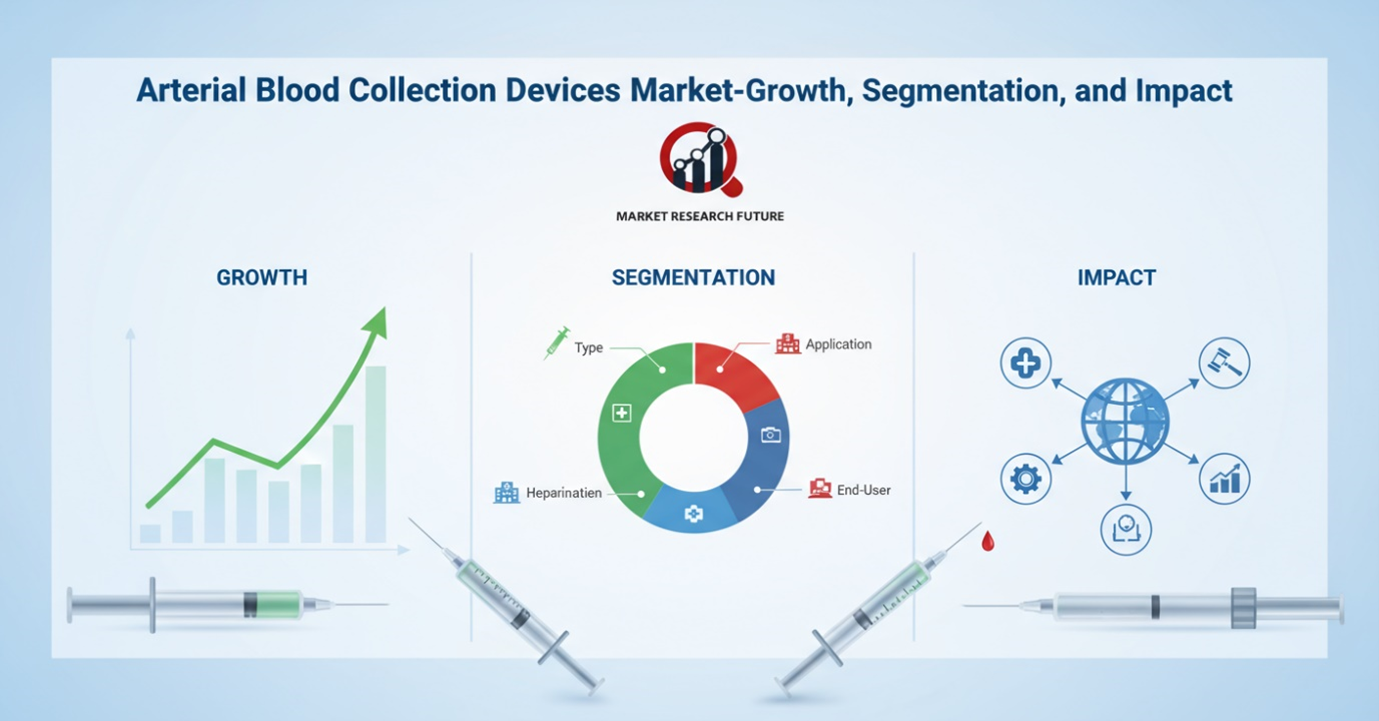
The arterial blood collection devices market is gaining noteworthy momentum as hospitals, intensive care units, and emergency departments increasingly prioritize rapid, accurate blood-gas analysis for critically ill patients. These devices — including arterial blood gas (ABG) syringes, closed arterial sampling systems, needleless connectors, and collection accessories — are critical frontline diagnostic tools for respiratory, metabolic, and hemodynamic management. Rising chronic disease prevalence, ICU expansion, and stronger institutional focus on safety are key growth drivers.
Arterial Blood Collection Devices Market Market Outlook
Analysts project steady mid-single-digit CAGR growth, driven by chronic disease burdens, ICU expansion, and wider POCT adoption. Regional variations will persist, with developed markets prioritizing safety features and emerging markets focusing on affordability. Manufacturers that align innovation with reimbursement and training support are best positioned to scale adoption globally.
Arterial Blood Collection Devices Market Segmentation
The market divides into ABG syringes and needles, closed arterial sampling systems, and ancillary disposables such as heparinized caps and pressure transducer kits. Closed systems are expanding fastest due to their ability to reduce needlestick injuries and contamination, aligning with stricter safety guidelines.
Hospitals and critical care units dominate demand, followed by emergency departments, ambulatory surgery centers, and blood banks. Each setting requires reliable arterial sampling to ensure rapid diagnostics and safe handling.
Regional Insights for Arterial Blood Collection Devices Market
North America and Western Europe lead adoption thanks to established reimbursement frameworks and higher ICU density. However, Asia-Pacific and Latin America are seeing faster growth, fueled by infrastructure development and rising demand for modern diagnostics. Regional procurement policies and supply chain dynamics influence adoption rates.
Technological Advancements Leading the Arterial Blood Collection Devices Market
Innovation is reshaping arterial sampling with integrated closed systems, pre-heparinized syringes, and automated modules that minimize human error. Connectivity features now transmit results directly into electronic health records, improving workflow efficiency. The rise of point-of-care testing (POCT) and telemedicine further accelerates demand for compact, safe, and interoperable collection devices.
Arterial Blood Collection Devices Market Drivers
The arterial blood collection devices market is experiencing steady growth due to several key drivers. Rising incidences of chronic respiratory and cardiovascular diseases have increased demand for accurate arterial blood analysis. Expanding ICU and emergency care capacity further fuels adoption. Additionally, the growing focus on infection control, clinician safety, and the integration of point-of-care testing solutions are accelerating the uptake of advanced, closed-system devices across both developed and emerging healthcare markets.
Common Challenges of the Arterial Blood Collection Devices Market
The arterial blood collection devices market faces notable challenges despite its growth potential. High costs of advanced closed systems limit adoption in resource-constrained settings, while training requirements and lack of standardized protocols create operational barriers—complex procurement processes and varying regional regulatory frameworks further slow market entry. Additionally, limited access to compatible analyzers in rural facilities and price sensitivity in developing markets hinder uniform adoption of innovative arterial blood collection solutions.
Clinical and Operational Impact of Arterial Blood Collection Devices Market
The adoption of safer, closed arterial collection systems reduces occupational risks while improving laboratory accuracy. Faster ABG testing at the point of care shortens treatment response times in conditions like sepsis and respiratory distress. Operationally, streamlined workflows and reduced repeat sampling lower costs and improve efficiency. Integration with analyzer systems and training programs is critical for maximizing impact.
Conclusion
As arterial blood collection devices evolve, the market will reward solutions that combine safety, efficiency, and integration. Closed sampling systems, single-use syringes, and analyzer connectivity reduce clinical risks and speed interventions, but broader adoption hinges on affordability, training, and reimbursement. Companies delivering cost-effective, interoperable devices alongside robust post-market support will drive widespread adoption, improve patient outcomes, and demonstrate clear value to both providers and payers in diverse healthcare environments.