Amblyopia Market: Innovations, Mergers, and the Future of Eye Care
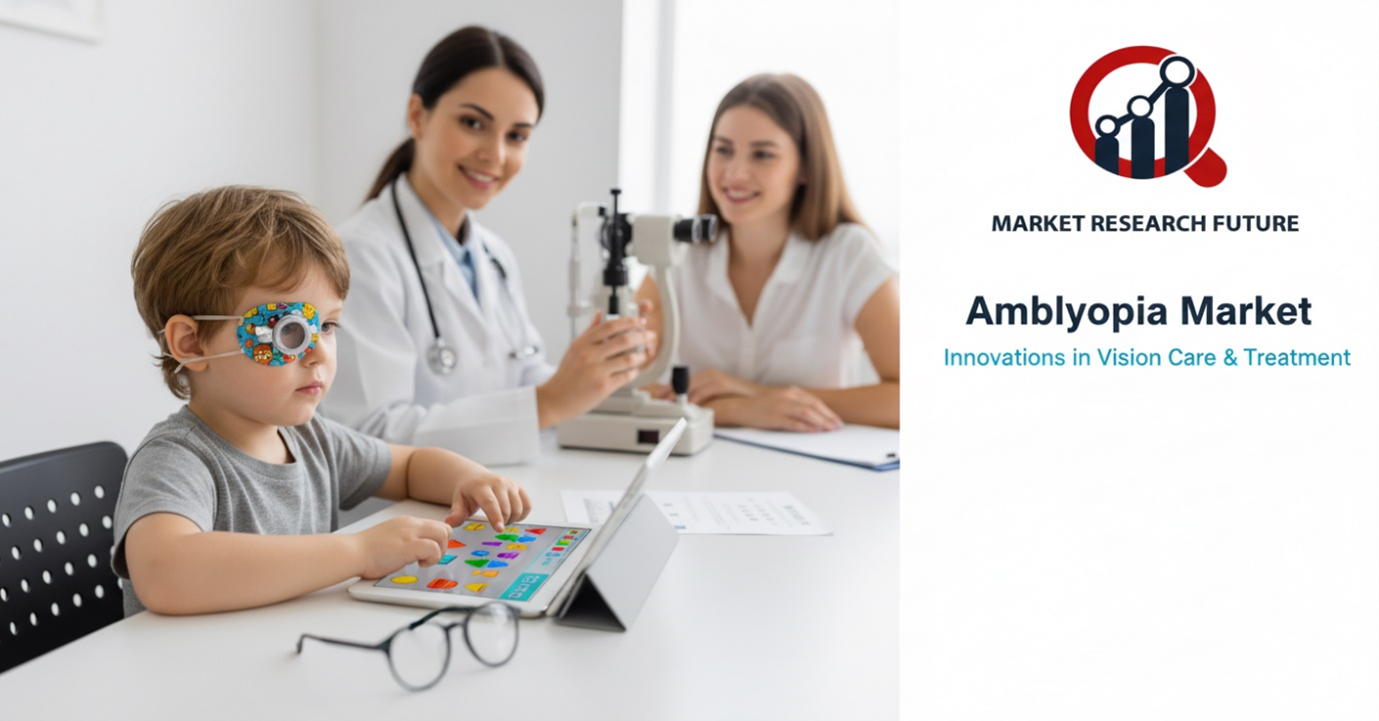
In recent years, the amblyopia market has undergone strong growth, and this upward trend is expected to continue. One of the major drivers of this expansion is the growth of cutting-edge and technologically complex treatment solutions. Vivid Vision, Inc. and Amblyotech, Inc. are market leaders using video game and virtual reality-based therapies to enhance binocular vision and maximize visual acuity. Similarly, Good-Lite Co. is modernizing approaches with the Eyetronix Flicker Glass, which replaces conventional patching and atropine treatments. Patches designed by Krafty Eye Patches and Fresnel Prism and Lens Co. dedicate themselves to constructive, rather than deleterious, goals by offering colorful designs to replace boring, monochrome eye patches that add to the psychological burden of young patients suffering from amblyopia.
Funding, Research, and Preventive Programs
The Amblyopia market has equally grown due to increasing public and private-funded eye health programs. New allocations and increased investment in research are equally spurring innovation in ophthalmic health care. For example, a report from the UK Statistics Authority stated that there were approximately 121,736 eye tests conducted under the Eye Health Examinations Wales (EHEW) scheme and the NHS funded more than 769,000 optical sight tests in 2016. These programs illustrate the emphasis on research, early diagnosis, and prevention programs, which therefore provide a good environment for market growth.
Increasing Incidence of Amblyopia
The incidence of amblyopia is increasing at a worrying rate, further fueled by lifestyle changes and the growing incidence of eye conditions such as cataracts, glaucoma, and macular degeneration. In North America, especially the United States and Canada, the demand for amblyopia is treatment is growing rapidly. Although there are still some cases that are responsive to drug-based treatment, surgical treatment, in recent times, has become more popular, albeit in some cases, the treatment mix becomes unbalanced.
Mergers, Acquisitions, and Collaborations
Mergers and acquisitions have been important in changing the competitive landscape. The many advancements in the United States most likely come from the great advancements in the American healthcare system, extensive healthcare expenditures, and access to high-end technology. Even so, factors like the saturated market, side effects from the treatments, and continually changing reimbursement policies have posed challenges to the success.
Leaders in many industries have reacted to these conditions by making developments in order to improve their portfolios. For example:
- In June 2025, Sydnexis secured a European Medicines Agency approval for SYD-101, an atropine formulation for pediatric myopia, also the first one for the myopia progression control market in Europe. This approval sets regulatory ignores for atropine-based therapies while also allowing Sydnexis to gain a strong dominant position in the expanding myopia control market.
- In June 2025, Santen Pharmaceutical also received the European Medicines Agency approval for Ryjunea, furthering the company's myopia management and pediatric right eye ownership. This approval shows Santen's strategic focus on eye care and pediatric ophthalmology, along with a strong base for expansion.
These types of developments allow global players to expand and gain dominance in critical markets. Collaboration remains another important strategy for growth. For example, Ubisoft partnered with Amblyotech to develop the video game Dig Rush, where the player engages with patented therapy for amblyopia, integrating fun with useful therapy.
What Does the Future Hold?
The outlook for managing amblyopia remains positive, especially in the U.S., where the prevalence of eye care conditions is on the rise. Driven by the widely available, cheap solutions in the market, combined with a plethora of new, innovative healthcare products, the demand is plentiful. The ‘oldies’ in the market are being forced to innovate since new entrants in the last few years have intensified competition. New entrants have to worry about competition, but in terms of growing focus on non-invasive, patient-friendly therapies combined with technological innovations, steady growth in the market is a given.