×
Request Free Sample ×

Kindly complete the form below to receive a free sample of this Report

* Please use a valid business email

Leading companies partner with us for data-driven Insights

clients tt-cursor
Hero Background
English
Chinese
French
Japanese
Korean
German
Spanish

Yeast Infection Market Size

ID: MRFR/Pharma/2884-HCR
203 Pages
Kinjoll Dey
October 2025

Yeast Infection Market Research Report Information By Pathogen (Candida Albicans, Candida Glabrata, Candida Rugosa, Others), By Types (Vaginal Yeast Infection, Skin Yeast Infection, Throat Yeast Infection, Others), By Treatment (Drug Treatments, Surgery), By End Users (Hospital, Clinics, Ambulatory Centers) - Forecast Till 2035

Share:
Download PDF ×

We do not share your information with anyone. However, we may send you emails based on your report interest from time to time. You may contact us at any time to opt-out.

Yeast Infection Market Infographic
×
Yeast Infection Market Infographic Full View
Purchase Options

Yeast Infection Size

Yeast Infection Market Growth Projections and Opportunities

Yeast disease treatment market is dependent on many factors, which altogether mold its dynamics. The rise of yeast infections as a significant determinant has been noted in the recent past. This is also compounded by changing lifestyles and hygiene practices that have been influenced by increased awareness of these conditions. Additionally, age and gender demographics are critical, with women being more prone to yeast infection while an aging population tends to suffer from it more often.

Pharmaneutical and healthcare industry’s research and development activities also influences the market for yeast infection treatments. The advancement of medical science in terms of introduction of improved innovative response mechanisms drives market growth. Moreover, regulatory factors are crucial because health authorities’ approval and endorsement for new treatments create consumer confidence hence expanding markets. Furthermore, there are strict regulations regarding safety and effectiveness which ensures that only reliable products are allowed into the market.

Economic factors such as healthcare expenditure and disposable income levels contribute to the market's growth. On one side, higher investments in healthcare give access to advanced therapies leading to rising demand for blood substitutes. In addition, consumers' purchasing power is important because affordability and accessibility play a key role in people seeking treatment for infections like this one. Similarly, insurance coverage as well as reimbursement policies shape patients' choice hence influencing overall demand for cures related to vaginitis.

The Pharmaceutical companies’ and research institutions’ actions help shape competitive landscape in yeast infection treatment market. Investment in R&D (Research & Development) together with strategic alliances affect availability as well as different types or varieties of therapeutic options (Muller et al., 2016). There is a continuous search for innovative ideas through branding strategy initiatives which leads to high degree competition among industry participants. Companies can drastically change their competitive position within the sector due to mergers or acquisitions’ effects.

Technological advancements in diagnostic tools & treatment methodologies drive yeast infection treatment market improvement continuously. Application of technology enhances precision and efficiency during diagnosis that ensures more focused and better treatment plans. Telemedicine plus digital health platforms also extend access to healthcare services thereby impacting the market’s extension and growth prospects.

Awareness by consumers and educational programs are key market factors. This increased information enables people to seek timely care for yeast infections. The condition can be better marketed in the market because of awareness campaigns from health organizations and pharmaceutical companies as well as fighting off stigmatization that comes with seeking treatment.

Furthermore, there are global factors like pandemics and outbreaks of infectious diseases that can affect the yeast infection treatment market. Even in times of health crises, changes in priorities in healthcare sector, resource allocation, or preferences for treatments cause shifts in market dynamics. For instance, COVID-19 pandemic has emphasized the significance of medical infrastructure and interconnectedness between different regions’ health systems.”
Yeast Infection Market Size Graph
Author
Kinjoll Dey
Research Analyst Level I

He is an extremely curious individual currently working in Healthcare and Medical Devices Domain. Kinjoll is comfortably versed in data centric research backed by healthcare educational background. He leverages extensive data mining and analytics tools such as Primary and Secondary Research, Statistical Analysis, Machine Learning, Data Modelling. His key role also involves Technical Sales Support, Client Interaction and Project management within the Healthcare team. Lastly, he showcases extensive affinity towards learning new skills and remain fascinated in implementing them.

Leave a Comment

FAQs

What is the projected CAGR for the Yeast Infection Market for the forecast period (2022-2030)?

The projected CAGR is 6.5% for the forecast period (2022-2032).

Who are the key players in the Yeast Infection Market?

The players are Synmedic Laboratories (India), Scynexis (US), Astellas (Japan), Bayer AG (Germany), Merck & Co., Inc. (US), Abbott (US), Mentis Pharma Ltd. (India), Sanofi (France), Novartis AG (Switzerland), Pfizer Inc. (US), AstraZeneca (UK), ALLERGAN (Ireland), and others.

What are the end users in the Yeast Infection Market?

Yeast Infection Market end users are Hospital, Clinics, Ambulatory Centers.

What are the types discussed in the Yeast Infection Market?

Yeast Infection Market has types like a skin yeast infection, throat yeast infection, vaginal yeast infection, and others.

Which region would lead to the global Yeast Infection Market?

Americas would lead the Yeast Infection Market.

Market Summary

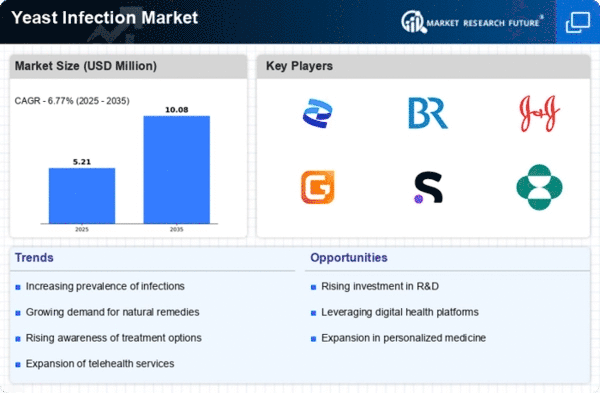
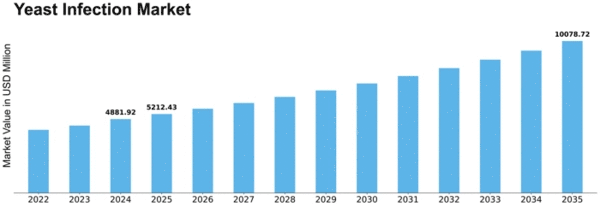
As per MRFR analysis, the Yeast Infection Market Size was estimated at 4.88 USD Million in 2024. The Yeast Infection industry is projected to grow from 5.27 USD Million in 2025 to 10.08 USD Million by 2035, exhibiting a compound annual growth rate (CAGR) of 6.77 during the forecast period 2025 - 2035.

Key Market Trends & Highlights

The yeast infection market is experiencing a dynamic shift towards more accessible and diverse treatment options.

  • The rise of over-the-counter treatments is reshaping consumer access to yeast infection remedies, particularly in North America.
  • Preference for natural remedies is gaining traction, especially among consumers in the Asia-Pacific region.
  • Telemedicine is influencing the way patients seek treatment, enhancing convenience and accessibility.
  • Increasing awareness of yeast infections and advancements in treatment options are driving growth, particularly in the topical antifungal segment and hospital settings.

Market Size & Forecast

2024 Market Size 4.88 (USD Million)
2035 Market Size 10.08 (USD Million)
CAGR (2025 - 2035) 6.77%
Largest Regional Market Share in 2024 North America

Major Players

<p>Pfizer (US), Bayer (DE), Johnson & Johnson (US), GSK (GB), Sanofi (FR), Merck & Co. (US), AbbVie (US), Astellas Pharma (JP), Novartis (CH)</p>

Market Trends

The Yeast Infection Market is currently experiencing notable transformations driven by various factors. Increased awareness regarding women's health issues has led to a rise in demand for effective treatment options. This heightened consciousness is reflected in the growing preference for over-the-counter medications, which offer convenience and accessibility. Furthermore, the market is witnessing a shift towards natural and organic remedies, as consumers become more discerning about the ingredients in their healthcare products. This trend suggests a potential for innovation in product formulations that align with consumer preferences for holistic health solutions. In addition, the Yeast Infection Market is influenced by advancements in technology, particularly in telemedicine and e-commerce. The ability to consult healthcare professionals remotely has made it easier for individuals to seek advice and treatment for yeast infections. This shift not only enhances patient convenience but also expands the reach of healthcare providers. As a result, the market is likely to see an increase in online sales of antifungal treatments and related products, catering to a more digitally savvy consumer base. Overall, the Yeast Infection Market appears poised for growth, driven by evolving consumer behaviors and technological advancements.

Rise of Over-the-Counter Treatments

The Yeast Infection Market is witnessing a significant increase in the demand for over-the-counter treatments. This trend is largely attributed to the growing awareness among consumers regarding self-diagnosis and treatment options. Patients are increasingly opting for accessible solutions that can be obtained without a prescription, reflecting a shift towards convenience in healthcare.

Preference for Natural Remedies

There is a noticeable trend towards the use of natural and organic remedies within the Yeast Infection Market. Consumers are becoming more health-conscious and are seeking products that align with their values regarding sustainability and holistic health. This shift indicates a potential for brands to innovate and develop formulations that cater to this growing demand.

Impact of Telemedicine

The integration of telemedicine into healthcare is reshaping the Yeast Infection Market. Patients are now able to consult healthcare professionals remotely, which enhances accessibility to treatment options. This trend not only facilitates timely medical advice but also encourages the growth of online sales for antifungal products, as consumers increasingly prefer digital solutions.

Yeast Infection Market Market Drivers

Market Growth Projections

The Global Yeast Infection Market Industry is projected to experience substantial growth over the coming years. With a market value of 5.14 USD Billion in 2024, it is anticipated to reach 8.82 USD Billion by 2035, reflecting a CAGR of 5.02% from 2025 to 2035. This growth trajectory indicates a robust demand for effective treatment options and highlights the importance of addressing yeast infections as a public health concern.

Impact of Lifestyle Changes

Lifestyle changes, including diet and hygiene practices, are impacting the Global Yeast Infection Market Industry. Increased consumption of processed foods and sugars can lead to an imbalance in the body's natural flora, making individuals more susceptible to yeast infections. Furthermore, changes in personal hygiene practices, such as the use of scented products, may exacerbate the issue. As awareness of these factors grows, there is a corresponding increase in demand for preventive measures and treatments, thereby driving market growth.

Growing Awareness and Education

There is a notable increase in awareness and education regarding yeast infections, which significantly impacts the Global Yeast Infection Market Industry. Campaigns aimed at educating the public about symptoms, causes, and treatment options are becoming more prevalent. This heightened awareness encourages individuals to seek medical advice and treatment, thereby driving market growth. As more people understand the importance of addressing yeast infections, the market is projected to grow at a CAGR of 5.02% from 2025 to 2035, reaching an estimated 8.82 USD Billion by 2035.

Advancements in Treatment Options

Innovations in treatment options for yeast infections are propelling the Global Yeast Infection Market Industry forward. The development of new antifungal medications, including topical and oral treatments, enhances patient outcomes and satisfaction. Additionally, the introduction of over-the-counter products allows for greater accessibility and convenience for consumers. These advancements not only improve treatment efficacy but also expand the market by attracting a broader consumer base. As a result, the market is experiencing robust growth, reflecting the ongoing demand for effective solutions.

Increase in Self-Medication Trends

The trend of self-medication is becoming increasingly prevalent, influencing the Global Yeast Infection Market Industry. Many individuals prefer to manage mild yeast infections with over-the-counter treatments rather than consulting healthcare professionals. This shift towards self-care is driven by the desire for convenience and immediate relief. Consequently, the market is witnessing a surge in the availability of antifungal products in pharmacies and online platforms. This trend is expected to contribute significantly to market growth, as more consumers opt for accessible treatment options.

Rising Prevalence of Yeast Infections

The increasing incidence of yeast infections globally is a primary driver of the Global Yeast Infection Market Industry. Factors such as antibiotic use, hormonal changes, and lifestyle choices contribute to this rise. For instance, it is estimated that approximately 75% of women will experience at least one yeast infection in their lifetime. This growing prevalence is expected to push the market value to 5.14 USD Billion in 2024, as healthcare providers and patients seek effective treatments and preventive measures.

Market Segment Insights

By Application: Topical Antifungal (Largest) vs. Oral Antifungal (Fastest-Growing)

<p>The Yeast Infection Market showcases a diverse application segment where Topical Antifungal products lead in market share, benefiting from their direct application and effectiveness in treating localized infections. Oral Antifungal products follow closely, offering convenience and systemic treatment, but are gaining traction due to increasing awareness and demand for these solutions among healthcare providers and patients alike. Vaginal Antifungal therapies and Combination Therapies also contribute to the market, reflecting varied consumer preferences and needs.</p>

<p>Topical Antifungal (Dominant) vs. Combination Therapy (Emerging)</p>

<p>Topical Antifungal products are the dominant force in the Yeast Infection Market, recognized for their effectiveness in localized treatment and user-friendly application methods. These products include creams, ointments, and lotions that are preferred by consumers for their targeted action and swift relief from symptoms. In contrast, Combination Therapy represents an emerging trend, integrating multiple active ingredients to combat yeast infections more efficiently. This approach appeals to patients seeking comprehensive solutions and is expected to grow as research progresses and healthcare recommendations evolve.</p>

By End Use: Hospitals (Largest) vs. Clinics (Fastest-Growing)

<p>In the Yeast Infection Market, the distribution of end-use segments shows a significant preference for hospitals, which dominate the market share due to their capability to provide advanced medical care and treatment options. With a larger patient influx and specialized services, hospitals are key players and heavily relied upon for managing complex yeast infection cases. Conversely, clinics are emerging rapidly, capturing a notable portion of the market as they offer more accessible treatment options for mild to moderate infections, catering to a growing patient base seeking convenience.</p>

<p>Hospitals (Dominant) vs. Clinics (Emerging)</p>

<p>Hospitals play a dominant role in the Yeast Infection Market, characterized by their extensive resources and specialized medical services, which allow them to manage severe cases effectively. They have established protocols for infection control and treatment, thus fostering patient trust and reliance. On the other hand, clinics represent an emerging segment, appealing to patients looking for quicker and less intensive treatment options. Their growth is supported by the increasing prevalence of yeast infections and the trend toward more personalized healthcare services that prioritize patient convenience and accessibility. Both segments reflect the diversified needs of patients and the evolving landscape of healthcare delivery.</p>

By Distribution Channel: Online Retail (Largest) vs. Pharmacy Retail (Fastest-Growing)

<p>In the Yeast Infection Market, distribution channels play a pivotal role in the accessibility and visibility of treatment options. Online Retail holds the largest market share, driven by increased consumer preference for the convenience of online shopping, alongside a wide range of product offerings. This modality not only caters to global consumers but also facilitates discreet purchasing, which is particularly significant in the context of yeast infections. In contrast, Pharmacy Retail, while currently smaller, is experiencing rapid growth. The rise of personalized service and OTC product availability in pharmacies is attracting more consumers seeking immediate solutions.</p>

<p>Online Retail (Dominant) vs. Direct Sales (Emerging)</p>

<p>Online Retail is dominating the Yeast Infection Market due to its unparalleled convenience and extensive range of products. Consumers can access a variety of treatments from various brands, ensuring they find the right solution for their needs. The anonymity offered by online purchases appeals to individuals who may feel embarrassed about purchasing yeast infection treatments in person. On the other hand, Direct Sales are an emerging channel that leverages personal connections to educate consumers about treatments while offering personalized product recommendations. This channel is gaining traction, especially among health advocates and community marketers who foster trust and provide tailored advice, appealing to a segment of consumers seeking more interactive purchasing experiences.</p>

By Demographics: Age Group (Largest) vs. Gender (Fastest-Growing)

<p>In the yeast infection market, the age group segment reveals that women aged 30-50 represent the largest portion of consumers, capturing a significant share of the market. This demographic often faces hormonal changes and increased susceptibilities to infections, driving their consumption of yeast infection treatments. In contrast, younger women aged 18-29 are emerging as a vital demographic, showcasing rapid growth in user engagement, reflecting a more proactive approach to health and hygiene. Analysis indicates that the market for yeast infection treatments is being significantly influenced by trends such as increased health awareness among younger women and rising incidences of yeast infections across various age groups. Additionally, educational outreach regarding feminine health and hygiene practices is fostering a shift in purchasing patterns, leading to enhanced demand from demographics that were previously less involved in preventative care and treatment options.</p>

<p>Age Group: 30-50 (Dominant) vs. 18-29 (Emerging)</p>

<p>The dominant age group in the yeast infection market is women aged 30-50, who face various hormonal changes that predispose them to yeast infections. This group tends to seek products that cater to their specific needs, such as those offering relief from symptoms, supporting reproductive health, and promoting overall wellness. Marketing strategies targeting this demographic often highlight the importance of maintaining vaginal health. Conversely, the emerging group of women aged 18-29 is becoming increasingly aware of their health and wellness, seeking preventive options. This younger demographic is being driven by trends of holistic health awareness, social media influence, and increased dialogue around women's health, making them a pivotal segment for growth in the yeast infection market.</p>

Get more detailed insights about Yeast Infection Market Research Report- Forecast till 2035

Regional Insights

North America : Market Leader in Innovation

North America continues to lead the yeast infection market, holding a significant share of 2.0 in 2024. The growth is driven by increasing awareness of yeast infections, advancements in treatment options, and a robust healthcare infrastructure. Regulatory support for innovative therapies and a rise in self-diagnosis are also contributing factors. The demand for antifungal medications is expected to rise as more patients seek effective treatments. The competitive landscape in North America is characterized by the presence of major players such as Pfizer, Johnson & Johnson, and Merck & Co. These companies are investing heavily in research and development to introduce new products. The U.S. remains the largest market, with Canada also showing promising growth. The focus on patient-centric solutions and digital health initiatives is expected to further enhance market dynamics.

Europe : Emerging Market with Growth Potential

Europe's yeast infection market is valued at 1.5, reflecting a growing demand for effective treatments. The rise in yeast infections, particularly among women, is driving market growth. Regulatory bodies are increasingly supporting the approval of new antifungal agents, which is expected to enhance treatment options. Additionally, public health campaigns aimed at raising awareness about yeast infections are contributing to market expansion. Leading countries in this region include Germany, France, and the UK, where key players like Bayer and GSK are actively involved. The competitive landscape is evolving, with a focus on innovative therapies and patient education. The presence of established pharmaceutical companies ensures a steady supply of effective treatments, while emerging startups are introducing novel solutions to meet patient needs.

Asia-Pacific : Rapidly Growing Market Segment

The Asia-Pacific yeast infection market, valued at 1.2, is witnessing rapid growth due to increasing awareness and rising healthcare expenditures. The region is experiencing a surge in yeast infections, driven by lifestyle changes and urbanization. Regulatory bodies are beginning to recognize the need for effective treatments, leading to a more favorable environment for market growth. The demand for over-the-counter antifungal medications is also on the rise as consumers seek accessible solutions. Countries like Japan, Australia, and India are leading the market, with key players such as Astellas Pharma and Novartis making significant investments. The competitive landscape is characterized by a mix of established companies and emerging players, focusing on innovative treatment options. The growing emphasis on women's health is expected to further boost market dynamics in this region.

Middle East and Africa : Untapped Market with Challenges

The Middle East and Africa yeast infection market is valued at 0.18, indicating significant untapped potential. The region faces challenges such as limited access to healthcare and a lack of awareness about yeast infections. However, increasing urbanization and healthcare initiatives are expected to drive market growth. Regulatory bodies are beginning to address these issues, paving the way for improved treatment options and access to medications. Countries like South Africa and the UAE are emerging as key markets, with a growing presence of pharmaceutical companies. The competitive landscape is still developing, with both local and international players looking to establish a foothold. The focus on education and awareness campaigns is crucial for driving demand and improving treatment accessibility in this region.

Key Players and Competitive Insights

The yeast infection market is characterized by a competitive landscape that is increasingly shaped by innovation, strategic partnerships, and a focus on patient-centric solutions. Key players such as Pfizer (US), Bayer (DE), and Johnson & Johnson (US) are actively engaged in enhancing their product offerings and expanding their market reach. Pfizer (US) has positioned itself as a leader in antifungal therapies, emphasizing research and development to introduce novel treatments. Bayer (DE) focuses on leveraging its extensive distribution network to ensure accessibility of its products, while Johnson & Johnson (US) is investing in digital health solutions to improve patient engagement and adherence to treatment regimens. Collectively, these strategies contribute to a dynamic competitive environment where companies are not only vying for market share but also striving to meet evolving consumer needs.

In terms of business tactics, companies are increasingly localizing manufacturing and optimizing supply chains to enhance efficiency and reduce costs. The yeast infection market appears moderately fragmented, with several players holding significant shares while others operate in niche segments. The collective influence of these key players is substantial, as they drive innovation and set industry standards, thereby shaping the overall market structure.

In November 2025, Bayer (DE) announced a strategic partnership with a leading biotechnology firm to co-develop a new class of antifungal agents. This collaboration is expected to accelerate the development of innovative treatments, potentially addressing the growing issue of antifungal resistance. The strategic importance of this partnership lies in Bayer's commitment to enhancing its product pipeline and responding to unmet medical needs in the yeast infection space.

In October 2025, Johnson & Johnson (US) launched a digital platform aimed at providing educational resources and support for patients suffering from yeast infections. This initiative reflects the company's focus on integrating technology into healthcare, thereby improving patient outcomes and fostering brand loyalty. The strategic significance of this move is underscored by the increasing demand for digital health solutions, which are becoming essential in managing chronic conditions.

In September 2025, Pfizer (US) expanded its global footprint by entering into a distribution agreement with a prominent healthcare provider in Asia. This strategic action is indicative of Pfizer's intent to tap into emerging markets, where the prevalence of yeast infections is on the rise. By enhancing its distribution capabilities, Pfizer aims to ensure that its innovative treatments reach a broader patient population, thereby solidifying its market position.

As of December 2025, current competitive trends in the yeast infection market are heavily influenced by digitalization, sustainability, and the integration of artificial intelligence (AI) in product development and patient care. Strategic alliances are increasingly shaping the landscape, allowing companies to pool resources and expertise to drive innovation. Looking ahead, competitive differentiation is likely to evolve from traditional price-based competition to a focus on technological advancements, innovative treatment options, and reliable supply chains. This shift underscores the importance of adaptability and forward-thinking strategies in maintaining a competitive edge in the market.

Key Companies in the Yeast Infection Market include

Industry Developments

  • The key players of the market are increasing the production of vaginal yeast infection drugs.  
  • The awareness about yeast infection treatment is rising in the middle and other emerging markets. 

Future Outlook

Yeast Infection Market Future Outlook

<p>The Yeast Infection Market is projected to grow at a 6.77% CAGR from 2024 to 2035, driven by increasing awareness, innovative treatments, and rising healthcare expenditure.</p>

New opportunities lie in:

  • <p>Development of personalized antifungal therapies</p>
  • <p>Expansion of telehealth services for remote consultations</p>
  • <p>Investment in probiotic-based preventive solutions</p>

<p>By 2035, the market is expected to achieve substantial growth, reflecting evolving consumer needs and advancements in treatment options.</p>

Market Segmentation

Yeast Infection Market End Use Outlook

  • Hospitals
  • Clinics
  • Homecare
  • Pharmacies

Yeast Infection Market Application Outlook

  • Topical Antifungal
  • Oral Antifungal
  • Vaginal Antifungal
  • Combination Therapy

Yeast Infection Market Demographics Outlook

  • Age Group
  • Gender
  • Income Level
  • Health Status

Yeast Infection Market Distribution Channel Outlook

  • Online Retail
  • Pharmacy Retail
  • Hospital Pharmacy
  • Direct Sales

Report Scope

MARKET SIZE 20244.88(USD Million)
MARKET SIZE 20255.27(USD Million)
MARKET SIZE 203510.08(USD Million)
COMPOUND ANNUAL GROWTH RATE (CAGR)6.77% (2024 - 2035)
REPORT COVERAGERevenue Forecast, Competitive Landscape, Growth Factors, and Trends
BASE YEAR2024
Market Forecast Period2025 - 2035
Historical Data2019 - 2024
Market Forecast UnitsUSD Million
Key Companies ProfiledPfizer (US), Bayer (DE), Johnson & Johnson (US), GSK (GB), Sanofi (FR), Merck & Co. (US), AbbVie (US), Astellas Pharma (JP), Novartis (CH)
Segments CoveredApplication, End Use, Distribution Channel, Demographics
Key Market OpportunitiesEmerging natural treatments and preventive measures drive growth in the Yeast Infection Market.
Key Market DynamicsRising consumer awareness and preference for over-the-counter treatments drive innovation in the yeast infection market.
Countries CoveredNorth America, Europe, APAC, South America, MEA

FAQs

What is the projected CAGR for the Yeast Infection Market for the forecast period (2022-2030)?

The projected CAGR is 6.5% for the forecast period (2022-2032).

Who are the key players in the Yeast Infection Market?

The players are Synmedic Laboratories (India), Scynexis (US), Astellas (Japan), Bayer AG (Germany), Merck &amp; Co., Inc. (US), Abbott (US), Mentis Pharma Ltd. (India), Sanofi (France), Novartis AG (Switzerland), Pfizer Inc. (US), AstraZeneca (UK), ALLERGAN (Ireland), and others.

What are the end users in the Yeast Infection Market?

Yeast Infection Market end users are Hospital, Clinics, Ambulatory Centers.

What are the types discussed in the Yeast Infection Market?

Yeast Infection Market has types like a skin yeast infection, throat yeast infection, vaginal yeast infection, and others.

Which region would lead to the global Yeast Infection Market?

Americas would lead the Yeast Infection Market.

  1. SECTION I: EXECUTIVE SUMMARY AND KEY HIGHLIGHTS
    1. | 1.1 EXECUTIVE SUMMARY
  2. SECTION II: SCOPING, METHODOLOGY AND MARKET STRUCTURE
    1. | 2.1 MARKET INTRODUCTION
    2. | 2.2 RESEARCH METHODOLOGY
  3. SECTION III: QUALITATIVE ANALYSIS
    1. | 3.1 MARKET DYNAMICS
    2. | 3.2 MARKET FACTOR ANALYSIS
  4. SECTION IV: QUANTITATIVE ANALYSIS
    1. | 4.1 Healthcare, BY Application (USD Million)
    2. | 4.2 Healthcare, BY End Use (USD Million)
    3. | 4.3 Healthcare, BY Distribution Channel (USD Million)
    4. | 4.4 Healthcare, BY Demographics (USD Million)
    5. | 4.5 Healthcare, BY Region (USD Million)
  5. SECTION V: COMPETITIVE ANALYSIS
    1. | 5.1 Competitive Landscape
    2. | 5.2 Company Profiles
    3. | 5.3 Appendix

Yeast Infection Market Segmentation

Market Segmentation Overview

  • Detailed segmentation data will be available in the full report
  • Comprehensive analysis by multiple parameters
  • Regional and country-level breakdowns
  • Market size forecasts by segment
Infographic

Free Sample Request

Kindly complete the form below to receive a free sample of this Report

Get Free Sample

Customer Strories

Compare Licence

×
Features License Type
Single User Multiuser License Enterprise User
Price $4,950 $5,950 $7,250
Maximum User Access Limit 1 User Upto 10 Users Unrestricted Access Throughout the Organization
Free Customization
Direct Access to Analyst
Deliverable Format
Platform Access
Discount on Next Purchase 10% 15% 15%
Printable Versions