×
Request Free Sample ×

Kindly complete the form below to receive a free sample of this Report

* Please use a valid business email

Leading companies partner with us for data-driven Insights

clients tt-cursor
Hero Background
English
Chinese
French
Japanese
Korean
German
Spanish

Viscosupplementation Market Share

ID: MRFR/HC/5788-CR
200 Pages
Rahul Gotadki
April 2025

Viscosupplementation Market Research Report: Size, Share, Trend Analysis By Applications (Osteoarthritis, Rheumatoid Arthritis, Sports Injuries, Joint Surgery, Other Orthopedic Conditions), By Product Type (Hyaluronic Acid, Protein-Based Products, Steroid Injections, Platelet-Rich Plasma, Other Viscosupplements), By Route of Administration (Intra-Articular Injection, Intravenous Injection, Intrasynovial Injection), By End Use (Hospitals, Clinics, Ambulatory Surgical Centers, Rehabilitation Centers) and By Regional (North America, Europe, Sou... read more

Share:
Download PDF ×

We do not share your information with anyone. However, we may send you emails based on your report interest from time to time. You may contact us at any time to opt-out.

Viscosupplementation Market Infographic
Purchase Options

Market Share

Viscosupplementation Market Share Analysis

The Viscosupplementation market, targeted at supplying remedies to people with osteoarthritis through injectable joint lubricants, has witnessed tremendous growth. Companies inside this market install numerous strategies to position themselves competitively and capture a share of the increasing demand for effective osteoarthritis treatments. To increase market proportion, organizations pursue global market growth techniques. This includes information and adapting to diverse regulatory landscapes, participating with international vendors, and addressing local healthcare desires. A worldwide presence allows agencies to tap into the increasing demand for osteoarthritis treatments worldwide. Building sturdy collaborations with healthcare companies is a key approach. Companies paint carefully with orthopedic clinics, rheumatologists, and other healthcare institutions to recognize evolving affected persons' desires. Collaborative partnerships make contributions to product development, medical validation, and accelerated adoption of viscosupplementation in numerous healthcare settings. Tailoring advertising and marketing efforts to target affected person demographics is essential. Companies become aware of and reach out to segments of the population most likely to benefit from viscosupplementation, considering elements along with age, lifestyle, and severity of osteoarthritis. This centered method complements market penetration and affects personal consciousness. Engaging in advocacy for coverage reimbursement is essential. Companies work to demonstrate the value-effectiveness and lengthy-term advantages of viscosupplementation to coverage carriers. Securing compensation allows a broader range of affected persons to gain admission to these treatments and strengthens market positioning. Continuous development of viscosupplementation products is a core method. Companies spend money on studies and improvements to beautify the houses in their formulations, including sturdiness, viscosity, and ease of administration. Innovations contribute to stepped-forward patient outcomes and differentiate merchandise inside the aggressive landscape. In a healthcare panorama where price is a huge aspect, agencies may also undertake strategies to place their viscosupplementation merchandise as cost-aggressive solutions. This ought to involve pricing trends that provide cost for money, discounts, and strategic partnerships with healthcare companies to beautify affordability and accessibility. Educating sufferers about the advantages and proper expectations of viscosupplementation is essential. Companies provoke patient training applications to offer information on osteoarthritis control, the function of viscosupplementation, and publish-remedy care. Well-knowledgeable patients are much more likely to choose and cling to viscosupplementation remedies. Adherence to stringent regulatory standards is non-negotiable. Companies that prioritize regulatory compliance demonstrate commitment to patient protection and contribute to constructing consideration amongst healthcare vendors and patients. Compliance efforts are crucial to keeping a high-quality logo image and a strong market function.


Author
Rahul Gotadki
Assistant Manager

He holds an experience of about 7+ years in Market Research and Business Consulting, working under the spectrum of Life Sciences and Healthcare domains. Rahul conceptualizes and implements a scalable business strategy and provides strategic leadership to the clients. His expertise lies in market estimation, competitive intelligence, pipeline analysis, customer assessment, etc. In addition to the above, his other responsibility includes strategic tracking of high growth markets & advising clients on the potential areas of focus they could direct their business initiatives

Leave a Comment

FAQs

What is the projected growth of the Viscosupplementation market?

The Viscosupplementation market is the expected increase in total market value of 7.31 USD billion over a defined forecast period 2025–2035. It is driven by factors such as demand trends, technological advances, regulatory changes, and geographic expansion.

What is the size of the Viscosupplementation market?

Viscosupplementation market size was valued at approximately 2.6 billion USD in 2024. This figure will reach 7.31 billion USD covering all regions (America, Europe, Asia, MEA and ROW), focusing its segments / services / distribution channels till 2035.

What is the CAGR of the Viscosupplementation market?

Viscosupplementation market is expected to grow at a CAGR of 9.84% between 2025 and 2035.

How much will the Viscosupplementation market be worth by 2035?

Viscosupplementation market is expected to be worth of 7.31 billion USD, reflecting growth driven by usage, technology and global demands by the end of 2035.

How will the Viscosupplementation market perform over the next 10 years?

Over the next 10 years the Viscosupplementation market is expected to shift from usd billion 2.6 to 7.31 billion USD, led by adoption of advanced tech, demographic trends, regulatory approvals, with potential headwinds from 2025 to 2035.

Which application has the largest market share in the Global Viscosupplementation Market?

Osteoarthritis holds the largest share with a market value of 2.25 USD Billion in 2024.

What is the market size for the Rheumatoid Arthritis segment by 2035?

The Rheumatoid Arthritis segment is projected to reach 1.5 USD Billion by 2035.

Which region holds the highest market value in the Global Viscosupplementation Market in 2024?

North America holds the highest market value at 2.0 USD Billion in 2024.

Who are the major players in the Global Viscosupplementation Market?

Key players include Orthogen AG, Zimmer Biomet, Galderma, and Baxter International among others.

What is the expected market growth for Sports Injuries segment by 2035?

The Sports Injuries segment is projected to reach 1.5 USD Billion by 2035.

Market Summary

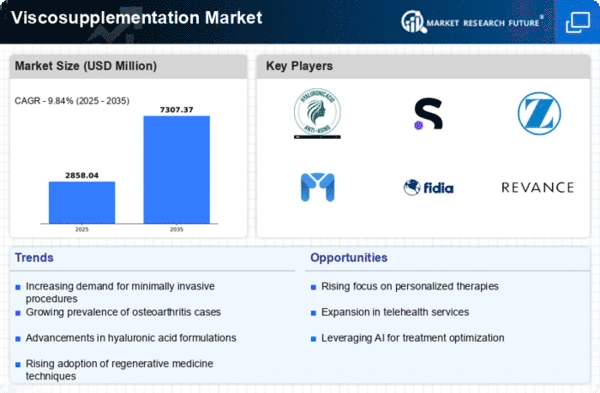
As per MRFR analysis, the Viscosupplementation Market Size was estimated at 2602.0 USD Million in 2024. The Viscosupplementation industry is projected to grow from 2858.09 in 2025 to 7307.37 by 2035, exhibiting a compound annual growth rate (CAGR) of 9.84 during the forecast period 2025 - 2035.

Key Market Trends & Highlights

The Viscosupplementation Market is experiencing robust growth driven by technological advancements and increasing demand for non-surgical treatments.

  • The North American region remains the largest market for viscosupplementation, primarily due to a high prevalence of osteoarthritis. The Asia-Pacific region is emerging as the fastest-growing market, fueled by rising healthcare expenditure and awareness of treatment options. Osteoarthritis is the largest segment, while the sports injuries segment is witnessing the fastest growth in demand for viscosupplementation products. Key market drivers include the increasing prevalence of osteoarthritis and a shift towards minimally invasive procedures.

Market Size & Forecast

2024 Market Size 2602.0 (USD Million)
2035 Market Size 7307.37 (USD Million)
CAGR (2025 - 2035) 9.84%
Largest Regional Market Share in 2024 North America

Major Players

<p>Hyaluronic Acid (US), Sanofi (FR), <a href="https://www.zimmerbiomet.com/en/products-and-solutions/products/restorative-therapies/visco-3.html">Zimmer Biomet</a> (US), MediKine (DE), Fidia Farmaceutici (IT), Revance Therapeutics (US), Stryker Corporation (US), Allergan (US), Merz Pharmaceuticals (DE)</p>

Market Trends

The Viscosupplementation Market is currently experiencing notable growth, driven by an increasing prevalence of osteoarthritis and a rising demand for non-surgical treatment options. This market encompasses a range of products designed to alleviate joint pain and improve mobility, particularly in the knee. As healthcare providers and patients alike seek alternatives to invasive procedures, viscosupplementation has emerged as a viable solution. The market landscape is characterized by a diverse array of hyaluronic acid-based products, which are gaining traction due to their effectiveness and relatively low risk of adverse effects. Furthermore, advancements in technology and product formulation are likely to enhance the efficacy of these treatments, potentially leading to broader acceptance among healthcare professionals. In addition to the growing awareness of viscosupplementation, the market is also influenced by demographic shifts, particularly the aging population. As individuals age, the incidence of joint-related ailments tends to increase, thereby fueling demand for viscosupplementation therapies. Moreover, the expansion of distribution channels, including online platforms, is making these products more accessible to consumers. This trend suggests that the Viscosupplementation Market is poised for continued expansion, as both healthcare providers and patients recognize the benefits of these innovative treatments. Overall, the future of this market appears promising, with ongoing research and development likely to yield new products and applications that further enhance patient outcomes.

Rising Demand for Non-Surgical Treatments

The Viscosupplementation Market is witnessing a shift towards non-invasive treatment options as patients increasingly prefer alternatives to surgery. This trend is driven by a growing awareness of the benefits associated with viscosupplementation, including reduced recovery times and lower risks of complications. As healthcare providers adopt these therapies, the market is likely to expand further.

Technological Advancements in Product Development

Innovations in the formulation and delivery of viscosupplementation products are shaping the market landscape. Enhanced formulations that improve the longevity and effectiveness of hyaluronic acid injections are emerging. These advancements may lead to increased patient satisfaction and a higher rate of adoption among healthcare professionals.

Aging Population and Increased Incidence of Osteoarthritis

The demographic shift towards an older population is significantly impacting the Viscosupplementation Market. As the prevalence of osteoarthritis rises with age, the demand for effective treatment options is expected to grow. This trend underscores the importance of viscosupplementation as a key player in managing joint health for older adults.

Viscosupplementation Market Market Drivers

Market Growth Projections

The Global Viscosupplementation Market Industry is projected to experience substantial growth over the next decade. With a market value of 4.79 USD Billion in 2024, it is expected to reach 8 USD Billion by 2035, reflecting a compound annual growth rate of 4.77% from 2025 to 2035. This growth trajectory underscores the increasing demand for effective joint pain management solutions and the expanding applications of viscosupplementation in various therapeutic areas. The market dynamics are influenced by factors such as technological advancements, rising healthcare expenditures, and an aging population, all contributing to a robust outlook for viscosupplementation.

Increase in Sports Injuries

The rise in sports-related injuries is another significant driver for the Global Viscosupplementation Market Industry. As participation in sports and physical activities increases, so does the incidence of joint injuries, particularly among younger populations. Viscosupplementation Market offers a promising solution for athletes seeking to recover quickly and effectively from joint injuries. The demand for such treatments is likely to escalate as more athletes and active individuals turn to viscosupplementation as a means of maintaining joint health and performance. This trend further supports the anticipated growth of the market, aligning with the overall increase in health consciousness.

Growing Awareness and Acceptance

There is a notable increase in awareness and acceptance of viscosupplementation therapies among both healthcare professionals and patients. Educational initiatives and marketing efforts are enhancing understanding of the benefits of viscosupplementation in managing joint pain. This shift in perception is crucial for the Global Viscosupplementation Market Industry, as it encourages more patients to seek these treatments. As a result, the market is expected to witness a compound annual growth rate of 4.77% from 2025 to 2035. This growth is indicative of a broader trend towards non-surgical interventions in orthopedic care.

Regulatory Support and Approvals

Regulatory bodies are increasingly recognizing the benefits of viscosupplementation, leading to a more favorable environment for the Global Viscosupplementation Market Industry. Approvals of new viscosupplementation products are becoming more streamlined, which encourages manufacturers to innovate and expand their product lines. This regulatory support not only enhances market accessibility but also instills confidence among healthcare providers and patients. As a result, the market is poised for growth, with projections indicating a rise to 8 USD Billion by 2035. This supportive regulatory landscape is essential for fostering advancements in treatment options.

Advancements in Medical Technology

Technological innovations in the field of viscosupplementation are propelling the Global Viscosupplementation Market Industry forward. New formulations and delivery methods are being developed to enhance the efficacy and safety of treatments. For example, the introduction of cross-linked hyaluronic acid has shown promise in extending the duration of relief for patients. These advancements not only improve patient outcomes but also increase the acceptance of viscosupplementation as a viable treatment option. As the market evolves, it is projected to grow to 8 USD Billion by 2035, indicating a robust trajectory fueled by ongoing research and development.

Rising Prevalence of Osteoarthritis

The increasing incidence of osteoarthritis globally drives the Global Viscosupplementation Market Industry. As populations age, the number of individuals suffering from joint-related disorders rises significantly. For instance, it is estimated that by 2024, the market will reach 4.79 USD Billion, reflecting the growing demand for effective treatment options. Viscosupplementation Market, which involves the injection of hyaluronic acid into the joints, offers a minimally invasive alternative to surgery. This trend is particularly evident in regions with aging populations, such as Europe and North America, where healthcare systems are adapting to manage the rising burden of osteoarthritis.

Market Segment Insights

By Application: Osteoarthritis (Largest) vs. Sports Injuries (Fastest-Growing)

<p>The Viscosupplementation Market is primarily driven by the application of treatments for osteoarthritis, which holds the largest share within this segment. This condition affects millions globally, leading to a substantial demand for effective treatment options. Following osteoarthritis, the application for sports injuries is gaining traction, reflecting an increasing awareness of joint health among athletes and active individuals. The market is therefore characterized by a diverse range of applications that seek to address varying patient needs, especially as the prevalence of joint-related issues rises.</p>

<p>Osteoarthritis (Dominant) vs. Rheumatoid Arthritis (Emerging)</p>

<p>Osteoarthritis represents the dominant application in the Viscosupplementation Market, characterized by its significant patient population and widespread recognition as a chronic joint condition. Patients with osteoarthritis frequently seek viscosupplementation for <a href="https://www.marketresearchfuture.com/reports/pain-relief-medication-market-8431">pain relief medication</a> and to improve joint function, establishing this therapy as a standard treatment modality. On the other hand, rheumatoid arthritis is an emerging application sector, driven by advancements in treatment innovations and a growing understanding of its prevalence. While it currently holds a smaller market share compared to osteoarthritis, the therapeutic potential and need for effective intervention place it in a growing position, attracting attention from both healthcare providers and pharmaceutical companies.</p>

By Product Type: Hyaluronic Acid (Largest) vs. Collagen-based Products (Fastest-Growing)

<p>The Viscosupplementation Market is primarily segmented into four key product types: Hyaluronic Acid, Collagen-based Products, Platelet-rich Plasma, and Synthetic Alternatives. Currently, Hyaluronic Acid dominates this market, holding the largest share due to its widespread adoption and proven efficacy in osteoarthritis treatment. In contrast, Collagen-based Products have emerged as a fast-growing segment, attributed to increasing awareness and demand for regenerative medicine solutions.</p>

<p>Hyaluronic Acid (Dominant) vs. Collagen-based Products (Emerging)</p>

<p>Hyaluronic Acid remains the dominant player in the Viscosupplementation Market due to its long history of use, reliability in managing joint pain, and effectiveness in enhancing mobility. It offers significant relief for patients suffering from osteoarthritis and is often preferred by healthcare professionals. On the other hand, Collagen-based Products are rapidly gaining traction as an emerging alternative, particularly among younger patients seeking preventative care and natural treatment options. Their appeal lies in the body's ability to utilize collagen for tissue repair, coupled with positive clinical outcomes that suggest promising potential for the future. This dynamic between established and emerging products shapes the Viscosupplementation Market landscape.</p>

By End User: Hospitals (Largest) vs. Orthopedic Clinics (Fastest-Growing)

<p>In the Viscosupplementation Market, hospitals dominate the end user segment, accounting for a significant portion of the market share. Their extensive facilities and ability to provide comprehensive care for osteoarthritis patients make them a preferred choice for viscosupplementation treatments. Orthopedic clinics, on the other hand, are rapidly increasing their market share due to the growing number of specialized practices focusing on joint health and innovative treatment solutions, catering to the specific needs of patients.</p>

<p>Hospitals (Dominant) vs. Orthopedic Clinics (Emerging)</p>

<p>Hospitals play a dominant role in the viscosupplementation market due to their established infrastructure, patient flow, and ability to integrate various treatment modalities. They are equipped with advanced diagnostic tools and trained medical staff to perform viscosupplementation procedures effectively. In contrast, orthopedic clinics emerge as a growing segment, focusing on personalized care and specialized treatments for joint diseases. These clinics often attract patients seeking targeted therapies without the need for hospital admission, thus capitalizing on a more direct and patient-centric approach to treatment.</p>

By Distribution Channel: Direct Sales (Largest) vs. Online Sales (Fastest-Growing)

<p>The distribution channels within the viscosupplementation market are crucial for ensuring product accessibility and consumer reach. Direct sales hold the largest share, as they allow manufacturers to maintain a strong relationship with healthcare professionals and ensure product integrity. In contrast, online sales have shown a remarkable increase in customer engagement and convenience, capturing a growing share of the market as telehealth becomes more integrated into patient care.</p>

<p>Pharmacies (Dominant) vs. Specialty Clinics (Emerging)</p>

<p>Pharmacies represent a dominant force in the viscosupplementation distribution landscape due to their extensive network and direct accessibility to consumers. They play a vital role in providing medications for chronic joint pain and offer a sense of familiarity to patients. Specialty clinics, while currently emerging, are rapidly gaining recognition for their focus on specific patient needs associated with viscosupplementation treatments. With personalized care and specialized services, these clinics are positioning themselves to cater to a niche market, drawing patients seeking targeted therapies that may not be available through traditional pharmacy routes.</p>

Get more detailed insights about Viscosupplementation Market Research Report-Forecast to 2035

Regional Insights

North America : Market Leader in Viscosupplementation

North America continues to lead the viscosupplementation market, holding a significant share of 1300.0M in 2024. The growth is driven by an aging population, increasing prevalence of osteoarthritis, and advancements in medical technology. Regulatory support from agencies like the FDA has also catalyzed market expansion, ensuring safety and efficacy in treatments. The demand for minimally invasive procedures further propels this market forward. The competitive landscape in North America is robust, featuring key players such as Hyaluronic Acid, Zimmer Biomet, and Revance Therapeutics. The U.S. stands out as the largest market, driven by high healthcare expenditure and a strong focus on research and development. Companies are increasingly investing in innovative products to meet the growing demand, ensuring a dynamic and competitive environment.

Europe : Emerging Market with Growth Potential

Europe's viscosupplementation market is valued at 800.0M, reflecting a growing demand for joint health solutions. Factors such as an increasing elderly population and rising awareness about osteoarthritis treatments are driving this growth. Regulatory frameworks in the EU are becoming more supportive, facilitating the introduction of new products and technologies. The market is also witnessing a shift towards personalized medicine, enhancing treatment outcomes. Leading countries in this region include Germany, France, and Italy, where major players like Sanofi and Fidia Farmaceutici are prominent. The competitive landscape is characterized by a mix of established companies and emerging startups, fostering innovation. The presence of advanced healthcare infrastructure and a focus on research further solidify Europe's position in the global market. "The European market is poised for significant growth as we adapt to the evolving needs of patients and healthcare providers," European Medicines Agency.

Asia-Pacific : Rapidly Growing Market Segment

The Asia-Pacific region is witnessing rapid growth in the viscosupplementation market, currently valued at 400.0M. This growth is fueled by increasing healthcare investments, rising awareness of joint health, and a growing aging population. Countries like Japan and China are leading the charge, with supportive government policies promoting advanced medical treatments. The market is also benefiting from the rising prevalence of osteoarthritis, driving demand for effective solutions. In this competitive landscape, key players such as MediKine and Allergan are making significant inroads. The region is characterized by a mix of local and international companies, enhancing competition and innovation. As healthcare systems evolve, the focus on minimally invasive procedures is expected to further boost market growth, making Asia-Pacific a vital area for future investments.

Middle East and Africa : Emerging Market with Untapped Potential

The Middle East and Africa (MEA) region, with a market size of 102.0M, presents untapped potential in the viscosupplementation sector. The growth is driven by increasing healthcare access, rising awareness of joint health issues, and a growing population. Regulatory bodies are beginning to establish frameworks that support the introduction of innovative medical solutions, which is crucial for market expansion. The demand for effective treatments is on the rise, particularly in urban areas. Leading countries in this region include South Africa and the UAE, where healthcare infrastructure is improving. The competitive landscape is still developing, with both local and international players vying for market share. Companies are focusing on education and awareness campaigns to promote viscosupplementation treatments, which is essential for driving adoption in this emerging market.

Key Players and Competitive Insights

The Viscosupplementation Market is characterized by a dynamic competitive landscape, driven by increasing demand for non-surgical treatment options for osteoarthritis and joint pain. Key players are actively engaging in strategies that emphasize innovation, regional expansion, and partnerships to enhance their market presence. For instance, in November 2025, Hyaluronic Acid (US) announced a collaboration with a leading research institution to develop next-generation viscosupplementation products, indicating a strong focus on R&D to maintain competitive advantage. Similarly, Zimmer Biomet (US) has been investing in digital transformation initiatives, aiming to streamline operations and improve patient outcomes through advanced data analytics and telehealth solutions.The market structure appears moderately fragmented, with several players vying for market share. Companies are increasingly localizing manufacturing and optimizing supply chains to enhance efficiency and reduce costs. This trend is likely to foster a more competitive environment, as firms that can effectively manage their operations may gain a significant edge. The collective influence of key players, including Sanofi (FR) and Stryker Corporation (US), suggests a robust competitive framework where innovation and operational excellence are paramount.


In October Sanofi (FR) launched a new viscosupplementation product aimed at enhancing patient comfort and efficacy in treatment. This strategic move not only diversifies their product portfolio but also positions the company as a leader in patient-centric solutions. The introduction of this product is expected to capture a substantial share of the market, particularly among healthcare providers seeking effective treatment options for their patients.


In September Revance Therapeutics (US) entered into a strategic partnership with a prominent orthopedic clinic to conduct clinical trials for its latest viscosupplementation formulation. This collaboration underscores the importance of clinical validation in the market, as it allows Revance to gather critical data that may enhance the credibility and acceptance of its products among healthcare professionals. Such partnerships are likely to become increasingly common as companies seek to leverage clinical insights to drive product development.


In August Fidia Farmaceutici (IT) announced the acquisition of a smaller biotech firm specializing in regenerative medicine. This acquisition is indicative of a broader trend where companies are seeking to expand their capabilities and product offerings through strategic mergers and acquisitions. By integrating innovative technologies from the acquired firm, Fidia aims to enhance its competitive positioning in the viscosupplementation space.


As of December the competitive trends in the Viscosupplementation Market are increasingly defined by digitalization, sustainability, and the integration of artificial intelligence (AI) into product development and patient management. Strategic alliances are playing a crucial role in shaping the landscape, as companies collaborate to leverage complementary strengths. The shift from price-based competition to a focus on innovation, technology, and supply chain reliability is becoming evident, suggesting that future competitive differentiation will hinge on the ability to deliver superior products and services.

Key Companies in the Viscosupplementation Market include

Industry Developments

  • Q2 2024: Anika Therapeutics Announces FDA Clearance of Integrity Implant for Knee Osteoarthritis Anika Therapeutics received FDA 510(k) clearance for its Integrity Implant, a hyaluronic acid-based device for the treatment of knee osteoarthritis, expanding its viscosupplementation product portfolio.
  • Q1 2024: Zimmer Biomet Launches Next-Generation Gel-One Hyaluronate in the U.S. Zimmer Biomet announced the commercial launch of its next-generation Gel-One Hyaluronate, a single-injection viscosupplement for knee osteoarthritis, in the United States.
  • Q2 2024: Sanofi Receives CE Mark for New Hyaluronic Acid Viscosupplement Sanofi announced it has received CE Mark approval for its new hyaluronic acid viscosupplement, enabling commercialization in the European Union for the treatment of osteoarthritis pain.
  • Q3 2024: Chugai Pharmaceutical Launches Suvenyl Next in Japan Chugai Pharmaceutical launched Suvenyl Next, an advanced hyaluronic acid viscosupplement, in Japan for the treatment of knee osteoarthritis.
  • Q2 2024: Lifecore Biomedical Expands Manufacturing Facility for Hyaluronic Acid Products Lifecore Biomedical announced the opening of a new manufacturing facility dedicated to the production of pharmaceutical-grade hyaluronic acid, supporting increased demand for viscosupplementation products.
  • Q1 2024: Smith & Nephew Announces Strategic Partnership with Hospital Group for Viscosupplementation Market Distribution Smith & Nephew entered into a strategic partnership with a major hospital group to distribute its hyaluronic acid viscosupplementation products across multiple U.S. states.
  • Q2 2025: Anika Therapeutics Appoints New Chief Commercial Officer to Drive Viscosupplementation Market Growth Anika Therapeutics appointed a new Chief Commercial Officer to lead the expansion of its viscosupplementation business in North America and Europe.
  • Q1 2025: Zimmer Biomet Receives Health Canada Approval for Gel-One Hyaluronate Zimmer Biomet received regulatory approval from Health Canada for its Gel-One Hyaluronate, allowing the company to market its single-injection viscosupplement in Canada.
  • Q3 2024: Sanofi Signs Distribution Agreement with MedTech Distributor for Viscosupplementation Market Portfolio in Latin America Sanofi signed a distribution agreement with a leading MedTech distributor to expand the reach of its viscosupplementation products in key Latin American markets.
  • Q2 2024: Roche Announces Investment in R&D for Next-Generation Viscosupplementation Market Therapies F. Hoffmann-La Roche announced a significant investment in research and development focused on next-generation viscosupplementation therapies for osteoarthritis.
  • Q1 2025: LG Chem Launches New Hyaluronic Acid Viscosupplement in South Korea LG Chem launched a new hyaluronic acid-based viscosupplement for the treatment of knee osteoarthritis in the South Korean market.
  • Q2 2025: Chugai Pharmaceutical Receives Regulatory Approval for Suvenyl Next in Taiwan Chugai Pharmaceutical received regulatory approval for its Suvenyl Next viscosupplement in Taiwan, expanding its presence in the Asia-Pacific region.

Future Outlook

Viscosupplementation Market Future Outlook

<p>The Viscosupplementation Market is projected to grow at a 9.84% CAGR from 2025 to 2035, driven by increasing osteoarthritis prevalence, technological advancements, and rising geriatric populations.</p>

New opportunities lie in:

  • <p>Development of personalized viscosupplementation therapies Expansion into emerging markets with tailored products Integration of digital health solutions for patient monitoring</p>

<p>By 2035, the Viscosupplementation Market is expected to achieve substantial growth and innovation.</p>

Market Segmentation

Viscosupplementation Market End User Outlook

  • Hospitals
  • Orthopedic Clinics
  • Rehabilitation Centers
  • Home Care Settings

Viscosupplementation Market Application Outlook

  • Osteoarthritis
  • Rheumatoid Arthritis
  • Sports Injuries
  • Joint Pain Management

Viscosupplementation Market Product Type Outlook

  • Hyaluronic Acid
  • Collagen-based Products
  • Platelet-rich Plasma
  • Synthetic Alternatives

Viscosupplementation Market Distribution Channel Outlook

  • Direct Sales
  • Online Sales
  • Pharmacies
  • Specialty Clinics

Report Scope

MARKET SIZE 2024 2602.0(USD Million)
MARKET SIZE 2025 2858.09(USD Million)
MARKET SIZE 2035 7307.37(USD Million)
COMPOUND ANNUAL GROWTH RATE (CAGR) 9.84% (2025 - 2035)
REPORT COVERAGE Revenue Forecast, Competitive Landscape, Growth Factors, and Trends
BASE YEAR 2024
Market Forecast Period 2025 - 2035
Historical Data 2019 - 2024
Market Forecast Units USD Million
Key Companies Profiled Hyaluronic Acid (US), Sanofi (FR), Zimmer Biomet (US), MediKine (DE), Fidia Farmaceutici (IT), Revance Therapeutics (US), Stryker Corporation (US), Allergan (US), Merz Pharmaceuticals (DE)
Segments Covered Application, Product Type, End User, Distribution Channel
Key Market Opportunities Emerging biocompatible materials enhance efficacy and safety in the Viscosupplementation Market.
Key Market Dynamics Rising demand for minimally invasive treatments drives innovation and competition in the viscosupplementation market.
Countries Covered North America, Europe, APAC, South America, MEA

FAQs

What is the projected growth of the Viscosupplementation market?

The Viscosupplementation market is the expected increase in total market value of 7.31 USD billion over a defined forecast period 2025–2035. It is driven by factors such as demand trends, technological advances, regulatory changes, and geographic expansion.

What is the size of the Viscosupplementation market?

Viscosupplementation market size was valued at approximately 2.6 billion USD in 2024. This figure will reach 7.31 billion USD covering all regions (America, Europe, Asia, MEA and ROW), focusing its segments / services / distribution channels till 2035.

What is the CAGR of the Viscosupplementation market?

Viscosupplementation market is expected to grow at a CAGR of 9.84% between 2025 and 2035.

How much will the Viscosupplementation market be worth by 2035?

Viscosupplementation market is expected to be worth of 7.31 billion USD, reflecting growth driven by usage, technology and global demands by the end of 2035.

How will the Viscosupplementation market perform over the next 10 years?

Over the next 10 years the Viscosupplementation market is expected to shift from usd billion 2.6 to 7.31 billion USD, led by adoption of advanced tech, demographic trends, regulatory approvals, with potential headwinds from 2025 to 2035.

Which application has the largest market share in the Global Viscosupplementation Market?

Osteoarthritis holds the largest share with a market value of 2.25 USD Billion in 2024.

What is the market size for the Rheumatoid Arthritis segment by 2035?

The Rheumatoid Arthritis segment is projected to reach 1.5 USD Billion by 2035.

Which region holds the highest market value in the Global Viscosupplementation Market in 2024?

North America holds the highest market value at 2.0 USD Billion in 2024.

Who are the major players in the Global Viscosupplementation Market?

Key players include Orthogen AG, Zimmer Biomet, Galderma, and Baxter International among others.

What is the expected market growth for Sports Injuries segment by 2035?

The Sports Injuries segment is projected to reach 1.5 USD Billion by 2035.

  1. SECTION I: EXECUTIVE SUMMARY AND KEY HIGHLIGHTS
    1. | 1.1 EXECUTIVE SUMMARY
    2. | 1.1.1 Market Overview
    3. | 1.1.2 Key Findings
    4. | 1.1.3 Market Segmentation
    5. | 1.1.4 Competitive Landscape
    6. | 1.1.5 Challenges and Opportunities
    7. | 1.1.6 Future Outlook
  2. SECTION II: SCOPING, METHODOLOGY AND MARKET STRUCTURE
    1. | 2.1 MARKET INTRODUCTION
    2. | 2.1.1 Definition
    3. | 2.1.2 Scope of the study
    4. |-- 2.1.2.1 Research Objective
    5. |-- 2.1.2.2 Assumption
    6. |-- 2.1.2.3 Limitations
    7. | 2.2 RESEARCH METHODOLOGY
    8. | 2.2.1 Overview
    9. | 2.2.2 Data Mining
    10. | 2.2.3 Secondary Research
    11. | 2.2.4 Primary Research
    12. |-- 2.2.4.1 Primary Interviews and Information Gathering Process
    13. |-- 2.2.4.2 Breakdown of Primary Respondents
    14. | 2.2.5 Forecasting Model
    15. | 2.2.6 Market Size Estimation
    16. |-- 2.2.6.1 Bottom-Up Approach
    17. |-- 2.2.6.2 Top-Down Approach
    18. | 2.2.7 Data Triangulation
    19. | 2.2.8 Validation
  3. SECTION III: QUALITATIVE ANALYSIS
    1. | 3.1 MARKET DYNAMICS
    2. | 3.1.1 Overview
    3. | 3.1.2 Drivers
    4. | 3.1.3 Restraints
    5. | 3.1.4 Opportunities
    6. | 3.2 MARKET FACTOR ANALYSIS
    7. | 3.2.1 Value chain Analysis
    8. | 3.2.2 Porter's Five Forces Analysis
    9. |-- 3.2.2.1 Bargaining Power of Suppliers
    10. |-- 3.2.2.2 Bargaining Power of Buyers
    11. |-- 3.2.2.3 Threat of New Entrants
    12. |-- 3.2.2.4 Threat of Substitutes
    13. |-- 3.2.2.5 Intensity of Rivalry
    14. | 3.2.3 COVID-19 Impact Analysis
    15. |-- 3.2.3.1 Market Impact Analysis
    16. |-- 3.2.3.2 Regional Impact
    17. |-- 3.2.3.3 Opportunity and Threat Analysis
  4. SECTION IV: QUANTITATIVE ANALYSIS
    1. | 4.1 Healthcare, BY Application (USD Million)
    2. | 4.1.1 Osteoarthritis
    3. | 4.1.2 Rheumatoid Arthritis
    4. | 4.1.3 Sports Injuries
    5. | 4.1.4 Joint Pain Management
    6. | 4.2 Healthcare, BY Product Type (USD Million)
    7. | 4.2.1 Hyaluronic Acid
    8. | 4.2.2 Collagen-based Products
    9. | 4.2.3 Platelet-rich Plasma
    10. | 4.2.4 Synthetic Alternatives
    11. | 4.3 Healthcare, BY End User (USD Million)
    12. | 4.3.1 Hospitals
    13. | 4.3.2 Orthopedic Clinics
    14. | 4.3.3 Rehabilitation Centers
    15. | 4.3.4 Home Care Settings
    16. | 4.4 Healthcare, BY Distribution Channel (USD Million)
    17. | 4.4.1 Direct Sales
    18. | 4.4.2 Online Sales
    19. | 4.4.3 Pharmacies
    20. | 4.4.4 Specialty Clinics
    21. | 4.5 Healthcare, BY Region (USD Million)
    22. | 4.5.1 North America
    23. |-- 4.5.1.1 US
    24. |-- 4.5.1.2 Canada
    25. | 4.5.2 Europe
    26. |-- 4.5.2.1 Germany
    27. |-- 4.5.2.2 UK
    28. |-- 4.5.2.3 France
    29. |-- 4.5.2.4 Russia
    30. |-- 4.5.2.5 Italy
    31. |-- 4.5.2.6 Spain
    32. |-- 4.5.2.7 Rest of Europe
    33. | 4.5.3 APAC
    34. |-- 4.5.3.1 China
    35. |-- 4.5.3.2 India
    36. |-- 4.5.3.3 Japan
    37. |-- 4.5.3.4 South Korea
    38. |-- 4.5.3.5 Malaysia
    39. |-- 4.5.3.6 Thailand
    40. |-- 4.5.3.7 Indonesia
    41. |-- 4.5.3.8 Rest of APAC
    42. | 4.5.4 South America
    43. |-- 4.5.4.1 Brazil
    44. |-- 4.5.4.2 Mexico
    45. |-- 4.5.4.3 Argentina
    46. |-- 4.5.4.4 Rest of South America
    47. | 4.5.5 MEA
    48. |-- 4.5.5.1 GCC Countries
    49. |-- 4.5.5.2 South Africa
    50. |-- 4.5.5.3 Rest of MEA
  5. SECTION V: COMPETITIVE ANALYSIS
    1. | 5.1 Competitive Landscape
    2. | 5.1.1 Overview
    3. | 5.1.2 Competitive Analysis
    4. | 5.1.3 Market share Analysis
    5. | 5.1.4 Major Growth Strategy in the Healthcare
    6. | 5.1.5 Competitive Benchmarking
    7. | 5.1.6 Leading Players in Terms of Number of Developments in the Healthcare
    8. | 5.1.7 Key developments and growth strategies
    9. |-- 5.1.7.1 New Product Launch/Service Deployment
    10. |-- 5.1.7.2 Merger & Acquisitions
    11. |-- 5.1.7.3 Joint Ventures
    12. | 5.1.8 Major Players Financial Matrix
    13. |-- 5.1.8.1 Sales and Operating Income
    14. |-- 5.1.8.2 Major Players R&D Expenditure. 2023
    15. | 5.2 Company Profiles
    16. | 5.2.1 Hyaluronic Acid (US)
    17. |-- 5.2.1.1 Financial Overview
    18. |-- 5.2.1.2 Products Offered
    19. |-- 5.2.1.3 Key Developments
    20. |-- 5.2.1.4 SWOT Analysis
    21. |-- 5.2.1.5 Key Strategies
    22. | 5.2.2 Sanofi (FR)
    23. |-- 5.2.2.1 Financial Overview
    24. |-- 5.2.2.2 Products Offered
    25. |-- 5.2.2.3 Key Developments
    26. |-- 5.2.2.4 SWOT Analysis
    27. |-- 5.2.2.5 Key Strategies
    28. | 5.2.3 Zimmer Biomet (US)
    29. |-- 5.2.3.1 Financial Overview
    30. |-- 5.2.3.2 Products Offered
    31. |-- 5.2.3.3 Key Developments
    32. |-- 5.2.3.4 SWOT Analysis
    33. |-- 5.2.3.5 Key Strategies
    34. | 5.2.4 MediKine (DE)
    35. |-- 5.2.4.1 Financial Overview
    36. |-- 5.2.4.2 Products Offered
    37. |-- 5.2.4.3 Key Developments
    38. |-- 5.2.4.4 SWOT Analysis
    39. |-- 5.2.4.5 Key Strategies
    40. | 5.2.5 Fidia Farmaceutici (IT)
    41. |-- 5.2.5.1 Financial Overview
    42. |-- 5.2.5.2 Products Offered
    43. |-- 5.2.5.3 Key Developments
    44. |-- 5.2.5.4 SWOT Analysis
    45. |-- 5.2.5.5 Key Strategies
    46. | 5.2.6 Revance Therapeutics (US)
    47. |-- 5.2.6.1 Financial Overview
    48. |-- 5.2.6.2 Products Offered
    49. |-- 5.2.6.3 Key Developments
    50. |-- 5.2.6.4 SWOT Analysis
    51. |-- 5.2.6.5 Key Strategies
    52. | 5.2.7 Stryker Corporation (US)
    53. |-- 5.2.7.1 Financial Overview
    54. |-- 5.2.7.2 Products Offered
    55. |-- 5.2.7.3 Key Developments
    56. |-- 5.2.7.4 SWOT Analysis
    57. |-- 5.2.7.5 Key Strategies
    58. | 5.2.8 Allergan (US)
    59. |-- 5.2.8.1 Financial Overview
    60. |-- 5.2.8.2 Products Offered
    61. |-- 5.2.8.3 Key Developments
    62. |-- 5.2.8.4 SWOT Analysis
    63. |-- 5.2.8.5 Key Strategies
    64. | 5.2.9 Merz Pharmaceuticals (DE)
    65. |-- 5.2.9.1 Financial Overview
    66. |-- 5.2.9.2 Products Offered
    67. |-- 5.2.9.3 Key Developments
    68. |-- 5.2.9.4 SWOT Analysis
    69. |-- 5.2.9.5 Key Strategies
    70. | 5.3 Appendix
    71. | 5.3.1 References
    72. | 5.3.2 Related Reports

Healthcare Market Segmentation

Healthcare By Application (USD Million, 2025-2035)

  • Osteoarthritis
  • Rheumatoid Arthritis
  • Sports Injuries
  • Joint Pain Management

Healthcare By Product Type (USD Million, 2025-2035)

  • Hyaluronic Acid
  • Collagen-based Products
  • Platelet-rich Plasma
  • Synthetic Alternatives

Healthcare By End User (USD Million, 2025-2035)

  • Hospitals
  • Orthopedic Clinics
  • Rehabilitation Centers
  • Home Care Settings

Healthcare By Distribution Channel (USD Million, 2025-2035)

  • Direct Sales
  • Online Sales
  • Pharmacies
  • Specialty Clinics
Infographic

Free Sample Request

Kindly complete the form below to receive a free sample of this Report

Get Free Sample

Customer Strories

Compare Licence

×
Features License Type
Single User Multiuser License Enterprise User
Price $4,950 $5,950 $7,250
Maximum User Access Limit 1 User Upto 10 Users Unrestricted Access Throughout the Organization
Free Customization
Direct Access to Analyst
Deliverable Format
Platform Access
Discount on Next Purchase 10% 15% 15%
Printable Versions