×
Request Free Sample ×

Kindly complete the form below to receive a free sample of this Report

* Please use a valid business email

Leading companies partner with us for data-driven Insights

clients tt-cursor
Hero Background
English
Chinese
French
Japanese
Korean
German
Spanish

Ventilator-associated pneumonia (VAP) Market Size

ID: MRFR/Pharma/0868-HCR
110 Pages
Rahul Gotadki
October 2025

Ventilator-Associated Pneumonia Market Research Report Information by Diagnosis (Clinical, Radiological, Microbiological), End User (Hospitals & Clinics, Research & Academic Institutes, Ambulatory Care Centers), and Region (the Americas, Europe, Asia-Pacific, and the Middle East & Africa) - Forecast till 2035.

Share:
Download PDF ×

We do not share your information with anyone. However, we may send you emails based on your report interest from time to time. You may contact us at any time to opt-out.

Ventilator-associated pneumonia (VAP) Market Infographic
Purchase Options

Ventilator Associated Pneumonia Vap Size

Ventilator-associated pneumonia (VAP) Market Growth Projections and Opportunities

The market for ventilator-associated pneumonia (VAP) treatment is significantly prompted by using hospitalization charges, especially in essential care units in which sufferers frequently require mechanical air flow. Higher fees for hospitalizations, mainly in intensive care settings, contribute to improved times of VAP, driving the demand for powerful remedies and preventive measures. The prevalence of VAP is immediately tied to the variety of patients receiving mechanical ventilation. As ventilator use becomes extra common in crucial care settings, the occurrence of VAP rises. This occurrence shapes the market for VAP-unique interventions and treatment options aimed toward lowering the risk of pneumonia in ventilated patients. The emergence of microbial resistance and the particular pathogen profile associated with VAP impact the market for antibiotic remedies. Antimicrobial resistance affects the development of recent antibiotics and alternative treatment procedures to combat VAP-inflicting pathogens efficiently. The development of prescription drugs, along with antibiotics and antifungal medicinal drugs, is a critical component of the VAP market. Ongoing research and improvements in drug formulations contribute to the availability of powerful remedies for VAP-inflicting pathogens, influencing market dynamics. Patient positioning and mobilization practices affect VAP prevention. Strategies to lessen the duration of mechanical ventilation, put into effect the right patient positioning, and inspire early mobilization make contributions to reducing the hazard of VAP, influencing market trends toward holistic care techniques. The training of healthcare workers in VAP prevention measures is essential. Education on exceptional practices, adherence to protocols, and early popularity of VAP signs contribute to improved patient results and have an impact on the market for schooling programs and educational assets. The excellent respiration care offerings in healthcare facilities are a big market aspect. Well-skilled respiratory therapists and specialized care groups make contributions to the prevention and early detection of VAP, impacting typical patient care and market alternatives. Global fitness-demanding situations, such as pandemics, can affect the VAP market. Surges in important care admissions and the want for mechanical air flow for the duration of health crises can also impact the superiority of VAP, affecting market tendencies and resource allocation. Adherence to regulatory recommendations and requirements set by using health authorities is crucial within the VAP market. Compliance with infection manipulation protocols, ventilator upkeep requirements, and reporting practices ensures patient safety and impacts market recognition of healthcare facilities and products.

Ventilator-associated pneumonia (VAP) Market Size Graph
Author
Rahul Gotadki
Assistant Manager

He holds an experience of about 7+ years in Market Research and Business Consulting, working under the spectrum of Life Sciences and Healthcare domains. Rahul conceptualizes and implements a scalable business strategy and provides strategic leadership to the clients. His expertise lies in market estimation, competitive intelligence, pipeline analysis, customer assessment, etc. In addition to the above, his other responsibility includes strategic tracking of high growth markets & advising clients on the potential areas of focus they could direct their business initiatives

Leave a Comment

FAQs

What was the value of the ventilator-associated pneumonia market in 2030?

The valuation of the ventilator-associated pneumonia market had reached USD 1.1 Billion in 2032.

At what CAGR is the Diagnosis projected to grow in the forecast period (2022-2030)?

Diagnosisis projected to grow at 10.2% CAGR during the assessment period (2023-2032).

What are the major tailwinds pushing the growth of the Ventilator-Associated Pneumonia Market?

Increasing incidences of traumatic brain injury and increasing R&D expenditure for the development of effective treatment for the disease are the major tailwinds pushing the growth of the Ventilator-Associated Pneumonia Market.

Which region holds the largest share in the Ventilator-Associated Pneumonia Market?

North America holds the largest share in the Ventilator-Associated Pneumonia Market, followed by Europe and the Asia Pacific, respectively.

Who are the top players in the ventilator-associated pneumonia market?

Adenium Biotech ApS (Denmark), Merck & Co., Inc. (US), AstraZeneca (UK), Nabriva Therapeutics AG (Austria), and MedImmune (US), are some of the major players operating in the ventilator-associated pneumonia market.

Market Summary

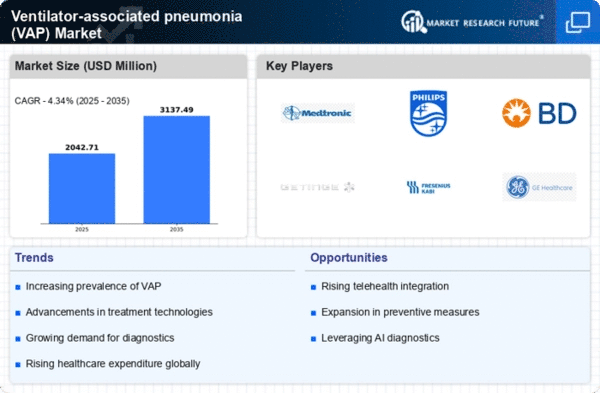
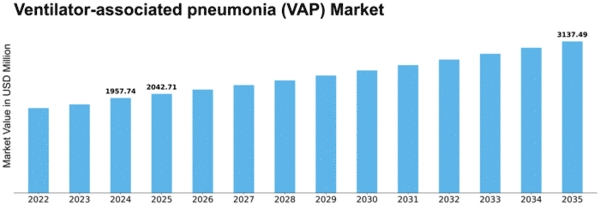
As per MRFR analysis, the Ventilator-associated pneumonia VAP Market Size was estimated at 1957.74 USD Million in 2024. The VAP industry is projected to grow from 2065.12 in 2025 to 3137.49 by 2035, exhibiting a compound annual growth rate CAGR of 4.34 during the forecast period 2025 - 2035.

Key Market Trends & Highlights

The Ventilator-associated pneumonia (VAP) market is poised for growth driven by technological advancements and increased awareness of infection control.

  • Technological advancements in ventilation equipment are enhancing patient outcomes and reducing VAP incidence.
  • North America remains the largest market, while the Asia-Pacific region is emerging as the fastest-growing area for VAP management.
  • The treatment segment dominates the market, whereas the diagnosis segment is experiencing rapid growth due to innovations in diagnostic technologies.
  • Rising incidence of ventilator-associated pneumonia and growing awareness of infection control practices are key drivers propelling market expansion.

Market Size & Forecast

2024 Market Size 1957.74 (USD Million)
2035 Market Size 3137.49 (USD Million)
CAGR (2025 - 2035) 4.34%
Largest Regional Market Share in 2024 North America

Major Players

Medtronic (US), Philips (NL), Becton Dickinson (US), Getinge (SE), Fresenius Kabi (DE), GE Healthcare (US), Smiths Medical (US), Dragerwerk (DE)

Market Trends

The Ventilator-associated pneumonia (VAP) Market is currently experiencing notable shifts driven by advancements in medical technology and an increasing focus on patient safety. Innovations in ventilator design and monitoring systems are enhancing the ability to prevent and manage VAP, which is a critical concern in intensive care settings. Furthermore, the growing awareness of infection control practices among healthcare professionals is likely contributing to a decline in VAP incidence rates. This evolving landscape suggests that healthcare facilities are prioritizing the implementation of best practices and advanced technologies to mitigate risks associated with ventilator use. In addition, the Ventilator-associated pneumonia (VAP) Market appears to be influenced by regulatory changes and guidelines aimed at improving patient outcomes. As healthcare providers adapt to these new standards, there is a potential for increased investment in training and resources dedicated to VAP prevention. The emphasis on evidence-based practices may lead to the development of new protocols and products designed specifically to address the challenges posed by VAP. Overall, the market is poised for growth as stakeholders recognize the importance of addressing this serious condition in ventilated patients.

Technological Advancements in Ventilation

Recent innovations in ventilator technology are transforming the landscape of the Ventilator-associated pneumonia (VAP) Market. Enhanced features such as automated monitoring systems and advanced filtration mechanisms are being integrated into ventilators, which may help reduce the risk of infection. These advancements not only improve patient outcomes but also streamline the workflow for healthcare providers.

Increased Focus on Infection Control

There is a growing emphasis on infection control measures within healthcare settings, which is likely impacting the Ventilator-associated pneumonia (VAP) Market. Hospitals are adopting stricter protocols and guidelines to minimize the incidence of VAP, leading to a heightened awareness among medical staff regarding best practices in patient care. This trend suggests a proactive approach to managing ventilator-associated risks.

Regulatory Changes and Guidelines

The Ventilator-associated pneumonia (VAP) Market is also being shaped by evolving regulatory frameworks and clinical guidelines. As healthcare organizations strive to comply with new standards, there is a potential for increased investment in training and resources aimed at VAP prevention. This shift may foster the development of innovative solutions tailored to address the complexities of managing ventilated patients.

Ventilator-associated pneumonia (VAP) Market Market Drivers

Market Growth Projections

The Global Ventilator-Associated Pneumonia Market Industry is poised for substantial growth in the coming years. Projections indicate that the market will reach 0.51 USD Billion in 2024 and is expected to expand to 1.47 USD Billion by 2035. This growth trajectory reflects a compound annual growth rate of 10.21% from 2025 to 2035. Factors such as rising incidences of VAP, advancements in medical technology, and increased awareness among healthcare professionals are driving this upward trend. The market dynamics suggest a robust future for the industry, with ongoing innovations and regulatory support likely to enhance growth.

Growing Geriatric Population

The aging population worldwide is a significant factor contributing to the growth of the Global Ventilator-Associated Pneumonia Market Industry. Older adults are more susceptible to respiratory infections and often require mechanical ventilation due to comorbidities. As the global geriatric population continues to rise, the demand for ventilatory support is expected to increase correspondingly. This demographic shift is likely to drive market expansion, as healthcare systems adapt to meet the needs of an aging population. The market is projected to experience substantial growth, with estimates indicating a potential market size of 1.47 USD Billion by 2035.

Increased Awareness and Training

Growing awareness regarding the prevention and management of ventilator-associated pneumonia is fostering a more proactive approach within healthcare settings. Training programs for healthcare professionals on best practices for ventilator care and infection control are being implemented globally. This increased focus on education is likely to enhance the quality of care provided to patients on mechanical ventilation, thereby reducing the incidence of VAP. The Global Ventilator-Associated Pneumonia Market Industry stands to benefit from these initiatives, as healthcare facilities increasingly invest in training and resources to mitigate risks associated with VAP.

Regulatory Support and Guidelines

The establishment of stringent regulatory frameworks and guidelines aimed at reducing the incidence of ventilator-associated pneumonia is a crucial driver for the Global Ventilator-Associated Pneumonia Market Industry. Regulatory bodies are actively promoting protocols that emphasize infection control and prevention strategies in healthcare facilities. For example, guidelines from the Centers for Disease Control and Prevention recommend specific measures to minimize VAP risks. Such regulatory support not only encourages compliance among healthcare providers but also stimulates market growth as facilities adopt new technologies and practices to align with these guidelines.

Advancements in Medical Technology

Technological innovations in medical devices and treatment protocols are significantly influencing the Global Ventilator-Associated Pneumonia Market Industry. Enhanced ventilators equipped with advanced monitoring systems and infection control features are becoming more prevalent. These advancements not only improve patient outcomes but also reduce the incidence of VAP. For instance, the integration of artificial intelligence in ventilators aids in real-time monitoring and adjustment of ventilation parameters. Such innovations are expected to drive market growth, contributing to an anticipated market size of 1.47 USD Billion by 2035, reflecting a compound annual growth rate of 10.21% from 2025 to 2035.

Rising Incidence of Ventilator-Associated Pneumonia

The increasing prevalence of ventilator-associated pneumonia (VAP) is a primary driver for the Global Ventilator-Associated Pneumonia Market Industry. As more patients require mechanical ventilation due to various health conditions, the risk of developing VAP escalates. This condition is particularly common in intensive care units, where patients are often on ventilators for extended periods. The World Health Organization indicates that VAP occurs in 9 to 27% of patients on mechanical ventilation. Consequently, this rising incidence is likely to propel the market, which is projected to reach 0.51 USD Billion in 2024.

Market Segment Insights

By Application: Treatment (Largest) vs. Diagnosis (Fastest-Growing)

In the Ventilator-associated pneumonia (VAP) market, the application segment showcases a diverse distribution of market shares. Treatment applications dominate this sector, as they encompass a wide array of therapies and interventions aimed at combating VAP. This includes the use of antibiotics, supportive care, and advanced respiratory management techniques. Following closely, diagnosis applications are gaining significant traction, reflecting the critical importance of accurately identifying pneumonia cases in ventilated patients for timely treatment. As healthcare systems prioritize early intervention, this segment is witnessing a remarkable surge in interest and investment. Examining the growth trends for the VAP market applications, treatment remains the cornerstone of strategic focus, driven by advancements in pharmaceutical therapies and enhanced clinical guidelines. Meanwhile, the diagnosis segment is on a rapid rise, bolstered by technological innovations in diagnostic tools that enhance accuracy and speed. This growth is further fueled by increased awareness of VAP risks among healthcare providers and the push for improved patient outcomes, positioning the diagnosis as a vital player in the overall market dynamics.

Diagnosis: Diagnostic Tests (Dominant) vs. Treatment Protocols (Emerging)

Within the VAP market, diagnostic tests are recognized as the dominant application, encompassing a variety of methodologies such as imaging techniques, microbiological assays, and clinical scoring systems aimed at accurate pneumonia detection. These tools are paramount in the clinical setting, facilitating prompt and effective treatment decisions. Emerging alongside them are treatment protocols, which are evolving rapidly as research advances and new evidence-based guidelines are developed. These protocols are increasingly tailored to individual patient needs, incorporating innovative therapies and multidisciplinary approaches. Together, these applications underline the importance of both precise diagnosis and effective treatment strategies in mitigating VAP incidence and improving patient outcomes.

By End Use: Hospitals (Largest) vs. Long-term Care Facilities (Fastest-Growing)

In the Ventilator-associated pneumonia (VAP) Market, hospitals hold the largest share, driven by the significant patient volume and the increasing prevalence of VAP in critical care settings. Long-term care facilities are also integral to the market, although they represent a smaller faction compared to hospitals. However, the market dynamics are shifting, with long-term care facilities emerging as a vital segment due to the rising incidence of pneumonia among the elderly and patients with chronic illnesses. As healthcare systems evolve, growth trends indicate an increasing focus on home care and long-term care facilities for managing VAP. The demand for integrated care solutions and advancements in portable ventilator technologies are contributing to this shift. Emerging healthcare policies are pushing for more supportive environments in non-hospital settings, which is propelling the growth of long-term care facilities, marking them as the fastest-growing segment in the VAP market.

Hospitals (Dominant) vs. Home Care (Emerging)

In the Ventilator-associated pneumonia (VAP) Market, hospitals are the dominant players, establishing their supremacy through their advanced infrastructure and critical care capabilities. They provide extensive resources and specialized staff necessary for managing complex VAP cases. The traditional hospital setting allows for immediate access to sophisticated technologies and collaborative medical teams, which are crucial in treating severe pneumonia cases. Conversely, home care has emerged as a vital segment amid shifting patient preferences and advancements in telehealth and portable ventilator options. As patients increasingly favor receiving care in familiar environments, the home care segment is witnessing heightened interest and investment, positioning it as a key player for the future, particularly for chronic disease management and post-hospitalization recovery.

By Type of Ventilator: Invasive Ventilator (Largest) vs. Non-invasive Ventilator (Fastest-Growing)

In the Ventilator-associated pneumonia (VAP) market, the Invasive Ventilator segment holds a significant share, dominating the overall landscape due to its extensive application in critical care environments. Non-invasive Ventilators, while previously viewed as secondary options, have gained substantial traction in recent years, appealing to a wider patient demographic seeking less intrusive alternatives. Both segments play pivotal roles but cater to distinct clinical needs and patient preferences.

Ventilation Methods: Invasive Ventilator (Dominant) vs. Non-invasive Ventilator (Emerging)

The Invasive Ventilator segment remains the dominant force in the Ventilator-associated pneumonia market, primarily used for patients requiring intensive respiratory support. Its advantages include the ability to deliver precise aerosolized medications and efficient airway management, which is crucial in managing VAP cases. Conversely, the Non-invasive Ventilator segment is emerging rapidly, catering to patients with less severe respiratory ailments who benefit from reduced risk of complications associated with invasive methods. This segment is characterized by increased patient comfort and shorter recovery times, appealing largely to patients seeking alternative treatment options.

By Patient Demographics: Adult Patients (Largest) vs. Pediatric Patients (Fastest-Growing)

In the Ventilator-associated pneumonia (VAP) market, adult patients represent the largest demographic segment, accounting for a significant share of VAP cases due to their prevalence in critical care settings. This patient group often has higher comorbidities, which results in increased ventilatory support leading to a rise in VAP instances. On the other hand, pediatric patients are emerging as the fastest-growing segment. The rise in pediatric cases can be attributed to increased awareness, better diagnostics, and improved healthcare access, leading to timely intervention and management of VAP risks.

Adult Patients: Dominant vs. Pediatric Patients: Emerging

Adult patients are the dominant segment in the Ventilator-associated pneumonia (VAP) market, driven by higher incidences of respiratory illnesses and the needs of critically ill patients in intensive care units. This demographic often faces complex health issues that necessitate prolonged ventilatory support, making them more susceptible to VAP. Conversely, pediatric patients represent the emerging segment, reflecting a growing recognition of respiratory infections in children. Advancements in respiratory support technologies and an increase in pediatric intensive care units have led to improved outcomes and reduced VAP incidence in this group, establishing them as a rapidly expanding market due to ongoing investments in pediatric healthcare.

Get more detailed insights about Ventilator-Associated Pneumonia Market Research Report - Forecast till 2035

Regional Insights

North America : Market Leader in VAP Solutions

North America holds a significant share of the VAP market, valued at $978.87M in 2024. The region's growth is driven by advanced healthcare infrastructure, increasing prevalence of respiratory diseases, and stringent regulations promoting patient safety. The demand for innovative ventilator technologies and effective infection control measures is on the rise, further propelling market expansion. Regulatory bodies are emphasizing the need for improved healthcare outcomes, which is expected to enhance market dynamics. The competitive landscape in North America is robust, featuring key players like Medtronic, GE Healthcare, and Becton Dickinson. These companies are investing heavily in R&D to develop advanced ventilator systems and associated technologies. The U.S. is the leading country in this market, supported by a high number of ICU beds and a growing elderly population. The presence of established healthcare facilities and a focus on improving patient care are pivotal for market growth.

Europe : Emerging Market with Growth Potential

Europe's VAP market is valued at €590.0M, reflecting a growing demand for ventilator-associated pneumonia solutions. The region is witnessing an increase in hospital admissions due to respiratory illnesses, coupled with a rising awareness of infection control protocols. Regulatory frameworks are evolving to ensure higher standards of care, which is expected to drive market growth. The European Union's initiatives to enhance healthcare quality are also contributing to the market's expansion. Leading countries in Europe include Germany, France, and the UK, where healthcare systems are increasingly adopting advanced ventilator technologies. Key players such as Philips and Fresenius Kabi are actively involved in this market, focusing on innovation and strategic partnerships. The competitive landscape is characterized by a mix of established companies and emerging startups, all aiming to capture a share of the growing demand for effective VAP solutions.

Asia-Pacific : Rapidly Growing Healthcare Sector

The Asia-Pacific VAP market is valued at $300.0M, driven by increasing healthcare investments and a rising burden of respiratory diseases. Countries in this region are experiencing rapid urbanization and an increase in healthcare access, which is contributing to the demand for ventilator technologies. Regulatory bodies are also focusing on enhancing healthcare standards, which is expected to further stimulate market growth. The region's diverse population and varying healthcare needs present both challenges and opportunities for market players. Key countries such as China, India, and Japan are leading the market, with significant investments in healthcare infrastructure. The competitive landscape includes major players like Getinge and Dragerwerk, who are focusing on expanding their product offerings and enhancing service capabilities. The presence of a growing number of hospitals and healthcare facilities is expected to drive the demand for VAP solutions in the coming years.

Middle East and Africa : Emerging Market with Challenges

The Middle East and Africa VAP market is valued at $88.87M, reflecting a nascent but growing demand for ventilator-associated pneumonia solutions. The region faces challenges such as limited healthcare infrastructure and varying levels of access to advanced medical technologies. However, increasing investments in healthcare and a rising prevalence of respiratory diseases are driving market growth. Regulatory bodies are beginning to implement standards aimed at improving healthcare quality, which is expected to enhance market dynamics. Countries like South Africa and the UAE are leading the market, with efforts to modernize healthcare facilities and improve patient care. The competitive landscape is characterized by a mix of local and international players, including companies like Smiths Medical. The focus on enhancing healthcare access and quality is pivotal for the growth of the VAP market in this region.

Key Players and Competitive Insights

The Ventilator-associated pneumonia (VAP) Market is characterized by a competitive landscape that is increasingly shaped by innovation, strategic partnerships, and a focus on enhancing patient outcomes. Key players such as Medtronic (US), Philips (NL), and Becton Dickinson (US) are actively engaged in developing advanced technologies and solutions aimed at reducing the incidence of VAP. These companies are leveraging their extensive research capabilities to introduce novel products that not only address the clinical needs but also align with the evolving regulatory frameworks. The collective strategies of these firms indicate a trend towards a more integrated approach to healthcare, where technology and patient care converge to improve overall treatment efficacy.In terms of business tactics, companies are increasingly localizing manufacturing to enhance supply chain resilience and reduce operational costs. This strategy appears to be particularly relevant in the context of global disruptions that have affected supply chains in recent years. The market structure is moderately fragmented, with several players vying for market share, yet the influence of major companies remains substantial. Their ability to innovate and adapt to changing market dynamics positions them as leaders in the VAP segment, thereby shaping competitive interactions.

In November Medtronic (US) announced the launch of a new ventilator model designed specifically to minimize the risk of VAP in critically ill patients. This strategic move underscores Medtronic's commitment to innovation and patient safety, potentially enhancing its market share by addressing a critical need in intensive care settings. The introduction of this product is likely to strengthen Medtronic's position as a leader in respiratory care solutions.

In October Philips (NL) expanded its partnership with a leading healthcare provider to implement advanced AI-driven monitoring systems in ICUs. This collaboration aims to enhance early detection of VAP, thereby improving patient outcomes. The integration of AI technology into their offerings not only positions Philips at the forefront of digital health solutions but also reflects a broader trend towards the utilization of data analytics in clinical settings.

In September Becton Dickinson (US) launched a new line of diagnostic tools aimed at early identification of pathogens associated with VAP. This initiative is indicative of Becton Dickinson's strategic focus on diagnostics as a critical component of infection control. By enhancing diagnostic capabilities, the company is likely to improve clinical decision-making and patient management, thereby reinforcing its competitive edge in the market.

As of December the competitive trends in the VAP Market are increasingly defined by digitalization, sustainability, and the integration of AI technologies. Strategic alliances among key players are fostering innovation and enhancing product offerings, which is crucial in a landscape where patient care is paramount. The shift from price-based competition to a focus on technological advancement and supply chain reliability is evident, suggesting that future competitive differentiation will hinge on the ability to innovate and deliver superior patient outcomes.

Key Companies in the Ventilator-associated pneumonia (VAP) Market include

Industry Developments

Future Outlook

Ventilator-associated pneumonia (VAP) Market Future Outlook

The Ventilator-associated pneumonia (VAP) Market is projected to grow at a 4.34% CAGR from 2025 to 2035, driven by advancements in medical technology and increasing healthcare expenditure.

New opportunities lie in:

  • Development of AI-driven diagnostic tools for early VAP detection.
  • Expansion of telehealth services for remote patient monitoring.
  • Investment in antimicrobial coatings for ventilator equipment.

By 2035, the VAP market is expected to achieve substantial growth, reflecting evolving healthcare needs.

Market Segmentation

Ventilator-associated pneumonia (VAP) Market End Use Outlook

  • Hospitals
  • Long-term Care Facilities
  • Home Care
  • Ambulatory Surgical Centers

Ventilator-associated pneumonia (VAP) Market Application Outlook

  • Diagnosis
  • Treatment
  • Prevention
  • Monitoring

Ventilator-associated pneumonia (VAP) Market Type of Ventilator Outlook

  • Invasive Ventilator
  • Non-invasive Ventilator
  • Portable Ventilator
  • High-frequency Ventilator

Ventilator-associated pneumonia (VAP) Market Patient Demographics Outlook

  • Adult Patients
  • Pediatric Patients
  • Geriatric Patients
  • Neonatal Patients

Report Scope

MARKET SIZE 20241957.74(USD Million)
MARKET SIZE 20252065.12(USD Million)
MARKET SIZE 20353137.49(USD Million)
COMPOUND ANNUAL GROWTH RATE (CAGR)4.34% (2025 - 2035)
REPORT COVERAGERevenue Forecast, Competitive Landscape, Growth Factors, and Trends
BASE YEAR2024
Market Forecast Period2025 - 2035
Historical Data2019 - 2024
Market Forecast UnitsUSD Million
Key Companies ProfiledMedtronic (US), Philips (NL), Becton Dickinson (US), Getinge (SE), Fresenius Kabi (DE), GE Healthcare (US), Smiths Medical (US), Dragerwerk (DE)
Segments CoveredApplication, End Use, Type of Ventilator, Patient Demographics
Key Market OpportunitiesAdvancements in diagnostic technologies enhance early detection in the Ventilator-associated pneumonia (VAP) Market.
Key Market DynamicsRising demand for advanced diagnostic tools drives innovation in the Ventilator-associated pneumonia market.
Countries CoveredNorth America, Europe, APAC, South America, MEA

FAQs

What was the value of the ventilator-associated pneumonia market in 2030?

The valuation of the ventilator-associated pneumonia market had reached USD 1.1 Billion in 2032.

At what CAGR is the Diagnosis projected to grow in the forecast period (2022-2030)?

Diagnosisis projected to grow at 10.2% CAGR during the assessment period (2023-2032).

What are the major tailwinds pushing the growth of the Ventilator-Associated Pneumonia Market?

Increasing incidences of traumatic brain injury and increasing R&D expenditure for the development of effective treatment for the disease are the major tailwinds pushing the growth of the Ventilator-Associated Pneumonia Market.

Which region holds the largest share in the Ventilator-Associated Pneumonia Market?

North America holds the largest share in the Ventilator-Associated Pneumonia Market, followed by Europe and the Asia Pacific, respectively.

Who are the top players in the ventilator-associated pneumonia market?

Adenium Biotech ApS (Denmark), Merck & Co., Inc. (US), AstraZeneca (UK), Nabriva Therapeutics AG (Austria), and MedImmune (US), are some of the major players operating in the ventilator-associated pneumonia market.

  1. SECTION I: EXECUTIVE SUMMARY AND KEY HIGHLIGHTS
    1. EXECUTIVE SUMMARY
      1. Market Overview
      2. Key Findings
      3. Market Segmentation
      4. Competitive Landscape
      5. Challenges and Opportunities
      6. Future Outlook
  2. SECTION II: SCOPING, METHODOLOGY AND MARKET STRUCTURE
    1. MARKET INTRODUCTION
      1. Definition
      2. Scope of the study
    2. RESEARCH METHODOLOGY
      1. Overview
      2. Data Mining
      3. Secondary Research
      4. Primary Research
      5. Forecasting Model
      6. Market Size Estimation
      7. Data Triangulation
      8. Validation
  3. SECTION III: QUALITATIVE ANALYSIS
    1. MARKET DYNAMICS
      1. Overview
      2. Drivers
      3. Restraints
      4. Opportunities
    2. MARKET FACTOR ANALYSIS
      1. Value chain Analysis
      2. Porter's Five Forces Analysis
      3. COVID-19 Impact Analysis
  4. SECTION IV: QUANTITATIVE ANALYSIS
    1. Healthcare, BY Application (USD Million)
      1. Diagnosis
      2. Treatment
      3. Prevention
      4. Monitoring
    2. Healthcare, BY End Use (USD Million)
      1. Hospitals
      2. Long-term Care Facilities
      3. Home Care
      4. Ambulatory Surgical Centers
    3. Healthcare, BY Type of Ventilator (USD Million)
      1. Invasive Ventilator
      2. Non-invasive Ventilator
      3. Portable Ventilator
      4. High-frequency Ventilator
    4. Healthcare, BY Patient Demographics (USD Million)
      1. Adult Patients
      2. Pediatric Patients
      3. Geriatric Patients
      4. Neonatal Patients
    5. Healthcare, BY Region (USD Million)
      1. North America
      2. Europe
      3. APAC
      4. South America
      5. MEA
  5. SECTION V: COMPETITIVE ANALYSIS
    1. Competitive Landscape
      1. Overview
      2. Competitive Analysis
      3. Market share Analysis
      4. Major Growth Strategy in the Healthcare
      5. Competitive Benchmarking
      6. Leading Players in Terms of Number of Developments in the Healthcare
      7. Key developments and growth strategies
      8. Major Players Financial Matrix
    2. Company Profiles
      1. Medtronic (US)
      2. Philips (NL)
      3. Becton Dickinson (US)
      4. Getinge (SE)
      5. Fresenius Kabi (DE)
      6. GE Healthcare (US)
      7. Smiths Medical (US)
      8. Dragerwerk (DE)
    3. Appendix
      1. References
      2. Related Reports

Healthcare Market Segmentation

Healthcare By Application (USD Million, 2025-2035)

  • Diagnosis
  • Treatment
  • Prevention
  • Monitoring

Healthcare By End Use (USD Million, 2025-2035)

  • Hospitals
  • Long-term Care Facilities
  • Home Care
  • Ambulatory Surgical Centers

Healthcare By Type of Ventilator (USD Million, 2025-2035)

  • Invasive Ventilator
  • Non-invasive Ventilator
  • Portable Ventilator
  • High-frequency Ventilator

Healthcare By Patient Demographics (USD Million, 2025-2035)

  • Adult Patients
  • Pediatric Patients
  • Geriatric Patients
  • Neonatal Patients
Infographic

Free Sample Request

Kindly complete the form below to receive a free sample of this Report

Get Free Sample

Customer Strories

Compare Licence

×
Features License Type
Single User Multiuser License Enterprise User
Price $4,950 $5,950 $7,250
Maximum User Access Limit 1 User Upto 10 Users Unrestricted Access Throughout the Organization
Free Customization
Direct Access to Analyst
Deliverable Format
Platform Access
Discount on Next Purchase 10% 15% 15%
Printable Versions