×
Hero Background
English
Chinese
French
Japanese
Korean
German
Spanish

Ventilator-associated pneumonia (VAP) Market Analysis

ID: MRFR/Pharma/0868-HCR
110 Pages
Rahul Gotadki
October 2025

Ventilator-Associated Pneumonia Market Research Report Information by Diagnosis (Clinical, Radiological, Microbiological), End User (Hospitals & Clinics, Research & Academic Institutes, Ambulatory Care Centers), and Region (the Americas, Europe, Asia-Pacific, and the Middle East & Africa) - Forecast till 2035.

Share:
Download PDF ×

We do not share your information with anyone. However, we may send you emails based on your report interest from time to time. You may contact us at any time to opt-out.

Ventilator-associated pneumonia (VAP) Market Infographic
Purchase Options

Market Analysis

In-depth Analysis of Ventilator-associated pneumonia (VAP) Market Industry Landscape

The market dynamics of ventilator-associated pneumonia (VAP) revolve around addressing the demanding situations posed by pneumonia in patients on mechanical air flow, emphasizing the essential need for powerful prevention and treatment strategies. Understanding the multifaceted factors influencing this dynamic healthcare region is essential for enhancing patient results and decreasing the prevalence of VAP. A primary motive force of market dynamics is the high incidence of VAP in intensive care devices. Patients on mechanical air flow are prone to respiratory infections, necessitating a targeted technique for prevention and treatment within crucial care settings. The market is substantially influenced by using preventive measures and bundle strategies. Implementation of proof-primarily based bundles, together with measures such as elevation of the head of the mattress and oral care, contributes to decreasing the hazard of VAP and shapes the landscape of infection control in healthcare centers. Rapid diagnostic technologies influence the market. The swift identity of the causative pathogens and antibiotic sensitivity via superior diagnostic tools contribute to timely and targeted treatment, lowering the impact of VAP on patient fitness. Regulatory frameworks governing contamination management and healthcare regulations significantly impact market dynamics. Adherence to hints, reporting requirements, and projects geared toward decreasing healthcare-related infections contributes to shaping the aggressive landscape within the VAP market. The cognizance of patient safety tasks is a vital element in market dynamics. Efforts to prioritize affected person protection, including infection prevention measures and first-class improvement programs, make contributions to decreasing the prevalence of VAP and fostering a way of life of affected person-focused care. Ongoing research and development efforts contribute to the invention of novel cures. Collaboration between pharmaceutical agencies, research institutions, and healthcare corporations drives innovation in VAP remedy, shaping the aggressive panorama of the market. The global nature of healthcare-related infections demands collaborative efforts. International collaboration in contamination management practices, sharing surveillance facts, and addressing international challenges contribute to an extra unified reaction to VAP, impacting market dynamics. The cost of imposing contamination manipulation packages and preventive measures is a large amount of attention. Financial implications, together with the expenses related to schooling, surveillance, and equipment, impact the adoption of preventive techniques and affect market dynamics.


Author
Rahul Gotadki
Assistant Manager

He holds an experience of about 7+ years in Market Research and Business Consulting, working under the spectrum of Life Sciences and Healthcare domains. Rahul conceptualizes and implements a scalable business strategy and provides strategic leadership to the clients. His expertise lies in market estimation, competitive intelligence, pipeline analysis, customer assessment, etc. In addition to the above, his other responsibility includes strategic tracking of high growth markets & advising clients on the potential areas of focus they could direct their business initiatives

Leave a Comment

FAQs

What was the value of the ventilator-associated pneumonia market in 2030?

The valuation of the ventilator-associated pneumonia market had reached USD 1.1 Billion in 2032.

At what CAGR is the Diagnosis projected to grow in the forecast period (2022-2030)?

Diagnosisis projected to grow at 10.2% CAGR during the assessment period (2023-2032).

What are the major tailwinds pushing the growth of the Ventilator-Associated Pneumonia Market?

Increasing incidences of traumatic brain injury and increasing R&D expenditure for the development of effective treatment for the disease are the major tailwinds pushing the growth of the Ventilator-Associated Pneumonia Market.

Which region holds the largest share in the Ventilator-Associated Pneumonia Market?

North America holds the largest share in the Ventilator-Associated Pneumonia Market, followed by Europe and the Asia Pacific, respectively.

Who are the top players in the ventilator-associated pneumonia market?

Adenium Biotech ApS (Denmark), Merck & Co., Inc. (US), AstraZeneca (UK), Nabriva Therapeutics AG (Austria), and MedImmune (US), are some of the major players operating in the ventilator-associated pneumonia market.

Market Summary

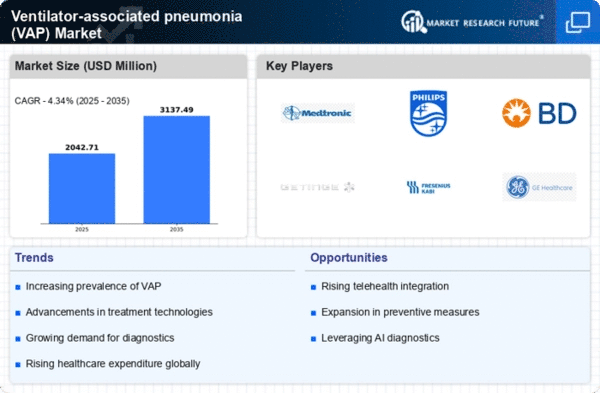
As per Market Research Future analysis, the Ventilator-associated pneumonia VAP Market Size was estimated at 1957.74 USD Million in 2024. The VAP industry is projected to grow from 2065.12 in 2025 to 3137.49 by 2035, exhibiting a compound annual growth rate CAGR of 4.34% during the forecast period 2025 - 2035.

Key Market Trends & Highlights

The Ventilator-associated pneumonia (VAP) market is experiencing notable growth driven by technological advancements and increased awareness of infection control.

  • Technological advancements in ventilation equipment are enhancing patient outcomes and reducing VAP incidence. North America remains the largest market, while the Asia-Pacific region is emerging as the fastest-growing area for VAP management. The hospital segment dominates the market, whereas the home care segment is witnessing rapid growth due to changing patient preferences. Rising incidence of ventilator-associated pneumonia and growing awareness of infection control practices are key drivers propelling market expansion.

Market Size & Forecast

2024 Market Size 1957.74 (USD Million)
2035 Market Size 3137.49 (USD Million)
CAGR (2025 - 2035) 4.34%
Largest Regional Market Share in 2024 North America

Major Players

<p>Medtronic (US), Philips (NL), Becton Dickinson (US), Getinge (SE), Fresenius Kabi (DE), GE Healthcare (US), Smiths Medical (US), Dragerwerk (DE)</p>

Market Trends

The Ventilator-associated pneumonia (VAP) Market is currently experiencing notable shifts driven by advancements in medical technology and an increasing focus on infection control measures. Healthcare facilities are increasingly adopting innovative solutions to mitigate the risk of VAP, which is a significant concern in intensive care units. Enhanced understanding of the pathophysiology of VAP has led to the development of targeted therapies and preventive strategies, which may improve patient outcomes. Furthermore, the integration of artificial intelligence and machine learning in monitoring and managing ventilated patients appears to be gaining traction, potentially revolutionizing care protocols. In addition, the growing emphasis on patient safety and quality of care is influencing purchasing decisions within the Ventilator-associated pneumonia (VAP) Market. Hospitals are prioritizing investments in advanced ventilators equipped with features that reduce the likelihood of pneumonia development. This trend suggests a shift towards more sophisticated equipment that not only supports respiratory function but also actively contributes to infection prevention. As the market evolves, stakeholders must remain vigilant to emerging technologies and practices that could reshape the landscape of VAP management.

Technological Advancements in Ventilation

The Ventilator-associated pneumonia (VAP) Market is witnessing a surge in technological innovations aimed at enhancing patient care. New ventilators are being designed with advanced features that help minimize the risk of pneumonia, such as improved humidification systems and automated monitoring capabilities. These advancements may lead to better patient outcomes and reduced healthcare costs.

Increased Focus on Infection Control

There is a growing emphasis on infection control measures within healthcare settings, particularly in intensive care units. This trend is driving the adoption of protocols and equipment designed to prevent VAP. Hospitals are increasingly implementing stringent hygiene practices and utilizing products that support infection prevention, which could significantly impact the VAP Market.

Shift Towards Personalized Medicine

The Ventilator-associated pneumonia (VAP) Market is gradually moving towards personalized medicine approaches. Tailoring treatment plans based on individual patient needs and responses may enhance the effectiveness of interventions. This trend indicates a broader shift in healthcare towards more customized care, which could improve overall patient management in VAP cases.

Ventilator-associated pneumonia (VAP) Market Market Drivers

Market Growth Projections

The Global Ventilator-Associated Pneumonia Market Industry is poised for substantial growth in the coming years. Projections indicate that the market will reach 0.51 USD Billion in 2024 and is expected to expand to 1.47 USD Billion by 2035. This growth trajectory reflects a compound annual growth rate of 10.21% from 2025 to 2035. Factors such as rising incidences of VAP, advancements in medical technology, and increased awareness among healthcare professionals are driving this upward trend. The market dynamics suggest a robust future for the industry, with ongoing innovations and regulatory support likely to enhance growth.

Growing Geriatric Population

The aging population worldwide is a significant factor contributing to the growth of the Global Ventilator-Associated Pneumonia Market Industry. Older adults are more susceptible to respiratory infections and often require mechanical ventilation due to comorbidities. As the global geriatric population continues to rise, the demand for ventilatory support is expected to increase correspondingly. This demographic shift is likely to drive market expansion, as healthcare systems adapt to meet the needs of an aging population. The market is projected to experience substantial growth, with estimates indicating a potential market size of 1.47 USD Billion by 2035.

Increased Awareness and Training

Growing awareness regarding the prevention and management of ventilator-associated pneumonia is fostering a more proactive approach within healthcare settings. Training programs for healthcare professionals on best practices for ventilator care and infection control are being implemented globally. This increased focus on education is likely to enhance the quality of care provided to patients on mechanical ventilation, thereby reducing the incidence of VAP. The Global Ventilator-Associated Pneumonia Market Industry stands to benefit from these initiatives, as healthcare facilities increasingly invest in training and resources to mitigate risks associated with VAP.

Regulatory Support and Guidelines

The establishment of stringent regulatory frameworks and guidelines aimed at reducing the incidence of ventilator-associated pneumonia is a crucial driver for the Global Ventilator-Associated Pneumonia Market Industry. Regulatory bodies are actively promoting protocols that emphasize infection control and prevention strategies in healthcare facilities. For example, guidelines from the Centers for Disease Control and Prevention recommend specific measures to minimize VAP risks. Such regulatory support not only encourages compliance among healthcare providers but also stimulates market growth as facilities adopt new technologies and practices to align with these guidelines.

Advancements in Medical Technology

Technological innovations in medical devices and treatment protocols are significantly influencing the Global Ventilator-Associated Pneumonia Market Industry. Enhanced ventilators equipped with advanced monitoring systems and infection control features are becoming more prevalent. These advancements not only improve patient outcomes but also reduce the incidence of VAP. For instance, the integration of artificial intelligence in ventilators aids in real-time monitoring and adjustment of ventilation parameters. Such innovations are expected to drive market growth, contributing to an anticipated market size of 1.47 USD Billion by 2035, reflecting a compound annual growth rate of 10.21% from 2025 to 2035.

Rising Incidence of Ventilator-Associated Pneumonia

The increasing prevalence of ventilator-associated pneumonia (VAP) is a primary driver for the Global Ventilator-Associated Pneumonia Market Industry. As more patients require mechanical ventilation due to various health conditions, the risk of developing VAP escalates. This condition is particularly common in intensive care units, where patients are often on ventilators for extended periods. The World Health Organization indicates that VAP occurs in 9 to 27% of patients on mechanical ventilation. Consequently, this rising incidence is likely to propel the market, which is projected to reach 0.51 USD Billion in 2024.

Market Segment Insights

By Application: Hospital (Largest) vs. Home Care (Fastest-Growing)

<p>In the Ventilator-associated pneumonia (VAP) market, hospitals are the predominant setting for VAP cases, accounting for a substantial portion of the market share. The availability of advanced healthcare facilities, technology, and skilled personnel makes hospitals the primary choice for treating patients with VAP. In contrast, home care and long-term care facilities are gaining traction but still account for a smaller share. Home care, in particular, is rapidly becoming a significant component as patient management shifts towards more personalized, at-home treatments.</p>

<p>Application: Hospital (Dominant) vs. Home Care (Emerging)</p>

<p>The Hospital application segment remains dominant in the VAP market due to its comprehensive resources and expert staff required for managing critically ill patients. Hospitals can afford advanced ventilatory support and have protocols for infection control, which is crucial in VAP management. On the other hand, the Home Care segment is emerging as a viable alternative as advancements in technology allow for effective management of VAP patients outside traditional healthcare settings. This emerging trend is driven by the increasing preference for patient-centered care, lower costs, and enhanced convenience, facilitating a growing market for out-of-hospital care options.</p>

By Type of Ventilator: Invasive Ventilator (Largest) vs. Non-invasive Ventilator (Fastest-Growing)

<p>In the Ventilator-associated pneumonia (VAP) Market, the share distribution reveals that invasive ventilators currently dominate the segment. This predominance is attributed to their essential role in critical care settings, where patients with severe respiratory conditions require comprehensive support. Conversely, non-invasive ventilators are gaining traction due to their increasing acceptance in treating milder cases and enhancing patient comfort, leading to a gradual shift in market dynamics.</p>

<p>Ventilator Type: Invasive (Dominant) vs. Non-invasive (Emerging)</p>

<p>Invasive ventilators remain the dominant force in the VAP market, widely used in intensive care units due to their ability to deliver precise mechanical ventilation and monitor critical parameters closely. Their established reliability makes them a standard choice for patients unable to breathe independently. On the other hand, non-invasive ventilators are emerging as a viable alternative, especially for patients requiring less intensive support. They offer numerous benefits, such as reduced risk of complications and increased patient compliance, making them increasingly popular in various healthcare settings.</p>

By Patient Type: Adult (Largest) vs. Pediatric (Fastest-Growing)

<p>The Ventilator-associated pneumonia (VAP) market segmentation by patient type showcases a predominant share held by the adult segment, reflecting the higher incidence and complexity of conditions in older populations. The adult patient category continues to outpace its counterparts, leveraging existing healthcare infrastructure and skilled personnel specializing in treating severe respiratory infections. On the other hand, the pediatric segment, while smaller in share, is rapidly gaining ground due to rising awareness and advancements in pediatric healthcare, indicating a shifting focus towards younger patients afflicted by VAP.</p>

<p>Adult (Dominant) vs. Pediatric (Emerging)</p>

<p>Within the Ventilator-associated pneumonia market, the adult segment stands as the dominant player, characterized by a robust prevalence of respiratory complications and extended ICU stays. Adults typically represent a large portion of VAP cases, primarily due to underlying chronic conditions and prolonged mechanical ventilation. Conversely, the pediatric segment is emerging, spurred by improvements in diagnostic methodologies and tailored therapeutic interventions. Pediatrics, although historically overshadowed, is witnessing growth driven by heightened awareness of VAP incidences in children, leading to enhanced strategies for prevention and treatment, thus solidifying its growing position in healthcare discussions.</p>

By Severity of Condition: Moderate (Largest) vs. Severe (Fastest-Growing)

<p>In the Ventilator-associated pneumonia (VAP) Market, the distribution of market share among severity conditions indicates that the moderate severity segment holds the largest share. This segment's prevalence is driven by the significant number of patients who exhibit moderate symptoms, thus requiring specialized care. In contrast, the severe condition segment, while smaller currently, exhibits rapid growth due to increasing awareness and improved diagnostic capabilities, leading to earlier identification and treatment of severe cases. Growth trends reveal that the moderate severity segment is supported by established treatment protocols and the availability of targeted therapies, fostering a steady demand. Meanwhile, the severe condition segment is characterized by a surge in cases attributed to an aging population and rising incidences of comorbidities. This escalation is prompting healthcare providers to develop new therapies that are designed to address these urgent needs effectively.</p>

<p>Moderate (Dominant) vs. Severe (Emerging)</p>

<p>The moderate severity segment in the VAP Market is characterized by patients who experience middle-tier symptoms that necessitate moderate levels of medical intervention. This segment has attracted extensive clinical attention due to its significant size and existing treatment options, making it a dominant force within the market. Healthcare providers have established effective care pathways that not only cater to the needs of these patients but also enhance patient outcomes. On the other hand, the severe condition segment is emerging rapidly, driven by rising patient acuity and the urgent need for advanced therapeutic interventions. The growth in this segment is propelled by innovations in treatment and a shift towards more aggressive management strategies to combat high mortality rates associated with severe VAP cases.</p>

By Treatment Approach: Antibiotic Therapy (Largest) vs. Supportive Care (Fastest-Growing)

<p>In the Ventilator-associated pneumonia (VAP) market, the treatment landscape is primarily dominated by Antibiotic Therapy. This segment holds the largest share, owing to the critical role of antibiotics in treating bacterial infections associated with mechanical ventilation. Supportive Care, however, is emerging rapidly as more hospitals adopt comprehensive protocols that prioritize patient comfort and recovery alongside antibiotic administration. Mechanical Ventilation acts as a backbone for both approaches, enabling effective delivery of therapies to patients suffering from VAP.</p>

<p>Supportive Care (Dominant) vs. Mechanical Ventilation (Emerging)</p>

<p>Supportive Care is increasingly recognized as a dominant approach in the VAP treatment paradigm, focusing on enhancing patient comfort and recovery while minimizing complications. This approach includes strategies such as the optimization of patient positioning, sedation management, and nutritional support. Mechanical Ventilation remains an essential component, facilitating patient breathing in severe cases of VAP. However, its role is evolving as new technologies emerge that improve patient outcomes. The emphasis on effective and holistic treatment regimens positions Supportive Care as a vital consideration in the overall management of ventilator-associated pneumonia, making it an attractive and emerging focus area for healthcare providers.</p>

Get more detailed insights about Ventilator-Associated Pneumonia Market Research Report - Forecast till 2035

Regional Insights

North America : Market Leader in VAP Solutions

North America is poised to maintain its leadership in the VAP market, holding a significant share of 978.87 million in 2025. The region's growth is driven by advanced healthcare infrastructure, increasing prevalence of respiratory diseases, and stringent regulations promoting infection control. The demand for innovative ventilator technologies and effective pneumonia management solutions is on the rise, supported by government initiatives aimed at improving patient outcomes. The United States stands out as the leading country in this market, with major players like Medtronic, GE Healthcare, and Becton Dickinson driving competition. The presence of established healthcare systems and a focus on research and development further enhance the competitive landscape. As hospitals increasingly adopt advanced ventilator technologies, North America is expected to continue its dominance in the VAP market.

Europe : Emerging Market with Growth Potential

Europe's VAP market is projected to grow significantly, with a market size of €590 million in 2025. Key growth drivers include rising healthcare expenditures, an aging population, and increasing awareness of ventilator-associated infections. Regulatory bodies are emphasizing the need for stringent infection control measures, which is expected to boost demand for advanced ventilator technologies and associated products. Leading countries in this region include Germany, France, and the UK, where major players like Philips and Fresenius Kabi are actively competing. The competitive landscape is characterized by collaborations and partnerships aimed at enhancing product offerings. As European healthcare systems prioritize patient safety and quality care, the VAP market is set for substantial growth, supported by innovative solutions and regulatory frameworks.

Asia-Pacific : Rapidly Growing Healthcare Sector

The Asia-Pacific region is witnessing rapid growth in the VAP market, projected to reach $300 million by 2025. This growth is fueled by increasing healthcare investments, rising incidences of respiratory diseases, and a growing awareness of infection control practices. Governments are implementing policies to enhance healthcare infrastructure, which is expected to drive demand for advanced ventilator solutions and improve patient care outcomes. Countries like China, India, and Japan are leading the market, with significant contributions from local and international players. Companies such as Getinge and Dragerwerk are expanding their presence in this region, focusing on innovative product development and strategic partnerships. As the healthcare sector continues to evolve, the Asia-Pacific VAP market is poised for substantial growth, driven by technological advancements and regulatory support.

Middle East and Africa : Emerging Market with Challenges

The Middle East and Africa (MEA) region is gradually developing its VAP market, with a projected size of $88.87 million by 2025. Key growth drivers include increasing healthcare investments, rising awareness of healthcare-associated infections, and government initiatives aimed at improving healthcare access. However, challenges such as limited healthcare infrastructure and varying regulatory environments may hinder rapid growth in this region. Countries like South Africa and the UAE are leading the market, with a growing presence of international players. Companies such as Smiths Medical are focusing on expanding their operations in the MEA region, addressing the need for advanced ventilator technologies. As healthcare systems evolve and prioritize infection control, the VAP market in the MEA region is expected to grow, albeit at a slower pace compared to other regions.

Key Players and Competitive Insights

The Ventilator-associated pneumonia (VAP) Market is characterized by a competitive landscape that is increasingly shaped by innovation, strategic partnerships, and a focus on enhancing patient outcomes. Key players such as Medtronic (US), Philips (NL), and Becton Dickinson (US) are actively engaged in developing advanced technologies and solutions aimed at reducing the incidence of VAP. These companies are leveraging their extensive research and development capabilities to introduce novel products that not only address clinical needs but also align with evolving regulatory standards. The collective strategies of these firms indicate a trend towards integrated healthcare solutions that encompass both device innovation and comprehensive patient management.

In terms of business tactics, companies are increasingly localizing manufacturing to enhance supply chain efficiency and reduce operational costs. This approach appears to be particularly relevant in the context of the VAP Market, which is moderately fragmented, with several players vying for market share. The competitive structure is influenced by the presence of both established firms and emerging players, each contributing to a dynamic environment where innovation and responsiveness to market demands are critical.

In November 2025, Medtronic (US) announced the launch of a new ventilator model designed specifically to minimize the risk of VAP in critically ill patients. This strategic move underscores Medtronic's commitment to addressing unmet clinical needs through advanced technology. The introduction of this product is expected to enhance patient safety and potentially capture a larger market share by appealing to healthcare providers focused on improving patient outcomes.

Similarly, in October 2025, Philips (NL) expanded its partnership with a leading healthcare provider to implement a comprehensive VAP prevention program. This collaboration aims to integrate Philips' advanced monitoring technologies with clinical protocols, thereby enhancing the overall management of patients on mechanical ventilation. The strategic importance of this partnership lies in its potential to establish Philips as a leader in VAP prevention, leveraging data analytics and real-time monitoring to improve clinical decision-making.

In September 2025, Becton Dickinson (US) launched a new line of diagnostic tools aimed at early detection of VAP. This initiative reflects the company's strategy to diversify its product offerings and address the critical need for timely diagnosis in the management of ventilated patients. By focusing on early detection, Becton Dickinson positions itself to play a pivotal role in reducing VAP incidence, thereby enhancing patient care and potentially increasing its market presence.

As of December 2025, the competitive trends in the VAP Market are increasingly defined by digitalization, sustainability, and the integration of artificial intelligence (AI) into healthcare solutions. Strategic alliances among key players are shaping the landscape, fostering innovation and collaborative approaches to patient care. Looking ahead, it is likely that competitive differentiation will evolve from traditional price-based strategies to a focus on technological advancements, innovative solutions, and reliable supply chains. This shift suggests a future where companies that prioritize innovation and patient-centric solutions will thrive in the VAP Market.

Key Companies in the Ventilator-associated pneumonia (VAP) Market market include

Industry Developments

Future Outlook

Ventilator-associated pneumonia (VAP) Market Future Outlook

<p>The Ventilator-associated pneumonia (VAP) market is projected to grow at a 4.34% CAGR from 2024 to 2035, driven by advancements in medical technology and increasing healthcare expenditure.</p>

New opportunities lie in:

  • <p>Development of AI-driven diagnostic tools for early VAP detection.</p>
  • <p>Expansion of telehealth services for remote patient monitoring.</p>
  • <p>Investment in antimicrobial coatings for ventilator equipment.</p>

<p>By 2035, the VAP market is expected to achieve substantial growth, reflecting evolving healthcare needs.</p>

Market Segmentation

Ventilator-associated pneumonia (VAP) Market Application Outlook

  • Hospital
  • Home Care
  • Long-term Care

Ventilator-associated pneumonia (VAP) Market Patient Type Outlook

  • Adult
  • Pediatric
  • Neonatal

Ventilator-associated pneumonia (VAP) Market Treatment Approach Outlook

  • Antibiotic Therapy
  • Supportive Care
  • Mechanical Ventilation

Ventilator-associated pneumonia (VAP) Market Type of Ventilator Outlook

  • Invasive Ventilator
  • Non-invasive Ventilator

Ventilator-associated pneumonia (VAP) Market Severity of Condition Outlook

  • Mild
  • Moderate
  • Severe

Report Scope

MARKET SIZE 2024 1957.74(USD Million)
MARKET SIZE 2025 2065.12(USD Million)
MARKET SIZE 2035 3137.49(USD Million)
COMPOUND ANNUAL GROWTH RATE (CAGR) 4.34% (2024 - 2035)
REPORT COVERAGE Revenue Forecast, Competitive Landscape, Growth Factors, and Trends
BASE YEAR 2024
Market Forecast Period 2025 - 2035
Historical Data 2019 - 2024
Market Forecast Units USD Million
Key Companies Profiled Medtronic (US), Philips (NL), Becton Dickinson (US), Getinge (SE), Fresenius Kabi (DE), GE Healthcare (US), Smiths Medical (US), Dragerwerk (DE)
Segments Covered Application, Type of Ventilator, Patient Type, Severity of Condition, Treatment Approach
Key Market Opportunities Advancements in diagnostic technologies enhance early detection in the Ventilator-associated pneumonia (VAP) Market.
Key Market Dynamics Rising demand for advanced diagnostic tools drives innovation in the Ventilator-associated pneumonia market.
Countries Covered North America, Europe, APAC, South America, MEA

FAQs

What was the value of the ventilator-associated pneumonia market in 2030?

The valuation of the ventilator-associated pneumonia market had reached USD 1.1 Billion in 2032.

At what CAGR is the Diagnosis projected to grow in the forecast period (2022-2030)?

Diagnosisis projected to grow at 10.2% CAGR during the assessment period (2023-2032).

What are the major tailwinds pushing the growth of the Ventilator-Associated Pneumonia Market?

Increasing incidences of traumatic brain injury and increasing R&amp;D expenditure for the development of effective treatment for the disease are the major tailwinds pushing the growth of the Ventilator-Associated Pneumonia Market.

Which region holds the largest share in the Ventilator-Associated Pneumonia Market?

North America holds the largest share in the Ventilator-Associated Pneumonia Market, followed by Europe and the Asia Pacific, respectively.

Who are the top players in the ventilator-associated pneumonia market?

Adenium Biotech ApS (Denmark), Merck &amp; Co., Inc. (US), AstraZeneca (UK), Nabriva Therapeutics AG (Austria), and MedImmune (US), are some of the major players operating in the ventilator-associated pneumonia market.

  1. REPORT PROLOGUE
  2. MARKET INTRODUCTION
    1. Definition
    2. Scope of the Study
      1. Research Objective
      2. Assumptions
      3. Limitations
  3. RESEARCH METHODOLOGY
    1. Overview
    2. Primary Research
    3. Secondary Research
    4. Market Size Estimation
  4. MARKET DYNAMICS
    1. Overview
    2. Drivers
    3. Restraints
    4. Opportunities
  5. MARKET FACTOR ANALYSIS
    1. Porter’s Five Forces Analysis
      1. Bargaining Power of Suppliers
      2. Bargaining Power of Buyers
      3. Threat of New Entrants
      4. Threat of Substitutes
      5. Intensity of Rivalry
    2. Value Chain Analysis
  6. GLOBAL VENTILATOR-ASSOCIATED PNEUMONIA MARKET, BY DIAGNOSIS
    1. Overview
    2. Clinical
  7. Market Estimates & Forecast, by Region, 2020-2027
  8. Market Estimates & Forecast, by Country, 2020-2027
    1. Radiological
  9. Market Estimates & Forecast, by Region, 2020-2027
  10. Market Estimates & Forecast, by Country, 2020-2027
    1. Microbiological
  11. Market Estimates & Forecast, by Region, 2020-2027
  12. Market Estimates & Forecast, by Country, 2020-2027
  13. Blood and pleural fluid cultures
  14. Market Estimates & Forecast, by Region, 2020-2027
  15. Market Estimates & Forecast, by Country, 2020-2027
  16. Nonquantitative or semi quantitative airway sampling
  17. Market Estimates & Forecast, by Region, 2020-2027
  18. Market Estimates & Forecast, by Country, 2020-2027
  19. Quantitative cultures of airway specimens
  20. Market Estimates & Forecast, by Region, 2020-2027
  21. Market Estimates & Forecast, by Country, 2020-2027
    1. Others
  22. Market Estimates & Forecast, by Region, 2020-2027
  23. Market Estimates & Forecast, by Country, 2020-2027
  24. GLOBAL VENTILATOR-ASSOCIATED PNEUMONIA MARKET, BY END USER
    1. Overview
    2. Hospitals & Clinics
  25. Market Estimates & Forecast, by Region, 2020-2027
  26. Market Estimates & Forecast, by Country, 2020-2027
    1. Research and Academic Institutes
  27. Market Estimates & Forecast, by Region, 2020-2027
  28. Market Estimates & Forecast, by Country, 2020-2027
    1. Ambulatory Care Centers
  29. Market Estimates & Forecast, by Region, 2020-2027
  30. Market Estimates & Forecast, by Country, 2020-2027
    1. Others
  31. Market Estimates & Forecast, by Region, 2020-2027
  32. Market Estimates & Forecast, by Country, 2020-2027
  33. GLOBAL VENTILATOR-ASSOCIATED PNEUMONIA MARKET, BY REGION
    1. Overview
    2. Americas
      1. North America
      2. Latin America
    3. Europe
      1. Western Europe
      2. Eastern Europe
    4. Asia-Pacific
      1. Japan
      2. China
      3. India
      4. Australia
      5. South Korea
      6. Rest of Asia-Pacific
    5. Middle East & Africa
      1. Middle East
      2. Africa
  34. COMPANY LANDSCAPE
    1. Overview
    2. Competitive Analysis
    3. Market Share Analysis
    4. Major Growth Strategy in the Global Ventilator-Associated Pneumonia Market
    5. Competitive Benchmarking
    6. Leading Players in Terms of Number of Developments in the Global Ventilator-Associated Pneumonia Market
    7. Key developments and Growth Strategies
      1. New Product Launch/Service Deployment
      2. Merger & acquisitions
      3. Joint Ventures
    8. Major Players Financial Matrix & Market Ratio
      1. Sales & Operating Income 2020
      2. Major Players R&D Expenditure 2020
    9. Major Players Capital Market Ratio
  35. COMPANY PROFILES
    1. Adenium Biotech ApS
      1. Company Overview
      2. Product Overview
      3. Financial Overview
      4. Key Developments
      5. SWOT Analysis
      6. Key Strategies
    2. Merck & Co., Inc.
      1. Company Overview
      2. Product Overview
      3. Financial Overview
      4. Key Developments
      5. SWOT Analysis
      6. Key Strategies
    3. AstraZeneca
      1. Company Overview
      2. Product Overview
      3. Financial Overview
      4. Key Developments
      5. SWOT Analysis
      6. Key Strategies
    4. MedImmune
      1. Company Overview
      2. Product Overview
      3. Financial Overview
      4. Key Developments
      5. SWOT Analysis
      6. Key Strategies
    5. Nabriva Therapeutics AG
      1. Company Overview
      2. Product Overview
      3. Financial Overview
      4. Key Developments
      5. SWOT Analysis
      6. Key Strategies
    6. Thermo Fisher Scientific
      1. Company Overview
      2. Product Overview
      3. Financial Overview
      4. Key Developments
      5. SWOT Analysis
      6. Key Strategies
    7. Bayer AG
      1. Company Overview
      2. Product Overview
      3. Financial Overview
      4. Key Developments
      5. SWOT Analysis
      6. Key Strategies
    8. Wockhardt
      1. Company Overview
      2. Product Overview
      3. Financial Overview
      4. Key Developments
      5. SWOT Analysis
      6. Key Strategies
    9. Shionogi Inc.
      1. Company Overview
      2. Product Overview
      3. Financial Overview
      4. Key Developments
      5. SWOT Analysis
      6. Key Strategies
    10. Cardeas Pharma
      1. Company Overview
      2. Product Overview
      3. Financial Overview
      4. Key Developments
      5. SWOT Analysis
      6. Key Strategies
    11. Others
  36. APPENDIX
    1. References
    2. Related Reports
  37. LIST OF TABLES
  38. GLOBAL VENTILATOR-ASSOCIATED PNEUMONIA MARKET SYNOPSIS, 2020-2027
  39. GLOBAL VENTILATOR-ASSOCIATED PNEUMONIA MARKET ESTIMATES & FORECAST, 2020-2027 (USD MILLION)
  40. GLOBAL VENTILATOR-ASSOCIATED PNEUMONIA MARKET, BY DIAGNOSIS, 2020-2027 (USD MILLION)
  41. GLOBAL VENTILATOR-ASSOCIATED PNEUMONIA MARKET, BY END USER, 2020-2027 (USD MILLION)
  42. GLOBAL VENTILATOR-ASSOCIATED PNEUMONIA MARKET, BY REGION, 2020-2027 (USD MILLION)
  43. NORTH AMERICA: VENTILATOR-ASSOCIATED PNEUMONIA MARKET, BY DIAGNOSIS, 2020-2027 (USD MILLION)
  44. NORTH AMERICA: VENTILATOR-ASSOCIATED PNEUMONIA MARKET, BY END USER, 2020-2027 (USD MILLION)
  45. US: VENTILATOR-ASSOCIATED PNEUMONIA MARKET, BY DIAGNOSIS, 2020-2027 (USD MILLION)
  46. US: VENTILATOR-ASSOCIATED PNEUMONIA MARKET, BY END USER, 2020-2027 (USD MILLION)
  47. CANADA: VENTILATOR-ASSOCIATED PNEUMONIA MARKET, BY DIAGNOSIS, 2020-2027 (USD MILLION)
  48. CANADA: VENTILATOR-ASSOCIATED PNEUMONIA MARKET, BY END USER, 2020-2027 (USD MILLION)
  49. LATIN AMERICA: VENTILATOR-ASSOCIATED PNEUMONIA MARKET, BY DIAGNOSIS, 2020-2027 (USD MILLION)
  50. LATIN AMERICA: VENTILATOR-ASSOCIATED PNEUMONIA MARKET, BY END USER, 2020-2027 (USD MILLION)
  51. EUROPE: VENTILATOR-ASSOCIATED PNEUMONIA MARKET, BY DIAGNOSIS, 2020-2027 (USD MILLION)
  52. EUROPE: VENTILATOR-ASSOCIATED PNEUMONIA MARKET, BY END USER, 2020-2027 (USD MILLION)
  53. WESTERN EUROPE: VENTILATOR-ASSOCIATED PNEUMONIA MARKET, BY DIAGNOSIS, 2020-2027 (USD MILLION)
  54. WESTERN EUROPE: VENTILATOR-ASSOCIATED PNEUMONIA MARKET, BY END USER, 2020-2027 (USD MILLION)
  55. EASTERN EUROPE: VENTILATOR-ASSOCIATED PNEUMONIA MARKET, BY DIAGNOSIS, 2020-2027 (USD MILLION)
  56. EASTERN EUROPE: VENTILATOR-ASSOCIATED PNEUMONIA MARKET, BY END USER, 2020-2027 (USD MILLION)
  57. ASIA-PACIFIC: VENTILATOR-ASSOCIATED PNEUMONIA MARKET, BY DIAGNOSIS, 2020-2027 (USD MILLION)
  58. ASIA-PACIFIC: VENTILATOR-ASSOCIATED PNEUMONIA MARKET, BY END USER, 2020-2027 (USD MILLION)
  59. MIDDLE EAST & AFRICA: VENTILATOR-ASSOCIATED PNEUMONIA MARKET, BY DIAGNOSIS, 2020-2027 (USD MILLION)
  60. MIDDLE EAST & AFRICA: VENTILATOR-ASSOCIATED PNEUMONIA MARKET, BY END USER, 2020-2027 (USD MILLION)
  61. LIST OF FIGURES
  62. RESEARCH PROCESS
  63. MARKET STRUCTURE FOR THE GLOBAL VENTILATOR-ASSOCIATED PNEUMONIA MARKET
  64. MARKET DYNAMICS FOR THE GLOBAL VENTILATOR-ASSOCIATED PNEUMONIA MARKET
  65. GLOBAL VENTILATOR-ASSOCIATED PNEUMONIA MARKET SHARE, BY DIAGNOSIS, 2020 (%)
  66. GLOBAL VENTILATOR-ASSOCIATED PNEUMONIA MARKET SHARE, BY END USER, 2020 (%)
  67. GLOBAL VENTILATOR-ASSOCIATED PNEUMONIA MARKET SHARE, BY REGION, 2020 (%)
  68. AMERICAS: VENTILATOR-ASSOCIATED PNEUMONIA MARKET SHARE BY REGION, 2020 (%)
  69. NORTH AMERICA: VENTILATOR-ASSOCIATED PNEUMONIA MARKET SHARE, BY COUNTRY, 2020 (%)
  70. EUROPE: VENTILATOR-ASSOCIATED PNEUMONIA MARKET SHARE, BY REGION, 2020 (%)
  71. WESTERN EUROPE: VENTILATOR-ASSOCIATED PNEUMONIA MARKET SHARE, BY COUNTRY, 2020 (%)
  72. ASIA-PACIFIC: VENTILATOR-ASSOCIATED PNEUMONIA MARKET SHARE, BY COUNTRY, 2020 (%)
  73. MIDDLE EAST & AFRICA: VENTILATOR-ASSOCIATED PNEUMONIA MARKET SHARE, BY COUNTRY, 2020 (%)
  74. GLOBAL VENTILATOR-ASSOCIATED PNEUMONIA MARKET: COMPANY SHARE ANALYSIS, 2020 (%)
  75. ADENIUM BIOTECH APS.: KEY FINANCIALS
  76. ADENIUM BIOTECH APS: SEGMENTAL REVENUE
  77. ADENIUM BIOTECH APS: REGIONAL REVENUE
  78. MERCK & CO., INC.: KEY FINANCIALS
  79. MERCK & CO., INC.: SEGMENTAL REVENUE
  80. MERCK & CO., INC.: REGIONAL REVENUE
  81. ASTRAZENECA: KEY FINANCIALS
  82. ASTRAZENECA: SEGMENTAL REVENUE
  83. ASTRAZENECA: REGIONAL REVENUE
  84. MEDIMMUNE: KEY FINANCIALS
  85. MEDIMMUNE: SEGMENTAL REVENUE
  86. MEDIMMUNE: REGIONAL REVENUE
  87. NABRIVA THERAPEUTICS AG: KEY FINANCIALS
  88. NABRIVA THERAPEUTICS AG: SEGMENTAL REVENUE
  89. NABRIVA THERAPEUTICS AG: REGIONAL REVENUE
  90. THERMO FISHER SCIENTIFIC: KEY FINANCIALS
  91. THERMO FISHER SCIENTIFIC: SEGMENTAL REVENUE
  92. THERMO FISHER SCIENTIFIC: REGIONAL REVENUE
  93. BAYER AG: KEY FINANCIALS
  94. BAYER AG: SEGMENTAL REVENUE
  95. BAYER AG: REGIONAL REVENUE
  96. WOCKHARDT: KEY FINANCIALS
  97. WOCKHARDT: SEGMENTAL REVENUE
  98. WOCKHARDT: REGIONAL REVENUE
  99. SHIONOGI INC.: KEY FINANCIALS
  100. SHIONOGI INC.: SEGMENTAL REVENUE
  101. SHIONOGI INC.: REGIONAL REVENUE
  102. CARDEAS PHARMA: KEY FINANCIALS
  103. CARDEAS PHARMA: SEGMENTAL REVENUE
  104. CARDEAS PHARMA: REGIONAL REVENUE

Ventilator-Associated Pneumonia Market Segmentation

Market Segmentation Overview

  • Detailed segmentation data will be available in the full report
  • Comprehensive analysis by multiple parameters
  • Regional and country-level breakdowns
  • Market size forecasts by segment
Infographic

Free Sample Request

Kindly complete the form below to receive a free sample of this Report

Get Free Sample

Customer Strories

Compare Licence

×
Features License Type
Single User Multiuser License Enterprise User
Price $4,950 $5,950 $7,250
Maximum User Access Limit 1 User Upto 10 Users Unrestricted Access Throughout the Organization
Free Customization
Direct Access to Analyst
Deliverable Format
Platform Access
Discount on Next Purchase 10% 15% 15%
Printable Versions