×
Hero Background
English
Chinese
French
Japanese
Korean
German
Spanish

US Plasma Fractionation Market Analysis

ID: MRFR/HC/13160-HCR
200 Pages
Rahul Gotadki
October 2025

US Plasma Fractionation Market Research Report By Product Type (Immunoglobulin, Albumin, Coagulation Factors, Protease Inhibitors), By Application (Neurology, Hematology, General Medicine, Immunology), By End User (Hospitals, Ambulatory Surgical Centers, Blood Banks, Pharmaceutical Companies) and By Technology (Centrifugation, Chromatography, Precipitation, Filtration)-Forecast to 2035

Share:
Download PDF ×

We do not share your information with anyone. However, we may send you emails based on your report interest from time to time. You may contact us at any time to opt-out.

US Plasma Fractionation Market Infographic
Purchase Options

Market Analysis

In-depth Analysis of US Plasma Fractionation Market Industry Landscape

The market elements of the US plasma fractionation market are affected by various variables that shape the industry's landscape. Plasma fractionation is one of the key components in the health care industry that include the separation of blood plasma into specific components. One of the main motors of this market is the growing demand for plasma-based therapies adopted by physicians to treat multiple illnesses (immune deficiencies, hemophilia, and neurology disorders). The top soar of persistent diseases and the expansion of elderly people will have the strong impact on the market growth. As the quantity of patients requiring plasma-derived items rises, the demand for plasma fractionation additionally increments. Also, mechanical progresses in the field of plasma fractionation have upgraded the proficiency of the cycle, prompting further developed item quality and wellbeing. These developments draw in healthcare suppliers and patients the same, further supporting market growth. The financial landscape, including healthcare spending and repayment strategies, fundamentally influences the market elements. Monetary elements can impact the moderateness and openness of plasma-derived therapies. Changes in healthcare approaches and repayment rates can affect the valuing and productivity of plasma fractionation items, impacting market patterns and techniques embraced by industry players. Moreover, the Coronavirus pandemic has highlighted the significance of a tough and responsive healthcare framework. The pandemic has prompted an expanded focus on the turn of events and creation of plasma-derived therapies, setting out the two difficulties and open doors for the plasma fractionation market. The requirement for secure and stable stock chains has turned into a need, and organizations are adjusting to guarantee the continuous availability of fundamental plasma-derived items.

Author
Rahul Gotadki
Assistant Manager

He holds an experience of about 7+ years in Market Research and Business Consulting, working under the spectrum of Life Sciences and Healthcare domains. Rahul conceptualizes and implements a scalable business strategy and provides strategic leadership to the clients. His expertise lies in market estimation, competitive intelligence, pipeline analysis, customer assessment, etc. In addition to the above, his other responsibility includes strategic tracking of high growth markets & advising clients on the potential areas of focus they could direct their business initiatives

Leave a Comment

FAQs

What was the projected market size of the US Plasma Fractionation Market in 2024?

The US Plasma Fractionation Market was expected to be valued at 5.1 USD Billion in 2024.

How much is the US Plasma Fractionation Market expected to grow by 2035?

By 2035, the US Plasma Fractionation Market is anticipated to reach a value of 8.2 USD Billion.

What is the expected CAGR for the US Plasma Fractionation Market from 2025 to 2035?

The expected CAGR for the US Plasma Fractionation Market is 4.412 percent from 2025 to 2035.

What are the major product segments in the US Plasma Fractionation Market?

The major product segments include Immunoglobulin, Albumin, Coagulation Factors, and Protease Inhibitors.

What was the market size of Immunoglobulin in 2024?

In 2024, the market size for Immunoglobulin was valued at 2.3 USD Billion.

How much is the Albumin segment expected to be valued by 2035?

The Albumin segment is projected to be valued at 2.5 USD Billion by 2035.

Which companies are considered major players in the US Plasma Fractionation Market?

Major players in the market include Cerus Corporation, Octapharma, Grifols, Baxter International, and CSL Behring.

What is the market size for Coagulation Factors in 2035?

The market size for Coagulation Factors is expected to reach 1.5 USD Billion by 2035.

What are the key growth drivers for the US Plasma Fractionation Market?

Key growth drivers include increasing demand for immunoglobulin therapies and advancements in medical technologies.

How much is the Protease Inhibitors segment expected to grow by 2035?

The Protease Inhibitors segment is anticipated to grow to 0.5 USD Billion by 2035.

Market Summary

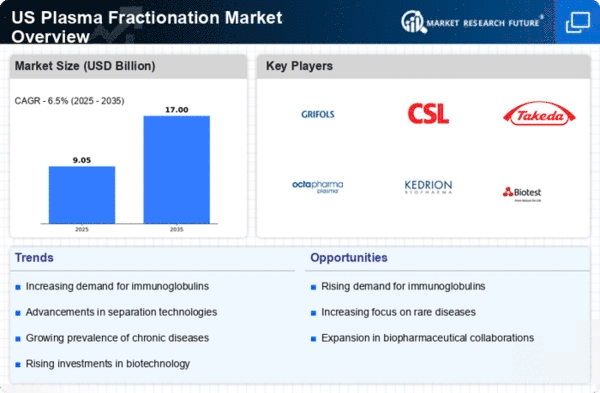
As per MRFR analysis, the US plasma fractionation market size was estimated at 8.5 USD Billion in 2024.. The US plasma fractionation market is projected to grow from 9.05 USD Billion in 2025 to 17.0 USD Billion by 2035, exhibiting a compound annual growth rate (CAGR) of 6.5% during the forecast period 2025 - 2035.

Key Market Trends & Highlights

The US plasma fractionation market is poised for growth driven by technological advancements and increasing demand for plasma-derived products.

  • Technological advancements in fractionation processes are enhancing product yield and quality. Regulatory developments are shaping the landscape, ensuring safety and efficacy in plasma-derived therapies. Patient-centric approaches are gaining traction, focusing on personalized medicine and tailored treatments. Rising demand for immunoglobulins and advancements in fractionation technologies are key drivers of market growth.

Market Size & Forecast

2024 Market Size 8.5 (USD Billion)
2035 Market Size 17.0 (USD Billion)
CAGR (2025 - 2035) 6.5%

Major Players

<p><a href="https://www.biosuppliesproducts.com/en/product-portfolio">Grifols </a>(ES), CSL Behring (AU), Takeda Pharmaceutical Company (JP), Octapharma (CH), Kedrion (IT), Biotest AG (DE), LFB Group (FR), Sangamo Therapeutics (US), Hualan Biological Engineering (CN)</p>

Market Trends

the plasma fractionation market is experiencing notable growth, driven by increasing demand for immunoglobulins and clotting factors. This growth is largely attributed to the rising prevalence of chronic diseases and the expanding applications of plasma-derived products in therapeutic areas. Furthermore, advancements in technology and manufacturing processes are enhancing the efficiency and yield of plasma fractionation, thereby supporting market expansion. Regulatory frameworks are also evolving, which may facilitate innovation and improve product availability. As a result, stakeholders are likely to witness a dynamic landscape characterized by both opportunities and challenges. In addition, the focus on patient-centric healthcare is influencing the plasma fractionation market. There is a growing emphasis on personalized medicine, which may lead to increased investment in research and development. This trend suggests that companies are prioritizing the development of tailored therapies that leverage the unique properties of plasma-derived products. Overall, the plasma fractionation market appears poised for continued growth, driven by technological advancements, regulatory support, and a shift towards personalized healthcare.

Technological Advancements

Recent innovations in plasma fractionation technologies are enhancing the efficiency and yield of product extraction. These advancements may lead to improved purification processes and reduced production costs, thereby benefiting manufacturers and consumers alike.

Regulatory Developments

Evolving regulatory frameworks are likely to impact the plasma fractionation market positively. Enhanced guidelines may facilitate faster approvals for new products, encouraging innovation and expanding the range of available therapies.

Patient-Centric Approaches

The increasing focus on personalized medicine is shaping the plasma fractionation market. Companies are investing in research to develop tailored therapies, which may lead to more effective treatments and improved patient outcomes.

US Plasma Fractionation Market Market Drivers

Rising Demand for Immunoglobulins

The plasma fractionation market is experiencing a notable increase in demand for immunoglobulins, which are critical for treating various immune deficiencies and autoimmune disorders. This surge is driven by a growing awareness of the therapeutic benefits of immunoglobulins, leading to a projected market growth of approximately 8% annually. The increasing prevalence of chronic diseases and the aging population in the US further contribute to this demand. As healthcare providers seek effective treatments, the plasma fractionation market is positioned to expand significantly, with immunoglobulin therapies becoming a cornerstone of patient care. This trend indicates a robust future for the industry, as manufacturers strive to enhance production capabilities to meet the rising needs of healthcare systems.

Growing Focus on Personalized Medicine

the plasma fractionation market aligns with the growing focus on personalized medicine, which emphasizes tailored treatment approaches for individual patients. This trend is particularly relevant as healthcare systems strive to improve patient outcomes through customized therapies. Plasma-derived products are being developed to meet specific patient needs, enhancing their efficacy and safety profiles. The market is likely to see a shift towards more personalized treatment options, with an anticipated growth rate of 9% in the coming years. As healthcare providers increasingly adopt personalized medicine strategies, the plasma fractionation market is expected to play a crucial role in delivering targeted therapies that address the unique characteristics of patients.

Advancements in Fractionation Technologies

Innovations in fractionation technologies are transforming the plasma fractionation market, enabling more efficient and cost-effective production processes. Techniques such as chromatography and membrane filtration are being refined, leading to higher yields and purities of plasma-derived products. These advancements not only enhance the quality of therapeutic proteins but also reduce production costs, making treatments more accessible. The market is projected to grow as these technologies become more widely adopted, with an estimated increase of 10% in efficiency reported by leading manufacturers. As a result, the plasma fractionation market is expected to see a surge in investment aimed at further technological enhancements, ensuring a competitive edge in the healthcare landscape.

Increasing Investment in Biopharmaceuticals

The plasma fractionation market is benefiting from a significant rise in investment in biopharmaceuticals, driven by the growing recognition of the value of plasma-derived therapies. In the US, biopharmaceutical investments have surged, with funding reaching over $50 billion in recent years. This influx of capital is facilitating research and development efforts, leading to the introduction of novel therapies and improved production methods. As biopharmaceutical companies expand their portfolios to include plasma-derived products, the plasma fractionation market is poised for substantial growth. This trend suggests a promising future for the industry, as new therapies emerge to address unmet medical needs and enhance patient outcomes.

Expanding Applications of Plasma-Derived Products

the plasma fractionation market is expanding in the applications of plasma-derived products, which are increasingly utilized in various therapeutic areas. Beyond traditional uses in immunology, these products are now being explored for their potential in treating neurological disorders, trauma, and surgical procedures. This diversification is likely to drive market growth, as healthcare providers recognize the versatility of plasma-derived therapies. The market is expected to grow at a rate of approximately 7% annually, reflecting the increasing adoption of these products across different medical fields. As research continues to unveil new applications, the plasma fractionation market is set to evolve, offering innovative solutions to complex health challenges.


Market Segment Insights

By Application: Hematology (Largest) vs. Neurology (Fastest-Growing)

<p>In the US plasma fractionation market, Hematology holds the largest share, primarily due to the increasing prevalence of blood disorders and the growing demand for immunoglobulin therapies. In contrast, Neurology is rapidly gaining traction, fueled by advancements in neurotherapeutics and increased investment in neurological research. Both segments are crucial for the overall growth of the market, but their dynamics differ significantly, with Hematology currently leading the charge. As the US plasma fractionation market evolves, Neurology is projected to grow at an impressive rate, driven by innovation in treatments for conditions such as multiple sclerosis and Alzheimer's disease. Factors such as an aging population and heightened awareness of neurological disorders contribute to this growth. Hematology, while still the dominant segment, must adapt to changing demands and new therapeutic developments to maintain its leading position.</p>

<p>Hematology: Dominant vs. Neurology: Emerging</p>

<p>Hematology is characterized by its established presence in the US plasma fractionation market, focusing on developing therapies for blood-related disorders, including hemophilia and thrombocytopenia. This segment benefits from well-recognized products and strong relationships with healthcare providers. On the other hand, Neurology represents an emerging segment, showcasing robust growth potential due to increasing neurological disease prevalence and advancements in treatment protocols. Neurology's innovations are attracting substantial research funding, setting the stage for competitive developments in novel therapies. As a result, these segments highlight a significant contrast, with Hematology's dominance balanced by Neurology's vibrant growth trajectory.</p>

By Product Type: Immunoglobulin (Largest) vs. Coagulation Factors (Fastest-Growing)

<p>In the US plasma fractionation market, the product type segment showcases varying shares among its key values. Immunoglobulin dominates the landscape, held by substantial demand due to its therapeutic applications in various medical conditions. Albumin follows, catering to critical care treatments, while Coagulation Factors and Protease Inhibitors represent vital components in specialty therapies, albeit with smaller market shares. Growth trends within this segment reveal a robust expansion, particularly for Coagulation Factors, which are experiencing increasing prevalence in hemophilia treatment. Factors driving this growth include rising awareness of bleeding disorders and advancements in therapeutic interventions. Additionally, expanding indications for Immunoglobulin usage across different health conditions are bolstering the demand, confirming its established dominance in the market.</p>

<p>Immunoglobulin: Dominant vs. Coagulation Factors: Emerging</p>

<p>Immunoglobulin is recognized as the dominant product type in the US plasma fractionation market, known for its extensive use in treating immune deficiencies and autoimmune disorders. Its reliable efficacy and established safety profile contribute to sustained demand among healthcare providers. In contrast, Coagulation Factors, while currently an emerging segment, are rapidly gaining traction due to innovative therapies and increasing prevalence of genetic bleeding disorders. As advancements in biotechnology enhance the availability of these factors, their market share is expected to grow, appealing to more healthcare scenarios where bleeding control is essential.</p>

By End User: Hospitals (Largest) vs. Blood Banks (Fastest-Growing)

<p>In the US plasma fractionation market, hospitals hold the largest market share, primarily due to their extensive utilization of plasma-derived therapies for various medical conditions. Following closely are blood banks, which are experiencing significant growth driven by the increasing demand for blood products and advancements in plasma collection technology. Ambulatory surgical centers and pharmaceutical companies also contribute to the market but represent a smaller share relative to hospitals and blood banks. The growth trends in this segment are largely influenced by the rising prevalence of chronic diseases and the growing emphasis on transfusion medicine. Hospitals continue to expand their services, while blood banks are innovating their operational efficiency and service offerings. As the healthcare landscape evolves, ambulatory surgical centers are also positioning themselves to capitalize on this trend by incorporating plasma therapies into their treatment options.</p>

<p>Hospitals (Dominant) vs. Blood Banks (Emerging)</p>

<p>Hospitals in the US plasma fractionation market are recognized as the dominant players due to their comprehensive healthcare services and the critical role they play in patient care, offering a range of treatments involving plasma-derived products. Their robust infrastructure and trained medical professionals enable them to implement <a href="https://www.marketresearchfuture.com/reports/advanced-glycation-end-products-market-26113">advanced</a> plasma collection and processing methods effectively. In contrast, blood banks are emerging as vital entities, characterized by their specialized focus on plasma collection and distribution. With an increasing demand for donated plasma and innovative approaches to donor recruitment and retention, blood banks are enhancing their operational capabilities. This shift positions them to meet the evolving needs of healthcare providers, thereby making them a promising segment in the market.</p>

By Technology: Centrifugation (Largest) vs. Chromatography (Fastest-Growing)

<p>In the US plasma fractionation market, the technology segment is primarily dominated by centrifugation, holding the largest market share due to its established efficiency and reliability in separating plasma components. Chromatography is gaining traction, gradually increasing its market share as advancements and specific applications expand. Precipitation and filtration, while essential, remain smaller segments compared to the leading two, reflecting the competitive landscape of the market. Centrifugation's leading position is driven by its effectiveness in large-scale processing, whereas chromatography is on a rapid growth trajectory, fueled by technological innovations and growing demand for purity in plasma-derived products. Factors such as increased research in therapeutic applications and a rise in plasma collection are propelling these segments forward, indicating a dynamic shift in preferences toward more specialized separation techniques that cater to specific clinical needs.</p>

<p>Technology: Centrifugation (Dominant) vs. Chromatography (Emerging)</p>

<p>Centrifugation is the dominant technology in the US plasma fractionation market, celebrated for its high throughput and efficiency in separating liquid components based on density. This method is widely adopted across various applications, including the production of immunoglobulins and clotting factors. Conversely, chromatography stands out as an emerging technology, noted for its precision and ability to achieve high purity levels in plasma derived products. As biopharmaceutical companies enhance their focus on developing complex therapies, the demand for chromatography is expected to grow significantly, allowing for the tailoring of treatment based on patient-specific needs. The evolution of these technologies indicates a trend towards increasingly sophisticated methods of plasma fractionation.</p>

Get more detailed insights about US Plasma Fractionation Market Research Report-Forecast to 2035

Regional Insights

Key Players and Competitive Insights

The plasma fractionation market is characterized by a dynamic competitive landscape, driven by increasing demand for immunoglobulins and clotting factors, alongside advancements in technology. Key players such as Grifols (Spain), CSL Behring (Australia), and Takeda Pharmaceutical Company (Japan) are at the forefront, each adopting distinct strategies to enhance their market positioning. Grifols (Spain) focuses on innovation through research and development, particularly in the area of rare diseases, while CSL Behring (Australia) emphasizes global expansion and strategic partnerships to bolster its product offerings. Takeda Pharmaceutical Company (Japan) is actively pursuing mergers and acquisitions to diversify its portfolio, indicating a trend towards consolidation in the market. Collectively, these strategies contribute to a competitive environment that is increasingly shaped by innovation and strategic collaborations.

In terms of business tactics, companies are localizing manufacturing to reduce costs and enhance supply chain efficiency. The market structure appears moderately fragmented, with several key players exerting influence over specific segments. This fragmentation allows for niche players to thrive, while larger companies leverage their scale to optimize operations and expand their reach. The collective influence of these key players fosters a competitive atmosphere where agility and responsiveness to market demands are paramount.

In October 2025, Grifols (Spain) announced a partnership with a leading biotechnology firm to develop next-generation therapies for immunodeficiencies. This collaboration is strategically significant as it not only enhances Grifols' R&D capabilities but also positions the company to capture a larger share of the growing market for specialized therapies. Such partnerships are indicative of a broader trend towards collaborative innovation in the sector.

In September 2025, CSL Behring (Australia) launched a new product line aimed at treating hemophilia, which underscores its commitment to addressing unmet medical needs. This strategic move is likely to strengthen CSL Behring's market presence and enhance its reputation as a leader in hemophilia treatment. The introduction of innovative products is essential for maintaining competitive advantage in a market that increasingly values differentiation.

In August 2025, Takeda Pharmaceutical Company (Japan) completed the acquisition of a smaller plasma-derived therapies company, which is expected to expand its product portfolio and enhance its operational capabilities. This acquisition reflects a strategic focus on growth through consolidation, allowing Takeda to leverage synergies and improve its market position. Such actions are indicative of a trend where larger firms seek to enhance their competitive edge through strategic acquisitions.

As of November 2025, current competitive trends in the plasma fractionation market include a strong emphasis on digitalization, sustainability, and the integration of artificial intelligence (AI) in operations. Strategic alliances are increasingly shaping the landscape, enabling companies to pool resources and expertise to drive innovation. Looking ahead, competitive differentiation is likely to evolve, with a shift from price-based competition towards a focus on technological advancements, innovation, and supply chain reliability. This transition suggests that companies will need to invest in R&D and forge strategic partnerships to remain competitive in an ever-evolving market.

Key Companies in the US Plasma Fractionation Market market include

Industry Developments

Recent developments in the US Plasma Fractionation Market have highlighted a surge in interest and activity among key players. For instance, in August 2023, Cerus Corporation announced advancements in its INTERCEPT Blood System technology, aiming to enhance safety protocols in plasma transfusions.

In July 2023, Grifols expanded its production capacity in North Carolina to meet the rising demand for immunoglobulin therapies. Furthermore, Baxter International revealed its plans to increase operational efficiencies by automating certain plasma processing procedures earlier in September 2023.

The market is also witnessing significant growth in valuation, driven by an increasing incidence of chronic diseases and an expanded patient population requiring plasma-derived therapies. Among recent strategic activities, in June 2023, Takeda Pharmaceutical finalized the acquisition of a biologics facility from Shire, enhancing its capabilities in the plasma sector.

Moreover, CSL Behring launched new products targeting rare bleeding disorders, which contributed to a positive market outlook. The American Red Cross continues to play a vital role in plasma collection efforts, ensuring a steady supply for therapeutic needs. These activities indicate a robust and evolving market landscape in the U.S. Plasma Fractionation sector.

Future Outlook

US Plasma Fractionation Market Future Outlook

<p>the plasma fractionation market is expected to grow at a 6.5% CAGR from 2024 to 2035, driven by increasing demand for immunoglobulins and advancements in fractionation technologies.</p>

New opportunities lie in:

  • <p>Expansion of contract manufacturing services for biopharmaceutical companies.</p>
  • <p>Development of innovative plasma-derived therapies targeting rare diseases.</p>
  • <p>Investment in automated plasma collection and processing technologies.</p>

<p>By 2035, the plasma fractionation market is expected to achieve robust growth and enhanced competitive positioning.</p>

Market Segmentation

US Plasma Fractionation Market End User Outlook

  • Hospitals
  • Ambulatory Surgical Centers
  • Blood Banks
  • Pharmaceutical Companies

US Plasma Fractionation Market Technology Outlook

  • Centrifugation
  • Chromatography
  • Precipitation
  • Filtration

US Plasma Fractionation Market Application Outlook

  • Neurology
  • Hematology
  • General Medicine
  • Immunology

US Plasma Fractionation Market Product Type Outlook

  • Immunoglobulin
  • Albumin
  • Coagulation Factors
  • Protease Inhibitors

Report Scope

MARKET SIZE 2024 8.5(USD Billion)
MARKET SIZE 2025 9.05(USD Billion)
MARKET SIZE 2035 17.0(USD Billion)
COMPOUND ANNUAL GROWTH RATE (CAGR) 6.5% (2024 - 2035)
REPORT COVERAGE Revenue Forecast, Competitive Landscape, Growth Factors, and Trends
BASE YEAR 2024
Market Forecast Period 2025 - 2035
Historical Data 2019 - 2024
Market Forecast Units USD Billion
Key Companies Profiled Grifols (ES), CSL Behring (AU), Takeda Pharmaceutical Company (JP), Octapharma (CH), Kedrion (IT), Biotest AG (DE), LFB Group (FR), Sangamo Therapeutics (US), Hualan Biological Engineering (CN)
Segments Covered Application, Product Type, End User, Technology
Key Market Opportunities Advancements in purification technologies enhance efficiency in the plasma fractionation market.
Key Market Dynamics Rising demand for immunoglobulins drives innovation and competition in the plasma fractionation market.
Countries Covered US

FAQs

What was the projected market size of the US Plasma Fractionation Market in 2024?

The US Plasma Fractionation Market was expected to be valued at 5.1 USD Billion in 2024.

How much is the US Plasma Fractionation Market expected to grow by 2035?

By 2035, the US Plasma Fractionation Market is anticipated to reach a value of 8.2 USD Billion.

What is the expected CAGR for the US Plasma Fractionation Market from 2025 to 2035?

The expected CAGR for the US Plasma Fractionation Market is 4.412 percent from 2025 to 2035.

What are the major product segments in the US Plasma Fractionation Market?

The major product segments include Immunoglobulin, Albumin, Coagulation Factors, and Protease Inhibitors.

What was the market size of Immunoglobulin in 2024?

In 2024, the market size for Immunoglobulin was valued at 2.3 USD Billion.

How much is the Albumin segment expected to be valued by 2035?

The Albumin segment is projected to be valued at 2.5 USD Billion by 2035.

Which companies are considered major players in the US Plasma Fractionation Market?

Major players in the market include Cerus Corporation, Octapharma, Grifols, Baxter International, and CSL Behring.

What is the market size for Coagulation Factors in 2035?

The market size for Coagulation Factors is expected to reach 1.5 USD Billion by 2035.

What are the key growth drivers for the US Plasma Fractionation Market?

Key growth drivers include increasing demand for immunoglobulin therapies and advancements in medical technologies.

How much is the Protease Inhibitors segment expected to grow by 2035?

The Protease Inhibitors segment is anticipated to grow to 0.5 USD Billion by 2035.

  1. SECTION I: EXECUTIVE SUMMARY AND KEY HIGHLIGHTS
    1. EXECUTIVE SUMMARY
      1. Market Overview
      2. Key Findings
      3. Market Segmentation
      4. Competitive Landscape
      5. Challenges and Opportunities
      6. Future Outlook 2
  2. SECTION II: SCOPING, METHODOLOGY AND MARKET STRUCTURE
    1. MARKET INTRODUCTION
      1. Definition
      2. Scope of the study
    2. RESEARCH METHODOLOGY
      1. Overview
      2. Data Mining
      3. Secondary Research
      4. Primary Research
      5. Forecasting Model
      6. Market Size Estimation
      7. Data Triangulation
      8. Validation 3
  3. SECTION III: QUALITATIVE ANALYSIS
    1. MARKET DYNAMICS
      1. Overview
      2. Drivers
      3. Restraints
      4. Opportunities
    2. MARKET FACTOR ANALYSIS
      1. Value chain Analysis
      2. Porter's Five Forces Analysis
      3. COVID-19 Impact Analysis
  4. SECTION IV: QUANTITATIVE ANALYSIS
    1. Life Sciences, BY Application (USD Billion)
      1. Neurology
      2. Hematology
      3. General Medicine
      4. Immunology
    2. Life Sciences, BY Product Type (USD Billion)
      1. Immunoglobulin
      2. Albumin
      3. Coagulation Factors
      4. Protease Inhibitors
    3. Life Sciences, BY End User (USD Billion)
      1. Hospitals
      2. Ambulatory Surgical Centers
      3. Blood Banks
      4. Pharmaceutical Companies
    4. Life Sciences, BY Technology (USD Billion)
      1. Centrifugation
      2. Chromatography
      3. Precipitation
      4. Filtration 5
  5. SECTION V: COMPETITIVE ANALYSIS
    1. Competitive Landscape
      1. Overview
      2. Competitive Analysis
      3. Market share Analysis
      4. Major Growth Strategy in the Life Sciences
      5. Competitive Benchmarking
      6. Leading Players in Terms of Number of Developments in the Life Sciences
      7. Key developments and growth strategies
      8. Major Players Financial Matrix
    2. Company Profiles
      1. Grifols (ES)
      2. CSL Behring (AU)
      3. Takeda Pharmaceutical Company (JP)
      4. Octapharma (CH)
      5. Kedrion (IT)
      6. Biotest AG (DE)
      7. LFB Group (FR)
      8. Sangamo Therapeutics (US)
      9. Hualan Biological Engineering (CN)
    3. Appendix
      1. References
      2. Related Reports 6 LIST OF FIGURES
    4. MARKET SYNOPSIS
    5. US MARKET ANALYSIS BY APPLICATION
    6. US MARKET ANALYSIS BY PRODUCT TYPE
    7. US MARKET ANALYSIS BY END USER
    8. US MARKET ANALYSIS BY TECHNOLOGY
    9. KEY BUYING CRITERIA OF LIFE SCIENCES
    10. RESEARCH PROCESS OF MRFR
    11. DRO ANALYSIS OF LIFE SCIENCES
    12. DRIVERS IMPACT ANALYSIS: LIFE SCIENCES
    13. RESTRAINTS IMPACT ANALYSIS: LIFE SCIENCES
    14. SUPPLY / VALUE CHAIN: LIFE SCIENCES
    15. LIFE SCIENCES, BY APPLICATION, 2024 (% SHARE)
    16. LIFE SCIENCES, BY APPLICATION, 2024 TO 2035 (USD Billion)
    17. LIFE SCIENCES, BY PRODUCT TYPE, 2024 (% SHARE)
    18. LIFE SCIENCES, BY PRODUCT TYPE, 2024 TO 2035 (USD Billion)
    19. LIFE SCIENCES, BY END USER, 2024 (% SHARE)
    20. LIFE SCIENCES, BY END USER, 2024 TO 2035 (USD Billion)
    21. LIFE SCIENCES, BY TECHNOLOGY, 2024 (% SHARE)
    22. LIFE SCIENCES, BY TECHNOLOGY, 2024 TO 2035 (USD Billion)
    23. BENCHMARKING OF MAJOR COMPETITORS 7 LIST OF TABLES
    24. LIST OF ASSUMPTIONS
    25. US MARKET SIZE ESTIMATES; FORECAST
      1. BY APPLICATION, 2025-2035 (USD Billion)
      2. BY PRODUCT TYPE, 2025-2035 (USD Billion)
      3. BY END USER, 2025-2035 (USD Billion)
      4. BY TECHNOLOGY, 2025-2035 (USD Billion)
    26. PRODUCT LAUNCH/PRODUCT DEVELOPMENT/APPROVAL
    27. ACQUISITION/PARTNERSHIP

US Life Sciences Market Segmentation

Life Sciences By Application (USD Billion, 2025-2035)

  • Neurology
  • Hematology
  • General Medicine
  • Immunology

Life Sciences By Product Type (USD Billion, 2025-2035)

  • Immunoglobulin
  • Albumin
  • Coagulation Factors
  • Protease Inhibitors

Life Sciences By End User (USD Billion, 2025-2035)

  • Hospitals
  • Ambulatory Surgical Centers
  • Blood Banks
  • Pharmaceutical Companies

Life Sciences By Technology (USD Billion, 2025-2035)

  • Centrifugation
  • Chromatography
  • Precipitation
  • Filtration
Infographic

Free Sample Request

Kindly complete the form below to receive a free sample of this Report

Get Free Sample

Customer Strories

Compare Licence

×
Features License Type
Single User Multiuser License Enterprise User
Price $4,950 $5,950 $7,250
Maximum User Access Limit 1 User Upto 10 Users Unrestricted Access Throughout the Organization
Free Customization
Direct Access to Analyst
Deliverable Format
Platform Access
Discount on Next Purchase 10% 15% 15%
Printable Versions