North America: Expanding Department of Defense
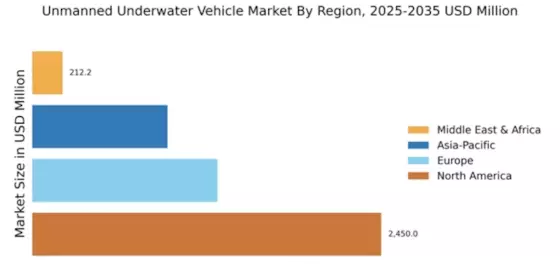
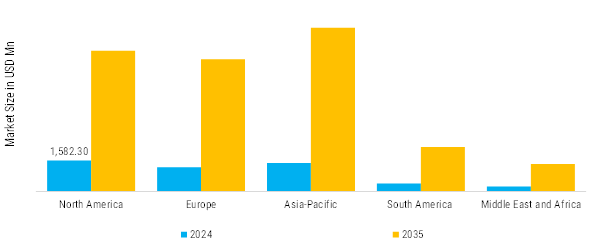
North American Unmanned Underwater Vehicles market is sourced from the government of the United States, especially the Department of Defense. For AUV manufacturers, DoD is an essential downstream client that provides some stability through long-term contracts. Such AUVs are widely used in commercial applications by research institutions, oil and gas companies, or other clients for tasks concerning seafloor and pipeline inspection in addition to environmental monitoring in the government sector. Since AUV subtitle manufacturers experienced robust demand from all potential applications over the period, their story with respect to the contracts from the government and the oil and gas industry remains exceptional. Even when almost all industries had a challenging time because of the COVID pandemic in 2020, the revenue for the AUV manufacturers experienced a substantial increase since they received significant government funding that went in favour of shoring up the demand created by other industries that suffered a setback. By 2021, when the economy was on the rebound, the additional money added by the DoD had also started to decline, so operators found themselves in need of making half a million up in revenue somewhere else. The demand in some other areas can reduce the revenue drop, but the decline is rather substantial, regardless.
Europe: Growing underwater exploration and defense and security applications
Europe has been gaining momentum in recent times, driven in part by growing underwater exploration and defense and security applications coupled with environmental monitoring. Europe is also a significant hub in the development and deployment of UUVs since some of the leading manufacturers and several research institutions are based there. The key market leaders in this include the United Kingdom, Germany, and France. Such countries are leading heavy investors in the development of advanced technologies in UUVs. They use these in developing UUVs for various applications ranging from military and defense to oil and gas exploration and scientific research. Another characteristic of the European UUV market is the large number of SMEs developing innovative solutions for UUVs.
Asia Pacific: Fastest Growing underwater vehicles
The Asia-Pacific region offers a growth opportunity market for unmanned underwater vehicles. With increasing defense budgets, heightened maritime security concerns, and reduced costs by the development of underwater technology, prospects for the UUV market in the Asia-Pacific region are looking bright across the forecast period. Countries such as China, Japan, South Korea, and Australia are making huge investments in developing and inducting UUVs for a variety of applications including oceanic exploration, marine research, and naval operations. The market comprises a wide range of platforms in UUVs, from small man-portable systems to large, long-endurance vehicles. As regional powers work towards increasing their maritime capabilities, demand for advanced UUV solutions will only continue to increase—hence, the Asia-Pacific will turn into a strategic battleground between UUV manufacturers and technology providers.
South America: Growing marine research, and environmental monitoring
The South and Central America UUV market is likely to grow in view of the increasing demand from offshore oil and gas exploration, marine research, and environmental monitoring activities that are undertaken in this region. Countries like Brazil, Mexico, and Colombia are investing in the development and deployment of UUVs to support their maritime operations and enhance their underwater capabilities. Another driver for the market is the improved coastal and port security, coupled with growing interest in the region's ocean space for its sustainable management and conservation.
Middle East & Africa: Emerging offshore oil and gas exploration activities
This Middle East and Africa UUV market is likely to bully in the forecasted years due to some impulse factors, including the rise in offshore oil and gas exploration activities, surge in demand for maritime security, and underwater technology evolution. Countries like Saudi Arabia, the United Arab Emirates, and South Africa are developing and fielding UUVs for a host of applications such as underwater inspection, mine countermeasures, and marine research. Another driver for this market is that in regional underwater operations, there comes a need for cost-effective solutions which are operationally effective.