
Request Free Sample ×

Kindly complete the form below to receive a free sample of this Report

* Please use a valid business email

Leading companies partner with us for data-driven Insights

clients tt-cursor
Hero Background
English
Chinese
French
Japanese
Korean
German
Spanish

Urban Air Mobility Market Size

ID: MRFR/AD/6216-HCR
200 Pages
Abbas Raut
March 2026

Urban Air Mobility (UAM) Market Size, Share, Industry Trend & Analysis Research Report By Application (Passenger Transport, Cargo Transport, Emergency Medical Services, Tourism), By Vehicle Type (Electric Vertical Takeoff and Landing, Hybrid Vertical Takeoff and Landing, Cargo Drones, Passenger Drones), By Technology (Autonomous Systems, Electric Propulsion, Air Traffic Management Solutions, Flight Control Systems), By End Use (Urban Commute, Regional Travel, Commercial Logistics) and By Regional (North America, Europe, South America, Asia Pacific, Middle East and Africa) - Forecast to 2035

Share:
Download PDF ×

We do not share your information with anyone. However, we may send you emails based on your report interest from time to time. You may contact us at any time to opt-out.

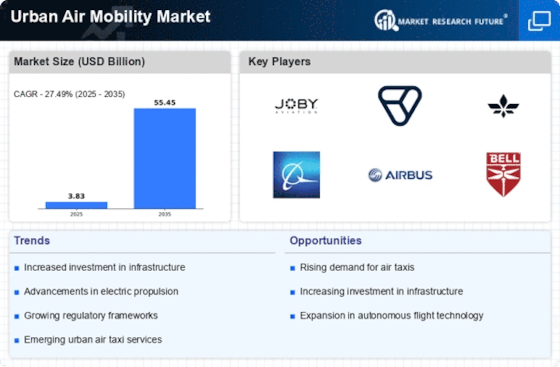
Urban Air Mobility Market Infographic
Purchase Options

Urban Air Mobility Size

Urban Air Mobility Market Growth Projections and Opportunities

The Urban Air Mobility (UAM) market is influenced by a confluence of factors that shape its development, adoption, and integration into urban transportation systems. Technological innovation serves as a fundamental factor driving the UAM market. Advances in electric propulsion systems, autonomous flight capabilities, battery technology, and lightweight materials drive the development of electric vertical takeoff and landing (eVTOL) aircraft. The ongoing pursuit of more efficient, reliable, and environmentally friendly aerial mobility solutions shapes the market's technological landscape.

Regulatory frameworks and policy implementations significantly impact the UAM market factors. Governments worldwide are working to establish regulations and standards that facilitate safe and efficient urban air transportation. Regulatory initiatives related to airspace integration, safety protocols, certification processes for new technologies, and operational guidelines are pivotal in defining the operational environment and fostering public trust in aerial mobility solutions.

Infrastructure readiness represents a crucial market factor in the UAM sector. The development of infrastructure such as vertiports, landing pads, charging stations, and air traffic management systems tailored for urban aerial mobility is essential. The availability and suitability of infrastructure to support UAM operations within urban areas significantly influence the feasibility and scalability of aerial transportation systems.

Consumer demand and societal acceptance play a significant role in shaping the market factors of UAM. As urban populations grow and traffic congestion worsens, there's a rising demand for efficient and time-saving transportation solutions. UAM offers the potential for faster, on-demand aerial mobility services, aligning with evolving consumer preferences for convenience and reduced commute times. However, societal acceptance regarding safety, noise pollution, environmental impact, and the integration of aerial vehicles into urban landscapes also shapes market factors by influencing adoption rates and public perception.

Technological partnerships and collaborations between industry stakeholders are pivotal factors driving market factors in the UAM sector. Collaborations between aerospace companies, technology firms, mobility service providers, and regulatory bodies accelerate innovation and the development of UAM solutions. Strategic partnerships aimed at designing aircraft, developing air traffic management systems, establishing infrastructure, and defining operational frameworks are instrumental in advancing the capabilities and integration of aerial mobility solutions.

Economic considerations and investment dynamics significantly influence the UAM market factors. The development and commercialization of UAM involve substantial investments in research, infrastructure, manufacturing, and operational systems. Investment trends, funding opportunities, and the ability to attract capital play a crucial role in driving market factors. Companies capable of securing investments and developing sustainable business models are likely to influence market growth and shape the trajectory of UAM.

Moreover, environmental concerns and sustainability efforts are increasingly influencing market factors in the UAM sector. The focus on reducing carbon emissions, noise pollution, and enhancing energy efficiency drives the development of electric and hybrid propulsion systems for UAM vehicles. Environmental considerations are becoming pivotal in shaping regulatory frameworks, technological innovations, and consumer choices within the UAM market.
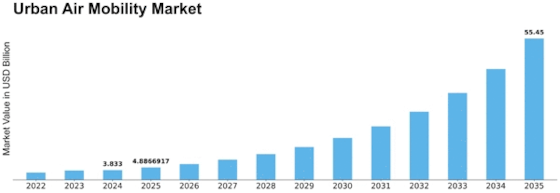

Urban Air Mobility Market Size Graph
Author
Author Profile
Abbas Raut
Research Analyst

Abbas Raut is a Senior Research Analyst with 5+ years of experience delivering data-driven insights and strategic recommendations across the Automotive and Aerospace & Defense sectors. He specializes in emerging technologies, industry value chains, and global market dynamics shaping the future of mobility and defense. In automotive, Abbas has led studies on EVs, charging stations, BMS, superchargers, and more, guiding stakeholders through electrification and regulatory shifts. In Aerospace & Defense, he has analyzed markets for military electronics, drones, radars, and electronic warfare solutions, supporting procurement and investment strategies. With expertise in market sizing, forecasting, benchmarking, and technology adoption, Abbas is known for transforming complex datasets into actionable insights that drive strategy, innovation, and growth.

Leave a Comment

FAQs

What is the current valuation of the Urban Air Mobility Market?

<p>As of 2024, the Urban Air Mobility Market was valued at approximately 3.833 USD Billion.</p>

What is the projected market size for Urban Air Mobility by 2035?

<p>The Urban Air Mobility Market is projected to reach a valuation of 55.45 USD Billion by 2035.</p>

What is the expected CAGR for the Urban Air Mobility Market from 2025 to 2035?

<p>The expected CAGR for the Urban Air Mobility Market during the forecast period 2025 - 2035 is 27.49%.</p>

Which applications are driving growth in the Urban Air Mobility Market?

<p>Key applications include Passenger Transport, projected to grow from 1.5 USD Billion to 22.0 USD Billion, and Cargo Transport, expected to rise from 1.0 USD Billion to 15.0 USD Billion.</p>

What vehicle types are anticipated to dominate the Urban Air Mobility Market?

<p>Electric Vertical Takeoff and Landing vehicles are expected to grow from 1.5 USD Billion to 22.0 USD Billion, alongside Hybrid Vertical Takeoff and Landing vehicles, which may increase from 1.0 USD Billion to 10.0 USD Billion.</p>

Who are the key players in the Urban Air Mobility Market?

<p>Prominent players include Joby Aviation, Volocopter, Lilium, Boeing, Airbus, Bell Textron, EHang, Pipistrel, Hyundai, and Kitty Hawk.</p>

What technological advancements are influencing the Urban Air Mobility Market?

<p>Technologies such as Electric Propulsion and Autonomous Systems are projected to grow significantly, with Electric Propulsion expected to rise from 1.1499 USD Billion to 16.5 USD Billion.</p>

How is the Urban Air Mobility Market segmented by end use?

<p>The market is segmented into Urban Commute, projected to grow from 1.5 USD Billion to 22.0 USD Billion, and Commercial Logistics, expected to increase from 1.333 USD Billion to 18.45 USD Billion.</p>

What role does emergency medical services play in the Urban Air Mobility Market?

<p>Emergency Medical Services are anticipated to grow from 0.5 USD Billion to 8.0 USD Billion, indicating a rising demand for rapid medical transport solutions.</p>

What is the significance of tourism in the Urban Air Mobility Market?

<p>Tourism is projected to expand from 0.833 USD Billion to 10.45 USD Billion, suggesting a growing interest in aerial tourism experiences.</p>

Market Summary

As per Market Research Future analysis, the Urban Air Mobility Market Size was estimated at 3.833 USD Billion in 2024. The Urban Air Mobility industry is projected to grow from 4.887 USD Billion in 2025 to 55.45 USD Billion by 2035, exhibiting a compound annual growth rate (CAGR) of 27.4% during the forecast period 2025 - 2035

Key Market Trends & Highlights

The Urban Air Mobility Market is poised for substantial growth driven by technological advancements and increasing urbanization.

  • North America remains the largest market for UAM Market, showcasing a robust demand for innovative aerial transport solutions. Asia-Pacific is emerging as the fastest-growing region, fueled by rapid urbanization and a burgeoning middle class. Passenger transport dominates the market, while cargo transport is experiencing the fastest growth due to rising e-commerce demands. Key market drivers include increased urbanization and technological innovations, which are shaping the future of aerial mobility solutions.

Market Size & Forecast

2024 Market Size 3.833 (USD Billion)
2035 Market Size 55.45 (USD Billion)
CAGR (2025 - 2035) 27.49%
Largest Regional Market Share in 2024 North America

Major Players

Joby Aviation (US), Volocopter (DE), Lilium (DE), Boeing (US), Airbus (FR), Bell Textron (US), EHang (CN), Pipistrel (SI), Hyundai (KR), Kitty Hawk (US)

Market Trends

The global urban air mobility market is currently experiencing a transformative phase, driven by advancements in technology and increasing urbanization. As cities grapple with congestion and pollution, the demand for innovative transportation solutions has surged. Urban air mobility, which encompasses the use of aerial vehicles for passenger and cargo transport within urban environments, appears to offer a viable alternative to traditional ground-based systems. This urban air mobility market report highlights a diverse array of stakeholders, including aerospace manufacturers, technology firms, and regulatory bodies, all of whom are collaborating to establish a framework for safe and efficient operations.  Moreover, the Urban Air Mobility Industry is likely to benefit from ongoing investments in infrastructure and regulatory frameworks that support the integration of aerial vehicles into existing transportation networks. The potential for reduced travel times and enhanced connectivity between urban centers is enticing for both consumers and businesses alike. As the market evolves, it seems that public acceptance and regulatory approval will play crucial roles in determining the pace of adoption. The future landscape of the urban air mobility market forecast may be shaped by innovations in electric vertical takeoff and landing (eVTOL) aircraft, autonomous flight technologies, and sustainable energy solutions, all of which could redefine urban transportation dynamics.

Technological Advancements

The Urban Air Mobility Industry is witnessing rapid technological progress, particularly in the development of electric vertical takeoff and landing (eVTOL) aircraft. These innovations are likely to enhance the efficiency and safety of aerial transportation, making it more accessible to urban populations and positively influencing the urban air mobility market size over the forecast period. Furthermore, advancements in autonomous flight systems may facilitate seamless operations, reducing the need for human pilots and potentially lowering operational costs.

Regulatory Developments

Regulatory frameworks are evolving to accommodate the unique challenges posed by urban air mobility. Governments and aviation authorities are actively working to establish guidelines that ensure safety and efficiency in urban airspace, which is crucial for long-term urban air mobility market forecast growth.

Sustainability Initiatives

Sustainability is becoming a central theme within the global urban air mobility market, as stakeholders prioritize environmentally friendly solutions. The push for electric propulsion systems aligns with global sustainability goals and strengthens the long-term outlook of the urban air mobility market size. This trend not only aligns with global sustainability goals but also appeals to environmentally conscious consumers.

Urban Air Mobility Market Market Drivers

Regulatory Frameworks

The establishment of supportive regulatory frameworks is essential for the Urban Air Mobility Market to thrive. Governments and aviation authorities are actively working to create guidelines that ensure the safe integration of aerial vehicles into existing airspace. These regulations encompass various aspects, including air traffic management, safety standards, and operational protocols. As regulatory bodies develop comprehensive frameworks, they provide a clearer pathway for companies to enter the Urban Air Mobility Industry. This regulatory clarity is crucial for fostering public trust and encouraging investment in urban air mobility solutions. Moreover, collaboration between industry stakeholders and regulators is likely to enhance the overall safety and efficiency of urban air mobility operations, further solidifying the market's potential.

Environmental Concerns

Growing environmental concerns are increasingly influencing the Urban Air Mobility Market. As urban areas grapple with air pollution and greenhouse gas emissions, there is a pressing need for sustainable transportation solutions. Urban air mobility, particularly through the use of electric aircraft, presents an opportunity to reduce the carbon footprint associated with traditional ground transportation. The shift towards greener technologies aligns with global sustainability goals, potentially leading to regulatory incentives for the Urban Air Mobility Industry. Furthermore, studies suggest that eVTOL aircraft could reduce noise pollution significantly compared to conventional helicopters, making them more acceptable in urban environments. This alignment with environmental objectives positions the Urban Air Mobility Industry favorably in the eyes of both consumers and policymakers.

Increased Urbanization

The rapid pace of urbanization is a key driver for the Urban Air Mobility Market. As cities expand and populations grow, traditional ground transportation systems face congestion and inefficiencies. Urban air mobility solutions, such as air taxis and drones, offer a potential alternative to alleviate traffic woes. According to recent estimates, urban populations are projected to reach 68% by 2050, intensifying the need for innovative transportation solutions. This demographic shift creates a fertile ground for the Urban Air Mobility Industry to flourish, as urban dwellers seek faster, more efficient means of travel. The integration of aerial vehicles into urban landscapes could redefine commuting, making it a viable option for daily transportation needs.

Investment and Funding

The Urban Air Mobility Market is witnessing a surge in investment and funding, which serves as a crucial driver for its growth. Venture capitalists, government agencies, and private investors are increasingly channeling resources into the development of urban air mobility technologies. Reports indicate that investments in the sector have reached billions of dollars, reflecting a strong belief in the potential of aerial transportation. This influx of capital not only accelerates research and development but also fosters collaboration among stakeholders, including aerospace manufacturers, technology firms, and regulatory bodies. As funding continues to flow into the Urban Air Mobility Industry, it is likely to catalyze innovation and expedite the commercialization of urban air mobility solutions, paving the way for a new era of transportation.

Technological Innovations

Technological advancements play a pivotal role in shaping the Urban Air Mobility Market. Innovations in electric vertical takeoff and landing (eVTOL) aircraft, autonomous navigation systems, and battery technology are driving the development of urban air mobility solutions. For instance, advancements in battery efficiency have the potential to extend flight ranges and reduce operational costs, making air mobility more accessible. The market for eVTOL aircraft is expected to grow significantly, with projections indicating a value of over 1 trillion USD by 2040. These technological breakthroughs not only enhance the feasibility of urban air mobility but also contribute to the overall safety and reliability of aerial transportation, thereby attracting investment and interest in the Urban Air Mobility Industry.

Market Segment Insights

By Application: Passenger Transport (Largest) vs. Cargo Transport (Fastest-Growing)

In the Urban Air Mobility Market, the application segment is broadly categorized into Passenger Transport, Cargo Transport, Emergency Medical Services, and Tourism. The Passenger Transport segment holds the largest market share due to the increasing demand for rapid and efficient urban transportation solutions, catering to commuters in congested metropolitan areas. Conversely, the Cargo Transport is emerging rapidly, contributing significantly to the expansion of the <strong>urban air mobility market size</strong>.

Passenger Transport (Dominant) vs. Cargo Transport (Emerging)

Passenger Transport is currently the dominant application in the Urban Air Mobility Industry, driven by urbanization and the need for efficient commuting options. This segment includes various innovative urban air vehicles designed for quick and safe transport of individuals across cities, facilitated by advanced technology. On the other hand, Cargo Transport is an emerging segment that is rapidly evolving, with a strong focus on integrating aerial delivery systems into logistics networks. As companies seek to optimize delivery speeds and reduce congestion, <a href="https://www.marketresearchfuture.com/reports/cargo-drones-market-11445" target="_blank" rel="noopener">cargo drones</a> and air taxis for freight are becoming more prevalent, marking significant growth potential within urban airspace.

By Vehicle Type: Electric Vertical Takeoff and Landing (Largest) vs. Passenger Drones (Fastest-Growing)

In the Urban <a href="https://www.marketresearchfuture.com/reports/advanced-air-mobility-market-14000">Air Mobility Market</a>, Electric Vertical Takeoff and Landing (eVTOL) vehicles hold the largest market share among the vehicle types, driven by advancements in battery technology and increasing urbanization. They appeal to operators seeking to provide efficient, emission-free transportation solutions in urban settings. Passenger drones, on the other hand, are rapidly gaining traction, positioned as the fastest-growing segment due to their potential to transform personal transport and alleviate traffic congestion in densely populated cities. The rise of commercial operations, favorable regulatory environments, and technological improvements are fostering growth in both segments. As cities explore innovative mobility solutions, eVTOL and <a href="https://www.marketresearchfuture.com/reports/passenger-drones-market-5386">passenger drones</a> are likely to play pivotal roles in reshaping urban infrastructure. Increased investment from tech companies further fuels prospects for these vehicle types, establishing them as favorable options in future transport scenarios.

Electric Vertical Takeoff and Landing (Dominant) vs. <a href="https://www.marketresearchfuture.com/reports/cargo-drones-market-11445" target="_blank" rel="noopener">cargo drones</a> (Emerging)

Electric Vertical Takeoff and Landing<a href="https://www.marketresearchfuture.com/reports/evtol-aircraft-market-7952"> (eVTOL) aircraft</a> are emerging as the dominant force in the Urban Air Mobility Market sector, with their design specifically tailored to meet the demands of urban commuting. Their capabilities allow for vertical takeoff and landing in confined spaces, which minimizes the need for extensive infrastructure. In contrast, cargo drones represent an emerging segment geared towards logistics and delivery solutions, promising increased efficiency in the transport of goods. As the e-commerce sector expands, cargo drones are gaining attention for their potential to expedite last-mile delivery. Both segments leverage cutting-edge technologies, but they cater to different market needs—eVTOL focuses on passenger transport while cargo drones aim at revolutionizing how goods are delivered in urban environments.

By Technology: Electric Propulsion (Largest) vs. Autonomous Systems (Fastest-Growing)

In the Urban Air Mobility Market, Electric propulsion forms the backbone of sustainable urban air transport and holds the largest share in the urban air mobility market report, while autonomous systems are emerging rapidly with strong future potential. This segment's prominence can be attributed to increasing demand for eco-friendly transportation systems that decrease emissions and comply with growing regulatory standards. Following closely is the autonomous systems segment, which is rapidly gaining traction as technological advancements push towards fully automated aerial vehicles, enhancing safety and efficiency in urban air mobility operations.

Technology: Electric Propulsion (Dominant) vs. Autonomous Systems (Emerging)

<a href="https://www.marketresearchfuture.com/reports/electric-propulsion-system-market-32605">Electric propulsion systems</a> are the cornerstone of the Urban Air Mobility Industry, offering a sustainable alternative to conventional fuel sources. These systems reduce carbon emissions and enhance operational efficiency, aligning with the global push for greener technologies. On the other hand, autonomous systems represent an emerging trend characterized by innovations in AI and machine learning that enable vehicles to navigate without human intervention. As cities look towards smart mobility solutions, the integration of autonomous systems in urban air transports shows immense potential for improved accessibility and operational flexibility, positioning them as key players in the future landscape of urban mobility.

By End Use: Urban Commute (Largest) vs. Regional Travel (Fastest-Growing)

In the Urban Air Mobility Market, the End Use segment is predominantly characterized by Urban Commute, which holds the largest market share. This segment appeals to consumers seeking efficient and time-saving transportation alternatives amid growing urban congestion. Regional Travel follows closely, with its increasing popularity reflecting the rising demand for faster travel options beyond local commutes. Both segments are essential in defining how aerial mobility is utilized, reflecting distinct consumer preferences and travel habits.

Urban Commute (Dominant) vs. Regional Travel (Emerging)

The Urban Commute segment is the dominant force within the End Use category, catering to daily commuters in bustling metropolitan areas. It offers a practical solution to urban traffic challenges, enhancing accessibility and reducing travel times significantly. On the other hand, Regional Travel is emerging rapidly, fueled by advancements in EVTOL technology and growing interest in intercity travel. This segment appeals to those seeking convenience and speed, bridging the gap between urban centers and nearby regions. Together, these segments are reshaping the landscape of urban air mobility, promoting a shift towards sustainable and efficient travel.

Get more detailed insights about Urban Air Mobility Market Research Report - Global Forecast till 2035

Regional Insights

North America : Innovation and Investment Hub

North America dominates the global urban air mobility market, supported by regulatory initiatives and strong investment activity. The region continues to influence the urban air mobility market forecast through innovation and commercialization. The U.S. is the largest market, followed by Canada, which is rapidly developing its own UAM initiatives. Regulatory bodies like the FAA are actively working on integrating UAM into the national airspace, fostering innovation and safety. The competitive landscape is robust, featuring major players such as Joby Aviation, Boeing, and Bell Textron. These companies are at the forefront of developing electric vertical takeoff and landing (eVTOL) aircraft, with ongoing partnerships and collaborations to enhance operational capabilities. The presence of established aerospace firms and startups alike creates a dynamic environment for UAM advancements, ensuring North America remains a leader in this emerging sector.

Europe : Regulatory Framework and Innovation

Europe accounts for approximately 30% of the urban air mobility market size, supported by sustainability-driven regulations and advanced aerospace capabilities. The region benefits from strong governmental support and a commitment to sustainable transport solutions. Countries like Germany and France are leading the charge, with initiatives aimed at integrating UAM into existing transport systems. The European Union's regulatory framework is designed to facilitate the safe introduction of UAM technologies, enhancing public acceptance and operational efficiency. Germany is home to key players such as Volocopter and Lilium, which are pioneering eVTOL technologies. The competitive landscape is characterized by collaboration between startups and established aerospace companies, fostering innovation. The European market is also seeing increased investment in infrastructure, such as vertiports, to support UAM operations. This collaborative environment positions Europe as a vital hub for UAM development and deployment

Asia-Pacific : Rapid Growth and Adoption

Asia-Pacific is witnessing rapid growth in the Urban Air Mobility Market sector, holding around 20% of the global market share. The region's urbanization and increasing traffic congestion are driving demand for innovative transport solutions. Countries like China and Japan are at the forefront, with significant investments in UAM technologies and infrastructure. Government initiatives are focused on developing regulatory frameworks that support the safe integration of UAM into urban environments, enhancing public safety and operational efficiency. China's EHang is a notable player, leading the charge in eVTOL development. The competitive landscape is diverse, with numerous startups emerging alongside established aerospace firms. Japan is also making strides with its own UAM initiatives, focusing on integrating these technologies into existing transport systems. The Asia-Pacific region's commitment to innovation and sustainability positions it as a key player in The Urban Air Mobility Market.

Middle East and Africa : Emerging Market Potential

The Middle East and Africa region is beginning to explore the potential of Urban Air Mobility Market, currently holding about 5% of the global market share. The rapid urbanization and increasing investment in infrastructure are key drivers for UAM development. Countries like the UAE are leading the way, with government-backed initiatives aimed at integrating UAM into their transport networks. Regulatory bodies are working to establish frameworks that ensure safety and efficiency in UAM operations, paving the way for future growth. The competitive landscape is still in its infancy, with a few key players emerging, including local startups and international firms looking to enter the market. The UAE's commitment to becoming a global hub for innovation in transport is evident through its investments in UAM technologies. As the region continues to develop its infrastructure and regulatory frameworks, it is poised for significant growth in the UAM sector.

Key Players and Competitive Insights

The Urban Air Mobility Market (UAM) market is currently characterized by a dynamic competitive landscape, driven by technological advancements, regulatory developments, and increasing urban congestion. Key players such as Joby Aviation (US), Volocopter (DE), and Lilium (DE) are at the forefront, each adopting distinct strategies to carve out their market positions. Joby Aviation (US) focuses on innovation in electric vertical takeoff and landing (eVTOL) aircraft, emphasizing safety and efficiency. In contrast, Volocopter (DE) is pursuing a strategy centered on partnerships with urban planners and local governments to facilitate the integration of air taxis into existing transport systems. Lilium (DE) is leveraging its unique jet design to target regional air mobility, aiming to connect urban centers with a network of vertiports, thereby enhancing its operational focus on regional connectivity. The business tactics employed by these companies reflect a concerted effort to localize manufacturing and optimize supply chains, which are crucial in a market that remains moderately fragmented. The collective influence of these key players is shaping a competitive structure that encourages innovation while also fostering collaboration among stakeholders. This is particularly evident as companies seek to establish a foothold in various geographical markets, often through strategic partnerships and joint ventures. In August 2025, Joby Aviation (US) announced a partnership with a major urban transportation network to pilot its air taxi service in a metropolitan area, marking a significant step towards operational deployment. This collaboration not only enhances Joby’s visibility but also aligns with its strategy to integrate air mobility solutions into existing transport frameworks, potentially setting a precedent for future urban air mobility initiatives. Similarly, in September 2025, Volocopter (DE) secured regulatory approval for its air taxi operations in a European city, a move that underscores its commitment to regulatory compliance and operational readiness, thereby enhancing its competitive edge in the European market. In July 2025, Lilium (DE) unveiled its plans for a new network of vertiports in collaboration with local authorities, aiming to establish a comprehensive regional air mobility system. This initiative is strategically significant as it not only expands Lilium’s operational capabilities but also positions the company as a leader in regional connectivity, which is increasingly vital in urban planning discussions. The establishment of these vertiports could facilitate a smoother transition to air mobility solutions, thereby enhancing public acceptance and operational feasibility. As of October 2025, the UAM market is witnessing trends that emphasize digitalization, sustainability, and the integration of artificial intelligence in operations. Strategic alliances are becoming increasingly pivotal, as companies recognize the need to collaborate on technology development and regulatory navigation. The competitive differentiation is likely to evolve from traditional price-based competition towards a focus on innovation, technological advancements, and supply chain reliability. This shift suggests that companies that prioritize these aspects will be better positioned to thrive in the rapidly evolving landscape of urban air mobility.

Key Companies in the Urban Air Mobility Market include

Industry Developments

Recent developments in the  Urban Air Mobility Market have been vibrant, driven by advancements in technology and regulatory support. Companies such as Joby Aviation and Archer Aviation are making significant strides, with Joby planning to launch its electric air taxi service in 2024, aiming to be a pioneer in this sector. Other key players like Volocopter and Lilium are also progressing on manufacturing operational prototypes and securing necessary certifications for urban air transport. Moreover, in August 2023, Bell Textron announced its partnership with several municipalities to expand urban air mobility solutions, demonstrating a growing public interest in aerial transit.

In terms of mergers and acquisitions, Hyundai Aerospace, in June 2023, acquired a majority stake in a local eVTOL startup to enhance its capabilities in the urban air mobility space. The market has witnessed a surge in valuations, reflecting increased investor confidence. The  Urban Air Mobility Industry is expected to grow as governments across the globe announce initiatives aimed at integrating air mobility systems within urban environments and improving infrastructure compatibility. Overall, these developments indicate a rapidly evolving landscape, fostering innovations in air transport solutions to address urban congestion challenges.

Future Outlook

Urban Air Mobility Market Future Outlook

The Urban Air Mobility Market is projected to grow at a 27.49% CAGR from 2025 to 2035, driven by technological advancements, urbanization, and regulatory support.

New opportunities lie in:

  • <p>Development of vertiports in urban centers Partnerships with logistics companies for cargo delivery Integration of AI for traffic management and route optimization</p>

By 2035, the Urban Air Mobility Industry is poised for substantial growth and innovation.

Market Segmentation

Urban Air Mobility Market End Use Outlook

  • Urban Commute
  • Regional Travel
  • Commercial Logistics

Urban Air Mobility Market Technology Outlook

  • Autonomous Systems
  • Electric Propulsion
  • Air Traffic Management Solutions
  • Flight Control Systems

Urban Air Mobility Market Application Outlook

  • Passenger Transport
  • Cargo Transport
  • Emergency Medical Services
  • Tourism

Urban Air Mobility Market Vehicle Type Outlook

  • Electric Vertical Takeoff and Landing
  • Hybrid Vertical Takeoff and Landing
  • Cargo Drones
  • Passenger Drones

Report Scope

MARKET SIZE 2024 3.833(USD Billion)
MARKET SIZE 2025 4.887(USD Billion)
MARKET SIZE 2035 55.45(USD Billion)
COMPOUND ANNUAL GROWTH RATE (CAGR) 27.49% (2025 - 2035)
REPORT COVERAGE Revenue Forecast, Competitive Landscape, Growth Factors, and Trends
BASE YEAR 2024
Market Forecast Period 2025 - 2035
Historical Data 2019 - 2024
Market Forecast Units USD Billion
Key Companies Profiled Joby Aviation (US), Volocopter (DE), Lilium (DE), Boeing (US), Airbus (FR), Bell Textron (US), EHang (CN), Pipistrel (SI), Hyundai (KR), Kitty Hawk (US)
Segments Covered Application, Vehicle Type, Technology, End Use, Regional
Key Market Opportunities Advancements in electric vertical takeoff and landing vehicles enhance accessibility in the Urban Air Mobility Market.
Key Market Dynamics Technological advancements and regulatory frameworks are shaping the competitive landscape of the Urban Air Mobility Market.
Countries Covered North America, Europe, APAC, South America, MEA

FAQs

What is the current valuation of the Urban Air Mobility Market?

<p>As of 2024, the Urban Air Mobility Market was valued at approximately 3.833 USD Billion.</p>

What is the projected market size for Urban Air Mobility by 2035?

<p>The Urban Air Mobility Market is projected to reach a valuation of 55.45 USD Billion by 2035.</p>

What is the expected CAGR for the Urban Air Mobility Market from 2025 to 2035?

<p>The expected CAGR for the Urban Air Mobility Market during the forecast period 2025 - 2035 is 27.49%.</p>

Which applications are driving growth in the Urban Air Mobility Market?

<p>Key applications include Passenger Transport, projected to grow from 1.5 USD Billion to 22.0 USD Billion, and Cargo Transport, expected to rise from 1.0 USD Billion to 15.0 USD Billion.</p>

What vehicle types are anticipated to dominate the Urban Air Mobility Market?

<p>Electric Vertical Takeoff and Landing vehicles are expected to grow from 1.5 USD Billion to 22.0 USD Billion, alongside Hybrid Vertical Takeoff and Landing vehicles, which may increase from 1.0 USD Billion to 10.0 USD Billion.</p>

Who are the key players in the Urban Air Mobility Market?

<p>Prominent players include Joby Aviation, Volocopter, Lilium, Boeing, Airbus, Bell Textron, EHang, Pipistrel, Hyundai, and Kitty Hawk.</p>

What technological advancements are influencing the Urban Air Mobility Market?

<p>Technologies such as Electric Propulsion and Autonomous Systems are projected to grow significantly, with Electric Propulsion expected to rise from 1.1499 USD Billion to 16.5 USD Billion.</p>

How is the Urban Air Mobility Market segmented by end use?

<p>The market is segmented into Urban Commute, projected to grow from 1.5 USD Billion to 22.0 USD Billion, and Commercial Logistics, expected to increase from 1.333 USD Billion to 18.45 USD Billion.</p>

What role does emergency medical services play in the Urban Air Mobility Market?

<p>Emergency Medical Services are anticipated to grow from 0.5 USD Billion to 8.0 USD Billion, indicating a rising demand for rapid medical transport solutions.</p>

What is the significance of tourism in the Urban Air Mobility Market?

<p>Tourism is projected to expand from 0.833 USD Billion to 10.45 USD Billion, suggesting a growing interest in aerial tourism experiences.</p>

  1. SECTION I: EXECUTIVE SUMMARY AND KEY HIGHLIGHTS
    1. | 1.1 EXECUTIVE SUMMARY
    2. | | 1.1.1 Market Overview
    3. | | 1.1.2 Key Findings
    4. | | 1.1.3 Market Segmentation
    5. | | 1.1.4 Competitive Landscape
    6. | | 1.1.5 Challenges and Opportunities
    7. | | 1.1.6 Future Outlook
  2. SECTION II: SCOPING, METHODOLOGY AND MARKET STRUCTURE
    1. | 2.1 MARKET INTRODUCTION
    2. | | 2.1.1 Definition
    3. | | 2.1.2 Scope of the study
    4. | | | 2.1.2.1 Research Objective
    5. | | | 2.1.2.2 Assumption
    6. | | | 2.1.2.3 Limitations
    7. | 2.2 RESEARCH METHODOLOGY
    8. | | 2.2.1 Overview
    9. | | 2.2.2 Data Mining
    10. | | 2.2.3 Secondary Research
    11. | | 2.2.4 Primary Research
    12. | | | 2.2.4.1 Primary Interviews and Information Gathering Process
    13. | | | 2.2.4.2 Breakdown of Primary Respondents
    14. | | 2.2.5 Forecasting Model
    15. | | 2.2.6 Market Size Estimation
    16. | | | 2.2.6.1 Bottom-Up Approach
    17. | | | 2.2.6.2 Top-Down Approach
    18. | | 2.2.7 Data Triangulation
    19. | | 2.2.8 Validation
  3. SECTION III: QUALITATIVE ANALYSIS
    1. | 3.1 MARKET DYNAMICS
    2. | | 3.1.1 Overview
    3. | | 3.1.2 Drivers
    4. | | 3.1.3 Restraints
    5. | | 3.1.4 Opportunities
    6. | 3.2 MARKET FACTOR ANALYSIS
    7. | | 3.2.1 Value chain Analysis
    8. | | 3.2.2 Porter's Five Forces Analysis
    9. | | | 3.2.2.1 Bargaining Power of Suppliers
    10. | | | 3.2.2.2 Bargaining Power of Buyers
    11. | | | 3.2.2.3 Threat of New Entrants
    12. | | | 3.2.2.4 Threat of Substitutes
    13. | | | 3.2.2.5 Intensity of Rivalry
    14. | | 3.2.3 COVID-19 Impact Analysis
    15. | | | 3.2.3.1 Market Impact Analysis
    16. | | | 3.2.3.2 Regional Impact
    17. | | | 3.2.3.3 Opportunity and Threat Analysis
  4. SECTION IV: QUANTITATIVE ANALYSIS
    1. | 4.1 Aerospace & Defense, BY Application (USD Billion)
    2. | | 4.1.1 Passenger Transport
    3. | | 4.1.2 Cargo Transport
    4. | | 4.1.3 Emergency Medical Services
    5. | | 4.1.4 Tourism
    6. | 4.2 Aerospace & Defense, BY Vehicle Type (USD Billion)
    7. | | 4.2.1 Electric Vertical Takeoff and Landing
    8. | | 4.2.2 Hybrid Vertical Takeoff and Landing
    9. | | 4.2.3 Cargo Drones
    10. | | 4.2.4 Passenger Drones
    11. | 4.3 Aerospace & Defense, BY Technology (USD Billion)
    12. | | 4.3.1 Autonomous Systems
    13. | | 4.3.2 Electric Propulsion
    14. | | 4.3.3 Air Traffic Management Solutions
    15. | | 4.3.4 Flight Control Systems
    16. | 4.4 Aerospace & Defense, BY End Use (USD Billion)
    17. | | 4.4.1 Urban Commute
    18. | | 4.4.2 Regional Travel
    19. | | 4.4.3 Commercial Logistics
    20. | 4.5 Aerospace & Defense, BY Region (USD Billion)
    21. | | 4.5.1 North America
    22. | | | 4.5.1.1 US
    23. | | | 4.5.1.2 Canada
    24. | | 4.5.2 Europe
    25. | | | 4.5.2.1 Germany
    26. | | | 4.5.2.2 UK
    27. | | | 4.5.2.3 France
    28. | | | 4.5.2.4 Russia
    29. | | | 4.5.2.5 Italy
    30. | | | 4.5.2.6 Spain
    31. | | | 4.5.2.7 Rest of Europe
    32. | | 4.5.3 APAC
    33. | | | 4.5.3.1 China
    34. | | | 4.5.3.2 India
    35. | | | 4.5.3.3 Japan
    36. | | | 4.5.3.4 South Korea
    37. | | | 4.5.3.5 Malaysia
    38. | | | 4.5.3.6 Thailand
    39. | | | 4.5.3.7 Indonesia
    40. | | | 4.5.3.8 Rest of APAC
    41. | | 4.5.4 South America
    42. | | | 4.5.4.1 Brazil
    43. | | | 4.5.4.2 Mexico
    44. | | | 4.5.4.3 Argentina
    45. | | | 4.5.4.4 Rest of South America
    46. | | 4.5.5 MEA
    47. | | | 4.5.5.1 GCC Countries
    48. | | | 4.5.5.2 South Africa
    49. | | | 4.5.5.3 Rest of MEA
  5. SECTION V: COMPETITIVE ANALYSIS
    1. | 5.1 Competitive Landscape
    2. | | 5.1.1 Overview
    3. | | 5.1.2 Competitive Analysis
    4. | | 5.1.3 Market share Analysis
    5. | | 5.1.4 Major Growth Strategy in the Aerospace & Defense
    6. | | 5.1.5 Competitive Benchmarking
    7. | | 5.1.6 Leading Players in Terms of Number of Developments in the Aerospace & Defense
    8. | | 5.1.7 Key developments and growth strategies
    9. | | | 5.1.7.1 New Product Launch/Service Deployment
    10. | | | 5.1.7.2 Merger & Acquisitions
    11. | | | 5.1.7.3 Joint Ventures
    12. | | 5.1.8 Major Players Financial Matrix
    13. | | | 5.1.8.1 Sales and Operating Income
    14. | | | 5.1.8.2 Major Players R&D Expenditure. 2023
    15. | 5.2 Company Profiles
    16. | | 5.2.1 Joby Aviation (US)
    17. | | | 5.2.1.1 Financial Overview
    18. | | | 5.2.1.2 Products Offered
    19. | | | 5.2.1.3 Key Developments
    20. | | | 5.2.1.4 SWOT Analysis
    21. | | | 5.2.1.5 Key Strategies
    22. | | 5.2.2 Volocopter (DE)
    23. | | | 5.2.2.1 Financial Overview
    24. | | | 5.2.2.2 Products Offered
    25. | | | 5.2.2.3 Key Developments
    26. | | | 5.2.2.4 SWOT Analysis
    27. | | | 5.2.2.5 Key Strategies
    28. | | 5.2.3 Lilium (DE)
    29. | | | 5.2.3.1 Financial Overview
    30. | | | 5.2.3.2 Products Offered
    31. | | | 5.2.3.3 Key Developments
    32. | | | 5.2.3.4 SWOT Analysis
    33. | | | 5.2.3.5 Key Strategies
    34. | | 5.2.4 Boeing (US)
    35. | | | 5.2.4.1 Financial Overview
    36. | | | 5.2.4.2 Products Offered
    37. | | | 5.2.4.3 Key Developments
    38. | | | 5.2.4.4 SWOT Analysis
    39. | | | 5.2.4.5 Key Strategies
    40. | | 5.2.5 Airbus (FR)
    41. | | | 5.2.5.1 Financial Overview
    42. | | | 5.2.5.2 Products Offered
    43. | | | 5.2.5.3 Key Developments
    44. | | | 5.2.5.4 SWOT Analysis
    45. | | | 5.2.5.5 Key Strategies
    46. | | 5.2.6 Bell Textron (US)
    47. | | | 5.2.6.1 Financial Overview
    48. | | | 5.2.6.2 Products Offered
    49. | | | 5.2.6.3 Key Developments
    50. | | | 5.2.6.4 SWOT Analysis
    51. | | | 5.2.6.5 Key Strategies
    52. | | 5.2.7 EHang (CN)
    53. | | | 5.2.7.1 Financial Overview
    54. | | | 5.2.7.2 Products Offered
    55. | | | 5.2.7.3 Key Developments
    56. | | | 5.2.7.4 SWOT Analysis
    57. | | | 5.2.7.5 Key Strategies
    58. | | 5.2.8 Pipistrel (SI)
    59. | | | 5.2.8.1 Financial Overview
    60. | | | 5.2.8.2 Products Offered
    61. | | | 5.2.8.3 Key Developments
    62. | | | 5.2.8.4 SWOT Analysis
    63. | | | 5.2.8.5 Key Strategies
    64. | | 5.2.9 Hyundai (KR)
    65. | | | 5.2.9.1 Financial Overview
    66. | | | 5.2.9.2 Products Offered
    67. | | | 5.2.9.3 Key Developments
    68. | | | 5.2.9.4 SWOT Analysis
    69. | | | 5.2.9.5 Key Strategies
    70. | | 5.2.10 Kitty Hawk (US)
    71. | | | 5.2.10.1 Financial Overview
    72. | | | 5.2.10.2 Products Offered
    73. | | | 5.2.10.3 Key Developments
    74. | | | 5.2.10.4 SWOT Analysis
    75. | | | 5.2.10.5 Key Strategies
    76. | 5.3 Appendix
    77. | | 5.3.1 References
    78. | | 5.3.2 Related Reports
  6. LIST OF FIGURES
    1. | 6.1 MARKET SYNOPSIS
    2. | 6.2 NORTH AMERICA MARKET ANALYSIS
    3. | 6.3 US MARKET ANALYSIS BY APPLICATION
    4. | 6.4 US MARKET ANALYSIS BY VEHICLE TYPE
    5. | 6.5 US MARKET ANALYSIS BY TECHNOLOGY
    6. | 6.6 US MARKET ANALYSIS BY END USE
    7. | 6.7 CANADA MARKET ANALYSIS BY APPLICATION
    8. | 6.8 CANADA MARKET ANALYSIS BY VEHICLE TYPE
    9. | 6.9 CANADA MARKET ANALYSIS BY TECHNOLOGY
    10. | 6.10 CANADA MARKET ANALYSIS BY END USE
    11. | 6.11 EUROPE MARKET ANALYSIS
    12. | 6.12 GERMANY MARKET ANALYSIS BY APPLICATION
    13. | 6.13 GERMANY MARKET ANALYSIS BY VEHICLE TYPE
    14. | 6.14 GERMANY MARKET ANALYSIS BY TECHNOLOGY
    15. | 6.15 GERMANY MARKET ANALYSIS BY END USE
    16. | 6.16 UK MARKET ANALYSIS BY APPLICATION
    17. | 6.17 UK MARKET ANALYSIS BY VEHICLE TYPE
    18. | 6.18 UK MARKET ANALYSIS BY TECHNOLOGY
    19. | 6.19 UK MARKET ANALYSIS BY END USE
    20. | 6.20 FRANCE MARKET ANALYSIS BY APPLICATION
    21. | 6.21 FRANCE MARKET ANALYSIS BY VEHICLE TYPE
    22. | 6.22 FRANCE MARKET ANALYSIS BY TECHNOLOGY
    23. | 6.23 FRANCE MARKET ANALYSIS BY END USE
    24. | 6.24 RUSSIA MARKET ANALYSIS BY APPLICATION
    25. | 6.25 RUSSIA MARKET ANALYSIS BY VEHICLE TYPE
    26. | 6.26 RUSSIA MARKET ANALYSIS BY TECHNOLOGY
    27. | 6.27 RUSSIA MARKET ANALYSIS BY END USE
    28. | 6.28 ITALY MARKET ANALYSIS BY APPLICATION
    29. | 6.29 ITALY MARKET ANALYSIS BY VEHICLE TYPE
    30. | 6.30 ITALY MARKET ANALYSIS BY TECHNOLOGY
    31. | 6.31 ITALY MARKET ANALYSIS BY END USE
    32. | 6.32 SPAIN MARKET ANALYSIS BY APPLICATION
    33. | 6.33 SPAIN MARKET ANALYSIS BY VEHICLE TYPE
    34. | 6.34 SPAIN MARKET ANALYSIS BY TECHNOLOGY
    35. | 6.35 SPAIN MARKET ANALYSIS BY END USE
    36. | 6.36 REST OF EUROPE MARKET ANALYSIS BY APPLICATION
    37. | 6.37 REST OF EUROPE MARKET ANALYSIS BY VEHICLE TYPE
    38. | 6.38 REST OF EUROPE MARKET ANALYSIS BY TECHNOLOGY
    39. | 6.39 REST OF EUROPE MARKET ANALYSIS BY END USE
    40. | 6.40 APAC MARKET ANALYSIS
    41. | 6.41 CHINA MARKET ANALYSIS BY APPLICATION
    42. | 6.42 CHINA MARKET ANALYSIS BY VEHICLE TYPE
    43. | 6.43 CHINA MARKET ANALYSIS BY TECHNOLOGY
    44. | 6.44 CHINA MARKET ANALYSIS BY END USE
    45. | 6.45 INDIA MARKET ANALYSIS BY APPLICATION
    46. | 6.46 INDIA MARKET ANALYSIS BY VEHICLE TYPE
    47. | 6.47 INDIA MARKET ANALYSIS BY TECHNOLOGY
    48. | 6.48 INDIA MARKET ANALYSIS BY END USE
    49. | 6.49 JAPAN MARKET ANALYSIS BY APPLICATION
    50. | 6.50 JAPAN MARKET ANALYSIS BY VEHICLE TYPE
    51. | 6.51 JAPAN MARKET ANALYSIS BY TECHNOLOGY
    52. | 6.52 JAPAN MARKET ANALYSIS BY END USE
    53. | 6.53 SOUTH KOREA MARKET ANALYSIS BY APPLICATION
    54. | 6.54 SOUTH KOREA MARKET ANALYSIS BY VEHICLE TYPE
    55. | 6.55 SOUTH KOREA MARKET ANALYSIS BY TECHNOLOGY
    56. | 6.56 SOUTH KOREA MARKET ANALYSIS BY END USE
    57. | 6.57 MALAYSIA MARKET ANALYSIS BY APPLICATION
    58. | 6.58 MALAYSIA MARKET ANALYSIS BY VEHICLE TYPE
    59. | 6.59 MALAYSIA MARKET ANALYSIS BY TECHNOLOGY
    60. | 6.60 MALAYSIA MARKET ANALYSIS BY END USE
    61. | 6.61 THAILAND MARKET ANALYSIS BY APPLICATION
    62. | 6.62 THAILAND MARKET ANALYSIS BY VEHICLE TYPE
    63. | 6.63 THAILAND MARKET ANALYSIS BY TECHNOLOGY
    64. | 6.64 THAILAND MARKET ANALYSIS BY END USE
    65. | 6.65 INDONESIA MARKET ANALYSIS BY APPLICATION
    66. | 6.66 INDONESIA MARKET ANALYSIS BY VEHICLE TYPE
    67. | 6.67 INDONESIA MARKET ANALYSIS BY TECHNOLOGY
    68. | 6.68 INDONESIA MARKET ANALYSIS BY END USE
    69. | 6.69 REST OF APAC MARKET ANALYSIS BY APPLICATION
    70. | 6.70 REST OF APAC MARKET ANALYSIS BY VEHICLE TYPE
    71. | 6.71 REST OF APAC MARKET ANALYSIS BY TECHNOLOGY
    72. | 6.72 REST OF APAC MARKET ANALYSIS BY END USE
    73. | 6.73 SOUTH AMERICA MARKET ANALYSIS
    74. | 6.74 BRAZIL MARKET ANALYSIS BY APPLICATION
    75. | 6.75 BRAZIL MARKET ANALYSIS BY VEHICLE TYPE
    76. | 6.76 BRAZIL MARKET ANALYSIS BY TECHNOLOGY
    77. | 6.77 BRAZIL MARKET ANALYSIS BY END USE
    78. | 6.78 MEXICO MARKET ANALYSIS BY APPLICATION
    79. | 6.79 MEXICO MARKET ANALYSIS BY VEHICLE TYPE
    80. | 6.80 MEXICO MARKET ANALYSIS BY TECHNOLOGY
    81. | 6.81 MEXICO MARKET ANALYSIS BY END USE
    82. | 6.82 ARGENTINA MARKET ANALYSIS BY APPLICATION
    83. | 6.83 ARGENTINA MARKET ANALYSIS BY VEHICLE TYPE
    84. | 6.84 ARGENTINA MARKET ANALYSIS BY TECHNOLOGY
    85. | 6.85 ARGENTINA MARKET ANALYSIS BY END USE
    86. | 6.86 REST OF SOUTH AMERICA MARKET ANALYSIS BY APPLICATION
    87. | 6.87 REST OF SOUTH AMERICA MARKET ANALYSIS BY VEHICLE TYPE
    88. | 6.88 REST OF SOUTH AMERICA MARKET ANALYSIS BY TECHNOLOGY
    89. | 6.89 REST OF SOUTH AMERICA MARKET ANALYSIS BY END USE
    90. | 6.90 MEA MARKET ANALYSIS
    91. | 6.91 GCC COUNTRIES MARKET ANALYSIS BY APPLICATION
    92. | 6.92 GCC COUNTRIES MARKET ANALYSIS BY VEHICLE TYPE
    93. | 6.93 GCC COUNTRIES MARKET ANALYSIS BY TECHNOLOGY
    94. | 6.94 GCC COUNTRIES MARKET ANALYSIS BY END USE
    95. | 6.95 SOUTH AFRICA MARKET ANALYSIS BY APPLICATION
    96. | 6.96 SOUTH AFRICA MARKET ANALYSIS BY VEHICLE TYPE
    97. | 6.97 SOUTH AFRICA MARKET ANALYSIS BY TECHNOLOGY
    98. | 6.98 SOUTH AFRICA MARKET ANALYSIS BY END USE
    99. | 6.99 REST OF MEA MARKET ANALYSIS BY APPLICATION
    100. | 6.100 REST OF MEA MARKET ANALYSIS BY VEHICLE TYPE
    101. | 6.101 REST OF MEA MARKET ANALYSIS BY TECHNOLOGY
    102. | 6.102 REST OF MEA MARKET ANALYSIS BY END USE
    103. | 6.103 KEY BUYING CRITERIA OF AEROSPACE & DEFENSE
    104. | 6.104 RESEARCH PROCESS OF MRFR
    105. | 6.105 DRO ANALYSIS OF AEROSPACE & DEFENSE
    106. | 6.106 DRIVERS IMPACT ANALYSIS: AEROSPACE & DEFENSE
    107. | 6.107 RESTRAINTS IMPACT ANALYSIS: AEROSPACE & DEFENSE
    108. | 6.108 SUPPLY / VALUE CHAIN: AEROSPACE & DEFENSE
    109. | 6.109 AEROSPACE & DEFENSE, BY APPLICATION, 2024 (% SHARE)
    110. | 6.110 AEROSPACE & DEFENSE, BY APPLICATION, 2024 TO 2035 (USD Billion)
    111. | 6.111 AEROSPACE & DEFENSE, BY VEHICLE TYPE, 2024 (% SHARE)
    112. | 6.112 AEROSPACE & DEFENSE, BY VEHICLE TYPE, 2024 TO 2035 (USD Billion)
    113. | 6.113 AEROSPACE & DEFENSE, BY TECHNOLOGY, 2024 (% SHARE)
    114. | 6.114 AEROSPACE & DEFENSE, BY TECHNOLOGY, 2024 TO 2035 (USD Billion)
    115. | 6.115 AEROSPACE & DEFENSE, BY END USE, 2024 (% SHARE)
    116. | 6.116 AEROSPACE & DEFENSE, BY END USE, 2024 TO 2035 (USD Billion)
    117. | 6.117 BENCHMARKING OF MAJOR COMPETITORS
  7. LIST OF TABLES
    1. | 7.1 LIST OF ASSUMPTIONS
    2. | | 7.1.1
    3. | 7.2 North America MARKET SIZE ESTIMATES; FORECAST
    4. | | 7.2.1 BY APPLICATION, 2025-2035 (USD Billion)
    5. | | 7.2.2 BY VEHICLE TYPE, 2025-2035 (USD Billion)
    6. | | 7.2.3 BY TECHNOLOGY, 2025-2035 (USD Billion)
    7. | | 7.2.4 BY END USE, 2025-2035 (USD Billion)
    8. | 7.3 US MARKET SIZE ESTIMATES; FORECAST
    9. | | 7.3.1 BY APPLICATION, 2025-2035 (USD Billion)
    10. | | 7.3.2 BY VEHICLE TYPE, 2025-2035 (USD Billion)
    11. | | 7.3.3 BY TECHNOLOGY, 2025-2035 (USD Billion)
    12. | | 7.3.4 BY END USE, 2025-2035 (USD Billion)
    13. | 7.4 Canada MARKET SIZE ESTIMATES; FORECAST
    14. | | 7.4.1 BY APPLICATION, 2025-2035 (USD Billion)
    15. | | 7.4.2 BY VEHICLE TYPE, 2025-2035 (USD Billion)
    16. | | 7.4.3 BY TECHNOLOGY, 2025-2035 (USD Billion)
    17. | | 7.4.4 BY END USE, 2025-2035 (USD Billion)
    18. | 7.5 Europe MARKET SIZE ESTIMATES; FORECAST
    19. | | 7.5.1 BY APPLICATION, 2025-2035 (USD Billion)
    20. | | 7.5.2 BY VEHICLE TYPE, 2025-2035 (USD Billion)
    21. | | 7.5.3 BY TECHNOLOGY, 2025-2035 (USD Billion)
    22. | | 7.5.4 BY END USE, 2025-2035 (USD Billion)
    23. | 7.6 Germany MARKET SIZE ESTIMATES; FORECAST
    24. | | 7.6.1 BY APPLICATION, 2025-2035 (USD Billion)
    25. | | 7.6.2 BY VEHICLE TYPE, 2025-2035 (USD Billion)
    26. | | 7.6.3 BY TECHNOLOGY, 2025-2035 (USD Billion)
    27. | | 7.6.4 BY END USE, 2025-2035 (USD Billion)
    28. | 7.7 UK MARKET SIZE ESTIMATES; FORECAST
    29. | | 7.7.1 BY APPLICATION, 2025-2035 (USD Billion)
    30. | | 7.7.2 BY VEHICLE TYPE, 2025-2035 (USD Billion)
    31. | | 7.7.3 BY TECHNOLOGY, 2025-2035 (USD Billion)
    32. | | 7.7.4 BY END USE, 2025-2035 (USD Billion)
    33. | 7.8 France MARKET SIZE ESTIMATES; FORECAST
    34. | | 7.8.1 BY APPLICATION, 2025-2035 (USD Billion)
    35. | | 7.8.2 BY VEHICLE TYPE, 2025-2035 (USD Billion)
    36. | | 7.8.3 BY TECHNOLOGY, 2025-2035 (USD Billion)
    37. | | 7.8.4 BY END USE, 2025-2035 (USD Billion)
    38. | 7.9 Russia MARKET SIZE ESTIMATES; FORECAST
    39. | | 7.9.1 BY APPLICATION, 2025-2035 (USD Billion)
    40. | | 7.9.2 BY VEHICLE TYPE, 2025-2035 (USD Billion)
    41. | | 7.9.3 BY TECHNOLOGY, 2025-2035 (USD Billion)
    42. | | 7.9.4 BY END USE, 2025-2035 (USD Billion)
    43. | 7.10 Italy MARKET SIZE ESTIMATES; FORECAST
    44. | | 7.10.1 BY APPLICATION, 2025-2035 (USD Billion)
    45. | | 7.10.2 BY VEHICLE TYPE, 2025-2035 (USD Billion)
    46. | | 7.10.3 BY TECHNOLOGY, 2025-2035 (USD Billion)
    47. | | 7.10.4 BY END USE, 2025-2035 (USD Billion)
    48. | 7.11 Spain MARKET SIZE ESTIMATES; FORECAST
    49. | | 7.11.1 BY APPLICATION, 2025-2035 (USD Billion)
    50. | | 7.11.2 BY VEHICLE TYPE, 2025-2035 (USD Billion)
    51. | | 7.11.3 BY TECHNOLOGY, 2025-2035 (USD Billion)
    52. | | 7.11.4 BY END USE, 2025-2035 (USD Billion)
    53. | 7.12 Rest of Europe MARKET SIZE ESTIMATES; FORECAST
    54. | | 7.12.1 BY APPLICATION, 2025-2035 (USD Billion)
    55. | | 7.12.2 BY VEHICLE TYPE, 2025-2035 (USD Billion)
    56. | | 7.12.3 BY TECHNOLOGY, 2025-2035 (USD Billion)
    57. | | 7.12.4 BY END USE, 2025-2035 (USD Billion)
    58. | 7.13 APAC MARKET SIZE ESTIMATES; FORECAST
    59. | | 7.13.1 BY APPLICATION, 2025-2035 (USD Billion)
    60. | | 7.13.2 BY VEHICLE TYPE, 2025-2035 (USD Billion)
    61. | | 7.13.3 BY TECHNOLOGY, 2025-2035 (USD Billion)
    62. | | 7.13.4 BY END USE, 2025-2035 (USD Billion)
    63. | 7.14 China MARKET SIZE ESTIMATES; FORECAST
    64. | | 7.14.1 BY APPLICATION, 2025-2035 (USD Billion)
    65. | | 7.14.2 BY VEHICLE TYPE, 2025-2035 (USD Billion)
    66. | | 7.14.3 BY TECHNOLOGY, 2025-2035 (USD Billion)
    67. | | 7.14.4 BY END USE, 2025-2035 (USD Billion)
    68. | 7.15 India MARKET SIZE ESTIMATES; FORECAST
    69. | | 7.15.1 BY APPLICATION, 2025-2035 (USD Billion)
    70. | | 7.15.2 BY VEHICLE TYPE, 2025-2035 (USD Billion)
    71. | | 7.15.3 BY TECHNOLOGY, 2025-2035 (USD Billion)
    72. | | 7.15.4 BY END USE, 2025-2035 (USD Billion)
    73. | 7.16 Japan MARKET SIZE ESTIMATES; FORECAST
    74. | | 7.16.1 BY APPLICATION, 2025-2035 (USD Billion)
    75. | | 7.16.2 BY VEHICLE TYPE, 2025-2035 (USD Billion)
    76. | | 7.16.3 BY TECHNOLOGY, 2025-2035 (USD Billion)
    77. | | 7.16.4 BY END USE, 2025-2035 (USD Billion)
    78. | 7.17 South Korea MARKET SIZE ESTIMATES; FORECAST
    79. | | 7.17.1 BY APPLICATION, 2025-2035 (USD Billion)
    80. | | 7.17.2 BY VEHICLE TYPE, 2025-2035 (USD Billion)
    81. | | 7.17.3 BY TECHNOLOGY, 2025-2035 (USD Billion)
    82. | | 7.17.4 BY END USE, 2025-2035 (USD Billion)
    83. | 7.18 Malaysia MARKET SIZE ESTIMATES; FORECAST
    84. | | 7.18.1 BY APPLICATION, 2025-2035 (USD Billion)
    85. | | 7.18.2 BY VEHICLE TYPE, 2025-2035 (USD Billion)
    86. | | 7.18.3 BY TECHNOLOGY, 2025-2035 (USD Billion)
    87. | | 7.18.4 BY END USE, 2025-2035 (USD Billion)
    88. | 7.19 Thailand MARKET SIZE ESTIMATES; FORECAST
    89. | | 7.19.1 BY APPLICATION, 2025-2035 (USD Billion)
    90. | | 7.19.2 BY VEHICLE TYPE, 2025-2035 (USD Billion)
    91. | | 7.19.3 BY TECHNOLOGY, 2025-2035 (USD Billion)
    92. | | 7.19.4 BY END USE, 2025-2035 (USD Billion)
    93. | 7.20 Indonesia MARKET SIZE ESTIMATES; FORECAST
    94. | | 7.20.1 BY APPLICATION, 2025-2035 (USD Billion)
    95. | | 7.20.2 BY VEHICLE TYPE, 2025-2035 (USD Billion)
    96. | | 7.20.3 BY TECHNOLOGY, 2025-2035 (USD Billion)
    97. | | 7.20.4 BY END USE, 2025-2035 (USD Billion)
    98. | 7.21 Rest of APAC MARKET SIZE ESTIMATES; FORECAST
    99. | | 7.21.1 BY APPLICATION, 2025-2035 (USD Billion)
    100. | | 7.21.2 BY VEHICLE TYPE, 2025-2035 (USD Billion)
    101. | | 7.21.3 BY TECHNOLOGY, 2025-2035 (USD Billion)
    102. | | 7.21.4 BY END USE, 2025-2035 (USD Billion)
    103. | 7.22 South America MARKET SIZE ESTIMATES; FORECAST
    104. | | 7.22.1 BY APPLICATION, 2025-2035 (USD Billion)
    105. | | 7.22.2 BY VEHICLE TYPE, 2025-2035 (USD Billion)
    106. | | 7.22.3 BY TECHNOLOGY, 2025-2035 (USD Billion)
    107. | | 7.22.4 BY END USE, 2025-2035 (USD Billion)
    108. | 7.23 Brazil MARKET SIZE ESTIMATES; FORECAST
    109. | | 7.23.1 BY APPLICATION, 2025-2035 (USD Billion)
    110. | | 7.23.2 BY VEHICLE TYPE, 2025-2035 (USD Billion)
    111. | | 7.23.3 BY TECHNOLOGY, 2025-2035 (USD Billion)
    112. | | 7.23.4 BY END USE, 2025-2035 (USD Billion)
    113. | 7.24 Mexico MARKET SIZE ESTIMATES; FORECAST
    114. | | 7.24.1 BY APPLICATION, 2025-2035 (USD Billion)
    115. | | 7.24.2 BY VEHICLE TYPE, 2025-2035 (USD Billion)
    116. | | 7.24.3 BY TECHNOLOGY, 2025-2035 (USD Billion)
    117. | | 7.24.4 BY END USE, 2025-2035 (USD Billion)
    118. | 7.25 Argentina MARKET SIZE ESTIMATES; FORECAST
    119. | | 7.25.1 BY APPLICATION, 2025-2035 (USD Billion)
    120. | | 7.25.2 BY VEHICLE TYPE, 2025-2035 (USD Billion)
    121. | | 7.25.3 BY TECHNOLOGY, 2025-2035 (USD Billion)
    122. | | 7.25.4 BY END USE, 2025-2035 (USD Billion)
    123. | 7.26 Rest of South America MARKET SIZE ESTIMATES; FORECAST
    124. | | 7.26.1 BY APPLICATION, 2025-2035 (USD Billion)
    125. | | 7.26.2 BY VEHICLE TYPE, 2025-2035 (USD Billion)
    126. | | 7.26.3 BY TECHNOLOGY, 2025-2035 (USD Billion)
    127. | | 7.26.4 BY END USE, 2025-2035 (USD Billion)
    128. | 7.27 MEA MARKET SIZE ESTIMATES; FORECAST
    129. | | 7.27.1 BY APPLICATION, 2025-2035 (USD Billion)
    130. | | 7.27.2 BY VEHICLE TYPE, 2025-2035 (USD Billion)
    131. | | 7.27.3 BY TECHNOLOGY, 2025-2035 (USD Billion)
    132. | | 7.27.4 BY END USE, 2025-2035 (USD Billion)
    133. | 7.28 GCC Countries MARKET SIZE ESTIMATES; FORECAST
    134. | | 7.28.1 BY APPLICATION, 2025-2035 (USD Billion)
    135. | | 7.28.2 BY VEHICLE TYPE, 2025-2035 (USD Billion)
    136. | | 7.28.3 BY TECHNOLOGY, 2025-2035 (USD Billion)
    137. | | 7.28.4 BY END USE, 2025-2035 (USD Billion)
    138. | 7.29 South Africa MARKET SIZE ESTIMATES; FORECAST
    139. | | 7.29.1 BY APPLICATION, 2025-2035 (USD Billion)
    140. | | 7.29.2 BY VEHICLE TYPE, 2025-2035 (USD Billion)
    141. | | 7.29.3 BY TECHNOLOGY, 2025-2035 (USD Billion)
    142. | | 7.29.4 BY END USE, 2025-2035 (USD Billion)
    143. | 7.30 Rest of MEA MARKET SIZE ESTIMATES; FORECAST
    144. | | 7.30.1 BY APPLICATION, 2025-2035 (USD Billion)
    145. | | 7.30.2 BY VEHICLE TYPE, 2025-2035 (USD Billion)
    146. | | 7.30.3 BY TECHNOLOGY, 2025-2035 (USD Billion)
    147. | | 7.30.4 BY END USE, 2025-2035 (USD Billion)
    148. | 7.31 PRODUCT LAUNCH/PRODUCT DEVELOPMENT/APPROVAL
    149. | | 7.31.1
    150. | 7.32 ACQUISITION/PARTNERSHIP
    151. | | 7.32.1

Aerospace & Defense Market Segmentation

Aerospace & Defense By Application (USD Billion, 2025-2035)

  • Passenger Transport
  • Cargo Transport
  • Emergency Medical Services
  • Tourism

Aerospace & Defense By Vehicle Type (USD Billion, 2025-2035)

  • Electric Vertical Takeoff and Landing
  • Hybrid Vertical Takeoff and Landing
  • Cargo Drones
  • Passenger Drones

Aerospace & Defense By Technology (USD Billion, 2025-2035)

  • Autonomous Systems
  • Electric Propulsion
  • Air Traffic Management Solutions
  • Flight Control Systems

Aerospace & Defense By End Use (USD Billion, 2025-2035)

  • Urban Commute
  • Regional Travel
  • Commercial Logistics
Infographic

Free Sample Request

Kindly complete the form below to receive a free sample of this Report

Get Free Sample

Customer Strories

Compare Licence

×
Features License Type
Single User Multiuser License Enterprise User
Price $4,950 $5,950 $7,250
Maximum User Access Limit 1 User Upto 10 Users Unrestricted Access Throughout the Organization
Free Customization
Direct Access to Analyst
Deliverable Format
Platform Access
Discount on Next Purchase 10% 15% 15%
Printable Versions