×
Hero Background
English
Chinese
French
Japanese
Korean
German
Spanish

Throat Cancer Market Share

ID: MRFR/Pharma/1260-HCR
80 Pages
Kinjoll Dey
October 2025

Throat Cancer Market Research Report Information, by Types (Pharyngeal Cancer and Laryngeal Cancer), Treatments (Surgery, Radiation Therapy, Chemotherapy, Others) - Forecast to 2035.

Share:
Download PDF ×

We do not share your information with anyone. However, we may send you emails based on your report interest from time to time. You may contact us at any time to opt-out.

Throat Cancer Market Infographic
Purchase Options

Market Share

Throat Cancer Market Share Analysis

To succeed in throat cancer treatment, market share positioning must be nuanced. Companies in this sector focus on understanding throat malignancies, developing new treatments, and using targeted marketing to reach patients and medical professionals. Understanding throat cancers is essential for success. The firms invest much in research to establish the molecular characteristics, staging, and prognosis of throat cancer subtypes. This lets firms provide customized treatments. Differentiation via innovation is key. Drug firms are developing targeted, immunotherapies, and precision medicine to enhance throat cancer therapy effectiveness, side effects, and outcomes. Establishing medical professional ties is vital. Businesses provide training events and work with oncologists, otolaryngologists, and other professionals to enhance throat cancer treatment knowledge. This builds medical professional trust. Effective marketing requires customized communication. Businesses promote their throat cancer therapy' benefits, methods, and outcomes to attract clients. This ensures that patients and healthcare professionals get relevant and entertaining information. Due of their complexity, throat cancers necessitate global perspectives. Businesses engage in global clinical trials and partner with research institutions to gather data, speed regulatory clearances, and expand throat cancer treatment options. Effective regulatory mechanisms need skill. Companies prioritize strict regulatory compliance and expedited treatment approvals to guarantee patients have timely access to throat cancer therapies and earn a competitive advantage. Staying ahead of scientific advances requires strong collaboration with research institutions. To benefit on academic institutions' expertise, companies form strategic partnerships, which leads to breakthrough throat cancer treatments. Affordable pricing is crucial. Companies typically provide patient assistance programs to help throat cancer sufferers follow their treatment plans. These initiatives assist firms create profitable, accessible pricing schemes. Digital media is essential for patient outreach. Companies raise throat cancer awareness via social media, forums, and seminars. They provide patients and families with information, resources, and support. Examination of real-world data drives continuous development. After launching their throat cancer therapies, firms closely evaluate their performance and results and utilize input to enhance their processes and patient outcomes. Training programs for healthcare personnel are essential. Companies invest in oncologists' expertise and experience to ensure effective throat cancer diagnosis, prescription, and administration. Optimized supply chains are essential for market share positioning. Businesses are reducing their operations to ensure a consistent supply of throat cancer medicines to healthcare facilities worldwide. Compassion and clever thinking may be shown via patient support and advocacy campaigns. Companies' activities to build brand loyalty and help throat cancer patients may provide emotional support, resources, and community. Research and development must be prioritized. Leading firms are researching innovative therapeutic methods, biomarkers, and combination medicines to stay ahead in throat cancer treatment.

Author
Kinjoll Dey
Research Analyst Level I

He is an extremely curious individual currently working in Healthcare and Medical Devices Domain. Kinjoll is comfortably versed in data centric research backed by healthcare educational background. He leverages extensive data mining and analytics tools such as Primary and Secondary Research, Statistical Analysis, Machine Learning, Data Modelling. His key role also involves Technical Sales Support, Client Interaction and Project management within the Healthcare team. Lastly, he showcases extensive affinity towards learning new skills and remain fascinated in implementing them.

Leave a Comment

FAQs

How does the outlook of the throat cancer market look like?

The outlook of throat cancer market looks very promising.

What are the major tailwinds pushing the growth of the throat cancer market?

Rising prevalence of throat cancer and the emergence of new drugs and therapies for the treatment are the major tailwinds pushing the growth of the global throat cancer market.

Which region holds the largest share in the throat cancer market?

North America holds the largest share in the global throat cancer market, followed by Europe and the Asia Pacific, respectively.

Who are the top players in the throat cancer market?

Bristol-Myers Squibb, Amgen Inc., Celgene Corporation, Engeneic Ltd, Eli Lilly and Company, F. Hoffmann-la Roche AG, Novartis, Merck & Co., Inc., Pfizer Inc., and Teva Pharmaceutical Industries Ltd., are some of the major players operating in the throat cancer market.

What are the key growth strategies of throat cancer industry players?

Strategic initiatives such as mergers & acquisitions, collaborations, expansion, and technology/ product launch are some of the growth strategies that players operating in the global throat cancer market adopt to gain a larger competitive advantage.

Market Summary

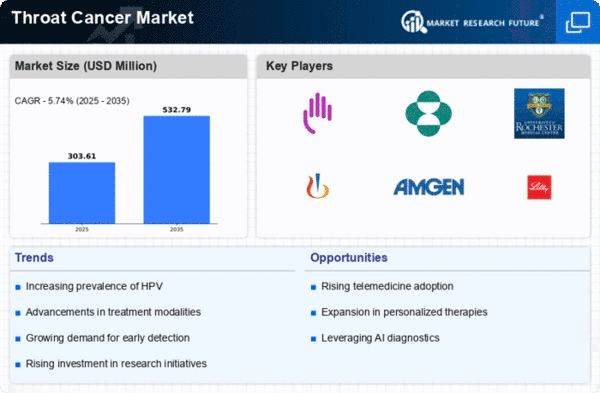
As per MRFR analysis, the Throat Cancer Market Size was estimated at 287.13 USD Million in 2024. The Throat Cancer industry is projected to grow from 306.9 USD Million in 2025 to 532.79 USD Million by 2035, exhibiting a compound annual growth rate (CAGR) of 5.74 during the forecast period 2025 - 2035.

Key Market Trends & Highlights

The Throat Cancer Market is experiencing dynamic growth driven by technological advancements and increasing awareness.

  • North America remains the largest market for throat cancer treatments, reflecting a robust healthcare infrastructure.
  • The Asia-Pacific region is emerging as the fastest-growing market, fueled by rising healthcare investments and awareness initiatives.
  • Squamous Cell Carcinoma continues to dominate the market, while Adenocarcinoma is witnessing the fastest growth due to evolving treatment protocols.
  • Key market drivers include rising incidence rates and advancements in treatment technologies, which are shaping the future landscape.

Market Size & Forecast

2024 Market Size 287.13 (USD Million)
2035 Market Size 532.79 (USD Million)
CAGR (2025 - 2035) 5.74%
Largest Regional Market Share in 2024 North America

Major Players

<p>Bristol-Myers Squibb (US), Merck & Co. (US), Roche (CH), Novartis (CH), Amgen (US), Eli Lilly and Company (US), AstraZeneca (GB), Pfizer (US), GSK (GB)</p>

Market Trends

The Throat Cancer Market is currently experiencing a dynamic evolution, driven by advancements in diagnostic techniques and treatment modalities. The increasing prevalence of throat cancer, attributed to factors such as tobacco use and human papillomavirus (HPV) infection, has prompted a surge in research and development efforts. Pharmaceutical companies are focusing on innovative therapies, including targeted treatments and immunotherapies, which appear to enhance patient outcomes. Furthermore, the integration of artificial intelligence in diagnostic processes is likely to improve early detection rates, thereby potentially increasing survival rates among patients. In addition to therapeutic advancements, the Throat Cancer Market is witnessing a shift towards personalized medicine. This approach tailors treatment plans based on individual patient profiles, which may lead to more effective interventions. The growing awareness of throat cancer symptoms and risk factors among the general population is also contributing to earlier diagnoses. As healthcare systems worldwide adapt to these changes, the Throat Cancer Market is poised for substantial growth, reflecting a commitment to improving patient care and outcomes in the coming years.

Advancements in Treatment Modalities

The Throat Cancer Market is seeing a notable shift towards innovative treatment options. New therapies, including targeted therapies and immunotherapies, are being developed to enhance efficacy and minimize side effects. This trend indicates a move away from traditional chemotherapy, as healthcare providers seek more effective and personalized treatment strategies.

Integration of Technology in Diagnostics

The incorporation of advanced technologies, such as artificial intelligence and machine learning, is transforming diagnostic practices within the Throat Cancer Market. These technologies facilitate earlier detection and more accurate assessments, which may lead to improved patient outcomes and a more efficient healthcare system.

Increased Awareness and Education

There is a growing emphasis on public awareness regarding throat cancer symptoms and risk factors. Educational campaigns are likely to encourage individuals to seek medical advice sooner, potentially leading to earlier diagnoses and better treatment outcomes. This trend reflects a proactive approach to managing throat cancer on a global scale.

Throat Cancer Market Market Drivers

Growing Geriatric Population

The aging global population is a significant factor influencing the Global Throat Cancer Market Industry. As individuals age, the risk of developing throat cancer increases, particularly among those with a history of tobacco and alcohol use. According to demographic studies, the proportion of individuals aged 65 and older is expected to rise substantially in the coming years. This demographic shift is likely to result in a higher incidence of throat cancer, thereby driving market growth. The industry must adapt to cater to this growing population, ensuring access to appropriate care and treatment options.

Rising Incidence of Throat Cancer

The Global Throat Cancer Market Industry is experiencing growth due to the increasing incidence of throat cancer worldwide. Factors such as smoking, alcohol consumption, and the human papillomavirus (HPV) are contributing to this rise. For instance, the World Health Organization indicates that throat cancer cases are expected to increase, leading to a projected market value of 3.0 USD Billion in 2024. This growing prevalence necessitates enhanced diagnostic and therapeutic solutions, thereby driving demand within the industry.

Advancements in Treatment Modalities

Innovations in treatment modalities are significantly influencing the Global Throat Cancer Market Industry. The development of targeted therapies, immunotherapies, and minimally invasive surgical techniques has improved patient outcomes. For example, the introduction of immunotherapy has shown promising results in clinical trials, leading to higher survival rates. As these advanced treatments become more widely adopted, the market is projected to grow, potentially reaching 6.14 USD Billion by 2035. This evolution in treatment options is likely to attract investment and research, further propelling the industry forward.

Emerging Markets and Economic Growth

Emerging markets are becoming increasingly important in the Global Throat Cancer Market Industry. Countries with developing healthcare infrastructures are witnessing a rise in throat cancer cases due to lifestyle changes and increased exposure to risk factors. Economic growth in these regions is facilitating investments in healthcare, leading to improved access to diagnostics and treatment. As these markets expand, they present lucrative opportunities for industry stakeholders. The anticipated growth in these regions is expected to contribute to the overall market expansion, aligning with the projected increase in market value.

Market Trends and Growth Projections

Charts illustrating the projected growth trajectory of the Global Throat Cancer Market Industry indicate a steady increase in market value from 2024 to 2035. The market is expected to grow from 3.0 USD Billion in 2024 to 6.14 USD Billion by 2035, reflecting a compound annual growth rate of 6.71% during the period from 2025 to 2035. These trends highlight the industry's response to rising incidence rates, advancements in treatment options, and the growing awareness of throat cancer.

Increased Awareness and Screening Programs

Heightened awareness of throat cancer and the implementation of screening programs are pivotal drivers in the Global Throat Cancer Market Industry. Public health initiatives aimed at educating populations about risk factors and early detection are crucial. For instance, campaigns promoting HPV vaccinations and regular screenings have been shown to reduce incidence rates. As awareness grows, more individuals seek medical attention, leading to earlier diagnoses and improved treatment outcomes. This trend is expected to contribute to a compound annual growth rate of 6.71% from 2025 to 2035, reflecting the industry's response to increased demand.

Market Segment Insights

By Type of Throat Cancer: Squamous Cell Carcinoma (Largest) vs. Adenocarcinoma (Fastest-Growing)

<p>The throat cancer market is primarily dominated by Squamous Cell Carcinoma (SCC), which accounts for a significant proportion of cases and holds the largest market share. This type of cancer originates from the squamous cells that line the throat, contributing to its prevalence and prominence. Other types such as Adenocarcinoma, though less common, are emerging with notable growth potential, indicating a shift in the cancer landscape as immunotherapies and targeted treatments become more available. In recent years, the growth trends in the Throat Cancer market have been significantly influenced by advancements in early detection and treatment methods. Adenocarcinoma is particularly on the rise, attributed to increased awareness of throat cancer symptoms and improved diagnostic capabilities. Additionally, lifestyle changes and environmental factors are driving the demand for innovative therapies, propelling Adenocarcinoma as a key focus for oncologists and researchers alike. The market response to these trends is fostering investment and collaboration in drug development, ultimately leading to better treatment outcomes for patients.</p>

<p>Squamous Cell Carcinoma (Dominant) vs. Lymphoma (Emerging)</p>

<p>Squamous Cell Carcinoma (SCC) remains the dominant type of throat cancer, primarily due to its high prevalence and recognition among healthcare professionals. This cancer type is often linked to tobacco use and HPV infections, making public health initiatives crucial in prevention efforts. SCC patients typically experience a range of symptoms that strongly prompt diagnosis and treatment, thereby keeping it at the forefront of clinical and research agendas. Conversely, Lymphoma is considered an emerging segment within the throat cancer market, characterized by its unique treatment requirements and different etiology. As awareness increases regarding lymphoma's presence in the throat area, early interventions are becoming more prevalent. Additionally, innovative therapies tailored to lymphoma are gaining traction, drawing attention to its growing significance in the broader context of throat cancer treatment.</p>

By Treatment Method: Surgery (Largest) vs. Chemotherapy (Fastest-Growing)

<p>The Throat Cancer Market is characterized by diverse treatment methods, with Surgery holding the largest market share due to its traditional role in cancer management. Surgical procedures are often integral for tumor removal, fundamentally impacting survival rates and patient outcomes. Other methods like Radiation Therapy and Chemotherapy also contribute significantly, with Radiation Therapy being recognized for its effectiveness in localized cancer treatment. Each treatment offers unique benefits, leading to a diverse approach in patient management. Growth trends in the throat cancer treatment segment show an upward trajectory, driven by increasing prevalence and awareness of throat cancer. Innovations in Chemotherapy have made it the fastest-growing segment as it adapts to targeted therapies that enhance efficacy and minimize side effects. A growing focus on patient-centric approaches is also contributing to the rising adoption of these various treatment modalities, shaping the future of throat cancer management.</p>

<p>Surgery (Dominant) vs. Targeted Therapy (Emerging)</p>

<p>Surgery continues to be the dominant treatment method in the Throat Cancer Market due to its direct approach in tumor removal, which remains the standard care for many patients. It is often complemented by other therapies for enhanced outcomes. On the other hand, Targeted Therapy is emerging as a promising alternative, focusing on specific cancer characteristics that differentiate it from traditional methods. This approach not only aims to improve efficacy but also targets cancer cells while preserving healthy tissues, leading to fewer side effects. As research progresses, Targeted Therapy is gaining traction, showing potential to reshape treatment protocols for specific patient profiles, thus expanding its presence in the overall treatment landscape.</p>

By Stage of Cancer: Localized (Largest) vs. Distant (Fastest-Growing)

<p>In the Throat Cancer Market, the distribution among the stages of cancer shows that the Localized stage holds the largest market share, indicating a significant number of patients are diagnosed early. This stage's prominence reflects advancements in screening and awareness programs aimed at early detection, allowing for more effective treatment options. Conversely, the Distant stage, while currently smaller in share, is witnessing rapid growth due to increased incidence rates and the advancement in therapies that cater to advanced stage patients.</p>

<p>Localized (Dominant) vs. Distant (Emerging)</p>

<p>The Localized stage of throat cancer remains the dominant segment, primarily attributed to improvements in early detection and awareness initiatives. Patients diagnosed at this stage typically have a higher treatment success rate, leading to a focus on localized therapies. On the other hand, the Distant stage is emerging as a notable segment due to rising prevalence and better treatment protocols. New therapies aimed at addressing metastatic cases are driving demand, which aligns with the broader trend of personalized medicine. As more effective therapies are developed, the Distant stage is expected to see increasing representation in the market.</p>

By Patient Demographics: Age (Largest) vs. Gender (Fastest-Growing)

<p>The Throat Cancer Market exhibits a diverse patient demographic, with age proving to be the largest segment, showcasing a significant prevalence among older adults, particularly those aged 55 and above. In contrast, gender also plays a crucial role, with males historically comprising a larger share of throat cancer cases. However, recent trends indicate a faster increase in cases among females, highlighting changing risk factors and awareness levels. This shift underscores the importance of understanding gender differences in patient experience and treatment responses.</p>

<p>Age: 55+ (Dominant) vs. Gender: Female (Emerging)</p>

<p>In the context of the Throat Cancer Market, patients aged 55 and above represent the dominant demographic, primarily due to factors such as prolonged exposure to carcinogens and the cumulative effects of lifestyle choices. This age group often experiences more severe disease outcomes, necessitating tailored treatment options. On the other hand, the emerging segment consists of female patients, who are witnessing a rising incidence of throat cancer, often attributed to changes in risk factors such as HPV infections and smoking behaviors. The increasing awareness and early detection efforts targeting this demographic are essential for improving outcomes.</p>

Get more detailed insights about Throat Cancer Market Research Report- Forecast to 2035

Regional Insights

North America : Market Leader in Innovation

North America continues to lead the throat cancer market, holding a significant share of 143.56 million in 2024. The region's growth is driven by advanced healthcare infrastructure, high R&D investments, and increasing awareness of throat cancer. Regulatory support, including expedited drug approvals, further fuels market expansion. The rising incidence of throat cancer, particularly among older adults, is also a key demand driver, pushing for innovative treatment options and therapies. The competitive landscape in North America is robust, featuring major players like Bristol-Myers Squibb, Merck & Co., and Pfizer. These companies are at the forefront of developing cutting-edge therapies, including immunotherapies and targeted treatments. The U.S. remains the largest market, supported by favorable reimbursement policies and a strong pipeline of new drugs. The presence of leading pharmaceutical firms ensures continuous innovation and a steady supply of effective treatment options.

Europe : Emerging Market with Growth Potential

Europe's throat cancer market is valued at 85.0 million, reflecting a growing awareness and improved diagnostic capabilities. The region is witnessing an increase in throat cancer cases, prompting healthcare systems to enhance treatment protocols. Regulatory bodies are actively promoting research and development, which is crucial for market growth. Initiatives aimed at early detection and prevention are also gaining traction, contributing to the overall demand for innovative therapies. Leading countries in Europe include Germany, France, and the UK, where significant investments in healthcare infrastructure are evident. The competitive landscape features key players like Roche and Novartis, who are focusing on developing advanced treatment options. The European Medicines Agency (EMA) is instrumental in facilitating drug approvals, ensuring that new therapies reach patients promptly. This regulatory support is vital for maintaining a dynamic market environment.

Asia-Pacific : Rapidly Growing Healthcare Sector

The Asia-Pacific throat cancer market, valued at 45.0 million, is experiencing rapid growth due to increasing healthcare investments and rising awareness of cancer prevention. Countries like China and India are witnessing a surge in throat cancer cases, driven by lifestyle changes and environmental factors. Regulatory frameworks are evolving to support faster drug approvals, which is essential for meeting the growing demand for effective treatments. Public health initiatives aimed at reducing risk factors are also contributing to market expansion. China and Japan are leading the market, with significant contributions from local pharmaceutical companies. The competitive landscape is becoming more dynamic, with both multinational and regional players investing in R&D. Key players such as Amgen and Eli Lilly are focusing on innovative therapies tailored to the unique needs of the region. The increasing collaboration between governments and private sectors is expected to further enhance market growth.

Middle East and Africa : Emerging Market with Challenges

The Middle East and Africa throat cancer market is valued at 13.57 million, reflecting a nascent but growing awareness of the disease. The region faces challenges such as limited access to healthcare and varying levels of awareness about throat cancer. However, increasing government initiatives aimed at cancer prevention and treatment are driving market growth. Regulatory bodies are beginning to implement frameworks that support the introduction of new therapies, which is crucial for improving patient outcomes. Countries like South Africa and the UAE are leading the way in addressing throat cancer, with efforts to enhance healthcare infrastructure and access to treatments. The competitive landscape is still developing, with a few key players beginning to establish a presence. Local and international companies are exploring opportunities to introduce innovative therapies, supported by growing public health campaigns aimed at increasing awareness and early detection.

Key Players and Competitive Insights

The throat cancer market is characterized by a dynamic competitive landscape, driven by increasing incidence rates and advancements in treatment modalities. Key players such as Bristol-Myers Squibb (US), Merck & Co. (US), and Roche (CH) are at the forefront, each adopting distinct strategies to enhance their market presence. Bristol-Myers Squibb (US) focuses on immunotherapy innovations, while Merck & Co. (US) emphasizes its robust pipeline of targeted therapies. Roche (CH) is leveraging its expertise in personalized medicine to tailor treatments for throat cancer patients, collectively shaping a competitive environment that prioritizes innovation and patient-centric approaches.

In terms of business tactics, companies are increasingly localizing manufacturing and optimizing supply chains to enhance efficiency and reduce costs. The throat cancer market appears moderately fragmented, with a mix of established players and emerging biotech firms. The collective influence of these key players fosters a competitive structure that encourages collaboration and innovation, as companies seek to differentiate themselves through unique therapeutic offerings and strategic partnerships.

In November 2025, Merck & Co. (US) announced a strategic collaboration with a leading biotech firm to develop a novel combination therapy for throat cancer. This partnership is poised to enhance Merck's portfolio and accelerate the development of innovative treatment options, reflecting a broader trend of collaboration in the industry. Such alliances may not only expedite research and development but also expand market access for new therapies.

In October 2025, Roche (CH) launched a new diagnostic tool aimed at improving early detection of throat cancer. This initiative underscores Roche's commitment to personalized medicine and early intervention, potentially leading to better patient outcomes. By integrating advanced diagnostics with therapeutic solutions, Roche is positioning itself as a leader in comprehensive throat cancer care, which may influence treatment paradigms in the coming years.

In December 2025, Bristol-Myers Squibb (US) revealed promising results from a clinical trial evaluating its latest immunotherapy for throat cancer. The positive outcomes suggest a potential breakthrough in treatment efficacy, which could significantly enhance the company's competitive edge. This development aligns with the growing emphasis on immunotherapy as a cornerstone of cancer treatment, indicating a shift towards more effective and targeted therapies.

As of December 2025, current competitive trends in the throat cancer market are increasingly defined by digitalization, sustainability, and the integration of artificial intelligence (AI) in drug development. Strategic alliances are becoming pivotal in shaping the landscape, as companies collaborate to leverage technological advancements and enhance therapeutic efficacy. Looking ahead, competitive differentiation is likely to evolve from traditional price-based competition to a focus on innovation, technology integration, and supply chain reliability, reflecting a broader industry shift towards value-based care.

Key Companies in the Throat Cancer Market market include

Industry Developments

The European Commission awarded eTheRNA, a Belgian immunotherapy business, a EUR 6.9 million grant to speed the clinical development of mRNA-based vaccinations for throat cancer.

Moderna Inc. released interim results from the expansion cohort of its ongoing Phase 1 study of its mRNA personalized cancer vaccine (PCV) mRNA-4157 in combination with Merck's Keytruda, showing that the vaccine candidate is well tolerated at all dose levels and produces responses as measured by tumor shrinkage in HPV (-)Head and Neck Squamous Cell Carcinoma (HNSCC) patients.


Future Outlook

Throat Cancer Market Future Outlook

<p>The Throat Cancer Market is projected to grow at a 5.74% CAGR from 2024 to 2035, driven by advancements in treatment technologies, increasing awareness, and rising incidence rates.</p>

New opportunities lie in:

  • <p>Development of personalized immunotherapy treatments for throat cancer patients.</p>
  • <p>Expansion of telemedicine services for remote patient monitoring and consultations.</p>
  • <p>Investment in AI-driven diagnostic tools to enhance early detection rates.</p>

<p>By 2035, the Throat Cancer Market is expected to exhibit robust growth and innovation.</p>

Market Segmentation

Throat Cancer Market Stage of Cancer Outlook

  • Localized
  • Regional
  • Distant

Throat Cancer Market Treatment Method Outlook

  • Surgery
  • Radiation Therapy
  • Chemotherapy
  • Targeted Therapy

Throat Cancer Market Patient Demographics Outlook

  • Age
  • Gender
  • Socioeconomic Status
  • Lifestyle Factors

Throat Cancer Market Type of Throat Cancer Outlook

  • Squamous Cell Carcinoma
  • Adenocarcinoma
  • Lymphoma
  • Sarcoma

Report Scope

MARKET SIZE 2024287.13(USD Million)
MARKET SIZE 2025306.9(USD Million)
MARKET SIZE 2035532.79(USD Million)
COMPOUND ANNUAL GROWTH RATE (CAGR)5.74% (2024 - 2035)
REPORT COVERAGERevenue Forecast, Competitive Landscape, Growth Factors, and Trends
BASE YEAR2024
Market Forecast Period2025 - 2035
Historical Data2019 - 2024
Market Forecast UnitsUSD Million
Key Companies ProfiledBristol-Myers Squibb (US), Merck & Co. (US), Roche (CH), Novartis (CH), Amgen (US), Eli Lilly and Company (US), AstraZeneca (GB), Pfizer (US), GSK (GB)
Segments CoveredType of Throat Cancer, Treatment Method, Stage of Cancer, Patient Demographics
Key Market OpportunitiesAdvancements in targeted therapies and immunotherapies enhance treatment options in the Throat Cancer Market.
Key Market DynamicsRising demand for innovative therapies drives competition and regulatory scrutiny in the throat cancer treatment landscape.
Countries CoveredNorth America, Europe, APAC, South America, MEA

FAQs

How does the outlook of the throat cancer market look like?

The outlook of throat cancer market looks very promising.

What are the major tailwinds pushing the growth of the throat cancer market?

Rising prevalence of throat cancer and the emergence of new drugs and therapies for the treatment are the major tailwinds pushing the growth of the global throat cancer market.

Which region holds the largest share in the throat cancer market?

North America holds the largest share in the global throat cancer market, followed by Europe and the Asia Pacific, respectively.

Who are the top players in the throat cancer market?

Bristol-Myers Squibb, Amgen Inc., Celgene Corporation, Engeneic Ltd, Eli Lilly and Company, F. Hoffmann-la Roche AG, Novartis, Merck &amp; Co., Inc., Pfizer Inc., and Teva Pharmaceutical Industries Ltd., are some of the major players operating in the throat cancer market.

What are the key growth strategies of throat cancer industry players?

Strategic initiatives such as mergers &amp; acquisitions, collaborations, expansion, and technology/ product launch are some of the growth strategies that players operating in the global throat cancer market adopt to gain a larger competitive advantage.

  1. Introduction
    1. Definition
    2. Scope of Study
    3. Research Objective
    4. Assumptions & Limitations
    5. Market Structure
  2. Research Methodology
    1. Research Process
    2. Primary Research
    3. Secondary Research
  3. Market Dynamics
    1. Drivers
    2. Restraints
    3. Opportunities
    4. Challenges
    5. Macroeconomic Indicators
  4. Market Factor Analysis
    1. Porter’s five forces model
      1. Bargaining Power of suppliers
      2. Bargaining Power of Customer
      3. Intensity of Competitor’s
      4. Threat of New Entrants
  5. Global Throat cancer Market, by Types
    1. Introduction
      1. Pharyngeal cancer
      2. Laryngeal cancer
  6. Global Throat cancer Market, by Treatments
    1. Introduction
      1. Surgery
      2. Radiation therapy
      3. Chemotherapy
      4. Others
  7. Global Throat cancer Market, by regions
    1. Introduction
      1. North America
      2. Europe
      3. Asia Pacific
      4. Middle East & Africa
  8. Company Landscape
    1. Introduction
      1. Mergers Acquisitions
      2. Collaborations
      3. Release/New Product Launches
  9. Company Profile
    1. Merck &Co.Inc.
      1. Company Overview
      2. Product/Business Segment Overview
      3. Financials
      4. Key Developments
    2. Bristol-Myers Squibb
      1. Overview
      2. Product/Business Segment Overview
      3. Financials
      4. Key Developments
    3. Pfizer Inc.
      1. Overview
      2. Product/Business Segment Overview
      3. Financials
      4. Key Developments
    4. Eli Lilly and Company
      1. Overview
      2. Product/Business Segment Overview
      3. Financials
      4. Key Developments
    5. F. Hoffmann-la Roche AG
      1. Overview
      2. Product/Business Segment Overview
      3. Financials
      4. Key Developments
  10. Appendix

Throat Cancer Market Segmentation

Market Segmentation Overview

  • Detailed segmentation data will be available in the full report
  • Comprehensive analysis by multiple parameters
  • Regional and country-level breakdowns
  • Market size forecasts by segment
Infographic

Free Sample Request

Kindly complete the form below to receive a free sample of this Report

Get Free Sample

Customer Strories

Compare Licence

×
Features License Type
Single User Multiuser License Enterprise User
Price $4,950 $5,950 $7,250
Maximum User Access Limit 1 User Upto 10 Users Unrestricted Access Throughout the Organization
Free Customization
Direct Access to Analyst
Deliverable Format
Platform Access
Discount on Next Purchase 10% 15% 15%
Printable Versions