×
Request Free Sample ×

Kindly complete the form below to receive a free sample of this Report

* Please use a valid business email

Leading companies partner with us for data-driven Insights

clients tt-cursor
Hero Background
English
Chinese
French
Japanese
Korean
German
Spanish

Spindle Cell Sarcoma Treatment Market Share

ID: MRFR/Pharma/5005-HCR
90 Pages
Rahul Gotadki
October 2025

Spindle Cell Sarcoma Treatment Market Research Report Information By Treatment (Radiotherapy, Chemotherapy, Cryotherapy, Surgical Removal (Conservative and Wide Surgical Removal Type), and Others) & by End-Users (Hospitals and Others) -Forecast Till 2035.

Share:
Download PDF ×

We do not share your information with anyone. However, we may send you emails based on your report interest from time to time. You may contact us at any time to opt-out.

Spindle Cell Sarcoma Treatment Market Infographic
×
Spindle Cell Sarcoma Treatment Market Infographic Full View
Purchase Options

Market Share

Spindle Cell Sarcoma Treatment Market Share Analysis

Begin with a thorough analysis of the spindle cell sarcoma treatment market, including factors such as prevalence rates, patient demographics, treatment options, and competitor landscape, to identify key trends and opportunities. The development of innovative treatment plans or therapies for spindle cell sarcoma, which address the current market shortcoming through aspects such as targeted therapies, novel drug combinations as well as the use of immunotherapy, will aid the company in offering a unique treatment plan from among the already available options in the market. Develop marketing campaigns, which are focused on the targeted doctors as oncologists and orthopedic surgeons and then other healthcare providers that are interconnected with the diagnostics and treatment of spindle cell sarcoma. This segment deserves more attention through highlighting the unique, special features which provide real benefit to this segment. Offer instructive educational materials, training sessions and training camps for health professionals of different levels for the improvement of the competence of spindle cell sarcoma diagnosis and treatment. Supply CME courses, webinars, or conferences on spindle cell sarcoma management. These should serve as educational aids for healthcare professionals who care for sarcoma patients. By providing classroom tools, online resources, and patient support programs, educate individuals with spindle cell sarcoma on their condition, treatment options, and the types of support available to them. Offer emotional support and guidance to deal with the problems faced by patients as well as their families in this regard. Invest in clinical research studies and fellow trials that yield proof of safety and efficiency of treatments for spindle cell sarcoma designed by the company. It helps to get the product on the market and work with regulatory authorities and achieve acceptance of the product by the medical community. Make the entity compliant with regulatory requirement and seek approval from required regulatory authorities of the country for its treatment in diagnosis and management of spindle cell sarcoma. Forge strategic partnerships with hospitals, research institutions, patient advocacy organizations as well as pharmaceuticals in order to boost the credibility of the company and, consequently, increase your reach themarket of spindle cell sarcoma treatment. Cooperation might involve shared research approaches, co-marketing deals, or distribution alliances.

Adopt a patient-centric approach by prioritizing patient needs, preferences, and experiences in the development and delivery of treatments for spindle cell sarcoma. Engage with patient advocacy groups, support networks, and healthcare organizations to raise awareness, provide support, and advocate for improved access to care and resources for individuals affected by spindle cell sarcoma.


Author
Rahul Gotadki
Assistant Manager

He holds an experience of about 7+ years in Market Research and Business Consulting, working under the spectrum of Life Sciences and Healthcare domains. Rahul conceptualizes and implements a scalable business strategy and provides strategic leadership to the clients. His expertise lies in market estimation, competitive intelligence, pipeline analysis, customer assessment, etc. In addition to the above, his other responsibility includes strategic tracking of high growth markets & advising clients on the potential areas of focus they could direct their business initiatives

Leave a Comment

FAQs

What would be the CAGR for the spindle cell sarcoma treatment market for the forecast period of 2023-2032?

Spindle cell sarcoma treatment market CAGR would be 6.3% during the forecast period.

What could be the spindle cell sarcoma treatment market hurdles?

Spindle cell sarcoma treatment market hurdles would be failure to follow distraction protocols and its adverse impact on the nerves.

What are the treatment types included in the spindle cell sarcoma treatment market?

Spindle cell sarcoma treatment market has segments like hormone therapy, cryotherapy, surgical removal, radiotherapy, and chemotherapy.

What are the end users included in the spindle cell sarcoma treatment market report?

The end users are hospitals, clinics, and others.

Which region is slated to project maximum growth for the spindle cell sarcoma treatment market?

The Americas would ensure maximum growth for the spindle cell sarcoma treatment market.

Market Summary

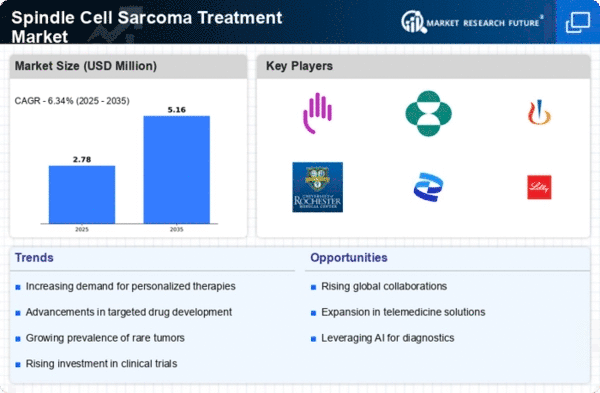
As per MRFR analysis, the Spindle Cell Sarcoma Treatment Market Size was estimated at 2.61 USD Million in 2024. The Spindle Cell Sarcoma Treatment industry is projected to grow from 2.81 in 2025 to 5.16 by 2035, exhibiting a compound annual growth rate (CAGR) of 6.34 during the forecast period 2025 - 2035.

Key Market Trends & Highlights

The Spindle Cell Sarcoma Treatment Market is experiencing a dynamic shift towards personalized and innovative therapeutic approaches.

  • The market is witnessing a notable increase in the adoption of personalized medicine, enhancing treatment efficacy.
  • Emerging novel therapies are reshaping the treatment landscape, particularly in the Asia-Pacific region.
  • In North America, heightened awareness and education initiatives are driving patient engagement and treatment accessibility.
  • The rising incidence of spindle cell sarcoma and advancements in targeted therapies are key drivers propelling market growth.

Market Size & Forecast

2024 Market Size 2.61 (USD Million)
2035 Market Size 5.16 (USD Million)
CAGR (2025 - 2035) 6.34%
Largest Regional Market Share in 2024 North America

Major Players

Bristol-Myers Squibb (US), Merck & Co. (US), Novartis (CH), Roche (CH), Pfizer (US), Eli Lilly and Company (US), Amgen (US), Bayer (DE), Sanofi (FR)

Market Trends

The Spindle Cell Sarcoma Treatment Market is currently experiencing a notable evolution, driven by advancements in therapeutic approaches and a growing understanding of the disease's biology. As research progresses, there is an increasing emphasis on personalized medicine, which tailors treatment strategies to individual patient profiles. This shift appears to enhance treatment efficacy and minimize adverse effects, thereby improving patient outcomes. Furthermore, the integration of novel therapies, including targeted agents and immunotherapies, is reshaping the treatment landscape, offering new hope for patients diagnosed with this rare form of cancer. In addition to therapeutic innovations, the Spindle Cell Sarcoma Treatment Market is influenced by the rising awareness of sarcomas among healthcare professionals and the general public. Educational initiatives and advocacy efforts are likely contributing to earlier diagnosis and improved treatment access. Moreover, collaborations between research institutions and pharmaceutical companies may facilitate the development of new treatment modalities, potentially leading to more effective management strategies. As the market continues to evolve, ongoing research and development efforts will be crucial in addressing the unmet needs of patients and healthcare providers alike.

Personalized Medicine Adoption

The trend towards personalized medicine is gaining traction within the Spindle Cell Sarcoma Treatment Market. This approach focuses on customizing treatment plans based on individual patient characteristics, including genetic profiles and tumor biology. By tailoring therapies, healthcare providers may enhance treatment effectiveness and reduce side effects, leading to improved patient satisfaction and outcomes.

Emergence of Novel Therapies

The introduction of novel therapies, such as targeted therapies and immunotherapies, is transforming the Spindle Cell Sarcoma Treatment Market. These innovative treatment options aim to specifically target cancer cells while sparing healthy tissue, potentially resulting in better efficacy and fewer adverse reactions. This trend indicates a shift towards more sophisticated treatment modalities.

Increased Awareness and Education

There is a growing emphasis on raising awareness about spindle cell sarcoma among both healthcare professionals and the public. Educational campaigns and advocacy efforts are likely contributing to earlier diagnosis and improved treatment access. This trend may lead to better patient outcomes as more individuals become informed about the disease and available treatment options.

Spindle Cell Sarcoma Treatment Market Market Drivers

Market Growth Projections

The Global Spindle Cell Sarcoma Treatment Market Industry is projected to experience substantial growth over the next decade. With a market size expected to reach 2.95 USD Billion in 2024 and further expand to 7.57 USD Billion by 2035, the industry is on a promising trajectory. The compound annual growth rate (CAGR) of 8.93% from 2025 to 2035 underscores the increasing demand for effective treatment options and the ongoing advancements in research and development. This growth is indicative of the collective efforts of stakeholders in the healthcare sector to address the challenges posed by spindle cell sarcoma.

Increased Research Funding

The Global Spindle Cell Sarcoma Treatment Market Industry benefits from heightened research funding aimed at understanding and treating rare cancers. Government and private sector investments are crucial for advancing clinical trials and developing new therapies. This influx of funding supports innovative research initiatives that focus on spindle cell sarcoma, potentially leading to breakthroughs in treatment. As a result, the market is expected to experience a compound annual growth rate (CAGR) of 8.93% from 2025 to 2035, reflecting the growing commitment to addressing this challenging disease.

Advancements in Treatment Modalities

Innovations in treatment modalities are significantly shaping the Global Spindle Cell Sarcoma Treatment Market Industry. The development of targeted therapies and immunotherapies has opened new avenues for effective management of spindle cell sarcoma. These advancements not only enhance treatment efficacy but also improve patient outcomes and quality of life. As the market evolves, the introduction of novel agents is anticipated to drive growth, with projections indicating a market size of 7.57 USD Billion by 2035. The ongoing research and clinical trials are likely to further bolster the availability of diverse treatment options.

Emerging Markets and Global Expansion

The Global Spindle Cell Sarcoma Treatment Market Industry is experiencing growth due to the expansion into emerging markets. Countries with developing healthcare infrastructures are increasingly recognizing the need for effective cancer treatments, including those for spindle cell sarcoma. This trend is driven by rising healthcare expenditures and improved access to medical services. As these markets evolve, they present new opportunities for pharmaceutical companies and healthcare providers. The anticipated growth in these regions is likely to contribute to the overall market expansion, with projections indicating a market size of 7.57 USD Billion by 2035.

Growing Patient Advocacy and Awareness

Patient advocacy groups play a pivotal role in the Global Spindle Cell Sarcoma Treatment Market Industry by raising awareness and promoting research funding. These organizations work tirelessly to educate patients and healthcare providers about spindle cell sarcoma, thereby facilitating earlier diagnosis and treatment. Increased awareness leads to a greater demand for specialized treatment options, which in turn drives market growth. As more patients seek information and support, the market is poised for expansion, aligning with the projected growth trajectory of 2.95 USD Billion in 2024.

Rising Incidence of Spindle Cell Sarcoma

The Global Spindle Cell Sarcoma Treatment Market Industry is witnessing a notable increase in the incidence of spindle cell sarcoma, which is a rare type of soft tissue sarcoma. This rise can be attributed to factors such as increased awareness and improved diagnostic techniques. As healthcare providers become more adept at identifying this condition, the demand for effective treatment options is expected to grow. In 2024, the market is projected to reach 2.95 USD Billion, reflecting the urgent need for innovative therapies and comprehensive treatment plans to address this growing patient population.

Market Segment Insights

By Treatment Type: Surgery (Largest) vs. Targeted Therapy (Fastest-Growing)

In the Spindle Cell Sarcoma Treatment Market, surgery holds the largest market share among treatment types due to its efficacy in tumor removal and a standard protocol among healthcare providers. It has been the primary treatment option for many patients, providing significant relief from symptoms and improving patient outcomes. On the other hand, targeted therapy is emerging rapidly, showing a robust growth trend. This method focuses on specific molecules and pathways involved in spindle cell sarcoma, leading to enhanced precision in treatment. As more research is conducted, targeted therapies are gaining popularity due to their tailored approach that results in fewer side effects and higher effectiveness when compared to conventional methods.

Surgery (Dominant) vs. Targeted Therapy (Emerging)

Surgery remains the dominant treatment approach for spindle cell sarcoma, primarily because of its ability to effectively remove tumors and improve prognosis. Surgeons employ various techniques that cater to the specific characteristics of the sarcoma, ensuring that a significant mass of cancerous cells is eliminated with minimal impact on surrounding healthy tissue. Despite its dominance, the landscape is evolving with the emergence of targeted therapy, which is increasingly seen as a crucial alternative. Targeted therapy concentrates on molecular abnormalities found in spindle cell sarcoma, offering a more personalized treatment avenue. This therapy is gaining traction among oncologists due to its innovative nature, showing promise in reducing tumor size and improving patient outcomes without the extensive recovery time associated with surgical procedures.

By Disease Stage: Localized (Largest) vs. Metastatic (Fastest-Growing)

In the Spindle Cell Sarcoma Treatment Market, the segment distribution among disease stages shows that the localized stage occupies the largest market share, attributable to early diagnosis and the effectiveness of surgical interventions. The regional stage also holds considerable market significance but trails behind localized cases as treatment options become more complex due to the involvement of surrounding tissues. As awareness increases, the metastatic stage is emerging, currently the smallest segment, yet demonstrating notable growth as treatment advancements improve therapeutic outcomes for patients.

Localized (Dominant) vs. Metastatic (Emerging)

The localized stage of Spindle Cell Sarcoma is characterized by localized tumors that are typically amenable to surgical removal, making them the dominant segment in the treatment landscape. This stage experiences the highest patient volumes due to early detection practices and an ongoing emphasis on surgical treatments. Conversely, the metastatic stage, classified as the emerging segment, presents significant challenges with tumors that have spread to distant sites, requiring more advanced therapies. However, innovations in systemic treatments and ongoing clinical trials render this stage a key area of growth, as it seeks to improve patient survival rates and quality of life.

By Patient Demographics: Age (Largest) vs. Gender (Fastest-Growing)

In the Spindle Cell Sarcoma Treatment Market, the 'Age' demographic holds the largest share, as older adult populations are significantly more affected by spindle cell sarcoma, leading to a greater focus on treatment options tailored for this age group. Conversely, the 'Gender' demographic, while not as large, is rapidly gaining attention in research and treatment developments, reflecting an increasing awareness of gender-based differences in sarcoma incidence and treatment response. As the market evolves, several growth trends are apparent. The growing geriatric population is driving the demand for targeted therapies in the older age bracket. Simultaneously, a notable rise in studies addressing gender disparities in treatment outcomes is making the gender demographic the fastest-growing segment. This evolving understanding suggests that tailored treatments may improve patient outcomes, prompting further investment into research and development within this area.

Age (Dominant) vs. Gender (Emerging)

The 'Age' demographic is the dominant segment in the Spindle Cell Sarcoma Treatment Market, primarily due to the higher prevalence of this cancer type in older adults. As individuals age, their risk for developing spindle cell sarcoma increases, making age-specific treatment protocols essential. Pharmaceutical companies and healthcare providers are focusing on developing therapies that address the unique needs of older patients, including considerations of comorbidities and polypharmacy. On the other hand, the 'Gender' demographic is emerging as a significant area of interest, with increasing recognition that men and women may experience differences in sarcoma types, responses to treatment, and side effects. This emerging focus is likely to drive further research and create opportunities for developing gender-specific treatment protocols, reflecting a more personalized approach to cancer therapy.

By Treatment Setting: Hospital (Largest) vs. Outpatient Clinic (Fastest-Growing)

In the Spindle Cell Sarcoma Treatment Market, the treatment setting plays a crucial role in patient care dynamics. Currently, hospitals dominate the market, providing specialized surgical interventions, radiotherapy, and comprehensive care essential for managing complex cases. In contrast, outpatient clinics, while smaller in share, are rapidly gaining traction due to rising patient preferences for less invasive treatment options and streamlined access to care. Home care remains a smaller segment, catering primarily to patients requiring ongoing support post-initial treatment.

Hospital (Dominant) vs. Outpatient Clinic (Emerging)

Hospitals stand as the dominant treatment setting for spindle cell sarcoma due to their extensive infrastructure, specialized medical staff, and access to advanced treatment modalities. They offer a holistic approach that includes surgical options, chemotherapy, and radiotherapy, ensuring comprehensive care for patients. Outpatient clinics, on the other hand, are emerging as a preferred option for many patients seeking convenience, quick access to services, and minimally invasive treatment alternatives. This shift aligns with broader healthcare trends prioritizing patient-centered care. As strategies evolve, outpatient clinics may increasingly integrate advanced treatment protocols, contributing to their growth amidst a competitive landscape.

Get more detailed insights about Spindle Cell Sarcoma Treatment Market Research Report – Forecast to 2032.

Regional Insights

North America : Market Leader in Treatment

North America is poised to maintain its leadership in the Spindle Cell Sarcoma treatment market, holding a significant market share of $1.3B in 2024. The region benefits from advanced healthcare infrastructure, high R&D investments, and a growing prevalence of sarcoma cases. Regulatory support from agencies like the FDA accelerates the approval of innovative therapies, driving demand for effective treatment options. The competitive landscape is robust, with key players such as Bristol-Myers Squibb, Merck & Co., and Pfizer leading the charge. The U.S. is the primary market, supported by a strong pipeline of therapies and clinical trials. The presence of major pharmaceutical companies fosters innovation and enhances treatment accessibility, ensuring that patients receive cutting-edge care. Overall, North America is set to continue its dominance in this specialized market.

Europe : Emerging Market Dynamics

Europe is witnessing a growing interest in Spindle Cell Sarcoma treatments, with a market size of $0.8B projected for 2025. Factors such as increasing awareness of rare cancers, improved diagnostic techniques, and supportive healthcare policies are driving market growth. The European Medicines Agency (EMA) plays a crucial role in facilitating the approval of new therapies, enhancing patient access to innovative treatments. Leading countries like Germany, France, and the UK are at the forefront of this market, supported by a strong presence of pharmaceutical giants such as Novartis and Roche. The competitive landscape is characterized by collaborations between biotech firms and established companies, fostering innovation. As the region continues to prioritize cancer research, the Spindle Cell Sarcoma treatment market is expected to expand significantly, benefiting from both public and private sector investments.

Asia-Pacific : Emerging Powerhouse in Oncology

The Asia-Pacific region, with a market size of $0.4B, is emerging as a significant player in the Spindle Cell Sarcoma treatment landscape. Factors such as increasing healthcare expenditure, rising awareness of cancer treatments, and a growing patient population are driving demand. Regulatory bodies in countries like Japan and Australia are enhancing their frameworks to expedite the approval of new therapies, which is crucial for market growth. Countries such as Japan, China, and India are leading the charge, with a mix of local and international players entering the market. The presence of key pharmaceutical companies, including Amgen and Bayer, is fostering competition and innovation. As the region continues to develop its healthcare infrastructure, the potential for growth in the Spindle Cell Sarcoma treatment market is substantial, with increasing investments in research and development.

Middle East and Africa : Developing Market Landscape

The Middle East and Africa region, with a market size of $0.11B, faces unique challenges in the Spindle Cell Sarcoma treatment market. Limited access to advanced healthcare facilities and a lack of awareness about rare cancers hinder market growth. However, increasing investments in healthcare infrastructure and initiatives to improve cancer care are paving the way for future opportunities. Regulatory bodies are beginning to recognize the need for better treatment options, which could catalyze market development. Countries like South Africa and the UAE are making strides in oncology, with efforts to enhance treatment accessibility. The presence of international pharmaceutical companies is gradually increasing, fostering a competitive environment. As awareness grows and healthcare systems improve, the Spindle Cell Sarcoma treatment market in this region is expected to evolve, presenting new opportunities for stakeholders.

Key Players and Competitive Insights

The Spindle Cell Sarcoma Treatment Market is characterized by a dynamic competitive landscape, driven by a confluence of innovation, strategic partnerships, and a focus on patient-centric therapies. Major players such as Bristol-Myers Squibb (US), Merck & Co. (US), and Novartis (CH) are actively shaping the market through their distinct operational focuses. Bristol-Myers Squibb (US) emphasizes immunotherapy advancements, while Merck & Co. (US) is leveraging its expertise in targeted therapies. Novartis (CH) appears to be concentrating on expanding its portfolio through strategic acquisitions, thereby enhancing its competitive positioning. Collectively, these strategies foster a competitive environment that is increasingly focused on innovative treatment modalities and collaborative efforts.In terms of business tactics, companies are increasingly localizing manufacturing and optimizing supply chains to enhance efficiency and responsiveness to market demands. The competitive structure of the Spindle Cell Sarcoma Treatment Market is moderately fragmented, with key players exerting substantial influence. This fragmentation allows for a diverse range of treatment options, yet the presence of major companies ensures that innovation and quality remain at the forefront of market offerings.In November 2025, Merck & Co. (US) announced a strategic partnership with a leading biotechnology firm to co-develop a novel immunotherapy specifically targeting spindle cell sarcoma. This collaboration is poised to enhance Merck's research capabilities and accelerate the development of cutting-edge therapies, potentially positioning the company as a leader in this niche segment. The strategic importance of this partnership lies in its potential to leverage combined expertise, thereby expediting the delivery of innovative treatments to patients.In October 2025, Novartis (CH) completed the acquisition of a biotech company specializing in rare sarcomas, which is expected to bolster its pipeline with promising candidates for spindle cell sarcoma treatment. This acquisition reflects Novartis's commitment to expanding its therapeutic offerings and underscores the growing trend of consolidation within the market. By integrating new technologies and expertise, Novartis aims to enhance its competitive edge and address unmet medical needs in this area.In December 2025, Bristol-Myers Squibb (US) launched a new clinical trial for a combination therapy targeting spindle cell sarcoma, which integrates its existing immunotherapy with a novel agent. This initiative not only demonstrates the company's commitment to advancing treatment options but also highlights the increasing trend towards personalized medicine. The strategic importance of this trial lies in its potential to provide more effective treatment regimens tailored to individual patient profiles, thereby improving outcomes.As of December 2025, the competitive trends in the Spindle Cell Sarcoma Treatment Market are increasingly defined by digitalization, sustainability, and the integration of artificial intelligence (AI) in drug development processes. Strategic alliances are becoming more prevalent, facilitating knowledge sharing and resource pooling among companies. Looking ahead, competitive differentiation is likely to evolve from traditional price-based competition to a focus on innovation, technological advancements, and supply chain reliability. This shift underscores the importance of developing robust, patient-centric solutions that not only meet regulatory standards but also enhance the overall quality of care.

Key Companies in the Spindle Cell Sarcoma Treatment Market include

Industry Developments

Future Outlook

Spindle Cell Sarcoma Treatment Market Future Outlook

The Spindle Cell Sarcoma Treatment Market is projected to grow at a 6.34% CAGR from 2024 to 2035, driven by advancements in targeted therapies and increasing awareness.

New opportunities lie in:

  • Development of personalized medicine approaches for treatment optimization.
  • Expansion of telemedicine services for remote patient monitoring.
  • Investment in clinical trials for novel therapeutic agents.

By 2035, the market is expected to achieve substantial growth, reflecting evolving treatment paradigms.

Market Segmentation

Spindle Cell Sarcoma Treatment Market Disease Stage Outlook

  • Localized
  • Regional
  • Metastatic

Spindle Cell Sarcoma Treatment Market Treatment Type Outlook

  • Surgery
  • Radiation Therapy
  • Chemotherapy
  • Targeted Therapy

Spindle Cell Sarcoma Treatment Market Treatment Setting Outlook

  • Hospital
  • Outpatient Clinic
  • Home Care

Spindle Cell Sarcoma Treatment Market Patient Demographics Outlook

  • Age
  • Gender
  • Socioeconomic Status

Report Scope

MARKET SIZE 20242.61(USD Million)
MARKET SIZE 20252.81(USD Million)
MARKET SIZE 20355.16(USD Million)
COMPOUND ANNUAL GROWTH RATE (CAGR)6.34% (2025 - 2035)
REPORT COVERAGERevenue Forecast, Competitive Landscape, Growth Factors, and Trends
BASE YEAR2024
Market Forecast Period2025 - 2035
Historical Data2019 - 2024
Market Forecast UnitsUSD Million
Key Companies ProfiledBristol-Myers Squibb (US), Merck & Co. (US), Novartis (CH), Roche (CH), Pfizer (US), Eli Lilly and Company (US), Amgen (US), Bayer (DE), Sanofi (FR)
Segments CoveredTreatment Type, Disease Stage, Patient Demographics, Treatment Setting
Key Market OpportunitiesAdvancements in targeted therapies and immunotherapies enhance treatment options in the Spindle Cell Sarcoma Treatment Market.
Key Market DynamicsRising demand for targeted therapies drives innovation and competition in the Spindle Cell Sarcoma Treatment Market.
Countries CoveredNorth America, Europe, APAC, South America, MEA

FAQs

What would be the CAGR for the spindle cell sarcoma treatment market for the forecast period of 2023-2032?

Spindle cell sarcoma treatment market CAGR would be 6.3% during the forecast period.

What could be the spindle cell sarcoma treatment market hurdles?

Spindle cell sarcoma treatment market hurdles would be failure to follow distraction protocols and its adverse impact on the nerves.

What are the treatment types included in the spindle cell sarcoma treatment market?

Spindle cell sarcoma treatment market has segments like hormone therapy, cryotherapy, surgical removal, radiotherapy, and chemotherapy.

What are the end users included in the spindle cell sarcoma treatment market report?

The end users are hospitals, clinics, and others.

Which region is slated to project maximum growth for the spindle cell sarcoma treatment market?

The Americas would ensure maximum growth for the spindle cell sarcoma treatment market.

  1. SECTION I: EXECUTIVE SUMMARY AND KEY HIGHLIGHTS
    1. | 1.1 EXECUTIVE SUMMARY
  2. SECTION II: SCOPING, METHODOLOGY AND MARKET STRUCTURE
    1. | 2.1 MARKET INTRODUCTION
    2. | 2.2 RESEARCH METHODOLOGY
  3. SECTION III: QUALITATIVE ANALYSIS
    1. | 3.1 MARKET DYNAMICS
    2. | 3.2 MARKET FACTOR ANALYSIS
  4. SECTION IV: QUANTITATIVE ANALYSIS
    1. | 4.1 Healthcare, BY Treatment Type (USD Million)
    2. | 4.2 Healthcare, BY Disease Stage (USD Million)
    3. | 4.3 Healthcare, BY Patient Demographics (USD Million)
    4. | 4.4 Healthcare, BY Treatment Setting (USD Million)
    5. | 4.5 Healthcare, BY Region (USD Million)
  5. SECTION V: COMPETITIVE ANALYSIS
    1. | 5.1 Competitive Landscape
    2. | 5.2 Company Profiles
    3. | 5.3 Appendix

Spindle Cell Sarcoma Treatment Market Segmentation

Market Segmentation Overview

  • Detailed segmentation data will be available in the full report
  • Comprehensive analysis by multiple parameters
  • Regional and country-level breakdowns
  • Market size forecasts by segment
Infographic

Free Sample Request

Kindly complete the form below to receive a free sample of this Report

Get Free Sample

Customer Strories

Compare Licence

×
Features License Type
Single User Multiuser License Enterprise User
Price $4,950 $5,950 $7,250
Maximum User Access Limit 1 User Upto 10 Users Unrestricted Access Throughout the Organization
Free Customization
Direct Access to Analyst
Deliverable Format
Platform Access
Discount on Next Purchase 10% 15% 15%
Printable Versions