


Spinal Implants Size
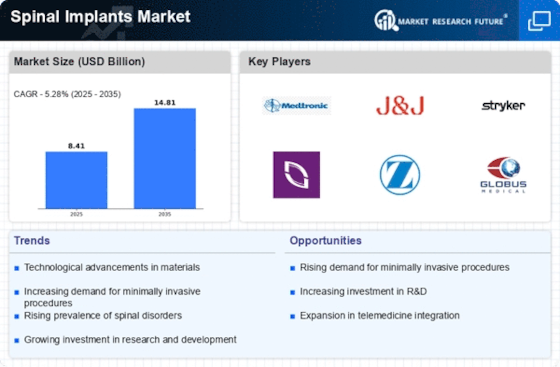
Market Size Snapshot
| Year | Value |
|---|---|
| 2024 | USD 15.09 Billion |
| 2035 | USD 25.0 Billion |
| CAGR (2025-2035) | 4.7 % |
Note – Market size depicts the revenue generated over the financial year
The spinal implant market is set to experience a strong growth, with a current market size of $16.9 billion in 2024 and is projected to reach $25.0 billion by 2035. This translates into a CAGR of 4.7% between 2025 and 2035. The growing prevalence of spinal disorders and the aging population have driven the demand for advanced spinal implant solutions. Technological developments, such as the development of new materials and the improvement of surgical techniques, have further contributed to the growth of the market. The major players in the spinal implant market, such as Medtronic, DePuy Synthes (a subsidiary of Johnson & Johnson), and Stryker, are heavily investing in research and development to launch new products. Strategic initiatives, such as strategic alliances and acquisitions, are also on the rise as companies look to acquire complementary technologies and expand their market reach. Recent product launches, such as bioresorbable spinal implants and surgical robots, are reflective of the industry’s commitment to improving patient outcomes and operational efficiencies. As these trends continue, the spinal implant market is expected to experience a steady growth.
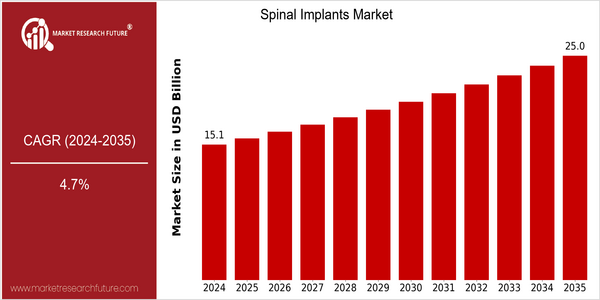
Regional Market Size
Regional Deep Dive
The spinal implant market is characterized by significant technological developments and the increasing demand for minimally invasive surgical procedures in different regions. In North America, the market is driven by the high prevalence of spinal disorders, the aging population, and the strong health care system. Europe is characterized by a high degree of research and development and a focus on the development of new materials and implant designs. The Asia-Pacific region is growing rapidly due to increasing health care expenditure and increased awareness of the importance of spinal health. Middle East and Africa are gradually developing their markets, which are influenced by improving health care systems and increasing investment in medical technology. Latin America is also emerging as a result of the growing population and the improving health care system.
Europe
- The European Union has introduced regulations aimed at improving the safety and efficacy of spinal implants, which has led to increased scrutiny and innovation in product development.
- Companies such as Stryker and Zimmer Biomet are collaborating with research institutions to develop smart spinal implants that can monitor patient recovery and provide real-time data to surgeons.
Asia Pacific
- Countries like India and China are experiencing a surge in demand for spinal implants due to a growing elderly population and increasing incidences of spinal disorders.
- Local manufacturers are emerging, such as Spinal Concepts in India, which are focusing on cost-effective solutions to cater to the price-sensitive market.
Latin America
- Brazil is witnessing a rise in spinal surgeries, driven by an increase in road traffic accidents and sports injuries, leading to a higher demand for spinal implants.
- Local companies are beginning to enter the market, providing affordable spinal implant solutions, which is expected to increase accessibility for patients in the region.
North America
- The FDA has recently approved several new spinal implant technologies, including bioresorbable implants, which are expected to enhance patient recovery times and reduce complications.
- Key players like Medtronic and Johnson & Johnson are investing heavily in R&D to develop next-generation spinal implants, focusing on personalized solutions and advanced materials.
Middle East And Africa
- The UAE is investing in advanced healthcare infrastructure, which includes the establishment of specialized spinal surgery centers, enhancing the availability of spinal implants.
- Government initiatives in countries like South Africa are promoting the adoption of advanced medical technologies, including spinal implants, to improve healthcare outcomes.
Did You Know?
“Approximately 80% of adults experience back pain at some point in their lives, making spinal health a critical area of focus for healthcare systems worldwide.” — American Chiropractic Association
Segmental Market Size
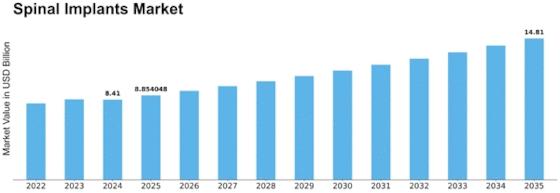
The market for spinal implant devices is currently growing steadily, due to the increasing frequency of spinal disorders and the development of surgical techniques. The main drivers of the market are the growing aging population with a higher risk of degenerative spinal disorders and the increasing demand for minimally invasive surgical procedures to shorten the recovery period. The use of new medical devices is also promoted by regulatory policies. The spinal implant market is currently in its early stages of development. The two market leaders Medtronic and DePuy Synthes are in the forefront of this field. North America and Europe, with their advanced surgical practices, are the most important regions. The main applications of spinal implants are spinal fusion surgery and the treatment of spinal deformities, with interbody fusion devices and pedicle screws being the most frequently used products. The trend towards the use of robots in spinal surgery and the development of personalized medicine will also boost the market. Moreover, the use of 3D printing and the development of bioresorbable materials will change the future of spinal implant development.
Future Outlook
The spinal implant market is expected to grow significantly from 2024 to 2035, at a compound annual growth rate of 4.7%. This growth is due to an aging population, the growing prevalence of spinal disorders, and the development of surgical methods and implant technology. As the world's population ages, the demand for spinal surgery is expected to increase, and the use of spinal implants will also increase. The penetration of spinal implants into surgical procedures will reach about 30% in 2035, up from the current 20-25%, mainly due to the improvement of clinical outcomes and the development of rehabilitation methods. Also, the development of minimally invasive surgery and the integration of artificial intelligence and automation into spinal surgery will also drive market growth. Moreover, the trend of personalized medicine and the development of bioresorbable spinal implants will also shape the future of the spinal implant market. Regulation and reimbursement will also play a major role in the development of the market, ensuring that more patients have access to new solutions. The spinal implant market is expected to grow significantly, driven by a combination of population trends, technological advancements, and supportive health policies.
























Leave a Comment