Request Free Sample ×

Kindly complete the form below to receive a free sample of this Report

* Please use a valid business email

Leading companies partner with us for data-driven Insights

clients tt-cursor
Hero Background
English
Chinese
French
Japanese
Korean
German
Spanish

Rheumatoid Arthritis Market Therapeutics Trends

ID: MRFR/HC/1127-HCR
200 Pages
Nidhi Mandole
March 2026

Rheumatoid Arthritis Market Research Report: Size, Share, Trend Analysis By Drug Type (Non-Steroidal Anti-Inflammatory Drugs, Disease Modifying Antirheumatic Drugs, Biologics, Corticosteroids), By Route of Administration (Oral, Injectable, Topical), By End Users (Hospitals, Clinics, Homecare Settings), By Distribution Channel (Hospital Pharmacies, Retail Pharmacies, Online Pharmacies), By Age Group (Children, Adults, Elderly) and By Regional (North America, Europe, South America, Asia Pacific, Middle East and Africa) - Growth Outlook & Industry Forecast 2026 To 2035

Share:
Download PDF ×

We do not share your information with anyone. However, we may send you emails based on your report interest from time to time. You may contact us at any time to opt-out.

Rheumatoid arthritis Market Infographic
Purchase Options

Market Trends

Key Emerging Trends in the Rheumatoid arthritis Market

The Rheumatoid arthritis market is going through significant changes because of advancements in early mediation, treatment, and appreciation of the illness.

Treatment and Early Analysis: to actually oversee rheumatoid joint pain, early determination and mediation are significant. This is reinforced by the advancement of demonstrative instruments, for example, biomarker testing and imaging methods.

Strength of Biologic and Designated Treatments: Biologic and designated treatments, like inhibitors of IL-6, TNF, and JAK, are changing the administration of rheumatoid joint pain by specifically focusing on unambiguous fiery pathways, subsequently offering a more extensive scope of effective medicines.

Customized Medication Approaches: The RA market is progressively perceiving the worth of customized medication, which underlines the utilization of patient-explicit attributes to foster exact and compelling helpful mediations that outcome in superior results and less unfriendly impacts.

The rise of biosimilars: because of patent lapse, biosimilars are turning out to be progressively common in the Rheumatoid Joint pain market, giving financially savvy choices that show tantamount degrees of adequacy and security. JAK inhibitors Introducing a helpful and open option to injectable biologics, oral JAK inhibitors are a well-known treatment for rheumatoid joint pain. They expand the remedial scene and furnish patients with extra treatment choices.

Putting Accentuation on Sickness The executives and Personal satisfaction: Medical services suppliers are putting a more noteworthy accentuation on exhaustive consideration designs that address the day-to-day routines, emotional wellness, and generally speaking prosperity of patients with rheumatoid joint pain.

Telemedicine and remote checking have become progressively pervasive in the RA market. These advances empower medical care professionals to notice the movement of the illness, assess the viability of therapies, and include patients in their continuous administration.

Movements in Imaging Advances — Rise in imaging advancements, like high-goal ultrasound and X-ray, gives complete experiences into joint aggravation and injury in rheumatoid joint pain, in this way working with the detailing of very much educated administration choices.

Patient Support and Strengthening — By working with the trading of encounters, pushing for novel treatments, and expanding treatment choices, patient promotion in the rheumatoid joint pain local area encourages a cooperative connection among patients and medical care suppliers.

Worldwide Conclusion Mindfulness Endeavors: Through missions, training, and local area outreach, overall endeavors to expand information and comprehension of Rheumatoid Joint pain look to decrease shame, energize early finding, and engage patients.


Author
Author Profile
Nidhi Mandole
Senior Research Analyst

She is an extremely curious individual currently working in Healthcare and Medical Devices Domain. Nidhi is comfortably versed in data centric research backed by healthcare educational background. She leverages extensive data mining and analytics tools such as Primary and Secondary Research, Statistical Analysis, Machine Learning, Data Modelling. Her key role also involves Technical Sales Support, Client Interaction and Project management within the Healthcare team. Lastly, she showcases extensive affinity towards learning new skills and remain fascinated in implementing them.

Leave a Comment

FAQs

What is the projected market valuation of the Rheumatoid Arthritis Market by 2035?

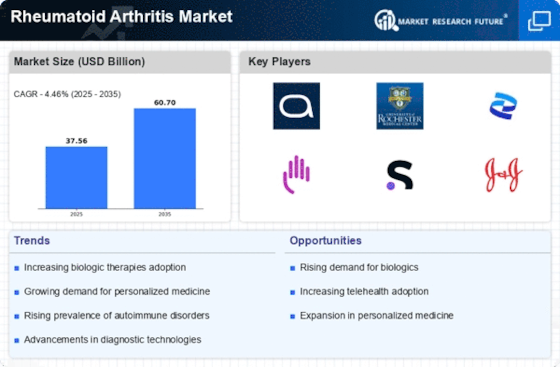
<p>The Rheumatoid Arthritis Market is projected to reach a valuation of 60.7 USD Billion by 2035.</p>

What was the overall market valuation of the Rheumatoid Arthritis Market in 2024?

<p>In 2024, the overall market valuation of the Rheumatoid Arthritis Market was 37.56 USD Billion.</p>

What is the expected CAGR for the Rheumatoid Arthritis Market during the forecast period 2025 - 2035?

<p>The expected CAGR for the Rheumatoid Arthritis Market during the forecast period 2025 - 2035 is 4.46%.</p>

Which companies are considered key players in the Rheumatoid Arthritis Market?

<p>Key players in the Rheumatoid Arthritis Market include AbbVie, Roche, Pfizer, Bristol-Myers Squibb, Sanofi, Johnson & Johnson, Amgen, Novartis, and GSK.</p>

What are the projected revenues for Biologics in the Rheumatoid Arthritis Market by 2035?

<p>Biologics are projected to generate revenues of 20.0 USD Billion by 2035.</p>

How do the revenues from Injectable treatments compare to Oral treatments in the Rheumatoid Arthritis Market?

<p>By 2035, revenues from Injectable treatments are expected to reach 25.0 USD Billion, surpassing the projected 15.0 USD Billion from Oral treatments.</p>

What is the anticipated revenue for the Elderly age group in the Rheumatoid Arthritis Market by 2035?

<p>The anticipated revenue for the Elderly age group in the Rheumatoid Arthritis Market is projected to be 27.2 USD Billion by 2035.</p>

What segment is expected to generate the highest revenue in the Rheumatoid Arthritis Market by 2035?

<p>By 2035, Disease Modifying Antirheumatic Drugs are expected to generate the highest revenue, reaching 15.0 USD Billion.</p>

What is the projected revenue for Homecare Settings in the Rheumatoid Arthritis Market by 2035?

<p>Homecare Settings are projected to generate revenues of 20.1 USD Billion by 2035.</p>

How does the revenue from Clinics compare to that from Hospitals in the Rheumatoid Arthritis Market?

<p>By 2035, revenues from Hospitals are expected to be 24.1 USD Billion, while Clinics are projected to generate 16.5 USD Billion.</p>

Market Summary

As per Market Research Future analysis, the Rheumatoid Arthritis Market Size was estimated at 27.1 USD Billion in 2025. The Rheumatoid Arthritis (RA) industry is projected to grow from 28.5 USD Billion in 2026 to 45.7 USD Billion by 2035, exhibiting a compound annual growth rate (CAGR) of 5.4% during the forecast period 2026 - 2035

Key Market Trends & Highlights

The Rheumatoid Arthritis Market is experiencing transformative growth driven by innovative therapies and digital health integration.

  • The RA market is witnessing a notable rise in the adoption of biologic therapies, particularly in North America, which remains the largest market. Digital health integration is becoming increasingly prevalent, enhancing patient engagement and treatment adherence across the Asia-Pacific region. Research and development efforts are intensifying, with a focus on novel treatment modalities to address unmet medical needs. The increase in prevalence of rheumatoid arthritis and advancements in treatment modalities are key drivers propelling market growth.

Market Size & Forecast

2025 Market Size 27.1 (USD Billion)
2035 Market Size 45.7 (USD Billion)
CAGR (2025 - 2035) 5.4%
Largest Regional Market Share in 2025 North America

Major Players

<a href="https://www.abbviepro.com/cee/en/immunology/rheumatology.html">AbbVie</a> (US), Roche (CH), Pfizer (US), Bristol-Myers Squibb (US), Sanofi (FR), Johnson &amp; Johnson (US), Amgen (US), Novartis (CH), GSK (GB)

Market Trends

The Rheumatoid Arthritis Market is currently experiencing notable transformations driven by advancements in treatment modalities and a growing understanding of the disease's pathophysiology. The increasing prevalence of rheumatoid arthritis, coupled with heightened awareness among healthcare professionals and patients, appears to be propelling demand for innovative therapies. Biologic agents, particularly those targeting specific inflammatory pathways, are gaining traction, suggesting a shift towards more personalized treatment approaches. Furthermore, the integration of digital health technologies into patient management is likely enhancing adherence to treatment regimens and improving overall outcomes. In addition, the Rheumatoid Arthritis Market is witnessing a surge in research and development activities aimed at discovering novel therapeutic agents. Pharmaceutical companies are investing significantly in clinical trials to evaluate the efficacy and safety of new drugs. This trend indicates a commitment to addressing unmet medical needs and improving the quality of life for individuals affected by this chronic condition. As the market evolves, collaboration between stakeholders, including researchers, healthcare providers, and patients, may play a crucial role in shaping future treatment landscapes and ensuring that advancements translate into tangible benefits for those living with rheumatoid arthritis.

Rise of Biologic Therapies

The Rheumatoid Arthritis Market is increasingly characterized by the adoption of biologic therapies. These agents, which target specific components of the immune system, are becoming preferred options due to their efficacy in managing symptoms and slowing disease progression. This trend suggests a move towards more tailored treatment strategies that align with individual patient profiles.

Digital Health Integration

The integration of digital health solutions into the management of rheumatoid arthritis is gaining momentum. Mobile applications and telehealth services are facilitating better patient engagement and monitoring, potentially leading to improved adherence to treatment plans. This trend indicates a shift towards more proactive and personalized care.

Focus on Research and Development

There is a pronounced emphasis on research and development within the Rheumatoid Arthritis Market. Pharmaceutical companies are actively pursuing innovative therapies through extensive clinical trials. This focus on R&D suggests a commitment to addressing the evolving needs of patients and enhancing therapeutic options.

Rheumatoid arthritis Market Market Drivers

Advancements in Treatment Modalities

Recent advancements in treatment modalities significantly influence the Rheumatoid Arthritis Market. The introduction of novel biologic agents and targeted therapies has transformed the therapeutic landscape, offering patients more effective options. For instance, the market for biologics is projected to reach USD 50 billion by 2026, indicating a robust growth trajectory. These innovations not only improve disease management but also enhance the quality of life for patients. Additionally, the development of personalized medicine approaches, which tailor treatments based on individual patient profiles, is gaining traction. This shift towards more precise therapies is expected to drive further investment in research and development within the Rheumatoid Arthritis Market, fostering a competitive environment that prioritizes patient-centric solutions.

Integration of Digital Health Solutions

The integration of digital health solutions is emerging as a transformative driver in the Rheumatoid Arthritis Market. Telemedicine, mobile health applications, and wearable devices are increasingly utilized to monitor disease progression and enhance patient engagement. These technologies facilitate real-time communication between patients and healthcare providers, allowing for timely interventions and personalized care plans. The market for digital health solutions in rheumatology is projected to grow significantly, with estimates suggesting a compound annual growth rate of over 20% through 2026. This trend not only improves patient outcomes but also streamlines healthcare delivery, making it more efficient. As digital health solutions become more prevalent, they are likely to reshape the landscape of the Rheumatoid Arthritis Market, fostering a more connected and informed patient population.

Rising Awareness and Education Initiatives

Rising awareness and education initiatives play a crucial role in shaping the Rheumatoid Arthritis Market. Efforts by healthcare organizations and advocacy groups to educate both patients and healthcare providers about the disease are increasing. These initiatives aim to improve understanding of rheumatoid arthritis, its symptoms, and the importance of early diagnosis and treatment. As awareness grows, more individuals are likely to seek medical attention, leading to higher diagnosis rates and, consequently, increased demand for treatment options. Furthermore, educational campaigns that highlight the benefits of adherence to prescribed therapies may enhance treatment outcomes. This heightened awareness is expected to drive growth in the Rheumatoid Arthritis Market, as more patients engage with healthcare systems and explore available therapeutic options.

Growing Investment in Research and Development

The increasing investment in research and development is a pivotal driver for the Rheumatoid Arthritis Market. Pharmaceutical companies and research institutions are allocating substantial resources to discover new therapies and improve existing ones. In 2025, it is anticipated that R&D spending in the rheumatology sector will exceed USD 10 billion, reflecting a commitment to addressing unmet medical needs. This influx of funding supports clinical trials, which are essential for validating the efficacy and safety of new treatments. Moreover, collaborations between academia and industry are becoming more prevalent, facilitating the exchange of knowledge and accelerating the development of innovative solutions. As a result, the Rheumatoid Arthritis Market is poised for significant advancements, ultimately benefiting patients and healthcare providers alike.

Increase in Prevalence of Rheumatoid Arthritis

The rising prevalence of rheumatoid arthritis is a critical driver for the Rheumatoid Arthritis Market. As the population ages, the incidence of this autoimmune disorder appears to increase, with estimates suggesting that approximately 1.3 million individuals in the United States alone are affected. This growing patient population necessitates the development and availability of effective treatment options, thereby propelling market growth. Furthermore, the increasing awareness of the disease among healthcare professionals and patients contributes to earlier diagnosis and treatment initiation, which may enhance patient outcomes. Consequently, the demand for innovative therapies and management solutions in the Rheumatoid Arthritis Market is likely to escalate, reflecting the urgent need for comprehensive care strategies.

Market Segment Insights

By Type: Biologics (Largest) vs. Disease Modifying Antirheumatic Drugs (Fastest-Growing)

In the Rheumatoid Arthritis Market, the segment distribution reveals that Biologics holds the largest share, thanks to their advanced mechanisms in targeting specific pathways involved in inflammation. On the other hand, Disease Modifying Antirheumatic Drugs (DMARDs) are gaining traction rapidly, primarily due to their potential in altering disease progression and improving patient outcomes. Non-Steroidal Anti-Inflammatory Drugs (NSAIDs) and Corticosteroids, while essential, are seeing relatively slower growth in terms of market preference, resulting in a diverse yet evolving competitive landscape. The growth trends in this segment are primarily driven by increasing incidences of rheumatoid arthritis and the rising awareness surrounding the effectiveness of targeted therapies. Biologics are experiencing consistent demand, attributed to improved patient adherence and newer product launches, while DMARDs are recognized for their potential in expanding treatment accessibility. With ongoing innovations and research in both categories, the segment is expected to witness robust advancements in treatment methodologies, catering to a growing patient population. Both segments aim to enhance patient quality of life, reflecting the overall evolution of the Rheumatoid Arthritis Market.

Biologics (Dominant) vs. Disease Modifying Antirheumatic Drugs (Emerging)

<a href="https://www.marketresearchfuture.com/reports/biologics-market-1339">Biologics</a> represent a dominant force in the Rheumatoid Arthritis Market, characterized by their targeted action against specific inflammatory pathways, leading to significant improvements in patient symptoms and disease progression. Their ability to provide individualized treatments makes them increasingly preferred among healthcare providers and patients alike. The increasing pipeline of biologics, along with approvals for various patient demographics, cements their position at the forefront of therapy options. Conversely, Disease Modifying Antirheumatic Drugs (DMARDs) are emerging as a compelling alternative, particularly due to their cost-effectiveness and accessibility. While they may act more slowly compared to biologics, their role in long-term management of rheumatoid arthritis is gaining recognition, leading to a resurgence in their use as new formulations and combinations are explored, which enhances their positioning in the therapeutic landscape.

By Route of Administration: Oral (Largest) vs. Injectable (Fastest-Growing)

In the Rheumatoid Arthritis market, the route of administration plays a crucial role in treatment efficacy and patient compliance. Oral medication holds the largest market share, appealing to patients due to its ease of use and accessibility. Injectable medications, while smaller, are experiencing rapid growth, driven by the increasing availability of biologics and newer therapies. Topical treatments also contribute, yet they remain limited in the clinical treatment landscape compared to oral and injectable routes.

Oral (Dominant) vs. Injectable (Emerging)

Oral administration is regarded as the dominant method in the Rheumatoid Arthritis market, sought after for its convenience and minimal invasiveness. This route allows patients to manage their medication routine more flexibly, which promotes adherence to treatment protocols. On the other hand, injectable therapies are emerging rapidly, particularly with the rise of biologics that target specific inflammatory pathways. These injectables, while initially perceived as complex due to the administration technique, are gaining traction due to their effectiveness in managing severe cases of rheumatoid arthritis, thus appealing to patients seeking rapid symptom relief.

By End User: Hospitals (Largest) vs. Homecare Settings (Fastest-Growing)

In the Rheumatoid Arthritis market, hospitals dominate the end-user segment, accounting for a significant portion of treatment and patient management. This large market share is attributed to their ability to provide comprehensive care, advanced technology, and specialized healthcare professionals. Clinics also play a vital role, offering outpatient services and early diagnosis, but their market share is comparatively smaller than that of hospitals. Homecare settings represent a growing segment, reflecting a shift toward patient-centric care and the increasing demand for at-home treatment options.

Hospitals (Dominant) vs. Homecare Settings (Emerging)

Hospitals are the dominant end-user segment in the Rheumatoid Arthritis market, equipped with extensive resources to manage complex patient needs. They provide a range of services, from diagnosis to advanced treatment options, including biologics and disease-modifying antirheumatic drugs (DMARDs). On the other hand, homecare settings are emerging as a fast-growing segment driven by patient preference for convenience and the need for chronic disease management at home. As telehealth options expand and patients seek more autonomy in their healthcare, the demand for homecare solutions in rheumatoid arthritis management is increasing. This trend reflects a broader shift towards integrated, personalized care that empowers patients to manage their symptoms in comfortable environments.

By Age Group: Adults (Largest) vs. Elderly (Fastest-Growing)

The Rheumatoid Arthritis Market exhibits a diverse age group distribution, where adults constitute the largest segment. This group typically showcases significant prevalence rates due to lifestyle factors and autoimmune vulnerabilities that increase after the age of 30. In contrast, the elderly segment, while smaller in overall market share, is witnessing rapid growth driven by the global aging population and increased longevity, resulting in a higher incidence of rheumatoid arthritis among older adults. As healthcare systems evolve and awareness increases, more elderly patients are being diagnosed and treated, contributing to the market's expansion in this demographic.

Adults (Dominant) vs. Elderly (Emerging)

In the Rheumatoid Arthritis Market, adults represent the dominant age group, characterized by a higher diagnosis rate and stronger engagement in therapeutic regimens. This segment often has access to various treatment options, including advanced biologics and targeted therapies. Conversely, the elderly segment is increasingly viewed as an emerging market, driven by demographic shifts and the growing recognition of rheumatoid arthritis as a critical health issue in older populations. This age group typically faces distinct treatment challenges, including polypharmacy and comorbidities, yet presents opportunities for novel therapeutic interventions tailored to their specific needs.

Get more detailed insights about Rheumatoid Arthritis Market Research Report- Forecast To 2035

Regional Insights

The Regional segmentation of the Rheumatoid Arthritis Market reveals key insights into the market landscape, highlighting its substantial growth potential across various areas. In 2024, the total market is valued at 37.56 USD billion, with North America leading significantly at 15.8 USD Billion, which is anticipated to reach 25.03 USD billion by 2035, indicating its majority holding in the market. 

Europe follows as a significant player, valued at 10.85 USD Billion in 2024 and projected to grow to 17.2 USD Billion in 2035, bolstered by advanced healthcare infrastructure and the increasing prevalence of rheumatoid arthritis.

In South America, the market value is 3.0 USD Billion in 2024, expected to rise to 4.5 USD billion by 2035, suggesting a growing awareness and access to treatment options. The Asia Pacific region holds a value of 5.75 USD billion in 2024 and is set to attain 9.6 USD billion by 2035, driven by rising healthcare expenditures and a growing aging population.

The Middle East and Africa, at 2.16 USD Billion in 2024 and projected to reach 4.37 USD Billion by 2035, face challenges such as limited healthcare access, yet still represent an emerging opportunity within the Rheumatoid Arthritis Market.

Overall, these regions demonstrate varied growth trajectories and highlight the demand for effective treatments and increased awareness, crucial for navigating the complexities and needs within the Rheumatoid Arthritis Market.

Key Players and Competitive Insights

The Rheumatoid Arthritis Market is characterized by a dynamic competitive landscape influenced by key players, innovations, and market strategies aimed at addressing the diverse needs of patients. Companies operating in this market are continuously developing new therapeutics and treatment options to enhance patient outcomes and improve quality of life. The increasing prevalence of rheumatoid arthritis, a chronic inflammatory disorder affecting millions globally, has heightened the demand for effective medications and has led to significant competition among pharmaceutical firms. Companies are focused on research and development to introduce novel biologics, synthetics, and combination therapies, while regulatory approvals and market access pose both challenges and opportunities for growth. Understanding the competitive dynamics within this market is crucial for stakeholders aiming to position their products effectively and capture market share.

Merck & Co. has a strong presence in the Rheumatoid Arthritis Market with a portfolio that includes innovative therapies designed specifically for managing the condition. The company's strengths lie in its commitment to research and development, bolstered by substantial investment in clinical trials aimed at discovering new treatment options. Merck & Co. benefits from a robust supply chain and global distribution network, which enhances its ability to reach a diverse patient population. The company is recognized for its high-quality standards and reliability, establishing trust among healthcare professionals and patients. With a focus on tackling unmet medical needs, Merck & Co. continues to explore collaborative partnerships that can lead to the development of new products, further strengthening its position in the competitive landscape of rheumatoid arthritis treatment.

Novartis also plays a significant role in the Rheumatoid Arthritis Market, with a strong emphasis on innovative treatments that address various aspects of the disease. The company has developed a range of key therapies that aim to improve effectiveness while minimizing side effects for patients. Novartis has established a notable market presence through its strong branding and extensive healthcare professional engagement. Its strengths include a diverse portfolio of biologics and small molecules that provide options for customized treatment approaches. Furthermore, Novartis has been active in strategic mergers and acquisitions, enhancing its capabilities and broadening its product offerings within the rheumatoid arthritis space. Such initiatives not only bolster its research pipeline but also enhance its market competitiveness, positioning Novartis as a formidable player in the ongoing quest to improve treatment outcomes for those living with rheumatoid arthritis on a global scale.

Key Companies in the Rheumatoid arthritis Market include

Industry Developments

Recent developments in the Rheumatoid Arthritis Market reveal significant activity from key players such as Merck and Co., Novartis, and Pfizer.

In March 2025, Gilead Sciences presented 8-year safety and efficacy data from the DARWIN-3 extension study, which showed that filgotinib maintained a favorable long-term profile in rheumatoid arthritis patients. 
 

Eli Lilly published findings on March 3, 2025, demonstrating that the treatment response was preserved and exposure was reduced when dose reductions of baricitinib were initiated in RA patients with sustained disease control.

In April 2025, Real-world Canadian CLOSE-UP observational data for upadacitinib (AbbVie) demonstrated that 63.5% of patients attained low disease activity (DAS28-CRP <2.6) at six months, thereby confirming its efficacy and safety in routine clinical practice.

Overall, the landscape is evolving with mergers, collaborations, and product innovations shaping the future of rheumatoid arthritis treatment and management globally.

Future Outlook

Rheumatoid arthritis Market Future Outlook

The Rheumatoid Arthritis Market is projected to grow at a 5.4% CAGR from 2026 to 2035, driven by advancements in biologics, increasing prevalence, and enhanced patient awareness.

New opportunities lie in:

  • <p>Development of personalized biologic therapies targeting specific patient profiles. Expansion of telehealth services for remote patient monitoring and consultations. Investment in AI-driven drug discovery platforms to expedite new treatment development.</p>

By 2035, the Rheumatoid Arthritis Market is expected to achieve substantial growth, reflecting evolving treatment paradigms.

Market Segmentation

Rheumatoid arthritis Market Type Outlook

  • Non-Steroidal Anti-Inflammatory Drugs
  • Disease Modifying Antirheumatic Drugs
  • Biologics
  • Corticosteroids

Rheumatoid arthritis Market End User Outlook

  • Hospitals
  • Clinics
  • Homecare Settings

Rheumatoid arthritis Market Age Group Outlook

  • Children
  • Adults
  • Elderly

Rheumatoid arthritis Market Distribution Channel

  • Hospital Pharmacies
  • Retail Pharmacies
  • Online Pharmacies

Rheumatoid arthritis Market Route of Administration Outlook

  • Oral
  • Injectable
  • Topical

Report Scope

MARKET SIZE 2025 27.1(USD Billion)
MARKET SIZE 2026 28.5(USD Billion)
MARKET SIZE 2035 45.7(USD Billion)
COMPOUND ANNUAL GROWTH RATE (CAGR) 5.4% (2026 - 2035)
REPORT COVERAGE Revenue Forecast, Competitive Landscape, Growth Factors, and Trends
BASE YEAR 2025
Market Forecast Period 2026 - 2035
Historical Data 2019 - 2024
Market Forecast Units USD Billion
Key Companies Profiled AbbVie (US), Roche (CH), Pfizer (US), Bristol-Myers Squibb (US), Sanofi (FR), Johnson & Johnson (US), Amgen (US), Novartis (CH), GSK (GB)
Segments Covered Drug Type, Route of Administration, End Users, Age Group, Regional
Key Market Opportunities Advancements in biologics and personalized medicine enhance treatment options in the Rheumatoid Arthritis Market.
Key Market Dynamics Rising demand for biologics drives innovation and competition in the Rheumatoid Arthritis treatment landscape.
Countries Covered North America, Europe, APAC, South America, MEA

FAQs

What is the projected market valuation of the Rheumatoid Arthritis Market by 2035?

<p>The Rheumatoid Arthritis Market is projected to reach a valuation of 60.7 USD Billion by 2035.</p>

What was the overall market valuation of the Rheumatoid Arthritis Market in 2024?

<p>In 2024, the overall market valuation of the Rheumatoid Arthritis Market was 37.56 USD Billion.</p>

What is the expected CAGR for the Rheumatoid Arthritis Market during the forecast period 2025 - 2035?

<p>The expected CAGR for the Rheumatoid Arthritis Market during the forecast period 2025 - 2035 is 4.46%.</p>

Which companies are considered key players in the Rheumatoid Arthritis Market?

<p>Key players in the Rheumatoid Arthritis Market include AbbVie, Roche, Pfizer, Bristol-Myers Squibb, Sanofi, Johnson & Johnson, Amgen, Novartis, and GSK.</p>

What are the projected revenues for Biologics in the Rheumatoid Arthritis Market by 2035?

<p>Biologics are projected to generate revenues of 20.0 USD Billion by 2035.</p>

How do the revenues from Injectable treatments compare to Oral treatments in the Rheumatoid Arthritis Market?

<p>By 2035, revenues from Injectable treatments are expected to reach 25.0 USD Billion, surpassing the projected 15.0 USD Billion from Oral treatments.</p>

What is the anticipated revenue for the Elderly age group in the Rheumatoid Arthritis Market by 2035?

<p>The anticipated revenue for the Elderly age group in the Rheumatoid Arthritis Market is projected to be 27.2 USD Billion by 2035.</p>

What segment is expected to generate the highest revenue in the Rheumatoid Arthritis Market by 2035?

<p>By 2035, Disease Modifying Antirheumatic Drugs are expected to generate the highest revenue, reaching 15.0 USD Billion.</p>

What is the projected revenue for Homecare Settings in the Rheumatoid Arthritis Market by 2035?

<p>Homecare Settings are projected to generate revenues of 20.1 USD Billion by 2035.</p>

How does the revenue from Clinics compare to that from Hospitals in the Rheumatoid Arthritis Market?

<p>By 2035, revenues from Hospitals are expected to be 24.1 USD Billion, while Clinics are projected to generate 16.5 USD Billion.</p>

  1. SECTION I: EXECUTIVE SUMMARY AND KEY HIGHLIGHTS
    1. | 1.1 EXECUTIVE SUMMARY
    2. | | 1.1.1 Market Overview
    3. | | 1.1.2 Key Findings
    4. | | 1.1.3 Market Segmentation
    5. | | 1.1.4 Competitive Landscape
    6. | | 1.1.5 Challenges and Opportunities
    7. | | 1.1.6 Future Outlook
  2. SECTION II: SCOPING, METHODOLOGY AND MARKET STRUCTURE
    1. | 2.1 MARKET INTRODUCTION
    2. | | 2.1.1 Definition
    3. | | 2.1.2 Scope of the study
    4. | | | 2.1.2.1 Research Objective
    5. | | | 2.1.2.2 Assumption
    6. | | | 2.1.2.3 Limitations
    7. | 2.2 RESEARCH METHODOLOGY
    8. | | 2.2.1 Overview
    9. | | 2.2.2 Data Mining
    10. | | 2.2.3 Secondary Research
    11. | | 2.2.4 Primary Research
    12. | | | 2.2.4.1 Primary Interviews and Information Gathering Process
    13. | | | 2.2.4.2 Breakdown of Primary Respondents
    14. | | 2.2.5 Forecasting Model
    15. | | 2.2.6 Market Size Estimation
    16. | | | 2.2.6.1 Bottom-Up Approach
    17. | | | 2.2.6.2 Top-Down Approach
    18. | | 2.2.7 Data Triangulation
    19. | | 2.2.8 Validation
  3. SECTION III: QUALITATIVE ANALYSIS
    1. | 3.1 MARKET DYNAMICS
    2. | | 3.1.1 Overview
    3. | | 3.1.2 Drivers
    4. | | 3.1.3 Restraints
    5. | | 3.1.4 Opportunities
    6. | 3.2 MARKET FACTOR ANALYSIS
    7. | | 3.2.1 Value chain Analysis
    8. | | 3.2.2 Porter's Five Forces Analysis
    9. | | | 3.2.2.1 Bargaining Power of Suppliers
    10. | | | 3.2.2.2 Bargaining Power of Buyers
    11. | | | 3.2.2.3 Threat of New Entrants
    12. | | | 3.2.2.4 Threat of Substitutes
    13. | | | 3.2.2.5 Intensity of Rivalry
    14. | | 3.2.3 COVID-19 Impact Analysis
    15. | | | 3.2.3.1 Market Impact Analysis
    16. | | | 3.2.3.2 Regional Impact
    17. | | | 3.2.3.3 Opportunity and Threat Analysis
  4. SECTION IV: QUANTITATIVE ANALYSIS
    1. | 4.1 Healthcare, BY Type (USD Billion)
    2. | | 4.1.1 Non-Steroidal Anti-Inflammatory Drugs
    3. | | 4.1.2 Disease Modifying Antirheumatic Drugs
    4. | | 4.1.3 Biologics
    5. | | 4.1.4 Corticosteroids
    6. | 4.2 Healthcare, BY Route of Administration (USD Billion)
    7. | | 4.2.1 Oral
    8. | | 4.2.2 Injectable
    9. | | 4.2.3 Topical
    10. | 4.3 Healthcare, BY End User (USD Billion)
    11. | | 4.3.1 Hospitals
    12. | | 4.3.2 Clinics
    13. | | 4.3.3 Homecare Settings
    14. | 4.4 Healthcare, BY Age Group (USD Billion)
    15. | | 4.4.1 Children
    16. | | 4.4.2 Adults
    17. | | 4.4.3 Elderly
    18. | 4.5 Healthcare, BY Region (USD Billion)
    19. | | 4.5.1 North America
    20. | | | 4.5.1.1 US
    21. | | | 4.5.1.2 Canada
    22. | | 4.5.2 Europe
    23. | | | 4.5.2.1 Germany
    24. | | | 4.5.2.2 UK
    25. | | | 4.5.2.3 France
    26. | | | 4.5.2.4 Russia
    27. | | | 4.5.2.5 Italy
    28. | | | 4.5.2.6 Spain
    29. | | | 4.5.2.7 Rest of Europe
    30. | | 4.5.3 APAC
    31. | | | 4.5.3.1 China
    32. | | | 4.5.3.2 India
    33. | | | 4.5.3.3 Japan
    34. | | | 4.5.3.4 South Korea
    35. | | | 4.5.3.5 Malaysia
    36. | | | 4.5.3.6 Thailand
    37. | | | 4.5.3.7 Indonesia
    38. | | | 4.5.3.8 Rest of APAC
    39. | | 4.5.4 South America
    40. | | | 4.5.4.1 Brazil
    41. | | | 4.5.4.2 Mexico
    42. | | | 4.5.4.3 Argentina
    43. | | | 4.5.4.4 Rest of South America
    44. | | 4.5.5 MEA
    45. | | | 4.5.5.1 GCC Countries
    46. | | | 4.5.5.2 South Africa
    47. | | | 4.5.5.3 Rest of MEA
  5. SECTION V: COMPETITIVE ANALYSIS
    1. | 5.1 Competitive Landscape
    2. | | 5.1.1 Overview
    3. | | 5.1.2 Competitive Analysis
    4. | | 5.1.3 Market share Analysis
    5. | | 5.1.4 Major Growth Strategy in the Healthcare
    6. | | 5.1.5 Competitive Benchmarking
    7. | | 5.1.6 Leading Players in Terms of Number of Developments in the Healthcare
    8. | | 5.1.7 Key developments and growth strategies
    9. | | | 5.1.7.1 New Product Launch/Service Deployment
    10. | | | 5.1.7.2 Merger & Acquisitions
    11. | | | 5.1.7.3 Joint Ventures
    12. | | 5.1.8 Major Players Financial Matrix
    13. | | | 5.1.8.1 Sales and Operating Income
    14. | | | 5.1.8.2 Major Players R&D Expenditure. 2023
    15. | 5.2 Company Profiles
    16. | | 5.2.1 AbbVie (US)
    17. | | | 5.2.1.1 Financial Overview
    18. | | | 5.2.1.2 Products Offered
    19. | | | 5.2.1.3 Key Developments
    20. | | | 5.2.1.4 SWOT Analysis
    21. | | | 5.2.1.5 Key Strategies
    22. | | 5.2.2 Roche (CH)
    23. | | | 5.2.2.1 Financial Overview
    24. | | | 5.2.2.2 Products Offered
    25. | | | 5.2.2.3 Key Developments
    26. | | | 5.2.2.4 SWOT Analysis
    27. | | | 5.2.2.5 Key Strategies
    28. | | 5.2.3 Pfizer (US)
    29. | | | 5.2.3.1 Financial Overview
    30. | | | 5.2.3.2 Products Offered
    31. | | | 5.2.3.3 Key Developments
    32. | | | 5.2.3.4 SWOT Analysis
    33. | | | 5.2.3.5 Key Strategies
    34. | | 5.2.4 Bristol-Myers Squibb (US)
    35. | | | 5.2.4.1 Financial Overview
    36. | | | 5.2.4.2 Products Offered
    37. | | | 5.2.4.3 Key Developments
    38. | | | 5.2.4.4 SWOT Analysis
    39. | | | 5.2.4.5 Key Strategies
    40. | | 5.2.5 Sanofi (FR)
    41. | | | 5.2.5.1 Financial Overview
    42. | | | 5.2.5.2 Products Offered
    43. | | | 5.2.5.3 Key Developments
    44. | | | 5.2.5.4 SWOT Analysis
    45. | | | 5.2.5.5 Key Strategies
    46. | | 5.2.6 Johnson & Johnson (US)
    47. | | | 5.2.6.1 Financial Overview
    48. | | | 5.2.6.2 Products Offered
    49. | | | 5.2.6.3 Key Developments
    50. | | | 5.2.6.4 SWOT Analysis
    51. | | | 5.2.6.5 Key Strategies
    52. | | 5.2.7 Amgen (US)
    53. | | | 5.2.7.1 Financial Overview
    54. | | | 5.2.7.2 Products Offered
    55. | | | 5.2.7.3 Key Developments
    56. | | | 5.2.7.4 SWOT Analysis
    57. | | | 5.2.7.5 Key Strategies
    58. | | 5.2.8 Novartis (CH)
    59. | | | 5.2.8.1 Financial Overview
    60. | | | 5.2.8.2 Products Offered
    61. | | | 5.2.8.3 Key Developments
    62. | | | 5.2.8.4 SWOT Analysis
    63. | | | 5.2.8.5 Key Strategies
    64. | | 5.2.9 GSK (GB)
    65. | | | 5.2.9.1 Financial Overview
    66. | | | 5.2.9.2 Products Offered
    67. | | | 5.2.9.3 Key Developments
    68. | | | 5.2.9.4 SWOT Analysis
    69. | | | 5.2.9.5 Key Strategies
    70. | 5.3 Appendix
    71. | | 5.3.1 References
    72. | | 5.3.2 Related Reports
  6. LIST OF FIGURES
    1. | 6.1 MARKET SYNOPSIS
    2. | 6.2 NORTH AMERICA MARKET ANALYSIS
    3. | 6.3 US MARKET ANALYSIS BY TYPE
    4. | 6.4 US MARKET ANALYSIS BY ROUTE OF ADMINISTRATION
    5. | 6.5 US MARKET ANALYSIS BY END USER
    6. | 6.6 US MARKET ANALYSIS BY AGE GROUP
    7. | 6.7 CANADA MARKET ANALYSIS BY TYPE
    8. | 6.8 CANADA MARKET ANALYSIS BY ROUTE OF ADMINISTRATION
    9. | 6.9 CANADA MARKET ANALYSIS BY END USER
    10. | 6.10 CANADA MARKET ANALYSIS BY AGE GROUP
    11. | 6.11 EUROPE MARKET ANALYSIS
    12. | 6.12 GERMANY MARKET ANALYSIS BY TYPE
    13. | 6.13 GERMANY MARKET ANALYSIS BY ROUTE OF ADMINISTRATION
    14. | 6.14 GERMANY MARKET ANALYSIS BY END USER
    15. | 6.15 GERMANY MARKET ANALYSIS BY AGE GROUP
    16. | 6.16 UK MARKET ANALYSIS BY TYPE
    17. | 6.17 UK MARKET ANALYSIS BY ROUTE OF ADMINISTRATION
    18. | 6.18 UK MARKET ANALYSIS BY END USER
    19. | 6.19 UK MARKET ANALYSIS BY AGE GROUP
    20. | 6.20 FRANCE MARKET ANALYSIS BY TYPE
    21. | 6.21 FRANCE MARKET ANALYSIS BY ROUTE OF ADMINISTRATION
    22. | 6.22 FRANCE MARKET ANALYSIS BY END USER
    23. | 6.23 FRANCE MARKET ANALYSIS BY AGE GROUP
    24. | 6.24 RUSSIA MARKET ANALYSIS BY TYPE
    25. | 6.25 RUSSIA MARKET ANALYSIS BY ROUTE OF ADMINISTRATION
    26. | 6.26 RUSSIA MARKET ANALYSIS BY END USER
    27. | 6.27 RUSSIA MARKET ANALYSIS BY AGE GROUP
    28. | 6.28 ITALY MARKET ANALYSIS BY TYPE
    29. | 6.29 ITALY MARKET ANALYSIS BY ROUTE OF ADMINISTRATION
    30. | 6.30 ITALY MARKET ANALYSIS BY END USER
    31. | 6.31 ITALY MARKET ANALYSIS BY AGE GROUP
    32. | 6.32 SPAIN MARKET ANALYSIS BY TYPE
    33. | 6.33 SPAIN MARKET ANALYSIS BY ROUTE OF ADMINISTRATION
    34. | 6.34 SPAIN MARKET ANALYSIS BY END USER
    35. | 6.35 SPAIN MARKET ANALYSIS BY AGE GROUP
    36. | 6.36 REST OF EUROPE MARKET ANALYSIS BY TYPE
    37. | 6.37 REST OF EUROPE MARKET ANALYSIS BY ROUTE OF ADMINISTRATION
    38. | 6.38 REST OF EUROPE MARKET ANALYSIS BY END USER
    39. | 6.39 REST OF EUROPE MARKET ANALYSIS BY AGE GROUP
    40. | 6.40 APAC MARKET ANALYSIS
    41. | 6.41 CHINA MARKET ANALYSIS BY TYPE
    42. | 6.42 CHINA MARKET ANALYSIS BY ROUTE OF ADMINISTRATION
    43. | 6.43 CHINA MARKET ANALYSIS BY END USER
    44. | 6.44 CHINA MARKET ANALYSIS BY AGE GROUP
    45. | 6.45 INDIA MARKET ANALYSIS BY TYPE
    46. | 6.46 INDIA MARKET ANALYSIS BY ROUTE OF ADMINISTRATION
    47. | 6.47 INDIA MARKET ANALYSIS BY END USER
    48. | 6.48 INDIA MARKET ANALYSIS BY AGE GROUP
    49. | 6.49 JAPAN MARKET ANALYSIS BY TYPE
    50. | 6.50 JAPAN MARKET ANALYSIS BY ROUTE OF ADMINISTRATION
    51. | 6.51 JAPAN MARKET ANALYSIS BY END USER
    52. | 6.52 JAPAN MARKET ANALYSIS BY AGE GROUP
    53. | 6.53 SOUTH KOREA MARKET ANALYSIS BY TYPE
    54. | 6.54 SOUTH KOREA MARKET ANALYSIS BY ROUTE OF ADMINISTRATION
    55. | 6.55 SOUTH KOREA MARKET ANALYSIS BY END USER
    56. | 6.56 SOUTH KOREA MARKET ANALYSIS BY AGE GROUP
    57. | 6.57 MALAYSIA MARKET ANALYSIS BY TYPE
    58. | 6.58 MALAYSIA MARKET ANALYSIS BY ROUTE OF ADMINISTRATION
    59. | 6.59 MALAYSIA MARKET ANALYSIS BY END USER
    60. | 6.60 MALAYSIA MARKET ANALYSIS BY AGE GROUP
    61. | 6.61 THAILAND MARKET ANALYSIS BY TYPE
    62. | 6.62 THAILAND MARKET ANALYSIS BY ROUTE OF ADMINISTRATION
    63. | 6.63 THAILAND MARKET ANALYSIS BY END USER
    64. | 6.64 THAILAND MARKET ANALYSIS BY AGE GROUP
    65. | 6.65 INDONESIA MARKET ANALYSIS BY TYPE
    66. | 6.66 INDONESIA MARKET ANALYSIS BY ROUTE OF ADMINISTRATION
    67. | 6.67 INDONESIA MARKET ANALYSIS BY END USER
    68. | 6.68 INDONESIA MARKET ANALYSIS BY AGE GROUP
    69. | 6.69 REST OF APAC MARKET ANALYSIS BY TYPE
    70. | 6.70 REST OF APAC MARKET ANALYSIS BY ROUTE OF ADMINISTRATION
    71. | 6.71 REST OF APAC MARKET ANALYSIS BY END USER
    72. | 6.72 REST OF APAC MARKET ANALYSIS BY AGE GROUP
    73. | 6.73 SOUTH AMERICA MARKET ANALYSIS
    74. | 6.74 BRAZIL MARKET ANALYSIS BY TYPE
    75. | 6.75 BRAZIL MARKET ANALYSIS BY ROUTE OF ADMINISTRATION
    76. | 6.76 BRAZIL MARKET ANALYSIS BY END USER
    77. | 6.77 BRAZIL MARKET ANALYSIS BY AGE GROUP
    78. | 6.78 MEXICO MARKET ANALYSIS BY TYPE
    79. | 6.79 MEXICO MARKET ANALYSIS BY ROUTE OF ADMINISTRATION
    80. | 6.80 MEXICO MARKET ANALYSIS BY END USER
    81. | 6.81 MEXICO MARKET ANALYSIS BY AGE GROUP
    82. | 6.82 ARGENTINA MARKET ANALYSIS BY TYPE
    83. | 6.83 ARGENTINA MARKET ANALYSIS BY ROUTE OF ADMINISTRATION
    84. | 6.84 ARGENTINA MARKET ANALYSIS BY END USER
    85. | 6.85 ARGENTINA MARKET ANALYSIS BY AGE GROUP
    86. | 6.86 REST OF SOUTH AMERICA MARKET ANALYSIS BY TYPE
    87. | 6.87 REST OF SOUTH AMERICA MARKET ANALYSIS BY ROUTE OF ADMINISTRATION
    88. | 6.88 REST OF SOUTH AMERICA MARKET ANALYSIS BY END USER
    89. | 6.89 REST OF SOUTH AMERICA MARKET ANALYSIS BY AGE GROUP
    90. | 6.90 MEA MARKET ANALYSIS
    91. | 6.91 GCC COUNTRIES MARKET ANALYSIS BY TYPE
    92. | 6.92 GCC COUNTRIES MARKET ANALYSIS BY ROUTE OF ADMINISTRATION
    93. | 6.93 GCC COUNTRIES MARKET ANALYSIS BY END USER
    94. | 6.94 GCC COUNTRIES MARKET ANALYSIS BY AGE GROUP
    95. | 6.95 SOUTH AFRICA MARKET ANALYSIS BY TYPE
    96. | 6.96 SOUTH AFRICA MARKET ANALYSIS BY ROUTE OF ADMINISTRATION
    97. | 6.97 SOUTH AFRICA MARKET ANALYSIS BY END USER
    98. | 6.98 SOUTH AFRICA MARKET ANALYSIS BY AGE GROUP
    99. | 6.99 REST OF MEA MARKET ANALYSIS BY TYPE
    100. | 6.100 REST OF MEA MARKET ANALYSIS BY ROUTE OF ADMINISTRATION
    101. | 6.101 REST OF MEA MARKET ANALYSIS BY END USER
    102. | 6.102 REST OF MEA MARKET ANALYSIS BY AGE GROUP
    103. | 6.103 KEY BUYING CRITERIA OF HEALTHCARE
    104. | 6.104 RESEARCH PROCESS OF MRFR
    105. | 6.105 DRO ANALYSIS OF HEALTHCARE
    106. | 6.106 DRIVERS IMPACT ANALYSIS: HEALTHCARE
    107. | 6.107 RESTRAINTS IMPACT ANALYSIS: HEALTHCARE
    108. | 6.108 SUPPLY / VALUE CHAIN: HEALTHCARE
    109. | 6.109 HEALTHCARE, BY TYPE, 2024 (% SHARE)
    110. | 6.110 HEALTHCARE, BY TYPE, 2024 TO 2035 (USD Billion)
    111. | 6.111 HEALTHCARE, BY ROUTE OF ADMINISTRATION, 2024 (% SHARE)
    112. | 6.112 HEALTHCARE, BY ROUTE OF ADMINISTRATION, 2024 TO 2035 (USD Billion)
    113. | 6.113 HEALTHCARE, BY END USER, 2024 (% SHARE)
    114. | 6.114 HEALTHCARE, BY END USER, 2024 TO 2035 (USD Billion)
    115. | 6.115 HEALTHCARE, BY AGE GROUP, 2024 (% SHARE)
    116. | 6.116 HEALTHCARE, BY AGE GROUP, 2024 TO 2035 (USD Billion)
    117. | 6.117 BENCHMARKING OF MAJOR COMPETITORS
  7. LIST OF TABLES
    1. | 7.1 LIST OF ASSUMPTIONS
    2. | | 7.1.1
    3. | 7.2 North America MARKET SIZE ESTIMATES; FORECAST
    4. | | 7.2.1 BY TYPE, 2025-2035 (USD Billion)
    5. | | 7.2.2 BY ROUTE OF ADMINISTRATION, 2025-2035 (USD Billion)
    6. | | 7.2.3 BY END USER, 2025-2035 (USD Billion)
    7. | | 7.2.4 BY AGE GROUP, 2025-2035 (USD Billion)
    8. | 7.3 US MARKET SIZE ESTIMATES; FORECAST
    9. | | 7.3.1 BY TYPE, 2025-2035 (USD Billion)
    10. | | 7.3.2 BY ROUTE OF ADMINISTRATION, 2025-2035 (USD Billion)
    11. | | 7.3.3 BY END USER, 2025-2035 (USD Billion)
    12. | | 7.3.4 BY AGE GROUP, 2025-2035 (USD Billion)
    13. | 7.4 Canada MARKET SIZE ESTIMATES; FORECAST
    14. | | 7.4.1 BY TYPE, 2025-2035 (USD Billion)
    15. | | 7.4.2 BY ROUTE OF ADMINISTRATION, 2025-2035 (USD Billion)
    16. | | 7.4.3 BY END USER, 2025-2035 (USD Billion)
    17. | | 7.4.4 BY AGE GROUP, 2025-2035 (USD Billion)
    18. | 7.5 Europe MARKET SIZE ESTIMATES; FORECAST
    19. | | 7.5.1 BY TYPE, 2025-2035 (USD Billion)
    20. | | 7.5.2 BY ROUTE OF ADMINISTRATION, 2025-2035 (USD Billion)
    21. | | 7.5.3 BY END USER, 2025-2035 (USD Billion)
    22. | | 7.5.4 BY AGE GROUP, 2025-2035 (USD Billion)
    23. | 7.6 Germany MARKET SIZE ESTIMATES; FORECAST
    24. | | 7.6.1 BY TYPE, 2025-2035 (USD Billion)
    25. | | 7.6.2 BY ROUTE OF ADMINISTRATION, 2025-2035 (USD Billion)
    26. | | 7.6.3 BY END USER, 2025-2035 (USD Billion)
    27. | | 7.6.4 BY AGE GROUP, 2025-2035 (USD Billion)
    28. | 7.7 UK MARKET SIZE ESTIMATES; FORECAST
    29. | | 7.7.1 BY TYPE, 2025-2035 (USD Billion)
    30. | | 7.7.2 BY ROUTE OF ADMINISTRATION, 2025-2035 (USD Billion)
    31. | | 7.7.3 BY END USER, 2025-2035 (USD Billion)
    32. | | 7.7.4 BY AGE GROUP, 2025-2035 (USD Billion)
    33. | 7.8 France MARKET SIZE ESTIMATES; FORECAST
    34. | | 7.8.1 BY TYPE, 2025-2035 (USD Billion)
    35. | | 7.8.2 BY ROUTE OF ADMINISTRATION, 2025-2035 (USD Billion)
    36. | | 7.8.3 BY END USER, 2025-2035 (USD Billion)
    37. | | 7.8.4 BY AGE GROUP, 2025-2035 (USD Billion)
    38. | 7.9 Russia MARKET SIZE ESTIMATES; FORECAST
    39. | | 7.9.1 BY TYPE, 2025-2035 (USD Billion)
    40. | | 7.9.2 BY ROUTE OF ADMINISTRATION, 2025-2035 (USD Billion)
    41. | | 7.9.3 BY END USER, 2025-2035 (USD Billion)
    42. | | 7.9.4 BY AGE GROUP, 2025-2035 (USD Billion)
    43. | 7.10 Italy MARKET SIZE ESTIMATES; FORECAST
    44. | | 7.10.1 BY TYPE, 2025-2035 (USD Billion)
    45. | | 7.10.2 BY ROUTE OF ADMINISTRATION, 2025-2035 (USD Billion)
    46. | | 7.10.3 BY END USER, 2025-2035 (USD Billion)
    47. | | 7.10.4 BY AGE GROUP, 2025-2035 (USD Billion)
    48. | 7.11 Spain MARKET SIZE ESTIMATES; FORECAST
    49. | | 7.11.1 BY TYPE, 2025-2035 (USD Billion)
    50. | | 7.11.2 BY ROUTE OF ADMINISTRATION, 2025-2035 (USD Billion)
    51. | | 7.11.3 BY END USER, 2025-2035 (USD Billion)
    52. | | 7.11.4 BY AGE GROUP, 2025-2035 (USD Billion)
    53. | 7.12 Rest of Europe MARKET SIZE ESTIMATES; FORECAST
    54. | | 7.12.1 BY TYPE, 2025-2035 (USD Billion)
    55. | | 7.12.2 BY ROUTE OF ADMINISTRATION, 2025-2035 (USD Billion)
    56. | | 7.12.3 BY END USER, 2025-2035 (USD Billion)
    57. | | 7.12.4 BY AGE GROUP, 2025-2035 (USD Billion)
    58. | 7.13 APAC MARKET SIZE ESTIMATES; FORECAST
    59. | | 7.13.1 BY TYPE, 2025-2035 (USD Billion)
    60. | | 7.13.2 BY ROUTE OF ADMINISTRATION, 2025-2035 (USD Billion)
    61. | | 7.13.3 BY END USER, 2025-2035 (USD Billion)
    62. | | 7.13.4 BY AGE GROUP, 2025-2035 (USD Billion)
    63. | 7.14 China MARKET SIZE ESTIMATES; FORECAST
    64. | | 7.14.1 BY TYPE, 2025-2035 (USD Billion)
    65. | | 7.14.2 BY ROUTE OF ADMINISTRATION, 2025-2035 (USD Billion)
    66. | | 7.14.3 BY END USER, 2025-2035 (USD Billion)
    67. | | 7.14.4 BY AGE GROUP, 2025-2035 (USD Billion)
    68. | 7.15 India MARKET SIZE ESTIMATES; FORECAST
    69. | | 7.15.1 BY TYPE, 2025-2035 (USD Billion)
    70. | | 7.15.2 BY ROUTE OF ADMINISTRATION, 2025-2035 (USD Billion)
    71. | | 7.15.3 BY END USER, 2025-2035 (USD Billion)
    72. | | 7.15.4 BY AGE GROUP, 2025-2035 (USD Billion)
    73. | 7.16 Japan MARKET SIZE ESTIMATES; FORECAST
    74. | | 7.16.1 BY TYPE, 2025-2035 (USD Billion)
    75. | | 7.16.2 BY ROUTE OF ADMINISTRATION, 2025-2035 (USD Billion)
    76. | | 7.16.3 BY END USER, 2025-2035 (USD Billion)
    77. | | 7.16.4 BY AGE GROUP, 2025-2035 (USD Billion)
    78. | 7.17 South Korea MARKET SIZE ESTIMATES; FORECAST
    79. | | 7.17.1 BY TYPE, 2025-2035 (USD Billion)
    80. | | 7.17.2 BY ROUTE OF ADMINISTRATION, 2025-2035 (USD Billion)
    81. | | 7.17.3 BY END USER, 2025-2035 (USD Billion)
    82. | | 7.17.4 BY AGE GROUP, 2025-2035 (USD Billion)
    83. | 7.18 Malaysia MARKET SIZE ESTIMATES; FORECAST
    84. | | 7.18.1 BY TYPE, 2025-2035 (USD Billion)
    85. | | 7.18.2 BY ROUTE OF ADMINISTRATION, 2025-2035 (USD Billion)
    86. | | 7.18.3 BY END USER, 2025-2035 (USD Billion)
    87. | | 7.18.4 BY AGE GROUP, 2025-2035 (USD Billion)
    88. | 7.19 Thailand MARKET SIZE ESTIMATES; FORECAST
    89. | | 7.19.1 BY TYPE, 2025-2035 (USD Billion)
    90. | | 7.19.2 BY ROUTE OF ADMINISTRATION, 2025-2035 (USD Billion)
    91. | | 7.19.3 BY END USER, 2025-2035 (USD Billion)
    92. | | 7.19.4 BY AGE GROUP, 2025-2035 (USD Billion)
    93. | 7.20 Indonesia MARKET SIZE ESTIMATES; FORECAST
    94. | | 7.20.1 BY TYPE, 2025-2035 (USD Billion)
    95. | | 7.20.2 BY ROUTE OF ADMINISTRATION, 2025-2035 (USD Billion)
    96. | | 7.20.3 BY END USER, 2025-2035 (USD Billion)
    97. | | 7.20.4 BY AGE GROUP, 2025-2035 (USD Billion)
    98. | 7.21 Rest of APAC MARKET SIZE ESTIMATES; FORECAST
    99. | | 7.21.1 BY TYPE, 2025-2035 (USD Billion)
    100. | | 7.21.2 BY ROUTE OF ADMINISTRATION, 2025-2035 (USD Billion)
    101. | | 7.21.3 BY END USER, 2025-2035 (USD Billion)
    102. | | 7.21.4 BY AGE GROUP, 2025-2035 (USD Billion)
    103. | 7.22 South America MARKET SIZE ESTIMATES; FORECAST
    104. | | 7.22.1 BY TYPE, 2025-2035 (USD Billion)
    105. | | 7.22.2 BY ROUTE OF ADMINISTRATION, 2025-2035 (USD Billion)
    106. | | 7.22.3 BY END USER, 2025-2035 (USD Billion)
    107. | | 7.22.4 BY AGE GROUP, 2025-2035 (USD Billion)
    108. | 7.23 Brazil MARKET SIZE ESTIMATES; FORECAST
    109. | | 7.23.1 BY TYPE, 2025-2035 (USD Billion)
    110. | | 7.23.2 BY ROUTE OF ADMINISTRATION, 2025-2035 (USD Billion)
    111. | | 7.23.3 BY END USER, 2025-2035 (USD Billion)
    112. | | 7.23.4 BY AGE GROUP, 2025-2035 (USD Billion)
    113. | 7.24 Mexico MARKET SIZE ESTIMATES; FORECAST
    114. | | 7.24.1 BY TYPE, 2025-2035 (USD Billion)
    115. | | 7.24.2 BY ROUTE OF ADMINISTRATION, 2025-2035 (USD Billion)
    116. | | 7.24.3 BY END USER, 2025-2035 (USD Billion)
    117. | | 7.24.4 BY AGE GROUP, 2025-2035 (USD Billion)
    118. | 7.25 Argentina MARKET SIZE ESTIMATES; FORECAST
    119. | | 7.25.1 BY TYPE, 2025-2035 (USD Billion)
    120. | | 7.25.2 BY ROUTE OF ADMINISTRATION, 2025-2035 (USD Billion)
    121. | | 7.25.3 BY END USER, 2025-2035 (USD Billion)
    122. | | 7.25.4 BY AGE GROUP, 2025-2035 (USD Billion)
    123. | 7.26 Rest of South America MARKET SIZE ESTIMATES; FORECAST
    124. | | 7.26.1 BY TYPE, 2025-2035 (USD Billion)
    125. | | 7.26.2 BY ROUTE OF ADMINISTRATION, 2025-2035 (USD Billion)
    126. | | 7.26.3 BY END USER, 2025-2035 (USD Billion)
    127. | | 7.26.4 BY AGE GROUP, 2025-2035 (USD Billion)
    128. | 7.27 MEA MARKET SIZE ESTIMATES; FORECAST
    129. | | 7.27.1 BY TYPE, 2025-2035 (USD Billion)
    130. | | 7.27.2 BY ROUTE OF ADMINISTRATION, 2025-2035 (USD Billion)
    131. | | 7.27.3 BY END USER, 2025-2035 (USD Billion)
    132. | | 7.27.4 BY AGE GROUP, 2025-2035 (USD Billion)
    133. | 7.28 GCC Countries MARKET SIZE ESTIMATES; FORECAST
    134. | | 7.28.1 BY TYPE, 2025-2035 (USD Billion)
    135. | | 7.28.2 BY ROUTE OF ADMINISTRATION, 2025-2035 (USD Billion)
    136. | | 7.28.3 BY END USER, 2025-2035 (USD Billion)
    137. | | 7.28.4 BY AGE GROUP, 2025-2035 (USD Billion)
    138. | 7.29 South Africa MARKET SIZE ESTIMATES; FORECAST
    139. | | 7.29.1 BY TYPE, 2025-2035 (USD Billion)
    140. | | 7.29.2 BY ROUTE OF ADMINISTRATION, 2025-2035 (USD Billion)
    141. | | 7.29.3 BY END USER, 2025-2035 (USD Billion)
    142. | | 7.29.4 BY AGE GROUP, 2025-2035 (USD Billion)
    143. | 7.30 Rest of MEA MARKET SIZE ESTIMATES; FORECAST
    144. | | 7.30.1 BY TYPE, 2025-2035 (USD Billion)
    145. | | 7.30.2 BY ROUTE OF ADMINISTRATION, 2025-2035 (USD Billion)
    146. | | 7.30.3 BY END USER, 2025-2035 (USD Billion)
    147. | | 7.30.4 BY AGE GROUP, 2025-2035 (USD Billion)
    148. | 7.31 PRODUCT LAUNCH/PRODUCT DEVELOPMENT/APPROVAL
    149. | | 7.31.1
    150. | 7.32 ACQUISITION/PARTNERSHIP
    151. | | 7.32.1

Healthcare Market Segmentation

Healthcare By Type (USD Billion, 2025-2035)

  • Non-Steroidal Anti-Inflammatory Drugs
  • Disease Modifying Antirheumatic Drugs
  • Biologics
  • Corticosteroids

Healthcare By Route of Administration (USD Billion, 2025-2035)

  • Oral
  • Injectable
  • Topical

Healthcare By End User (USD Billion, 2025-2035)

  • Hospitals
  • Clinics
  • Homecare Settings

Healthcare By Age Group (USD Billion, 2025-2035)

  • Children
  • Adults
  • Elderly
Infographic

Free Sample Request

Kindly complete the form below to receive a free sample of this Report

Get Free Sample

Customer Strories

Compare Licence

×
Features License Type
Single User Multiuser License Enterprise User
Price $4,950 $5,950 $7,250
Maximum User Access Limit 1 User Upto 10 Users Unrestricted Access Throughout the Organization
Free Customization
Direct Access to Analyst
Deliverable Format
Platform Access
Discount on Next Purchase 10% 15% 15%
Printable Versions