×
Request Free Sample ×

Kindly complete the form below to receive a free sample of this Report

* Please use a valid business email

Leading companies partner with us for data-driven Insights

clients tt-cursor
Hero Background
English
Chinese
French
Japanese
Korean
German
Spanish

Rheumatic Fever Market Analysis

ID: MRFR/Pharma/4849-HCR
100 Pages
Rahul Gotadki
October 2025

Rheumatic Fever Market Research Report Information By Diagnosis (Physical Exam, Blood Test, Electrocardiogram, Other), by Treatment (Pharmacotherapy), by Distribution Channel (Retail Pharmacies, Hospital Pharmacies, Others), by End-User- Forecast Till 2035

Share:
Download PDF ×

We do not share your information with anyone. However, we may send you emails based on your report interest from time to time. You may contact us at any time to opt-out.

Rheumatic Fever Market Infographic
×
Rheumatic Fever Market Infographic Full View
Purchase Options

Market Analysis

In-depth Analysis of Rheumatic Fever Market Industry Landscape

The rheumatic fever market is driven by a complex interaction of various factors that have an effect on the approach of health care industry towards this inflammation disease. Within the medical and pharmaceutical sectors, rheumatic fever (RF) which results from untreated streptococcal infections is both a challenge and an opportunity. Market forces are determined by various factors such as variation in prevalence, method of diagnosis, treatment options available, research initiatives and economic considerations.

The prevalence of rheumatic fever is one of the key determinants of market dynamics. Although there has been decline in number cases of this condition in many developed nations, it remains a major public health problem in some regions where access to healthcare is limited and streptococcal infections are common. The market adjusts itself to different prevalence rates by modifying its diagnostic approaches and treatment strategies that are relevant for each population affected.

Diagnostic methods play a very important role in the market dynamics associated with rheumatic fever. Early and accurate diagnosis is vital for proper management and prevention from complications like rheumatic heart disease. Advances in diagnostic technology such as molecular testing, echocardiography and serological assays among others also affect the market. Better diagnostics lead to improved patient outcomes while also guiding the development of targeted therapies.

Market forces on rheumatic fever depend on treatment options with emphasis on symptom control as well as relapse prevention. Antibiotics particularly penicillin’s form the core drugs used to treat streptococcus as well as prevent subsequent development of RF disease. Netty teas cause relief from signs among them nonsteroidal anti-inflammatory drugs (NSAIDs). In response to research efforts aimed at developing more targeted therapies and addressing autoimmune aspects involved with RF; current markets show their concern.

Market forces for RF are significantly influenced by continuing research activities. Researchers’ collaborative efforts with health providers including drug manufacturers aim at enhancing understanding about possible causes or pathways for treating or managing such conditions. Once scientific discoveries occur that might assist in the development of new therapies and methods for preventing rheumatic fever, such findings will automatically be used to shape market forces.

Market dynamics of RF are influenced by economic factors such as healthcare spending and medical access. Cost of drugs, diagnostic tests and possible surgical interventions can affect patients’ chances of seeing a doctor. As for pharmaceutical companies and healthcare providers among other market participants; they should always take into account economic considerations when dealing with issues related to treatments for rheumatic fever.

Early detection mechanisms and preventive measures have an impact in the market dynamics through public health campaigns. Better understanding on streptococcal infections themselves as well as their timely management consequences among others has potential effects on patient outcomes. Thus, markets are responding to these moves by encouraging learning programs while at the same time advocating for policies aimed at promoting prevention programs and access to relevant health services.


Author
Rahul Gotadki
Assistant Manager

He holds an experience of about 7+ years in Market Research and Business Consulting, working under the spectrum of Life Sciences and Healthcare domains. Rahul conceptualizes and implements a scalable business strategy and provides strategic leadership to the clients. His expertise lies in market estimation, competitive intelligence, pipeline analysis, customer assessment, etc. In addition to the above, his other responsibility includes strategic tracking of high growth markets & advising clients on the potential areas of focus they could direct their business initiatives

Leave a Comment

FAQs

What would be the rheumatic fever market obstacles?

Lack of awareness and infrastructural problems in the healthcare sector can hold back rheumatic fever market report.

What are the diagnoses involved in the rheumatic fever market report?

The diagnosis types included in rheumatic fever market report are electrocardiogram, blood test, physical exam, and echocardiogram.

What are the distribution channel segments included in the rheumatic fever market report?

Distribution channels included in rheumatic fever market report are hospital pharmacies, retail pharmacies, and others.

Which region would dominate the global rheumatic fever market?

The Americas would display its dominance over global rheumatic fever market.

What are the end users involved in the rheumatic fever market report?

The end users included in rheumatic fever market are diagnostic centers, hospitals & clinics, and others.

Market Summary

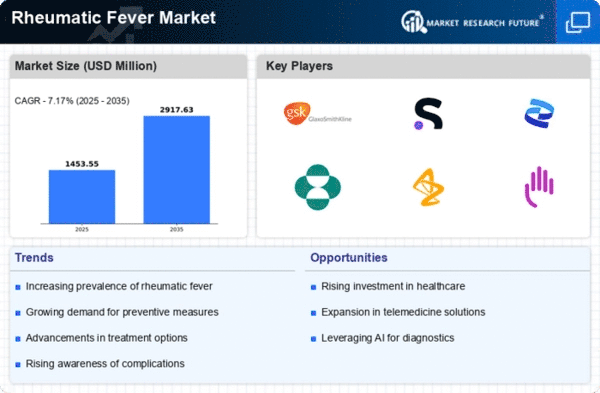
As per MRFR analysis, the Rheumatic Fever Market Size was estimated at 1356.3 USD Million in 2024. The Rheumatic Fever industry is projected to grow from 1469.09 USD Million in 2025 to 2917.63 USD Million by 2035, exhibiting a compound annual growth rate (CAGR) of 7.17 during the forecast period 2025 - 2035.

Key Market Trends & Highlights

The Rheumatic Fever Market is experiencing a dynamic shift towards enhanced awareness and treatment options.

  • Increased awareness and education regarding rheumatic fever are driving market growth, particularly in North America.
  • Advancements in treatment options are becoming more prevalent, with a focus on chronic rheumatic heart disease as the largest segment.
  • The Asia-Pacific region is emerging as the fastest-growing market, particularly in the acute rheumatic fever segment.
  • Rising incidence of rheumatic fever and government initiatives are key drivers propelling the market forward.

Market Size & Forecast

2024 Market Size 1356.3 (USD Million)
2035 Market Size 2917.63 (USD Million)
CAGR (2025 - 2035) 7.17%
Largest Regional Market Share in 2024 North America

Major Players

GlaxoSmithKline (GB), Sanofi (FR), Pfizer (US), Merck & Co. (US), AstraZeneca (GB), Bristol-Myers Squibb (US), Novartis (CH), AbbVie (US), Johnson & Johnson (US)

Market Trends

The Rheumatic Fever Market is currently experiencing a notable evolution, driven by a combination of factors including increased awareness, advancements in treatment options, and a growing emphasis on preventive measures. The condition, which primarily affects children and young adults, arises as a complication of untreated streptococcal throat infections. As healthcare systems worldwide enhance their focus on early diagnosis and management, the market appears poised for growth. Furthermore, the integration of innovative technologies in healthcare delivery may facilitate improved patient outcomes and adherence to treatment protocols. In addition, the Rheumatic Fever Market is likely to benefit from ongoing research initiatives aimed at understanding the underlying mechanisms of the disease. This research could lead to the development of novel therapeutic agents and vaccines, potentially transforming the landscape of treatment. Moreover, public health campaigns aimed at educating communities about the importance of timely medical intervention for throat infections may further bolster market expansion. As stakeholders continue to navigate the complexities of this condition, the future of the Rheumatic Fever Market seems promising, with opportunities for enhanced patient care and improved health outcomes.

Increased Awareness and Education

There is a growing recognition of rheumatic fever and its complications, leading to enhanced educational initiatives. These efforts aim to inform both healthcare professionals and the public about the importance of early detection and treatment of streptococcal infections, which may ultimately reduce the incidence of rheumatic fever.

Advancements in Treatment Options

The Rheumatic Fever Market is witnessing a shift towards more effective treatment modalities. Innovations in pharmacotherapy, including the development of new antibiotics and anti-inflammatory agents, are likely to improve patient outcomes and adherence to treatment regimens.

Focus on Preventive Measures

Preventive strategies are becoming increasingly prioritized within the Rheumatic Fever Market. Public health initiatives that promote vaccination and timely treatment of throat infections may significantly decrease the prevalence of rheumatic fever, thereby influencing market dynamics.

Rheumatic Fever Market Market Drivers

Rising Healthcare Expenditure

An upward trend in healthcare expenditure is significantly impacting the Global Rheumatic Fever Market Industry. As countries allocate more resources to healthcare, there is a corresponding increase in funding for rheumatic fever prevention and treatment programs. This financial commitment is likely to enhance access to healthcare services, including diagnostics and therapeutics for rheumatic fever. Moreover, higher healthcare spending often correlates with improved infrastructure and availability of medical supplies, which could further stimulate market growth. The anticipated rise in market value to 1.58 USD Billion by 2035 reflects this positive trend in healthcare investment.

Growing Awareness and Education

The Global Rheumatic Fever Market Industry is benefiting from heightened awareness and education regarding the disease. Increased public knowledge about the symptoms and complications of rheumatic fever is likely to lead to earlier diagnosis and treatment. Educational campaigns by health authorities and non-governmental organizations are crucial in disseminating information about prevention strategies, particularly in high-risk populations. This growing awareness is expected to drive market demand as more individuals seek medical attention for rheumatic fever symptoms. Consequently, the market is poised for substantial growth as educational initiatives continue to expand globally.

Increased Government Initiatives

Government initiatives aimed at combating rheumatic fever are playing a crucial role in shaping the Global Rheumatic Fever Market Industry. Various health organizations are implementing programs focused on prevention, early detection, and treatment of rheumatic fever. For example, national health campaigns promoting awareness about streptococcal infections are likely to lead to increased screening and treatment rates. These initiatives not only enhance public health outcomes but also stimulate market growth by increasing the demand for healthcare services and products related to rheumatic fever management. Such efforts are expected to contribute to a compound annual growth rate of 14.38% from 2025 to 2035.

Rising Incidence of Rheumatic Fever

The Global Rheumatic Fever Market Industry is experiencing growth driven by the increasing incidence of rheumatic fever, particularly in low- and middle-income countries. The World Health Organization indicates that rheumatic fever remains a significant public health concern, with millions affected annually. This rising prevalence is likely to drive demand for effective treatment options and preventive measures. As awareness increases, healthcare systems are focusing on early diagnosis and management, which could potentially enhance market growth. The market is projected to reach 0.36 USD Billion in 2024, reflecting the urgent need for interventions in affected populations.

Advancements in Treatment Modalities

Innovations in treatment modalities are propelling the Global Rheumatic Fever Market Industry forward. Recent developments in antibiotic therapies and anti-inflammatory medications are enhancing patient outcomes and reducing complications associated with rheumatic fever. For instance, the introduction of long-acting penicillin formulations has shown promise in preventing recurrent rheumatic fever. These advancements not only improve patient adherence but also reduce the burden on healthcare systems. As the market evolves, it is expected to grow significantly, with projections indicating a rise to 1.58 USD Billion by 2035, driven by these therapeutic innovations.

Market Segment Insights

By Disease Type: Chronic Rheumatic Heart Disease (Largest) vs. Acute Rheumatic Fever (Fastest-Growing)

In the Rheumatic Fever Market, Chronic Rheumatic Heart Disease represents the largest segment, commanding a significant share due to its long-term impacts on health and treatment needs. This segment is characterized by its persistent nature, which results in continuous demand for medical interventions, medications, and surgical procedures. Acute Rheumatic Fever, while smaller in market share, is experiencing rapid growth as awareness increases, particularly in developing regions, leading to more healthcare investments and preventive measures. Growth trends in the Rheumatic Fever Market are currently influenced by heightened awareness and early diagnosis of Acute Rheumatic Fever, which is driving interventions that can prevent long-term consequences. Additionally, advancements in treatment options and local health policies aimed at tackling rheumatic diseases are likely to enhance the market landscape. As new technologies and therapies become available, the focus will shift towards improving patient outcomes, thus propelling the demand for both Chronic and Acute conditions further in the coming years.

Chronic Rheumatic Heart Disease (Dominant) vs. Acute Rheumatic Fever (Emerging)

Chronic Rheumatic Heart Disease stands as the dominant player in the Rheumatic Fever Market, primarily due to its serious implications for heart health and ongoing management required post-diagnosis. This segment is often characterized by severe complications and high healthcare costs, prompting long-term care requirements. On the other hand, Acute Rheumatic Fever, while currently an emerging segment, is gaining attention due to increasing incidences and the need for proactive management strategies. As educational initiatives promote awareness about the disease and its prevention, Acute Rheumatic Fever is expected to see robust growth. In summary, while Chronic Rheumatic Heart Disease dominates in terms of market presence, Acute Rheumatic Fever is rapidly emerging as an essential focus for healthcare providers.

By Treatment Type: Antibiotic Therapy (Largest) vs. Anti-Inflammatory Medications (Fastest-Growing)

In the Rheumatic Fever Market, the treatment landscape is primarily dominated by Antibiotic Therapy, which plays a crucial role in combating the streptococcal infection responsible for rheumatic fever. This segment not only holds a significant share of the market but also represents the cornerstone of treatment protocols. Following closely is Anti-Inflammatory Medications, reflecting a robust share as they alleviate symptoms and manage inflammation, making them essential alongside antibiotics in the treatment regimen. As the understanding of rheumatic fever improves, there is increasing recognition of the importance of Preventive Measures, which, although not the largest, are gaining traction due to their role in reducing recurrence rates. Surgical Interventions remain a necessary option for severe cases, although their market presence is less pronounced. The overall growth trends in this segment are driven by the rising awareness of rheumatic fever and the expansion of healthcare access in emerging markets, promoting proactive treatments and strategies for prevention.

Antibiotic Therapy (Dominant) vs. Surgical Interventions (Emerging)

Antibiotic Therapy stands out as the dominant treatment for rheumatic fever, focusing on eradicating the streptococcal bacteria to prevent the onset of severe complications. This segment is supported by extensive clinical guidelines emphasizing its necessity in management protocols. In contrast, Surgical Interventions, while emerging, are reserved for extreme cases where other treatments fail or are insufficient. These interventions may include valve repair or replacement in cases of rheumatic heart disease. Despite being less prevalent, they play a critical role in comprehensive care, especially for patients with severe manifestations of the disease. As awareness increases, the integration of both approaches enhances treatment efficacy and patient outcomes.

By Age Group: Children (Largest) vs. Adolescents (Fastest-Growing)

The Rheumatic Fever Market shows a diverse distribution of prevalence among various age groups. Children constitute the largest segment, deeply affecting families due to the high susceptibility during early childhood, especially in developing regions. Following closely, adolescents show a significant presence, as this age group transitions into adulthood, often exacerbated by lifestyle factors. Adults and the elderly contribute to the market, but their overall representation tends to fluctuate based on regional healthcare initiatives and disease awareness.

Children (Dominant) vs. Adolescents (Emerging)

Children remain the dominant segment in the Rheumatic Fever Market due to their heightened vulnerability to Group A Streptococcus infections, leading to rheumatic fever. Public health measures aimed at reducing the incidence of rheumatic fever in childhood play a critical role in this segment's prominence. Conversely, the adolescent group is emerging rapidly as a significant segment as awareness around rheumatic heart disease grows, fueled by increased healthcare access and education. These trends reflect a shift in focus towards preventive care, making adolescents a key target for future interventions.

By Diagnosis Method: Clinical Evaluation (Largest) vs. Laboratory Tests (Fastest-Growing)

In the Rheumatic Fever Market, the segmentation by diagnosis method reveals that Clinical Evaluation holds a significant share, being widely adopted due to its straightforward approach and efficiency in initial assessments. Laboratory Tests follow closely, serving as critical adjuncts for confirming diagnoses and unveiling serological evidence, though they represent a smaller share compared to Clinical Evaluation. Imaging Techniques, while essential in some cases, are typically employed less frequently, making them the least significant segment in terms of overall market presence. The growth trends for this segment indicate a robust shift towards Laboratory Tests as the fastest-growing method. The rise of advanced diagnostic technologies, coupled with increasing awareness about the importance of early diagnosis, is fueling this growth. Meanwhile, Clinical Evaluation remains the foundation of diagnosis in rheumatic fever cases, benefitting from established practices and widespread acceptance within clinical settings.

Clinical Evaluation (Dominant) vs. Imaging Techniques (Emerging)

Clinical Evaluation serves as the dominant method for diagnosing rheumatic fever, leveraging a clinician's expertise and patient history to make initial assessments. This method is preferred due to its cost-effectiveness and immediacy, allowing healthcare providers to initiate treatment based on clinical signs and symptoms. In contrast, Imaging Techniques are emerging as a complementary diagnostic tool. While not as widely used, their role is growing, particularly in complex cases where structural damage is suspected. These techniques, which include echocardiography, are crucial for a comprehensive evaluation, indicating a potential increase in integration within diagnostic protocols as technology advances and the importance of thorough assessments gains recognition.

By Healthcare Setting: Hospitals (Largest) vs. Community Health Centers (Fastest-Growing)

In the Rheumatic Fever Market, hospitals dominate the healthcare setting landscape due to their capacity to provide comprehensive and specialized treatment for complex cases. They serve as the primary care facilities for severe manifestations of rheumatic fever, capturing a significant share of patient admissions. Outpatient clinics and community health centers, while essential, account for lesser market shares, focusing more on preventive care and follow-up treatments instead. The growth trends indicate a rising demand for community health centers as they become vital for accessible healthcare in underserved populations. This shift is driven by increased awareness of rheumatic fever and the need for early diagnosis and intervention, leading to a burgeoning number of community-based initiatives and partnerships aimed at prevention and education.

Hospitals: Dominant vs. Community Health Centers: Emerging

Hospitals maintain a dominant position in the Rheumatic Fever Market due to their extensive resources, skilled specialists, and ability to handle severe cases effectively. They provide comprehensive services ranging from diagnostics to treatment and management of complications associated with rheumatic fever. Conversely, community health centers are emerging as critical players, focusing on outreach and education to prevent rheumatic fever in at-risk populations. These centers emphasize early detection and management strategies in community settings, making healthcare more accessible. The trend towards integrated care models that incorporate both hospitals and community health initiatives is expected to bolster the overall management approach to rheumatic fever.

Get more detailed insights about Rheumatic Fever Market Research Report – Forecast to 2035

Regional Insights

North America : Market Leader in Rheumatic Fever

North America is poised to maintain its leadership in the Rheumatic Fever market, holding a significant market size of $678.79M in 2025. Key growth drivers include advanced healthcare infrastructure, increased awareness of rheumatic diseases, and supportive regulatory frameworks. The region's focus on research and development, alongside government initiatives to improve healthcare access, further fuels demand for effective treatments. The competitive landscape in North America is robust, with major players like Pfizer, Merck & Co., and Johnson & Johnson leading the charge. The U.S. is the primary market, benefiting from high healthcare expenditure and a strong emphasis on innovative therapies. The presence of established pharmaceutical companies ensures a steady supply of effective treatments, contributing to the region's market dominance.

Europe : Emerging Market with Growth Potential

Europe's Rheumatic Fever market is valued at $392.52M in 2025, driven by increasing healthcare investments and a growing focus on preventive care. Regulatory bodies are enhancing guidelines to improve disease management, which is expected to boost market growth. The rising incidence of rheumatic diseases, coupled with an aging population, is creating a higher demand for effective treatments across the continent. Leading countries in this region include Germany, France, and the UK, where healthcare systems are increasingly prioritizing rheumatic fever management. Key players such as Sanofi and AstraZeneca are actively involved in developing innovative therapies. The competitive landscape is characterized by collaborations and partnerships aimed at enhancing treatment options, ensuring that Europe remains a vital player in the global market.

Asia-Pacific : Rapidly Growing Healthcare Sector

The Asia-Pacific Rheumatic Fever market, valued at $227.89M in 2025, is experiencing rapid growth due to increasing healthcare access and rising awareness of rheumatic diseases. Governments are implementing policies to improve healthcare infrastructure, which is expected to drive demand for effective treatments. The region's diverse population and varying healthcare needs present both challenges and opportunities for market expansion. Countries like India and China are leading the market, with significant investments in healthcare and pharmaceutical sectors. The presence of key players such as GlaxoSmithKline and Novartis is enhancing competition and innovation. As the region continues to develop, the focus on improving treatment accessibility will be crucial for capturing a larger market share in the coming years.

Middle East and Africa : Emerging Market with Challenges

The Middle East and Africa Rheumatic Fever market is valued at $57.11M in 2025, with growth driven by increasing healthcare initiatives and awareness campaigns. However, challenges such as limited access to healthcare and varying disease prevalence across countries hinder market expansion. Regulatory bodies are working to improve healthcare policies, which may catalyze future growth in the region. Leading countries include South Africa and Nigeria, where healthcare systems are gradually evolving. The competitive landscape is characterized by a mix of local and international players, including companies like AbbVie and Bristol-Myers Squibb. As healthcare access improves, the market is expected to grow, driven by the need for effective treatments and better disease management strategies.

Key Players and Competitive Insights

The Rheumatic Fever Market is characterized by a competitive landscape that is increasingly shaped by innovation, strategic partnerships, and regional expansions. Key players such as GlaxoSmithKline (GB), Sanofi (FR), and Pfizer (US) are actively pursuing strategies that emphasize research and development, aiming to enhance their product offerings and address unmet medical needs. These companies are not only focusing on the development of new therapeutics but are also investing in digital health solutions to improve patient outcomes and streamline operations. The collective efforts of these firms contribute to a dynamic market environment, where competition is driven by the need for effective treatments and the integration of advanced technologies.In terms of business tactics, companies are localizing manufacturing and optimizing supply chains to enhance efficiency and reduce costs. The market structure appears moderately fragmented, with several players vying for market share. However, the influence of major companies is significant, as they leverage their resources and expertise to establish a competitive edge. This competitive structure fosters an environment where innovation and strategic collaborations are paramount, allowing companies to respond swiftly to market demands and regulatory changes.

In November GlaxoSmithKline (GB) announced a partnership with a leading biotechnology firm to co-develop a novel vaccine aimed at preventing rheumatic fever. This strategic move is expected to bolster GSK's portfolio and position it as a leader in preventive care within the market. The collaboration highlights the importance of innovation in addressing public health challenges and reflects a growing trend towards preventive strategies in the healthcare sector.

In October Sanofi (FR) launched a new digital platform designed to enhance patient engagement and adherence to treatment protocols for rheumatic fever. This initiative underscores Sanofi's commitment to integrating technology into its operations, aiming to improve patient outcomes through better management of chronic conditions. The platform is anticipated to facilitate real-time communication between healthcare providers and patients, thereby enhancing the overall treatment experience.

In September Pfizer (US) expanded its research initiatives focused on the long-term effects of rheumatic fever on cardiovascular health. This strategic focus not only aims to deepen the understanding of the disease but also positions Pfizer to develop targeted therapies that address the complications associated with rheumatic fever. Such research endeavors are crucial for establishing Pfizer as a thought leader in the field and may lead to innovative treatment options in the future.

As of December current competitive trends in the Rheumatic Fever Market are increasingly defined by digitalization, sustainability, and the integration of artificial intelligence (AI) into healthcare solutions. Strategic alliances are becoming more prevalent, as companies recognize the value of collaboration in driving innovation and enhancing market reach. Looking ahead, competitive differentiation is likely to evolve from traditional price-based strategies to a focus on innovation, technological advancements, and supply chain reliability. This shift may redefine how companies position themselves in the market, emphasizing the importance of delivering high-quality, effective solutions to meet the needs of patients and healthcare providers.

Key Companies in the Rheumatic Fever Market include

Industry Developments

Future Outlook

Rheumatic Fever Market Future Outlook

The Rheumatic Fever Market is projected to grow at a 7.17% CAGR from 2025 to 2035, driven by increased awareness, improved diagnostics, and enhanced treatment options.

New opportunities lie in:

  • Development of mobile health applications for patient monitoring
  • Expansion of telemedicine services for remote consultations
  • Investment in innovative vaccine research and development

By 2035, the market is expected to achieve substantial growth, reflecting advancements in treatment and prevention strategies.

Market Segmentation

Rheumatic Fever Market Age Group Outlook

  • Children
  • Adolescents
  • Adults
  • Elderly

Rheumatic Fever Market Disease Type Outlook

  • Acute Rheumatic Fever
  • Chronic Rheumatic Heart Disease
  • Post-Streptococcal Sequelae

Rheumatic Fever Market Treatment Type Outlook

  • Antibiotic Therapy
  • Anti-Inflammatory Medications
  • Surgical Interventions
  • Preventive Measures

Rheumatic Fever Market Diagnosis Method Outlook

  • Clinical Evaluation
  • Laboratory Tests
  • Imaging Techniques

Rheumatic Fever Market Healthcare Setting Outlook

  • Hospitals
  • Outpatient Clinics
  • Community Health Centers

Report Scope

MARKET SIZE 20241356.3(USD Million)
MARKET SIZE 20251469.09(USD Million)
MARKET SIZE 20352917.63(USD Million)
COMPOUND ANNUAL GROWTH RATE (CAGR)7.17% (2025 - 2035)
REPORT COVERAGERevenue Forecast, Competitive Landscape, Growth Factors, and Trends
BASE YEAR2024
Market Forecast Period2025 - 2035
Historical Data2019 - 2024
Market Forecast UnitsUSD Million
Key Companies ProfiledGlaxoSmithKline (GB), Sanofi (FR), Pfizer (US), Merck & Co. (US), AstraZeneca (GB), Bristol-Myers Squibb (US), Novartis (CH), AbbVie (US), Johnson & Johnson (US)
Segments CoveredDisease Type, Treatment Type, Age Group, Diagnosis Method, Healthcare Setting
Key Market OpportunitiesAdvancements in diagnostic technologies enhance early detection and treatment options in the Rheumatic Fever Market.
Key Market DynamicsRising awareness and improved diagnostics are reshaping treatment approaches in the Rheumatic Fever Market.
Countries CoveredNorth America, Europe, APAC, South America, MEA

FAQs

What would be the rheumatic fever market obstacles?

Lack of awareness and infrastructural problems in the healthcare sector can hold back rheumatic fever market report.

What are the diagnoses involved in the rheumatic fever market report?

The diagnosis types included in rheumatic fever market report are electrocardiogram, blood test, physical exam, and echocardiogram.

What are the distribution channel segments included in the rheumatic fever market report?

Distribution channels included in rheumatic fever market report are hospital pharmacies, retail pharmacies, and others.

Which region would dominate the global rheumatic fever market?

The Americas would display its dominance over global rheumatic fever market.

What are the end users involved in the rheumatic fever market report?

The end users included in rheumatic fever market are diagnostic centers, hospitals & clinics, and others.

  1. SECTION I: EXECUTIVE SUMMARY AND KEY HIGHLIGHTS
    1. | 1.1 EXECUTIVE SUMMARY
    2. | 1.1.1 Market Overview
    3. | 1.1.2 Key Findings
    4. | 1.1.3 Market Segmentation
    5. | 1.1.4 Competitive Landscape
    6. | 1.1.5 Challenges and Opportunities
    7. | 1.1.6 Future Outlook
  2. SECTION II: SCOPING, METHODOLOGY AND MARKET STRUCTURE
    1. | 2.1 MARKET INTRODUCTION
    2. | 2.1.1 Definition
    3. | 2.1.2 Scope of the study
    4. |-- 2.1.2.1 Research Objective
    5. |-- 2.1.2.2 Assumption
    6. |-- 2.1.2.3 Limitations
    7. | 2.2 RESEARCH METHODOLOGY
    8. | 2.2.1 Overview
    9. | 2.2.2 Data Mining
    10. | 2.2.3 Secondary Research
    11. | 2.2.4 Primary Research
    12. |-- 2.2.4.1 Primary Interviews and Information Gathering Process
    13. |-- 2.2.4.2 Breakdown of Primary Respondents
    14. | 2.2.5 Forecasting Model
    15. | 2.2.6 Market Size Estimation
    16. |-- 2.2.6.1 Bottom-Up Approach
    17. |-- 2.2.6.2 Top-Down Approach
    18. | 2.2.7 Data Triangulation
    19. | 2.2.8 Validation
  3. SECTION III: QUALITATIVE ANALYSIS
    1. | 3.1 MARKET DYNAMICS
    2. | 3.1.1 Overview
    3. | 3.1.2 Drivers
    4. | 3.1.3 Restraints
    5. | 3.1.4 Opportunities
    6. | 3.2 MARKET FACTOR ANALYSIS
    7. | 3.2.1 Value chain Analysis
    8. | 3.2.2 Porter's Five Forces Analysis
    9. |-- 3.2.2.1 Bargaining Power of Suppliers
    10. |-- 3.2.2.2 Bargaining Power of Buyers
    11. |-- 3.2.2.3 Threat of New Entrants
    12. |-- 3.2.2.4 Threat of Substitutes
    13. |-- 3.2.2.5 Intensity of Rivalry
    14. | 3.2.3 COVID-19 Impact Analysis
    15. |-- 3.2.3.1 Market Impact Analysis
    16. |-- 3.2.3.2 Regional Impact
    17. |-- 3.2.3.3 Opportunity and Threat Analysis
  4. SECTION IV: QUANTITATIVE ANALYSIS
    1. | 4.1 Healthcare, BY Disease Type (USD Million)
    2. | 4.1.1 Acute Rheumatic Fever
    3. | 4.1.2 Chronic Rheumatic Heart Disease
    4. | 4.1.3 Post-Streptococcal Sequelae
    5. | 4.2 Healthcare, BY Treatment Type (USD Million)
    6. | 4.2.1 Antibiotic Therapy
    7. | 4.2.2 Anti-Inflammatory Medications
    8. | 4.2.3 Surgical Interventions
    9. | 4.2.4 Preventive Measures
    10. | 4.3 Healthcare, BY Age Group (USD Million)
    11. | 4.3.1 Children
    12. | 4.3.2 Adolescents
    13. | 4.3.3 Adults
    14. | 4.3.4 Elderly
    15. | 4.4 Healthcare, BY Diagnosis Method (USD Million)
    16. | 4.4.1 Clinical Evaluation
    17. | 4.4.2 Laboratory Tests
    18. | 4.4.3 Imaging Techniques
    19. | 4.5 Healthcare, BY Healthcare Setting (USD Million)
    20. | 4.5.1 Hospitals
    21. | 4.5.2 Outpatient Clinics
    22. | 4.5.3 Community Health Centers
    23. | 4.6 Healthcare, BY Region (USD Million)
    24. | 4.6.1 North America
    25. |-- 4.6.1.1 US
    26. |-- 4.6.1.2 Canada
    27. | 4.6.2 Europe
    28. |-- 4.6.2.1 Germany
    29. |-- 4.6.2.2 UK
    30. |-- 4.6.2.3 France
    31. |-- 4.6.2.4 Russia
    32. |-- 4.6.2.5 Italy
    33. |-- 4.6.2.6 Spain
    34. |-- 4.6.2.7 Rest of Europe
    35. | 4.6.3 APAC
    36. |-- 4.6.3.1 China
    37. |-- 4.6.3.2 India
    38. |-- 4.6.3.3 Japan
    39. |-- 4.6.3.4 South Korea
    40. |-- 4.6.3.5 Malaysia
    41. |-- 4.6.3.6 Thailand
    42. |-- 4.6.3.7 Indonesia
    43. |-- 4.6.3.8 Rest of APAC
    44. | 4.6.4 South America
    45. |-- 4.6.4.1 Brazil
    46. |-- 4.6.4.2 Mexico
    47. |-- 4.6.4.3 Argentina
    48. |-- 4.6.4.4 Rest of South America
    49. | 4.6.5 MEA
    50. |-- 4.6.5.1 GCC Countries
    51. |-- 4.6.5.2 South Africa
    52. |-- 4.6.5.3 Rest of MEA
  5. SECTION V: COMPETITIVE ANALYSIS
    1. | 5.1 Competitive Landscape
    2. | 5.1.1 Overview
    3. | 5.1.2 Competitive Analysis
    4. | 5.1.3 Market share Analysis
    5. | 5.1.4 Major Growth Strategy in the Healthcare
    6. | 5.1.5 Competitive Benchmarking
    7. | 5.1.6 Leading Players in Terms of Number of Developments in the Healthcare
    8. | 5.1.7 Key developments and growth strategies
    9. |-- 5.1.7.1 New Product Launch/Service Deployment
    10. |-- 5.1.7.2 Merger & Acquisitions
    11. |-- 5.1.7.3 Joint Ventures
    12. | 5.1.8 Major Players Financial Matrix
    13. |-- 5.1.8.1 Sales and Operating Income
    14. |-- 5.1.8.2 Major Players R&D Expenditure. 2023
    15. | 5.2 Company Profiles
    16. | 5.2.1 GlaxoSmithKline (GB)
    17. |-- 5.2.1.1 Financial Overview
    18. |-- 5.2.1.2 Products Offered
    19. |-- 5.2.1.3 Key Developments
    20. |-- 5.2.1.4 SWOT Analysis
    21. |-- 5.2.1.5 Key Strategies
    22. | 5.2.2 Sanofi (FR)
    23. |-- 5.2.2.1 Financial Overview
    24. |-- 5.2.2.2 Products Offered
    25. |-- 5.2.2.3 Key Developments
    26. |-- 5.2.2.4 SWOT Analysis
    27. |-- 5.2.2.5 Key Strategies
    28. | 5.2.3 Pfizer (US)
    29. |-- 5.2.3.1 Financial Overview
    30. |-- 5.2.3.2 Products Offered
    31. |-- 5.2.3.3 Key Developments
    32. |-- 5.2.3.4 SWOT Analysis
    33. |-- 5.2.3.5 Key Strategies
    34. | 5.2.4 Merck & Co. (US)
    35. |-- 5.2.4.1 Financial Overview
    36. |-- 5.2.4.2 Products Offered
    37. |-- 5.2.4.3 Key Developments
    38. |-- 5.2.4.4 SWOT Analysis
    39. |-- 5.2.4.5 Key Strategies
    40. | 5.2.5 AstraZeneca (GB)
    41. |-- 5.2.5.1 Financial Overview
    42. |-- 5.2.5.2 Products Offered
    43. |-- 5.2.5.3 Key Developments
    44. |-- 5.2.5.4 SWOT Analysis
    45. |-- 5.2.5.5 Key Strategies
    46. | 5.2.6 Bristol-Myers Squibb (US)
    47. |-- 5.2.6.1 Financial Overview
    48. |-- 5.2.6.2 Products Offered
    49. |-- 5.2.6.3 Key Developments
    50. |-- 5.2.6.4 SWOT Analysis
    51. |-- 5.2.6.5 Key Strategies
    52. | 5.2.7 Novartis (CH)
    53. |-- 5.2.7.1 Financial Overview
    54. |-- 5.2.7.2 Products Offered
    55. |-- 5.2.7.3 Key Developments
    56. |-- 5.2.7.4 SWOT Analysis
    57. |-- 5.2.7.5 Key Strategies
    58. | 5.2.8 AbbVie (US)
    59. |-- 5.2.8.1 Financial Overview
    60. |-- 5.2.8.2 Products Offered
    61. |-- 5.2.8.3 Key Developments
    62. |-- 5.2.8.4 SWOT Analysis
    63. |-- 5.2.8.5 Key Strategies
    64. | 5.2.9 Johnson & Johnson (US)
    65. |-- 5.2.9.1 Financial Overview
    66. |-- 5.2.9.2 Products Offered
    67. |-- 5.2.9.3 Key Developments
    68. |-- 5.2.9.4 SWOT Analysis
    69. |-- 5.2.9.5 Key Strategies
    70. | 5.3 Appendix
    71. | 5.3.1 References
    72. | 5.3.2 Related Reports

Healthcare Market Segmentation

Healthcare By Disease Type (USD Million, 2025-2035)

  • Acute Rheumatic Fever
  • Chronic Rheumatic Heart Disease
  • Post-Streptococcal Sequelae

Healthcare By Treatment Type (USD Million, 2025-2035)

  • Antibiotic Therapy
  • Anti-Inflammatory Medications
  • Surgical Interventions
  • Preventive Measures

Healthcare By Age Group (USD Million, 2025-2035)

  • Children
  • Adolescents
  • Adults
  • Elderly

Healthcare By Diagnosis Method (USD Million, 2025-2035)

  • Clinical Evaluation
  • Laboratory Tests
  • Imaging Techniques

Healthcare By Healthcare Setting (USD Million, 2025-2035)

  • Hospitals
  • Outpatient Clinics
  • Community Health Centers
Infographic

Free Sample Request

Kindly complete the form below to receive a free sample of this Report

Get Free Sample

Customer Strories

Compare Licence

×
Features License Type
Single User Multiuser License Enterprise User
Price $4,950 $5,950 $7,250
Maximum User Access Limit 1 User Upto 10 Users Unrestricted Access Throughout the Organization
Free Customization
Direct Access to Analyst
Deliverable Format
Platform Access
Discount on Next Purchase 10% 15% 15%
Printable Versions