Request Free Sample ×

Kindly complete the form below to receive a free sample of this Report

* Please use a valid business email

Leading companies partner with us for data-driven Insights

clients tt-cursor
Hero Background
English
Chinese
French
Japanese
Korean
German
Spanish

Reefer Container Genset Size

ID: MRFR/EnP/10429-CR
128 Pages
Anshula Mandaokar
July 2023

Reefer Container Genset Market Research Report Information By Product Type (Undermount Reefer generator and clip on generator) By Type (20 ft reefer, 40 ft reefer and others), By Application (dairy products, medicine, sea food and others), By Region - Global Forecast to 2035

Share:
Download PDF ×

We do not share your information with anyone. However, we may send you emails based on your report interest from time to time. You may contact us at any time to opt-out.

Reefer Container Genset Market Infographic
Purchase Options

Reefer Container Genset Size

Reefer Container Genset Market Growth Projections and Opportunities

In 2021, the global market for reefer container gensets reached a valuation of USD 3,399.7 million, and it is projected to soar to USD 8,715.6 million by 2030, reflecting a Compound Annual Growth Rate (CAGR) of 10.8% during the period from 2022 to 2030.

Gensets, short for generator sets, are specialized diesel generators designed to power refrigerated containers, commonly known as reefers. These gensets play a vital role in providing power to reefers in off-grid locations or enabling the use of reefers on trucks for transporting perishable goods. When reefers, which are containers equipped with a refrigeration system, require an external power source during transport on ships, trains, or trucks, gensets are frequently utilized.

Reefer containers are integral to the shipping and transportation of temperature-sensitive cargo, and gensets contribute significantly to their functionality. While many ships incorporate power sources for reefer containers that require heating or cooling, gensets offer a crucial backup power solution. This backup becomes particularly important for maintaining the temperature-sensitive cargo within a specified range, ensuring the preservation of extremely delicate items during transit.

The comprehensive study on the global reefer container genset market delves into various aspects, including industry trends, market dynamics, size, competitive landscape, and growth opportunities. The research report categorizes the market based on product type, type of reefer container, application, and region/country.

In terms of product type, the market is segmented into undermount reefer generators and clip-on generators. The clip-on generator segment dominated the market in 2021 and is anticipated to witness the highest CAGR during the assessment period.

The type of reefer container is categorized into 20 ft reefer, 40 ft reefer, and others. The 40 ft reefer segment held the market dominance in 2021, while the others segment is expected to exhibit the highest CAGR during the assessment period.

Application-wise, the reefer container genset market is divided into dairy products, medicine, seafood, and others. The medicine segment emerged as the market leader in 2021 and is anticipated to experience the highest CAGR during the assessment period.

Regionally, Asia-Pacific is expected to dominate the reefer container genset market in 2021 and exhibit the highest CAGR throughout the forecast period.

The global market is characterized by high competition, with numerous vendors offering feature-rich and innovative solutions. Major players profiled in the study include Thermo King, Carrier Transicold (Carrier), MPMC Powertech Corp, CIMC, Taylor Power Systems, Inc., among others. These industry leaders contribute to the market with advanced solutions that cater to the diverse needs of customers in the reefer container genset sector.
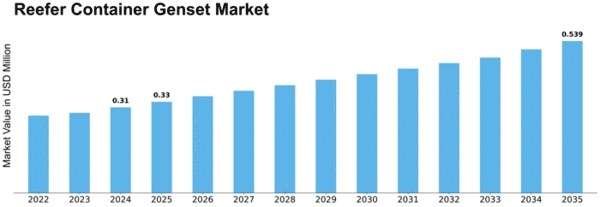
Reefer Container Genset Market Size Graph
Author
Author Profile
Anshula Mandaokar
Team Lead - Research

Anshula Mandaokar holds an academic degree in Chemical Engineering and has been contributing to the field for more than 5 years. She has expertise in Market Research and Business Consulting and serves as a Team Lead for a reputed Market Research firm under the Chemicals and Materials domain spectrum. She has worked on multiple projects, generating explicit results in a quick turnaround time. Her understanding of data interpretation justifies her role as a leader.

Leave a Comment

FAQs

What is the projected market valuation for the Reefer Container Genset Market in 2035?

<p>The projected market valuation for the Reefer Container Genset Market in 2035 is expected to reach 0.539 USD Million.</p>

Which companies are considered key players in the Reefer Container Genset Market?

<p>Key players in the Reefer Container Genset Market include Caterpillar, Kohler, Wärtsilä, Cummins, MTU, Perkins, Himoinsa, Generac, and Atlas Copco.</p>

What was the overall market valuation of the Reefer Container Genset Market in 2024?

<p>The overall market valuation of the Reefer Container Genset Market in 2024 was 0.31 USD Million.</p>

What is the expected CAGR for the Reefer Container Genset Market during the forecast period 2025 - 2035?

<p>The expected CAGR for the Reefer Container Genset Market during the forecast period 2025 - 2035 is 5.15%.</p>

How does the Cold Chain Logistics segment perform in terms of market valuation?

<p>The Cold Chain Logistics segment is projected to have a market valuation ranging from 0.1 to 0.175 USD Million.</p>

What are the different fuel types used in the Reefer Container Genset Market?

<p>The Reefer Container Genset Market utilizes various fuel types, including Diesel, Natural Gas, Biodiesel, and Propane, with Diesel showing a valuation range of 0.155 to 0.265 USD Million.</p>

What is the market valuation for the Pharmaceutical Transportation segment?

<p>The Pharmaceutical Transportation segment is expected to have a market valuation between 0.07 and 0.115 USD Million.</p>

Which end users are driving demand in the Reefer Container Genset Market?

End users driving demand in the Reefer Container Genset Market include Shipping Companies, Logistics Providers, Retailers, and Pharmaceutical Companies, with Shipping Companies valued between 0.093 and 0.162 USD Million.

What power output categories are available in the Reefer Container Genset Market?

Power output categories in the Reefer Container Genset Market include Below 10 kW, 10 kW to 20 kW, 20 kW to 30 kW, and Above 30 kW, with the 10 kW to 20 kW category valued between 0.1 and 0.18 USD Million.

What cooling technologies are utilized in the Reefer Container Genset Market?

The Reefer Container Genset Market employs various cooling technologies, including Air Cooling, Water Cooling, and Hybrid Cooling, with Air Cooling projected to have a valuation range of 0.12 to 0.2 USD Million.

Market Summary

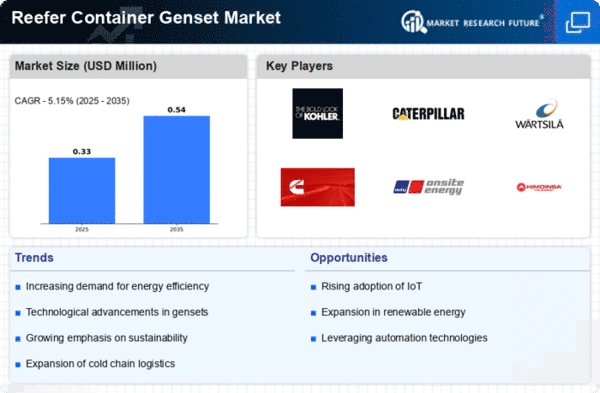
As per MRFR analysis, the Reefer Container Genset Market Size was estimated at 0.31 USD Million in 2024. The Reefer Container Genset industry is projected to grow from 0.326 in 2025 to 0.539 by 2035, exhibiting a compound annual growth rate (CAGR) of 5.15% during the forecast period 2025 - 2035.

Key Market Trends & Highlights

The Reefer Container Genset Market is poised for growth driven by sustainability and technological advancements.

  • North America remains the largest market for reefer container gensets, driven by robust cold chain logistics. Asia-Pacific is emerging as the fastest-growing region, fueled by increasing demand for efficient transportation solutions. The cold chain logistics segment dominates the market, while the pharmaceutical transportation segment is experiencing rapid growth. Key market drivers include the rising demand for perishable goods and the need for regulatory compliance in transportation standards.

Market Size & Forecast

2024 Market Size 0.31 (USD Million)
2035 Market Size 0.539 (USD Million)
CAGR (2025 - 2035) 5.15%
Largest Regional Market Share in 2024 North America

Major Players

Kohler Co (US), Caterpillar Inc (US), Wärtsilä Corporation (FI), Cummins Inc (US), MTU Onsite Energy (DE), <a href="https://www.himoinsa.com/electric-generators/generator-sets-for-stationary-installations/industrial-generator-sets/3-6/eng.html">Himoinsa S.L.</a> (ES), Generac Holdings Inc (US), Atlas Copco AB (SE)

Market Trends

The Reefer Container Genset Market is currently experiencing notable transformations driven by various factors. The increasing demand for temperature-sensitive goods, such as pharmaceuticals and perishable food items, necessitates reliable power solutions for refrigerated containers. As global trade expands, the need for efficient and sustainable energy sources becomes paramount. This market appears to be adapting to these requirements by integrating advanced technologies that enhance performance and reduce emissions. Furthermore, the growing emphasis on environmental regulations is likely to influence the design and functionality of gensets, pushing manufacturers to innovate and comply with stricter standards. In addition, the Reefer Container Genset Market seems to be witnessing a shift towards hybrid and electric solutions. These alternatives may offer improved efficiency and lower operational costs, appealing to a broader range of customers. The trend towards digitalization and smart technologies is also evident, as companies seek to optimize logistics and monitor equipment performance in real-time. Overall, the Reefer Container Genset Market is poised for growth, driven by technological advancements and changing consumer preferences, which could reshape the landscape of refrigerated transport in the coming years.

Sustainability Initiatives

The Reefer Container Genset Market is increasingly focusing on sustainability initiatives. Manufacturers are exploring eco-friendly technologies and alternative fuels to minimize environmental impact. This trend reflects a broader commitment to reducing carbon footprints and complying with stringent regulations.

Technological Advancements

Technological advancements are reshaping the Reefer Container Genset Market. Innovations in energy efficiency, remote monitoring, and automation are enhancing the performance of gensets. These developments may lead to improved reliability and reduced operational costs for users.

Shift Towards Electrification

There is a noticeable shift towards electrification within the Reefer Container Genset Market. As electric and hybrid solutions gain traction, companies are likely to invest in these technologies to meet the growing demand for cleaner energy sources. This transition could redefine operational practices in refrigerated transport.

Reefer Container Genset Market Market Drivers

Market Growth Projections

The Reefer Container Genset Market is poised for substantial growth, with projections indicating a market value of 4.88 USD Billion in 2024 and an anticipated rise to 14.6 USD Billion by 2035. This growth trajectory suggests a robust demand for reefer container gensets, driven by factors such as the increasing need for efficient cold chain logistics and advancements in technology. The market is expected to experience a compound annual growth rate (CAGR) of 10.45% from 2025 to 2035, reflecting the industry's adaptability to evolving consumer preferences and regulatory requirements. Such projections underscore the importance of reefer container gensets in ensuring the safe transportation of temperature-sensitive goods on a global scale.

Growing Demand for Perishable Goods

The increasing global demand for perishable goods, such as fruits, vegetables, and pharmaceuticals, drives the Global Reefer Container Genset Market. As consumers become more health-conscious and seek fresh products, the need for efficient cold chain logistics intensifies. This trend is particularly evident in regions with expanding middle-class populations, where access to fresh produce is becoming a priority. The Global Reefer Container Genset Market Industry is expected to reach 4.88 USD Billion in 2024, reflecting the necessity for reliable refrigeration solutions in transportation. Consequently, the demand for reefer container gensets is likely to rise, ensuring that temperature-sensitive goods are delivered safely and efficiently.

Expansion of Global Trade and E-commerce

The expansion of global trade and e-commerce plays a pivotal role in shaping the Reefer Container Genset Market. As international trade continues to flourish, the need for efficient and reliable cold chain solutions becomes paramount. E-commerce platforms are increasingly offering perishable goods, necessitating robust logistics systems to ensure product quality during transit. This trend is expected to contribute to the market's growth, with projections indicating a rise to 14.6 USD Billion by 2035. The integration of reefer container gensets into supply chains is essential for meeting the demands of consumers who expect fresh products delivered promptly, thereby enhancing the overall efficiency of global trade.

Rising Fuel Prices and Operational Costs

Rising fuel prices and operational costs are critical factors influencing the Reefer Container Genset Industry. As fuel prices fluctuate, logistics companies are compelled to seek more efficient and cost-effective solutions for transporting perishable goods. Reefer container gensets that offer improved fuel efficiency and lower operational costs become increasingly attractive to businesses aiming to maintain profitability. This trend is likely to drive innovation in genset technology, as manufacturers focus on developing solutions that minimize fuel consumption while maximizing performance. Consequently, the demand for advanced reefer container gensets is expected to rise, reflecting the industry's need for sustainable and economically viable cold chain solutions.

Technological Advancements in Genset Efficiency

Technological innovations in genset efficiency significantly influence the Reefer Container Genset Market. Manufacturers are increasingly adopting advanced technologies, such as hybrid systems and IoT integration, to enhance the performance and reliability of reefer container gensets. These advancements not only improve fuel efficiency but also reduce emissions, aligning with global sustainability goals. As the industry moves towards greener solutions, the market is projected to grow at a CAGR of 10.45% from 2025 to 2035. This growth indicates a shift towards more environmentally friendly practices in the transportation of perishable goods, further solidifying the role of advanced gensets in the cold chain logistics sector.

Regulatory Compliance and Environmental Standards

Regulatory compliance and environmental standards significantly impact the Reefer Container Genset Market. Governments worldwide are implementing stricter regulations regarding emissions and fuel efficiency, compelling manufacturers to innovate and adapt their products accordingly. Compliance with these regulations not only ensures legal adherence but also enhances the marketability of gensets in a competitive landscape. As companies strive to meet these standards, the demand for advanced reefer container gensets is likely to increase. This trend suggests a growing emphasis on sustainability within the industry, potentially leading to a more environmentally conscious approach to cold chain logistics.

Market Segment Insights

By Application: Cold Chain Logistics (Largest) vs. Food and Beverage Transportation (Fastest-Growing)

<p>The Reefer Container Genset Market is significantly influenced by its application segments. Cold Chain Logistics holds a dominant share in the market, driven by the vital need for temperature-sensitive goods to be transported under controlled conditions. This segment's efficiency is crucial for maintaining quality and safety across various industries, making it essential for logistics providers. Meanwhile, the Food and Beverage Transportation segment is rapidly gaining traction, reflecting the growing demand for fresh and perishable items globally. Companies are increasingly investing in reefer containers equipped with advanced gensets to ensure product integrity during transit. Growth trends in the Reefer Container Genset Market highlight the rising importance of temperature-controlled transportation. Factors such as increasing urbanization, a shift towards online grocery shopping, and stricter regulations on food safety drive the demand for efficient cold chain solutions. Moreover, expansion in pharmaceuticals and floral transportation sectors emphasizes the role of reefer gensets in preserving the quality of sensitive goods, showcasing a continued upward trend in these applications. Businesses are leveraging technological advancements to enhance fuel efficiency and reliability, which are crucial for maintaining competitive advantage in these burgeoning markets.</p>

<p>Cold Chain Logistics (Dominant) vs. Pharmaceutical Transportation (Emerging)</p>

<p>Cold Chain Logistics stands out as the dominant application in the Reefer Container Genset Market, characterized by its robust infrastructure and established operational practices. This segment requires the highest levels of reliability and efficiency, as it is integral to industries relying on the safe transportation of perishable goods. Key players are investing in next-generation gensets, focusing on sustainable practices and operational excellence. In contrast, Pharmaceutical Transportation is an emerging segment that is rapidly evolving, driven by the increasing complexity of drug distribution and heightened regulatory requirements. This segment demands temperature-sensitive solutions that adhere to stringent specifications, prompting innovation within the market. Companies are now prioritizing integrated cold chain solutions that not only meet compliance standards but also enhance overall logistics efficiency.</p>

By Fuel Type: Diesel (Largest) vs. Natural Gas (Fastest-Growing)

<p>The Reefer Container Genset Market is primarily dominated by Diesel fuel, which holds the largest market share. This dominance can be attributed to its widespread availability and established infrastructure. In contrast, Natural Gas is making inroads into the market due to increasing environmental regulations and a shift towards cleaner energy sources. The versatility of these fuels ensures a competitive landscape in the reefer genset sector.</p>

<p>Diesel (Dominant) vs. Natural Gas (Emerging)</p>

<p>Diesel continues to be the dominant fuel type in the Reefer Container Genset Market because of its high energy density and reliability in various operational conditions. It is often chosen for long-haul transportation solutions due to its robustness and established supply chains. On the other hand, Natural Gas is emerging as a competitive alternative, spurred by growing awareness of environmental sustainability and government incentives promoting cleaner fuels. Natural Gas gensets are increasingly preferred in urban areas where emissions regulations are stricter, leading to a transition towards this emerging fuel type.</p>

By Power Output: 10 kW to 20 kW (Largest) vs. Above 30 kW (Fastest-Growing)

The Reefer Container Genset Market displays a distinctive market share distribution among its power output segments. The segment of 10 kW to 20 kW holds the largest share, catering to a broad range of standard refrigeration needs within the logistics sector. In contrast, the segment for power outputs above 30 kW, while smaller in share, represents a growing niche, appealing to the needs of high-capacity operations.

Power Output: 10 kW to 20 kW (Dominant) vs. Above 30 kW (Emerging)

The 10 kW to 20 kW segment is the dominant force in the Reefer Container Genset Market, favored for its balance of efficiency and adequacy in handling common refrigeration tasks. This segment is extensively adopted in many industries due to its capability to support mid-sized applications. On the other hand, the Above 30 kW segment is marked as emerging, driven by an increasing demand for high-efficiency power solutions in larger, specialized operations. These gensets offer enhanced energy outputs necessary for transporting larger quantities of goods while adhering to rigorous temperature control standards, appealing to a growing sector of operations focusing on larger-scale logistics.

By Cooling Technology: Air Cooling (Largest) vs. Hybrid Cooling (Fastest-Growing)

<p>In the Reefer Container Genset Market, the Cooling Technology segment showcases a diverse range of options, including Air Cooling, Water Cooling, and Hybrid Cooling. Air Cooling has positioned itself as the largest segment, capturing a significant portion of the market share. Its efficiency in maintaining optimal temperatures makes it the preferred choice for many users, particularly those who prioritize reliability and cost-effectiveness. Meanwhile, Hybrid Cooling is emerging rapidly, attracting attention due to its innovative blend of traditional and modern cooling solutions, appealing to environmentally conscious customers seeking efficiency and sustainability.</p>

<p>Cooling Technology: Air Cooling (Dominant) vs. Hybrid Cooling (Emerging)</p>

<p>Air Cooling is recognized as the dominant technology in the Reefer Container Genset Market, thanks to its well-established performance and reliability. It operates by circulating air through cooling coils, ensuring effective temperature regulation in reefer containers. The technology is widely adopted due to its simplicity, lower maintenance costs, and effectiveness in various ambient conditions. In contrast, Hybrid Cooling is regarded as an emerging technology that combines the benefits of Air and Water Cooling, utilizing both air and liquid to optimize cooling efficiency. This innovative approach not only reduces energy consumption but also enhances temperature control, positioning Hybrid Cooling as a fast-growing option among users looking to adopt greener technologies and improve operational performance.</p>

By End User: Shipping Companies (Largest) vs. Pharmaceutical Companies (Fastest-Growing)

<p>In the Reefer Container Genset Market, Shipping Companies represent the largest segment due to their critical role in international trade and the necessity to transport temperature-sensitive goods. Their ability to efficiently manage supply chains while maintaining the integrity of goods has positioned them as key players, commanding a significant share of the market. Conversely, sectors such as Pharmaceutical Companies are increasingly vital, driven by the growing demand for the transport of medical supplies and biological products that require stringent temperature control during shipping. This shift signals a transformation in the dynamics of the market, with these companies gaining a notable foothold. Growth trends indicate that Shipping Companies will continue to dominate the Reefer Container Genset Market, primarily as global trade activities expand and the logistics of perishable goods become more complex. Meanwhile, the Pharmaceutical segment is experiencing accelerated growth due to the increasing need for reliable cold chain solutions that assure the safety and efficacy of sensitive medical products. Market dynamics indicate that as these segments evolve, they will significantly influence innovations and the competitiveness of Reefer Container Genset technologies.</p>

<p>Shipping Companies (Dominant) vs. Logistics Providers (Emerging)</p>

<p>Shipping Companies hold a dominant position in the Reefer Container Genset Market due to their established infrastructure and capacity to handle a vast volume of temperature-sensitive cargo across global trade networks. Their operations are characterized by advanced logistics capabilities, ensuring that refrigerated products reach their destination in optimal condition. They typically invest in the latest technologies to enhance efficiency, reduce environmental impact, and ensure compliance with stringent shipping regulations. On the other hand, Logistics Providers are emerging players as they adapt to the growing demand for reliable cold storage and transportation solutions. With innovation driving their operations, they focus on last-mile delivery and specialized services that cater to niche markets such as pharmaceuticals and perishables, making them increasingly relevant in this competitive landscape.</p>

Get more detailed insights about Reefer Container Genset Market Research Report—Global Forecast till 2035

Regional Insights

North America : Market Leader in Gensets

North America is poised to maintain its leadership in the Reefer Container Genset market, holding a significant market share of 12% in 2024. The growth is driven by increasing demand for refrigerated transport in the food and pharmaceutical sectors, alongside stringent regulations on emissions and energy efficiency. The region's robust infrastructure and technological advancements further bolster market expansion. The United States is the primary contributor, with key players like Kohler Co, Caterpillar Inc, and Cummins Inc leading the competitive landscape. These companies are investing in innovative solutions to enhance efficiency and reduce environmental impact. The presence of established manufacturers and a growing focus on sustainability are expected to drive further growth in this sector.

Europe : Emerging Regulatory Frameworks

Europe is witnessing a dynamic shift in the Reefer Container Genset market, with a market share of 9% in 2024. The region's growth is fueled by stringent environmental regulations and a strong emphasis on sustainable practices. The European Union's Green Deal aims to reduce carbon emissions, which is catalyzing demand for efficient gensets that comply with new standards. This regulatory environment is expected to drive innovation and investment in cleaner technologies. Leading countries such as Germany, France, and the UK are at the forefront of this transition, with major players like Wärtsilä Corporation and MTU Onsite Energy actively participating. The competitive landscape is characterized by a mix of established firms and emerging startups focused on eco-friendly solutions. This combination of regulatory support and market demand positions Europe as a key player in The Reefer Container Genset.

Asia-Pacific : Rapid Growth and Demand

Asia-Pacific is rapidly emerging as a significant player in the Reefer Container Genset market, holding an 8% market share in 2024. The region's growth is driven by increasing trade activities, urbanization, and a rising demand for temperature-sensitive goods. Countries like China and India are expanding their logistics and cold chain infrastructure, which is further propelling the need for reliable gensets. Additionally, government initiatives to enhance food safety and reduce waste are contributing to market growth. China is the leading country in this region, with a growing number of local manufacturers entering the market. Key global players like Generac Holdings Inc and Atlas Copco AB are also expanding their presence. The competitive landscape is evolving, with a focus on innovation and cost-effective solutions to meet the diverse needs of the market, positioning Asia-Pacific for substantial growth in the coming years.

Middle East and Africa : Emerging Market Opportunities

The Middle East and Africa region is gradually developing its Reefer Container Genset market, currently holding a 2% market share in 2024. The growth is primarily driven by increasing investments in infrastructure and logistics, particularly in the food and beverage sector. The region's strategic location as a trade hub is enhancing the demand for refrigerated transport solutions, which is expected to boost the genset market significantly. Countries like South Africa and the UAE are leading the way, with a growing number of projects aimed at improving cold chain logistics. The competitive landscape includes both local and international players, with companies focusing on tailored solutions to meet regional needs. As the market matures, opportunities for innovation and partnerships are likely to emerge, paving the way for future growth.

Key Players and Competitive Insights

The Reefer Container Genset Market is currently characterized by a competitive landscape that is both dynamic and multifaceted. Key growth drivers include the increasing demand for temperature-sensitive goods, the expansion of global trade, and advancements in generator technology. Major players such as Kohler Co (US), Caterpillar Inc (US), and Wärtsilä Corporation (FI) are strategically positioned to leverage these trends. Kohler Co (US) focuses on innovation in energy efficiency and sustainability, while Caterpillar Inc (US) emphasizes its extensive service network and product reliability. Wärtsilä Corporation (FI) is actively pursuing digital transformation initiatives, enhancing operational efficiency through smart technology integration. Collectively, these strategies contribute to a competitive environment that is increasingly shaped by technological advancements and customer-centric solutions.In terms of business tactics, companies are localizing manufacturing to reduce lead times and optimize supply chains. The market structure appears moderately fragmented, with several key players holding substantial market shares. This fragmentation allows for a diverse range of offerings, yet the influence of major companies remains significant, as they set benchmarks for quality and innovation.
In November Caterpillar Inc (US) announced the launch of its latest line of energy-efficient gensets designed specifically for reefer containers. This strategic move is likely to enhance its competitive edge by addressing the growing demand for sustainable solutions in the logistics sector. The introduction of these gensets is expected to reduce fuel consumption by up to 15%, aligning with The Reefer Container Genset share.
In October Wärtsilä Corporation (FI) entered into a partnership with a leading logistics firm to develop integrated solutions for reefer container operations. This collaboration aims to enhance the efficiency of cold chain logistics through advanced monitoring systems and predictive maintenance. The strategic importance of this partnership lies in its potential to streamline operations and reduce downtime, thereby improving customer satisfaction and operational reliability.
In September Kohler Co (US) expanded its manufacturing capabilities in Europe, focusing on the production of high-performance gensets for the reefer market. This expansion is indicative of the company's commitment to meeting the rising demand in the region while also reducing shipping costs and lead times. By localizing production, Kohler Co (US) is likely to enhance its responsiveness to market needs and strengthen its competitive position.
As of December current competitive trends in the Reefer Container Genset Market are heavily influenced by digitalization, sustainability, and the integration of AI technologies. Strategic alliances are increasingly shaping the landscape, enabling companies to pool resources and expertise. The shift from price-based competition to a focus on innovation, technology, and supply chain reliability is evident. Moving forward, differentiation will likely hinge on the ability to deliver advanced, sustainable solutions that meet the evolving demands of the global market.

Key Companies in the Reefer Container Genset Market include

Industry Developments

April 2021 The innovative Container Fresh & Frozen (CFF) refrigeration systems for containers were unveiled by Thermo King. Improved temperature and humidity control, lower total cost of ownership, and industry-standard R-134A low global warming potential (GWP) refrigerant are all features of the new Thermo King CFF reefers..

August 2020 Thermo King released the "TK Tek" maritime service app. Thermo King Marine is introducing the app as its newest digital tool to serve its marine dealers and customers throughout the world. Thermo King Marine products now have simple access to service and technical information thanks to the new TK Tek app, which is essential for maintaining equipment uptime and guaranteeing that cargo is safeguarded and maintained at the right temperature..

April 2020 Thermo King unveiled the SG-5000, a maritime container's next-generation generator set. The SG-5000 can power any ISO reefer on the market and is available in clip-on and under-mount variants. It guarantees total temperature control and safety of the chilled cargo.

Future Outlook

Reefer Container Genset Market Future Outlook

The Reefer Container Genset Market is projected to grow at a 5.15% CAGR from 2025 to 2035, driven by increasing global trade and demand for temperature-sensitive goods.

New opportunities lie in:

  • <p>Development of hybrid genset technologies for enhanced fuel efficiency. Expansion into emerging markets with tailored leasing solutions. Integration of IoT for real-time monitoring and predictive maintenance.</p>

By 2035, the market is expected to solidify its position as a critical component in global logistics.

Market Segmentation

Reefer Container Genset Market End User Outlook

  • Shipping Companies
  • Logistics Providers
  • Retailers
  • Pharmaceutical Companies

Reefer Container Genset Market Fuel Type Outlook

  • Diesel
  • Natural Gas
  • Biodiesel
  • Electric

Reefer Container Genset Market Application Outlook

  • Cold Chain Logistics
  • Food and Beverage Transportation
  • Pharmaceutical Transportation
  • Floral Transportation

Reefer Container Genset Market Power Output Outlook

  • Below 10 kW
  • 10 kW to 20 kW
  • 20 kW to 30 kW
  • Above 30 kW

Reefer Container Genset Market Cooling Technology Outlook

  • Vapor Compression
  • Thermoelectric
  • Absorption Cooling

Report Scope

MARKET SIZE 2024 0.31(USD Million)
MARKET SIZE 2025 0.326(USD Million)
MARKET SIZE 2035 0.539(USD Million)
COMPOUND ANNUAL GROWTH RATE (CAGR) 5.15% (2025 - 2035)
REPORT COVERAGE Revenue Forecast, Competitive Landscape, Growth Factors, and Trends
BASE YEAR 2024
Market Forecast Period 2025 - 2035
Historical Data 2019 - 2024
Market Forecast Units USD Million
Key Companies Profiled Kohler Co (US), Caterpillar Inc (US), Wärtsilä Corporation (FI), Cummins Inc (US), MTU Onsite Energy (DE), Himoinsa S.L. (ES), Generac Holdings Inc (US), Atlas Copco AB (SE)
Segments Covered Application, Fuel Type, Power Output, Cooling Technology, End User
Key Market Opportunities Integration of renewable energy sources in the Reefer Container Genset Market enhances sustainability and operational efficiency.
Key Market Dynamics Rising demand for energy-efficient solutions drives innovation in the Reefer Container Genset Market.
Countries Covered North America, Europe, APAC, South America, MEA

FAQs

What is the projected market valuation for the Reefer Container Genset Market in 2035?

<p>The projected market valuation for the Reefer Container Genset Market in 2035 is expected to reach 0.539 USD Million.</p>

Which companies are considered key players in the Reefer Container Genset Market?

<p>Key players in the Reefer Container Genset Market include Caterpillar, Kohler, Wärtsilä, Cummins, MTU, Perkins, Himoinsa, Generac, and Atlas Copco.</p>

What was the overall market valuation of the Reefer Container Genset Market in 2024?

<p>The overall market valuation of the Reefer Container Genset Market in 2024 was 0.31 USD Million.</p>

What is the expected CAGR for the Reefer Container Genset Market during the forecast period 2025 - 2035?

<p>The expected CAGR for the Reefer Container Genset Market during the forecast period 2025 - 2035 is 5.15%.</p>

How does the Cold Chain Logistics segment perform in terms of market valuation?

<p>The Cold Chain Logistics segment is projected to have a market valuation ranging from 0.1 to 0.175 USD Million.</p>

What are the different fuel types used in the Reefer Container Genset Market?

<p>The Reefer Container Genset Market utilizes various fuel types, including Diesel, Natural Gas, Biodiesel, and Propane, with Diesel showing a valuation range of 0.155 to 0.265 USD Million.</p>

What is the market valuation for the Pharmaceutical Transportation segment?

<p>The Pharmaceutical Transportation segment is expected to have a market valuation between 0.07 and 0.115 USD Million.</p>

Which end users are driving demand in the Reefer Container Genset Market?

End users driving demand in the Reefer Container Genset Market include Shipping Companies, Logistics Providers, Retailers, and Pharmaceutical Companies, with Shipping Companies valued between 0.093 and 0.162 USD Million.

What power output categories are available in the Reefer Container Genset Market?

Power output categories in the Reefer Container Genset Market include Below 10 kW, 10 kW to 20 kW, 20 kW to 30 kW, and Above 30 kW, with the 10 kW to 20 kW category valued between 0.1 and 0.18 USD Million.

What cooling technologies are utilized in the Reefer Container Genset Market?

The Reefer Container Genset Market employs various cooling technologies, including Air Cooling, Water Cooling, and Hybrid Cooling, with Air Cooling projected to have a valuation range of 0.12 to 0.2 USD Million.

  1. SECTION I: EXECUTIVE SUMMARY AND KEY HIGHLIGHTS
    1. | 1.1 EXECUTIVE SUMMARY
    2. | | 1.1.1 Market Overview
    3. | | 1.1.2 Key Findings
    4. | | 1.1.3 Market Segmentation
    5. | | 1.1.4 Competitive Landscape
    6. | | 1.1.5 Challenges and Opportunities
    7. | | 1.1.6 Future Outlook
  2. SECTION II: SCOPING, METHODOLOGY AND MARKET STRUCTURE
    1. | 2.1 MARKET INTRODUCTION
    2. | | 2.1.1 Definition
    3. | | 2.1.2 Scope of the study
    4. | | | 2.1.2.1 Research Objective
    5. | | | 2.1.2.2 Assumption
    6. | | | 2.1.2.3 Limitations
    7. | 2.2 RESEARCH METHODOLOGY
    8. | | 2.2.1 Overview
    9. | | 2.2.2 Data Mining
    10. | | 2.2.3 Secondary Research
    11. | | 2.2.4 Primary Research
    12. | | | 2.2.4.1 Primary Interviews and Information Gathering Process
    13. | | | 2.2.4.2 Breakdown of Primary Respondents
    14. | | 2.2.5 Forecasting Model
    15. | | 2.2.6 Market Size Estimation
    16. | | | 2.2.6.1 Bottom-Up Approach
    17. | | | 2.2.6.2 Top-Down Approach
    18. | | 2.2.7 Data Triangulation
    19. | | 2.2.8 Validation
  3. SECTION III: QUALITATIVE ANALYSIS
    1. | 3.1 MARKET DYNAMICS
    2. | | 3.1.1 Overview
    3. | | 3.1.2 Drivers
    4. | | 3.1.3 Restraints
    5. | | 3.1.4 Opportunities
    6. | 3.2 MARKET FACTOR ANALYSIS
    7. | | 3.2.1 Value chain Analysis
    8. | | 3.2.2 Porter's Five Forces Analysis
    9. | | | 3.2.2.1 Bargaining Power of Suppliers
    10. | | | 3.2.2.2 Bargaining Power of Buyers
    11. | | | 3.2.2.3 Threat of New Entrants
    12. | | | 3.2.2.4 Threat of Substitutes
    13. | | | 3.2.2.5 Intensity of Rivalry
    14. | | 3.2.3 COVID-19 Impact Analysis
    15. | | | 3.2.3.1 Market Impact Analysis
    16. | | | 3.2.3.2 Regional Impact
    17. | | | 3.2.3.3 Opportunity and Threat Analysis
  4. SECTION IV: QUANTITATIVE ANALYSIS
    1. | 4.1 Energy & Power, BY Application (USD Million)
    2. | | 4.1.1 Cold Chain Logistics
    3. | | 4.1.2 Food and Beverage Transportation
    4. | | 4.1.3 Pharmaceutical Transportation
    5. | | 4.1.4 Floral Transportation
    6. | 4.2 Energy & Power, BY Fuel Type (USD Million)
    7. | | 4.2.1 Diesel
    8. | | 4.2.2 Natural Gas
    9. | | 4.2.3 Biodiesel
    10. | | 4.2.4 Propane
    11. | 4.3 Energy & Power, BY Power Output (USD Million)
    12. | | 4.3.1 Below 10 kW
    13. | | 4.3.2 10 kW to 20 kW
    14. | | 4.3.3 20 kW to 30 kW
    15. | | 4.3.4 Above 30 kW
    16. | 4.4 Energy & Power, BY Cooling Technology (USD Million)
    17. | | 4.4.1 Air Cooling
    18. | | 4.4.2 Water Cooling
    19. | | 4.4.3 Hybrid Cooling
    20. | 4.5 Energy & Power, BY End User (USD Million)
    21. | | 4.5.1 Shipping Companies
    22. | | 4.5.2 Logistics Providers
    23. | | 4.5.3 Retailers
    24. | | 4.5.4 Pharmaceutical Companies
    25. | 4.6 Energy & Power, BY Region (USD Million)
    26. | | 4.6.1 North America
    27. | | | 4.6.1.1 US
    28. | | | 4.6.1.2 Canada
    29. | | 4.6.2 Europe
    30. | | | 4.6.2.1 Germany
    31. | | | 4.6.2.2 UK
    32. | | | 4.6.2.3 France
    33. | | | 4.6.2.4 Russia
    34. | | | 4.6.2.5 Italy
    35. | | | 4.6.2.6 Spain
    36. | | | 4.6.2.7 Rest of Europe
    37. | | 4.6.3 APAC
    38. | | | 4.6.3.1 China
    39. | | | 4.6.3.2 India
    40. | | | 4.6.3.3 Japan
    41. | | | 4.6.3.4 South Korea
    42. | | | 4.6.3.5 Malaysia
    43. | | | 4.6.3.6 Thailand
    44. | | | 4.6.3.7 Indonesia
    45. | | | 4.6.3.8 Rest of APAC
    46. | | 4.6.4 South America
    47. | | | 4.6.4.1 Brazil
    48. | | | 4.6.4.2 Mexico
    49. | | | 4.6.4.3 Argentina
    50. | | | 4.6.4.4 Rest of South America
    51. | | 4.6.5 MEA
    52. | | | 4.6.5.1 GCC Countries
    53. | | | 4.6.5.2 South Africa
    54. | | | 4.6.5.3 Rest of MEA
  5. SECTION V: COMPETITIVE ANALYSIS
    1. | 5.1 Competitive Landscape
    2. | | 5.1.1 Overview
    3. | | 5.1.2 Competitive Analysis
    4. | | 5.1.3 Market share Analysis
    5. | | 5.1.4 Major Growth Strategy in the Energy & Power
    6. | | 5.1.5 Competitive Benchmarking
    7. | | 5.1.6 Leading Players in Terms of Number of Developments in the Energy & Power
    8. | | 5.1.7 Key developments and growth strategies
    9. | | | 5.1.7.1 New Product Launch/Service Deployment
    10. | | | 5.1.7.2 Merger & Acquisitions
    11. | | | 5.1.7.3 Joint Ventures
    12. | | 5.1.8 Major Players Financial Matrix
    13. | | | 5.1.8.1 Sales and Operating Income
    14. | | | 5.1.8.2 Major Players R&D Expenditure. 2023
    15. | 5.2 Company Profiles
    16. | | 5.2.1 Caterpillar (US)
    17. | | | 5.2.1.1 Financial Overview
    18. | | | 5.2.1.2 Products Offered
    19. | | | 5.2.1.3 Key Developments
    20. | | | 5.2.1.4 SWOT Analysis
    21. | | | 5.2.1.5 Key Strategies
    22. | | 5.2.2 Kohler (US)
    23. | | | 5.2.2.1 Financial Overview
    24. | | | 5.2.2.2 Products Offered
    25. | | | 5.2.2.3 Key Developments
    26. | | | 5.2.2.4 SWOT Analysis
    27. | | | 5.2.2.5 Key Strategies
    28. | | 5.2.3 Wärtsilä (FI)
    29. | | | 5.2.3.1 Financial Overview
    30. | | | 5.2.3.2 Products Offered
    31. | | | 5.2.3.3 Key Developments
    32. | | | 5.2.3.4 SWOT Analysis
    33. | | | 5.2.3.5 Key Strategies
    34. | | 5.2.4 Cummins (US)
    35. | | | 5.2.4.1 Financial Overview
    36. | | | 5.2.4.2 Products Offered
    37. | | | 5.2.4.3 Key Developments
    38. | | | 5.2.4.4 SWOT Analysis
    39. | | | 5.2.4.5 Key Strategies
    40. | | 5.2.5 MTU (DE)
    41. | | | 5.2.5.1 Financial Overview
    42. | | | 5.2.5.2 Products Offered
    43. | | | 5.2.5.3 Key Developments
    44. | | | 5.2.5.4 SWOT Analysis
    45. | | | 5.2.5.5 Key Strategies
    46. | | 5.2.6 Perkins (GB)
    47. | | | 5.2.6.1 Financial Overview
    48. | | | 5.2.6.2 Products Offered
    49. | | | 5.2.6.3 Key Developments
    50. | | | 5.2.6.4 SWOT Analysis
    51. | | | 5.2.6.5 Key Strategies
    52. | | 5.2.7 Himoinsa (ES)
    53. | | | 5.2.7.1 Financial Overview
    54. | | | 5.2.7.2 Products Offered
    55. | | | 5.2.7.3 Key Developments
    56. | | | 5.2.7.4 SWOT Analysis
    57. | | | 5.2.7.5 Key Strategies
    58. | | 5.2.8 Generac (US)
    59. | | | 5.2.8.1 Financial Overview
    60. | | | 5.2.8.2 Products Offered
    61. | | | 5.2.8.3 Key Developments
    62. | | | 5.2.8.4 SWOT Analysis
    63. | | | 5.2.8.5 Key Strategies
    64. | | 5.2.9 Atlas Copco (SE)
    65. | | | 5.2.9.1 Financial Overview
    66. | | | 5.2.9.2 Products Offered
    67. | | | 5.2.9.3 Key Developments
    68. | | | 5.2.9.4 SWOT Analysis
    69. | | | 5.2.9.5 Key Strategies
    70. | 5.3 Appendix
    71. | | 5.3.1 References
    72. | | 5.3.2 Related Reports
  6. LIST OF FIGURES
    1. | 6.1 MARKET SYNOPSIS
    2. | 6.2 NORTH AMERICA MARKET ANALYSIS
    3. | 6.3 US MARKET ANALYSIS BY APPLICATION
    4. | 6.4 US MARKET ANALYSIS BY FUEL TYPE
    5. | 6.5 US MARKET ANALYSIS BY POWER OUTPUT
    6. | 6.6 US MARKET ANALYSIS BY COOLING TECHNOLOGY
    7. | 6.7 US MARKET ANALYSIS BY END USER
    8. | 6.8 CANADA MARKET ANALYSIS BY APPLICATION
    9. | 6.9 CANADA MARKET ANALYSIS BY FUEL TYPE
    10. | 6.10 CANADA MARKET ANALYSIS BY POWER OUTPUT
    11. | 6.11 CANADA MARKET ANALYSIS BY COOLING TECHNOLOGY
    12. | 6.12 CANADA MARKET ANALYSIS BY END USER
    13. | 6.13 EUROPE MARKET ANALYSIS
    14. | 6.14 GERMANY MARKET ANALYSIS BY APPLICATION
    15. | 6.15 GERMANY MARKET ANALYSIS BY FUEL TYPE
    16. | 6.16 GERMANY MARKET ANALYSIS BY POWER OUTPUT
    17. | 6.17 GERMANY MARKET ANALYSIS BY COOLING TECHNOLOGY
    18. | 6.18 GERMANY MARKET ANALYSIS BY END USER
    19. | 6.19 UK MARKET ANALYSIS BY APPLICATION
    20. | 6.20 UK MARKET ANALYSIS BY FUEL TYPE
    21. | 6.21 UK MARKET ANALYSIS BY POWER OUTPUT
    22. | 6.22 UK MARKET ANALYSIS BY COOLING TECHNOLOGY
    23. | 6.23 UK MARKET ANALYSIS BY END USER
    24. | 6.24 FRANCE MARKET ANALYSIS BY APPLICATION
    25. | 6.25 FRANCE MARKET ANALYSIS BY FUEL TYPE
    26. | 6.26 FRANCE MARKET ANALYSIS BY POWER OUTPUT
    27. | 6.27 FRANCE MARKET ANALYSIS BY COOLING TECHNOLOGY
    28. | 6.28 FRANCE MARKET ANALYSIS BY END USER
    29. | 6.29 RUSSIA MARKET ANALYSIS BY APPLICATION
    30. | 6.30 RUSSIA MARKET ANALYSIS BY FUEL TYPE
    31. | 6.31 RUSSIA MARKET ANALYSIS BY POWER OUTPUT
    32. | 6.32 RUSSIA MARKET ANALYSIS BY COOLING TECHNOLOGY
    33. | 6.33 RUSSIA MARKET ANALYSIS BY END USER
    34. | 6.34 ITALY MARKET ANALYSIS BY APPLICATION
    35. | 6.35 ITALY MARKET ANALYSIS BY FUEL TYPE
    36. | 6.36 ITALY MARKET ANALYSIS BY POWER OUTPUT
    37. | 6.37 ITALY MARKET ANALYSIS BY COOLING TECHNOLOGY
    38. | 6.38 ITALY MARKET ANALYSIS BY END USER
    39. | 6.39 SPAIN MARKET ANALYSIS BY APPLICATION
    40. | 6.40 SPAIN MARKET ANALYSIS BY FUEL TYPE
    41. | 6.41 SPAIN MARKET ANALYSIS BY POWER OUTPUT
    42. | 6.42 SPAIN MARKET ANALYSIS BY COOLING TECHNOLOGY
    43. | 6.43 SPAIN MARKET ANALYSIS BY END USER
    44. | 6.44 REST OF EUROPE MARKET ANALYSIS BY APPLICATION
    45. | 6.45 REST OF EUROPE MARKET ANALYSIS BY FUEL TYPE
    46. | 6.46 REST OF EUROPE MARKET ANALYSIS BY POWER OUTPUT
    47. | 6.47 REST OF EUROPE MARKET ANALYSIS BY COOLING TECHNOLOGY
    48. | 6.48 REST OF EUROPE MARKET ANALYSIS BY END USER
    49. | 6.49 APAC MARKET ANALYSIS
    50. | 6.50 CHINA MARKET ANALYSIS BY APPLICATION
    51. | 6.51 CHINA MARKET ANALYSIS BY FUEL TYPE
    52. | 6.52 CHINA MARKET ANALYSIS BY POWER OUTPUT
    53. | 6.53 CHINA MARKET ANALYSIS BY COOLING TECHNOLOGY
    54. | 6.54 CHINA MARKET ANALYSIS BY END USER
    55. | 6.55 INDIA MARKET ANALYSIS BY APPLICATION
    56. | 6.56 INDIA MARKET ANALYSIS BY FUEL TYPE
    57. | 6.57 INDIA MARKET ANALYSIS BY POWER OUTPUT
    58. | 6.58 INDIA MARKET ANALYSIS BY COOLING TECHNOLOGY
    59. | 6.59 INDIA MARKET ANALYSIS BY END USER
    60. | 6.60 JAPAN MARKET ANALYSIS BY APPLICATION
    61. | 6.61 JAPAN MARKET ANALYSIS BY FUEL TYPE
    62. | 6.62 JAPAN MARKET ANALYSIS BY POWER OUTPUT
    63. | 6.63 JAPAN MARKET ANALYSIS BY COOLING TECHNOLOGY
    64. | 6.64 JAPAN MARKET ANALYSIS BY END USER
    65. | 6.65 SOUTH KOREA MARKET ANALYSIS BY APPLICATION
    66. | 6.66 SOUTH KOREA MARKET ANALYSIS BY FUEL TYPE
    67. | 6.67 SOUTH KOREA MARKET ANALYSIS BY POWER OUTPUT
    68. | 6.68 SOUTH KOREA MARKET ANALYSIS BY COOLING TECHNOLOGY
    69. | 6.69 SOUTH KOREA MARKET ANALYSIS BY END USER
    70. | 6.70 MALAYSIA MARKET ANALYSIS BY APPLICATION
    71. | 6.71 MALAYSIA MARKET ANALYSIS BY FUEL TYPE
    72. | 6.72 MALAYSIA MARKET ANALYSIS BY POWER OUTPUT
    73. | 6.73 MALAYSIA MARKET ANALYSIS BY COOLING TECHNOLOGY
    74. | 6.74 MALAYSIA MARKET ANALYSIS BY END USER
    75. | 6.75 THAILAND MARKET ANALYSIS BY APPLICATION
    76. | 6.76 THAILAND MARKET ANALYSIS BY FUEL TYPE
    77. | 6.77 THAILAND MARKET ANALYSIS BY POWER OUTPUT
    78. | 6.78 THAILAND MARKET ANALYSIS BY COOLING TECHNOLOGY
    79. | 6.79 THAILAND MARKET ANALYSIS BY END USER
    80. | 6.80 INDONESIA MARKET ANALYSIS BY APPLICATION
    81. | 6.81 INDONESIA MARKET ANALYSIS BY FUEL TYPE
    82. | 6.82 INDONESIA MARKET ANALYSIS BY POWER OUTPUT
    83. | 6.83 INDONESIA MARKET ANALYSIS BY COOLING TECHNOLOGY
    84. | 6.84 INDONESIA MARKET ANALYSIS BY END USER
    85. | 6.85 REST OF APAC MARKET ANALYSIS BY APPLICATION
    86. | 6.86 REST OF APAC MARKET ANALYSIS BY FUEL TYPE
    87. | 6.87 REST OF APAC MARKET ANALYSIS BY POWER OUTPUT
    88. | 6.88 REST OF APAC MARKET ANALYSIS BY COOLING TECHNOLOGY
    89. | 6.89 REST OF APAC MARKET ANALYSIS BY END USER
    90. | 6.90 SOUTH AMERICA MARKET ANALYSIS
    91. | 6.91 BRAZIL MARKET ANALYSIS BY APPLICATION
    92. | 6.92 BRAZIL MARKET ANALYSIS BY FUEL TYPE
    93. | 6.93 BRAZIL MARKET ANALYSIS BY POWER OUTPUT
    94. | 6.94 BRAZIL MARKET ANALYSIS BY COOLING TECHNOLOGY
    95. | 6.95 BRAZIL MARKET ANALYSIS BY END USER
    96. | 6.96 MEXICO MARKET ANALYSIS BY APPLICATION
    97. | 6.97 MEXICO MARKET ANALYSIS BY FUEL TYPE
    98. | 6.98 MEXICO MARKET ANALYSIS BY POWER OUTPUT
    99. | 6.99 MEXICO MARKET ANALYSIS BY COOLING TECHNOLOGY
    100. | 6.100 MEXICO MARKET ANALYSIS BY END USER
    101. | 6.101 ARGENTINA MARKET ANALYSIS BY APPLICATION
    102. | 6.102 ARGENTINA MARKET ANALYSIS BY FUEL TYPE
    103. | 6.103 ARGENTINA MARKET ANALYSIS BY POWER OUTPUT
    104. | 6.104 ARGENTINA MARKET ANALYSIS BY COOLING TECHNOLOGY
    105. | 6.105 ARGENTINA MARKET ANALYSIS BY END USER
    106. | 6.106 REST OF SOUTH AMERICA MARKET ANALYSIS BY APPLICATION
    107. | 6.107 REST OF SOUTH AMERICA MARKET ANALYSIS BY FUEL TYPE
    108. | 6.108 REST OF SOUTH AMERICA MARKET ANALYSIS BY POWER OUTPUT
    109. | 6.109 REST OF SOUTH AMERICA MARKET ANALYSIS BY COOLING TECHNOLOGY
    110. | 6.110 REST OF SOUTH AMERICA MARKET ANALYSIS BY END USER
    111. | 6.111 MEA MARKET ANALYSIS
    112. | 6.112 GCC COUNTRIES MARKET ANALYSIS BY APPLICATION
    113. | 6.113 GCC COUNTRIES MARKET ANALYSIS BY FUEL TYPE
    114. | 6.114 GCC COUNTRIES MARKET ANALYSIS BY POWER OUTPUT
    115. | 6.115 GCC COUNTRIES MARKET ANALYSIS BY COOLING TECHNOLOGY
    116. | 6.116 GCC COUNTRIES MARKET ANALYSIS BY END USER
    117. | 6.117 SOUTH AFRICA MARKET ANALYSIS BY APPLICATION
    118. | 6.118 SOUTH AFRICA MARKET ANALYSIS BY FUEL TYPE
    119. | 6.119 SOUTH AFRICA MARKET ANALYSIS BY POWER OUTPUT
    120. | 6.120 SOUTH AFRICA MARKET ANALYSIS BY COOLING TECHNOLOGY
    121. | 6.121 SOUTH AFRICA MARKET ANALYSIS BY END USER
    122. | 6.122 REST OF MEA MARKET ANALYSIS BY APPLICATION
    123. | 6.123 REST OF MEA MARKET ANALYSIS BY FUEL TYPE
    124. | 6.124 REST OF MEA MARKET ANALYSIS BY POWER OUTPUT
    125. | 6.125 REST OF MEA MARKET ANALYSIS BY COOLING TECHNOLOGY
    126. | 6.126 REST OF MEA MARKET ANALYSIS BY END USER
    127. | 6.127 KEY BUYING CRITERIA OF ENERGY & POWER
    128. | 6.128 RESEARCH PROCESS OF MRFR
    129. | 6.129 DRO ANALYSIS OF ENERGY & POWER
    130. | 6.130 DRIVERS IMPACT ANALYSIS: ENERGY & POWER
    131. | 6.131 RESTRAINTS IMPACT ANALYSIS: ENERGY & POWER
    132. | 6.132 SUPPLY / VALUE CHAIN: ENERGY & POWER
    133. | 6.133 ENERGY & POWER, BY APPLICATION, 2024 (% SHARE)
    134. | 6.134 ENERGY & POWER, BY APPLICATION, 2024 TO 2035 (USD Million)
    135. | 6.135 ENERGY & POWER, BY FUEL TYPE, 2024 (% SHARE)
    136. | 6.136 ENERGY & POWER, BY FUEL TYPE, 2024 TO 2035 (USD Million)
    137. | 6.137 ENERGY & POWER, BY POWER OUTPUT, 2024 (% SHARE)
    138. | 6.138 ENERGY & POWER, BY POWER OUTPUT, 2024 TO 2035 (USD Million)
    139. | 6.139 ENERGY & POWER, BY COOLING TECHNOLOGY, 2024 (% SHARE)
    140. | 6.140 ENERGY & POWER, BY COOLING TECHNOLOGY, 2024 TO 2035 (USD Million)
    141. | 6.141 ENERGY & POWER, BY END USER, 2024 (% SHARE)
    142. | 6.142 ENERGY & POWER, BY END USER, 2024 TO 2035 (USD Million)
    143. | 6.143 BENCHMARKING OF MAJOR COMPETITORS
  7. LIST OF TABLES
    1. | 7.1 LIST OF ASSUMPTIONS
    2. | | 7.1.1
    3. | 7.2 North America MARKET SIZE ESTIMATES; FORECAST
    4. | | 7.2.1 BY APPLICATION, 2025-2035 (USD Million)
    5. | | 7.2.2 BY FUEL TYPE, 2025-2035 (USD Million)
    6. | | 7.2.3 BY POWER OUTPUT, 2025-2035 (USD Million)
    7. | | 7.2.4 BY COOLING TECHNOLOGY, 2025-2035 (USD Million)
    8. | | 7.2.5 BY END USER, 2025-2035 (USD Million)
    9. | 7.3 US MARKET SIZE ESTIMATES; FORECAST
    10. | | 7.3.1 BY APPLICATION, 2025-2035 (USD Million)
    11. | | 7.3.2 BY FUEL TYPE, 2025-2035 (USD Million)
    12. | | 7.3.3 BY POWER OUTPUT, 2025-2035 (USD Million)
    13. | | 7.3.4 BY COOLING TECHNOLOGY, 2025-2035 (USD Million)
    14. | | 7.3.5 BY END USER, 2025-2035 (USD Million)
    15. | 7.4 Canada MARKET SIZE ESTIMATES; FORECAST
    16. | | 7.4.1 BY APPLICATION, 2025-2035 (USD Million)
    17. | | 7.4.2 BY FUEL TYPE, 2025-2035 (USD Million)
    18. | | 7.4.3 BY POWER OUTPUT, 2025-2035 (USD Million)
    19. | | 7.4.4 BY COOLING TECHNOLOGY, 2025-2035 (USD Million)
    20. | | 7.4.5 BY END USER, 2025-2035 (USD Million)
    21. | 7.5 Europe MARKET SIZE ESTIMATES; FORECAST
    22. | | 7.5.1 BY APPLICATION, 2025-2035 (USD Million)
    23. | | 7.5.2 BY FUEL TYPE, 2025-2035 (USD Million)
    24. | | 7.5.3 BY POWER OUTPUT, 2025-2035 (USD Million)
    25. | | 7.5.4 BY COOLING TECHNOLOGY, 2025-2035 (USD Million)
    26. | | 7.5.5 BY END USER, 2025-2035 (USD Million)
    27. | 7.6 Germany MARKET SIZE ESTIMATES; FORECAST
    28. | | 7.6.1 BY APPLICATION, 2025-2035 (USD Million)
    29. | | 7.6.2 BY FUEL TYPE, 2025-2035 (USD Million)
    30. | | 7.6.3 BY POWER OUTPUT, 2025-2035 (USD Million)
    31. | | 7.6.4 BY COOLING TECHNOLOGY, 2025-2035 (USD Million)
    32. | | 7.6.5 BY END USER, 2025-2035 (USD Million)
    33. | 7.7 UK MARKET SIZE ESTIMATES; FORECAST
    34. | | 7.7.1 BY APPLICATION, 2025-2035 (USD Million)
    35. | | 7.7.2 BY FUEL TYPE, 2025-2035 (USD Million)
    36. | | 7.7.3 BY POWER OUTPUT, 2025-2035 (USD Million)
    37. | | 7.7.4 BY COOLING TECHNOLOGY, 2025-2035 (USD Million)
    38. | | 7.7.5 BY END USER, 2025-2035 (USD Million)
    39. | 7.8 France MARKET SIZE ESTIMATES; FORECAST
    40. | | 7.8.1 BY APPLICATION, 2025-2035 (USD Million)
    41. | | 7.8.2 BY FUEL TYPE, 2025-2035 (USD Million)
    42. | | 7.8.3 BY POWER OUTPUT, 2025-2035 (USD Million)
    43. | | 7.8.4 BY COOLING TECHNOLOGY, 2025-2035 (USD Million)
    44. | | 7.8.5 BY END USER, 2025-2035 (USD Million)
    45. | 7.9 Russia MARKET SIZE ESTIMATES; FORECAST
    46. | | 7.9.1 BY APPLICATION, 2025-2035 (USD Million)
    47. | | 7.9.2 BY FUEL TYPE, 2025-2035 (USD Million)
    48. | | 7.9.3 BY POWER OUTPUT, 2025-2035 (USD Million)
    49. | | 7.9.4 BY COOLING TECHNOLOGY, 2025-2035 (USD Million)
    50. | | 7.9.5 BY END USER, 2025-2035 (USD Million)
    51. | 7.10 Italy MARKET SIZE ESTIMATES; FORECAST
    52. | | 7.10.1 BY APPLICATION, 2025-2035 (USD Million)
    53. | | 7.10.2 BY FUEL TYPE, 2025-2035 (USD Million)
    54. | | 7.10.3 BY POWER OUTPUT, 2025-2035 (USD Million)
    55. | | 7.10.4 BY COOLING TECHNOLOGY, 2025-2035 (USD Million)
    56. | | 7.10.5 BY END USER, 2025-2035 (USD Million)
    57. | 7.11 Spain MARKET SIZE ESTIMATES; FORECAST
    58. | | 7.11.1 BY APPLICATION, 2025-2035 (USD Million)
    59. | | 7.11.2 BY FUEL TYPE, 2025-2035 (USD Million)
    60. | | 7.11.3 BY POWER OUTPUT, 2025-2035 (USD Million)
    61. | | 7.11.4 BY COOLING TECHNOLOGY, 2025-2035 (USD Million)
    62. | | 7.11.5 BY END USER, 2025-2035 (USD Million)
    63. | 7.12 Rest of Europe MARKET SIZE ESTIMATES; FORECAST
    64. | | 7.12.1 BY APPLICATION, 2025-2035 (USD Million)
    65. | | 7.12.2 BY FUEL TYPE, 2025-2035 (USD Million)
    66. | | 7.12.3 BY POWER OUTPUT, 2025-2035 (USD Million)
    67. | | 7.12.4 BY COOLING TECHNOLOGY, 2025-2035 (USD Million)
    68. | | 7.12.5 BY END USER, 2025-2035 (USD Million)
    69. | 7.13 APAC MARKET SIZE ESTIMATES; FORECAST
    70. | | 7.13.1 BY APPLICATION, 2025-2035 (USD Million)
    71. | | 7.13.2 BY FUEL TYPE, 2025-2035 (USD Million)
    72. | | 7.13.3 BY POWER OUTPUT, 2025-2035 (USD Million)
    73. | | 7.13.4 BY COOLING TECHNOLOGY, 2025-2035 (USD Million)
    74. | | 7.13.5 BY END USER, 2025-2035 (USD Million)
    75. | 7.14 China MARKET SIZE ESTIMATES; FORECAST
    76. | | 7.14.1 BY APPLICATION, 2025-2035 (USD Million)
    77. | | 7.14.2 BY FUEL TYPE, 2025-2035 (USD Million)
    78. | | 7.14.3 BY POWER OUTPUT, 2025-2035 (USD Million)
    79. | | 7.14.4 BY COOLING TECHNOLOGY, 2025-2035 (USD Million)
    80. | | 7.14.5 BY END USER, 2025-2035 (USD Million)
    81. | 7.15 India MARKET SIZE ESTIMATES; FORECAST
    82. | | 7.15.1 BY APPLICATION, 2025-2035 (USD Million)
    83. | | 7.15.2 BY FUEL TYPE, 2025-2035 (USD Million)
    84. | | 7.15.3 BY POWER OUTPUT, 2025-2035 (USD Million)
    85. | | 7.15.4 BY COOLING TECHNOLOGY, 2025-2035 (USD Million)
    86. | | 7.15.5 BY END USER, 2025-2035 (USD Million)
    87. | 7.16 Japan MARKET SIZE ESTIMATES; FORECAST
    88. | | 7.16.1 BY APPLICATION, 2025-2035 (USD Million)
    89. | | 7.16.2 BY FUEL TYPE, 2025-2035 (USD Million)
    90. | | 7.16.3 BY POWER OUTPUT, 2025-2035 (USD Million)
    91. | | 7.16.4 BY COOLING TECHNOLOGY, 2025-2035 (USD Million)
    92. | | 7.16.5 BY END USER, 2025-2035 (USD Million)
    93. | 7.17 South Korea MARKET SIZE ESTIMATES; FORECAST
    94. | | 7.17.1 BY APPLICATION, 2025-2035 (USD Million)
    95. | | 7.17.2 BY FUEL TYPE, 2025-2035 (USD Million)
    96. | | 7.17.3 BY POWER OUTPUT, 2025-2035 (USD Million)
    97. | | 7.17.4 BY COOLING TECHNOLOGY, 2025-2035 (USD Million)
    98. | | 7.17.5 BY END USER, 2025-2035 (USD Million)
    99. | 7.18 Malaysia MARKET SIZE ESTIMATES; FORECAST
    100. | | 7.18.1 BY APPLICATION, 2025-2035 (USD Million)
    101. | | 7.18.2 BY FUEL TYPE, 2025-2035 (USD Million)
    102. | | 7.18.3 BY POWER OUTPUT, 2025-2035 (USD Million)
    103. | | 7.18.4 BY COOLING TECHNOLOGY, 2025-2035 (USD Million)
    104. | | 7.18.5 BY END USER, 2025-2035 (USD Million)
    105. | 7.19 Thailand MARKET SIZE ESTIMATES; FORECAST
    106. | | 7.19.1 BY APPLICATION, 2025-2035 (USD Million)
    107. | | 7.19.2 BY FUEL TYPE, 2025-2035 (USD Million)
    108. | | 7.19.3 BY POWER OUTPUT, 2025-2035 (USD Million)
    109. | | 7.19.4 BY COOLING TECHNOLOGY, 2025-2035 (USD Million)
    110. | | 7.19.5 BY END USER, 2025-2035 (USD Million)
    111. | 7.20 Indonesia MARKET SIZE ESTIMATES; FORECAST
    112. | | 7.20.1 BY APPLICATION, 2025-2035 (USD Million)
    113. | | 7.20.2 BY FUEL TYPE, 2025-2035 (USD Million)
    114. | | 7.20.3 BY POWER OUTPUT, 2025-2035 (USD Million)
    115. | | 7.20.4 BY COOLING TECHNOLOGY, 2025-2035 (USD Million)
    116. | | 7.20.5 BY END USER, 2025-2035 (USD Million)
    117. | 7.21 Rest of APAC MARKET SIZE ESTIMATES; FORECAST
    118. | | 7.21.1 BY APPLICATION, 2025-2035 (USD Million)
    119. | | 7.21.2 BY FUEL TYPE, 2025-2035 (USD Million)
    120. | | 7.21.3 BY POWER OUTPUT, 2025-2035 (USD Million)
    121. | | 7.21.4 BY COOLING TECHNOLOGY, 2025-2035 (USD Million)
    122. | | 7.21.5 BY END USER, 2025-2035 (USD Million)
    123. | 7.22 South America MARKET SIZE ESTIMATES; FORECAST
    124. | | 7.22.1 BY APPLICATION, 2025-2035 (USD Million)
    125. | | 7.22.2 BY FUEL TYPE, 2025-2035 (USD Million)
    126. | | 7.22.3 BY POWER OUTPUT, 2025-2035 (USD Million)
    127. | | 7.22.4 BY COOLING TECHNOLOGY, 2025-2035 (USD Million)
    128. | | 7.22.5 BY END USER, 2025-2035 (USD Million)
    129. | 7.23 Brazil MARKET SIZE ESTIMATES; FORECAST
    130. | | 7.23.1 BY APPLICATION, 2025-2035 (USD Million)
    131. | | 7.23.2 BY FUEL TYPE, 2025-2035 (USD Million)
    132. | | 7.23.3 BY POWER OUTPUT, 2025-2035 (USD Million)
    133. | | 7.23.4 BY COOLING TECHNOLOGY, 2025-2035 (USD Million)
    134. | | 7.23.5 BY END USER, 2025-2035 (USD Million)
    135. | 7.24 Mexico MARKET SIZE ESTIMATES; FORECAST
    136. | | 7.24.1 BY APPLICATION, 2025-2035 (USD Million)
    137. | | 7.24.2 BY FUEL TYPE, 2025-2035 (USD Million)
    138. | | 7.24.3 BY POWER OUTPUT, 2025-2035 (USD Million)
    139. | | 7.24.4 BY COOLING TECHNOLOGY, 2025-2035 (USD Million)
    140. | | 7.24.5 BY END USER, 2025-2035 (USD Million)
    141. | 7.25 Argentina MARKET SIZE ESTIMATES; FORECAST
    142. | | 7.25.1 BY APPLICATION, 2025-2035 (USD Million)
    143. | | 7.25.2 BY FUEL TYPE, 2025-2035 (USD Million)
    144. | | 7.25.3 BY POWER OUTPUT, 2025-2035 (USD Million)
    145. | | 7.25.4 BY COOLING TECHNOLOGY, 2025-2035 (USD Million)
    146. | | 7.25.5 BY END USER, 2025-2035 (USD Million)
    147. | 7.26 Rest of South America MARKET SIZE ESTIMATES; FORECAST
    148. | | 7.26.1 BY APPLICATION, 2025-2035 (USD Million)
    149. | | 7.26.2 BY FUEL TYPE, 2025-2035 (USD Million)
    150. | | 7.26.3 BY POWER OUTPUT, 2025-2035 (USD Million)
    151. | | 7.26.4 BY COOLING TECHNOLOGY, 2025-2035 (USD Million)
    152. | | 7.26.5 BY END USER, 2025-2035 (USD Million)
    153. | 7.27 MEA MARKET SIZE ESTIMATES; FORECAST
    154. | | 7.27.1 BY APPLICATION, 2025-2035 (USD Million)
    155. | | 7.27.2 BY FUEL TYPE, 2025-2035 (USD Million)
    156. | | 7.27.3 BY POWER OUTPUT, 2025-2035 (USD Million)
    157. | | 7.27.4 BY COOLING TECHNOLOGY, 2025-2035 (USD Million)
    158. | | 7.27.5 BY END USER, 2025-2035 (USD Million)
    159. | 7.28 GCC Countries MARKET SIZE ESTIMATES; FORECAST
    160. | | 7.28.1 BY APPLICATION, 2025-2035 (USD Million)
    161. | | 7.28.2 BY FUEL TYPE, 2025-2035 (USD Million)
    162. | | 7.28.3 BY POWER OUTPUT, 2025-2035 (USD Million)
    163. | | 7.28.4 BY COOLING TECHNOLOGY, 2025-2035 (USD Million)
    164. | | 7.28.5 BY END USER, 2025-2035 (USD Million)
    165. | 7.29 South Africa MARKET SIZE ESTIMATES; FORECAST
    166. | | 7.29.1 BY APPLICATION, 2025-2035 (USD Million)
    167. | | 7.29.2 BY FUEL TYPE, 2025-2035 (USD Million)
    168. | | 7.29.3 BY POWER OUTPUT, 2025-2035 (USD Million)
    169. | | 7.29.4 BY COOLING TECHNOLOGY, 2025-2035 (USD Million)
    170. | | 7.29.5 BY END USER, 2025-2035 (USD Million)
    171. | 7.30 Rest of MEA MARKET SIZE ESTIMATES; FORECAST
    172. | | 7.30.1 BY APPLICATION, 2025-2035 (USD Million)
    173. | | 7.30.2 BY FUEL TYPE, 2025-2035 (USD Million)
    174. | | 7.30.3 BY POWER OUTPUT, 2025-2035 (USD Million)
    175. | | 7.30.4 BY COOLING TECHNOLOGY, 2025-2035 (USD Million)
    176. | | 7.30.5 BY END USER, 2025-2035 (USD Million)
    177. | 7.31 PRODUCT LAUNCH/PRODUCT DEVELOPMENT/APPROVAL
    178. | | 7.31.1
    179. | 7.32 ACQUISITION/PARTNERSHIP
    180. | | 7.32.1

Energy & Power Market Segmentation

Energy & Power By Application (USD Million, 2025-2035)

  • Cold Chain Logistics
  • Food and Beverage Transportation
  • Pharmaceutical Transportation
  • Floral Transportation

Energy & Power By Fuel Type (USD Million, 2025-2035)

  • Diesel
  • Natural Gas
  • Biodiesel
  • Propane

Energy & Power By Power Output (USD Million, 2025-2035)

  • Below 10 kW
  • 10 kW to 20 kW
  • 20 kW to 30 kW
  • Above 30 kW

Energy & Power By Cooling Technology (USD Million, 2025-2035)

  • Air Cooling
  • Water Cooling
  • Hybrid Cooling

Energy & Power By End User (USD Million, 2025-2035)

  • Shipping Companies
  • Logistics Providers
  • Retailers
  • Pharmaceutical Companies
Infographic

Free Sample Request

Kindly complete the form below to receive a free sample of this Report

Get Free Sample

Customer Strories

Compare Licence

×
Features License Type
Single User Multiuser License Enterprise User
Price $4,950 $5,950 $7,250
Maximum User Access Limit 1 User Upto 10 Users Unrestricted Access Throughout the Organization
Free Customization
Direct Access to Analyst
Deliverable Format
Platform Access
Discount on Next Purchase 10% 15% 15%
Printable Versions