×
Request Free Sample ×

Kindly complete the form below to receive a free sample of this Report

* Please use a valid business email

Leading companies partner with us for data-driven Insights

clients tt-cursor
Hero Background
English
Chinese
French
Japanese
Korean
German
Spanish

Precious Metal Catalysts Market Size

ID: MRFR/CnM/4519-HCR
100 Pages
Priya Nagrale
October 2025

Precious Metal Catalysts Market Research Report Information By Type (Platinum, Palladium, Ruthenium, Rhodium, Rhenium, Iridium, Gold and Others), Application (Automotive, Refining, Petrochemicals, Oil, Mining and Others), By Region - Forecast till 2035

Share:
Download PDF ×

We do not share your information with anyone. However, we may send you emails based on your report interest from time to time. You may contact us at any time to opt-out.

Precious Metal Catalysts Market Infographic
Purchase Options

Precious Metal Catalysts Size

Precious Metal Catalysts Market Growth Projections and Opportunities

The Precious Metal Catalysts Market is significantly influenced by various market factors that play a crucial role in shaping its dynamics. One of the primary factors driving the market is the growing demand for precious metal catalysts across diverse industries. These catalysts, often based on metals like platinum, palladium, and rhodium, are essential for various chemical processes, including catalytic converters in automotive applications, petroleum refining, and pharmaceutical manufacturing.

The automotive industry stands out as a major market driver. With stringent emission regulations worldwide, the demand for catalytic converters, which utilize precious metal catalysts, has soared. Governments globally are imposing stricter emission standards to curb air pollution, leading to increased adoption of catalytic converters in vehicles. This surge in demand directly impacts the Precious Metal Catalysts Market, driving its growth.

Another significant market factor is the rise in environmental concerns and the focus on sustainable practices. Precious metal catalysts play a vital role in promoting green and sustainable technologies. Industries are increasingly shifting towards cleaner production processes that minimize environmental impact. Precious metal catalysts enable these industries to adhere to eco-friendly practices, further boosting their demand in the market.

The economic landscape also plays a pivotal role in shaping the Precious Metal Catalysts Market. Fluctuations in global economies can impact the production and consumption patterns of various industries. For instance, during economic downturns, there might be a temporary decline in automotive production, affecting the demand for precious metal catalysts. On the flip side, economic recoveries often lead to increased industrial activities, positively influencing the market.

Moreover, advancements in technology contribute significantly to the growth of the Precious Metal Catalysts Market. Ongoing research and development efforts are focused on enhancing the efficiency and effectiveness of catalysts. Innovations in catalyst design and manufacturing processes contribute to improved catalytic performance, making these catalysts more attractive to industries. As technology evolves, it opens up new applications for precious metal catalysts, expanding their market reach.

The geopolitical landscape also plays a role in shaping the Precious Metal Catalysts Market. The availability and accessibility of raw materials, especially precious metals like platinum and palladium, can be influenced by geopolitical factors. Trade tensions, mining regulations, and geopolitical conflicts can impact the supply chain of these metals, leading to fluctuations in the market.

Regulatory policies and standards are crucial market factors for precious metal catalysts. Governments worldwide are implementing regulations to control emissions and promote sustainable practices. Compliance with these regulations is driving industries to adopt advanced catalytic technologies, thereby boosting the demand for precious metal catalysts. Additionally, stringent quality standards and certifications further influence the market, ensuring that catalysts meet specific performance and environmental criteria.

Market competition is another key factor shaping the Precious Metal Catalysts Market. The presence of numerous manufacturers and suppliers intensifies competition. Companies strive to differentiate themselves through product innovation, quality, and cost-effectiveness. This competitive landscape can impact pricing strategies, research and development investments, and overall market dynamics.
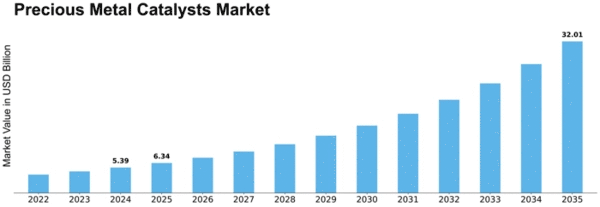
Precious Metal Catalysts Market Size Graph
Author
Priya Nagrale
Senior Research Analyst

With an experience of over five years in market research industry (Chemicals & Materials domain), I gather and analyze market data from diverse sources to produce results, which are then presented back to a client. Also, provide recommendations based on the findings. As a Senior Research Analyst, I perform quality checks (QC) for market estimations, QC for reports, and handle queries and work extensively on client customizations. Also, handle the responsibilities of client proposals, report planning, report finalization, and execution

Leave a Comment

FAQs

In the precious metal catalyst market, which region will have the largest share?

The market for precious metal catalysts is likely to be dominated by Europe.

Which prominent players are there In the precious metal catalyst market,?

The market for precious metal catalysts features significant players such as Vineeth Precious Catalysts Pvt Ltd (India), Heraeus Group (UK), Johnson Matthey (UK), Alfa Aesar (U.S.), Clariant (Switzerland), Evonik Industries AG (Germany), BASF SE (U.S.), American Elements (U.S.), Sabin Metal Corporation (U.S.), and Chimet S.p.A. (Italy).

How is the precious metal catalyst used in various applications?

Mines, electronic, pharmaceutical, petrochemical, hydrocarbon, refining, and automotive are some of the industries that use it extensively.

The market for precious metal catalysts is driven by which factors?

The market is experiencing strong growth due to increased research and development investments, environmental regulations, and the auto industry.

Market Summary

As per MRFR analysis, the Precious Metal Catalysts Market Size was estimated at 5.39 USD Billion in 2024. The Precious Metal Catalysts industry is projected to grow from 6.33 USD Billion in 2025 to 32.01 USD Billion by 2035, exhibiting a compound annual growth rate (CAGR) of 17.59 during the forecast period 2025 - 2035.

Key Market Trends & Highlights

The Precious Metal Catalysts Market is experiencing robust growth driven by sustainability and technological advancements.

  • North America remains the largest market for precious metal catalysts, primarily due to its established automotive sector.
  • The Asia-Pacific region is emerging as the fastest-growing market, fueled by rapid industrialization and increasing demand for chemical processing.
  • Catalytic converters dominate the market, while the chemical synthesis segment is witnessing the fastest growth due to innovations in catalysis.
  • Key market drivers include rising investment in renewable energy and regulatory pressure for emission reductions, particularly in the automotive and chemicals sectors.

Market Size & Forecast

2024 Market Size 5.39 (USD Billion)
2035 Market Size 32.01 (USD Billion)
CAGR (2025 - 2035) 17.59%
Largest Regional Market Share in 2024 North America

Major Players

<p>Johnson Matthey (GB), BASF (DE), Umicore (BE), Heraeus (DE), Clariant (CH), Noble Group (SG), Albemarle (US), Catalent (US), W.R. Grace (US)</p>

Market Trends

The Precious Metal Catalysts Market is currently experiencing a dynamic evolution, driven by various factors that influence demand and supply. The increasing focus on environmental sustainability and the need for cleaner industrial processes appear to be pivotal in shaping market dynamics. Industries such as automotive, chemical manufacturing, and petroleum refining are increasingly adopting precious metal catalysts to enhance efficiency and reduce harmful emissions. This trend suggests a growing recognition of the role these catalysts play in achieving regulatory compliance and promoting sustainable practices. Furthermore, advancements in catalyst technology and the development of novel applications are likely to propel market growth, as industries seek innovative solutions to meet their operational challenges. In addition, the Precious Metal Catalysts Market seems to be influenced by fluctuations in precious metal prices, which can impact production costs and, consequently, market pricing strategies. The ongoing research into alternative materials and methods may also pose challenges, as companies strive to balance performance with cost-effectiveness. Overall, the market appears poised for continued growth, driven by technological advancements and a heightened awareness of environmental issues, which could lead to new opportunities and challenges in the coming years.

Sustainability Initiatives

The Precious Metal Catalysts Market is increasingly shaped by sustainability initiatives across various industries. Companies are prioritizing eco-friendly practices, leading to a heightened demand for catalysts that facilitate cleaner production processes. This trend indicates a shift towards greener technologies, as organizations seek to minimize their environmental footprint.

Technological Advancements

Ongoing technological advancements in catalyst design and application are significantly influencing the Precious Metal Catalysts Market. Innovations in catalyst efficiency and durability are enabling industries to optimize their processes, suggesting a potential for enhanced performance and reduced operational costs.

Market Volatility

The Precious Metal Catalysts Market is subject to volatility due to fluctuations in precious metal prices. This instability can affect production costs and market strategies, indicating that companies must remain agile and responsive to changes in the economic landscape.

Precious Metal Catalysts Market Market Drivers

Growth in Chemical Manufacturing

The Global Precious Metal Catalysts Market Industry is significantly influenced by the expansion of the chemical manufacturing sector. Precious metals, such as rhodium and platinum, are integral to various chemical processes, including hydrogenation and oxidation reactions. As the global chemical industry continues to grow, driven by increasing consumer demand for specialty chemicals and pharmaceuticals, the need for efficient catalysts becomes paramount. This growth trajectory is anticipated to propel the market forward, with estimates suggesting a market size of 36.6 USD Billion by 2035. The chemical sector's reliance on precious metal catalysts underscores their importance in enhancing production efficiency and sustainability.

Rising Demand in Automotive Sector

The Global Precious Metal Catalysts Market Industry experiences a notable surge in demand driven by the automotive sector's transition towards cleaner technologies. As governments worldwide implement stringent emission regulations, the need for catalysts that facilitate the conversion of harmful gases into less harmful emissions intensifies. For instance, platinum and palladium are extensively utilized in catalytic converters, which are essential for meeting these regulatory standards. This trend is expected to contribute to the market's growth, with projections indicating a market value of 21.7 USD Billion in 2024, reflecting the automotive industry's pivotal role in shaping the demand for precious metal catalysts.

Increasing Environmental Regulations

The Global Precious Metal Catalysts Market Industry is significantly impacted by the tightening of environmental regulations across various regions. Governments are increasingly mandating the use of catalysts to reduce emissions from industrial processes and transportation. This regulatory landscape compels industries to adopt cleaner technologies, thereby driving the demand for precious metal catalysts. For instance, the European Union's stringent emission standards necessitate the use of advanced catalytic systems in vehicles and industrial applications. As a result, the market is poised for growth, as compliance with these regulations becomes a critical factor for manufacturers aiming to maintain competitiveness in a rapidly evolving landscape.

Technological Advancements in Catalysis

Technological advancements play a crucial role in shaping the Global Precious Metal Catalysts Market Industry. Innovations in catalyst design and manufacturing processes enhance the efficiency and effectiveness of precious metal catalysts. For example, the development of nanostructured catalysts has shown promise in improving catalytic activity while reducing the amount of precious metals required. These advancements not only optimize performance but also contribute to cost-effectiveness in various applications. As industries increasingly adopt these innovative technologies, the market is likely to witness a compound annual growth rate of 4.87% from 2025 to 2035, indicating a robust future for precious metal catalysts.

Emerging Applications in Renewable Energy

The Global Precious Metal Catalysts Market Industry is witnessing a shift towards emerging applications in renewable energy technologies. Precious metal catalysts are increasingly utilized in fuel cells and electrolysis processes, which are essential for hydrogen production and energy conversion. As the world moves towards sustainable energy solutions, the demand for efficient catalysts in these applications is likely to rise. This trend aligns with global efforts to reduce carbon footprints and transition to greener energy sources. The growing focus on renewable energy is expected to further bolster the market, creating new opportunities for innovation and investment in precious metal catalysts.

Market Segment Insights

By Application: Catalytic Converters (Largest) vs. Chemical Synthesis (Fastest-Growing)

<p>In the Precious Metal Catalysts Market, the 'By Application' segment distribution reveals notable insights. Catalytic converters are the leading application, dominating the market share due to their crucial role in reducing harmful emissions from vehicles. This segment benefits from stringent environmental regulations and a growing emphasis on sustainable automotive solutions. Meanwhile, chemical synthesis is emerging rapidly, driven by advancements in pharmaceuticals and fine chemicals, presenting a lucrative opportunity for growth in precious metal catalysts.</p>

<p>Catalytic Converters (Dominant) vs. Chemical Synthesis (Emerging)</p>

<p>The catalytic converters segment remains the dominant application in the precious metal catalysts market, primarily due to its essential role in emissions control for internal combustion engines. This segment leverages unique properties of platinum, palladium, and rhodium to effectively catalyze reactions that convert toxic gases into less harmful emissions. Conversely, the chemical synthesis segment is rapidly emerging, propelled by its applications in the production of complex organic compounds, particularly in the pharmaceutical sector. As researchers continuously seek more efficient catalytic processes and greener alternatives, the demand for precious metal catalysts in chemical synthesis is set to increase, offering manufacturers opportunities to innovate.</p>

By End Use Industry: Automotive (Largest) vs. Chemicals (Fastest-Growing)

<p>The Precious Metal Catalysts Market shows a dynamic distribution of market share across key end use industries. The Automotive sector is the largest end user, driven by stringent emissions regulations and increasing demand for catalytic converters that optimize vehicle performance. The Chemical Manufacturing industry follows closely, leveraging precious metal catalysts for various chemical reactions, but is currently overshadowed by the rapid advancements in the Pharmaceuticals and Electronics sectors. The growth trends within the Precious Metal Catalysts Market are being significantly shaped by technological innovations and sustainability goals. The Pharmaceutical sector is witnessing swift growth due to the demand for catalysts in drug manufacturing processes, while the Electronics sector is emerging rapidly by incorporating precious metals into electronic components. These drivers highlight a shift towards more specialized and efficient applications of precious metal catalysts in diverse industries.</p>

<p>Automotive (Dominant) vs. Pharmaceuticals (Emerging)</p>

<p>In the Precious Metal Catalysts Market, the Automotive sector stands as the dominant segment, primarily due to the extensive use of catalytic converters that facilitate emission control in vehicles. This segment is reinforced by stringent regulations and a growing consumer awareness about environmental impacts. Conversely, the Pharmaceutical sector emerges as a significant player, characterized by the increasing reliance on precious metal catalysts for synthesizing complex drugs. This segment is expanding rapidly as pharmaceutical companies seek enhanced efficiency and purity in their processes. Both segments illustrate the diverse applications of precious metal catalysts, with Automotive focusing on emissions reduction and Pharmaceuticals on achieving high-quality production efficiency.</p>

By Type of Catalyst: Platinum Catalysts (Largest) vs. Palladium Catalysts (Fastest-Growing)

<p>The Precious Metal Catalysts Market exhibits a diverse distribution among its segments, with platinum catalysts currently holding the largest market share. This dominance can be attributed to their extensive use in automotive catalytic converters, chemical processing, and various industrial applications due to their high activity and stability. Meanwhile, palladium catalysts are rapidly gaining traction, reflecting a significant shift in market dynamics as a result of their increasing application in the automotive sector, particularly in gasoline engines.</p>

<p>Palladium Catalysts (Dominant) vs. Rhodium Catalysts (Emerging)</p>

<p>Platinum catalysts continue to lead the precious metal catalyst market, known for their remarkable efficiency in facilitating chemical reactions. They are characterized by their excellent thermal stability and resistance to poisoning, making them favored in numerous applications. Palladium catalysts, while currently dominant in specific applications such as automotive pollution control, are witnessing accelerated growth thanks to technological advancements that enhance their performance. In contrast, rhodium catalysts are emerging as significant players, increasingly adopted in advanced emission control technologies. Their unique properties make them essential for achieving tighter emission regulations, thereby driving growth within niche markets.</p>

By Form: Powder (Largest) vs. Pellet (Fastest-Growing)

<p>In the Precious Metal Catalysts Market, the segment of 'Form' showcases a diverse range of product types, including Powder, Pellet, Coated, and Supported variants. Among these, the Powder form represents the largest share, driven by its versatile applications and established market presence. The Pellet form, however, is emerging with significant momentum, appealing particularly to sectors that demand compact and efficient catalysts, thereby reinforcing its role in this competitive landscape.</p>

<p>Powder: (Dominant) vs. Pellet (Emerging)</p>

<p>The Powder form of precious metal catalysts has long been the dominant player, primarily due to its easy handling and versatility in various industrial applications. Its fine particle size enhances catalytic activity and surface area, making it suitable for a range of processes, from petrochemical refining to automotive catalysts. On the other hand, the Pellet form is gaining traction as an emerging alternative, noted for its structural integrity and efficiency. The compact design of pellets allows for a streamlined flow in reactors, which caters to industries looking for enhanced performance and reduced space requirements. This shift signals a growing trend towards specialized forms that align with operational efficiencies.</p>

By Technology: Heterogeneous Catalysis (Largest) vs. Homogeneous Catalysis (Fastest-Growing)

<p>In the Precious Metal Catalysts Market, the segmentation by technology reveals that Heterogeneous Catalysis holds the largest market share due to its extensive application in various industrial processes, including chemical synthesis and petroleum refining. This type of catalysis benefits from the use of solid catalysts that can be easily separated from the products, contributing to its widespread adoption and preference among manufacturers. Conversely, Homogeneous Catalysis is emerging as the fastest-growing segment driven by innovations in chemical processes and a shift towards greener technologies. The convenience and efficiency offered by homogeneous catalysts in fine chemical production have boosted their demand. Additionally, advancements in catalyst design and the increasing need for more efficient reaction pathways are propelling the growth of this segment.</p>

<p>Technology: Heterogeneous Catalysis (Dominant) vs. Homogeneous Catalysis (Emerging)</p>

<p>Heterogeneous Catalysis is characterized by its ability to facilitate reactions preferentially at the surface of solid catalysts, making it ideal for large-scale industrial applications. Its dominance in the market can be attributed to the plethora of established technologies and processes incorporating precious metals to enhance activity and selectivity. In contrast, Homogeneous Catalysis, where the catalyst is in the same phase as the reactants, is seeing burgeoning interest due to its operational flexibility and efficiency in synthesizing complex molecules. This segment caters to the pharmaceutical industry and specialty chemicals, where precision and reaction control are paramount, making it an attractive area for research and innovation.</p>

Get more detailed insights about Precious Metal Catalysts Market Research Report – Forecast to 2035

Regional Insights

North America : Market Leader in Catalysts

North America is poised to maintain its leadership in the Precious Metal Catalysts Market, holding a significant market share of 2.15 billion. The region's growth is driven by stringent environmental regulations and a robust demand for cleaner technologies. The automotive and chemical industries are increasingly adopting precious metal catalysts to meet emission standards, further propelling market expansion. The United States and Canada are the primary contributors to this market, with key players like Johnson Matthey and BASF leading the charge. The competitive landscape is characterized by innovation and strategic partnerships, ensuring a steady supply of advanced catalysts. The presence of established manufacturers and a growing focus on sustainability are expected to enhance market dynamics in the coming years.

Europe : Innovation and Sustainability Focus

Europe, with a market size of €1.8 billion, is witnessing a surge in demand for precious metal catalysts driven by the region's commitment to sustainability and environmental regulations. The European Union's stringent emission standards are pushing industries to adopt cleaner technologies, thereby increasing the use of catalysts in various applications. This regulatory environment is a key growth driver for the market. Germany, France, and the UK are leading countries in this sector, hosting major players like Umicore and Heraeus. The competitive landscape is marked by innovation, with companies investing in R&D to develop more efficient catalysts. The presence of a well-established automotive industry further supports the demand for advanced catalytic solutions, positioning Europe as a significant player in the global market.

Asia-Pacific : Rapid Growth and Adoption

The Asia-Pacific region, valued at $1.3 billion, is experiencing rapid growth in the Precious Metal Catalysts Market, fueled by industrialization and increasing environmental awareness. Countries like China and India are investing heavily in cleaner technologies, leading to a higher demand for catalysts in automotive and industrial applications. The region's growth is also supported by favorable government policies aimed at reducing pollution levels. China stands out as a major player, with significant contributions from local manufacturers and international companies like Clariant and Noble Group. The competitive landscape is evolving, with a focus on innovation and cost-effective solutions. As the region continues to urbanize, the demand for precious metal catalysts is expected to rise, making it a key market for future investments.

Middle East and Africa : Emerging Market Potential

The Middle East and Africa (MEA) region, with a market size of $0.14 billion, presents emerging opportunities in the Precious Metal Catalysts Market. The growth is primarily driven by increasing industrial activities and a rising focus on environmental sustainability. Governments in the region are beginning to implement regulations aimed at reducing emissions, which is expected to boost the demand for catalysts in various sectors. Countries like South Africa and the UAE are leading the way in adopting advanced technologies, with key players like Albemarle and W.R. Grace establishing a presence. The competitive landscape is still developing, but there is a growing interest from international firms looking to tap into the region's potential. As awareness of environmental issues increases, the market for precious metal catalysts is likely to expand significantly in the coming years.

Key Players and Competitive Insights

The Precious Metal Catalysts Market is characterized by a dynamic competitive landscape, driven by increasing demand for efficient catalytic processes across various industries, including automotive, chemical, and energy sectors. Key players such as Johnson Matthey (GB), BASF (DE), and Umicore (BE) are strategically positioned to leverage their technological expertise and extensive product portfolios. Johnson Matthey (GB) focuses on innovation in sustainable technologies, while BASF (DE) emphasizes its commitment to digital transformation and operational efficiency. Umicore (BE) is actively pursuing partnerships to enhance its recycling capabilities, which collectively shapes a competitive environment that prioritizes sustainability and technological advancement.

In terms of business tactics, companies are increasingly localizing manufacturing to reduce lead times and optimize supply chains. The market appears moderately fragmented, with a mix of established players and emerging companies vying for market share. The collective influence of these key players is significant, as they drive advancements in catalyst performance and sustainability practices, thereby enhancing the overall market structure.

In November 2025, Johnson Matthey (GB) announced a strategic partnership with a leading automotive manufacturer to develop next-generation catalytic converters aimed at reducing emissions. This collaboration is expected to enhance Johnson Matthey's position in the market by aligning its innovative capabilities with the growing regulatory demands for cleaner technologies. The partnership underscores the importance of aligning product development with industry needs, potentially leading to increased market penetration.

In October 2025, BASF (DE) unveiled a new digital platform designed to optimize catalyst performance monitoring for its clients. This initiative reflects BASF's commitment to integrating digital solutions into its operations, allowing for real-time data analysis and improved customer service. The platform is likely to enhance customer loyalty and operational efficiency, positioning BASF as a leader in the digital transformation of the catalyst sector.

In September 2025, Umicore (BE) expanded its recycling operations by acquiring a facility in North America, aimed at increasing its capacity to recover precious metals from spent catalysts. This strategic move not only enhances Umicore's sustainability profile but also strengthens its supply chain resilience. The acquisition is indicative of a broader trend towards circular economy practices within the industry, as companies seek to minimize waste and maximize resource recovery.

As of December 2025, current competitive trends in the Precious Metal Catalysts Market are heavily influenced by digitalization, sustainability initiatives, and the integration of AI technologies. Strategic alliances are increasingly shaping the landscape, enabling companies to pool resources and expertise to address complex market challenges. Looking ahead, competitive differentiation is likely to evolve from traditional price-based competition to a focus on innovation, technological advancements, and supply chain reliability. This shift suggests that companies that prioritize these areas will be better positioned to thrive in an increasingly competitive environment.

Key Companies in the Precious Metal Catalysts Market include

Industry Developments

In October 2023, Evonik Industries announced its intention to enhance and relocate its catalyst production facility located at the Shanghai Chemical Industrial Park. The aim of this endeavor is to strengthen the firm’s foothold and capabilities in the precious metal catalyst markets.

In July 2023, The carve-out process across the business mobile catalysts emissions and precious metal services was built up by BASF after the legal entity was incorporated BASF Environmental Catalyst and Metal Solutions (ECMS). This decision was announced in December of 2021 with the intention of being completed during a time span of 18 months.

In October 2023 - Evonik announced a joint undertaking with other companies to develop, scale up production and undertake commercially exclusive bed fixed catalysts into a mobile application of Hydrogenious LOHC Technologies liquid organic hydrogen carrier benzyl toluene-based technology.

In April 2024 - Research scientists presented a new strategy for recycling metal waste into a catalyst that is able to efficiently produce hydrogen from water. Cars or power-generating machines may efficiently use hydrogen as fuel since it is much more sustainable.

Tanaka Holdings Co., Ltd., a recycler of precious metals, said in August 2023 that it has established a brand new refinery in Japan that promotes the recycling of scraps of gold and silver together with other platinum metals. This new refinery aims at producing compounds of precious metals for a variety of catalysts and for plating.

In July 2023, BASF Environmental Catalyst and Metal Solutions communicated to the public that they are starting a new division that provides emissions catalysts and precious metals services. This division is engaged in the production of emission catalysts for petrol-fueled and diesel-fueled automobiles as well as off-road cars, motorcycles and small engine applications.

By improving the efficiency of industrial processes through the use of auto-catalysts, emissions from gasoline and diesel engines can be reduced. The platinum group metals found in autocatalysts have proven most effective in reducing pollution generated by a variety of gasoline and diesel vehicles for more than 35 years.

In the average 10-year life span of a vehicle, an autocatalyst would remove 98% of the harmful emissions from the exhaust. Without them, the average family car would emit 15 tonnes of toxic gases.​ The use of platinum along with pollution control catalysts in automobiles is also widespread. Examples of applications include vehicle engine control sensors, airbag initiators, electronic engine management, and spark plugs.​ In the third quarter of 2019 and 2020, global auto production was approximately 65 million units and 50 million units, respectively, according to OICA (International Organisation of Motor Vehicle Manufacturers).

In light of COVID-19, production has decreased. The automobile industry, nevertheless, is expected to recover during the forecast period due to the lifting of lockdown laws and transportation regulations. The enhancement of medical technology with platinum also improves health care.

There is also a lot of utilization of platinum group metals in the pharmaceutical industry since platinum, palladium, ruthenium, rhodium, iridium, and osmium are used in several important catalysts.​ Platinum-based emissions control catalysts are discovering an increasing number of applications and increasing the demand for platinum catalysts from sources such as automobiles, refineries, petrochemical plants, industrial chemical processing plants, and pharmaceutical plants, among others, thus increasing the market studied.

Future Outlook

Precious Metal Catalysts Market Future Outlook

<p>The Precious Metal Catalysts Market is projected to grow at a 17.59% CAGR from 2024 to 2035, driven by increasing demand in automotive and industrial applications.</p>

New opportunities lie in:

  • <p>Development of advanced catalyst recycling technologies</p>
  • <p>Expansion into emerging markets with tailored solutions</p>
  • <p>Integration of AI for predictive maintenance in catalyst systems</p>

<p>By 2035, the market is expected to achieve robust growth, solidifying its position as a key industry segment.</p>

Market Segmentation

Precious Metal Catalysts Market Form Outlook

  • Powder
  • Pellet
  • Coated
  • Supported

Precious Metal Catalysts Market Technology Outlook

  • Homogeneous Catalysis
  • Heterogeneous Catalysis
  • Biocatalysis

Precious Metal Catalysts Market Application Outlook

  • Catalytic Converters
  • Chemical Synthesis
  • Electrochemical Reactions
  • Petrochemical Processing

Precious Metal Catalysts Market End Use Industry Outlook

  • Automotive
  • Chemical Manufacturing
  • Pharmaceuticals
  • Electronics

Precious Metal Catalysts Market Type of Catalyst Outlook

  • Platinum Catalysts
  • Palladium Catalysts
  • Rhodium Catalysts
  • Gold Catalysts

Report Scope

MARKET SIZE 20245.39(USD Billion)
MARKET SIZE 20256.33(USD Billion)
MARKET SIZE 203532.01(USD Billion)
COMPOUND ANNUAL GROWTH RATE (CAGR)17.59% (2024 - 2035)
REPORT COVERAGERevenue Forecast, Competitive Landscape, Growth Factors, and Trends
BASE YEAR2024
Market Forecast Period2025 - 2035
Historical Data2019 - 2024
Market Forecast UnitsUSD Billion
Key Companies ProfiledJohnson Matthey (GB), BASF (DE), Umicore (BE), Heraeus (DE), Clariant (CH), Noble Group (SG), Albemarle (US), Catalent (US), W.R. Grace (US)
Segments CoveredApplication, End Use Industry, Type of Catalyst, Form, Technology
Key Market OpportunitiesGrowing demand for sustainable technologies drives innovation in the Precious Metal Catalysts Market.
Key Market DynamicsRising demand for cleaner technologies drives innovation and competition in the precious metal catalysts market.
Countries CoveredNorth America, Europe, APAC, South America, MEA

FAQs

In the precious metal catalyst market, which region will have the largest share?

The market for precious metal catalysts is likely to be dominated by Europe.

Which prominent players are there In the precious metal catalyst market,?

The market for precious metal catalysts features significant players such as Vineeth Precious Catalysts Pvt Ltd (India), Heraeus Group (UK), Johnson Matthey (UK), Alfa Aesar (U.S.), Clariant (Switzerland), Evonik Industries AG (Germany), BASF SE (U.S.), American Elements (U.S.), Sabin Metal Corporation (U.S.), and Chimet S.p.A. (Italy).

How is the precious metal catalyst used in various applications?

Mines, electronic, pharmaceutical, petrochemical, hydrocarbon, refining, and automotive are some of the industries that use it extensively.

The market for precious metal catalysts is driven by which factors?

The market is experiencing strong growth due to increased research and development investments, environmental regulations, and the auto industry.

  1. Executive Summary
  2. Scope of the Report
    1. Market Definition
    2. Scope of the
      1. Research Objectives
      2. Assumptions & Limitations
    3. Study
    4. Markets Structure
    5. Market Research Methodology
    6. Research
    7. Process
    8. Secondary Research
    9. Primary Research
    10. Forecast Model
  3. Market Landscape
    1. Porter’s Five Forces Analysis
      1. Threat of New Entrants
      2. Bargaining power of buyers
      3. Threat
      4. Segment rivalry
    2. Bargaining power of suppliers
    3. of substitutes
    4. Value Chain/Supply Chain of Global Precious Metal
    5. Catalysts Market
  4. Industry Overview of Global Precious Metal
    1. Catalysts Market
    2. Introduction
    3. Growth Drivers
    4. Impact analysis
    5. Market Challenges
  5. Market Trends
    1. Introduction
    2. Growth Trends
    3. Impact analysis
    4. Global Precious Metal Catalysts Market by Type
    5. Introduction
    6. Platinum
      1. Market Estimates & Forecast, 2020-2027
      2. Market Estimates & Forecast by Region, 2020-2027
      3. Market Estimates & Forecast, 2020-2027
    7. Palladium
    8. Market Estimates & Forecast by Region, 2020-2027
    9. Ruthenium
      1. Market Estimates & Forecast, 2020-2027
      2. Market Estimates &
    10. Forecast by Region, 2020-2027
    11. Rhodium
      1. Market Estimates & Forecast, 2020-2027
      2. Market Estimates
    12. & Forecast by Region, 2020-2027
    13. Iridium
      1. Market Estimates & Forecast, 2020-2027
      2. Market Estimates
    14. & Forecast by Region, 2020-2027
    15. Rhenium
      1. Market Estimates & Forecast, 2020-2027
      2. Market Estimates
    16. & Forecast by Region, 2020-2027
    17. Gold
      1. Market Estimates & Forecast, 2020-2027
      2. Market Estimates
    18. & Forecast by Region, 2020-2027
    19. Silver
      1. Market Estimates & Forecast, 2020-2027
      2. Market Estimates
    20. & Forecast by Region, 2020-2027
    21. Nickel
      1. Market Estimates & Forecast, 2020-2027
      2. Market Estimates
    22. & Forecast by Region, 2020-2027
    23. Others
      1. Market Estimates & Forecast, 2020-2027
      2. Market Estimates
    24. & Forecast by Region, 2020-2027
  6. Global Precious Metal
    1. Catalysts Market by Application
    2. Introduction
      1. Market Estimates & Forecast, 2020-2027
    3. Automotive
    4. Market Estimates & Forecast by Region, 2020-2027
    5. Refining
      1. Market Estimates & Forecast, 2020-2027
      2. Market Estimates &
    6. Forecast by Region, 2020-2027
    7. Pharmaceuticals
      1. Market Estimates & Forecast
    8. Market Estimates & Forecast, 2020-2027
    9. by Region, 2020-2027
    10. Petrochemicals
      1. Market
      2. Market Estimates & Forecast by
    11. Estimates & Forecast, 2020-2027
    12. Region, 2020-2027
    13. Oil
      1. Market Estimates &
      2. Market Estimates & Forecast by Region, 2020-2027
    14. Forecast, 2020-2027
    15. Mining
      1. Market Estimates & Forecast, 2020-2027
      2. Market Estimates & Forecast by Region, 2020-2027
      3. Market Estimates & Forecast, 2020-2027
    16. Electronics
    17. Market Estimates & Forecast by Region, 2020-2027
    18. Others
      1. Market Estimates & Forecast, 2020-2027
      2. Market Estimates &
    19. Forecast by Region, 2020-2027
  7. Global Precious Metal Catalysts
    1. Market by Region
    2. Introduction
    3. North
      1. Market Estimates & Forecast, 2020-2027
      2. Market
      3. Market Estimates & Forecast
      4. U.S.
      5. Canada
      6. Market Estimates & Forecast, 2020-2027
      7. Market
      8. Market Estimates & Forecast
      9. Germany
      10. France
      11. Spain
      12. U.K
      13. Poland
    4. America
    5. Estimates & Forecast by Type, 2020-2027
    6. by Application, 2020-2027
    7. Estimates & Forecast, 2020-2027
    8. by Type, 2020-2027
    9. Forecast, 2020-2027
    10. Europe
    11. Estimates & Forecast by Type, 2020-2027
    12. by Application, 2020-2027
    13. Estimates & Forecast, 2020-2027
    14. by Type, 2020-2027
    15. Forecast, 2020-2027
    16. Italy
    17. Market Estimates & Forecast by Type, 2020-2027
    18. & Forecast by Application, 2020-2027
    19. Market Estimates & Forecast, 2020-2027
    20. by Type, 2020-2027
    21. Market Estimates & Forecast by Application, 2020-2027
    22. Russia
    23. Market Estimates & Forecast by Type, 2020-2027
    24. & Forecast by Application, 2020-2027
    25. & Forecast by Type, 2020-2027
    26. by Application, 2020-2027
    27. Asia Pacific
      1. Market
      2. Market Estimates & Forecast by
      3. Market Estimates & Forecast by Application, 2020-2027
      4. China
      5. Japan
      6. Australia
      7. Rest of Asia
    28. Estimates & Forecast, 2020-2027
    29. Type, 2020-2027
    30. Estimates & Forecast by Application, 2020-2027
    31. India
    32. Market Estimates & Forecast by Type, 2020-2027
    33. & Forecast by Application, 2020-2027
    34. Market Estimates & Forecast, 2020-2027
    35. by Type, 2020-2027
    36. Forecast, 2020-2027
    37. New Zealand
    38. Market Estimates & Forecast by Type, 2020-2027
    39. & Forecast by Application, 2020-2027
    40. Pacific
    41. Estimates & Forecast by Type, 2020-2027
    42. Forecast by Application, 2020-2027
    43. The Middle East &
      1. Market Estimates & Forecast, 2020-2027
      2. Market
      3. Market Estimates & Forecast
      4. Turkey
      5. Israel
      6. North Africa
      7. Rest of Middle
    44. Africa
    45. Estimates & Forecast by Type, 2020-2027
    46. by Application, 2020-2027
    47. Estimates & Forecast, 2020-2027
    48. by Type, 2020-2027
    49. & Forecast, 2020-2027
    50. Forecast, 2020-2027
    51. GCC
    52. Estimates & Forecast by Type, 2020-2027
    53. Forecast by Application, 2020-2027
    54. East & Africa
    55. Estimates & Forecast by Application, 2020-2027
    56. Latin
      1. Market Estimates & Forecast, 2020-2027
      2. Market
      3. Market Estimates & Forecast
      4. Brazil
      5. Argentina
      6. Mexico
    57. America
    58. Estimates & Forecast by Type, 2020-2027
    59. by Application, 2020-2027
    60. Market Estimates & Forecast, 2020-2027
    61. by Type, 2020-2027
    62. & Forecast, 2020-2027
    63. Market Estimates & Forecast by Application, 2020-2027
    64. Rest of Latin America
    65. Market Estimates & Forecast by Application, 2020-2027
  8. Company
    1. Landscape
  9. Company Profiles
    1. Chimet S.p.A
    2. Type/Business Segment Overview
    3. Corporation
    4. Type/Business Segment Overview
    5. Elements
    6. Type/Business Segment Overview
    7. SE
    8. Segment Overview
    9. Key Developments
    10. Segment Overview
    11. Key Developments
    12. Company Overview
    13. Financial Updates
    14. Johnson Matthey
    15. Type/Business Segment Overview
    16. Heraeus Group
    17. Financial Updates
    18. Overview
    19. Financial Updates
    20. Conclusion
  10. Company Overview
  11. Financial Updates
  12. Key Developments
    1. Sabin Metal
      1. Company Overview
      2. Financial Updates
      3. Key Developments
    2. American
      1. Company Overview
      2. Financial Updates
      3. Key Developments
    3. BASF
      1. Company Overview
      2. Type/Business
      3. Financial Updates
    4. Evonik Industries AG
      1. Company Overview
      2. Type/Business
      3. Financial Updates
    5. Clariant
      1. Type/Business Segment Overview
      2. Financial Updates
      3. Key Developments
    6. Alfa Aesar
      1. Company Overview
      2. Type/Business Segment Overview
      3. Key Developments
      4. Company Overview
      5. Financial Updates
      6. Key Developments
      7. Company Overview
      8. Type/Business Segment Overview
      9. Key Developments
    7. Vineeth Precious Catalysts Pvt Ltd
      1. Company
      2. Type/Business Segment Overview
      3. Key Developments
  13. LIST OF TABLES
  14. World
    1. Population by Major Regions (2020 To 2027)
  15. Global
    1. Precious Metal Catalysts Market: By Region, 2020-2027
    2. Table 3
    3. North America Global Precious Metal Catalysts Market: By Country, 2020-2027
  16. Europe Global Precious Metal Catalysts Market:
    1. By Country, 2020-2027
  17. Asia Pacific Global
    1. Precious Metal Catalysts Market: By Country, 2020-2027
    2. Table 7
    3. The Middle East & Africa Global Precious Metal Catalysts Market: By Country,
  18. Latin America Global Precious Metal
    1. Catalysts Market: By Country, 2020-2027
  19. Global
    1. Precious Metal Catalysts by Types Market: By Regions, 2020-2027
  20. North America Global Precious Metal Catalysts Market
    1. by Types Market: By Country, 2020-2027
  21. Europe
    1. Global Precious Metal Catalysts Market by Types Market: By Country, 2020-2027
    2. Table11 Asia Pacific Global Precious Metal Catalysts
    3. Market by Types Market: By Country, 2020-2027
    4. Table13
    5. The Middle East & Africa Global Precious Metal Catalysts Market by Types
    6. Market: By Country, 2020-2027
    7. Table12 Latin
    8. America Global Precious Metal Catalysts Market by Types Market: By Country,
    9. Table14 North America Global Precious Metal
    10. Catalysts Market for Application Market: By Country, 2020-2027
    11. Table13
    12. Europe Global Precious Metal Catalysts Market for Application Market: By Country,
    13. Table14 Asia Pacific Global Precious Metal
    14. Catalysts Market for Application Market: By Country, 2020-2027
    15. Table16
    16. The Middle East & Africa Global Precious Metal Catalysts Market for Application
    17. Market: By Country, 2020-2027
    18. Table15 Latin America
    19. Global Precious Metal Catalysts Market for Application Market: By Country, 2020-2027
    20. Table23 Global Types Market: By Region, 2020-2027
    21. Table24 Global Application Market: By Region, 2020-2027
    22. Table25 North America Global Precious Metal Catalysts Market,
    23. By Country
    24. Table26 North America Global Precious Metal
  22. Catalysts Market, By Types
    1. Table27 North America Global
  23. Precious Metal Catalysts Market, By Application
    1. Table28 Europe:
  24. Global Precious Metal Catalysts Market, By Country
    1. Table29
  25. Europe: Global Precious Metal Catalysts Market, By Types
    1. Table30
  26. Europe: Global Precious Metal Catalysts Market, By Application
    1. Table31
  27. Asia Pacific: Global Precious Metal Catalysts Market, By Country
    1. Table32 Asia Pacific: Global Precious Metal Catalysts Market,
    2. By Types
    3. Table33 Asia Pacific: Global Precious
  28. Metal Catalysts Market, By Application
    1. Table36 The
  29. Middle East & Africa: Global Precious Metal Catalysts Market, By Country
    1. Table37 The Middle East & Africa Global Precious Metal Catalysts
  30. Market, By Types
    1. Table33 The Middle East &
  31. Africa: Global Precious Metal Catalysts Market, By Application
    1. Table34
  32. Latin America: Global Precious Metal Catalysts Market, By Country
    1. Table35 Latin America Global Precious Metal Catalysts Market,
    2. By Types
    3. Table33 Latin America: Global Precious
  33. Metal Catalysts Market, By Application
  34. LIST OF FIGURES
  35. Global Precious Metal Catalysts Market segmentation
    1. FIGURE
  36. Forecast Methodology
  37. Porter’s Five Forces Analysis
    1. of Global Precious Metal Catalysts Market
  38. Value Chain of Global
    1. Precious Metal Catalysts Market
  39. Share of Global Precious Metal
  40. Catalysts Market in 2020, by country (in %)
  41. Global Precious
    1. Metal Catalysts Market, 2020-2027,
  42. Sub-segments of Type
  43. Global Precious Metal Catalysts Market size by Type, 2020
    1. FIGURE
  44. Share of Global Precious Metal Catalysts Market by Type, 2020-2027
    1. FIGURE
  45. Sub-segments of Application
  46. Global Precious Metal
    1. Catalysts Market size by Application, 2020
  47. Share of Global
    1. Precious Metal Catalysts Market by Application, 2020-2027

Precious Metal Catalysts Market Segmentation

Market Segmentation Overview

  • Detailed segmentation data will be available in the full report
  • Comprehensive analysis by multiple parameters
  • Regional and country-level breakdowns
  • Market size forecasts by segment
Infographic

Free Sample Request

Kindly complete the form below to receive a free sample of this Report

Get Free Sample

Customer Strories

Compare Licence

×
Features License Type
Single User Multiuser License Enterprise User
Price $4,950 $5,950 $7,250
Maximum User Access Limit 1 User Upto 10 Users Unrestricted Access Throughout the Organization
Free Customization
Direct Access to Analyst
Deliverable Format
Platform Access
Discount on Next Purchase 10% 15% 15%
Printable Versions