×
Request Free Sample ×

Kindly complete the form below to receive a free sample of this Report

* Please use a valid business email

Leading companies partner with us for data-driven Insights

clients tt-cursor
Hero Background

Plethysmograph Market

ID: MRFR/HC/25974-HCR
100 Pages
Rahul Gotadki
October 2025

Plethysmograph Market Research Report By Product Type (Whole Body Plethysmograph, Pneumotach Plethysmograph, Forced Oscillation Technique Plethysmograph), By Application (Pulmonary Function Testing, Sleep Studies, Cardiopulmonary Exercise Testing), By End User (Hospitals, Clinics, Diagnostic Centers), By Technology (Air Displacement Plethysmography, Flow Sensing Plethysmography, Pressure Sensing Plethysmography), By Modality (Pulmonary Plethysmography, Cardiovascular Plethysmography, Cerebral Plethysmography) and By Regional (North America,... read more

Share:
Download PDF ×

We do not share your information with anyone. However, we may send you emails based on your report interest from time to time. You may contact us at any time to opt-out.

Plethysmograph Market Infographic
Purchase Options

Plethysmograph Market Summary

As per MRFR analysis, the Plethysmograph Market Size was estimated at 0.19 USD Billion in 2024. The Plethysmograph industry is projected to grow from 0.206 in 2025 to 0.4615 by 2035, exhibiting a compound annual growth rate (CAGR) of 8.4 during the forecast period 2025 - 2035.

Key Market Trends & Highlights

The Plethysmograph Market is experiencing robust growth driven by technological advancements and increasing demand for non-invasive solutions.

  • North America remains the largest market for plethysmographs, driven by advanced healthcare infrastructure and high adoption rates.
  • The Asia-Pacific region is emerging as the fastest-growing market, fueled by rising healthcare investments and a growing geriatric population.
  • Whole Body Plethysmographs dominate the market, while Pneumotach Plethysmographs are witnessing rapid growth due to their efficiency in respiratory assessments.
  • Key market drivers include the rising prevalence of cardiovascular diseases and growing awareness of preventive healthcare, which are propelling demand for innovative medical devices.

Market Size & Forecast

2024 Market Size 0.19 (USD Billion)
2035 Market Size 0.4615 (USD Billion)
CAGR (2025 - 2035) 8.4%

Major Players

Medtronic (US), Philips (NL), GE Healthcare (US), Nihon Kohden (JP), Schiller AG (CH), Cortex Biophysik (DE), Compumedics (AU), Mediware (US), SOMNOmedics (DE)

Plethysmograph Market Trends

The Plethysmograph Market is currently experiencing a notable evolution, driven by advancements in technology and increasing awareness regarding health monitoring. The integration of digital solutions into traditional plethysmography is enhancing the accuracy and efficiency of these devices. Furthermore, the growing emphasis on preventive healthcare is propelling demand for non-invasive diagnostic tools, which plethysmographs exemplify. As healthcare systems worldwide strive to improve patient outcomes, the role of plethysmographs in clinical settings appears to be expanding, suggesting a promising trajectory for the market. In addition, the rise of telemedicine and remote patient monitoring is likely to influence the Plethysmograph Market positively. Healthcare providers are increasingly adopting telehealth solutions, which necessitate reliable and portable diagnostic equipment. This shift may lead to a greater focus on developing compact and user-friendly plethysmographs that can be utilized in various settings, including home care. As the market adapts to these trends, it seems poised for growth, with innovations that cater to the evolving needs of both healthcare professionals and patients alike.

Technological Advancements

The Plethysmograph Market is witnessing rapid technological innovations, particularly in the realm of digital integration. Enhanced data analytics and connectivity features are being incorporated into plethysmographs, allowing for real-time monitoring and improved patient management. This trend indicates a shift towards more sophisticated devices that not only measure physiological parameters but also provide actionable insights.

Increased Demand for Non-Invasive Solutions

There is a growing preference for non-invasive diagnostic tools within the Plethysmograph Market. Patients and healthcare providers alike are gravitating towards methods that minimize discomfort while delivering accurate results. This trend reflects a broader movement in healthcare towards patient-centered approaches, where ease of use and comfort are prioritized.

Expansion of Telehealth Services

The rise of telehealth services is significantly impacting the Plethysmograph Market. As remote patient monitoring becomes more prevalent, there is a heightened need for portable and efficient plethysmographs. This trend suggests that manufacturers may focus on developing devices that are not only effective but also compatible with telehealth platforms, thereby enhancing accessibility and convenience for patients.

Plethysmograph Market Drivers

Increase in Geriatric Population

The rise in the geriatric population is a significant factor propelling the Plethysmograph Market. Older adults are more susceptible to various health conditions, including cardiovascular diseases and diabetes, necessitating regular monitoring of their health status. Plethysmographs serve as essential tools for healthcare providers to assess blood flow and vascular health in this demographic. Data indicates that the global population aged 65 and older is projected to double by 2050, leading to an increased demand for effective monitoring solutions. This demographic shift is likely to create substantial opportunities for growth within the Plethysmograph Market.

Expansion of Healthcare Infrastructure

The expansion of healthcare infrastructure, particularly in emerging economies, is driving the Plethysmograph Market. As healthcare facilities grow and modernize, there is an increasing need for advanced diagnostic equipment, including plethysmographs. Investments in healthcare infrastructure are aimed at improving patient care and accessibility, which in turn fuels the demand for innovative medical devices. Market data suggests that government initiatives and private sector investments are contributing to the establishment of new healthcare facilities, thereby enhancing the availability of plethysmography services. This trend is expected to support the growth of the Plethysmograph Market in the coming years.

Growing Awareness of Preventive Healthcare

There is a notable shift towards preventive healthcare, which is significantly influencing the Plethysmograph Market. As individuals become more health-conscious, the demand for regular health monitoring tools is on the rise. Plethysmographs offer a non-invasive method to assess various physiological parameters, making them appealing for preventive health screenings. Market data indicates that the preventive healthcare sector is expanding rapidly, with a projected growth rate that underscores the increasing focus on early diagnosis and intervention. This trend is likely to drive the adoption of plethysmography in both clinical and home settings, enhancing the Plethysmograph Market.

Rising Prevalence of Cardiovascular Diseases

The increasing incidence of cardiovascular diseases is a primary driver for the Plethysmograph Market. As heart-related ailments become more prevalent, healthcare providers are seeking advanced diagnostic tools to monitor and assess patients' conditions. According to recent data, cardiovascular diseases account for a significant percentage of global mortality rates, prompting a surge in demand for effective monitoring solutions. Plethysmographs, known for their ability to measure blood volume changes, are increasingly utilized in clinical settings to provide accurate assessments. This trend is likely to continue, as healthcare systems prioritize early detection and management of cardiovascular issues, thereby bolstering the Plethysmograph Market.

Technological Innovations in Medical Devices

Technological advancements in medical devices are reshaping the Plethysmograph Market. Innovations such as portable and wearable plethysmographs are gaining traction, allowing for continuous monitoring of patients outside traditional clinical environments. These devices leverage advanced sensors and connectivity features, enabling real-time data transmission to healthcare providers. Market analysis suggests that the integration of artificial intelligence and machine learning in plethysmography could further enhance diagnostic accuracy and patient outcomes. As technology continues to evolve, the Plethysmograph Market is expected to experience substantial growth, driven by the demand for more sophisticated and user-friendly monitoring solutions.

Market Segment Insights

By Product Type: Whole Body Plethysmograph Market (Largest) vs. Pneumotach Plethysmograph Market (Fastest-Growing)

The Plethysmograph Market is segmented into three primary product types: Whole Body Plethysmograph Market, Pneumotach Plethysmograph Market, and Forced Oscillation Technique Plethysmograph Market. Among these, the Whole Body Plethysmograph Market holds the largest market share, driven by its widespread application in respiratory assessments and higher adaptability in clinical settings. On the other hand, the Pneumotach Plethysmograph Market is gaining traction due to its advantages in non-invasive measurements and increasing demand in research and diagnostic practices.

Whole Body Plethysmograph Market (Dominant) vs. Pneumotach Plethysmograph Market (Emerging)

The Whole Body Plethysmograph Market is recognized for its comprehensive capabilities in evaluating lung function, making it a dominant player in the market. Its intricate design allows for accurate volume measurements and is preferred in pulmonary rehabilitation settings. In contrast, the Pneumotach Plethysmograph Market is emerging as a significant option due to its portable nature and ease of use, appealing to both research institutions and outpatient care. This product type leverages advanced technology that permits real-time airflow measurement, thereby capturing dynamic respiratory patterns, which is crucial for modern diagnostic practices.

By Application: Pulmonary Function Testing (Largest) vs. Sleep Studies (Fastest-Growing)

In the Plethysmograph Market, the application segment is led by Pulmonary Function Testing, which holds the largest share due to its critical role in diagnosing respiratory conditions. Following closely are Sleep Studies, which are rapidly gaining popularity as awareness about sleep disorders increases. Cardiopulmonary Exercise Testing, while valuable, occupies a smaller share of the market yet complements the other segments by providing insights into cardiovascular health and overall fitness levels.

Pulmonary Function Testing (Dominant) vs. Cardiopulmonary Exercise Testing (Emerging)

Pulmonary Function Testing stands as the dominant application in the Plethysmograph Market, effectively utilized for assessing lung function and diagnosing conditions such as asthma and COPD. This segment is characterized by widespread adoption in clinics and hospitals, ensuring its leading position. In contrast, Cardiopulmonary Exercise Testing represents an emerging segment, focusing on the cardiopulmonary system's performance during physical exertion. As fitness awareness rises, this segment is anticipated to grow, driven by its application in sports medicine and rehabilitation, making it a valuable addition alongside the more traditional pulmonary function tests.

By End User: Hospitals (Largest) vs. Clinics (Fastest-Growing)

In the Plethysmograph Market, hospitals account for the largest share of the end-user segment. This dominance is attributed to their extensive patient base, advanced diagnostic capabilities, and a higher frequency of complex examinations requiring plethysmography. Clinics, while smaller in market share, are rapidly gaining traction as they expand their service offerings and invest in modern diagnostic equipment to facilitate early disease detection and management. As the healthcare industry embraces technological advancements, both hospitals and clinics are witnessing transformative growth. Factors driving this surge include an increased emphasis on preventive healthcare, a rise in chronic diseases, and the integration of plethysmography into routine clinical assessments. Additionally, the growing awareness of respiratory and cardiovascular ailments propels demand beyond traditional settings, enhancing clinics’ role in the market.

Hospitals (Dominant) vs. Clinics (Emerging)

Hospitals remain the dominant player in the Plethysmograph Market due to their comprehensive healthcare services, which necessitate advanced diagnostic technology like plethysmographs. These facilities often have the infrastructure to support sophisticated medical devices, enabling them to conduct a high volume of tests. On the other hand, clinics represent an emerging force within the market, increasingly incorporating plethysmography into their offerings. Their agility allows them to adapt quickly to market demands, fostering innovation and accessibility. Clinics aim to provide specialized diagnostic services targeting specific patient demographics, enhancing their appeal. As they adopt advanced plethysmographic technology, clinics are poised to increase their market presence and offer competitive alternatives to traditional hospital services.

By Technology: Air Displacement Plethysmography (Largest) vs. Flow Sensing Plethysmography (Fastest-Growing)

In the Plethysmograph Market, Air Displacement Plethysmography holds the largest share, leveraging its precise measurement capabilities and extensive application in medical settings. Flow Sensing Plethysmography, while smaller in market share, is rapidly gaining traction due to advancements in sensor technology and growing demand for non-invasive monitoring solutions. Pressure Sensing Plethysmography follows closely, supported by its reliability in various diagnostic settings. As new technologies emerge, segment dynamics are expected to evolve further with competitive positioning mapped by regulatory approvals and user adoption rates.

Technology: Air Displacement Plethysmography (Dominant) vs. Flow Sensing Plethysmography (Emerging)

Air Displacement Plethysmography stands out as the dominant technology in the Plethysmograph Market, known for its accuracy in body composition analysis. Its widespread adoption across medical, fitness, and research institutions underlines its importance in clinical diagnostics. On the other hand, Flow Sensing Plethysmography is an emerging player that is quickly making strides in the market due to innovations in its design that promote user comfort and ease of use. The enhanced convenience and accuracy provided by Flow Sensing devices are driving their appeal, especially in outpatient settings and among health-conscious consumers, establishing strong growth potential.

By Modality: Pulmonary Plethysmography (Largest) vs. Cardiovascular Plethysmography (Fastest-Growing)

The Plethysmograph Market is notably characterized by its segmented distribution among various modalities. Pulmonary plethysmography stands as the largest segment, primarily due to its crucial applications in diagnosing and managing respiratory conditions. Following closely is cardiovascular plethysmography, which, while smaller in market share compared to its pulmonary counterpart, showcases a strong inclination towards growth as awareness regarding cardiovascular health escalates across populations. Cognitive assessments are facilitated by cerebral plethysmography, yet it occupies a niche segment compared to the respiratory and cardiovascular modalities. Current trends indicate a robust growth trajectory for cardiovascular plethysmography, driven by an increasing prevalence of heart diseases and the corresponding demand for effective monitoring solutions. The rise in telemedicine and home-based health solutions contributes significantly to this segment’s expansion. On the contrary, pulmonary plethysmography maintains a steady growth rate, bolstered by a persistent focus on respiratory health due to the impact of environmental factors. Emerging technologies further stimulate innovation across all modalities, igniting competition and enhancing service delivery in the market.

Modality: Pulmonary Plethysmography (Dominant) vs. Cardiovascular Plethysmography (Emerging)

Pulmonary plethysmography holds a dominant position in the Plethysmograph Market, primarily due to its extensive use in diagnosing conditions like asthma and chronic obstructive pulmonary disease (COPD). This modality allows for detailed respiratory assessments, making it invaluable in clinical settings. Its robust adoption is a result of rising respiratory health concerns, prompting healthcare providers to rely on more sophisticated diagnostic tools. Conversely, cardiovascular plethysmography is emerging rapidly, fueled by the increasing incidence of heart-related ailments and an aging populace. Its applications extend to assessing vascular health and measuring blood flow dynamics. Continuous advancements in technology, such as portable devices and non-invasive techniques, are enhancing its accessibility and effectiveness, positioning it as a significant growth area within the plethysmography market.

Get more detailed insights about Plethysmograph Market

Regional Insights

North America : Healthcare Innovation Leader

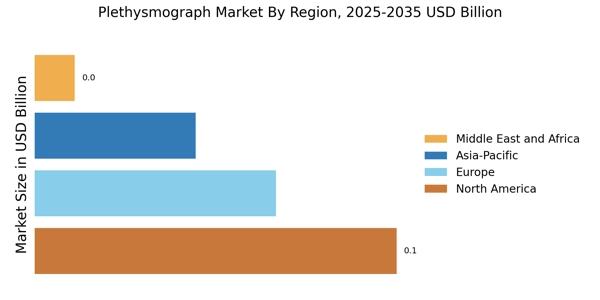
North America is the largest market for plethysmographs, accounting for approximately 45% of the global share. The region's growth is driven by advanced healthcare infrastructure, increasing prevalence of respiratory diseases, and a strong focus on research and development. Regulatory support from agencies like the FDA further catalyzes market expansion, ensuring safety and efficacy in medical devices. The demand for non-invasive diagnostic tools is also on the rise, contributing to market growth. The United States leads the North American market, with significant contributions from Canada. Key players such as Medtronic, GE Healthcare, and Philips dominate the competitive landscape, leveraging technological advancements to enhance product offerings. The presence of established healthcare systems and a growing emphasis on preventive care are pivotal in shaping the market dynamics. The competitive environment is characterized by continuous innovation and strategic partnerships among leading firms.

Europe : Emerging Regulatory Frameworks

Europe is the second-largest market for plethysmographs, holding around 30% of the global market share. The region's growth is propelled by increasing healthcare expenditure, a rising geriatric population, and advancements in medical technology. Regulatory frameworks, such as the EU Medical Device Regulation, are enhancing product safety and efficacy, thereby boosting consumer confidence. The demand for home healthcare solutions is also rising, further driving market growth in the region. Germany and the UK are the leading countries in the European plethysmograph market, with significant contributions from France and Italy. The competitive landscape features key players like Philips and Schiller AG, who are focusing on innovation and expanding their product portfolios. Collaborations between healthcare providers and technology firms are becoming more common, fostering a dynamic environment for growth. The emphasis on research and development is expected to yield new solutions that cater to evolving healthcare needs.

Asia-Pacific : Rapidly Growing Healthcare Sector

Asia-Pacific is witnessing rapid growth in the plethysmograph market, accounting for approximately 20% of the global share. The region's expansion is driven by increasing healthcare investments, a growing population, and rising awareness of respiratory diseases. Countries like China and India are focusing on enhancing their healthcare infrastructure, which is expected to further boost demand for diagnostic devices. Government initiatives aimed at improving healthcare access are also significant growth catalysts. China is the largest market in the Asia-Pacific region, followed by Japan and India. The competitive landscape is characterized by the presence of both global and local players, including Nihon Kohden and Compumedics. The market is becoming increasingly competitive, with companies investing in research and development to introduce innovative products. The growing trend of telemedicine and home healthcare solutions is also shaping the market dynamics, providing new opportunities for growth.

Middle East and Africa : Untapped Market Opportunities

The Middle East and Africa region is gradually emerging in the plethysmograph market, holding about 5% of the global share. The growth is primarily driven by increasing healthcare investments, rising awareness of chronic diseases, and government initiatives aimed at improving healthcare infrastructure. Countries like the UAE and South Africa are leading the way in adopting advanced medical technologies, which is expected to enhance market growth. The demand for non-invasive diagnostic tools is also on the rise, contributing to the region's development. South Africa is the largest market in the region, with significant contributions from the UAE and Saudi Arabia. The competitive landscape is characterized by a mix of local and international players, focusing on expanding their presence in the region. The market is witnessing increased collaboration between healthcare providers and technology firms, fostering innovation and improving access to diagnostic solutions. The emphasis on enhancing healthcare quality is expected to drive further growth in the plethysmograph market.

Plethysmograph Market Regional Image

Key Players and Competitive Insights

The Plethysmograph Market is currently characterized by a dynamic competitive landscape, driven by advancements in technology and increasing demand for non-invasive diagnostic tools. Key players such as Medtronic (US), Philips (NL), and GE Healthcare (US) are at the forefront, each adopting distinct strategies to enhance their market presence. Medtronic (US) focuses on innovation through the development of advanced plethysmography systems that integrate seamlessly with digital health platforms. Philips (NL) emphasizes partnerships with healthcare providers to expand its reach in emerging markets, while GE Healthcare (US) is investing heavily in research and development to enhance the accuracy and efficiency of its diagnostic equipment. Collectively, these strategies not only bolster their competitive positioning but also contribute to a rapidly evolving market environment.

In terms of business tactics, companies are increasingly localizing manufacturing to reduce costs and improve supply chain efficiency. This approach appears to be particularly effective in regions with high demand for plethysmography devices. The market structure is moderately fragmented, with several players vying for market share, yet the influence of major companies remains substantial. Their ability to innovate and adapt to changing market conditions is likely to dictate the competitive dynamics moving forward.

In August 2025, Medtronic (US) announced the launch of a new line of portable plethysmographs designed for home use, which could significantly enhance patient accessibility to diagnostic services. This strategic move not only aligns with the growing trend of telehealth but also positions Medtronic as a leader in patient-centric solutions. The introduction of these devices is expected to expand their market share by catering to a demographic increasingly seeking convenience in healthcare.

Similarly, in July 2025, Philips (NL) entered into a strategic partnership with a leading telemedicine provider to integrate its plethysmography technology into remote patient monitoring systems. This collaboration is indicative of a broader trend towards digital health solutions, suggesting that Philips is keen on leveraging technology to enhance patient outcomes. By aligning with telemedicine, Philips is likely to capture a larger segment of the market that prioritizes remote healthcare solutions.

In September 2025, GE Healthcare (US) unveiled a new AI-driven analytics platform that enhances the functionality of its plethysmography devices. This platform is designed to provide real-time data analysis, which could significantly improve diagnostic accuracy. The integration of AI into their product offerings not only reflects GE's commitment to innovation but also positions the company to meet the increasing demand for data-driven healthcare solutions.

As of October 2025, the Plethysmograph Market is witnessing trends that emphasize digitalization, sustainability, and the integration of artificial intelligence. Strategic alliances are becoming increasingly pivotal, as companies recognize the value of collaboration in enhancing their technological capabilities. Looking ahead, it appears that competitive differentiation will increasingly hinge on innovation and technological advancements rather than merely price competition. The focus is shifting towards creating reliable supply chains and developing cutting-edge solutions that meet the evolving needs of healthcare providers and patients alike.

Key Companies in the Plethysmograph Market market include

Industry Developments

The Plethysmograph Market is projected to reach USD 5.2 billion by 2032, exhibiting a CAGR of 5.17% from 2024 to 2032. The rising prevalence of respiratory disorders, increasing demand for minimally invasive procedures, technological advancements in plethysmography devices, and growing awareness about the benefits of early diagnosis are key factors driving market growth.

Moreover, favorable reimbursement policies and government initiatives to improve healthcare infrastructure in developing regions are anticipated to offer lucrative opportunities for market expansion. Recent news developments include the launch of the ZephyrON PerCLAW Fingertip Pulse Oximeter by Masimo Corporation, which provides continuous and non-invasive monitoring of regional cerebral oxygen saturation (rSO2) and cerebral oximetry (COx).

Future Outlook

Plethysmograph Market Future Outlook

The Plethysmograph Market is projected to grow at an 8.4% CAGR from 2024 to 2035, driven by technological advancements, increasing healthcare demands, and rising awareness of non-invasive diagnostic methods.

New opportunities lie in:

  • Development of portable plethysmograph devices for home healthcare markets.
  • Integration of AI analytics for enhanced diagnostic capabilities.
  • Expansion into emerging markets with tailored product offerings.

By 2035, the Plethysmograph Market is expected to achieve substantial growth and innovation.

Market Segmentation

Plethysmograph Market End User Outlook

  • Hospitals
  • Clinics
  • Diagnostic Centers

Plethysmograph Market Modality Outlook

  • Pulmonary Plethysmography
  • Cardiovascular Plethysmography
  • Cerebral Plethysmography

Plethysmograph Market Technology Outlook

  • Air Displacement Plethysmography
  • Flow Sensing Plethysmography
  • Pressure Sensing Plethysmography

Plethysmograph Market Application Outlook

  • Pulmonary Function Testing
  • Sleep Studies
  • Cardiopulmonary Exercise Testing

Plethysmograph Market Product Type Outlook

  • Whole Body Plethysmograph
  • Pneumotach Plethysmograph
  • Forced Oscillation Technique Plethysmograph

Report Scope

MARKET SIZE 20240.19(USD Billion)
MARKET SIZE 20250.206(USD Billion)
MARKET SIZE 20350.4615(USD Billion)
COMPOUND ANNUAL GROWTH RATE (CAGR)8.4% (2024 - 2035)
REPORT COVERAGERevenue Forecast, Competitive Landscape, Growth Factors, and Trends
BASE YEAR2024
Market Forecast Period2025 - 2035
Historical Data2019 - 2024
Market Forecast UnitsUSD Billion
Key Companies ProfiledMarket analysis in progress
Segments CoveredMarket segmentation analysis in progress
Key Market OpportunitiesIntegration of advanced sensors and artificial intelligence in the Plethysmograph Market enhances diagnostic capabilities.
Key Market DynamicsTechnological advancements and regulatory changes drive innovation and competition in the Plethysmograph Market.
Countries CoveredNorth America, Europe, APAC, South America, MEA

Leave a Comment

FAQs

What is the projected market valuation of the Plethysmograph Market by 2035?

The Plethysmograph Market is projected to reach a valuation of 0.4615 USD Billion by 2035.

What was the market valuation of the Plethysmograph Market in 2024?

In 2024, the Plethysmograph Market had a valuation of 0.19 USD Billion.

What is the expected CAGR for the Plethysmograph Market during the forecast period 2025 - 2035?

The expected CAGR for the Plethysmograph Market during the forecast period 2025 - 2035 is 8.4%.

Which companies are considered key players in the Plethysmograph Market?

Key players in the Plethysmograph Market include Medtronic, Philips, GE Healthcare, Nihon Kohden, and Schiller AG.

What are the main product types in the Plethysmograph Market and their valuations?

Main product types include Whole Body Plethysmograph, Pneumotach Plethysmograph, and Forced Oscillation Technique Plethysmograph, with valuations ranging from 0.05 to 0.17 USD Billion.

What applications are driving growth in the Plethysmograph Market?

Applications such as Pulmonary Function Testing, Sleep Studies, and Cardiopulmonary Exercise Testing are driving growth, with valuations between 0.05 and 0.17 USD Billion.

How do end users impact the Plethysmograph Market?

End users like Hospitals, Clinics, and Diagnostic Centers are crucial, with market valuations ranging from 0.057 to 0.1843 USD Billion.

What technologies are utilized in the Plethysmograph Market?

Technologies such as Air Displacement Plethysmography and Flow Sensing Plethysmography are utilized, with valuations from 0.05 to 0.18 USD Billion.

What modalities are represented in the Plethysmograph Market?

Modalities include Pulmonary, Cardiovascular, and Cerebral Plethysmography, with valuations between 0.06 and 0.17 USD Billion.

How does the Plethysmograph Market's growth compare to other medical device markets?

The Plethysmograph Market's growth, driven by an 8.4% CAGR, suggests a robust expansion compared to other medical device markets.

Download Free Sample

Kindly complete the form below to receive a free sample of this Report

Compare Licence

×
Features License Type
Single User Multiuser License Enterprise User
Price $4,950 $5,950 $7,250
Maximum User Access Limit 1 User Upto 10 Users Unrestricted Access Throughout the Organization
Free Customization
Direct Access to Analyst
Deliverable Format
Platform Access
Discount on Next Purchase 10% 15% 15%
Printable Versions