Request Free Sample ×

Kindly complete the form below to receive a free sample of this Report

* Please use a valid business email

Leading companies partner with us for data-driven Insights

clients tt-cursor
Hero Background
English
Chinese
French
Japanese
Korean
German
Spanish

Plasma Fractionation Market Trends

ID: MRFR/HC/5928-CR
200 Pages
Vikita Thakur
Last Updated: April 06, 2026

Plasma Fractionation Market Research Report: Size, Share, Trend Analysis By Applications (Neurology, Hematology, General Medicine, Immunology), By Product Type (Immunoglobulin, Albumin, Coagulation Factors, Protease Inhibitors), By End Users (Hospitals, Ambulatory Surgical Centers, Blood Banks, Pharmaceutical Companies), By Technology (Centrifugation, Chromatography, Precipitation, Filtration) and By Regional (North America, Europe, South America, Asia Pacific, Middle East and Africa) - Growth Outlook & Industry Forecast 2025 To 2035

Share:
Download PDF ×

We do not share your information with anyone. However, we may send you emails based on your report interest from time to time. You may contact us at any time to opt-out.

Plasma Fractionation Market Infographic
Purchase Options

Market Trends

Key Emerging Trends in the Plasma Fractionation Market

The heavy-duty vehicle rental market is presently experiencing considerable shifts and traits that can be shaping its landscape. One extremely good fashion is the growing demand for green and sustainable alternatives within this area. With an accelerated worldwide consciousness of environmental conservation and lowering carbon footprints, companies are looking for heavy-duty motors that adhere to stricter emission requirements. This has led to the creation of electric and hybrid alternatives in the heavy-duty vehicle rental marketplace, presenting companies with the opportunity to align their operations with sustainable practices. Another noteworthy marketplace fashion is the upward push of digitalization and era integration in heavy-duty vehicle rentals. The creation of superior telematics and fleet management systems has enabled condo companies to optimize their operations, enhance car performance, and provide real-time monitoring for their customers. This now not only improves performance but also contributes to a greater seamless condo experience for groups relying on heavy-duty vehicles for their operations. The international economic landscape is also influencing marketplace trends in heavy-duty vehicle rentals. As economies get over various disruptions, there is an observable boom in creation and infrastructure tasks, contributing to a heightened demand for heavy-duty motors. This uptick in production activities, coupled with the want for efficient transportation of products, is using the demand for heavy-obligation motors, therefore influencing the boom of the rental market. Moreover, regulatory modifications and compliance requirements are shaping the heavy-duty vehicle rental market. Governments international are implementing stricter guidelines on emissions, protection, and other components of vehicle operation. Rental businesses are adapting to these adjustments by updating their fleets to satisfy brand-new standards, ensuring compliance with policies, and supplying customers with motors that align with ultra-modern enterprise requirements. In terms of geographical trends, emerging markets are getting an increasing number of extensive gamers inside the heavy-duty vehicle rental enterprise. As organizations extend their operations globally, the demand for dependable heavy-duty vehicle rental services in emerging economies is at an upward push. This has led to the established order of new apartment groups in these areas, catering to the growing desires of agencies running in various sectors. In conclusion, the heavy-duty vehicle rental marketplace presents dynamic process adjustments driven by environmental concerns, technological advancements, consumer possibilities, economic factors, regulatory shifts, and the globalization of organizations. As the industry continues to adapt, condominium corporations that adapt to these traits and offer progressive answers are probably to thrive in this competitive marketplace. Whether it's embracing sustainability, integrating modern-day generations, or presenting bendy rental options, the heavy-duty vehicle rental area is poised for persistent transformation in the coming years.

Author
Author Profile
Vikita Thakur
Senior Research Analyst

She holds an experience of about 5+ years in market research and business consulting projects for sectors such as life sciences, medical devices, and healthcare IT. She possesses a robust background in data analysis, market estimation, competitive intelligence, pipeline analysis market trend identification, and consumer behavior insights. Her expertise lies in technical Sales support, client interaction and project management, designing and implementing market research studies, conducting competitive analysis, and synthesizing complex data into actionable recommendations that drive business growth.

Leave a Comment

FAQs

What is the current valuation of the Plasma Fractionation Market?

<p>As of 2024, the Plasma Fractionation Market was valued at 31.82 USD Billion.</p>

What is the projected market size for the market by 2035?

The market is projected to reach 64.22 USD Billion by 2035.

What is the expected CAGR for the market during the forecast period 2025 - 2035?

The expected CAGR for the market during 2025 - 2035 is 6.59%.

Which application segment is anticipated to have the highest valuation in 2035?

<p>The General Medicine application segment is projected to reach between 10.0 and 20.0 USD Billion by 2035.</p>

What are the key product types in the market?

Key product types include Immunoglobulin, Albumin, Coagulation Factors, and Protease Inhibitors.

Which end user segment is expected to dominate the market by 2035?

<p>The Hospitals end user segment is anticipated to grow to between 12.0 and 25.0 USD Billion by 2035.</p>

What technologies are utilized in the Plasma Fractionation process?

<p>Technologies used include Centrifugation, Chromatography, Precipitation, and Filtration.</p>

Who are the leading companies in the Plasma Fractionation Market?

<p>Key players include Grifols, CSL Behring, Takeda Pharmaceutical Company Limited, and Octapharma.</p>

What is the projected valuation for the Immunoglobulin product type by 2035?

<p>The Immunoglobulin product type is expected to reach between 12.0 and 25.0 USD Billion by 2035.</p>

How does the Plasma Fractionation Market's growth compare across different segments?

<p>The market shows varied growth across segments, with Hematology and Immunology also projected to see substantial increases.</p>

Market Summary

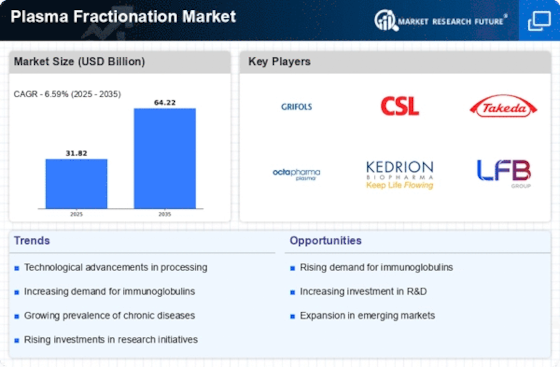
April 01, 2026- According to Market Research Future analysis, the Plasma Fractionation Market Size was estimated at 31.82 USD Billion in 2024. The Plasma Fractionation industry is projected to grow from 33.92 USD Billion in 2025 to 64.22 USD Billion by 2035, exhibiting a compound annual growth rate (CAGR) of 6.5% during the forecast period 2025 - 2035. North America led the market with over 45% share, generating around USD 14.3 billion in revenue.
 
Rising prevalence of chronic and rare disorders such as immunodeficiency and hemophilia is driving demand for plasma-derived therapies. Increasing use of immunoglobulins and clotting factors supports plasma fractionation expansion across hospitals and specialty care globally.
 
According to the Centers for Disease Control and Prevention (CDC), hemophilia affects approximately 1 in 5,000 male births globally, creating sustained demand for clotting factor concentrates derived from plasma fractionation. WHO highlights growing need for immunoglobulin therapies in immune deficiency management, reinforcing global treatment accessibility trends.

Key Market Trends & Highlights

The Plasma Fractionation Market is poised for robust growth driven by technological advancements and increasing demand for therapies.

  • Immunology segment holds 45% share in 2024, driven by increasing immune disorders and plasma-derived therapeutic applications worldwide. Immunoglobulin dominates product type with 50% share, supported by rising autoimmune disease prevalence and advanced clinical treatments. North America leads globally with 45% revenue share in 2024, supported by advanced healthcare infrastructure and plasma supply networks. Europe market valued USD 9.55 billion in 2024, accounting for 30% share with strong regulatory and therapeutic demand.

Market Size & Forecast

2024 Market Size 31.82 (USD Billion)
2035 Market Size 64.22 (USD Billion)
CAGR (2025 - 2035) 6.59%
Largest Regional Market Share in 2024 North America

Major Players

Companies such as Grifols (ES), CSL Behring (AU), Takeda Pharmaceutical Company Limited (JP), <a href="https://www.octapharma.com/news/corporate-news/2025/octapharma-appointed-sole-fractionator-for-uk-s-plasma-programme">Octapharma</a> (CH), Kedrion S.p.A. (IT), <a href="https://www.biotest.com/de/en/company/areas_of_activity/processes.cfm">Biotest AG</a> (DE), LFB Group (FR), Hualan Biological Engineering Inc. (CN) are some of the major participants in the global market.

Market Trends

The Plasma Fractionation Market is currently experiencing a dynamic evolution, driven by advancements in technology and increasing demand for immunoglobulins and clotting factors. This sector plays a crucial role in the healthcare landscape, particularly in the treatment of various diseases and conditions, including immune deficiencies and bleeding disorders.

The growing awareness of the therapeutic benefits of plasma-derived products, including plasma fractionators, is fostering a robust market environment. Furthermore, the rise in research and development activities is likely to enhance product offerings, thereby expanding the market's potential. In addition, regulatory frameworks are becoming more stringent, which may influence the operational strategies of companies within the market.

Organizations are adapting to these changes by investing in compliance and quality assurance measures. The global landscape is also witnessing a shift towards more sustainable practices, as stakeholders recognize the importance of ethical sourcing and environmental responsibility. This multifaceted approach suggests that the market is poised for continued growth, with opportunities for innovation and collaboration across various sectors.

Technological Advancements

The market is witnessing a surge in technological innovations that enhance the efficiency and yield of plasma processing. Automation and advanced separation techniques are being integrated into production processes, which may lead to improved product quality and reduced operational costs. These advancements not only streamline plasma fractionator manufacturing but also ensure compliance with regulatory standards, thereby fostering market growth.

Advanced plasma fractionation technologies, including high-efficiency centrifugation and chromatography, are improving yield and purity of plasma-derived products. Automation in bioprocessing enhances scalability and safety standards. According to WHO blood safety initiatives, improved processing systems contribute to safer plasma-derived therapies, reducing contamination risks and increasing global treatment reliability.

Rising Demand for Plasma-Derived Therapies

There is an increasing global demand for plasma-derived therapies, particularly immunoglobulins and clotting factors. This trend is driven by a growing prevalence of chronic diseases and a heightened focus on personalized medicine. As healthcare providers seek effective treatment options using plasma fractionators, the market is likely to expand, catering to the needs of diverse patient populations.

Global demand for immunoglobulins and clotting factors continues to rise due to increasing immune and bleeding disorders. CDC data indicates hemophilia prevalence of about 1 in 5,000 male births, while WHO emphasizes expanding immunodeficiency treatment coverage, driving sustained adoption of plasma-derived medicines worldwide.

Focus on Sustainability

Sustainability is becoming a pivotal concern within the market. Companies are increasingly adopting eco-friendly practices and ethical sourcing of plasma. This shift not only addresses environmental challenges but also aligns with consumer expectations for responsible production. As stakeholders prioritize sustainability, the market may see a transformation in operational strategies and product offerings.

Plasma fractionation facilities are adopting sustainable sourcing and waste reduction practices to improve environmental compliance. PAHO supports efficient blood and plasma collection systems in Latin America, promoting ethical plasma utilization and reduced wastage, strengthening long-term healthcare sustainability and resource efficiency in plasma processing.

Plasma Fractionation Market Market Drivers

Expansion of Healthcare Infrastructure

The ongoing expansion of healthcare infrastructure in various regions is significantly influencing the Plasma Fractionation Market. As countries invest in improving their healthcare systems, the availability of advanced medical facilities and technologies is increasing. This expansion facilitates better access to plasma-derived therapies, which are essential for treating a range of medical conditions. For instance, the establishment of specialized treatment centers and blood banks enhances the collection and processing of plasma, thereby supporting the growth of the market.
 
Moreover, the integration of state-of-the-art technologies in healthcare facilities is likely to improve the efficiency of plasma fractionation processes. As a result, the market may witness a surge in demand for plasma-derived products, driven by the enhanced capabilities of healthcare providers to deliver effective treatments.

Rising Demand for Personalized Medicine

The growing trend towards personalized medicine is significantly impacting the Plasma Fractionation Market. As healthcare shifts towards tailored treatment approaches, the demand for plasma-derived therapies that can be customized to individual patient needs is likely to increase. Personalized medicine aims to optimize therapeutic outcomes by considering genetic, environmental, and lifestyle factors.
 
This approach aligns well with the capabilities of plasma fractionation, which allows for the development of specific products targeting unique patient profiles. Recent studies suggest that personalized therapies can lead to improved patient outcomes and reduced healthcare costs, further driving interest in plasma-derived products. Consequently, the market may experience a surge in demand as healthcare providers and patients seek more effective and individualized treatment options.

Growing Awareness of Immunoglobulin Therapies

The increasing awareness regarding the benefits of immunoglobulin therapies is a notable driver for the Plasma Fractionation Market. Immunoglobulins, derived from human plasma, play a vital role in treating various immunodeficiency disorders and autoimmune diseases. As healthcare professionals and patients become more informed about these therapies, the demand for immunoglobulin products is likely to rise. Recent data indicates that the immunoglobulin market is projected to reach approximately USD 20 billion by 2026, reflecting a robust growth trajectory.
 
This trend suggests that the market will experience heightened interest and investment as stakeholders recognize the therapeutic potential of immunoglobulins. Additionally, the increasing number of clinical trials and research initiatives focused on immunoglobulin therapies may further stimulate market growth, as new applications and formulations are explored.

Regulatory Support for Plasma-Derived Products

Regulatory support for plasma-derived products is emerging as a significant driver for the Plasma Fractionation Market. Governments and regulatory bodies are increasingly recognizing the importance of plasma therapies in treating various medical conditions. This recognition has led to the establishment of favorable policies and guidelines that facilitate the approval and commercialization of plasma-derived products. For instance, streamlined regulatory processes can expedite the introduction of new therapies into the market, thereby enhancing patient access to essential treatments.
 
Furthermore, the emphasis on safety and efficacy in the approval process is likely to bolster consumer confidence in plasma-derived products. As a result, the market may benefit from increased investment and innovation, as companies seek to develop new and improved therapies that meet regulatory standards.

Increasing Incidence of Hematological Disorders

The rising prevalence of hematological disorders, such as hemophilia and multiple myeloma, is a crucial driver for the Plasma Fractionation Market. As these conditions require specific plasma-derived products for treatment, the demand for plasma fractionation is expected to grow. According to recent estimates, the incidence of hemophilia is approximately 1 in 5,000 male births, indicating a substantial patient population reliant on plasma-derived therapies.
 
This trend suggests that healthcare providers are increasingly focusing on developing effective treatment options, thereby propelling the market forward. Furthermore, advancements in diagnostic techniques are likely to enhance early detection, leading to timely interventions and increased demand for plasma products. Consequently, the market is poised for growth as healthcare systems adapt to the rising burden of hematological disorders.

Market Segment Insights

By Application: Immunology (Largest) vs. Hematology (Fastest-Growing)

The application segment primarily comprises neurology, hematology, general medicine, and immunology. Currently, immunology holds the largest Plasma Fractionation Market share at 45% within this segment, driven by the increasing prevalence of immune disorders and the demand for immunoglobulin therapies. Hematology, while smaller in proportion compared to immunology, is rapidly gaining traction and is recognized as the fastest-growing segment due to advancements in therapeutic developments and rising blood disorder cases.

Immunology (Dominant) vs. Hematology (Emerging)

Immunology plays a dominant role in the Plasma Fractionation Market, characterized by its substantial contribution towards enabling the production of immunoglobulins, which are vital for treating a variety of immune system disorders. This segment benefits significantly from the continuous innovation in therapies that target autoimmune diseases and primary immunodeficiencies. On the other hand, hematology, as an emerging segment, is witnessing rapid growth driven by increasing incidences of hematological disorders such as hemophilia and anemia. The focus on developing new therapies and treatments, coupled with enhancements in blood component collection and fractionation technologies, positions hematology as a vital area of future development within the market.

By Product Type: Immunoglobulin (Largest) vs. Albumin (Fastest-Growing)

The Immunoglobulin continues to dominate with the largest Plasma Fractionation Market share at 50% among product types, owing to its extensive application in immunotherapy and autoimmune disorders. Albumin, while currently holding a smaller share, is rapidly gaining traction, particularly in critical care and surgical settings, reflecting a significant shift in market dynamics. The growth of these product types is influenced by their therapeutic benefits and increasing clinical demand. The overall growth of the market is driven by advancements in biotechnology and rising prevalence of diseases requiring plasma-derived therapies. Furthermore, regulatory approvals for new treatments and increasing investment in research are propelling the development of emerging products like Albumin. As healthcare systems evolve, the importance of efficient and safe plasma products remains paramount to meet growing patient needs.

Immunoglobulin (Dominant) vs. Protease Inhibitors (Emerging)

Immunoglobulin represents the dominant force in the Plasma Fractionation Market, praised for its wide-ranging applications in treating immune deficiencies and various chronic diseases. Its established presence in clinical settings solidifies its position, driven by strong demand from healthcare professionals. On the other hand, Protease Inhibitors are emerging as a significant focus for research and development within the market. Although currently less prevalent, their potential to treat viral infections, including Hepatitis and HIV, positions them favorably for future growth. As healthcare trends shift toward innovative therapies, both products will play distinct roles; Immunoglobulin bolstering established treatments, while Protease Inhibitors expand therapeutic options.

By End User: Hospitals (Largest) vs. Pharmaceutical Companies (Fastest-Growing)

Hospitals dominate the end-user segment with the largest Plasma Fractionation Market share at 55%, as they rely on plasma-derived products for patient treatments and surgical procedures. Conversely, pharmaceutical companies are rapidly emerging as a significant stakeholder in this market, driven by the increasing demand for innovative therapies, including immunoglobulins and clotting factors. Together, these two segments reflect the broader applications of plasma products in healthcare, underscoring the vital role of medical institutions and drug manufacturers in advancing treatment options.

Blood Banks (Dominant) vs. Ambulatory Surgical Centers (Emerging)

Blood banks represent a dominant force in the Plasma Fractionation Market, serving as key collectors and processors of plasma. They leverage advanced technologies to ensure the safety and efficacy of plasma products, which are essential for transfusions and other medical applications. On the other hand, ambulatory surgical centers (ASCs) are emerging as a vital segment, gaining traction due to the shift towards outpatient care. These centers benefit from streamlined operations and the ability to provide immediate access to plasma therapies, driving their growth. As healthcare continues to evolve, both blood banks and ASCs play pivotal roles in the distribution and utilization of plasma-derived treatments.

By Technology: Centrifugation (Largest) vs. Chromatography (Fastest-Growing)

Centrifugation holds the largest Plasma Fractionation Market share at 60% due to its established efficiency and reliability in separating plasma components. It is widely adopted across various healthcare settings. Conversely, Chromatography, while smaller in market share, is recognized for its rapid growth as it provides higher purity and specificity in plasma fractionation processes, attracting a growing number of applications.

Technology: Centrifugation (Dominant) vs. Chromatography (Emerging)

Centrifugation is a dominant technology in the Plasma Fractionation Market, known for its effectiveness in separating blood components through high-speed spinning. This technique is preferred for its scalability and cost-effectiveness, making it suitable for both large and small-scale operations. On the other hand, Chromatography is emerging as a pivotal technology, particularly valued for its ability to achieve high-resolution separation. It utilizes sophisticated methods to ensure the purity of plasma derivatives, which is increasingly demanded in therapeutic applications. As regulatory standards tighten and the demand for quality increases, chromatography is expected to see significant uptake, driving innovation in the sector.

Get more detailed insights about Plasma Fractionation Market Research Report – Global Forecast till 2035

Regional Insights

North America : Market Leader in Innovation

North America leads in the Plasma Fractionation Market size, accounting for over 45% of the global revenue in 2024. The region benefits from advanced healthcare infrastructure, high demand for immunoglobulins, and supportive regulatory frameworks. The increasing prevalence of chronic diseases and the aging population are significant growth drivers.

Regulatory bodies like the FDA ensure stringent quality standards, further boosting market confidence. The United States is the leading country in this region, with major players such as Grifols and CSL Behring establishing a strong presence. Canada also contributes significantly, focusing on research and development in biopharmaceuticals. The competitive landscape is characterized by innovation and strategic partnerships among key players, enhancing product offerings and market reach.

Strong demand for immunoglobulins and advanced healthcare infrastructure drives North America’s leadership in plasma fractionation. CDC reports hemophilia affects about 20,000 individuals in the U.S., sustaining demand for clotting therapies. High chronic disease prevalence and strong plasma donation systems further strengthen market expansion across the region.

Europe : Emerging Market with Growth Potential

Europe Plasma Fractionation Market size was valued at USD 9.55 billion in 2024, making it the second-largest regional market with a 30% share. The region is witnessing increased demand for plasma-derived therapies, driven by rising healthcare expenditures and a growing patient population. Regulatory support from the European Medicines Agency (EMA) is pivotal in ensuring product safety and efficacy, which fosters market growth and innovation.

Germany, France, and the UK are the leading countries in this market, with significant contributions from companies like Octapharma and LFB Group. The competitive landscape is evolving, with a focus on expanding production capacities and enhancing product portfolios. Collaborations between public and private sectors are also on the rise, aiming to improve access to plasma therapies across Europe.

Europe’s growth is driven by increasing demand for plasma-derived therapies and strong regulatory frameworks ensuring product safety. ECDC supports advanced blood safety monitoring systems across EU nations, improving plasma collection efficiency. Rising patient population requiring immunoglobulin therapies strengthens regional adoption and healthcare accessibility across major economies.

Asia-Pacific : Rapidly Growing Market Segment

Asia-Pacific is an emerging powerhouse in the market, holding approximately 20% of the global share. The region is experiencing rapid growth due to increasing healthcare investments, rising awareness of plasma-derived therapies, and a growing population. Countries like China and India are witnessing significant demand, driven by the rising incidence of hemophilia and other blood-related disorders, alongside supportive government initiatives.

China is the largest market in the region, with key players like Hualan Biological Engineering leading the charge. India is also making strides, with a focus on expanding its plasma collection and processing capabilities. The competitive landscape is characterized by both local and international players, fostering innovation and improving access to essential therapies across the region.

Middle East and Africa : Untapped Market with Potential

The Middle East and Africa represent an untapped market for plasma fractionation, holding about 5% of the global share. The region is gradually recognizing the importance of plasma-derived therapies, driven by increasing healthcare investments and a rising prevalence of chronic diseases. Regulatory frameworks are evolving, with governments focusing on improving healthcare infrastructure and access to essential treatments, which is expected to catalyze market growth in the coming years.

Countries like South Africa and the UAE are leading the way in adopting plasma therapies, with a growing number of healthcare facilities investing in plasma collection and processing. The competitive landscape is still developing, with opportunities for both local and international players to establish a foothold in this emerging market. Strategic partnerships and collaborations are likely to play a crucial role in expanding market presence and improving patient access to therapies.

Key Players and Competitive Insights

The Plasma Fractionation Market has witnessed significant growth over recent years, driven by the increasing demand for plasma-derived therapies and the rising prevalence of various disorders such as hemophilia, immune deficiencies, and certain cancers.
 
This market is characterized by the presence of numerous key players, each striving to enhance their product offerings and expand their market share.Competitive insights into this market reveal a landscape where innovation, strategic partnerships, and regulatory considerations play vital roles. Plasma manufacturers are focusing on research and development to improve existing advanced plasma products, while also exploring new therapeutic areas to address unmet medical needs.
 

Additionally, the blood plasma market is experiencing consolidation through mergers and acquisitions as organizations aim to leverage synergies and streamline their operations.LFB Group has established itself as a prominent player in the market through its emphasis on high-quality products and patient-centric solutions. The company benefits from its strong research and development capabilities, allowing it to introduce innovative plasma-derived therapies that meet the increasing global healthcare demands.
 
LFB Group's market presence is bolstered by its commitment to safety and efficacy, which resonates well with healthcare providers and patients alike. The organization has developed a wide range of immunoglobulin and clotting factor products that cater to various therapeutic needs, making it a trusted name within plasma industries. Its collaborations with academic institutions and healthcare organizations further enhance its competitive position, emphasizing its role as a leader in providing specialized plasma-derived therapies globally.Takeda Pharmaceutical is another key participant in the market, recognized for its extensive portfolio of biologics and Takeda plasma derived therapies. The company offers a range of products, including immunoglobulins, clotting factors, and other therapeutic proteins, which serve various medical conditions.
 
Takeda's strength lies in its robust global presence, allowing it to reach a wide patient population and address local healthcare challenges effectively. With a strong focus on research and strategic partnerships, Takeda is actively engaged in mergers and acquisitions to enhance its technological capabilities and expand its product offerings.
These initiatives not only bolster its market position but also promote innovation in plasma fractionation technologies. The company’s commitment to patient access and improving health outcomes further solidifies its standing as a leader in the global blood plasma market, enhancing its competitiveness in this dynamic industry.

Key Companies in the Plasma Fractionation Market include

Industry Developments

Significant news developments in the Plasma Fractionation Market include accelerated growth driven by increasing demand for immunoglobulin therapies and advancements in plasma-derived products. Companies like Grifols and CSL Behring are enhancing their production capabilities through investments in new facilities and technology.

In October 2023, Takeda Pharmaceutical announced plans to expand its manufacturing footprint in response to heightened demand, illustrating the competitive landscape.

Recent mergers and acquisitions have also shaped plasma industries; for instance, in September 2023, ADMA Biologics finalized its acquisition of a specialized plasma collection center to strengthen its supply chain.

Additionally, in December 2022, Octapharma and Hualan Biological Engineering formed a collaborative agreement to enhance production efficiency, indicating strategic alliances within the sector.

Moreover, technological advancements in plasma fractionation processes are improving yield and reducing costs, benefiting plasma manufacturers like Emergent BioSolutions and Biotest AG.

The overall market valuation continues to grow as consumer awareness of plasma-derived therapies rises, with emerging markets contributing to increasing investments. This growth trend emphasizes the importance of operational excellence and innovation in the industry's future endeavors while navigating regulatory landscapes in various global regions.

Future Outlook

Plasma Fractionation Market Future Outlook

The Plasma Fractionation Market size is projected to reach USD 64.22 Billion by 2035, growing at a CAGR of 6.59%, driven by increasing demand for immunoglobulins and advancements in fractionation technologies.

New opportunities lie in:

  • <p>Expansion of <a title="contract manufacturing service" href="https://www.marketresearchfuture.com/reports/contract-manufacturing-service-market-41421" target="_blank" rel="noopener">contract manufacturing services</a> for biopharmaceutical companies. Development of innovative plasma-derived therapies targeting rare diseases. Investment in automated plasma collection and processing technologies.</p>

By 2035, the Plasma Fractionation Market is expected to achieve substantial growth and innovation.

Market Segmentation

Plasma Fractionation Market End User Outlook

  • Hospitals
  • Ambulatory Surgical Centers
  • Blood Banks
  • Pharmaceutical Companies

Plasma Fractionation Market Technology Outlook

  • Centrifugation
  • Chromatography
  • Precipitation
  • Filtration

Plasma Fractionation Market Application Outlook

  • Neurology
  • Hematology
  • General Medicine
  • Immunology

Plasma Fractionation Market Product Type Outlook

  • Immunoglobulin
  • Albumin
  • Coagulation Factors
  • Protease Inhibitors

Report Scope

MARKET SIZE 2024 31.82(USD Billion)
MARKET SIZE 2025 33.92(USD Billion)
MARKET SIZE 2035 64.22(USD Billion)
COMPOUND ANNUAL GROWTH RATE (CAGR) 6.59% (2025 - 2035)
REPORT COVERAGE Revenue Forecast, Competitive Landscape, Growth Factors, and Trends
BASE YEAR 2024
Market Forecast Period 2025 - 2035
Historical Data 2019 - 2024
Market Forecast Units USD Billion
Key Companies Profiled Grifols (ES), CSL Behring (AU), Takeda Pharmaceutical Company Limited (JP), Octapharma (CH), Kedrion S.p.A. (IT), Biotest AG (DE), LFB Group (FR), Hualan Biological Engineering Inc. (CN)
Segments Covered Applications, Product Type, End Users, Technology, Regional
Key Market Opportunities Advancements in immunoglobulin therapies drive growth in the market.
Key Market Dynamics Rising demand for immunoglobulins drives innovation and competition in the market.
Countries Covered North America, Europe, APAC, South America, MEA

FAQs

What is the current valuation of the Plasma Fractionation Market?

<p>As of 2024, the Plasma Fractionation Market was valued at 31.82 USD Billion.</p>

What is the projected market size for the market by 2035?

The market is projected to reach 64.22 USD Billion by 2035.

What is the expected CAGR for the market during the forecast period 2025 - 2035?

The expected CAGR for the market during 2025 - 2035 is 6.59%.

Which application segment is anticipated to have the highest valuation in 2035?

<p>The General Medicine application segment is projected to reach between 10.0 and 20.0 USD Billion by 2035.</p>

What are the key product types in the market?

Key product types include Immunoglobulin, Albumin, Coagulation Factors, and Protease Inhibitors.

Which end user segment is expected to dominate the market by 2035?

<p>The Hospitals end user segment is anticipated to grow to between 12.0 and 25.0 USD Billion by 2035.</p>

What technologies are utilized in the Plasma Fractionation process?

<p>Technologies used include Centrifugation, Chromatography, Precipitation, and Filtration.</p>

Who are the leading companies in the Plasma Fractionation Market?

<p>Key players include Grifols, CSL Behring, Takeda Pharmaceutical Company Limited, and Octapharma.</p>

What is the projected valuation for the Immunoglobulin product type by 2035?

<p>The Immunoglobulin product type is expected to reach between 12.0 and 25.0 USD Billion by 2035.</p>

How does the Plasma Fractionation Market's growth compare across different segments?

<p>The market shows varied growth across segments, with Hematology and Immunology also projected to see substantial increases.</p>

  1. SECTION I: EXECUTIVE SUMMARY AND KEY HIGHLIGHTS |
    1. EXECUTIVE SUMMARY | |
      1. Market Overview | |
      2. Key Findings | |
      3. Market Segmentation | |
      4. Competitive Landscape | |
      5. Challenges and Opportunities | |
      6. Future Outlook 2
  2. SECTION II: SCOPING, METHODOLOGY AND MARKET STRUCTURE |
    1. MARKET INTRODUCTION | |
      1. Definition | |
      2. Scope of the study | | |
    2. RESEARCH METHODOLOGY | |
      1. Overview | |
      2. Data Mining | |
      3. Secondary Research | |
      4. Primary Research | | |
      5. Forecasting Model | |
      6. Market Size Estimation | | |
      7. Data Triangulation | |
      8. Validation 3
  3. SECTION III: QUALITATIVE ANALYSIS |
    1. MARKET DYNAMICS | |
      1. Overview | |
      2. Drivers | |
      3. Restraints | |
      4. Opportunities |
    2. MARKET FACTOR ANALYSIS | |
      1. Value chain Analysis | |
      2. Porter's Five Forces Analysis | | |
      3. COVID-19 Impact Analysis | | |
  4. SECTION IV: QUANTITATIVE ANALYSIS |
    1. Healthcare, BY Application (USD Billion) | |
      1. Neurology | |
      2. Hematology | |
      3. General Medicine | |
      4. Immunology |
    2. Healthcare, BY Product Type (USD Billion) | |
      1. Immunoglobulin | |
      2. Albumin | |
      3. Coagulation Factors | |
      4. Protease Inhibitors |
    3. Healthcare, BY End User (USD Billion) | |
      1. Hospitals | |
      2. Ambulatory Surgical Centers | |
      3. Blood Banks | |
      4. Pharmaceutical Companies |
    4. Healthcare, BY Technology (USD Billion) | |
      1. Centrifugation | |
      2. Chromatography | |
      3. Precipitation | |
      4. Filtration |
    5. Healthcare, BY Region (USD Billion) | |
      1. North America | | |
      2. Europe | | |
      3. APAC | | |
      4. South America | | |
      5. MEA | | |
  5. SECTION V: COMPETITIVE ANALYSIS |
    1. Competitive Landscape | |
      1. Overview | |
      2. Competitive Analysis | |
      3. Market share Analysis | |
      4. Major Growth Strategy in the Healthcare | |
      5. Competitive Benchmarking | |
      6. Leading Players in Terms of Number of Developments in the Healthcare | |
      7. Key developments and growth strategies | | |
      8. Major Players Financial Matrix | | |
    2. Company Profiles | |
      1. Grifols (ES) | | |
      2. CSL Behring (AU) | | |
      3. Takeda Pharmaceutical Company Limited (JP) | | |
      4. Octapharma (CH) | | |
      5. Kedrion S.p.A. (IT) | | |
      6. Biotest AG (DE) | | |
      7. LFB Group (FR) | | |
      8. Hualan Biological Engineering Inc. (CN) | | |
    3. Appendix | |
      1. References | |
      2. Related Reports 6 LIST OF FIGURES |
    4. MARKET SYNOPSIS |
    5. NORTH AMERICA MARKET ANALYSIS |
    6. US MARKET ANALYSIS BY APPLICATION |
    7. US MARKET ANALYSIS BY PRODUCT TYPE |
    8. US MARKET ANALYSIS BY END USER |
    9. US MARKET ANALYSIS BY TECHNOLOGY |
    10. CANADA MARKET ANALYSIS BY APPLICATION |
    11. CANADA MARKET ANALYSIS BY PRODUCT TYPE |
    12. CANADA MARKET ANALYSIS BY END USER |
    13. CANADA MARKET ANALYSIS BY TECHNOLOGY |
    14. EUROPE MARKET ANALYSIS |
    15. GERMANY MARKET ANALYSIS BY APPLICATION |
    16. GERMANY MARKET ANALYSIS BY PRODUCT TYPE |
    17. GERMANY MARKET ANALYSIS BY END USER |
    18. GERMANY MARKET ANALYSIS BY TECHNOLOGY |
    19. UK MARKET ANALYSIS BY APPLICATION |
    20. UK MARKET ANALYSIS BY PRODUCT TYPE |
    21. UK MARKET ANALYSIS BY END USER |
    22. UK MARKET ANALYSIS BY TECHNOLOGY |
    23. FRANCE MARKET ANALYSIS BY APPLICATION |
    24. FRANCE MARKET ANALYSIS BY PRODUCT TYPE |
    25. FRANCE MARKET ANALYSIS BY END USER |
    26. FRANCE MARKET ANALYSIS BY TECHNOLOGY |
    27. RUSSIA MARKET ANALYSIS BY APPLICATION |
    28. RUSSIA MARKET ANALYSIS BY PRODUCT TYPE |
    29. RUSSIA MARKET ANALYSIS BY END USER |
    30. RUSSIA MARKET ANALYSIS BY TECHNOLOGY |
    31. ITALY MARKET ANALYSIS BY APPLICATION |
    32. ITALY MARKET ANALYSIS BY PRODUCT TYPE |
    33. ITALY MARKET ANALYSIS BY END USER |
    34. ITALY MARKET ANALYSIS BY TECHNOLOGY |
    35. SPAIN MARKET ANALYSIS BY APPLICATION |
    36. SPAIN MARKET ANALYSIS BY PRODUCT TYPE |
    37. SPAIN MARKET ANALYSIS BY END USER |
    38. SPAIN MARKET ANALYSIS BY TECHNOLOGY |
    39. REST OF EUROPE MARKET ANALYSIS BY APPLICATION |
    40. REST OF EUROPE MARKET ANALYSIS BY PRODUCT TYPE |
    41. REST OF EUROPE MARKET ANALYSIS BY END USER |
    42. REST OF EUROPE MARKET ANALYSIS BY TECHNOLOGY |
    43. APAC MARKET ANALYSIS |
    44. CHINA MARKET ANALYSIS BY APPLICATION |
    45. CHINA MARKET ANALYSIS BY PRODUCT TYPE |
    46. CHINA MARKET ANALYSIS BY END USER |
    47. CHINA MARKET ANALYSIS BY TECHNOLOGY |
    48. INDIA MARKET ANALYSIS BY APPLICATION |
    49. INDIA MARKET ANALYSIS BY PRODUCT TYPE |
    50. INDIA MARKET ANALYSIS BY END USER |
    51. INDIA MARKET ANALYSIS BY TECHNOLOGY |
    52. JAPAN MARKET ANALYSIS BY APPLICATION |
    53. JAPAN MARKET ANALYSIS BY PRODUCT TYPE |
    54. JAPAN MARKET ANALYSIS BY END USER |
    55. JAPAN MARKET ANALYSIS BY TECHNOLOGY |
    56. SOUTH KOREA MARKET ANALYSIS BY APPLICATION |
    57. SOUTH KOREA MARKET ANALYSIS BY PRODUCT TYPE |
    58. SOUTH KOREA MARKET ANALYSIS BY END USER |
    59. SOUTH KOREA MARKET ANALYSIS BY TECHNOLOGY |
    60. MALAYSIA MARKET ANALYSIS BY APPLICATION |
    61. MALAYSIA MARKET ANALYSIS BY PRODUCT TYPE |
    62. MALAYSIA MARKET ANALYSIS BY END USER |
    63. MALAYSIA MARKET ANALYSIS BY TECHNOLOGY |
    64. THAILAND MARKET ANALYSIS BY APPLICATION |
    65. THAILAND MARKET ANALYSIS BY PRODUCT TYPE |
    66. THAILAND MARKET ANALYSIS BY END USER |
    67. THAILAND MARKET ANALYSIS BY TECHNOLOGY |
    68. INDONESIA MARKET ANALYSIS BY APPLICATION |
    69. INDONESIA MARKET ANALYSIS BY PRODUCT TYPE |
    70. INDONESIA MARKET ANALYSIS BY END USER |
    71. INDONESIA MARKET ANALYSIS BY TECHNOLOGY |
    72. REST OF APAC MARKET ANALYSIS BY APPLICATION |
    73. REST OF APAC MARKET ANALYSIS BY PRODUCT TYPE |
    74. REST OF APAC MARKET ANALYSIS BY END USER |
    75. REST OF APAC MARKET ANALYSIS BY TECHNOLOGY |
    76. SOUTH AMERICA MARKET ANALYSIS |
    77. BRAZIL MARKET ANALYSIS BY APPLICATION |
    78. BRAZIL MARKET ANALYSIS BY PRODUCT TYPE |
    79. BRAZIL MARKET ANALYSIS BY END USER |
    80. BRAZIL MARKET ANALYSIS BY TECHNOLOGY |
    81. MEXICO MARKET ANALYSIS BY APPLICATION |
    82. MEXICO MARKET ANALYSIS BY PRODUCT TYPE |
    83. MEXICO MARKET ANALYSIS BY END USER |
    84. MEXICO MARKET ANALYSIS BY TECHNOLOGY |
    85. ARGENTINA MARKET ANALYSIS BY APPLICATION |
    86. ARGENTINA MARKET ANALYSIS BY PRODUCT TYPE |
    87. ARGENTINA MARKET ANALYSIS BY END USER |
    88. ARGENTINA MARKET ANALYSIS BY TECHNOLOGY |
    89. REST OF SOUTH AMERICA MARKET ANALYSIS BY APPLICATION |
    90. REST OF SOUTH AMERICA MARKET ANALYSIS BY PRODUCT TYPE |
    91. REST OF SOUTH AMERICA MARKET ANALYSIS BY END USER |
    92. REST OF SOUTH AMERICA MARKET ANALYSIS BY TECHNOLOGY |
    93. MEA MARKET ANALYSIS |
    94. GCC COUNTRIES MARKET ANALYSIS BY APPLICATION |
    95. GCC COUNTRIES MARKET ANALYSIS BY PRODUCT TYPE |
    96. GCC COUNTRIES MARKET ANALYSIS BY END USER |
    97. GCC COUNTRIES MARKET ANALYSIS BY TECHNOLOGY |
    98. SOUTH AFRICA MARKET ANALYSIS BY APPLICATION |
    99. SOUTH AFRICA MARKET ANALYSIS BY PRODUCT TYPE |
    100. SOUTH AFRICA MARKET ANALYSIS BY END USER |
    101. SOUTH AFRICA MARKET ANALYSIS BY TECHNOLOGY |
    102. REST OF MEA MARKET ANALYSIS BY APPLICATION |
    103. REST OF MEA MARKET ANALYSIS BY PRODUCT TYPE |
    104. REST OF MEA MARKET ANALYSIS BY END USER |
    105. REST OF MEA MARKET ANALYSIS BY TECHNOLOGY |
    106. KEY BUYING CRITERIA OF HEALTHCARE |
    107. RESEARCH PROCESS OF MRFR |
    108. DRO ANALYSIS OF HEALTHCARE |
    109. DRIVERS IMPACT ANALYSIS: HEALTHCARE |
    110. RESTRAINTS IMPACT ANALYSIS: HEALTHCARE |
    111. SUPPLY / VALUE CHAIN: HEALTHCARE |
    112. HEALTHCARE, BY APPLICATION, 2024 (% SHARE) |
    113. HEALTHCARE, BY APPLICATION, 2024 TO 2035 (USD Billion) |
    114. HEALTHCARE, BY PRODUCT TYPE, 2024 (% SHARE) |
    115. HEALTHCARE, BY PRODUCT TYPE, 2024 TO 2035 (USD Billion) |
    116. HEALTHCARE, BY END USER, 2024 (% SHARE) |
    117. HEALTHCARE, BY END USER, 2024 TO 2035 (USD Billion) |
    118. HEALTHCARE, BY TECHNOLOGY, 2024 (% SHARE) |
    119. HEALTHCARE, BY TECHNOLOGY, 2024 TO 2035 (USD Billion) |
    120. BENCHMARKING OF MAJOR COMPETITORS 7 LIST OF TABLES |
    121. LIST OF ASSUMPTIONS | |
      1. |
    122. North America MARKET SIZE ESTIMATES; FORECAST | |
      1. BY APPLICATION, 2025-2035 (USD Billion) | |
      2. BY PRODUCT TYPE, 2025-2035 (USD Billion) | |
      3. BY END USER, 2025-2035 (USD Billion) | |
      4. BY TECHNOLOGY, 2025-2035 (USD Billion) |
    123. US MARKET SIZE ESTIMATES; FORECAST | |
      1. BY APPLICATION, 2025-2035 (USD Billion) | |
      2. BY PRODUCT TYPE, 2025-2035 (USD Billion) | |
      3. BY END USER, 2025-2035 (USD Billion) | |
      4. BY TECHNOLOGY, 2025-2035 (USD Billion) |
    124. Canada MARKET SIZE ESTIMATES; FORECAST | |
      1. BY APPLICATION, 2025-2035 (USD Billion) | |
      2. BY PRODUCT TYPE, 2025-2035 (USD Billion) | |
      3. BY END USER, 2025-2035 (USD Billion) | |
      4. BY TECHNOLOGY, 2025-2035 (USD Billion) |
    125. Europe MARKET SIZE ESTIMATES; FORECAST | |
      1. BY APPLICATION, 2025-2035 (USD Billion) | |
      2. BY PRODUCT TYPE, 2025-2035 (USD Billion) | |
      3. BY END USER, 2025-2035 (USD Billion) | |
      4. BY TECHNOLOGY, 2025-2035 (USD Billion) |
    126. Germany MARKET SIZE ESTIMATES; FORECAST | |
      1. BY APPLICATION, 2025-2035 (USD Billion) | |
      2. BY PRODUCT TYPE, 2025-2035 (USD Billion) | |
      3. BY END USER, 2025-2035 (USD Billion) | |
      4. BY TECHNOLOGY, 2025-2035 (USD Billion) |
    127. UK MARKET SIZE ESTIMATES; FORECAST | |
      1. BY APPLICATION, 2025-2035 (USD Billion) | |
      2. BY PRODUCT TYPE, 2025-2035 (USD Billion) | |
      3. BY END USER, 2025-2035 (USD Billion) | |
      4. BY TECHNOLOGY, 2025-2035 (USD Billion) |
    128. France MARKET SIZE ESTIMATES; FORECAST | |
      1. BY APPLICATION, 2025-2035 (USD Billion) | |
      2. BY PRODUCT TYPE, 2025-2035 (USD Billion) | |
      3. BY END USER, 2025-2035 (USD Billion) | |
      4. BY TECHNOLOGY, 2025-2035 (USD Billion) |
    129. Russia MARKET SIZE ESTIMATES; FORECAST | |
      1. BY APPLICATION, 2025-2035 (USD Billion) | |
      2. BY PRODUCT TYPE, 2025-2035 (USD Billion) | |
      3. BY END USER, 2025-2035 (USD Billion) | |
      4. BY TECHNOLOGY, 2025-2035 (USD Billion) |
    130. Italy MARKET SIZE ESTIMATES; FORECAST | |
      1. BY APPLICATION, 2025-2035 (USD Billion) | |
      2. BY PRODUCT TYPE, 2025-2035 (USD Billion) | |
      3. BY END USER, 2025-2035 (USD Billion) | |
      4. BY TECHNOLOGY, 2025-2035 (USD Billion) |
    131. Spain MARKET SIZE ESTIMATES; FORECAST | |
      1. BY APPLICATION, 2025-2035 (USD Billion) | |
      2. BY PRODUCT TYPE, 2025-2035 (USD Billion) | |
      3. BY END USER, 2025-2035 (USD Billion) | |
      4. BY TECHNOLOGY, 2025-2035 (USD Billion) |
    132. Rest of Europe MARKET SIZE ESTIMATES; FORECAST | |
      1. BY APPLICATION, 2025-2035 (USD Billion) | |
      2. BY PRODUCT TYPE, 2025-2035 (USD Billion) | |
      3. BY END USER, 2025-2035 (USD Billion) | |
      4. BY TECHNOLOGY, 2025-2035 (USD Billion) |
    133. APAC MARKET SIZE ESTIMATES; FORECAST | |
      1. BY APPLICATION, 2025-2035 (USD Billion) | |
      2. BY PRODUCT TYPE, 2025-2035 (USD Billion) | |
      3. BY END USER, 2025-2035 (USD Billion) | |
      4. BY TECHNOLOGY, 2025-2035 (USD Billion) |
    134. China MARKET SIZE ESTIMATES; FORECAST | |
      1. BY APPLICATION, 2025-2035 (USD Billion) | |
      2. BY PRODUCT TYPE, 2025-2035 (USD Billion) | |
      3. BY END USER, 2025-2035 (USD Billion) | |
      4. BY TECHNOLOGY, 2025-2035 (USD Billion) |
    135. India MARKET SIZE ESTIMATES; FORECAST | |
      1. BY APPLICATION, 2025-2035 (USD Billion) | |
      2. BY PRODUCT TYPE, 2025-2035 (USD Billion) | |
      3. BY END USER, 2025-2035 (USD Billion) | |
      4. BY TECHNOLOGY, 2025-2035 (USD Billion) |
    136. Japan MARKET SIZE ESTIMATES; FORECAST | |
      1. BY APPLICATION, 2025-2035 (USD Billion) | |
      2. BY PRODUCT TYPE, 2025-2035 (USD Billion) | |
      3. BY END USER, 2025-2035 (USD Billion) | |
      4. BY TECHNOLOGY, 2025-2035 (USD Billion) |
    137. South Korea MARKET SIZE ESTIMATES; FORECAST | |
      1. BY APPLICATION, 2025-2035 (USD Billion) | |
      2. BY PRODUCT TYPE, 2025-2035 (USD Billion) | |
      3. BY END USER, 2025-2035 (USD Billion) | |
      4. BY TECHNOLOGY, 2025-2035 (USD Billion) |
    138. Malaysia MARKET SIZE ESTIMATES; FORECAST | |
      1. BY APPLICATION, 2025-2035 (USD Billion) | |
      2. BY PRODUCT TYPE, 2025-2035 (USD Billion) | |
      3. BY END USER, 2025-2035 (USD Billion) | |
      4. BY TECHNOLOGY, 2025-2035 (USD Billion) |
    139. Thailand MARKET SIZE ESTIMATES; FORECAST | |
      1. BY APPLICATION, 2025-2035 (USD Billion) | |
      2. BY PRODUCT TYPE, 2025-2035 (USD Billion) | |
      3. BY END USER, 2025-2035 (USD Billion) | |
      4. BY TECHNOLOGY, 2025-2035 (USD Billion) |
    140. Indonesia MARKET SIZE ESTIMATES; FORECAST | |
      1. BY APPLICATION, 2025-2035 (USD Billion) | |
      2. BY PRODUCT TYPE, 2025-2035 (USD Billion) | |
      3. BY END USER, 2025-2035 (USD Billion) | |
      4. BY TECHNOLOGY, 2025-2035 (USD Billion) |
    141. Rest of APAC MARKET SIZE ESTIMATES; FORECAST | |
      1. BY APPLICATION, 2025-2035 (USD Billion) | |
      2. BY PRODUCT TYPE, 2025-2035 (USD Billion) | |
      3. BY END USER, 2025-2035 (USD Billion) | |
      4. BY TECHNOLOGY, 2025-2035 (USD Billion) |
    142. South America MARKET SIZE ESTIMATES; FORECAST | |
      1. BY APPLICATION, 2025-2035 (USD Billion) | |
      2. BY PRODUCT TYPE, 2025-2035 (USD Billion) | |
      3. BY END USER, 2025-2035 (USD Billion) | |
      4. BY TECHNOLOGY, 2025-2035 (USD Billion) |
    143. Brazil MARKET SIZE ESTIMATES; FORECAST | |
      1. BY APPLICATION, 2025-2035 (USD Billion) | |
      2. BY PRODUCT TYPE, 2025-2035 (USD Billion) | |
      3. BY END USER, 2025-2035 (USD Billion) | |
      4. BY TECHNOLOGY, 2025-2035 (USD Billion) |
    144. Mexico MARKET SIZE ESTIMATES; FORECAST | |
      1. BY APPLICATION, 2025-2035 (USD Billion) | |
      2. BY PRODUCT TYPE, 2025-2035 (USD Billion) | |
      3. BY END USER, 2025-2035 (USD Billion) | |
      4. BY TECHNOLOGY, 2025-2035 (USD Billion) |
    145. Argentina MARKET SIZE ESTIMATES; FORECAST | |
      1. BY APPLICATION, 2025-2035 (USD Billion) | |
      2. BY PRODUCT TYPE, 2025-2035 (USD Billion) | |
      3. BY END USER, 2025-2035 (USD Billion) | |
      4. BY TECHNOLOGY, 2025-2035 (USD Billion) |
    146. Rest of South America MARKET SIZE ESTIMATES; FORECAST | |
      1. BY APPLICATION, 2025-2035 (USD Billion) | |
      2. BY PRODUCT TYPE, 2025-2035 (USD Billion) | |
      3. BY END USER, 2025-2035 (USD Billion) | |
      4. BY TECHNOLOGY, 2025-2035 (USD Billion) |
    147. MEA MARKET SIZE ESTIMATES; FORECAST | |
      1. BY APPLICATION, 2025-2035 (USD Billion) | |
      2. BY PRODUCT TYPE, 2025-2035 (USD Billion) | |
      3. BY END USER, 2025-2035 (USD Billion) | |
      4. BY TECHNOLOGY, 2025-2035 (USD Billion) |
    148. GCC Countries MARKET SIZE ESTIMATES; FORECAST | |
      1. BY APPLICATION, 2025-2035 (USD Billion) | |
      2. BY PRODUCT TYPE, 2025-2035 (USD Billion) | |
      3. BY END USER, 2025-2035 (USD Billion) | |
      4. BY TECHNOLOGY, 2025-2035 (USD Billion) |
    149. South Africa MARKET SIZE ESTIMATES; FORECAST | |
      1. BY APPLICATION, 2025-2035 (USD Billion) | |
      2. BY PRODUCT TYPE, 2025-2035 (USD Billion) | |
      3. BY END USER, 2025-2035 (USD Billion) | |
      4. BY TECHNOLOGY, 2025-2035 (USD Billion) |
    150. Rest of MEA MARKET SIZE ESTIMATES; FORECAST | |
      1. BY APPLICATION, 2025-2035 (USD Billion) | |
      2. BY PRODUCT TYPE, 2025-2035 (USD Billion) | |
      3. BY END USER, 2025-2035 (USD Billion) | |
      4. BY TECHNOLOGY, 2025-2035 (USD Billion) |
    151. PRODUCT LAUNCH/PRODUCT DEVELOPMENT/APPROVAL | |
      1. |
    152. ACQUISITION/PARTNERSHIP | |

Healthcare Market Segmentation

Healthcare By Application (USD Billion, 2025-2035)

  • Neurology
  • Hematology
  • General Medicine
  • Immunology

Healthcare By Product Type (USD Billion, 2025-2035)

  • Immunoglobulin
  • Albumin
  • Coagulation Factors
  • Protease Inhibitors

Healthcare By End User (USD Billion, 2025-2035)

  • Hospitals
  • Ambulatory Surgical Centers
  • Blood Banks
  • Pharmaceutical Companies

Healthcare By Technology (USD Billion, 2025-2035)

  • Centrifugation
  • Chromatography
  • Precipitation
  • Filtration
Infographic

Free Sample Request

Kindly complete the form below to receive a free sample of this Report

Get Free Sample

Customer Strories

Compare Licence

×
Features License Type
Single User Multiuser License Enterprise User
Price $4,950 $5,950 $7,250
Maximum User Access Limit 1 User Upto 10 Users Unrestricted Access Throughout the Organization
Free Customization
Direct Access to Analyst
Deliverable Format
Platform Access
Discount on Next Purchase 10% 15% 15%
Printable Versions