
Request Free Sample ×

Kindly complete the form below to receive a free sample of this Report

* Please use a valid business email

Leading companies partner with us for data-driven Insights

clients tt-cursor
Hero Background
English
Chinese
French
Japanese
Korean
German
Spanish

Plant Based Meat Market Size

ID: MRFR/FnB/7111-HCR
200 Pages
Snehal Singh
April 2026

Plant-Based Meat Market Size, Share, Industry Trend & Analysis Research Report By Product Type (Burgers, Sausages, Meatballs, Chicken, Seafood), By Source (Soy, Pea Protein, Wheat Gluten, Jackfruit, Mushrooms), By Distribution Channel (Supermarkets, Online Retail, Specialty Stores, Food Service, Convenience Stores), By Consumer Type (Vegetarians, Vegans, Flexitarians, Meat Lovers, Health Conscious Consumers) and By Regional (North America, Europe, South America, Asia Pacific, Middle East and Africa) - Forecast to 2035

Share:
Download PDF ×

We do not share your information with anyone. However, we may send you emails based on your report interest from time to time. You may contact us at any time to opt-out.

Plant Based Meat Market Infographic
Purchase Options

Plant Based Meat Size

Plant Based Meat Market Growth Projections and Opportunities

The plant-based meat industry is affected by various elements, one of which is the rising natural maintainability mindfulness among purchasers. Concerns encompassing deforestation, and environmental change, have prompted a developing tendency towards eco-friendly options. The rising interest for plant-based meat items, which have decreased carbon impressions, can be credited to the shopper's familiarity with their natural obligation. The rising pervasiveness of the plant-based meat industry can be credited to wellbeing and health concerns. The inclination of customers is developing for better choices that contain decreased measures of soaked lipids and cholesterol. Progresses in the fortress of food sources with proteins, nutrients, and minerals are enlarging their attractiveness. Changing purchaser inclinations, especially the ascent of flexitarian, veggie lover, and vegetarian ways of life, impact the plant-based meat market. The quest for versatile and satisfying substitutes has incited the extension and progression of definitions got from plants. Innovative advancement and novel ways to deal with protein sources are driving the development of the plant-based meat industry, empowering the creation of merchandise that duplicate the flavour, consistency, and visual allure of traditional meat. The examination of flighty organic beginnings, for example, tempeh, jackfruit, and pea protein improves the general quality. The market for plant-based meat is dependent upon the effect of appropriation channels and market access, as it is presented in wellbeing food outlets, supermarkets, and online commercial centres. Market infiltration and perceivability are improved through eatery menu incorporation and associations with retailers. The plant-based meat industry is affected by evaluating techniques and reasonableness, among other financial variables. To improve the openness of options, makers are by and by putting accentuation on cutthroat estimating, in this way finding some kind of harmony among quality and availability. Administrative elements significantly affect the market for plant-based meat, impacting angles, for example, item naming, advertising cases, and market access. Moreover, they shape purchaser trust and discernments, and eventually impact the elements of the business. Customer training and mindfulness drives essentially affect the market for plant-based meat. Brands and support bunches effectively advance the benefits, healthy benefit, and natural maintainability of this item to cultivate informed independent direction. The market for plant-based meat is turning out to be more cutthroat because of expanded section and opposition from new organizations. Imaginative and unmistakable brands can possibly achieve an upper hand. Ecological manageability, wellbeing and health, customer inclinations, mechanical headways, market availability, financial elements, administrative contemplations, buyer instruction, and serious elements all impact the plant-based meat market. Brands that effectively acclimate to these variables thrive in the powerful market climate.
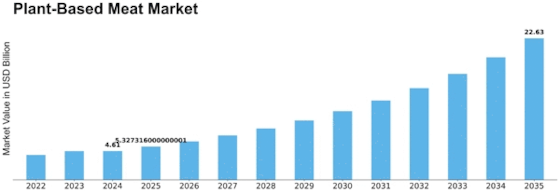

Plant Based Meat Market Size Graph
Author
Author Profile
Snehal Singh
Manager - Research

High acumen in analyzing complex macro & micro markets with more than 6 years of work experience in the field of market research. By implementing her analytical skills in forecasting and estimation into market research reports, she has expertise in Packaging, Construction, and Equipment domains. She handles a team size of 20-25 resources and ensures smooth running of the projects, associated marketing activities, and client servicing.

Leave a Comment

FAQs

What is the current valuation of the Plant-Based Meat Market in 2025?

<p>The Plant-Based Meat Market is valued at approximately 4.61 USD Billion in 2024.</p>

What is the projected market size for the Plant-Based Meat Market by 2035?

The market is projected to reach approximately 22.63 USD Billion by 2035.

What is the expected CAGR for the Plant-Based Meat Market during the forecast period 2025 - 2035?

The expected CAGR for the Plant-Based Meat Market during the forecast period 2025 - 2035 is 15.56%.

Which segments are leading in the Plant-Based Meat Market by type?

Burgers and sausages are leading segments, with valuations of 6.83 USD Billion and 4.56 USD Billion, respectively, in 2035.

What are the primary sources of plant-based meat products?

Soy and pea protein are the primary sources, projected to reach 6.89 USD Billion and 5.75 USD Billion, respectively, by 2035.

How do distribution channels impact the Plant-Based Meat Market?

Supermarkets and food service channels are expected to dominate, with projected valuations of 6.83 USD Billion each by 2035.

What consumer types are driving growth in the Plant-Based Meat Market?

Health-conscious consumers and flexitarians are significant drivers, with projected market sizes of 9.63 USD Billion and 6.89 USD Billion, respectively, by 2035.

Who are the key players in the Plant-Based Meat Market?

Key players include Beyond Meat, Impossible Foods, Nestle, and Tyson Foods, among others.

What is the market performance of meatballs and chicken in the Plant-Based Meat Market?

Meatballs and chicken are projected to reach valuations of 3.45 USD Billion and 4.56 USD Billion, respectively, by 2035.

How does the Plant-Based Meat Market compare to traditional meat markets?

The Plant-Based Meat Market is rapidly expanding, with a projected valuation of 22.63 USD Billion by 2035, indicating a shift in consumer preferences.

Market Summary

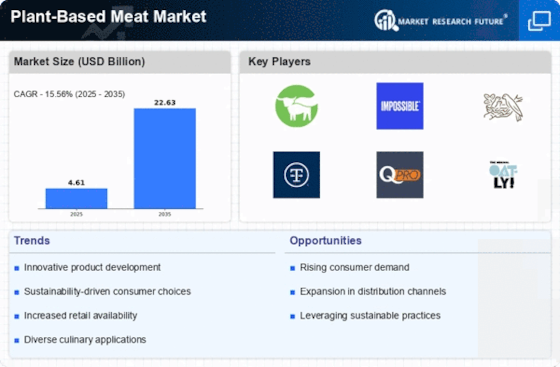
As per Market Research Future analysis, the Plant-Based Meat Market Size was estimated at 4.61 USD Billion in 2024. The Plant-Based Meat industry is projected to grow from 5.327 USD Billion in 2025 to 22.63 USD Billion by 2035, exhibiting a compound annual growth rate (CAGR) of 15.56% during the forecast period 2025 - 2035

Key Market Trends & Highlights

The Plant-Based Meat Market is experiencing robust growth driven by health consciousness and sustainability.

  • North America remains the largest market for plant-based meat, reflecting a strong consumer shift towards healthier diets. Asia-Pacific is emerging as the fastest-growing region, indicating a rising demand for alternative protein sources. Burgers dominate the market as the largest segment, while sausages are rapidly gaining traction as the fastest-growing category. Health awareness and environmental sustainability are key drivers propelling the market forward.

Market Size & Forecast

2024 Market Size 4.61 (USD Billion)
2035 Market Size 22.63 (USD Billion)
CAGR (2025 - 2035) 15.56%
Largest Regional Market Share in 2024 North America

Major Players

Beyond Meat (US), Impossible Foods (US), Nestle (CH), <a href="https://www.tyson.com/products">Tyson Foods</a> (US), Quorn Foods (GB), Oatly (SE), MorningStar Farms (US), Gardein (CA), Field Roast (US)

Market Trends

The Plant-Based Meat Market is currently experiencing a notable transformation, driven by evolving consumer preferences and heightened awareness regarding health and environmental sustainability. These developments strongly reflect prevailing plant based meat market trends across the plant based meat alternatives market. As individuals increasingly seek alternatives to traditional meat products, the demand within the market for plant based meat appears to be on the rise.

This shift is not merely a trend but rather a reflection of a broader movement towards healthier lifestyles and ethical consumption. Companies are responding by innovating and diversifying their offerings, which is also influencing plant based meat companies market share as competition intensifies.

Moreover, the Plant-Based Meat Market is witnessing advancements in technology that enhance the taste, texture, and nutritional profile of products across the global plant-based meat market. Retailers are adapting strategies to expand shelf presence, further supporting market share of plant based meat across mainstream channels.. Retailers are also adapting their strategies, incorporating plant-based options into mainstream grocery aisles and restaurants, thereby normalizing these products in everyday diets. As the market continues to expand, it is likely that further innovations and strategic partnerships will emerge, shaping the future landscape of food consumption.

Health Consciousness

The growing awareness of health issues related to meat consumption is driving consumers towards plant-based alternatives, reinforcing positive plant based meat market growth worldwide. Individuals are increasingly prioritizing diets that promote well-being, leading to a surge in demand for nutritious plant-based options.

Sustainability Focus

Environmental concerns are influencing consumer choices, positioning the plant based meat alternatives market for sustained expansion. These factors continue to shape plant based meat market trends. The Plant-Based Meat Market is positioned to benefit from this trend, as plant-based products generally have a lower environmental impact compared to traditional meat.

Culinary Innovation

The market is witnessing a wave of culinary creativity, strengthening the plant based meat market share by attracting new consumer segments. This innovation is crucial for attracting a diverse consumer base and encouraging trial among meat-eaters.

Plant Based Meat Market Market Drivers

Environmental Sustainability

Concerns regarding environmental sustainability are increasingly influencing consumer choices, thereby impacting the Plant-Based Meat Market. The livestock sector is known to contribute significantly to greenhouse gas emissions, deforestation, and water usage. As awareness of these environmental issues grows, consumers are more inclined to seek sustainable food options. Market data suggests that the plant-based meat sector could potentially reduce carbon footprints by up to 90% compared to traditional meat production. This environmental consciousness is prompting both consumers and businesses to prioritize plant-based alternatives, leading to a surge in demand for products that are perceived as more sustainable. Consequently, the Plant-Based Meat Market is likely to benefit from this shift towards eco-friendly consumption patterns.

Changing Consumer Preferences

Changing consumer preferences are significantly impacting the Plant-Based Meat Market. A notable trend is the increasing acceptance of plant-based diets among various demographics, including flexitarians and omnivores. This shift is driven by a desire for variety in diets and the exploration of new culinary experiences. Market data reveals that nearly 30% of consumers are actively seeking plant-based alternatives, indicating a substantial market opportunity. As more individuals incorporate plant-based options into their meals, the demand for diverse and innovative products is likely to rise. This evolving consumer landscape encourages manufacturers to diversify their offerings, thereby enhancing the overall growth potential of the Plant-Based Meat Market.

Health Awareness and Dietary Shifts

The increasing awareness of health issues related to meat consumption appears to be a driving force in the Plant-Based Meat Market. Consumers are becoming more conscious of the health implications of red and processed meats, which have been linked to various diseases. This shift in dietary preferences is reflected in market data, indicating that the plant-based meat segment is projected to grow at a compound annual growth rate of approximately 15% over the next five years. As individuals seek healthier alternatives, the demand for plant-based options is likely to rise, encouraging manufacturers to innovate and expand their product lines. This trend not only caters to health-conscious consumers but also aligns with broader dietary shifts towards plant-based diets, further solidifying the position of the Plant-Based Meat Market.

Regulatory Support and Policy Initiatives

Regulatory support and policy initiatives are emerging as key drivers for the Plant-Based Meat Market. Governments are increasingly recognizing the need to promote sustainable food systems and are implementing policies that support plant-based alternatives. This includes subsidies for plant-based food production and initiatives aimed at reducing meat consumption for health and environmental reasons. Market data suggests that regions with supportive policies are witnessing faster growth in the plant-based sector. As regulatory frameworks evolve to favor plant-based options, the Plant-Based Meat Market is likely to experience accelerated growth, driven by both consumer demand and governmental support.

Technological Advancements in Food Production

Technological advancements in food production are playing a pivotal role in shaping the Plant-Based Meat Market. Innovations in food technology, such as improved processing techniques and ingredient sourcing, are enhancing the taste, texture, and nutritional profile of plant-based meats. For instance, the development of new protein sources and flavoring agents is making plant-based products more appealing to a broader audience. Market data indicates that investments in food technology are expected to increase, with projections suggesting a rise in the plant-based meat market's value to over 20 billion dollars by 2027. These advancements not only improve product quality but also facilitate the scalability of production, making it easier for companies to meet the growing consumer demand for plant-based options.

Market Segment Insights

By Type: Burgers (Largest) vs. Sausages (Fastest-Growing)

In the Plant-Based Meat Market, burgers hold the largest share, contributing significantly to the overall plant based meat market share. Sausages are emerging rapidly, supporting continued plant based meat market growth. Following closely are Sausages, which are gaining traction among health-conscious and flexitarian consumers. Other categories like Meatballs, Chicken, and Seafood, while integral to the overall market, continue to play a smaller role in market share as they cater to niche markets and specific dietary preferences. Growth trends indicate that while Burgers remain a staple in plant-based diets, Sausages are emerging as a significant contender due to innovative flavors and textures that enhance their appeal. The rising demand for convenient and ready-to-eat options, coupled with health benefits associated with plant-based diets, is driving the growth of these products, particularly among younger demographics.

Burgers: Dominant vs. Sausages: Emerging

Burgers are the dominant force in the Plant-Based Meat Market, favored for their versatility and reminiscent taste profile that mimics traditional <a href="https://www.marketresearchfuture.com/reports/beef-market-11902">beef</a> burgers. They are widely available in various retail channels, making them easy for consumers to access. Innovations in flavors, ingredients, and cooking methods have bolstered their popularity, with brands focusing on high-quality, sustainable ingredients. In contrast, Sausages represent an emerging segment, captivating a growing audience with unique flavor profiles and convenience. They are increasingly featuring in meal solutions, from breakfast options to dinner accompaniments. The evolution of plant-based sauces and seasonings is enhancing their appeal, allowing manufacturers to present a more diverse product offering that attracts a broader consumer base.

By Source: Soy (Largest) vs. Pea Protein (Fastest-Growing)

In the Plant-Based Meat Market, burgers hold the largest share, contributing significantly to the overall plant based meat market share. Sausages are emerging rapidly, supporting continued plant based meat market growth. While soy provides a familiar and reliable choice for manufacturers, pea protein has emerged as a strong competitor, appealing to those with allergies to soy and gluten. It is increasingly favored for its lean protein content and environmental advantages. As health trends evolve, both sources are strategically placed; soy continues to dominate, while pea protein captures the attention of a growing segment of health-conscious consumers.

Soy: Dominant vs. Pea Protein: Emerging

Soy remains the dominant player in the plant-based meat sector, recognized for its rich nutritional profile and ability to blend seamlessly into various meat substitute products. While soy provides a familiar and reliable choice for manufacturers, pea protein has emerged as a strong competitor, appealing to those with allergies to soy and gluten. It is increasingly favored for its lean protein content and environmental advantages. As health trends evolve, both sources are strategically placed; soy continues to dominate, while pea protein captures the attention of a growing segment of health-conscious consumers.

By Distribution Channel: Supermarkets (Largest) vs. Online Retail (Fastest-Growing)

Supermarkets continue to dominate distribution, though online retail is gaining traction, influencing market share of plant based meat across channels. They remain the preferred choice for consumers due to their accessibility and variety of products. Online retail is emerging rapidly, attracting tech-savvy consumers looking for convenience and a wide selection of plant-based options. Specialty stores and food service channels also contribute to the landscape, but their shares are comparatively smaller. Convenience stores, while traditionally limited in choices, are also expanding their offerings to keep up with consumer trends. Growth trends in the plant-based meat distribution channels reveal an intriguing shift towards online retail. As more consumers embrace e-commerce, this channel is becoming critical for product availability and sales. Rising health awareness and dietary preferences are driving consumers to seek plant-based meat options, and the convenience of shopping online is appealing to many. Supermarkets are not losing relevance; however, they face pressure to adapt their assortments and promotions to compete with the burgeoning online market.

Supermarkets (Dominant) vs. Online Retail (Emerging)

Supermarkets dominate the distribution of plant-based meat products due to their established infrastructure and relationships with consumers. They tend to offer a wide range of brands and products, making them a one-stop shop for health-conscious consumers. However, as preferences shift and more shoppers turn to online platforms for their groceries, supermarkets are evolving by enhancing their online presence and delivery capabilities. On the other hand, online retail is quickly becoming a formidable player in the market, appealing primarily to younger consumers who favor the convenience and broad selection that e-commerce provides. Online platforms benefit from lower overhead costs and the ability to reach niche markets, making them a key emerging channel in the plant-based meat sector.

By Consumer Type: Flexitarians (Largest) vs. Vegans (Fastest-Growing)

In the Plant-Based Meat Market, the consumer type segment is dominated by Flexitarians, who account for a significant portion of the market. Following closely are Vegetarians and Health Conscious Consumers, who contribute to the growing demand for meat alternatives. Vegans, while currently a smaller segment, are rapidly gaining traction, highlighting a diverse consumer base that drives market evolution. The distribution reflects a shift towards more varied dietary preferences, with considerable room for growth in each segment. Growth trends in the consumer type segment are largely influenced by evolving dietary choices and an increased health consciousness among consumers. The Flexitarian approach continues to appeal to a broad audience, promoting flexibility in meat consumption while integrating plant-based options. Meanwhile, the <a href="https://www.marketresearchfuture.com/reports/vegan-food-market-11517">Vegan</a> segment is emerging as the fastest-growing due to heightened awareness of animal welfare and environmental issues, leading to a sustained interest in plant-based diets. This trend is expected to accelerate as more brands innovate and cater to these consumer preferences.

Flexitarians (Dominant) vs. Vegans (Emerging)

Flexitarians are the dominant force in the Plant-Based Meat Market, characterized by their willingness to consume both plant-based products and meat, often to enjoy the health benefits and reduce their environmental footprint. This group is typically motivated by a desire for balance in their diet, leading to a broad acceptance of meat alternatives as they enjoy the taste and convenience. On the other hand, Vegans are classified as an emerging consumer segment, with a strong commitment to plant-based diets that exclude all animal products. This growing segment is driven by ethical concerns and a quest for sustainable living, which has encouraged brands to innovate and expand their offerings specifically tailored to vegan consumers. Both segments indicate a positive market trend, enhancing the diversity of plant-based options available.

Get more detailed insights about Plant Based Meat Market Research Report-Forecast to 2035

Regional Insights

The global plant-based meat market demonstrates varied regional growth patterns. North America leads the plant based meat market share, followed by Europe. Asia Pacific—including emerging demand in the India plant based meat market—continues to show strong growth potential due to changing dietary habits and urbanization.

The Regional segment of the Plant-Based Meat Market exhibits notable growth trends, with North America leading the market valued at 4.0 USD Billion in 2024 and expected to rise to 11.0 USD Billion by 2035, representing a significant majority holding within the market.

Europe follows closely, valued at 3.0 USD Billion in 2024 and projected to reach 9.0 USD Billion by 2035, highlighting strong consumer preference for plant-based alternatives driven by health and environmental concerns.

South America shows a smaller market at 0.8 USD Billion in 2024 and aims for 2.5 USD Billion in 2035, reflecting emerging interest in sustainable protein sources.

The Asia Pacific region is valued at 1.8 USD Billion in 2024, anticipated to grow to 4.5 USD Billion by 2035, with rising urbanization and changing dietary patterns playing key roles in its expansion.

Meanwhile, the Middle East and Africa region, though currently valued at 0.57 USD Billion in 2024, is projected to reach 1.0 USD Billion by 2035, which indicates increasing market interest but still represents a smaller share compared to other regions. This segmentation illustrates varying demand dynamics and consumer awareness levels, creating diverse opportunities for market growth across global regions.

Key Players and Competitive Insights

The Plant-Based Meat Market has experienced significant growth in recent years, driven by increasing consumer demand for healthier and more sustainable food options. As more individuals adopt vegetarian and vegan diets or seek to reduce their meat consumption for health, environmental, or ethical reasons, the competition within this market has intensified. Numerous companies are entering the space, leading to a diverse range of products aimed at mimicking traditional meat in flavor, texture, and appearance. This hyper-competitive environment has prompted firms to innovate rapidly while also focusing on brand loyalty and consumer preferences. The presence of major food manufacturers and start-ups alike adds to the dynamic landscape, making it crucial for companies to differentiate their offerings and strategically position themselves within the market.

Boca, a prominent player in the Plant-Based Meat Market, has established itself as a significant option for consumers looking for meat alternatives. Known for its broad range of products, including veggie burgers, sausages, and ground meat substitutes, Boca has built a strong reputation for quality and taste. The company leverages its long-standing presence in the market to foster brand loyalty through innovative marketing strategies that resonate with health-conscious consumers. Boca’s strengths lie in its ability to offer a variety of options that cater to differing dietary preferences without compromising on flavor, thus appealing to a wide array of consumers from strict vegetarians to occasional meat-reducers. Boca continues to strengthen its market presence by emphasizing product quality and sustainable practices, solidifying its position as a leader in the plant-based meat segment globally.

Field Roast is another key competitor within the Plant-Based Meat Market, distinguished by its focus on creating artisanal plant-based products. Offering a range of items such as grain-based sausages, burgers, and deli slices, Field Roast stands out through its commitment to high-quality ingredients and bold flavors. The company cultivates a strong market presence by appealing to consumers seeking gourmet plant-based options. Field Roast’s strengths are evident in its innovative product offerings that combine traditional culinary methods with plant-based alternatives, resulting in a unique consumption experience. Additionally, the firm has engaged in strategic mergers and acquisitions to expand its reach and diversify its product portfolio, thereby enhancing its position in the competitive landscape of the global market. By emphasizing its commitment to sustainability and high-quality production processes, Field Roast interacts effectively with a growing demographic interested in ethical eating, further establishing its role as a pivotal player in the plant-based meat market on a global scale.

Key Companies in the Plant Based Meat Market include

Industry Developments

Recent developments in the Plant-Based Meat Market indicate significant shifts, driven by increasing consumer demand for sustainable alternatives to meat.

Companies such as Impossible Foods and Beyond Meat have continued to expand their product offerings and distribution channels, announcing partnerships with major fast-food chains to incorporate plant-based options on their menus.

In October 2023, Tyson Foods reported a strategic pivot, allocating resources toward plant-based products to align with evolving consumer preferences.

Furthermore, in September 2023, Daring Foods successfully raised substantial funding to enhance production capabilities and product innovation. The market has also seen a merger, as Maple Leaf Foods acquired a minority stake in Oumph! in July 2023, aiming to enhance its plant-based portfolio.

As of 2021, projections estimated the Plant-Based Meat Market to reach a valuation of approximately USD 27.9 billion by 2025, driven by a surge in health consciousness and environmental concerns among consumers.

Companies like MorningStar Farms and Lightlife have ramped up their Research and Development efforts to cater to evolving tastes, further amplifying competition in the plant-based sector.


Future Outlook

Plant Based Meat Market Future Outlook

The Plant-Based Meat Market is projected to grow at a 15.56% CAGR from 2025 to 2035, driven by rising consumer demand, sustainability trends, and technological advancements.

New opportunities lie in:

  • <p>Expansion into emerging markets with localized products Development of innovative plant-based protein blends Strategic partnerships with food service providers for menu integration</p>

By 2035, the market is expected to solidify its position as a key player in the global food industry.

Market Segmentation

Plant Based Meat Market Type Outlook

  • Burgers
  • Sausages
  • Meatballs
  • Chicken
  • Seafood

Plant Based Meat Market Source Outlook

  • Soy
  • Pea Protein
  • Wheat Gluten
  • Jackfruit
  • Mushrooms

Plant Based Meat Market Consumer Type Outlook

  • Vegetarians
  • Vegans
  • Flexitarians
  • Meat Lovers
  • Health Conscious Consumers

Plant Based Meat Market Distribution Channel Outlook

  • Supermarkets
  • Online Retail
  • Specialty Stores
  • Food Service
  • Convenience Stores

Report Scope

MARKET SIZE 2024 4.61(USD Billion)
MARKET SIZE 2025 5.327(USD Billion)
MARKET SIZE 2035 22.63(USD Billion)
COMPOUND ANNUAL GROWTH RATE (CAGR) 15.56% (2025 - 2035)
REPORT COVERAGE Revenue Forecast, Competitive Landscape, Growth Factors, and Trends
BASE YEAR 2024
Market Forecast Period 2025 - 2035
Historical Data 2019 - 2024
Market Forecast Units USD Billion
Key Companies Profiled Beyond Meat (US), Impossible Foods (US), Nestle (CH), Tyson Foods (US), Quorn Foods (GB), Oatly (SE), MorningStar Farms (US), Gardein (CA), Field Roast (US)
Segments Covered Product Type, Source, Distribution Channel, Consumer Type, Regional
Key Market Opportunities Growing consumer demand for sustainable protein sources drives innovation in the Plant-Based Meat Market.
Key Market Dynamics Rising consumer demand for sustainable protein alternatives drives innovation and competition in the Plant-Based Meat Market.
Countries Covered North America, Europe, APAC, South America, MEA

FAQs

What is the current valuation of the Plant-Based Meat Market in 2025?

<p>The Plant-Based Meat Market is valued at approximately 4.61 USD Billion in 2024.</p>

What is the projected market size for the Plant-Based Meat Market by 2035?

The market is projected to reach approximately 22.63 USD Billion by 2035.

What is the expected CAGR for the Plant-Based Meat Market during the forecast period 2025 - 2035?

The expected CAGR for the Plant-Based Meat Market during the forecast period 2025 - 2035 is 15.56%.

Which segments are leading in the Plant-Based Meat Market by type?

Burgers and sausages are leading segments, with valuations of 6.83 USD Billion and 4.56 USD Billion, respectively, in 2035.

What are the primary sources of plant-based meat products?

Soy and pea protein are the primary sources, projected to reach 6.89 USD Billion and 5.75 USD Billion, respectively, by 2035.

How do distribution channels impact the Plant-Based Meat Market?

Supermarkets and food service channels are expected to dominate, with projected valuations of 6.83 USD Billion each by 2035.

What consumer types are driving growth in the Plant-Based Meat Market?

Health-conscious consumers and flexitarians are significant drivers, with projected market sizes of 9.63 USD Billion and 6.89 USD Billion, respectively, by 2035.

Who are the key players in the Plant-Based Meat Market?

Key players include Beyond Meat, Impossible Foods, Nestle, and Tyson Foods, among others.

What is the market performance of meatballs and chicken in the Plant-Based Meat Market?

Meatballs and chicken are projected to reach valuations of 3.45 USD Billion and 4.56 USD Billion, respectively, by 2035.

How does the Plant-Based Meat Market compare to traditional meat markets?

The Plant-Based Meat Market is rapidly expanding, with a projected valuation of 22.63 USD Billion by 2035, indicating a shift in consumer preferences.

  1. SECTION I: EXECUTIVE SUMMARY AND KEY HIGHLIGHTS
    1. | 1.1 EXECUTIVE SUMMARY
    2. | | 1.1.1 Market Overview
    3. | | 1.1.2 Key Findings
    4. | | 1.1.3 Market Segmentation
    5. | | 1.1.4 Competitive Landscape
    6. | | 1.1.5 Challenges and Opportunities
    7. | | 1.1.6 Future Outlook
  2. SECTION II: SCOPING, METHODOLOGY AND MARKET STRUCTURE
    1. | 2.1 MARKET INTRODUCTION
    2. | | 2.1.1 Definition
    3. | | 2.1.2 Scope of the study
    4. | | | 2.1.2.1 Research Objective
    5. | | | 2.1.2.2 Assumption
    6. | | | 2.1.2.3 Limitations
    7. | 2.2 RESEARCH METHODOLOGY
    8. | | 2.2.1 Overview
    9. | | 2.2.2 Data Mining
    10. | | 2.2.3 Secondary Research
    11. | | 2.2.4 Primary Research
    12. | | | 2.2.4.1 Primary Interviews and Information Gathering Process
    13. | | | 2.2.4.2 Breakdown of Primary Respondents
    14. | | 2.2.5 Forecasting Model
    15. | | 2.2.6 Market Size Estimation
    16. | | | 2.2.6.1 Bottom-Up Approach
    17. | | | 2.2.6.2 Top-Down Approach
    18. | | 2.2.7 Data Triangulation
    19. | | 2.2.8 Validation
  3. SECTION III: QUALITATIVE ANALYSIS
    1. | 3.1 MARKET DYNAMICS
    2. | | 3.1.1 Overview
    3. | | 3.1.2 Drivers
    4. | | 3.1.3 Restraints
    5. | | 3.1.4 Opportunities
    6. | 3.2 MARKET FACTOR ANALYSIS
    7. | | 3.2.1 Value chain Analysis
    8. | | 3.2.2 Porter's Five Forces Analysis
    9. | | | 3.2.2.1 Bargaining Power of Suppliers
    10. | | | 3.2.2.2 Bargaining Power of Buyers
    11. | | | 3.2.2.3 Threat of New Entrants
    12. | | | 3.2.2.4 Threat of Substitutes
    13. | | | 3.2.2.5 Intensity of Rivalry
    14. | | 3.2.3 COVID-19 Impact Analysis
    15. | | | 3.2.3.1 Market Impact Analysis
    16. | | | 3.2.3.2 Regional Impact
    17. | | | 3.2.3.3 Opportunity and Threat Analysis
  4. SECTION IV: QUANTITATIVE ANALYSIS
    1. | 4.1 Food, Beverages & Nutrition, BY Type (USD Billion)
    2. | | 4.1.1 Burgers
    3. | | 4.1.2 Sausages
    4. | | 4.1.3 Meatballs
    5. | | 4.1.4 Chicken
    6. | | 4.1.5 Seafood
    7. | 4.2 Food, Beverages & Nutrition, BY Source (USD Billion)
    8. | | 4.2.1 Soy
    9. | | 4.2.2 Pea Protein
    10. | | 4.2.3 Wheat Gluten
    11. | | 4.2.4 Jackfruit
    12. | | 4.2.5 Mushrooms
    13. | 4.3 Food, Beverages & Nutrition, BY Distribution Channel (USD Billion)
    14. | | 4.3.1 Supermarkets
    15. | | 4.3.2 Online Retail
    16. | | 4.3.3 Specialty Stores
    17. | | 4.3.4 Food Service
    18. | | 4.3.5 Convenience Stores
    19. | 4.4 Food, Beverages & Nutrition, BY Consumer Type (USD Billion)
    20. | | 4.4.1 Vegetarians
    21. | | 4.4.2 Vegans
    22. | | 4.4.3 Flexitarians
    23. | | 4.4.4 Meat Lovers
    24. | | 4.4.5 Health Conscious Consumers
    25. | 4.5 Food, Beverages & Nutrition, BY Region (USD Billion)
    26. | | 4.5.1 North America
    27. | | | 4.5.1.1 US
    28. | | | 4.5.1.2 Canada
    29. | | 4.5.2 Europe
    30. | | | 4.5.2.1 Germany
    31. | | | 4.5.2.2 UK
    32. | | | 4.5.2.3 France
    33. | | | 4.5.2.4 Russia
    34. | | | 4.5.2.5 Italy
    35. | | | 4.5.2.6 Spain
    36. | | | 4.5.2.7 Rest of Europe
    37. | | 4.5.3 APAC
    38. | | | 4.5.3.1 China
    39. | | | 4.5.3.2 India
    40. | | | 4.5.3.3 Japan
    41. | | | 4.5.3.4 South Korea
    42. | | | 4.5.3.5 Malaysia
    43. | | | 4.5.3.6 Thailand
    44. | | | 4.5.3.7 Indonesia
    45. | | | 4.5.3.8 Rest of APAC
    46. | | 4.5.4 South America
    47. | | | 4.5.4.1 Brazil
    48. | | | 4.5.4.2 Mexico
    49. | | | 4.5.4.3 Argentina
    50. | | | 4.5.4.4 Rest of South America
    51. | | 4.5.5 MEA
    52. | | | 4.5.5.1 GCC Countries
    53. | | | 4.5.5.2 South Africa
    54. | | | 4.5.5.3 Rest of MEA
  5. SECTION V: COMPETITIVE ANALYSIS
    1. | 5.1 Competitive Landscape
    2. | | 5.1.1 Overview
    3. | | 5.1.2 Competitive Analysis
    4. | | 5.1.3 Market share Analysis
    5. | | 5.1.4 Major Growth Strategy in the Food, Beverages & Nutrition
    6. | | 5.1.5 Competitive Benchmarking
    7. | | 5.1.6 Leading Players in Terms of Number of Developments in the Food, Beverages & Nutrition
    8. | | 5.1.7 Key developments and growth strategies
    9. | | | 5.1.7.1 New Product Launch/Service Deployment
    10. | | | 5.1.7.2 Merger & Acquisitions
    11. | | | 5.1.7.3 Joint Ventures
    12. | | 5.1.8 Major Players Financial Matrix
    13. | | | 5.1.8.1 Sales and Operating Income
    14. | | | 5.1.8.2 Major Players R&D Expenditure. 2023
    15. | 5.2 Company Profiles
    16. | | 5.2.1 Beyond Meat (US)
    17. | | | 5.2.1.1 Financial Overview
    18. | | | 5.2.1.2 Products Offered
    19. | | | 5.2.1.3 Key Developments
    20. | | | 5.2.1.4 SWOT Analysis
    21. | | | 5.2.1.5 Key Strategies
    22. | | 5.2.2 Impossible Foods (US)
    23. | | | 5.2.2.1 Financial Overview
    24. | | | 5.2.2.2 Products Offered
    25. | | | 5.2.2.3 Key Developments
    26. | | | 5.2.2.4 SWOT Analysis
    27. | | | 5.2.2.5 Key Strategies
    28. | | 5.2.3 Nestle (CH)
    29. | | | 5.2.3.1 Financial Overview
    30. | | | 5.2.3.2 Products Offered
    31. | | | 5.2.3.3 Key Developments
    32. | | | 5.2.3.4 SWOT Analysis
    33. | | | 5.2.3.5 Key Strategies
    34. | | 5.2.4 Tyson Foods (US)
    35. | | | 5.2.4.1 Financial Overview
    36. | | | 5.2.4.2 Products Offered
    37. | | | 5.2.4.3 Key Developments
    38. | | | 5.2.4.4 SWOT Analysis
    39. | | | 5.2.4.5 Key Strategies
    40. | | 5.2.5 Quorn Foods (GB)
    41. | | | 5.2.5.1 Financial Overview
    42. | | | 5.2.5.2 Products Offered
    43. | | | 5.2.5.3 Key Developments
    44. | | | 5.2.5.4 SWOT Analysis
    45. | | | 5.2.5.5 Key Strategies
    46. | | 5.2.6 Oatly (SE)
    47. | | | 5.2.6.1 Financial Overview
    48. | | | 5.2.6.2 Products Offered
    49. | | | 5.2.6.3 Key Developments
    50. | | | 5.2.6.4 SWOT Analysis
    51. | | | 5.2.6.5 Key Strategies
    52. | | 5.2.7 MorningStar Farms (US)
    53. | | | 5.2.7.1 Financial Overview
    54. | | | 5.2.7.2 Products Offered
    55. | | | 5.2.7.3 Key Developments
    56. | | | 5.2.7.4 SWOT Analysis
    57. | | | 5.2.7.5 Key Strategies
    58. | | 5.2.8 Gardein (CA)
    59. | | | 5.2.8.1 Financial Overview
    60. | | | 5.2.8.2 Products Offered
    61. | | | 5.2.8.3 Key Developments
    62. | | | 5.2.8.4 SWOT Analysis
    63. | | | 5.2.8.5 Key Strategies
    64. | | 5.2.9 Field Roast (US)
    65. | | | 5.2.9.1 Financial Overview
    66. | | | 5.2.9.2 Products Offered
    67. | | | 5.2.9.3 Key Developments
    68. | | | 5.2.9.4 SWOT Analysis
    69. | | | 5.2.9.5 Key Strategies
    70. | 5.3 Appendix
    71. | | 5.3.1 References
    72. | | 5.3.2 Related Reports
  6. LIST OF FIGURES
    1. | 6.1 MARKET SYNOPSIS
    2. | 6.2 NORTH AMERICA MARKET ANALYSIS
    3. | 6.3 US MARKET ANALYSIS BY TYPE
    4. | 6.4 US MARKET ANALYSIS BY SOURCE
    5. | 6.5 US MARKET ANALYSIS BY DISTRIBUTION CHANNEL
    6. | 6.6 US MARKET ANALYSIS BY CONSUMER TYPE
    7. | 6.7 CANADA MARKET ANALYSIS BY TYPE
    8. | 6.8 CANADA MARKET ANALYSIS BY SOURCE
    9. | 6.9 CANADA MARKET ANALYSIS BY DISTRIBUTION CHANNEL
    10. | 6.10 CANADA MARKET ANALYSIS BY CONSUMER TYPE
    11. | 6.11 EUROPE MARKET ANALYSIS
    12. | 6.12 GERMANY MARKET ANALYSIS BY TYPE
    13. | 6.13 GERMANY MARKET ANALYSIS BY SOURCE
    14. | 6.14 GERMANY MARKET ANALYSIS BY DISTRIBUTION CHANNEL
    15. | 6.15 GERMANY MARKET ANALYSIS BY CONSUMER TYPE
    16. | 6.16 UK MARKET ANALYSIS BY TYPE
    17. | 6.17 UK MARKET ANALYSIS BY SOURCE
    18. | 6.18 UK MARKET ANALYSIS BY DISTRIBUTION CHANNEL
    19. | 6.19 UK MARKET ANALYSIS BY CONSUMER TYPE
    20. | 6.20 FRANCE MARKET ANALYSIS BY TYPE
    21. | 6.21 FRANCE MARKET ANALYSIS BY SOURCE
    22. | 6.22 FRANCE MARKET ANALYSIS BY DISTRIBUTION CHANNEL
    23. | 6.23 FRANCE MARKET ANALYSIS BY CONSUMER TYPE
    24. | 6.24 RUSSIA MARKET ANALYSIS BY TYPE
    25. | 6.25 RUSSIA MARKET ANALYSIS BY SOURCE
    26. | 6.26 RUSSIA MARKET ANALYSIS BY DISTRIBUTION CHANNEL
    27. | 6.27 RUSSIA MARKET ANALYSIS BY CONSUMER TYPE
    28. | 6.28 ITALY MARKET ANALYSIS BY TYPE
    29. | 6.29 ITALY MARKET ANALYSIS BY SOURCE
    30. | 6.30 ITALY MARKET ANALYSIS BY DISTRIBUTION CHANNEL
    31. | 6.31 ITALY MARKET ANALYSIS BY CONSUMER TYPE
    32. | 6.32 SPAIN MARKET ANALYSIS BY TYPE
    33. | 6.33 SPAIN MARKET ANALYSIS BY SOURCE
    34. | 6.34 SPAIN MARKET ANALYSIS BY DISTRIBUTION CHANNEL
    35. | 6.35 SPAIN MARKET ANALYSIS BY CONSUMER TYPE
    36. | 6.36 REST OF EUROPE MARKET ANALYSIS BY TYPE
    37. | 6.37 REST OF EUROPE MARKET ANALYSIS BY SOURCE
    38. | 6.38 REST OF EUROPE MARKET ANALYSIS BY DISTRIBUTION CHANNEL
    39. | 6.39 REST OF EUROPE MARKET ANALYSIS BY CONSUMER TYPE
    40. | 6.40 APAC MARKET ANALYSIS
    41. | 6.41 CHINA MARKET ANALYSIS BY TYPE
    42. | 6.42 CHINA MARKET ANALYSIS BY SOURCE
    43. | 6.43 CHINA MARKET ANALYSIS BY DISTRIBUTION CHANNEL
    44. | 6.44 CHINA MARKET ANALYSIS BY CONSUMER TYPE
    45. | 6.45 INDIA MARKET ANALYSIS BY TYPE
    46. | 6.46 INDIA MARKET ANALYSIS BY SOURCE
    47. | 6.47 INDIA MARKET ANALYSIS BY DISTRIBUTION CHANNEL
    48. | 6.48 INDIA MARKET ANALYSIS BY CONSUMER TYPE
    49. | 6.49 JAPAN MARKET ANALYSIS BY TYPE
    50. | 6.50 JAPAN MARKET ANALYSIS BY SOURCE
    51. | 6.51 JAPAN MARKET ANALYSIS BY DISTRIBUTION CHANNEL
    52. | 6.52 JAPAN MARKET ANALYSIS BY CONSUMER TYPE
    53. | 6.53 SOUTH KOREA MARKET ANALYSIS BY TYPE
    54. | 6.54 SOUTH KOREA MARKET ANALYSIS BY SOURCE
    55. | 6.55 SOUTH KOREA MARKET ANALYSIS BY DISTRIBUTION CHANNEL
    56. | 6.56 SOUTH KOREA MARKET ANALYSIS BY CONSUMER TYPE
    57. | 6.57 MALAYSIA MARKET ANALYSIS BY TYPE
    58. | 6.58 MALAYSIA MARKET ANALYSIS BY SOURCE
    59. | 6.59 MALAYSIA MARKET ANALYSIS BY DISTRIBUTION CHANNEL
    60. | 6.60 MALAYSIA MARKET ANALYSIS BY CONSUMER TYPE
    61. | 6.61 THAILAND MARKET ANALYSIS BY TYPE
    62. | 6.62 THAILAND MARKET ANALYSIS BY SOURCE
    63. | 6.63 THAILAND MARKET ANALYSIS BY DISTRIBUTION CHANNEL
    64. | 6.64 THAILAND MARKET ANALYSIS BY CONSUMER TYPE
    65. | 6.65 INDONESIA MARKET ANALYSIS BY TYPE
    66. | 6.66 INDONESIA MARKET ANALYSIS BY SOURCE
    67. | 6.67 INDONESIA MARKET ANALYSIS BY DISTRIBUTION CHANNEL
    68. | 6.68 INDONESIA MARKET ANALYSIS BY CONSUMER TYPE
    69. | 6.69 REST OF APAC MARKET ANALYSIS BY TYPE
    70. | 6.70 REST OF APAC MARKET ANALYSIS BY SOURCE
    71. | 6.71 REST OF APAC MARKET ANALYSIS BY DISTRIBUTION CHANNEL
    72. | 6.72 REST OF APAC MARKET ANALYSIS BY CONSUMER TYPE
    73. | 6.73 SOUTH AMERICA MARKET ANALYSIS
    74. | 6.74 BRAZIL MARKET ANALYSIS BY TYPE
    75. | 6.75 BRAZIL MARKET ANALYSIS BY SOURCE
    76. | 6.76 BRAZIL MARKET ANALYSIS BY DISTRIBUTION CHANNEL
    77. | 6.77 BRAZIL MARKET ANALYSIS BY CONSUMER TYPE
    78. | 6.78 MEXICO MARKET ANALYSIS BY TYPE
    79. | 6.79 MEXICO MARKET ANALYSIS BY SOURCE
    80. | 6.80 MEXICO MARKET ANALYSIS BY DISTRIBUTION CHANNEL
    81. | 6.81 MEXICO MARKET ANALYSIS BY CONSUMER TYPE
    82. | 6.82 ARGENTINA MARKET ANALYSIS BY TYPE
    83. | 6.83 ARGENTINA MARKET ANALYSIS BY SOURCE
    84. | 6.84 ARGENTINA MARKET ANALYSIS BY DISTRIBUTION CHANNEL
    85. | 6.85 ARGENTINA MARKET ANALYSIS BY CONSUMER TYPE
    86. | 6.86 REST OF SOUTH AMERICA MARKET ANALYSIS BY TYPE
    87. | 6.87 REST OF SOUTH AMERICA MARKET ANALYSIS BY SOURCE
    88. | 6.88 REST OF SOUTH AMERICA MARKET ANALYSIS BY DISTRIBUTION CHANNEL
    89. | 6.89 REST OF SOUTH AMERICA MARKET ANALYSIS BY CONSUMER TYPE
    90. | 6.90 MEA MARKET ANALYSIS
    91. | 6.91 GCC COUNTRIES MARKET ANALYSIS BY TYPE
    92. | 6.92 GCC COUNTRIES MARKET ANALYSIS BY SOURCE
    93. | 6.93 GCC COUNTRIES MARKET ANALYSIS BY DISTRIBUTION CHANNEL
    94. | 6.94 GCC COUNTRIES MARKET ANALYSIS BY CONSUMER TYPE
    95. | 6.95 SOUTH AFRICA MARKET ANALYSIS BY TYPE
    96. | 6.96 SOUTH AFRICA MARKET ANALYSIS BY SOURCE
    97. | 6.97 SOUTH AFRICA MARKET ANALYSIS BY DISTRIBUTION CHANNEL
    98. | 6.98 SOUTH AFRICA MARKET ANALYSIS BY CONSUMER TYPE
    99. | 6.99 REST OF MEA MARKET ANALYSIS BY TYPE
    100. | 6.100 REST OF MEA MARKET ANALYSIS BY SOURCE
    101. | 6.101 REST OF MEA MARKET ANALYSIS BY DISTRIBUTION CHANNEL
    102. | 6.102 REST OF MEA MARKET ANALYSIS BY CONSUMER TYPE
    103. | 6.103 KEY BUYING CRITERIA OF FOOD, BEVERAGES & NUTRITION
    104. | 6.104 RESEARCH PROCESS OF MRFR
    105. | 6.105 DRO ANALYSIS OF FOOD, BEVERAGES & NUTRITION
    106. | 6.106 DRIVERS IMPACT ANALYSIS: FOOD, BEVERAGES & NUTRITION
    107. | 6.107 RESTRAINTS IMPACT ANALYSIS: FOOD, BEVERAGES & NUTRITION
    108. | 6.108 SUPPLY / VALUE CHAIN: FOOD, BEVERAGES & NUTRITION
    109. | 6.109 FOOD, BEVERAGES & NUTRITION, BY TYPE, 2024 (% SHARE)
    110. | 6.110 FOOD, BEVERAGES & NUTRITION, BY TYPE, 2024 TO 2035 (USD Billion)
    111. | 6.111 FOOD, BEVERAGES & NUTRITION, BY SOURCE, 2024 (% SHARE)
    112. | 6.112 FOOD, BEVERAGES & NUTRITION, BY SOURCE, 2024 TO 2035 (USD Billion)
    113. | 6.113 FOOD, BEVERAGES & NUTRITION, BY DISTRIBUTION CHANNEL, 2024 (% SHARE)
    114. | 6.114 FOOD, BEVERAGES & NUTRITION, BY DISTRIBUTION CHANNEL, 2024 TO 2035 (USD Billion)
    115. | 6.115 FOOD, BEVERAGES & NUTRITION, BY CONSUMER TYPE, 2024 (% SHARE)
    116. | 6.116 FOOD, BEVERAGES & NUTRITION, BY CONSUMER TYPE, 2024 TO 2035 (USD Billion)
    117. | 6.117 BENCHMARKING OF MAJOR COMPETITORS
  7. LIST OF TABLES
    1. | 7.1 LIST OF ASSUMPTIONS
    2. | | 7.1.1
    3. | 7.2 North America MARKET SIZE ESTIMATES; FORECAST
    4. | | 7.2.1 BY TYPE, 2025-2035 (USD Billion)
    5. | | 7.2.2 BY SOURCE, 2025-2035 (USD Billion)
    6. | | 7.2.3 BY DISTRIBUTION CHANNEL, 2025-2035 (USD Billion)
    7. | | 7.2.4 BY CONSUMER TYPE, 2025-2035 (USD Billion)
    8. | 7.3 US MARKET SIZE ESTIMATES; FORECAST
    9. | | 7.3.1 BY TYPE, 2025-2035 (USD Billion)
    10. | | 7.3.2 BY SOURCE, 2025-2035 (USD Billion)
    11. | | 7.3.3 BY DISTRIBUTION CHANNEL, 2025-2035 (USD Billion)
    12. | | 7.3.4 BY CONSUMER TYPE, 2025-2035 (USD Billion)
    13. | 7.4 Canada MARKET SIZE ESTIMATES; FORECAST
    14. | | 7.4.1 BY TYPE, 2025-2035 (USD Billion)
    15. | | 7.4.2 BY SOURCE, 2025-2035 (USD Billion)
    16. | | 7.4.3 BY DISTRIBUTION CHANNEL, 2025-2035 (USD Billion)
    17. | | 7.4.4 BY CONSUMER TYPE, 2025-2035 (USD Billion)
    18. | 7.5 Europe MARKET SIZE ESTIMATES; FORECAST
    19. | | 7.5.1 BY TYPE, 2025-2035 (USD Billion)
    20. | | 7.5.2 BY SOURCE, 2025-2035 (USD Billion)
    21. | | 7.5.3 BY DISTRIBUTION CHANNEL, 2025-2035 (USD Billion)
    22. | | 7.5.4 BY CONSUMER TYPE, 2025-2035 (USD Billion)
    23. | 7.6 Germany MARKET SIZE ESTIMATES; FORECAST
    24. | | 7.6.1 BY TYPE, 2025-2035 (USD Billion)
    25. | | 7.6.2 BY SOURCE, 2025-2035 (USD Billion)
    26. | | 7.6.3 BY DISTRIBUTION CHANNEL, 2025-2035 (USD Billion)
    27. | | 7.6.4 BY CONSUMER TYPE, 2025-2035 (USD Billion)
    28. | 7.7 UK MARKET SIZE ESTIMATES; FORECAST
    29. | | 7.7.1 BY TYPE, 2025-2035 (USD Billion)
    30. | | 7.7.2 BY SOURCE, 2025-2035 (USD Billion)
    31. | | 7.7.3 BY DISTRIBUTION CHANNEL, 2025-2035 (USD Billion)
    32. | | 7.7.4 BY CONSUMER TYPE, 2025-2035 (USD Billion)
    33. | 7.8 France MARKET SIZE ESTIMATES; FORECAST
    34. | | 7.8.1 BY TYPE, 2025-2035 (USD Billion)
    35. | | 7.8.2 BY SOURCE, 2025-2035 (USD Billion)
    36. | | 7.8.3 BY DISTRIBUTION CHANNEL, 2025-2035 (USD Billion)
    37. | | 7.8.4 BY CONSUMER TYPE, 2025-2035 (USD Billion)
    38. | 7.9 Russia MARKET SIZE ESTIMATES; FORECAST
    39. | | 7.9.1 BY TYPE, 2025-2035 (USD Billion)
    40. | | 7.9.2 BY SOURCE, 2025-2035 (USD Billion)
    41. | | 7.9.3 BY DISTRIBUTION CHANNEL, 2025-2035 (USD Billion)
    42. | | 7.9.4 BY CONSUMER TYPE, 2025-2035 (USD Billion)
    43. | 7.10 Italy MARKET SIZE ESTIMATES; FORECAST
    44. | | 7.10.1 BY TYPE, 2025-2035 (USD Billion)
    45. | | 7.10.2 BY SOURCE, 2025-2035 (USD Billion)
    46. | | 7.10.3 BY DISTRIBUTION CHANNEL, 2025-2035 (USD Billion)
    47. | | 7.10.4 BY CONSUMER TYPE, 2025-2035 (USD Billion)
    48. | 7.11 Spain MARKET SIZE ESTIMATES; FORECAST
    49. | | 7.11.1 BY TYPE, 2025-2035 (USD Billion)
    50. | | 7.11.2 BY SOURCE, 2025-2035 (USD Billion)
    51. | | 7.11.3 BY DISTRIBUTION CHANNEL, 2025-2035 (USD Billion)
    52. | | 7.11.4 BY CONSUMER TYPE, 2025-2035 (USD Billion)
    53. | 7.12 Rest of Europe MARKET SIZE ESTIMATES; FORECAST
    54. | | 7.12.1 BY TYPE, 2025-2035 (USD Billion)
    55. | | 7.12.2 BY SOURCE, 2025-2035 (USD Billion)
    56. | | 7.12.3 BY DISTRIBUTION CHANNEL, 2025-2035 (USD Billion)
    57. | | 7.12.4 BY CONSUMER TYPE, 2025-2035 (USD Billion)
    58. | 7.13 APAC MARKET SIZE ESTIMATES; FORECAST
    59. | | 7.13.1 BY TYPE, 2025-2035 (USD Billion)
    60. | | 7.13.2 BY SOURCE, 2025-2035 (USD Billion)
    61. | | 7.13.3 BY DISTRIBUTION CHANNEL, 2025-2035 (USD Billion)
    62. | | 7.13.4 BY CONSUMER TYPE, 2025-2035 (USD Billion)
    63. | 7.14 China MARKET SIZE ESTIMATES; FORECAST
    64. | | 7.14.1 BY TYPE, 2025-2035 (USD Billion)
    65. | | 7.14.2 BY SOURCE, 2025-2035 (USD Billion)
    66. | | 7.14.3 BY DISTRIBUTION CHANNEL, 2025-2035 (USD Billion)
    67. | | 7.14.4 BY CONSUMER TYPE, 2025-2035 (USD Billion)
    68. | 7.15 India MARKET SIZE ESTIMATES; FORECAST
    69. | | 7.15.1 BY TYPE, 2025-2035 (USD Billion)
    70. | | 7.15.2 BY SOURCE, 2025-2035 (USD Billion)
    71. | | 7.15.3 BY DISTRIBUTION CHANNEL, 2025-2035 (USD Billion)
    72. | | 7.15.4 BY CONSUMER TYPE, 2025-2035 (USD Billion)
    73. | 7.16 Japan MARKET SIZE ESTIMATES; FORECAST
    74. | | 7.16.1 BY TYPE, 2025-2035 (USD Billion)
    75. | | 7.16.2 BY SOURCE, 2025-2035 (USD Billion)
    76. | | 7.16.3 BY DISTRIBUTION CHANNEL, 2025-2035 (USD Billion)
    77. | | 7.16.4 BY CONSUMER TYPE, 2025-2035 (USD Billion)
    78. | 7.17 South Korea MARKET SIZE ESTIMATES; FORECAST
    79. | | 7.17.1 BY TYPE, 2025-2035 (USD Billion)
    80. | | 7.17.2 BY SOURCE, 2025-2035 (USD Billion)
    81. | | 7.17.3 BY DISTRIBUTION CHANNEL, 2025-2035 (USD Billion)
    82. | | 7.17.4 BY CONSUMER TYPE, 2025-2035 (USD Billion)
    83. | 7.18 Malaysia MARKET SIZE ESTIMATES; FORECAST
    84. | | 7.18.1 BY TYPE, 2025-2035 (USD Billion)
    85. | | 7.18.2 BY SOURCE, 2025-2035 (USD Billion)
    86. | | 7.18.3 BY DISTRIBUTION CHANNEL, 2025-2035 (USD Billion)
    87. | | 7.18.4 BY CONSUMER TYPE, 2025-2035 (USD Billion)
    88. | 7.19 Thailand MARKET SIZE ESTIMATES; FORECAST
    89. | | 7.19.1 BY TYPE, 2025-2035 (USD Billion)
    90. | | 7.19.2 BY SOURCE, 2025-2035 (USD Billion)
    91. | | 7.19.3 BY DISTRIBUTION CHANNEL, 2025-2035 (USD Billion)
    92. | | 7.19.4 BY CONSUMER TYPE, 2025-2035 (USD Billion)
    93. | 7.20 Indonesia MARKET SIZE ESTIMATES; FORECAST
    94. | | 7.20.1 BY TYPE, 2025-2035 (USD Billion)
    95. | | 7.20.2 BY SOURCE, 2025-2035 (USD Billion)
    96. | | 7.20.3 BY DISTRIBUTION CHANNEL, 2025-2035 (USD Billion)
    97. | | 7.20.4 BY CONSUMER TYPE, 2025-2035 (USD Billion)
    98. | 7.21 Rest of APAC MARKET SIZE ESTIMATES; FORECAST
    99. | | 7.21.1 BY TYPE, 2025-2035 (USD Billion)
    100. | | 7.21.2 BY SOURCE, 2025-2035 (USD Billion)
    101. | | 7.21.3 BY DISTRIBUTION CHANNEL, 2025-2035 (USD Billion)
    102. | | 7.21.4 BY CONSUMER TYPE, 2025-2035 (USD Billion)
    103. | 7.22 South America MARKET SIZE ESTIMATES; FORECAST
    104. | | 7.22.1 BY TYPE, 2025-2035 (USD Billion)
    105. | | 7.22.2 BY SOURCE, 2025-2035 (USD Billion)
    106. | | 7.22.3 BY DISTRIBUTION CHANNEL, 2025-2035 (USD Billion)
    107. | | 7.22.4 BY CONSUMER TYPE, 2025-2035 (USD Billion)
    108. | 7.23 Brazil MARKET SIZE ESTIMATES; FORECAST
    109. | | 7.23.1 BY TYPE, 2025-2035 (USD Billion)
    110. | | 7.23.2 BY SOURCE, 2025-2035 (USD Billion)
    111. | | 7.23.3 BY DISTRIBUTION CHANNEL, 2025-2035 (USD Billion)
    112. | | 7.23.4 BY CONSUMER TYPE, 2025-2035 (USD Billion)
    113. | 7.24 Mexico MARKET SIZE ESTIMATES; FORECAST
    114. | | 7.24.1 BY TYPE, 2025-2035 (USD Billion)
    115. | | 7.24.2 BY SOURCE, 2025-2035 (USD Billion)
    116. | | 7.24.3 BY DISTRIBUTION CHANNEL, 2025-2035 (USD Billion)
    117. | | 7.24.4 BY CONSUMER TYPE, 2025-2035 (USD Billion)
    118. | 7.25 Argentina MARKET SIZE ESTIMATES; FORECAST
    119. | | 7.25.1 BY TYPE, 2025-2035 (USD Billion)
    120. | | 7.25.2 BY SOURCE, 2025-2035 (USD Billion)
    121. | | 7.25.3 BY DISTRIBUTION CHANNEL, 2025-2035 (USD Billion)
    122. | | 7.25.4 BY CONSUMER TYPE, 2025-2035 (USD Billion)
    123. | 7.26 Rest of South America MARKET SIZE ESTIMATES; FORECAST
    124. | | 7.26.1 BY TYPE, 2025-2035 (USD Billion)
    125. | | 7.26.2 BY SOURCE, 2025-2035 (USD Billion)
    126. | | 7.26.3 BY DISTRIBUTION CHANNEL, 2025-2035 (USD Billion)
    127. | | 7.26.4 BY CONSUMER TYPE, 2025-2035 (USD Billion)
    128. | 7.27 MEA MARKET SIZE ESTIMATES; FORECAST
    129. | | 7.27.1 BY TYPE, 2025-2035 (USD Billion)
    130. | | 7.27.2 BY SOURCE, 2025-2035 (USD Billion)
    131. | | 7.27.3 BY DISTRIBUTION CHANNEL, 2025-2035 (USD Billion)
    132. | | 7.27.4 BY CONSUMER TYPE, 2025-2035 (USD Billion)
    133. | 7.28 GCC Countries MARKET SIZE ESTIMATES; FORECAST
    134. | | 7.28.1 BY TYPE, 2025-2035 (USD Billion)
    135. | | 7.28.2 BY SOURCE, 2025-2035 (USD Billion)
    136. | | 7.28.3 BY DISTRIBUTION CHANNEL, 2025-2035 (USD Billion)
    137. | | 7.28.4 BY CONSUMER TYPE, 2025-2035 (USD Billion)
    138. | 7.29 South Africa MARKET SIZE ESTIMATES; FORECAST
    139. | | 7.29.1 BY TYPE, 2025-2035 (USD Billion)
    140. | | 7.29.2 BY SOURCE, 2025-2035 (USD Billion)
    141. | | 7.29.3 BY DISTRIBUTION CHANNEL, 2025-2035 (USD Billion)
    142. | | 7.29.4 BY CONSUMER TYPE, 2025-2035 (USD Billion)
    143. | 7.30 Rest of MEA MARKET SIZE ESTIMATES; FORECAST
    144. | | 7.30.1 BY TYPE, 2025-2035 (USD Billion)
    145. | | 7.30.2 BY SOURCE, 2025-2035 (USD Billion)
    146. | | 7.30.3 BY DISTRIBUTION CHANNEL, 2025-2035 (USD Billion)
    147. | | 7.30.4 BY CONSUMER TYPE, 2025-2035 (USD Billion)
    148. | 7.31 PRODUCT LAUNCH/PRODUCT DEVELOPMENT/APPROVAL
    149. | | 7.31.1
    150. | 7.32 ACQUISITION/PARTNERSHIP
    151. | | 7.32.1

Food, Beverages & Nutrition Market Segmentation

Food, Beverages & Nutrition By Type (USD Billion, 2025-2035)

  • Burgers
  • Sausages
  • Meatballs
  • Chicken
  • Seafood

Food, Beverages & Nutrition By Source (USD Billion, 2025-2035)

  • Soy
  • Pea Protein
  • Wheat Gluten
  • Jackfruit
  • Mushrooms

Food, Beverages & Nutrition By Distribution Channel (USD Billion, 2025-2035)

  • Supermarkets
  • Online Retail
  • Specialty Stores
  • Food Service
  • Convenience Stores

Food, Beverages & Nutrition By Consumer Type (USD Billion, 2025-2035)

  • Vegetarians
  • Vegans
  • Flexitarians
  • Meat Lovers
  • Health Conscious Consumers
Infographic

Free Sample Request

Kindly complete the form below to receive a free sample of this Report

Get Free Sample

Customer Strories

Compare Licence

×
Features License Type
Single User Multiuser License Enterprise User
Price $4,950 $5,950 $7,250
Maximum User Access Limit 1 User Upto 10 Users Unrestricted Access Throughout the Organization
Free Customization
Direct Access to Analyst
Deliverable Format
Platform Access
Discount on Next Purchase 10% 15% 15%
Printable Versions
%>