Request Free Sample ×

Kindly complete the form below to receive a free sample of this Report

* Please use a valid business email

Leading companies partner with us for data-driven Insights

clients tt-cursor
Hero Background
English
Chinese
French
Japanese
Korean
German
Spanish

Picture Archiving Communications Systems Market Trends

ID: MRFR/HS/4377-CR
100 Pages
Vikita Thakur
February 2026

Picture Archiving and Communication System Market Research Report Information By Component (Hardware, Software[on-premise, cloud-based], Services), By Imaging Modality (into x-ray, computed tomography (CT), magnetic resonance imaging (MRI), ultrasound, nuclear imaging, others), By Application (pathology, and radiology), By End User (Hospitals and Clinics, diagnostic imaging centers, ambulatory surgery centers (ASCs), and others) and By Region (North America, Europe, Asia-Pacific, South America, And Middle East & Africa) – Forecast Till 2035

Share:
Download PDF ×

We do not share your information with anyone. However, we may send you emails based on your report interest from time to time. You may contact us at any time to opt-out.

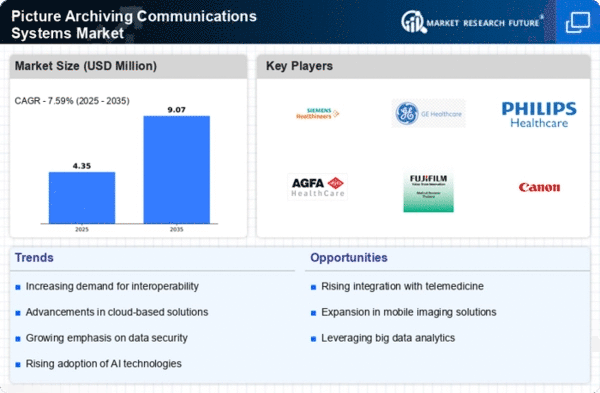
Picture Archiving Communications Systems Market Infographic
Purchase Options

Market Trends

Key Emerging Trends in the Picture Archiving Communications Systems Market

Picture Archiving and Communication Systems (PACS) are being integrated with medical data-storing EHRs. These two factors enable medical imaging data flow smoother, offering clinicians a more full patient picture and improving decision-making. PACS vendors are adopting vendor-neutral archives. VNAs store medical pictures in a standard format, making sharing easy. This lets doctors easily review and transmit images across PACS and health information systems. The number of cloud-hosted PACS users is rising. Cloud technology lets healthcare businesses securely store, manage, and retrieve medical pictures. It is extensible, adaptable, and affordable. Cloud computing is growing in medicine, following this trend. The PACS sector uses AI to analyze images. Medical picture analysis is being simplified by artificial intelligence algorithms that help doctors and therapists find difficulties. While improving diagnosis accuracy, this also speeds up reading. The PACS business is focusing on mobility to make medical pictures accessible remotely. Mobile-friendly PACS systems let doctors see and interpret pictures on computers and cellphones. In the era of telemedicine and remote services, this gives them more autonomy and makes collaboration easier. Security remains a priority in PACS. PACS systems use encryption, access restrictions, and audit trails to protect patient data and ensure accuracy because medical imaging data is confidential and must comply with regulations. Market awareness is growing that PACS systems are adding more advanced display options. 3D imaging and rendering technologies simplify complex medical pictures, enabling more thorough analysis and better surgery planning, especially for orthopedic and cardiovascular diseases. The PACS industry prioritizes interoperability. To ensure compatibility with various imaging processes and standards, solutions are being modified. This simplifies data transfer between systems. Collaboration helps healthcare providers serve patients better and communicate better. Subscription-based and variable-priced PA systems are growing in popularity. These models enable healthcare organizations to gain advanced PACS capabilities without spending a lot of money up front, making it easier for more healthcare workers to utilize them. Artificial intelligence is used for more than visual analysis in PACS to improve operations. AI systems automate monotonous tasks like sorting, rating, and routing photos. This makes imaging operations more efficient, allowing doctors to concentrate on more difficult diagnostic tasks. Teleradiology services are growing worldwide, affecting the PACS business. PACS systems are essential for remote imaging because they allow doctors to see pictures from distant places. This trend is anticipated to continue due to increased demand for virtual services and faster picture sharing. As the PACS market evolves, usability and UX design become increasingly important. User-friendly designs, intuitive layouts, and useful features are becoming increasingly important for PACS systems. Because these traits are becoming more important. Healthcare personnel may focus on patient care since they will be easier to use.

Author
Author Profile
Vikita Thakur
Senior Research Analyst

She holds an experience of about 5+ years in market research and business consulting projects for sectors such as life sciences, medical devices, and healthcare IT. She possesses a robust background in data analysis, market estimation, competitive intelligence, pipeline analysis market trend identification, and consumer behavior insights. Her expertise lies in technical Sales support, client interaction and project management, designing and implementing market research studies, conducting competitive analysis, and synthesizing complex data into actionable recommendations that drive business growth.

Leave a Comment

FAQs

What is the current market valuation of the Picture Archiving Communications Systems Market?

<p>The market valuation of the Picture Archiving Communications Systems Market was 4041.02 USD Million in 2024.</p>

What is the projected market size for the Picture Archiving Communications Systems Market by 2035?

<p>The market is projected to reach 9074.9 USD Million by 2035.</p>

What is the expected CAGR for the Picture Archiving Communications Systems Market during the forecast period?

<p>The expected CAGR for the market from 2025 to 2035 is 7.59%.</p>

Which companies are considered key players in the Picture Archiving Communications Systems Market?

<p>Key players include Siemens Healthineers, GE Healthcare, Philips Healthcare, and others.</p>

What are the primary applications of Picture Archiving Communications Systems?

<p>The primary applications include Radiology, Cardiology, Oncology, Orthopedics, and Neurology.</p>

How does the market segment by end use?

The market segments by end use include Hospitals, Diagnostic Imaging Centers, Research Institutions, and Ambulatory Surgical Centers.

What are the different deployment modes for Picture Archiving Communications Systems?

Deployment modes include On-Premises, Cloud-Based, and Hybrid solutions.

What technologies are utilized in Picture Archiving Communications Systems?

Technologies include Digital Imaging, Data Storage, Image Retrieval, and Network Infrastructure.

What components are involved in the Picture Archiving Communications Systems?

The components consist of Software, Hardware, and Services.

How did the market perform in the Radiology segment in 2024?

In 2024, the Radiology segment was valued at 1610.51 USD Million.

Market Summary

As per MRFR analysis, The Picture Archiving and Communication System Market Size Was Valued at USD 3,262.17 Million In 2024. The Global Picture Archiving and Communication System Industry Is Projected to grow from USD 3,513.36 Million in 2025 to USD 6,752.58 Million by 2035, Exhibiting A Compound Annual Growth Rate (CAGR) of 7.7% during the Forecast Period (2025 – 2035).

Key Market Trends & Highlights

The Picture Archiving and Communication System Market is undergoing rapid transformation driven by electrification, sustainability demands, and smart tech integration.

  • Implementing standards-based interoperability is now a requirement: Integration of DICOM with HL7/FHIR for orders, results, and identity is the baseline acquisition and credentialing standard across regions. Adopting zero-trust security by design: role-based access, end-to-end encryption, and full audit trails are necessary for regional exchange and teleradiology while not reducing clinician usability. Hybrid infrastructures prevail local reading cores to address latency; cloud tiers for archiving/disaster recovery and onboarding affiliates within a centralized identity and logging context. Capacity under continued pressure: Emergency Department (ED) and inpatient workflows enhance the value of rapid prior access and standardized workflow for avoiding stacked delays and re-imaging. Governed AI adjacent for adoption: triage, measures, and quality assessment only scale to human-in-the-loop review by model versioning and inference logging.

Market Size & Forecast

2024 Market Size 3,262.17 (USD Million)
2035 Market Size 6,752.58 (USD Million)
CAGR (2025 - 2035) 7.7%

Major Players

Siemens Healthineers, GE HealthCare, Philips Healthcare, and Canon Medical Systems, which leverage advanced imaging technologies and enterprise-scale healthcare IT solutions. Companies such as Agfa-Gevaert (Agfa HealthCare), Fujifilm Holdings (Fujifilm Healthcare), and Konica Minolta.

Market Trends

Lighter Car Seats and Passive Safety

The two basic functions of the car seats are maintaining a comfortable position of a driver while driving and also protection of health and life in case of an accident. Every seat element is significant, beginning with head rests, which stabilize the cervical section of the spine, through seats and a back rest, which are supposed to stabilize the lumbar spine and to prevent leaning of the passenger body sideways on curves, ending with safety belts. All these elements must be produced from material of relevant strength. At the same time diminishing of weight is pursued, which will serve reduction of vehicle emission. For this purpose, lighter metal alloys are used to make a seat frame and elements of expanded polypropylene as a space filling material, which can constitute even up to 40% of the whole seat.

This material combines resistance to impacts and absorbing properties with light weight. How well it can protect even the smallest passengers of a vehicle is testified by the lightest child seat in the market made by Karwala company using the over-moulding technology at the Knauf Industries manufacturing plant. The seat frame from a plastic material designed in a right way was completely sunk in the EPP, which allowed to obtain perfectly durable and comfortable in use product that fulfils the strictest requirements in respect of the passive safety.

Heated And Ventilated Car Seats

The next trend gaining in meaning are the technologies that provide larger comfort of travelling by adjustment of microclimate – i.e., the seat featuring functions of air conditioning and heating. Growing demand for such solutions is related not only to increasing expectations of users in respect of equipment of modern cars, but also to development of the electric and hybrid cars sector, for which energy saving counts. In this context it is worth emphasizing that the expanded polypropylene features excellent thermal insulation properties.

Picture Archiving Communications Systems Market Market Drivers

Interoperability Mandates and Standards-Based Workflows

Interoperability is a dimensional force behind PACS growth, as it transforms departmental images assets into clinical resources across the whole system, supporting cross-facility care, decreasing redundant imaging, and advancing data governance objectives associated with safety and quality. DICOM provides a framework for image acquisition, storage, and transport across modalities, and when integrated with HL7/FHIR interfaces for orders, results, and patient demographics, PACS becomes the central point of imaging informatics for RIS/EHR, and increasingly, becoming linked to regional exchanges and registries as well. In its policy guidance, the WHO explicitly suggests that Member States adopt internationally accepted standards into national strategies when including imaging. Underpinning national strategies achieve technical conformance as a governance requirement for health organizations and not a choice for vendors; this governance expectation shifts procurement to PACS platforms that are available in the marketplace as standards-compliant and open.

Rising Imaging Volumes and Hospital Throughput Pressure

Health systems are under persistent pressure in both acute and elective care, increasing the operational value of PACS for rapid access to images, prior retrieval, and cross-site reading at scale. OECD’s Health at a Glance shows that, in many countries, hospital activity has bounced back from the depths of the pandemic. Discharges and surgery backlogs indicate persistent throughput constraints that suggest the turnaround of relevant imaging whether radiology or pathology or avoiding repeat exams altogether, have become mission‑critical for those care pathways supported by PACS. Emergency department utilization is a major proxy for acute imaging demand, with data from OECD showing average ED visits of roughly 27 visits per 100 population among members indexed in 2021, highlighting many millions’ worth of time-sensitive examinations when rapid radiology results inform triage and disposition to inpatient acuity, all workflows that benefit from PACS-enabled real-time availability and distribution of images and reports. And beyond ED flows, OECD data series on hospital activity and beds show continuing tight capacity on many systems have all but eliminated the possible use of bed utilization for monitoring performance against capacity.

National Policies for Equitable Imaging and Digital Health

Accelerated by national policy momentum to embed imaging within universal health coverage (UHC) and digital health strategies, the shift toward PACS adoption is redefining interoperable imaging infrastructure as a public health consideration rather than IT capacity enhancements. The Member States of the WHO Executive Board have formally called the competent authorities to build medical imaging capacity in national health plans, engage in systematic assessments of health system’s needs, prepare investment cases, and budget for maintenance and training; all of which are forms of governance that directly favor standards-based PACS planning and sustained operations at scale.

Ai-Enabled Workflow Augmentation and Multispecialty Expansion

AI development in imaging is driving a transition toward modeling-ready, interoperable PACS environments suitable for triage, quality assurance, and measurement automation close to the image archive & viewer, in ways that alter buyer decision-making criteria and expedite platform refresh cycles. The AI programs and challenges put on by RSNA point to curating clinically useful, labeled datasets and validating algorithms for tasks related to detection, classification, or structured measurement, and these capabilities dictate deep PACS/VNA integration to ingest studies, return results, and feedback outcomes for iterative improvement and governance. Multisystem radiology trends in clinical forums reinforce the need for enterprise imaging architectures that cross specialty and service lines; shared access to consolidated imaging records underpins tumor boards, cardiac teams and peri-operative planning; thus, generating a PACS that manages diverse images, viewers, and structured reporting templates, all without isolating data.

Market Segment Insights

By Application: Radiology (Largest) vs. Cardiology (Fastest-Growing)

<p>In the Picture Archiving Communications Systems (PACS) market, Radiology remains the largest application segment, capturing a significant portion of the market share. The increasing demand for efficient imaging solutions in hospitals and clinics drives the adoption of PACS technologies in radiological departments, enhancing workflow and patient care. Additionally, advancements in imaging technologies and the integration of artificial intelligence are bolstering the effectiveness of radiological practices. On the other hand, Cardiology is emerging as the fastest-growing application segment within the PACS market. The rising prevalence of cardiovascular diseases and the growing focus on early detection and management are propelling the demand for advanced imaging systems in cardiology. Furthermore, the integration of cloud-based PACS solutions is facilitating remote access to cardiac images, thus enhancing diagnostic capabilities and patient outcomes.</p>

<p>Radiology (Dominant) vs. Oncology (Emerging)</p>

<p>Radiology is positioned as the dominant application segment in the PACS market, underpinned by its extensive utilization in diagnostics and patient management. The segment benefits from continuous Investment in technology upgrades, improving image quality, and expediting the diagnostic process. This dominance is complemented by the rise in regulatory standards demanding higher efficiency in radiological practices. Conversely, Oncology represents an emerging segment, propelled by the increasing necessity for precise imaging solutions in cancer detection and treatment planning. The demand for personalized medicine is driving innovations in oncology PACS, allowing for better tracking of treatment efficacy and faster adjustments. Both segments are essential, with Radiology leading in applications while Oncology showcases significant potential for future growth.</p>

By End Use: Hospitals (Largest) vs. Diagnostic Imaging Centers (Fastest-Growing)

<p>The Picture Archiving Communications Systems Market showcases a diverse distribution of end-use segments. Hospitals currently hold the largest market share, capitalizing on the increasing demand for efficient imaging solutions and the necessity for archiving vast amounts of patient data. Diagnostic Imaging Centers, while smaller in market share compared to hospitals, are rapidly gaining traction, driven by a growing emphasis on outpatient services and the need for quick imaging solutions. In terms of growth trends, both segments are experiencing notable advancements. Hospitals are investing significantly in upgrading their PACS infrastructure to improve workflow efficiency and enhance patient outcomes. Meanwhile, Diagnostic Imaging Centers are expanding due to the rising demand for non-invasive diagnostic procedures, making them the fastest-growing segment. Emerging technologies and the integration of AI further propel this growth, fostering increased adoption of PACS among these centers.</p>

<p>Hospitals (Dominant) vs. Research Institutions (Emerging)</p>

<p>In the Picture Archiving Communications Systems Market, Hospitals are recognized as the dominant segment, due to their comprehensive imaging needs and substantial patient volumes. Their advanced PACS implementation allows for streamlined processes, efficient data management, and improved patient care. Conversely, Research Institutions, categorized as an emerging segment, are increasingly adopting PACS to facilitate advanced studies and medical research. The need for high-quality imaging data collection and analysis is becoming paramount in research settings. These institutions focus on innovative applications, such as clinical trials and biomedical imaging research, thereby driving demand for tailored PACS solutions. The continued evolution of technologies in both segments highlights their crucial role in enhancing the overall healthcare landscape.</p>

By Deployment Mode: Cloud-Based (Largest) vs. Hybrid (Fastest-Growing)

<p>In the Picture Archiving Communications Systems Market, the deployment mode is broken down into three primary categories: On-Premises, Cloud-Based, and Hybrid. Currently, Cloud-Based systems hold the largest market share due to their accessibility, scalability, and cost-efficiency, making them an attractive option for healthcare facilities seeking modernization. Meanwhile, Hybrid systems are gaining traction, appealing to organizations that prefer a blend of on-premises security with the flexibility of cloud storage solutions, hence illustrating a competitive distribution among these segments.</p>

<p>Cloud-Based (Dominant) vs. Hybrid (Emerging)</p>

<p>Cloud-Based Picture Archiving Communications Systems are at the forefront of the market thanks to their ability to provide secure, scalable storage and rapid access to images over the internet. This deployment method allows for seamless collaboration among healthcare professionals across different locations. In comparison, Hybrid systems are emerging as a viable option for institutions that require both traditional on-premises infrastructure and cloud features. They combine the benefits of secure, localized storage with the advantages of cloud computing, making them appealing for organizations prioritizing data security while still wanting some cloud flexibility.</p>

By Technology: Digital Imaging (Largest) vs. Network Infrastructure (Fastest-Growing)

<p>Within the Picture Archiving Communications Systems (PACS) market, Digital Imaging holds the largest share among the technology segment values, attributed to its crucial role in diagnostics. As healthcare facilities increasingly adopt advanced imaging modalities, the demand for reliable digital imaging technology continues to rise. Meanwhile, Network Infrastructure is rapidly gaining traction as it enhances the connectivity and efficiency of imaging systems, responding to the growing need for seamless data exchange in healthcare settings.</p>

<p>Technology: Digital Imaging (Dominant) vs. Network Infrastructure (Emerging)</p>

<p>Digital Imaging represents the cornerstone of PACS solutions, providing critical capabilities for capturing, storing, and managing images from various modalities. Its dominant position stems from continuous innovations that improve image quality and accessibility, ensuring that healthcare providers can offer precise diagnostics. In contrast, Network Infrastructure is emerging as a vital component that supports the increasing data load from digital imaging technologies. Enhanced security protocols and faster network speeds position it as an essential asset for healthcare organizations aiming to streamline workflows and improve patient care. This growth is driven by the demand for integrated solutions that facilitate efficient communication and data management.</p>

By Component: Software (Largest) vs. Services (Fastest-Growing)

<p>In the Picture Archiving Communications Systems (PACS) market, the component segment is primarily dominated by software, which is considered the largest part of the market due to its critical role in image management and analysis. Software solutions enable healthcare facilities to efficiently store, retrieve, and manipulate medical images, ensuring accurate diagnostics and patient care. Following software, hardware components such as servers and storage devices contribute significantly to the market, while services, including installation and maintenance, also play a vital supporting role.</p>

<p>Software: Dominant vs. Services: Emerging</p>

<p>Software stands as the dominant force in the PACS market due to its essential functions in image storage and manipulation, which are crucial for modern healthcare provisions. The extensive capabilities of software tailored for data security, interoperability, and user-friendly interfaces contribute to its leading position. Meanwhile, services are emerging as a fast-growing segment, driven by the increasing demand for comprehensive support and maintenance as healthcare organizations transition to more sophisticated PACS. The demand for technical support, training, and integration services highlights the shift towards service-oriented models in this sector.</p>

Get more detailed insights about Picture Archiving and Communications Systems Market Research Report - Forecast Till 2035

Regional Insights

North America: Increased automotive seating systems and components

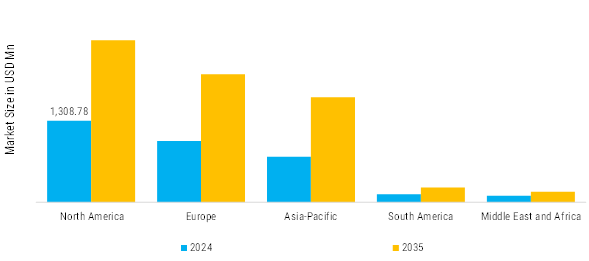
North America is characterized by consolidation in enterprise, hybrid cloud utilization, and governance that is prepared for AI, all under persistent pressures for acute care. Prior availability, turnaround time and repeat-exam reduction continue to be the operational currencies by which boards assess imaging IT performance through indicator-style dashboards across multi-hospital networks. Health systems prioritize interoperability that is anchored in standards-DICOM for imaging objects and HL7/FHIR for orders, results, and identity context-so priors can travel with confidence from emergency to inpatient settings and from inpatient to ambulatory settings, without brittle integrations that contribute to delays and providing unnecessary duplicate exposure risk during volume spikes.

Picture Archiving and Communication System (PACS) Market Regional Insights

Europe: Emerging automotive seating systems and components

Europe's PACS market has three main factors governing actions: public procurement policy, regional interoperability efforts, and equity-related requirements for funding and accreditation that embed internationally accepted standards and lifecycle sustainability. This means that the conformance artifacts, maintainability, and training have become as important compared to the features in vendor selection in contrast to the United States. The expectations related to cross-border mobility and regionalized care models suggest that priors will be expected to follow patients even across hospitals and countries. This is where DICOM fidelity with HL7/FHIR integration with RIS/EHR, must be the baseline utility of PACS systems to assure safe identity matching, integrity between orders and results, and longitudinal access during referrals, perioperative instances, and tumor boards.

 Asia-Pacific: Rapidly Growing automotive seating systems and components

Asia Pacific can be characterized by scale, heterogeneity, and modernization in phases, as governments and health networks consider the demands of rapid urban growth against rural access as part of their universal health coverage (UHC) obligations, explicitly requiring internationally accepted standards, lifecycle maintenance, and education of the workforce in imaging health informatics programs. Accreditation and procurement increasingly require DICOM fidelity and HL7/FHIR integration in order for orders, results, and demographics to remain reconciled across mixed public–private environments to prevent identity drift, and prior records lost to follow the patient’s transitions from primary care, urban center, and specialty hospital care.

Middle East and Africa: Emerging automotive seating

MEA’s PACS trajectory reflects simultaneous top‑down national digital health programs and bottom‑up capacity building across diverse provider ecosystems, making governed interoperability and resilience the decisive criteria for funding and scale in mixed public private markets. Procurement increasingly specifies internationally accepted standards, with DICOM fidelity and HL7/FHIR integration required so priors, orders, and results remain consistent as patients move between public hospitals, defense/teaching institutions, and contracted private providers, reducing identity drift and missed priors that drive repeat exposure and delays. Ministries and health authorities evaluate performance through comparable operational proxy’s time‑to‑first‑view in acute pathways, prior‑hit rates across facilities, and repeat‑exam trends so PACS platforms that surface these analytics by site and modality enable targeted remediation and verifiable improvements aligned with governance dashboards.

South America: Rapidly Develop automotive seating

South America is primarily motivated by table-pushing demands from health systems to create more equitable health system goals, capabilities targeting standard-based enterprise imaging, decreasing duplication, shortening turnaround, and providing access across geographic dispersion with comparable operational indicators and governance demands. Public purchasers and larger private groups are increasing requiring documented DICOM integrity and HL7/FHIR interfacing so that priors/prior results are shared between public hospitals, contracted providers.

Key Players and Competitive Insights

Many global, regional, and local vendors characterize the Picture Archiving and Communication System Market. The market is highly competitive, with all the players competing to gain market share. Intense competition, rapid advances in technology, frequent changes in government policies, and environmental regulations are key factors that confront market growth. The vendors compete based on cost, product quality, reliability, and government regulations. Vendors must provide cost-efficient, high-quality products to survive and succeed in an intensely competitive market.
 
The major players in the market include Siemens Healthineers, GE HealthCare, Philips Healthcare, and Canon Medical Systems, which leverage advanced imaging technologies and enterprise-scale healthcare IT solutions. Companies such as Agfa-Gevaert (Agfa HealthCare), Fujifilm Holdings (Fujifilm Healthcare), and Konica Minolta strategic market developments and decisions to improve operational effectiveness.

Key Companies in the Picture Archiving Communications Systems Market include

Industry Developments

In 2024, Novarad announced that it had added four new significant customers to its PACS footprint.

Future Outlook

Picture Archiving Communications Systems Market Future Outlook

The Picture Archiving and Communication System Market is projected to grow at a 7.7% CAGR from 2025 to 2035, driven by growing geriatric population and technological advancements.

New opportunities lie in:

  • <p>Enterprise imaging and regional image exchange to cut repeats and speed diagnosis</p>
  • <p>AI-ready PACS for workflow triage, quality assurance, and multispecialty growth</p>
  • <p>Teleradiology and rural reach under UHC and digital health strategies</p>

By 2035, the market is expected to achieve substantial growth, solidifying its role in healthcare imaging.

Market Segmentation

Picture Archiving and Communication System Market by End User Outlook

  • Hospitals and Clinics
  • diagnostic imaging centers
  • ambulatory surgery centers (ASCs)
  • and others

Picture Archiving and Communication System Market by Component Outlook

  • Hardware
  • Software[on-premise
  • cloud-based]
  • Services

Picture Archiving and Communication System Market by Application Outlook

  • pathology
  • and radiology

Picture Archiving and Communication System Market by Imaging Modality Outlook

  • into x-ray
  • computed tomography (CT)
  • magnetic resonance imaging (MRI)
  • ultrasound
  • nuclear imaging
  • others

Report Scope

Market Size 2024 3,262.17 (USD Million)
Market Size 2025 3,513.36 (USD Million)
Market Size 2035 6,752.58 (USD Million)
Compound Annual Growth Rate (CAGR) 7.7% (2025 - 2035)
Report Coverage Revenue Forecast, Competitive Landscape, Growth Factors, and Trends
Base Year 2024
Market Forecast Period 2025 - 2035
Historical Data 2019 - 2023
Market Forecast Units USD Million
Key Companies Profiled Siemens Healthineers, GE HealthCare, Philips Healthcare, and Canon Medical Systems, which leverage advanced imaging technologies and enterprise-scale healthcare IT solutions. Companies such as Agfa-Gevaert (Agfa HealthCare), Fujifilm Holdings (Fujifilm Healthcare), and Konica Minolta.
Segments Covered By Component, By Imaging Modality,  By Application, By End User
Key Market Opportunities ·         Enterprise imaging and regional image exchange to cut repeats and speed diagnosis ·         AI-ready PACS for workflow triage, quality assurance, and multispecialty growth ·         Teleradiology and rural reach under UHC and digital health strategies
Key Market Dynamics ·      Rising imaging volumes and hospital throughput pressure ·      National policies for equitable imaging and digital health ·      Interoperability mandates and standards-based workflows ·      AI-enabled workflow augmentation and multispecialty expansion ·      Workforce constraints, remote care, and equitable access
Regional Covered North America, Europe, Asia Pacific, Latin America, Middle East & Africa.

FAQs

What is the current market valuation of the Picture Archiving Communications Systems Market?

<p>The market valuation of the Picture Archiving Communications Systems Market was 4041.02 USD Million in 2024.</p>

What is the projected market size for the Picture Archiving Communications Systems Market by 2035?

<p>The market is projected to reach 9074.9 USD Million by 2035.</p>

What is the expected CAGR for the Picture Archiving Communications Systems Market during the forecast period?

<p>The expected CAGR for the market from 2025 to 2035 is 7.59%.</p>

Which companies are considered key players in the Picture Archiving Communications Systems Market?

<p>Key players include Siemens Healthineers, GE Healthcare, Philips Healthcare, and others.</p>

What are the primary applications of Picture Archiving Communications Systems?

<p>The primary applications include Radiology, Cardiology, Oncology, Orthopedics, and Neurology.</p>

How does the market segment by end use?

The market segments by end use include Hospitals, Diagnostic Imaging Centers, Research Institutions, and Ambulatory Surgical Centers.

What are the different deployment modes for Picture Archiving Communications Systems?

Deployment modes include On-Premises, Cloud-Based, and Hybrid solutions.

What technologies are utilized in Picture Archiving Communications Systems?

Technologies include Digital Imaging, Data Storage, Image Retrieval, and Network Infrastructure.

What components are involved in the Picture Archiving Communications Systems?

The components consist of Software, Hardware, and Services.

How did the market perform in the Radiology segment in 2024?

In 2024, the Radiology segment was valued at 1610.51 USD Million.

  1. SECTION I: EXECUTIVE SUMMARY AND KEY HIGHLIGHTS
    1. | 1.1 EXECUTIVE SUMMARY
    2. | | 1.1.1 Market Overview
    3. | | 1.1.2 Key Findings
    4. | | 1.1.3 Market Segmentation
    5. | | 1.1.4 Competitive Landscape
    6. | | 1.1.5 Challenges and Opportunities
    7. | | 1.1.6 Future Outlook
  2. SECTION II: SCOPING, METHODOLOGY AND MARKET STRUCTURE
    1. | 2.1 MARKET INTRODUCTION
    2. | | 2.1.1 Definition
    3. | | 2.1.2 Scope of the study
    4. | | | 2.1.2.1 Research Objective
    5. | | | 2.1.2.2 Assumption
    6. | | | 2.1.2.3 Limitations
    7. | 2.2 RESEARCH METHODOLOGY
    8. | | 2.2.1 Overview
    9. | | 2.2.2 Data Mining
    10. | | 2.2.3 Secondary Research
    11. | | 2.2.4 Primary Research
    12. | | | 2.2.4.1 Primary Interviews and Information Gathering Process
    13. | | | 2.2.4.2 Breakdown of Primary Respondents
    14. | | 2.2.5 Forecasting Model
    15. | | 2.2.6 Market Size Estimation
    16. | | | 2.2.6.1 Bottom-Up Approach
    17. | | | 2.2.6.2 Top-Down Approach
    18. | | 2.2.7 Data Triangulation
    19. | | 2.2.8 Validation
  3. SECTION III: QUALITATIVE ANALYSIS
    1. | 3.1 MARKET DYNAMICS
    2. | | 3.1.1 Overview
    3. | | 3.1.2 Drivers
    4. | | 3.1.3 Restraints
    5. | | 3.1.4 Opportunities
    6. | 3.2 MARKET FACTOR ANALYSIS
    7. | | 3.2.1 Value chain Analysis
    8. | | 3.2.2 Porter's Five Forces Analysis
    9. | | | 3.2.2.1 Bargaining Power of Suppliers
    10. | | | 3.2.2.2 Bargaining Power of Buyers
    11. | | | 3.2.2.3 Threat of New Entrants
    12. | | | 3.2.2.4 Threat of Substitutes
    13. | | | 3.2.2.5 Intensity of Rivalry
    14. | | 3.2.3 COVID-19 Impact Analysis
    15. | | | 3.2.3.1 Market Impact Analysis
    16. | | | 3.2.3.2 Regional Impact
    17. | | | 3.2.3.3 Opportunity and Threat Analysis
  4. SECTION IV: QUANTITATIVE ANALYSIS
    1. | 4.1 Healthcare, BY Application (USD Million)
    2. | | 4.1.1 Radiology
    3. | | 4.1.2 Cardiology
    4. | | 4.1.3 Oncology
    5. | | 4.1.4 Orthopedics
    6. | | 4.1.5 Neurology
    7. | 4.2 Healthcare, BY End Use (USD Million)
    8. | | 4.2.1 Hospitals
    9. | | 4.2.2 Diagnostic Imaging Centers
    10. | | 4.2.3 Research Institutions
    11. | | 4.2.4 Ambulatory Surgical Centers
    12. | 4.3 Healthcare, BY Deployment Mode (USD Million)
    13. | | 4.3.1 On-Premises
    14. | | 4.3.2 Cloud-Based
    15. | | 4.3.3 Hybrid
    16. | 4.4 Healthcare, BY Technology (USD Million)
    17. | | 4.4.1 Digital Imaging
    18. | | 4.4.2 Data Storage
    19. | | 4.4.3 Image Retrieval
    20. | | 4.4.4 Network Infrastructure
    21. | 4.5 Healthcare, BY Component (USD Million)
    22. | | 4.5.1 Software
    23. | | 4.5.2 Hardware
    24. | | 4.5.3 Services
    25. | 4.6 Healthcare, BY Region (USD Million)
    26. | | 4.6.1 North America
    27. | | | 4.6.1.1 US
    28. | | | 4.6.1.2 Canada
    29. | | 4.6.2 Europe
    30. | | | 4.6.2.1 Germany
    31. | | | 4.6.2.2 UK
    32. | | | 4.6.2.3 France
    33. | | | 4.6.2.4 Russia
    34. | | | 4.6.2.5 Italy
    35. | | | 4.6.2.6 Spain
    36. | | | 4.6.2.7 Rest of Europe
    37. | | 4.6.3 APAC
    38. | | | 4.6.3.1 China
    39. | | | 4.6.3.2 India
    40. | | | 4.6.3.3 Japan
    41. | | | 4.6.3.4 South Korea
    42. | | | 4.6.3.5 Malaysia
    43. | | | 4.6.3.6 Thailand
    44. | | | 4.6.3.7 Indonesia
    45. | | | 4.6.3.8 Rest of APAC
    46. | | 4.6.4 South America
    47. | | | 4.6.4.1 Brazil
    48. | | | 4.6.4.2 Mexico
    49. | | | 4.6.4.3 Argentina
    50. | | | 4.6.4.4 Rest of South America
    51. | | 4.6.5 MEA
    52. | | | 4.6.5.1 GCC Countries
    53. | | | 4.6.5.2 South Africa
    54. | | | 4.6.5.3 Rest of MEA
  5. SECTION V: COMPETITIVE ANALYSIS
    1. | 5.1 Competitive Landscape
    2. | | 5.1.1 Overview
    3. | | 5.1.2 Competitive Analysis
    4. | | 5.1.3 Market share Analysis
    5. | | 5.1.4 Major Growth Strategy in the Healthcare
    6. | | 5.1.5 Competitive Benchmarking
    7. | | 5.1.6 Leading Players in Terms of Number of Developments in the Healthcare
    8. | | 5.1.7 Key developments and growth strategies
    9. | | | 5.1.7.1 New Product Launch/Service Deployment
    10. | | | 5.1.7.2 Merger & Acquisitions
    11. | | | 5.1.7.3 Joint Ventures
    12. | | 5.1.8 Major Players Financial Matrix
    13. | | | 5.1.8.1 Sales and Operating Income
    14. | | | 5.1.8.2 Major Players R&D Expenditure. 2023
    15. | 5.2 Company Profiles
    16. | | 5.2.1 Siemens Healthineers (DE)
    17. | | | 5.2.1.1 Financial Overview
    18. | | | 5.2.1.2 Products Offered
    19. | | | 5.2.1.3 Key Developments
    20. | | | 5.2.1.4 SWOT Analysis
    21. | | | 5.2.1.5 Key Strategies
    22. | | 5.2.2 GE Healthcare (US)
    23. | | | 5.2.2.1 Financial Overview
    24. | | | 5.2.2.2 Products Offered
    25. | | | 5.2.2.3 Key Developments
    26. | | | 5.2.2.4 SWOT Analysis
    27. | | | 5.2.2.5 Key Strategies
    28. | | 5.2.3 Philips Healthcare (NL)
    29. | | | 5.2.3.1 Financial Overview
    30. | | | 5.2.3.2 Products Offered
    31. | | | 5.2.3.3 Key Developments
    32. | | | 5.2.3.4 SWOT Analysis
    33. | | | 5.2.3.5 Key Strategies
    34. | | 5.2.4 Agfa HealthCare (BE)
    35. | | | 5.2.4.1 Financial Overview
    36. | | | 5.2.4.2 Products Offered
    37. | | | 5.2.4.3 Key Developments
    38. | | | 5.2.4.4 SWOT Analysis
    39. | | | 5.2.4.5 Key Strategies
    40. | | 5.2.5 Fujifilm Medical Systems (JP)
    41. | | | 5.2.5.1 Financial Overview
    42. | | | 5.2.5.2 Products Offered
    43. | | | 5.2.5.3 Key Developments
    44. | | | 5.2.5.4 SWOT Analysis
    45. | | | 5.2.5.5 Key Strategies
    46. | | 5.2.6 Canon Medical Systems (JP)
    47. | | | 5.2.6.1 Financial Overview
    48. | | | 5.2.6.2 Products Offered
    49. | | | 5.2.6.3 Key Developments
    50. | | | 5.2.6.4 SWOT Analysis
    51. | | | 5.2.6.5 Key Strategies
    52. | | 5.2.7 Carestream Health (US)
    53. | | | 5.2.7.1 Financial Overview
    54. | | | 5.2.7.2 Products Offered
    55. | | | 5.2.7.3 Key Developments
    56. | | | 5.2.7.4 SWOT Analysis
    57. | | | 5.2.7.5 Key Strategies
    58. | | 5.2.8 Merge Healthcare (US)
    59. | | | 5.2.8.1 Financial Overview
    60. | | | 5.2.8.2 Products Offered
    61. | | | 5.2.8.3 Key Developments
    62. | | | 5.2.8.4 SWOT Analysis
    63. | | | 5.2.8.5 Key Strategies
    64. | | 5.2.9 Infinitt Healthcare (KR)
    65. | | | 5.2.9.1 Financial Overview
    66. | | | 5.2.9.2 Products Offered
    67. | | | 5.2.9.3 Key Developments
    68. | | | 5.2.9.4 SWOT Analysis
    69. | | | 5.2.9.5 Key Strategies
    70. | 5.3 Appendix
    71. | | 5.3.1 References
    72. | | 5.3.2 Related Reports
  6. LIST OF FIGURES
    1. | 6.1 MARKET SYNOPSIS
    2. | 6.2 NORTH AMERICA MARKET ANALYSIS
    3. | 6.3 US MARKET ANALYSIS BY APPLICATION
    4. | 6.4 US MARKET ANALYSIS BY END USE
    5. | 6.5 US MARKET ANALYSIS BY DEPLOYMENT MODE
    6. | 6.6 US MARKET ANALYSIS BY TECHNOLOGY
    7. | 6.7 US MARKET ANALYSIS BY COMPONENT
    8. | 6.8 CANADA MARKET ANALYSIS BY APPLICATION
    9. | 6.9 CANADA MARKET ANALYSIS BY END USE
    10. | 6.10 CANADA MARKET ANALYSIS BY DEPLOYMENT MODE
    11. | 6.11 CANADA MARKET ANALYSIS BY TECHNOLOGY
    12. | 6.12 CANADA MARKET ANALYSIS BY COMPONENT
    13. | 6.13 EUROPE MARKET ANALYSIS
    14. | 6.14 GERMANY MARKET ANALYSIS BY APPLICATION
    15. | 6.15 GERMANY MARKET ANALYSIS BY END USE
    16. | 6.16 GERMANY MARKET ANALYSIS BY DEPLOYMENT MODE
    17. | 6.17 GERMANY MARKET ANALYSIS BY TECHNOLOGY
    18. | 6.18 GERMANY MARKET ANALYSIS BY COMPONENT
    19. | 6.19 UK MARKET ANALYSIS BY APPLICATION
    20. | 6.20 UK MARKET ANALYSIS BY END USE
    21. | 6.21 UK MARKET ANALYSIS BY DEPLOYMENT MODE
    22. | 6.22 UK MARKET ANALYSIS BY TECHNOLOGY
    23. | 6.23 UK MARKET ANALYSIS BY COMPONENT
    24. | 6.24 FRANCE MARKET ANALYSIS BY APPLICATION
    25. | 6.25 FRANCE MARKET ANALYSIS BY END USE
    26. | 6.26 FRANCE MARKET ANALYSIS BY DEPLOYMENT MODE
    27. | 6.27 FRANCE MARKET ANALYSIS BY TECHNOLOGY
    28. | 6.28 FRANCE MARKET ANALYSIS BY COMPONENT
    29. | 6.29 RUSSIA MARKET ANALYSIS BY APPLICATION
    30. | 6.30 RUSSIA MARKET ANALYSIS BY END USE
    31. | 6.31 RUSSIA MARKET ANALYSIS BY DEPLOYMENT MODE
    32. | 6.32 RUSSIA MARKET ANALYSIS BY TECHNOLOGY
    33. | 6.33 RUSSIA MARKET ANALYSIS BY COMPONENT
    34. | 6.34 ITALY MARKET ANALYSIS BY APPLICATION
    35. | 6.35 ITALY MARKET ANALYSIS BY END USE
    36. | 6.36 ITALY MARKET ANALYSIS BY DEPLOYMENT MODE
    37. | 6.37 ITALY MARKET ANALYSIS BY TECHNOLOGY
    38. | 6.38 ITALY MARKET ANALYSIS BY COMPONENT
    39. | 6.39 SPAIN MARKET ANALYSIS BY APPLICATION
    40. | 6.40 SPAIN MARKET ANALYSIS BY END USE
    41. | 6.41 SPAIN MARKET ANALYSIS BY DEPLOYMENT MODE
    42. | 6.42 SPAIN MARKET ANALYSIS BY TECHNOLOGY
    43. | 6.43 SPAIN MARKET ANALYSIS BY COMPONENT
    44. | 6.44 REST OF EUROPE MARKET ANALYSIS BY APPLICATION
    45. | 6.45 REST OF EUROPE MARKET ANALYSIS BY END USE
    46. | 6.46 REST OF EUROPE MARKET ANALYSIS BY DEPLOYMENT MODE
    47. | 6.47 REST OF EUROPE MARKET ANALYSIS BY TECHNOLOGY
    48. | 6.48 REST OF EUROPE MARKET ANALYSIS BY COMPONENT
    49. | 6.49 APAC MARKET ANALYSIS
    50. | 6.50 CHINA MARKET ANALYSIS BY APPLICATION
    51. | 6.51 CHINA MARKET ANALYSIS BY END USE
    52. | 6.52 CHINA MARKET ANALYSIS BY DEPLOYMENT MODE
    53. | 6.53 CHINA MARKET ANALYSIS BY TECHNOLOGY
    54. | 6.54 CHINA MARKET ANALYSIS BY COMPONENT
    55. | 6.55 INDIA MARKET ANALYSIS BY APPLICATION
    56. | 6.56 INDIA MARKET ANALYSIS BY END USE
    57. | 6.57 INDIA MARKET ANALYSIS BY DEPLOYMENT MODE
    58. | 6.58 INDIA MARKET ANALYSIS BY TECHNOLOGY
    59. | 6.59 INDIA MARKET ANALYSIS BY COMPONENT
    60. | 6.60 JAPAN MARKET ANALYSIS BY APPLICATION
    61. | 6.61 JAPAN MARKET ANALYSIS BY END USE
    62. | 6.62 JAPAN MARKET ANALYSIS BY DEPLOYMENT MODE
    63. | 6.63 JAPAN MARKET ANALYSIS BY TECHNOLOGY
    64. | 6.64 JAPAN MARKET ANALYSIS BY COMPONENT
    65. | 6.65 SOUTH KOREA MARKET ANALYSIS BY APPLICATION
    66. | 6.66 SOUTH KOREA MARKET ANALYSIS BY END USE
    67. | 6.67 SOUTH KOREA MARKET ANALYSIS BY DEPLOYMENT MODE
    68. | 6.68 SOUTH KOREA MARKET ANALYSIS BY TECHNOLOGY
    69. | 6.69 SOUTH KOREA MARKET ANALYSIS BY COMPONENT
    70. | 6.70 MALAYSIA MARKET ANALYSIS BY APPLICATION
    71. | 6.71 MALAYSIA MARKET ANALYSIS BY END USE
    72. | 6.72 MALAYSIA MARKET ANALYSIS BY DEPLOYMENT MODE
    73. | 6.73 MALAYSIA MARKET ANALYSIS BY TECHNOLOGY
    74. | 6.74 MALAYSIA MARKET ANALYSIS BY COMPONENT
    75. | 6.75 THAILAND MARKET ANALYSIS BY APPLICATION
    76. | 6.76 THAILAND MARKET ANALYSIS BY END USE
    77. | 6.77 THAILAND MARKET ANALYSIS BY DEPLOYMENT MODE
    78. | 6.78 THAILAND MARKET ANALYSIS BY TECHNOLOGY
    79. | 6.79 THAILAND MARKET ANALYSIS BY COMPONENT
    80. | 6.80 INDONESIA MARKET ANALYSIS BY APPLICATION
    81. | 6.81 INDONESIA MARKET ANALYSIS BY END USE
    82. | 6.82 INDONESIA MARKET ANALYSIS BY DEPLOYMENT MODE
    83. | 6.83 INDONESIA MARKET ANALYSIS BY TECHNOLOGY
    84. | 6.84 INDONESIA MARKET ANALYSIS BY COMPONENT
    85. | 6.85 REST OF APAC MARKET ANALYSIS BY APPLICATION
    86. | 6.86 REST OF APAC MARKET ANALYSIS BY END USE
    87. | 6.87 REST OF APAC MARKET ANALYSIS BY DEPLOYMENT MODE
    88. | 6.88 REST OF APAC MARKET ANALYSIS BY TECHNOLOGY
    89. | 6.89 REST OF APAC MARKET ANALYSIS BY COMPONENT
    90. | 6.90 SOUTH AMERICA MARKET ANALYSIS
    91. | 6.91 BRAZIL MARKET ANALYSIS BY APPLICATION
    92. | 6.92 BRAZIL MARKET ANALYSIS BY END USE
    93. | 6.93 BRAZIL MARKET ANALYSIS BY DEPLOYMENT MODE
    94. | 6.94 BRAZIL MARKET ANALYSIS BY TECHNOLOGY
    95. | 6.95 BRAZIL MARKET ANALYSIS BY COMPONENT
    96. | 6.96 MEXICO MARKET ANALYSIS BY APPLICATION
    97. | 6.97 MEXICO MARKET ANALYSIS BY END USE
    98. | 6.98 MEXICO MARKET ANALYSIS BY DEPLOYMENT MODE
    99. | 6.99 MEXICO MARKET ANALYSIS BY TECHNOLOGY
    100. | 6.100 MEXICO MARKET ANALYSIS BY COMPONENT
    101. | 6.101 ARGENTINA MARKET ANALYSIS BY APPLICATION
    102. | 6.102 ARGENTINA MARKET ANALYSIS BY END USE
    103. | 6.103 ARGENTINA MARKET ANALYSIS BY DEPLOYMENT MODE
    104. | 6.104 ARGENTINA MARKET ANALYSIS BY TECHNOLOGY
    105. | 6.105 ARGENTINA MARKET ANALYSIS BY COMPONENT
    106. | 6.106 REST OF SOUTH AMERICA MARKET ANALYSIS BY APPLICATION
    107. | 6.107 REST OF SOUTH AMERICA MARKET ANALYSIS BY END USE
    108. | 6.108 REST OF SOUTH AMERICA MARKET ANALYSIS BY DEPLOYMENT MODE
    109. | 6.109 REST OF SOUTH AMERICA MARKET ANALYSIS BY TECHNOLOGY
    110. | 6.110 REST OF SOUTH AMERICA MARKET ANALYSIS BY COMPONENT
    111. | 6.111 MEA MARKET ANALYSIS
    112. | 6.112 GCC COUNTRIES MARKET ANALYSIS BY APPLICATION
    113. | 6.113 GCC COUNTRIES MARKET ANALYSIS BY END USE
    114. | 6.114 GCC COUNTRIES MARKET ANALYSIS BY DEPLOYMENT MODE
    115. | 6.115 GCC COUNTRIES MARKET ANALYSIS BY TECHNOLOGY
    116. | 6.116 GCC COUNTRIES MARKET ANALYSIS BY COMPONENT
    117. | 6.117 SOUTH AFRICA MARKET ANALYSIS BY APPLICATION
    118. | 6.118 SOUTH AFRICA MARKET ANALYSIS BY END USE
    119. | 6.119 SOUTH AFRICA MARKET ANALYSIS BY DEPLOYMENT MODE
    120. | 6.120 SOUTH AFRICA MARKET ANALYSIS BY TECHNOLOGY
    121. | 6.121 SOUTH AFRICA MARKET ANALYSIS BY COMPONENT
    122. | 6.122 REST OF MEA MARKET ANALYSIS BY APPLICATION
    123. | 6.123 REST OF MEA MARKET ANALYSIS BY END USE
    124. | 6.124 REST OF MEA MARKET ANALYSIS BY DEPLOYMENT MODE
    125. | 6.125 REST OF MEA MARKET ANALYSIS BY TECHNOLOGY
    126. | 6.126 REST OF MEA MARKET ANALYSIS BY COMPONENT
    127. | 6.127 KEY BUYING CRITERIA OF HEALTHCARE
    128. | 6.128 RESEARCH PROCESS OF MRFR
    129. | 6.129 DRO ANALYSIS OF HEALTHCARE
    130. | 6.130 DRIVERS IMPACT ANALYSIS: HEALTHCARE
    131. | 6.131 RESTRAINTS IMPACT ANALYSIS: HEALTHCARE
    132. | 6.132 SUPPLY / VALUE CHAIN: HEALTHCARE
    133. | 6.133 HEALTHCARE, BY APPLICATION, 2024 (% SHARE)
    134. | 6.134 HEALTHCARE, BY APPLICATION, 2024 TO 2035 (USD Million)
    135. | 6.135 HEALTHCARE, BY END USE, 2024 (% SHARE)
    136. | 6.136 HEALTHCARE, BY END USE, 2024 TO 2035 (USD Million)
    137. | 6.137 HEALTHCARE, BY DEPLOYMENT MODE, 2024 (% SHARE)
    138. | 6.138 HEALTHCARE, BY DEPLOYMENT MODE, 2024 TO 2035 (USD Million)
    139. | 6.139 HEALTHCARE, BY TECHNOLOGY, 2024 (% SHARE)
    140. | 6.140 HEALTHCARE, BY TECHNOLOGY, 2024 TO 2035 (USD Million)
    141. | 6.141 HEALTHCARE, BY COMPONENT, 2024 (% SHARE)
    142. | 6.142 HEALTHCARE, BY COMPONENT, 2024 TO 2035 (USD Million)
    143. | 6.143 BENCHMARKING OF MAJOR COMPETITORS
  7. LIST OF TABLES
    1. | 7.1 LIST OF ASSUMPTIONS
    2. | | 7.1.1
    3. | 7.2 North America MARKET SIZE ESTIMATES; FORECAST
    4. | | 7.2.1 BY APPLICATION, 2025-2035 (USD Million)
    5. | | 7.2.2 BY END USE, 2025-2035 (USD Million)
    6. | | 7.2.3 BY DEPLOYMENT MODE, 2025-2035 (USD Million)
    7. | | 7.2.4 BY TECHNOLOGY, 2025-2035 (USD Million)
    8. | | 7.2.5 BY COMPONENT, 2025-2035 (USD Million)
    9. | 7.3 US MARKET SIZE ESTIMATES; FORECAST
    10. | | 7.3.1 BY APPLICATION, 2025-2035 (USD Million)
    11. | | 7.3.2 BY END USE, 2025-2035 (USD Million)
    12. | | 7.3.3 BY DEPLOYMENT MODE, 2025-2035 (USD Million)
    13. | | 7.3.4 BY TECHNOLOGY, 2025-2035 (USD Million)
    14. | | 7.3.5 BY COMPONENT, 2025-2035 (USD Million)
    15. | 7.4 Canada MARKET SIZE ESTIMATES; FORECAST
    16. | | 7.4.1 BY APPLICATION, 2025-2035 (USD Million)
    17. | | 7.4.2 BY END USE, 2025-2035 (USD Million)
    18. | | 7.4.3 BY DEPLOYMENT MODE, 2025-2035 (USD Million)
    19. | | 7.4.4 BY TECHNOLOGY, 2025-2035 (USD Million)
    20. | | 7.4.5 BY COMPONENT, 2025-2035 (USD Million)
    21. | 7.5 Europe MARKET SIZE ESTIMATES; FORECAST
    22. | | 7.5.1 BY APPLICATION, 2025-2035 (USD Million)
    23. | | 7.5.2 BY END USE, 2025-2035 (USD Million)
    24. | | 7.5.3 BY DEPLOYMENT MODE, 2025-2035 (USD Million)
    25. | | 7.5.4 BY TECHNOLOGY, 2025-2035 (USD Million)
    26. | | 7.5.5 BY COMPONENT, 2025-2035 (USD Million)
    27. | 7.6 Germany MARKET SIZE ESTIMATES; FORECAST
    28. | | 7.6.1 BY APPLICATION, 2025-2035 (USD Million)
    29. | | 7.6.2 BY END USE, 2025-2035 (USD Million)
    30. | | 7.6.3 BY DEPLOYMENT MODE, 2025-2035 (USD Million)
    31. | | 7.6.4 BY TECHNOLOGY, 2025-2035 (USD Million)
    32. | | 7.6.5 BY COMPONENT, 2025-2035 (USD Million)
    33. | 7.7 UK MARKET SIZE ESTIMATES; FORECAST
    34. | | 7.7.1 BY APPLICATION, 2025-2035 (USD Million)
    35. | | 7.7.2 BY END USE, 2025-2035 (USD Million)
    36. | | 7.7.3 BY DEPLOYMENT MODE, 2025-2035 (USD Million)
    37. | | 7.7.4 BY TECHNOLOGY, 2025-2035 (USD Million)
    38. | | 7.7.5 BY COMPONENT, 2025-2035 (USD Million)
    39. | 7.8 France MARKET SIZE ESTIMATES; FORECAST
    40. | | 7.8.1 BY APPLICATION, 2025-2035 (USD Million)
    41. | | 7.8.2 BY END USE, 2025-2035 (USD Million)
    42. | | 7.8.3 BY DEPLOYMENT MODE, 2025-2035 (USD Million)
    43. | | 7.8.4 BY TECHNOLOGY, 2025-2035 (USD Million)
    44. | | 7.8.5 BY COMPONENT, 2025-2035 (USD Million)
    45. | 7.9 Russia MARKET SIZE ESTIMATES; FORECAST
    46. | | 7.9.1 BY APPLICATION, 2025-2035 (USD Million)
    47. | | 7.9.2 BY END USE, 2025-2035 (USD Million)
    48. | | 7.9.3 BY DEPLOYMENT MODE, 2025-2035 (USD Million)
    49. | | 7.9.4 BY TECHNOLOGY, 2025-2035 (USD Million)
    50. | | 7.9.5 BY COMPONENT, 2025-2035 (USD Million)
    51. | 7.10 Italy MARKET SIZE ESTIMATES; FORECAST
    52. | | 7.10.1 BY APPLICATION, 2025-2035 (USD Million)
    53. | | 7.10.2 BY END USE, 2025-2035 (USD Million)
    54. | | 7.10.3 BY DEPLOYMENT MODE, 2025-2035 (USD Million)
    55. | | 7.10.4 BY TECHNOLOGY, 2025-2035 (USD Million)
    56. | | 7.10.5 BY COMPONENT, 2025-2035 (USD Million)
    57. | 7.11 Spain MARKET SIZE ESTIMATES; FORECAST
    58. | | 7.11.1 BY APPLICATION, 2025-2035 (USD Million)
    59. | | 7.11.2 BY END USE, 2025-2035 (USD Million)
    60. | | 7.11.3 BY DEPLOYMENT MODE, 2025-2035 (USD Million)
    61. | | 7.11.4 BY TECHNOLOGY, 2025-2035 (USD Million)
    62. | | 7.11.5 BY COMPONENT, 2025-2035 (USD Million)
    63. | 7.12 Rest of Europe MARKET SIZE ESTIMATES; FORECAST
    64. | | 7.12.1 BY APPLICATION, 2025-2035 (USD Million)
    65. | | 7.12.2 BY END USE, 2025-2035 (USD Million)
    66. | | 7.12.3 BY DEPLOYMENT MODE, 2025-2035 (USD Million)
    67. | | 7.12.4 BY TECHNOLOGY, 2025-2035 (USD Million)
    68. | | 7.12.5 BY COMPONENT, 2025-2035 (USD Million)
    69. | 7.13 APAC MARKET SIZE ESTIMATES; FORECAST
    70. | | 7.13.1 BY APPLICATION, 2025-2035 (USD Million)
    71. | | 7.13.2 BY END USE, 2025-2035 (USD Million)
    72. | | 7.13.3 BY DEPLOYMENT MODE, 2025-2035 (USD Million)
    73. | | 7.13.4 BY TECHNOLOGY, 2025-2035 (USD Million)
    74. | | 7.13.5 BY COMPONENT, 2025-2035 (USD Million)
    75. | 7.14 China MARKET SIZE ESTIMATES; FORECAST
    76. | | 7.14.1 BY APPLICATION, 2025-2035 (USD Million)
    77. | | 7.14.2 BY END USE, 2025-2035 (USD Million)
    78. | | 7.14.3 BY DEPLOYMENT MODE, 2025-2035 (USD Million)
    79. | | 7.14.4 BY TECHNOLOGY, 2025-2035 (USD Million)
    80. | | 7.14.5 BY COMPONENT, 2025-2035 (USD Million)
    81. | 7.15 India MARKET SIZE ESTIMATES; FORECAST
    82. | | 7.15.1 BY APPLICATION, 2025-2035 (USD Million)
    83. | | 7.15.2 BY END USE, 2025-2035 (USD Million)
    84. | | 7.15.3 BY DEPLOYMENT MODE, 2025-2035 (USD Million)
    85. | | 7.15.4 BY TECHNOLOGY, 2025-2035 (USD Million)
    86. | | 7.15.5 BY COMPONENT, 2025-2035 (USD Million)
    87. | 7.16 Japan MARKET SIZE ESTIMATES; FORECAST
    88. | | 7.16.1 BY APPLICATION, 2025-2035 (USD Million)
    89. | | 7.16.2 BY END USE, 2025-2035 (USD Million)
    90. | | 7.16.3 BY DEPLOYMENT MODE, 2025-2035 (USD Million)
    91. | | 7.16.4 BY TECHNOLOGY, 2025-2035 (USD Million)
    92. | | 7.16.5 BY COMPONENT, 2025-2035 (USD Million)
    93. | 7.17 South Korea MARKET SIZE ESTIMATES; FORECAST
    94. | | 7.17.1 BY APPLICATION, 2025-2035 (USD Million)
    95. | | 7.17.2 BY END USE, 2025-2035 (USD Million)
    96. | | 7.17.3 BY DEPLOYMENT MODE, 2025-2035 (USD Million)
    97. | | 7.17.4 BY TECHNOLOGY, 2025-2035 (USD Million)
    98. | | 7.17.5 BY COMPONENT, 2025-2035 (USD Million)
    99. | 7.18 Malaysia MARKET SIZE ESTIMATES; FORECAST
    100. | | 7.18.1 BY APPLICATION, 2025-2035 (USD Million)
    101. | | 7.18.2 BY END USE, 2025-2035 (USD Million)
    102. | | 7.18.3 BY DEPLOYMENT MODE, 2025-2035 (USD Million)
    103. | | 7.18.4 BY TECHNOLOGY, 2025-2035 (USD Million)
    104. | | 7.18.5 BY COMPONENT, 2025-2035 (USD Million)
    105. | 7.19 Thailand MARKET SIZE ESTIMATES; FORECAST
    106. | | 7.19.1 BY APPLICATION, 2025-2035 (USD Million)
    107. | | 7.19.2 BY END USE, 2025-2035 (USD Million)
    108. | | 7.19.3 BY DEPLOYMENT MODE, 2025-2035 (USD Million)
    109. | | 7.19.4 BY TECHNOLOGY, 2025-2035 (USD Million)
    110. | | 7.19.5 BY COMPONENT, 2025-2035 (USD Million)
    111. | 7.20 Indonesia MARKET SIZE ESTIMATES; FORECAST
    112. | | 7.20.1 BY APPLICATION, 2025-2035 (USD Million)
    113. | | 7.20.2 BY END USE, 2025-2035 (USD Million)
    114. | | 7.20.3 BY DEPLOYMENT MODE, 2025-2035 (USD Million)
    115. | | 7.20.4 BY TECHNOLOGY, 2025-2035 (USD Million)
    116. | | 7.20.5 BY COMPONENT, 2025-2035 (USD Million)
    117. | 7.21 Rest of APAC MARKET SIZE ESTIMATES; FORECAST
    118. | | 7.21.1 BY APPLICATION, 2025-2035 (USD Million)
    119. | | 7.21.2 BY END USE, 2025-2035 (USD Million)
    120. | | 7.21.3 BY DEPLOYMENT MODE, 2025-2035 (USD Million)
    121. | | 7.21.4 BY TECHNOLOGY, 2025-2035 (USD Million)
    122. | | 7.21.5 BY COMPONENT, 2025-2035 (USD Million)
    123. | 7.22 South America MARKET SIZE ESTIMATES; FORECAST
    124. | | 7.22.1 BY APPLICATION, 2025-2035 (USD Million)
    125. | | 7.22.2 BY END USE, 2025-2035 (USD Million)
    126. | | 7.22.3 BY DEPLOYMENT MODE, 2025-2035 (USD Million)
    127. | | 7.22.4 BY TECHNOLOGY, 2025-2035 (USD Million)
    128. | | 7.22.5 BY COMPONENT, 2025-2035 (USD Million)
    129. | 7.23 Brazil MARKET SIZE ESTIMATES; FORECAST
    130. | | 7.23.1 BY APPLICATION, 2025-2035 (USD Million)
    131. | | 7.23.2 BY END USE, 2025-2035 (USD Million)
    132. | | 7.23.3 BY DEPLOYMENT MODE, 2025-2035 (USD Million)
    133. | | 7.23.4 BY TECHNOLOGY, 2025-2035 (USD Million)
    134. | | 7.23.5 BY COMPONENT, 2025-2035 (USD Million)
    135. | 7.24 Mexico MARKET SIZE ESTIMATES; FORECAST
    136. | | 7.24.1 BY APPLICATION, 2025-2035 (USD Million)
    137. | | 7.24.2 BY END USE, 2025-2035 (USD Million)
    138. | | 7.24.3 BY DEPLOYMENT MODE, 2025-2035 (USD Million)
    139. | | 7.24.4 BY TECHNOLOGY, 2025-2035 (USD Million)
    140. | | 7.24.5 BY COMPONENT, 2025-2035 (USD Million)
    141. | 7.25 Argentina MARKET SIZE ESTIMATES; FORECAST
    142. | | 7.25.1 BY APPLICATION, 2025-2035 (USD Million)
    143. | | 7.25.2 BY END USE, 2025-2035 (USD Million)
    144. | | 7.25.3 BY DEPLOYMENT MODE, 2025-2035 (USD Million)
    145. | | 7.25.4 BY TECHNOLOGY, 2025-2035 (USD Million)
    146. | | 7.25.5 BY COMPONENT, 2025-2035 (USD Million)
    147. | 7.26 Rest of South America MARKET SIZE ESTIMATES; FORECAST
    148. | | 7.26.1 BY APPLICATION, 2025-2035 (USD Million)
    149. | | 7.26.2 BY END USE, 2025-2035 (USD Million)
    150. | | 7.26.3 BY DEPLOYMENT MODE, 2025-2035 (USD Million)
    151. | | 7.26.4 BY TECHNOLOGY, 2025-2035 (USD Million)
    152. | | 7.26.5 BY COMPONENT, 2025-2035 (USD Million)
    153. | 7.27 MEA MARKET SIZE ESTIMATES; FORECAST
    154. | | 7.27.1 BY APPLICATION, 2025-2035 (USD Million)
    155. | | 7.27.2 BY END USE, 2025-2035 (USD Million)
    156. | | 7.27.3 BY DEPLOYMENT MODE, 2025-2035 (USD Million)
    157. | | 7.27.4 BY TECHNOLOGY, 2025-2035 (USD Million)
    158. | | 7.27.5 BY COMPONENT, 2025-2035 (USD Million)
    159. | 7.28 GCC Countries MARKET SIZE ESTIMATES; FORECAST
    160. | | 7.28.1 BY APPLICATION, 2025-2035 (USD Million)
    161. | | 7.28.2 BY END USE, 2025-2035 (USD Million)
    162. | | 7.28.3 BY DEPLOYMENT MODE, 2025-2035 (USD Million)
    163. | | 7.28.4 BY TECHNOLOGY, 2025-2035 (USD Million)
    164. | | 7.28.5 BY COMPONENT, 2025-2035 (USD Million)
    165. | 7.29 South Africa MARKET SIZE ESTIMATES; FORECAST
    166. | | 7.29.1 BY APPLICATION, 2025-2035 (USD Million)
    167. | | 7.29.2 BY END USE, 2025-2035 (USD Million)
    168. | | 7.29.3 BY DEPLOYMENT MODE, 2025-2035 (USD Million)
    169. | | 7.29.4 BY TECHNOLOGY, 2025-2035 (USD Million)
    170. | | 7.29.5 BY COMPONENT, 2025-2035 (USD Million)
    171. | 7.30 Rest of MEA MARKET SIZE ESTIMATES; FORECAST
    172. | | 7.30.1 BY APPLICATION, 2025-2035 (USD Million)
    173. | | 7.30.2 BY END USE, 2025-2035 (USD Million)
    174. | | 7.30.3 BY DEPLOYMENT MODE, 2025-2035 (USD Million)
    175. | | 7.30.4 BY TECHNOLOGY, 2025-2035 (USD Million)
    176. | | 7.30.5 BY COMPONENT, 2025-2035 (USD Million)
    177. | 7.31 PRODUCT LAUNCH/PRODUCT DEVELOPMENT/APPROVAL
    178. | | 7.31.1
    179. | 7.32 ACQUISITION/PARTNERSHIP
    180. | | 7.32.1

Healthcare Market Segmentation

Healthcare By Application (USD Million, 2025-2035)

  • Radiology
  • Cardiology
  • Oncology
  • Orthopedics
  • Neurology

Healthcare By End Use (USD Million, 2025-2035)

  • Hospitals
  • Diagnostic Imaging Centers
  • Research Institutions
  • Ambulatory Surgical Centers

Healthcare By Deployment Mode (USD Million, 2025-2035)

  • On-Premises
  • Cloud-Based
  • Hybrid

Healthcare By Technology (USD Million, 2025-2035)

  • Digital Imaging
  • Data Storage
  • Image Retrieval
  • Network Infrastructure

Healthcare By Component (USD Million, 2025-2035)

  • Software
  • Hardware
  • Services
Infographic

Free Sample Request

Kindly complete the form below to receive a free sample of this Report

Get Free Sample

Customer Strories

Compare Licence

×
Features License Type
Single User Multiuser License Enterprise User
Price $4,950 $5,950 $7,250
Maximum User Access Limit 1 User Upto 10 Users Unrestricted Access Throughout the Organization
Free Customization
Direct Access to Analyst
Deliverable Format
Platform Access
Discount on Next Purchase 10% 15% 15%
Printable Versions