Request Free Sample ×

Kindly complete the form below to receive a free sample of this Report

* Please use a valid business email

Leading companies partner with us for data-driven Insights

clients tt-cursor
Hero Background
English
Chinese
French
Japanese
Korean
German
Spanish

Pericarditis Market Share

ID: MRFR/Pharma/1315-CR
156 Pages
Nidhi Mandole
August 2019

Global Pericarditis Market Research Report Information by Type (Acute Pericarditis, Recurrent Pericarditis and Chronic Pericarditis), Diagnosis & Treatment [Diagnosis (Electrocardiogram (ECG), Echocardiogram, Computerized Tomography (CT) and X-Ray) and Treatment (Medication (Non-Steroidal Anti-Inflammatory Drugs (NSAIDs) and Colchicine) and Surgical Treatment), End User (Hospitals & Clinics and Medical Institutes & Research Laboratories) and Region (Americas, Europe, Asia-Pacific and Middle East & Africa) - Forecast till 2035

Share:
Download PDF ×

We do not share your information with anyone. However, we may send you emails based on your report interest from time to time. You may contact us at any time to opt-out.

Pericarditis Market Infographic
Purchase Options

Market Share

Pericarditis Market Share Analysis

The Pericarditis market, focused on addressing inflammation of the pericardium, demands strategic positioning to provide effective treatments. Companies in this market employ diverse strategies to position their products effectively and gain a significant market share. Companies focus on developing differentiated anti-inflammatory medications tailored specifically for pericarditis. Innovations in drug formulations, such as nonsteroidal anti-inflammatory drugs (NSAIDs) or colchicine, contribute to improved efficacy and patient outcomes, setting products apart in the competitive landscape. A key strategy is the development of targeted therapeutic approaches catering to different types of pericarditis. Tailoring treatments for idiopathic pericarditis, post-infectious pericarditis, or recurrent pericarditis allows for more precise and effective interventions, attracting healthcare professionals and patients seeking tailored therapeutic options. Enterprise funding is directed on the newest and precise diagnostic methods to ensure early and accurate detection of pericarditis. Innovations in imaging techniques such as echocardiography or cardiac MRI are graphically displayed and enable us to diagnose at an earlier stage and implement the therapy at the best possible time, increasing its efficacy. Pericarditis is an important factor in the emotional and physical well-being of patients and, in order to reflect it appropriately, organizations start taking into account a patient-oriented approach. Treatments that ensure quick symptom remedy, little side effects to experience, and simple dosage plan focus on enhanced patient satisfaction, leading to enhanced loyalty hence greater market share. Enacting dynamic pricing policies is fundamental to a desirable market share improvement. The pharaceutical industry can emphasize their treatment of pericarditis as a cost effective solution that can offer accessible treatments for a wider patient population, or they might present it as a premium option that may differentiate them from the competition. To develop a wider market share includes entering new locations. `Use the given sentence as a guide, whether by rephrasing the sentence or creating entirely new sentences, to create three different versions of this sentence. Look for opportunities to incorporate new words and phrases, diversify sentence structures, and maintain the overall essence of the sentence. Businesses discover new markets, negotiate complex regulations around the world and develop a powerful brand recognization, as the result of what their overall sales and dominance in the international Pericarditis market are growing. In this regard, making strong strategic partnerships with Cardiology Centers, Hospitals and Healthcare Instituitions is a significant market positioning strategy we embrace. The collaboration possibility is a good strategy to promote the product with proper distribution, where it is have joint initiatives such as workshops and educational programs and consequently to a broader range on the markets share.


Author
Author Profile
Nidhi Mandole
Senior Research Analyst

She is an extremely curious individual currently working in Healthcare and Medical Devices Domain. Nidhi is comfortably versed in data centric research backed by healthcare educational background. She leverages extensive data mining and analytics tools such as Primary and Secondary Research, Statistical Analysis, Machine Learning, Data Modelling. Her key role also involves Technical Sales Support, Client Interaction and Project management within the Healthcare team. Lastly, she showcases extensive affinity towards learning new skills and remain fascinated in implementing them.

Leave a Comment

FAQs

What is the current valuation of the Pericarditis Market as of 2024?

<p>The Pericarditis Market was valued at approximately 3267.13 USD Million in 2024.</p>

What is the projected market valuation for the Pericarditis Market in 2035?

<p>The market is projected to reach approximately 6621.0 USD Million by 2035.</p>

What is the expected CAGR for the Pericarditis Market during the forecast period 2025 - 2035?

<p>The expected CAGR for the Pericarditis Market during the forecast period 2025 - 2035 is 6.59%.</p>

Which companies are considered key players in the Pericarditis Market?

Key players in the Pericarditis Market include Novartis, Pfizer, Bristol-Myers Squibb, AstraZeneca, Sanofi, Merck &amp; Co., Gilead Sciences, Roche, and Johnson &amp; Johnson.

What are the main types of pericarditis and their market valuations?

<p>The main types of pericarditis include Acute Pericarditis valued at 1000.0 to 2000.0 USD Million, Chronic Pericarditis at 800.0 to 1500.0 USD Million, Recurrent Pericarditis at 600.0 to 1200.0 USD Million, and Constrictive Pericarditis at 867.13 to 1921.0 USD Million.</p>

What treatment approaches are available for pericarditis and their market values?

<p>Treatment approaches for pericarditis include Medication valued at 1300.0 to 2700.0 USD Million, Surgical Intervention at 800.0 to 1600.0 USD Million, Lifestyle Modification at 600.0 to 1200.0 USD Million, and Monitoring and Follow-up at 567.13 to 1121.0 USD Million.</p>

What are the primary causes of pericarditis and their respective market valuations?

The primary causes of pericarditis include Infectious Causes valued at 800.0 to 1600.0 USD Million, Autoimmune Disorders at 900.0 to 1800.0 USD Million, Post-Myocardial Infarction at 700.0 to 1400.0 USD Million, and Trauma or Injury at 867.13 to 1821.0 USD Million.

How does the Pericarditis Market's growth compare to other cardiovascular markets?

While specific comparisons to other cardiovascular markets are not provided, the Pericarditis Market's projected growth at a CAGR of 6.59% during 2025 - 2035 suggests a robust expansion.

What factors may influence the growth of the Pericarditis Market in the coming years?

Factors influencing the growth of the Pericarditis Market may include advancements in treatment options, increasing awareness of pericarditis, and the rising prevalence of underlying conditions.

How does the market segmentation impact the overall Pericarditis Market dynamics?

Market segmentation by type, treatment approach, and cause allows for targeted strategies by key players, potentially enhancing market dynamics and addressing specific patient needs.

Market Summary

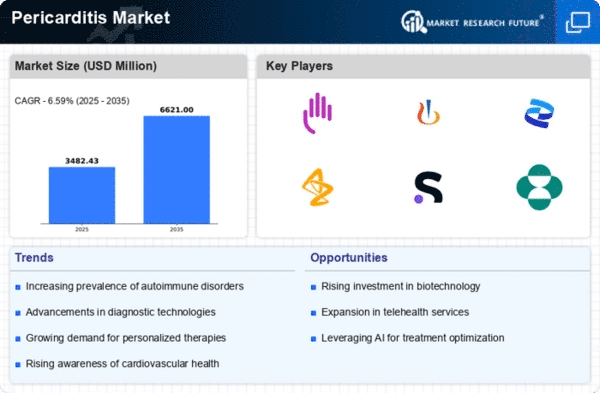
As per MRFR analysis, the Pericarditis Market Size was estimated at 3267.13 USD Million in 2024. The Pericarditis industry is projected to grow from 3519.87 in 2025 to 6621.0 by 2035, exhibiting a compound annual growth rate (CAGR) of 6.59% during the forecast period 2025 - 2035.

Key Market Trends & Highlights

The Pericarditis Market is experiencing notable growth driven by advancements in treatment and rising awareness of cardiovascular health.

  • North America remains the largest market for pericarditis treatments, reflecting a robust healthcare infrastructure. The Asia-Pacific region is identified as the fastest-growing market, driven by increasing healthcare investments and awareness. Acute pericarditis represents the largest segment, while chronic pericarditis is emerging as the fastest-growing segment in the market. Key market drivers include the increasing incidence of pericarditis and advancements in treatment modalities, which are shaping market dynamics.

Market Size & Forecast

2024 Market Size 3267.13 (USD Million)
2035 Market Size 6621.0 (USD Million)
CAGR (2025 - 2035) 6.59%
Largest Regional Market Share in 2024 North America

Major Players

<a href="https://news.bms.com/news/details/2025/Bristol-Myers-Squibb-Receives-Positive-CHMP-Opinion-for-the-Subcutaneous-Formulation-of-Opdivo-nivolumab-Across-Multiple-Solid-Tumor-Indications/default.aspx">Bristol-Myers Squibb</a> (US), Novartis (CH), Pfizer (US), AstraZeneca (GB), Sanofi (FR), Merck &amp; Co. (US), Gilead Sciences (US), Roche (CH)

Market Trends

The Pericarditis Market is currently experiencing notable developments, driven by a combination of increasing awareness regarding cardiovascular diseases and advancements in diagnostic technologies. As healthcare systems evolve, there is a growing emphasis on early detection and effective management of pericarditis, which is a condition characterized by inflammation of the pericardium. This heightened focus is likely to enhance patient outcomes and reduce the burden on healthcare resources. Furthermore, the integration of telemedicine and digital health solutions appears to be transforming how patients access care, potentially leading to improved adherence to treatment protocols and follow-up care.

In addition, the Pericarditis Market is witnessing a surge in research and development activities aimed at discovering novel therapeutic agents. Pharmaceutical companies are investing in innovative drug formulations and treatment modalities, which may offer more effective solutions for managing this condition. The global pericarditis treatment market is anticipated to expand significantly as pharmaceutical innovations and biological therapies provide more targeted options for patients with recurrent and chronic conditions. The collaboration between academic institutions and industry stakeholders seems to be fostering a conducive environment for breakthroughs in treatment options. Overall, the Pericarditis Market is poised for growth, driven by technological advancements, increased awareness, and a commitment to improving patient care.

Rising Awareness of Cardiovascular Health

There is an increasing recognition of the importance of cardiovascular health, which is driving demand for effective management of pericarditis. Educational initiatives and public health campaigns are contributing to this trend, encouraging individuals to seek timely medical attention.

Advancements in Diagnostic Technologies

Innovations in diagnostic tools are enhancing the ability to accurately identify pericarditis. Improved imaging techniques and biomarkers are facilitating earlier diagnosis, which may lead to better treatment outcomes and increased market growth.

Emerging Treatment Options

The development of new therapeutic agents is reshaping the treatment landscape for pericarditis. Research into biologics and targeted therapies suggests a potential shift towards more personalized medicine, which could significantly impact patient care.

Pericarditis Market Market Drivers

Emerging Therapeutic Options

The development of novel therapeutic agents for pericarditis is reshaping the Global Pericarditis Market Industry. Recent advancements in pharmacotherapy, including biologics and targeted therapies, offer new avenues for treatment, particularly for patients with recurrent or chronic pericarditis. These emerging options are designed to improve efficacy and reduce side effects compared to traditional treatments. As clinical trials yield promising results, the market is poised for expansion, with stakeholders keen to capitalize on these innovations. The anticipated growth trajectory suggests a market value of 7.16 USD Billion by 2035, reflecting the potential impact of these therapeutic advancements.

Rising Incidence of Pericarditis

The increasing prevalence of pericarditis globally is a primary driver for the Global Pericarditis Market Industry. Factors such as autoimmune diseases, infections, and post-surgical complications contribute to this rise. For instance, studies indicate that pericarditis affects approximately 27 per 100,000 individuals annually, with higher rates observed in specific demographics. This growing patient population necessitates enhanced diagnostic and therapeutic options, thereby expanding market opportunities. As the market is projected to reach 3.74 USD Billion in 2024, addressing this rising incidence is crucial for stakeholders in the Global Pericarditis Market Industry.

Increased Awareness and Education

Growing awareness about pericarditis among healthcare professionals and the general public is driving the Global Pericarditis Market Industry. Educational initiatives and campaigns aimed at recognizing symptoms and understanding treatment options are essential for early diagnosis and management. This heightened awareness leads to increased patient consultations and demand for medical interventions. Furthermore, as healthcare systems prioritize patient education, the market is expected to benefit from a more informed patient base. This trend aligns with the projected compound annual growth rate of 6.09% from 2025 to 2035, indicating a robust future for the industry.

Advancements in Diagnostic Technologies

Technological innovations in diagnostic tools are significantly influencing the Global Pericarditis Market Industry. Enhanced imaging techniques, such as echocardiography and MRI, allow for more accurate and timely diagnosis of pericarditis. These advancements facilitate early intervention, which is essential for improving patient outcomes. Moreover, the integration of artificial intelligence in diagnostic processes is expected to streamline workflows and reduce diagnostic errors. As these technologies become more widely adopted, they are likely to contribute to the market's growth, with projections indicating a market value of 7.16 USD Billion by 2035.

Rising Investment in Healthcare Infrastructure

The expansion of healthcare infrastructure globally is a significant factor propelling the Global Pericarditis Market Industry. Governments and private entities are investing in healthcare facilities and services, particularly in developing regions. This investment enhances access to medical care, including specialized treatments for pericarditis. Improved healthcare infrastructure facilitates better patient management and follow-up care, which is crucial for chronic conditions like pericarditis. As healthcare systems evolve, the market is likely to experience growth, supported by the increasing availability of resources and services tailored to pericarditis management.

Market Segment Insights

By Type of Pericarditis: Acute Pericarditis (Largest) vs. Chronic Pericarditis (Fastest-Growing)

The Pericarditis Market is primarily dominated by Acute Pericarditis, which represents the largest share due to its widespread prevalence and recognition as a common cardiac condition. Chronic Pericarditis, while less prevalent than its acute counterpart, is gaining significant attention in the market, reflecting its increasing diagnosis and management. This dynamic distribution indicates a sector wherein acute cases lead, yet chronic instances are on the rise, influencing treatment protocols and market dynamics.

Acute Pericarditis (Dominant) vs. Recurrent Pericarditis (Emerging)

Acute Pericarditis is characterized by sudden onset and typically resolves within weeks, making it the dominant type in the global pericarditis market. It is frequently triggered by infections, inflammatory diseases, or injury to the heart, leading to symptoms like chest pain and discomfort, which necessitate prompt treatment. This type stands out due to its clear clinical presentation and management protocols, thus ensuring its enduring prominence in the Pericarditis Market. On the other hand, Chronic Pericarditis has an extended duration of symptoms and often requires ongoing management, making it an emerging focus for patients and healthcare providers alike. This type is closely associated with numerous underlying conditions, resulting in a complex treatment landscape. The increase in identification and diagnosis of chronic cases is propelling its growth, as healthcare advancements lead to better patient outcomes and improved quality of care.

By Treatment Approach: Medication (Largest) vs. Surgical Intervention (Fastest-Growing)

In the Pericarditis market, medication constitutes the largest treatment approach, emphasizing its pivotal role in managing the condition through anti-inflammatory drugs, corticosteroids, and pain relievers. This segment captures a substantial share of the treatment landscape due to its accessibility and effectiveness in mitigating symptoms. Meanwhile, surgical intervention is emerging as the fastest-growing approach, driven by an increasing recognition of its necessity in severe cases, such as constrictive pericarditis, where surgery can dramatically improve patient outcomes. The growth of the Treatment Approach segment is primarily fueled by advancements in medical research and technology, enabling more effective drug formulations and surgical techniques. Additionally, rising awareness about pericarditis and its debilitating effects has led to greater patient engagement in treatment decisions, further propelling the adoption of all treatment modalities. As healthcare providers recognize the need for personalized treatment plans, the combination of medication, surgery, and lifestyle changes is becoming increasingly common, adapting to the unique needs of patients experiencing pericarditis.

Medication (Dominant) vs. Surgical Intervention (Emerging)

Medication remains the dominant treatment approach in managing pericarditis due to its non-invasive nature and established efficacy in alleviating symptoms. This segment includes non-steroidal anti-inflammatory drugs, corticosteroids, and the appropriate use of colchicine, which are widely prescribed to help reduce inflammation and pain. In contrast, surgical intervention is gaining momentum as an emerging approach, particularly for patients with recurrent or persistent symptoms unresponsive to medication. Procedures such as pericardiectomy are becoming more prevalent, supported by research demonstrating their effectiveness in addressing specific complications of pericarditis. As healthcare professionals weigh the benefits of both approaches, there is a growing trend towards integrating medication management with surgical options to optimize patient care.

By Cause of Pericarditis: Infectious Causes (Largest) vs. Autoimmune Disorders (Fastest-Growing)

In the Pericarditis Market, infectious causes represent the largest segment, significantly impacting overall incidence rates. Various infectious agents, including viruses, bacteria, and fungi contribute heavily to pericarditis cases, establishing a dominant market share. Autoimmune disorders, while smaller in total share, are rapidly gaining traction due to increasing awareness and better diagnostic methods among clinicians, particularly for diseases such as lupus and rheumatoid arthritis. Growth trends for the pericarditis segment are largely driven by the rising prevalence of infectious diseases, spurred by globalization and changing social behaviors. On the other hand, autoimmune disorders are becoming an emerging focus area, with advancements in treatment options leading to an increase in the diagnosed cases, thereby fueling growth in this segment. Both trends indicate a need for tailored therapy and management strategies within this complex market.

Infectious Causes (Dominant) vs. Autoimmune Disorders (Emerging)

The infectious causes segment remains the dominant force in the Pericarditis Market, characterized by its extensive prevalence stemming from various pathogens such as viral and bacterial infections. Increasing rates of viral infections, particularly viral pericarditis, underline the segment’s robust positioning. Conversely, the autoimmune disorders segment is marked as an emerging market, reflecting a growing awareness and understanding of conditions like systemic lupus erythematosus and rheumatoid arthritis that lead to pericarditis. Healthcare providers are focusing on personalized treatment approaches to better manage these complex conditions, thus driving growth. With improvements in diagnostics and therapeutic options, this segment is expected to witness significant growth as more patients are identified and treated.

By Diagnosis Method: Imaging Techniques (Largest) vs. Blood Tests (Fastest-Growing)

In the Pericarditis Market, imaging techniques dominate the diagnosis method segment, capturing the largest share due to their ability to provide detailed visualization of the pericardium and surrounding structures. This includes echocardiography, CT scans, and MRI, which are pivotal in diagnosing the condition accurately. Meanwhile, blood tests, while traditionally considered ancillary, are experiencing growth as they provide quick and informative results regarding inflammation and infection, making them increasingly relevant in the overall diagnostic process.

Imaging Techniques (Dominant) vs. Blood Tests (Emerging)

Imaging techniques, particularly echocardiography, are established as the dominant method in the diagnosis of pericarditis, offering high accuracy and detailed anatomical assessment. These techniques allow clinicians to visualize fluid accumulation and other changes in the pericardium, leading to timely and effective treatment. In contrast, blood tests are emerging as an essential part of the diagnostic landscape, helping to identify biomarkers of inflammation. As healthcare evolves and focuses on <a href="https://www.marketresearchfuture.com/reports/rapid-diagnostics-market-11687">rapid diagnostics</a>, the demand for blood tests is increasing, showcasing their potential to complement traditional imaging techniques and enhance patient care.

Get more detailed insights about Pericarditis Market Research Report— Global Forecast till 2035

Regional Insights

North America : Market Leader in Pericarditis

North America is poised to maintain its leadership in the Pericarditis market, holding a significant market share of $1630.0M in 2024. The region's growth is driven by increasing prevalence of cardiovascular diseases, advancements in treatment options, and supportive regulatory frameworks. The demand for innovative therapies is further fueled by rising healthcare expenditures and a focus on patient-centric care. The competitive landscape in North America is robust, featuring key players such as Bristol-Myers Squibb, Pfizer, and Merck & Co. These companies are actively engaged in research and development to enhance treatment efficacy. The U.S. remains the largest market, supported by a well-established healthcare infrastructure and a high rate of clinical trials, ensuring a steady pipeline of new therapies.

Europe : Emerging Market Dynamics

Europe is witnessing a growing interest in the Pericarditis market, with a market size of $900.0M projected for 2025. Factors such as an aging population, increased awareness of cardiovascular health, and regulatory support for new therapies are driving this growth. The European Medicines Agency (EMA) is actively facilitating the approval of innovative treatments, which is expected to enhance market dynamics. The France pericarditis market is a key contributor to regional growth, driven by a strong presence of domestic pharmaceutical giants like Sanofi and an increasing clinical focus on managing recurrent inflammatory heart conditions. Leading countries in this region include Germany, France, and the UK, where healthcare systems are increasingly adopting advanced treatment protocols. Major players like Novartis and AstraZeneca are investing in research and development to meet the rising demand. The competitive landscape is characterized by collaborations and partnerships aimed at enhancing therapeutic options for patients.

Asia-Pacific : Rapidly Growing Market Potential

The Asia-Pacific region is emerging as a significant player in the Pericarditis market, with a projected size of $600.0M by 2025. The growth is driven by increasing healthcare investments, rising awareness of cardiovascular diseases, and a growing patient population. Regulatory bodies are also becoming more supportive of new drug approvals, which is expected to catalyze market expansion in the coming years. Countries like China, India, and Japan are leading the charge, with a focus on improving healthcare access and treatment options. Specifically, the China pericarditis market is expected to witness substantial expansion due to the country's aging demographic and the rapid modernization of its cardiac care facilities. The competitive landscape features both local and international players, including Gilead Sciences and Roche, who are actively working to introduce innovative therapies tailored to regional needs. This dynamic environment presents numerous opportunities for growth and collaboration.

Middle East and Africa : Untapped Market Opportunities

The Middle East and Africa (MEA) region is characterized by its untapped potential in the Pericarditis market, with a market size of $137.13M. Factors such as increasing healthcare investments, rising prevalence of cardiovascular diseases, and a growing focus on healthcare infrastructure are driving this market. Regulatory bodies are beginning to recognize the need for innovative treatments, which is expected to enhance market dynamics in the region. Leading countries include South Africa and the UAE, where healthcare systems are evolving to meet the needs of patients. The expansion of specialized cardiac centers and increased procurement of advanced diagnostic tools are expected to significantly bolster the GCC pericarditis market, particularly in nations like Saudi Arabia and Kuwait. The competitive landscape is still developing, with opportunities for both local and international players to enter the pericarditis market. Companies are focusing on establishing partnerships and collaborations to enhance their presence and offer effective treatment options.

Key Players and Competitive Insights

The Pericarditis Market is currently characterized by a dynamic competitive landscape, driven by increasing incidences of the condition and a growing demand for effective treatment options. Major players such as Bristol-Myers Squibb (US), Novartis (CH), and Pfizer (US) are strategically positioned to leverage their extensive research and development capabilities. Bristol-Myers Squibb (US) focuses on innovative therapies, while Novartis (CH) emphasizes partnerships to enhance its product pipeline. Pfizer (US) is actively pursuing digital transformation initiatives to streamline operations and improve patient engagement. Collectively, these strategies contribute to a competitive environment that is increasingly focused on innovation and patient-centric solutions.Key business tactics within the Pericarditis Market include localizing manufacturing and optimizing supply chains to enhance efficiency and reduce costs. The market structure appears moderately fragmented, with several key players exerting influence over various segments. This fragmentation allows for a diverse range of treatment options, although it also necessitates strategic collaborations among companies to maintain competitive advantage.
In November Novartis (CH) announced a strategic partnership with a leading biotechnology firm to co-develop a novel therapeutic agent for pericarditis. This collaboration is expected to accelerate the development timeline and enhance the efficacy of treatment options available in the market. The strategic importance of this partnership lies in its potential to combine Novartis's extensive resources with innovative approaches from the biotech sector, thereby positioning the company as a leader in the treatment of pericarditis.
In October Pfizer (US) launched a new digital health platform aimed at improving patient adherence to prescribed therapies for pericarditis. This initiative reflects a growing trend towards integrating technology into healthcare, allowing for real-time monitoring and personalized treatment plans. The strategic significance of this move is underscored by the increasing demand for digital solutions in healthcare, which may enhance patient outcomes and foster brand loyalty.
In September Bristol-Myers Squibb (US) expanded its clinical trial program for a promising new drug targeting pericarditis, indicating a strong commitment to research and development. This expansion not only demonstrates the company's dedication to addressing unmet medical needs but also positions it to capture a larger market share as new therapies emerge. The strategic focus on clinical trials is likely to yield valuable data that can inform future product development and marketing strategies.
As of December current competitive trends in the Pericarditis Market are increasingly defined by digitalization, sustainability, and the integration of artificial intelligence (AI) into treatment protocols. Strategic alliances are shaping the landscape, enabling companies to pool resources and expertise to drive innovation. Looking ahead, competitive differentiation is expected to evolve, with a shift from price-based competition towards a focus on technological advancements, innovative therapies, and reliable supply chains. This transition may ultimately enhance patient care and foster long-term growth within the market.

Key Companies in the Pericarditis Market include

Industry Developments

Future Outlook

Pericarditis Market Future Outlook

The Pericarditis Market is projected to grow at a 6.59% CAGR from 2025 to 2035, driven by advancements in treatment options, increasing awareness, and rising prevalence.

New opportunities lie in:

  • <p>Development of targeted biologic therapies for chronic pericarditis management. Expansion of telemedicine platforms for remote patient monitoring. Investment in AI-driven diagnostic tools for early detection of pericarditis.</p>

By 2035, the Pericarditis Market is expected to achieve substantial growth and innovation.

Market Segmentation

Pericarditis Market Diagnosis Method Outlook

  • Imaging Techniques
  • Blood Tests
  • Electrocardiogram
  • Physical Examination

Pericarditis Market Treatment Approach Outlook

  • Medication
  • Surgical Intervention
  • Lifestyle Modification
  • Monitoring and Follow-up

Pericarditis Market Patient Demographics Outlook

  • Age Group
  • Gender
  • Comorbid Conditions
  • Socioeconomic Status

Pericarditis Market Type of Pericarditis Outlook

  • Acute Pericarditis
  • Chronic Pericarditis
  • Recurrent Pericarditis
  • Constrictive Pericarditis

Report Scope

MARKET SIZE 2024 3267.13(USD Million)
MARKET SIZE 2025 3519.87(USD Million)
MARKET SIZE 2035 6621.0(USD Million)
COMPOUND ANNUAL GROWTH RATE (CAGR) 6.59% (2025 - 2035)
REPORT COVERAGE Revenue Forecast, Competitive Landscape, Growth Factors, and Trends
BASE YEAR 2024
Market Forecast Period 2025 - 2035
Historical Data 2019 - 2024
Market Forecast Units USD Million
Key Companies Profiled Bristol-Myers Squibb (US), Novartis (CH), Pfizer (US), AstraZeneca (GB), Sanofi (FR), Merck & Co. (US), Gilead Sciences (US), Roche (CH)
Segments Covered Type of Pericarditis, Treatment Approach, Patient Demographics, Diagnosis Method
Key Market Opportunities Advancements in targeted therapies and diagnostics enhance treatment options in the Pericarditis Market.
Key Market Dynamics Rising demand for innovative therapies drives competitive dynamics in the Pericarditis Market.
Countries Covered North America, Europe, APAC, South America, MEA

FAQs

What is the current valuation of the Pericarditis Market as of 2024?

<p>The Pericarditis Market was valued at approximately 3267.13 USD Million in 2024.</p>

What is the projected market valuation for the Pericarditis Market in 2035?

<p>The market is projected to reach approximately 6621.0 USD Million by 2035.</p>

What is the expected CAGR for the Pericarditis Market during the forecast period 2025 - 2035?

<p>The expected CAGR for the Pericarditis Market during the forecast period 2025 - 2035 is 6.59%.</p>

Which companies are considered key players in the Pericarditis Market?

Key players in the Pericarditis Market include Novartis, Pfizer, Bristol-Myers Squibb, AstraZeneca, Sanofi, Merck &amp; Co., Gilead Sciences, Roche, and Johnson &amp; Johnson.

What are the main types of pericarditis and their market valuations?

<p>The main types of pericarditis include Acute Pericarditis valued at 1000.0 to 2000.0 USD Million, Chronic Pericarditis at 800.0 to 1500.0 USD Million, Recurrent Pericarditis at 600.0 to 1200.0 USD Million, and Constrictive Pericarditis at 867.13 to 1921.0 USD Million.</p>

What treatment approaches are available for pericarditis and their market values?

<p>Treatment approaches for pericarditis include Medication valued at 1300.0 to 2700.0 USD Million, Surgical Intervention at 800.0 to 1600.0 USD Million, Lifestyle Modification at 600.0 to 1200.0 USD Million, and Monitoring and Follow-up at 567.13 to 1121.0 USD Million.</p>

What are the primary causes of pericarditis and their respective market valuations?

The primary causes of pericarditis include Infectious Causes valued at 800.0 to 1600.0 USD Million, Autoimmune Disorders at 900.0 to 1800.0 USD Million, Post-Myocardial Infarction at 700.0 to 1400.0 USD Million, and Trauma or Injury at 867.13 to 1821.0 USD Million.

How does the Pericarditis Market's growth compare to other cardiovascular markets?

While specific comparisons to other cardiovascular markets are not provided, the Pericarditis Market's projected growth at a CAGR of 6.59% during 2025 - 2035 suggests a robust expansion.

What factors may influence the growth of the Pericarditis Market in the coming years?

Factors influencing the growth of the Pericarditis Market may include advancements in treatment options, increasing awareness of pericarditis, and the rising prevalence of underlying conditions.

How does the market segmentation impact the overall Pericarditis Market dynamics?

Market segmentation by type, treatment approach, and cause allows for targeted strategies by key players, potentially enhancing market dynamics and addressing specific patient needs.

  1. SECTION I: EXECUTIVE SUMMARY AND KEY HIGHLIGHTS |
    1. EXECUTIVE SUMMARY | |
      1. Market Overview | |
      2. Key Findings | |
      3. Market Segmentation | |
      4. Competitive Landscape | |
      5. Challenges and Opportunities | |
      6. Future Outlook 2
  2. SECTION II: SCOPING, METHODOLOGY AND MARKET STRUCTURE |
    1. MARKET INTRODUCTION | |
      1. Definition | |
      2. Scope of the study | | |
    2. RESEARCH METHODOLOGY | |
      1. Overview | |
      2. Data Mining | |
      3. Secondary Research | |
      4. Primary Research | | |
      5. Forecasting Model | |
      6. Market Size Estimation | | |
      7. Data Triangulation | |
      8. Validation 3
  3. SECTION III: QUALITATIVE ANALYSIS |
    1. MARKET DYNAMICS | |
      1. Overview | |
      2. Drivers | |
      3. Restraints | |
      4. Opportunities |
    2. MARKET FACTOR ANALYSIS | |
      1. Value chain Analysis | |
      2. Porter's Five Forces Analysis | | |
      3. COVID-19 Impact Analysis | | |
  4. SECTION IV: QUANTITATIVE ANALYSIS |
    1. Healthcare, BY Type of Pericarditis (USD Million) | |
      1. Acute Pericarditis | |
      2. Chronic Pericarditis | |
      3. Recurrent Pericarditis | |
      4. Constrictive Pericarditis |
    2. Healthcare, BY Treatment Approach (USD Million) | |
      1. Medication | |
      2. Surgical Intervention | |
      3. Lifestyle Modification | |
      4. Monitoring and Follow-up |
    3. Healthcare, BY Cause of Pericarditis (USD Million) | |
      1. Infectious Causes | |
      2. Autoimmune Disorders | |
      3. Post-Myocardial Infarction | |
      4. Trauma or Injury |
    4. Healthcare, BY Region (USD Million) | |
      1. North America | | |
      2. Europe | | |
      3. APAC | | |
      4. South America | | |
      5. MEA | | |
  5. SECTION V: COMPETITIVE ANALYSIS |
    1. Competitive Landscape | |
      1. Overview | |
      2. Competitive Analysis | |
      3. Market share Analysis | |
      4. Major Growth Strategy in the Healthcare | |
      5. Competitive Benchmarking | |
      6. Leading Players in Terms of Number of Developments in the Healthcare | |
      7. Key developments and growth strategies | | |
      8. Major Players Financial Matrix | | |
    2. Company Profiles | |
      1. Novartis (CH) | | |
      2. Pfizer (US) | | |
      3. Bristol-Myers Squibb (US) | | |
      4. AstraZeneca (GB) | | |
      5. Sanofi (FR) | | |
      6. Merck & Co. (US) | | |
      7. Gilead Sciences (US) | | |
      8. Roche (CH) | | |
      9. Johnson & Johnson (US) | | |
    3. Appendix | |
      1. References | |
      2. Related Reports 6 LIST OF FIGURES |
    4. MARKET SYNOPSIS |
    5. NORTH AMERICA MARKET ANALYSIS |
    6. US MARKET ANALYSIS BY TYPE OF PERICARDITIS |
    7. US MARKET ANALYSIS BY TREATMENT APPROACH |
    8. US MARKET ANALYSIS BY CAUSE OF PERICARDITIS |
    9. CANADA MARKET ANALYSIS BY TYPE OF PERICARDITIS |
    10. CANADA MARKET ANALYSIS BY TREATMENT APPROACH |
    11. CANADA MARKET ANALYSIS BY CAUSE OF PERICARDITIS |
    12. EUROPE MARKET ANALYSIS |
    13. GERMANY MARKET ANALYSIS BY TYPE OF PERICARDITIS |
    14. GERMANY MARKET ANALYSIS BY TREATMENT APPROACH |
    15. GERMANY MARKET ANALYSIS BY CAUSE OF PERICARDITIS |
    16. UK MARKET ANALYSIS BY TYPE OF PERICARDITIS |
    17. UK MARKET ANALYSIS BY TREATMENT APPROACH |
    18. UK MARKET ANALYSIS BY CAUSE OF PERICARDITIS |
    19. FRANCE MARKET ANALYSIS BY TYPE OF PERICARDITIS |
    20. FRANCE MARKET ANALYSIS BY TREATMENT APPROACH |
    21. FRANCE MARKET ANALYSIS BY CAUSE OF PERICARDITIS |
    22. RUSSIA MARKET ANALYSIS BY TYPE OF PERICARDITIS |
    23. RUSSIA MARKET ANALYSIS BY TREATMENT APPROACH |
    24. RUSSIA MARKET ANALYSIS BY CAUSE OF PERICARDITIS |
    25. ITALY MARKET ANALYSIS BY TYPE OF PERICARDITIS |
    26. ITALY MARKET ANALYSIS BY TREATMENT APPROACH |
    27. ITALY MARKET ANALYSIS BY CAUSE OF PERICARDITIS |
    28. SPAIN MARKET ANALYSIS BY TYPE OF PERICARDITIS |
    29. SPAIN MARKET ANALYSIS BY TREATMENT APPROACH |
    30. SPAIN MARKET ANALYSIS BY CAUSE OF PERICARDITIS |
    31. REST OF EUROPE MARKET ANALYSIS BY TYPE OF PERICARDITIS |
    32. REST OF EUROPE MARKET ANALYSIS BY TREATMENT APPROACH |
    33. REST OF EUROPE MARKET ANALYSIS BY CAUSE OF PERICARDITIS |
    34. APAC MARKET ANALYSIS |
    35. CHINA MARKET ANALYSIS BY TYPE OF PERICARDITIS |
    36. CHINA MARKET ANALYSIS BY TREATMENT APPROACH |
    37. CHINA MARKET ANALYSIS BY CAUSE OF PERICARDITIS |
    38. INDIA MARKET ANALYSIS BY TYPE OF PERICARDITIS |
    39. INDIA MARKET ANALYSIS BY TREATMENT APPROACH |
    40. INDIA MARKET ANALYSIS BY CAUSE OF PERICARDITIS |
    41. JAPAN MARKET ANALYSIS BY TYPE OF PERICARDITIS |
    42. JAPAN MARKET ANALYSIS BY TREATMENT APPROACH |
    43. JAPAN MARKET ANALYSIS BY CAUSE OF PERICARDITIS |
    44. SOUTH KOREA MARKET ANALYSIS BY TYPE OF PERICARDITIS |
    45. SOUTH KOREA MARKET ANALYSIS BY TREATMENT APPROACH |
    46. SOUTH KOREA MARKET ANALYSIS BY CAUSE OF PERICARDITIS |
    47. MALAYSIA MARKET ANALYSIS BY TYPE OF PERICARDITIS |
    48. MALAYSIA MARKET ANALYSIS BY TREATMENT APPROACH |
    49. MALAYSIA MARKET ANALYSIS BY CAUSE OF PERICARDITIS |
    50. THAILAND MARKET ANALYSIS BY TYPE OF PERICARDITIS |
    51. THAILAND MARKET ANALYSIS BY TREATMENT APPROACH |
    52. THAILAND MARKET ANALYSIS BY CAUSE OF PERICARDITIS |
    53. INDONESIA MARKET ANALYSIS BY TYPE OF PERICARDITIS |
    54. INDONESIA MARKET ANALYSIS BY TREATMENT APPROACH |
    55. INDONESIA MARKET ANALYSIS BY CAUSE OF PERICARDITIS |
    56. REST OF APAC MARKET ANALYSIS BY TYPE OF PERICARDITIS |
    57. REST OF APAC MARKET ANALYSIS BY TREATMENT APPROACH |
    58. REST OF APAC MARKET ANALYSIS BY CAUSE OF PERICARDITIS |
    59. SOUTH AMERICA MARKET ANALYSIS |
    60. BRAZIL MARKET ANALYSIS BY TYPE OF PERICARDITIS |
    61. BRAZIL MARKET ANALYSIS BY TREATMENT APPROACH |
    62. BRAZIL MARKET ANALYSIS BY CAUSE OF PERICARDITIS |
    63. MEXICO MARKET ANALYSIS BY TYPE OF PERICARDITIS |
    64. MEXICO MARKET ANALYSIS BY TREATMENT APPROACH |
    65. MEXICO MARKET ANALYSIS BY CAUSE OF PERICARDITIS |
    66. ARGENTINA MARKET ANALYSIS BY TYPE OF PERICARDITIS |
    67. ARGENTINA MARKET ANALYSIS BY TREATMENT APPROACH |
    68. ARGENTINA MARKET ANALYSIS BY CAUSE OF PERICARDITIS |
    69. REST OF SOUTH AMERICA MARKET ANALYSIS BY TYPE OF PERICARDITIS |
    70. REST OF SOUTH AMERICA MARKET ANALYSIS BY TREATMENT APPROACH |
    71. REST OF SOUTH AMERICA MARKET ANALYSIS BY CAUSE OF PERICARDITIS |
    72. MEA MARKET ANALYSIS |
    73. GCC COUNTRIES MARKET ANALYSIS BY TYPE OF PERICARDITIS |
    74. GCC COUNTRIES MARKET ANALYSIS BY TREATMENT APPROACH |
    75. GCC COUNTRIES MARKET ANALYSIS BY CAUSE OF PERICARDITIS |
    76. SOUTH AFRICA MARKET ANALYSIS BY TYPE OF PERICARDITIS |
    77. SOUTH AFRICA MARKET ANALYSIS BY TREATMENT APPROACH |
    78. SOUTH AFRICA MARKET ANALYSIS BY CAUSE OF PERICARDITIS |
    79. REST OF MEA MARKET ANALYSIS BY TYPE OF PERICARDITIS |
    80. REST OF MEA MARKET ANALYSIS BY TREATMENT APPROACH |
    81. REST OF MEA MARKET ANALYSIS BY CAUSE OF PERICARDITIS |
    82. KEY BUYING CRITERIA OF HEALTHCARE |
    83. RESEARCH PROCESS OF MRFR |
    84. DRO ANALYSIS OF HEALTHCARE |
    85. DRIVERS IMPACT ANALYSIS: HEALTHCARE |
    86. RESTRAINTS IMPACT ANALYSIS: HEALTHCARE |
    87. SUPPLY / VALUE CHAIN: HEALTHCARE |
    88. HEALTHCARE, BY TYPE OF PERICARDITIS, 2024 (% SHARE) |
    89. HEALTHCARE, BY TYPE OF PERICARDITIS, 2024 TO 2035 (USD Million) |
    90. HEALTHCARE, BY TREATMENT APPROACH, 2024 (% SHARE) |
    91. HEALTHCARE, BY TREATMENT APPROACH, 2024 TO 2035 (USD Million) |
    92. HEALTHCARE, BY CAUSE OF PERICARDITIS, 2024 (% SHARE) |
    93. HEALTHCARE, BY CAUSE OF PERICARDITIS, 2024 TO 2035 (USD Million) |
    94. BENCHMARKING OF MAJOR COMPETITORS 7 LIST OF TABLES |
    95. LIST OF ASSUMPTIONS | |
      1. |
    96. North America MARKET SIZE ESTIMATES; FORECAST | |
      1. BY TYPE OF PERICARDITIS, 2025-2035 (USD Million) | |
      2. BY TREATMENT APPROACH, 2025-2035 (USD Million) | |
      3. BY CAUSE OF PERICARDITIS, 2025-2035 (USD Million) |
    97. US MARKET SIZE ESTIMATES; FORECAST | |
      1. BY TYPE OF PERICARDITIS, 2025-2035 (USD Million) | |
      2. BY TREATMENT APPROACH, 2025-2035 (USD Million) | |
      3. BY CAUSE OF PERICARDITIS, 2025-2035 (USD Million) |
    98. Canada MARKET SIZE ESTIMATES; FORECAST | |
      1. BY TYPE OF PERICARDITIS, 2025-2035 (USD Million) | |
      2. BY TREATMENT APPROACH, 2025-2035 (USD Million) | |
      3. BY CAUSE OF PERICARDITIS, 2025-2035 (USD Million) |
    99. Europe MARKET SIZE ESTIMATES; FORECAST | |
      1. BY TYPE OF PERICARDITIS, 2025-2035 (USD Million) | |
      2. BY TREATMENT APPROACH, 2025-2035 (USD Million) | |
      3. BY CAUSE OF PERICARDITIS, 2025-2035 (USD Million) |
    100. Germany MARKET SIZE ESTIMATES; FORECAST | |
      1. BY TYPE OF PERICARDITIS, 2025-2035 (USD Million) | |
      2. BY TREATMENT APPROACH, 2025-2035 (USD Million) | |
      3. BY CAUSE OF PERICARDITIS, 2025-2035 (USD Million) |
    101. UK MARKET SIZE ESTIMATES; FORECAST | |
      1. BY TYPE OF PERICARDITIS, 2025-2035 (USD Million) | |
      2. BY TREATMENT APPROACH, 2025-2035 (USD Million) | |
      3. BY CAUSE OF PERICARDITIS, 2025-2035 (USD Million) |
    102. France MARKET SIZE ESTIMATES; FORECAST | |
      1. BY TYPE OF PERICARDITIS, 2025-2035 (USD Million) | |
      2. BY TREATMENT APPROACH, 2025-2035 (USD Million) | |
      3. BY CAUSE OF PERICARDITIS, 2025-2035 (USD Million) |
    103. Russia MARKET SIZE ESTIMATES; FORECAST | |
      1. BY TYPE OF PERICARDITIS, 2025-2035 (USD Million) | |
      2. BY TREATMENT APPROACH, 2025-2035 (USD Million) | |
      3. BY CAUSE OF PERICARDITIS, 2025-2035 (USD Million) |
    104. Italy MARKET SIZE ESTIMATES; FORECAST | |
      1. BY TYPE OF PERICARDITIS, 2025-2035 (USD Million) | |
      2. BY TREATMENT APPROACH, 2025-2035 (USD Million) | |
      3. BY CAUSE OF PERICARDITIS, 2025-2035 (USD Million) |
    105. Spain MARKET SIZE ESTIMATES; FORECAST | |
      1. BY TYPE OF PERICARDITIS, 2025-2035 (USD Million) | |
      2. BY TREATMENT APPROACH, 2025-2035 (USD Million) | |
      3. BY CAUSE OF PERICARDITIS, 2025-2035 (USD Million) |
    106. Rest of Europe MARKET SIZE ESTIMATES; FORECAST | |
      1. BY TYPE OF PERICARDITIS, 2025-2035 (USD Million) | |
      2. BY TREATMENT APPROACH, 2025-2035 (USD Million) | |
      3. BY CAUSE OF PERICARDITIS, 2025-2035 (USD Million) |
    107. APAC MARKET SIZE ESTIMATES; FORECAST | |
      1. BY TYPE OF PERICARDITIS, 2025-2035 (USD Million) | |
      2. BY TREATMENT APPROACH, 2025-2035 (USD Million) | |
      3. BY CAUSE OF PERICARDITIS, 2025-2035 (USD Million) |
    108. China MARKET SIZE ESTIMATES; FORECAST | |
      1. BY TYPE OF PERICARDITIS, 2025-2035 (USD Million) | |
      2. BY TREATMENT APPROACH, 2025-2035 (USD Million) | |
      3. BY CAUSE OF PERICARDITIS, 2025-2035 (USD Million) |
    109. India MARKET SIZE ESTIMATES; FORECAST | |
      1. BY TYPE OF PERICARDITIS, 2025-2035 (USD Million) | |
      2. BY TREATMENT APPROACH, 2025-2035 (USD Million) | |
      3. BY CAUSE OF PERICARDITIS, 2025-2035 (USD Million) |
    110. Japan MARKET SIZE ESTIMATES; FORECAST | |
      1. BY TYPE OF PERICARDITIS, 2025-2035 (USD Million) | |
      2. BY TREATMENT APPROACH, 2025-2035 (USD Million) | |
      3. BY CAUSE OF PERICARDITIS, 2025-2035 (USD Million) |
    111. South Korea MARKET SIZE ESTIMATES; FORECAST | |
      1. BY TYPE OF PERICARDITIS, 2025-2035 (USD Million) | |
      2. BY TREATMENT APPROACH, 2025-2035 (USD Million) | |
      3. BY CAUSE OF PERICARDITIS, 2025-2035 (USD Million) |
    112. Malaysia MARKET SIZE ESTIMATES; FORECAST | |
      1. BY TYPE OF PERICARDITIS, 2025-2035 (USD Million) | |
      2. BY TREATMENT APPROACH, 2025-2035 (USD Million) | |
      3. BY CAUSE OF PERICARDITIS, 2025-2035 (USD Million) |
    113. Thailand MARKET SIZE ESTIMATES; FORECAST | |
      1. BY TYPE OF PERICARDITIS, 2025-2035 (USD Million) | |
      2. BY TREATMENT APPROACH, 2025-2035 (USD Million) | |
      3. BY CAUSE OF PERICARDITIS, 2025-2035 (USD Million) |
    114. Indonesia MARKET SIZE ESTIMATES; FORECAST | |
      1. BY TYPE OF PERICARDITIS, 2025-2035 (USD Million) | |
      2. BY TREATMENT APPROACH, 2025-2035 (USD Million) | |
      3. BY CAUSE OF PERICARDITIS, 2025-2035 (USD Million) |
    115. Rest of APAC MARKET SIZE ESTIMATES; FORECAST | |
      1. BY TYPE OF PERICARDITIS, 2025-2035 (USD Million) | |
      2. BY TREATMENT APPROACH, 2025-2035 (USD Million) | |
      3. BY CAUSE OF PERICARDITIS, 2025-2035 (USD Million) |
    116. South America MARKET SIZE ESTIMATES; FORECAST | |
      1. BY TYPE OF PERICARDITIS, 2025-2035 (USD Million) | |
      2. BY TREATMENT APPROACH, 2025-2035 (USD Million) | |
      3. BY CAUSE OF PERICARDITIS, 2025-2035 (USD Million) |
    117. Brazil MARKET SIZE ESTIMATES; FORECAST | |
      1. BY TYPE OF PERICARDITIS, 2025-2035 (USD Million) | |
      2. BY TREATMENT APPROACH, 2025-2035 (USD Million) | |
      3. BY CAUSE OF PERICARDITIS, 2025-2035 (USD Million) |
    118. Mexico MARKET SIZE ESTIMATES; FORECAST | |
      1. BY TYPE OF PERICARDITIS, 2025-2035 (USD Million) | |
      2. BY TREATMENT APPROACH, 2025-2035 (USD Million) | |
      3. BY CAUSE OF PERICARDITIS, 2025-2035 (USD Million) |
    119. Argentina MARKET SIZE ESTIMATES; FORECAST | |
      1. BY TYPE OF PERICARDITIS, 2025-2035 (USD Million) | |
      2. BY TREATMENT APPROACH, 2025-2035 (USD Million) | |
      3. BY CAUSE OF PERICARDITIS, 2025-2035 (USD Million) |
    120. Rest of South America MARKET SIZE ESTIMATES; FORECAST | |
      1. BY TYPE OF PERICARDITIS, 2025-2035 (USD Million) | |
      2. BY TREATMENT APPROACH, 2025-2035 (USD Million) | |
      3. BY CAUSE OF PERICARDITIS, 2025-2035 (USD Million) |
    121. MEA MARKET SIZE ESTIMATES; FORECAST | |
      1. BY TYPE OF PERICARDITIS, 2025-2035 (USD Million) | |
      2. BY TREATMENT APPROACH, 2025-2035 (USD Million) | |
      3. BY CAUSE OF PERICARDITIS, 2025-2035 (USD Million) |
    122. GCC Countries MARKET SIZE ESTIMATES; FORECAST | |
      1. BY TYPE OF PERICARDITIS, 2025-2035 (USD Million) | |
      2. BY TREATMENT APPROACH, 2025-2035 (USD Million) | |
      3. BY CAUSE OF PERICARDITIS, 2025-2035 (USD Million) |
    123. South Africa MARKET SIZE ESTIMATES; FORECAST | |
      1. BY TYPE OF PERICARDITIS, 2025-2035 (USD Million) | |
      2. BY TREATMENT APPROACH, 2025-2035 (USD Million) | |
      3. BY CAUSE OF PERICARDITIS, 2025-2035 (USD Million) |
    124. Rest of MEA MARKET SIZE ESTIMATES; FORECAST | |
      1. BY TYPE OF PERICARDITIS, 2025-2035 (USD Million) | |
      2. BY TREATMENT APPROACH, 2025-2035 (USD Million) | |
      3. BY CAUSE OF PERICARDITIS, 2025-2035 (USD Million) |
    125. PRODUCT LAUNCH/PRODUCT DEVELOPMENT/APPROVAL | |
      1. |
    126. ACQUISITION/PARTNERSHIP | |

Healthcare Market Segmentation

Healthcare By Type of Pericarditis (USD Million, 2025-2035)

  • Acute Pericarditis
  • Chronic Pericarditis
  • Recurrent Pericarditis
  • Constrictive Pericarditis

Healthcare By Treatment Approach (USD Million, 2025-2035)

  • Medication
  • Surgical Intervention
  • Lifestyle Modification
  • Monitoring and Follow-up

Healthcare By Cause of Pericarditis (USD Million, 2025-2035)

  • Infectious Causes
  • Autoimmune Disorders
  • Post-Myocardial Infarction
  • Trauma or Injury
Infographic

Free Sample Request

Kindly complete the form below to receive a free sample of this Report

Get Free Sample

Customer Strories

Compare Licence

×
Features License Type
Single User Multiuser License Enterprise User
Price $4,950 $5,950 $7,250
Maximum User Access Limit 1 User Upto 10 Users Unrestricted Access Throughout the Organization
Free Customization
Direct Access to Analyst
Deliverable Format
Platform Access
Discount on Next Purchase 10% 15% 15%
Printable Versions