×
Hero Background
English
Chinese
French
Japanese
Korean
German
Spanish

Patient Derived Xenograft Model Market Share

ID: MRFR/HC/10607-HCR
128 Pages
Rahul Gotadki
October 2025

Patient Derived Xenograft Model Market Research Report Information by Tumor Type (Lung Cancer, Pancreatic Cancer, Prostate Cancer, Breast Cancer and Other Cancer), by Model Type (Mice and Rats), by End-User (Pharmaceutical And Biopharmaceutical Companies, Academic & Research Institutes and CROs & CDMOs) And By Region (North America, Europe, Asia-Pacific, And Rest Of The World) –Market Forecast Till 2035

Share:
Download PDF ×

We do not share your information with anyone. However, we may send you emails based on your report interest from time to time. You may contact us at any time to opt-out.

Patient Derived Xenograft Model Market Infographic
Purchase Options

Market Share

Patient Derived Xenograft Model Market Share Analysis

Patient Derived Xenograft (PDX) Model Market is developing at an extremely high pace due to increased need for individualized and targeted cancer therapies, improvement in cancer research methodology and demand for more realistic pre-clinical models. The tumor cells obtained from patients are inserted into immune-deficient mice to produce PDX models. This allows studying the biology of cancer as well as testing drug reactions or even making treatment decisions based on individual patient’s information. One major development in this market is increasing use of patient derived xenografts (PDXs) across various cancers including solid tumors, hematologic malignancies.

The Growing Popularity of Co-Clinical Trials has also caught the attention of the PDX Model Market; it assists in advancing translational research over time. It makes it possible to take any successes from animal experiments directly into clinical practice by having co-clinical experiments where both real patients and PDX models experience those novel treatments effects simultaneously. Furthermore, there is an increasing adoption co-clinical study methodologies by pharmaceutical firms, academic institutions doing research work as well as healthcare organizations aimed at ensuring precision medicine therapies into cancer diseases' management with higher success rate.

More specific PD-Xenograft (PDX) Models targeted at rare or genetically complex cancers have also become available in response to expanding knowledge about cancer genes. There are so many PDX models that can show how different cancer types vary at the molecular level as our understanding of cancer genes increases. This shift is consistent with the broader transition to precision medicine. In this field, PDX models are very important for making treatment decisions based on each patient's unique DNA makeup.

The market calls for more diverse and accurate PDX models. These include those derived from certain population subsets such as pediatric tumors, specific patient groups and different races among others in order to increase the number of available PDX models. By this trend, it is evident that people are realizing that basic research activities should be inclusive enough to capture all individuals so as to take into account possible treatment reactions across different cohorts.

The market for PDX Models embracing Immuno-oncology and Combination therapies reveals a change in focus towards modeling the interaction between cancer and the immune system more effectively. Many individuals now employ humanized mice with engrafted immune cells to study immunotherapies and combination treatments’ effects on both tumor and immune system.


Author
Rahul Gotadki
Assistant Manager

He holds an experience of about 7+ years in Market Research and Business Consulting, working under the spectrum of Life Sciences and Healthcare domains. Rahul conceptualizes and implements a scalable business strategy and provides strategic leadership to the clients. His expertise lies in market estimation, competitive intelligence, pipeline analysis, customer assessment, etc. In addition to the above, his other responsibility includes strategic tracking of high growth markets & advising clients on the potential areas of focus they could direct their business initiatives

Leave a Comment

FAQs

What is the projected market valuation for the Patient Derived Xenograft Model Market in 2035?

The projected market valuation for the Patient Derived Xenograft Model Market in 2035 is 1.249 USD Billion.

What was the overall market valuation for the Patient Derived Xenograft Model Market in 2024?

The overall market valuation for the Patient Derived Xenograft Model Market in 2024 was 0.3161 USD Billion.

What is the expected CAGR for the Patient Derived Xenograft Model Market from 2025 to 2035?

The expected CAGR for the Patient Derived Xenograft Model Market during the forecast period 2025 - 2035 is 13.3%.

Which tumor type segment had the highest valuation in 2024?

In 2024, the tumor type segment with the highest valuation was Lung Cancer, at 0.3192 USD Billion.

What are the two primary model types in the Patient Derived Xenograft Model Market?

The two primary model types in the Patient Derived Xenograft Model Market are Mice and Rats, with valuations of 0.7855 USD Billion and 0.4635 USD Billion, respectively.

Which end-user segment is projected to grow the most by 2035?

The Pharmaceutical and Biopharmaceutical Companies segment is projected to grow the most, with a valuation of 0.5161 USD Billion in 2035.

Market Summary

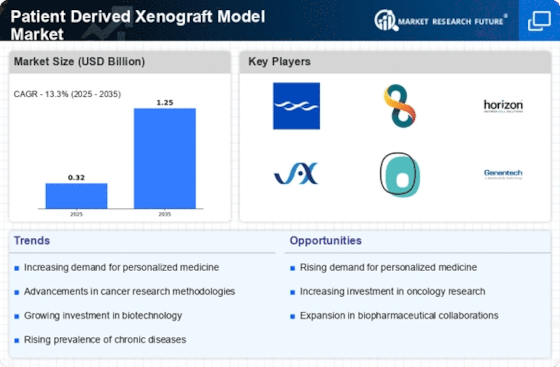
As per MRFR analysis, the Patient Derived Xenograft Model Market Size was estimated at 0.3161 USD Billion in 2024. The Patient Derived Xenograft Model industry is projected to grow from 0.3582 in 2025 to 1.249 by 2035, exhibiting a compound annual growth rate (CAGR) of 13.3 during the forecast period 2025 - 2035.

Key Market Trends & Highlights

The Patient Derived Xenograft Model Market is experiencing robust growth driven by advancements in technology and increasing demand for personalized medicine.

  • The market is witnessing a growing demand for personalized medicine, particularly in North America, which remains the largest market. Enhanced research collaborations are becoming increasingly prevalent, especially in the Asia-Pacific region, recognized as the fastest-growing market. Technological advancements in model development are facilitating more accurate and efficient research methodologies, particularly in lung cancer, the largest segment. The increasing prevalence of cancer and rising investment in cancer research are key drivers propelling market expansion.

Market Size & Forecast

2024 Market Size 0.3161 (USD Billion)
2035 Market Size 1.249 (USD Billion)
CAGR (2025 - 2035) 13.3%
Largest Regional Market Share in 2024 North America

Major Players

<p>Charles River Laboratories (US), <a title="Crown Bioscience" href="https://www.crownbio.com/model/pdx" target="_blank" rel="noopener">Crown Bioscience</a> (US), Horizon Discovery (GB), The Jackson Laboratory (US), OncoOne (US), Genentech (US), Eureka Therapeutics (US), MedImmune (GB), Celerion (US)</p>

Market Trends

The Patient Derived Xenograft Model Market is currently experiencing notable growth, driven by advancements in personalized medicine and the increasing demand for more effective cancer therapies. These models, which involve implanting human tumor tissues into immunocompromised mice, provide researchers with invaluable insights into tumor behavior and treatment responses. As the pharmaceutical industry continues to prioritize the development of targeted therapies, the relevance of patient-derived xenografts in preclinical studies becomes increasingly apparent. This trend suggests a shift towards more tailored approaches in drug development, potentially leading to improved patient outcomes. Moreover, the rising prevalence of cancer globally has intensified the focus on innovative research methodologies. Patient Derived Xenograft Models offer a unique platform for evaluating the efficacy of new drugs and understanding the complexities of tumor microenvironments. Collaborations between academic institutions and biotechnology firms are likely to enhance the capabilities of these models, fostering a more robust research ecosystem. As the Patient Derived Xenograft Model Market evolves, it appears poised to play a crucial role in bridging the gap between laboratory research and clinical application, ultimately contributing to the advancement of cancer treatment strategies.

Growing Demand for Personalized Medicine

The Patient Derived Xenograft Model Market is witnessing an increasing emphasis on personalized medicine. Researchers are seeking models that closely mimic individual patient tumors, allowing for more accurate predictions of treatment responses. This trend indicates a shift towards tailored therapies that cater to the unique genetic profiles of patients.

Enhanced Research Collaborations

There is a noticeable rise in partnerships between academic institutions and biotechnology companies within the Patient Derived Xenograft Model Market. These collaborations aim to leverage shared expertise and resources, potentially accelerating the development of innovative cancer therapies and improving the overall research landscape.

Technological Advancements in Model Development

The Patient Derived Xenograft Model Market is benefiting from technological innovations that enhance model fidelity and usability. New techniques in genetic engineering and imaging are likely to improve the accuracy of these models, thereby providing researchers with more reliable data for drug testing and development.

Patient Derived Xenograft Model Market Market Drivers

Increasing Prevalence of Cancer

The rising incidence of cancer worldwide is a pivotal driver for the Patient Derived Xenograft Model Market. As cancer cases continue to escalate, the demand for innovative research models that can accurately mimic human tumors becomes paramount. Patient derived xenograft models offer a unique advantage by preserving the heterogeneity of the original tumor, thus providing more reliable data for drug testing and therapeutic strategies. According to recent statistics, cancer is projected to affect nearly 1 in 3 individuals during their lifetime, underscoring the urgent need for effective treatment options. This growing prevalence not only fuels research initiatives but also encourages pharmaceutical companies to invest in the development of personalized therapies, further propelling the Patient Derived Xenograft Model Market.

Growing Focus on Drug Development

The increasing emphasis on drug development, particularly in oncology, is a crucial driver for the Patient Derived Xenograft Model Market. Pharmaceutical companies are under pressure to expedite the drug discovery process while ensuring efficacy and safety. Patient derived xenograft models provide a robust platform for evaluating drug responses in a human-like environment, which is essential for reducing the risk of late-stage clinical trial failures. In recent years, the market for oncology drugs has expanded significantly, with projections indicating a value exceeding 300 billion USD by 2025. This growth in drug development initiatives is likely to enhance the adoption of patient derived xenograft models, thereby bolstering the Patient Derived Xenograft Model Market.

Advancements in Genomic Technologies

The rapid evolution of genomic technologies is reshaping the landscape of the Patient Derived Xenograft Model Market. Innovations such as CRISPR and next-generation sequencing enable researchers to create more precise and genetically diverse xenograft models. These advancements allow for the exploration of tumor genetics and the identification of potential therapeutic targets, enhancing the relevance of preclinical studies. As the integration of genomic data into xenograft models becomes more prevalent, the demand for these models is expected to rise. The ability to tailor treatments based on genetic profiles aligns with the broader trend towards personalized medicine, thereby driving the Patient Derived Xenograft Model Market forward.

Rising Investment in Cancer Research

The surge in funding for cancer research is significantly influencing the Patient Derived Xenograft Model Market. Governments, private organizations, and academic institutions are increasingly allocating resources to combat cancer, recognizing the necessity for advanced research methodologies. In 2023, it was reported that global cancer research funding reached approximately 200 billion USD, reflecting a commitment to innovative solutions. This financial support facilitates the development and validation of patient derived xenograft models, which are essential for understanding tumor biology and testing new drugs. As more researchers adopt these models, the Patient Derived Xenograft Model Market is likely to experience substantial growth, driven by the need for effective preclinical testing platforms.

Regulatory Support for Innovative Models

Regulatory bodies are increasingly recognizing the importance of innovative research models, which is positively impacting the Patient Derived Xenograft Model Market. Agencies such as the FDA and EMA are advocating for the use of patient derived xenograft models in preclinical studies, as they provide more predictive data regarding human responses to therapies. This regulatory support encourages researchers and pharmaceutical companies to adopt these models, facilitating a smoother transition from laboratory to clinical settings. As regulations evolve to embrace advanced modeling techniques, the Patient Derived Xenograft Model Market is poised for growth, driven by the need for more reliable and relevant preclinical testing methodologies.

Market Segment Insights

By Tumor Type: Lung Cancer (Largest) vs. Breast Cancer (Fastest-Growing)

<p>In the Patient Derived Xenograft Model Market, Lung Cancer holds a significant portion of the market share, making it the largest segment. This is due to the high prevalence of lung cancer globally, which drives substantial investment into research and development of effective therapies. Meanwhile, <a title="Breast Cancer" href="https://www.marketresearchfuture.com/reports/global-breast-cancer-market-1379" target="_blank" rel="noopener">Breast Cancer</a> is catching up as a rapidly expanding segment, highlighting the urgency in addressing this critical health challenge and the increased focus on personalized medicine treatments for this type of cancer that leads to its noticeable market presence.</p>

<p>Lung Cancer (Dominant) vs. Breast Cancer (Emerging)</p>

<p>Lung Cancer stands as a dominant segment in the Patient Derived Xenograft Model Market, largely due to its high incidence rate and significant research funding aimed at discovering innovative treatment solutions. The introduction of targeted therapies and immunotherapy has also propelled the focus on lung cancer models. On the other hand, Breast Cancer is emerging rapidly within this market, driven by heightened awareness and ongoing breakthroughs in treatment options. The growing emphasis on personalized medicine is leading to increased investment in breast cancer research, representing a shift in focus toward developing precise therapies that can significantly improve patient outcomes.</p>

By Model Type: Mice (Largest) vs. Rats (Fastest-Growing)

<p>In the Patient Derived Xenograft Model Market, the distribution of model types highlights Mice as the most dominant segment, accounting for a significant market share due to their extensive use in preclinical testing. This segment's popularity stems from the mature infrastructure, established protocols, and a wide range of applications in cancer and immunology research. On the other hand, Rats represent a rapidly growing segment, driven by advancements in genetic engineering that allow for the creation of more sophisticated models for human diseases. Their increasing acceptance in various experimental protocols is reflected in the growing number of studies utilizing Rat models.</p>

<p>Model Type: Mice (Dominant) vs. Rats (Emerging)</p>

<p>Mice have long been the cornerstone of the Patient Derived Xenograft Model Market, recognized for their size, reproductive rate, and genetic similarities to humans. They provide reliable and reproducible results, making them the preferred choice for researchers. Conversely, Rats are emerging as a significant player in this market segment, primarily due to their larger body size, which allows for more complex surgical procedures and higher tumor burden in xenograft studies. This characteristic enhances their potential for translational research, leading to increased investment and innovation in Rat model development as a viable alternative to traditional methods.</p>

By End-user: Pharmaceutical and Biopharmaceutical Companies (Largest) vs. Academic & Research Institutes (Fastest-Growing)

<p>The Patient Derived Xenograft Model Market showcases a diverse distribution among its end-users, with pharmaceutical and biopharmaceutical companies holding the largest share. This segment benefits significantly from the growing advancements in drug development and the increasing demand for personalized medicine. In contrast, academic and research institutes are rapidly expanding their presence in the market, driven by a surge in research activities and funding. Contract Research Organizations (CROs) and Contract Development and Manufacturing Organizations (CDMOs) play a supportive role, contributing to the overall ecosystem but holding a comparatively smaller market share.</p>

<p>Pharmaceutical and Biopharmaceutical Companies (Dominant) vs. Academic &amp; Research Institutes (Emerging)</p>

<p>The pharmaceutical and biopharmaceutical companies dominate the Patient Derived Xenograft Model Market due to their substantial investments in R&amp;D and a robust pipeline of drug candidates that necessitate preclinical testing in relevant models. Their established infrastructure and expertise allow for extensive utilization of xenograft models to evaluate drug efficacy and safety. Conversely, academic and research institutes are emerging players, harnessing these models for innovative research and collaboration with industry partners. This segment is characterized by its agility and pioneering research that often leads to new insights into cancer treatment and drug development, establishing its growing importance in the market.</p>

Get more detailed insights about Patient Derived Xenograft Model Market Research Report 2035

Regional Insights

North America : Leading Innovation and Research

North America is the largest market for Patient Derived Xenograft (PDX) models, holding approximately 45% of the global market share. The region's growth is driven by advanced healthcare infrastructure, significant investments in R&D, and a strong presence of biopharmaceutical companies. Regulatory support from agencies like the FDA further catalyzes market expansion, ensuring compliance and safety in xenograft research. The United States is the primary contributor, with key players such as Charles River Laboratories and Genentech leading the competitive landscape. Canada also plays a significant role, focusing on innovative cancer therapies and personalized medicine. The presence of numerous research institutions and collaborations enhances the region's capability to develop and utilize PDX models effectively.

Europe : Emerging Research Hub

Europe is the second-largest market for Patient Derived Xenograft models, accounting for around 30% of the global share. The region benefits from robust healthcare systems and increasing funding for cancer research initiatives. Regulatory frameworks, such as the European Medicines Agency guidelines, support the development and use of PDX models, fostering innovation and collaboration among research institutions. Leading countries include Germany, the UK, and France, where significant investments in biotechnology and pharmaceutical sectors are evident. Key players like Horizon Discovery and MedImmune are actively involved in advancing PDX technologies. The competitive landscape is characterized by partnerships between academia and industry, enhancing the region's research capabilities and market growth.

Asia-Pacific : Rapidly Growing Market

Asia-Pacific is witnessing rapid growth in the Patient Derived Xenograft model market, holding approximately 20% of the global share. The region's expansion is fueled by increasing investments in healthcare infrastructure, rising prevalence of cancer, and growing demand for personalized medicine. Countries like China and Japan are at the forefront, supported by favorable government policies and funding for biopharmaceutical research. China is emerging as a significant player, with numerous biotech firms focusing on PDX models. Japan also contributes to the market with advanced research capabilities and collaborations with global companies. The competitive landscape is evolving, with local firms partnering with international players to enhance their technological expertise and market reach.

Middle East and Africa : Untapped Potential

The Middle East and Africa region is gradually developing its Patient Derived Xenograft model market, currently holding about 5% of the global share. The growth is driven by increasing healthcare investments and a rising focus on cancer research. Countries like South Africa and the UAE are making strides in establishing research facilities and collaborations to enhance their capabilities in xenograft studies. The competitive landscape is still emerging, with local institutions beginning to partner with international organizations to leverage expertise in PDX models. The region's potential is significant, as governments are increasingly recognizing the importance of advanced cancer research in improving healthcare outcomes. Continued investment and regulatory support will be crucial for future growth.

Key Players and Competitive Insights

The Patient Derived Xenograft Model Market is characterized by a dynamic competitive landscape, driven by increasing demand for personalized medicine and advancements in cancer research. Key players such as Charles River Laboratories (US), Crown Bioscience (US), and Horizon Discovery (GB) are strategically positioned to leverage their expertise in preclinical models and biopharmaceutical development. These companies focus on innovation and partnerships to enhance their product offerings and expand their market reach. The collective strategies of these firms contribute to a moderately fragmented market structure, where collaboration and technological advancements play pivotal roles in shaping competitive dynamics.

In terms of business tactics, companies are increasingly localizing manufacturing and optimizing supply chains to enhance operational efficiency. This approach not only reduces costs but also improves responsiveness to market demands. The competitive structure of the Patient Derived Xenograft Model Market appears to be moderately fragmented, with several key players influencing market trends through their strategic initiatives. The interplay between these companies fosters a competitive environment that encourages innovation and collaboration.

In August 2025, Charles River Laboratories (US) announced a strategic partnership with a leading biotechnology firm to develop advanced xenograft models tailored for specific cancer types. This collaboration is expected to enhance their product portfolio and position them as a leader in personalized medicine solutions. The strategic importance of this partnership lies in its potential to accelerate the development of targeted therapies, thereby addressing the growing need for precision oncology.

In September 2025, Crown Bioscience (US) launched a new line of patient-derived xenograft models that incorporate advanced genomic profiling techniques. This initiative aims to provide researchers with more accurate preclinical data, facilitating the development of effective cancer treatments. The introduction of these models signifies Crown Bioscience's commitment to innovation and its strategic focus on enhancing the quality of preclinical research.

In July 2025, Horizon Discovery (GB) expanded its operations by establishing a new facility dedicated to the production of patient-derived xenograft models. This expansion is anticipated to increase their manufacturing capacity and improve supply chain reliability. The strategic significance of this move lies in Horizon's ability to meet the rising demand for customized xenograft models, thereby solidifying its position in the market.

As of October 2025, current competitive trends in the Patient Derived Xenograft Model Market include a strong emphasis on digitalization, sustainability, and the integration of artificial intelligence in research processes. Strategic alliances among key players are increasingly shaping the landscape, fostering innovation and enhancing product offerings. Looking ahead, competitive differentiation is likely to evolve from traditional price-based competition to a focus on technological advancements, innovation, and supply chain reliability, reflecting the industry's shift towards more sophisticated and effective solutions in cancer research.

Key Companies in the Patient Derived Xenograft Model Market market include

Industry Developments

  • Q2 2024: Charles River Laboratories Announces Opening of New PDX Model Production Facility in Massachusetts Charles River Laboratories opened a new facility dedicated to the production and expansion of patient-derived xenograft (PDX) models for oncology research, aiming to meet growing demand from pharmaceutical and biotech clients.
  • Q1 2024: Taconic Biosciences Launches Expanded Portfolio of Humanized PDX Mouse Models Taconic Biosciences announced the launch of new humanized PDX mouse models designed to improve preclinical testing of immuno-oncology therapies, expanding their offerings for cancer drug development.
  • Q2 2024: The Jackson Laboratory and AstraZeneca Announce Strategic Partnership to Advance PDX Model-Based Cancer Research The Jackson Laboratory entered a partnership with AstraZeneca to co-develop and validate new PDX models for use in precision oncology research and drug development.
  • Q3 2024: Crown Bioscience Receives FDA Clearance for Novel PDX Platform in Preclinical Oncology Studies Crown Bioscience received FDA clearance for its new PDX platform, enabling expanded use of patient-derived xenograft models in preclinical oncology studies for pharmaceutical clients.
  • Q2 2024: Genentech Invests $30 Million in PDX Model Development for Next-Generation Cancer Therapies Genentech announced a $30 million investment to accelerate the development of advanced PDX models, supporting its pipeline of targeted cancer therapies.
  • Q1 2025: Envigo Expands PDX Model Production Capacity with New Facility in the UK Envigo opened a new facility in the United Kingdom to increase its production capacity for patient-derived xenograft models, addressing rising demand from European pharmaceutical companies.
  • Q2 2025: BioIVT Acquires PDX Model Assets from TransCure BioServices BioIVT completed the acquisition of patient-derived xenograft model assets from TransCure BioServices, strengthening its position in the preclinical oncology research market.
  • Q1 2024: Cureline Announces Collaboration with Novartis to Develop Custom PDX Models for Rare Cancers Cureline entered a collaboration with Novartis to develop custom patient-derived xenograft models targeting rare cancer types, aiming to support novel drug discovery efforts.
  • Q3 2024: Crown Bioscience Launches New PDX Model Catalog for Immuno-Oncology Research Crown Bioscience launched a new catalog of PDX models specifically designed for immuno-oncology research, providing expanded options for pharmaceutical and biotech clients.
  • Q2 2025: Charles River Laboratories Announces Partnership with Merck to Advance PDX Model-Based Drug Development Charles River Laboratories formed a partnership with Merck to co-develop and utilize patient-derived xenograft models in the preclinical evaluation of new cancer therapies.
  • Q1 2025: The Jackson Laboratory Appoints Dr. Emily Chen as Director of PDX Model Research The Jackson Laboratory appointed Dr. Emily Chen as Director of PDX Model Research, overseeing the expansion and innovation of patient-derived xenograft model programs.
  • Q3 2025: Taconic Biosciences Secures $15 Million Series B Funding to Expand PDX Model Offerings Taconic Biosciences raised $15 million in Series B funding to support the expansion of its patient-derived xenograft model portfolio and invest in new technologies for cancer research.

Future Outlook

Patient Derived Xenograft Model Market Future Outlook

<p>The Patient Derived Xenograft Model Market is projected to grow at a 13.3% CAGR from 2024 to 2035, driven by advancements in personalized medicine, increased R&amp;D investments, and rising demand for effective cancer therapies.</p>

New opportunities lie in:

  • <p>Development of customized xenograft models for specific cancer types</p>
  • <p>Partnerships with biotech firms for co-development of novel therapies</p>
  • <p>Expansion into emerging markets with tailored product offerings</p>

<p>By 2035, the market is expected to solidify its position as a leader in cancer research and treatment innovation.</p>

Market Segmentation

Patient Derived Xenograft Model Market End-user Outlook

  • Pharmaceutical and Biopharmaceutical Companies
  • Academic & Research Institutes
  • CROs & CDMOs

Patient Derived Xenograft Model Market Model Type Outlook

  • Mice
  • Rats

Patient Derived Xenograft Model Market Tumor Type Outlook

  • Lung Cancer
  • Pancreatic Cancer
  • Prostate Cancer
  • Breast Cancer
  • Other Cancer

Report Scope

MARKET SIZE 2024 0.3161(USD Billion)
MARKET SIZE 2025 0.3582(USD Billion)
MARKET SIZE 2035 1.249(USD Billion)
COMPOUND ANNUAL GROWTH RATE (CAGR) 13.3% (2024 - 2035)
REPORT COVERAGE Revenue Forecast, Competitive Landscape, Growth Factors, and Trends
BASE YEAR 2024
Market Forecast Period 2025 - 2035
Historical Data 2019 - 2024
Market Forecast Units USD Billion
Key Companies Profiled Market analysis in progress
Segments Covered Market segmentation analysis in progress
Key Market Opportunities Advancements in personalized medicine drive demand for innovative Patient Derived Xenograft Model solutions.
Key Market Dynamics Rising demand for personalized medicine drives innovation and competition in the Patient Derived Xenograft Model Market.
Countries Covered North America, Europe, APAC, South America, MEA

FAQs

What is the projected market valuation for the Patient Derived Xenograft Model Market in 2035?

The projected market valuation for the Patient Derived Xenograft Model Market in 2035 is 1.249 USD Billion.

What was the overall market valuation for the Patient Derived Xenograft Model Market in 2024?

The overall market valuation for the Patient Derived Xenograft Model Market in 2024 was 0.3161 USD Billion.

What is the expected CAGR for the Patient Derived Xenograft Model Market from 2025 to 2035?

The expected CAGR for the Patient Derived Xenograft Model Market during the forecast period 2025 - 2035 is 13.3%.

Which tumor type segment had the highest valuation in 2024?

In 2024, the tumor type segment with the highest valuation was Lung Cancer, at 0.3192 USD Billion.

What are the two primary model types in the Patient Derived Xenograft Model Market?

The two primary model types in the Patient Derived Xenograft Model Market are Mice and Rats, with valuations of 0.7855 USD Billion and 0.4635 USD Billion, respectively.

Which end-user segment is projected to grow the most by 2035?

The Pharmaceutical and Biopharmaceutical Companies segment is projected to grow the most, with a valuation of 0.5161 USD Billion in 2035.

  1. SECTION I: EXECUTIVE SUMMARY AND KEY HIGHLIGHTS
    1. EXECUTIVE SUMMARY
      1. Market Overview
      2. Key Findings
      3. Market Segmentation
      4. Competitive Landscape
      5. Challenges and Opportunities
      6. Future Outlook 2
  2. SECTION II: SCOPING, METHODOLOGY AND MARKET STRUCTURE
    1. MARKET INTRODUCTION
      1. Definition
      2. Scope of the study
    2. RESEARCH METHODOLOGY
      1. Overview
      2. Data Mining
      3. Secondary Research
      4. Primary Research
      5. Forecasting Model
      6. Market Size Estimation
      7. Data Triangulation
      8. Validation 3
  3. SECTION III: QUALITATIVE ANALYSIS
    1. MARKET DYNAMICS
      1. Overview
      2. Drivers
      3. Restraints
      4. Opportunities
    2. MARKET FACTOR ANALYSIS
      1. Value chain Analysis
      2. Porter's Five Forces Analysis
      3. COVID-19 Impact Analysis
  4. SECTION IV: QUANTITATIVE ANALYSIS
    1. Healthcare, BY Tumor Type (USD Billion)
      1. Lung Cancer
      2. Pancreatic Cancer
      3. Prostate Cancer
      4. Breast Cancer
      5. Other Cancer
    2. Healthcare, BY Model Type (USD Billion)
      1. Mice
      2. Rats
    3. Healthcare, BY End-user (USD Billion)
      1. Pharmaceutical and Biopharmaceutical Companies
      2. Academic & Research Institutes
      3. CROs & CDMOs
    4. Healthcare, BY Region (USD Billion)
      1. North America
      2. Europe
      3. APAC
      4. South America
      5. MEA
  5. SECTION V: COMPETITIVE ANALYSIS
    1. Competitive Landscape
      1. Overview
      2. Competitive Analysis
      3. Market share Analysis
      4. Major Growth Strategy in the Healthcare
      5. Competitive Benchmarking
      6. Leading Players in Terms of Number of Developments in the Healthcare
      7. Key developments and growth strategies
      8. Major Players Financial Matrix
    2. Company Profiles
      1. Charles River Laboratories (US)
      2. Crown Bioscience (US)
      3. Horizon Discovery (GB)
      4. The Jackson Laboratory (US)
      5. OncoOne (US)
      6. Genentech (US)
      7. Eureka Therapeutics (US)
      8. MedImmune (GB)
      9. Celerion (US)
    3. Appendix
      1. References
      2. Related Reports 6 LIST OF FIGURES
    4. MARKET SYNOPSIS
    5. NORTH AMERICA MARKET ANALYSIS
    6. US MARKET ANALYSIS BY TUMOR TYPE
    7. US MARKET ANALYSIS BY MODEL TYPE
    8. US MARKET ANALYSIS BY END-USER
    9. CANADA MARKET ANALYSIS BY TUMOR TYPE
    10. CANADA MARKET ANALYSIS BY MODEL TYPE
    11. CANADA MARKET ANALYSIS BY END-USER
    12. EUROPE MARKET ANALYSIS
    13. GERMANY MARKET ANALYSIS BY TUMOR TYPE
    14. GERMANY MARKET ANALYSIS BY MODEL TYPE
    15. GERMANY MARKET ANALYSIS BY END-USER
    16. UK MARKET ANALYSIS BY TUMOR TYPE
    17. UK MARKET ANALYSIS BY MODEL TYPE
    18. UK MARKET ANALYSIS BY END-USER
    19. FRANCE MARKET ANALYSIS BY TUMOR TYPE
    20. FRANCE MARKET ANALYSIS BY MODEL TYPE
    21. FRANCE MARKET ANALYSIS BY END-USER
    22. RUSSIA MARKET ANALYSIS BY TUMOR TYPE
    23. RUSSIA MARKET ANALYSIS BY MODEL TYPE
    24. RUSSIA MARKET ANALYSIS BY END-USER
    25. ITALY MARKET ANALYSIS BY TUMOR TYPE
    26. ITALY MARKET ANALYSIS BY MODEL TYPE
    27. ITALY MARKET ANALYSIS BY END-USER
    28. SPAIN MARKET ANALYSIS BY TUMOR TYPE
    29. SPAIN MARKET ANALYSIS BY MODEL TYPE
    30. SPAIN MARKET ANALYSIS BY END-USER
    31. REST OF EUROPE MARKET ANALYSIS BY TUMOR TYPE
    32. REST OF EUROPE MARKET ANALYSIS BY MODEL TYPE
    33. REST OF EUROPE MARKET ANALYSIS BY END-USER
    34. APAC MARKET ANALYSIS
    35. CHINA MARKET ANALYSIS BY TUMOR TYPE
    36. CHINA MARKET ANALYSIS BY MODEL TYPE
    37. CHINA MARKET ANALYSIS BY END-USER
    38. INDIA MARKET ANALYSIS BY TUMOR TYPE
    39. INDIA MARKET ANALYSIS BY MODEL TYPE
    40. INDIA MARKET ANALYSIS BY END-USER
    41. JAPAN MARKET ANALYSIS BY TUMOR TYPE
    42. JAPAN MARKET ANALYSIS BY MODEL TYPE
    43. JAPAN MARKET ANALYSIS BY END-USER
    44. SOUTH KOREA MARKET ANALYSIS BY TUMOR TYPE
    45. SOUTH KOREA MARKET ANALYSIS BY MODEL TYPE
    46. SOUTH KOREA MARKET ANALYSIS BY END-USER
    47. MALAYSIA MARKET ANALYSIS BY TUMOR TYPE
    48. MALAYSIA MARKET ANALYSIS BY MODEL TYPE
    49. MALAYSIA MARKET ANALYSIS BY END-USER
    50. THAILAND MARKET ANALYSIS BY TUMOR TYPE
    51. THAILAND MARKET ANALYSIS BY MODEL TYPE
    52. THAILAND MARKET ANALYSIS BY END-USER
    53. INDONESIA MARKET ANALYSIS BY TUMOR TYPE
    54. INDONESIA MARKET ANALYSIS BY MODEL TYPE
    55. INDONESIA MARKET ANALYSIS BY END-USER
    56. REST OF APAC MARKET ANALYSIS BY TUMOR TYPE
    57. REST OF APAC MARKET ANALYSIS BY MODEL TYPE
    58. REST OF APAC MARKET ANALYSIS BY END-USER
    59. SOUTH AMERICA MARKET ANALYSIS
    60. BRAZIL MARKET ANALYSIS BY TUMOR TYPE
    61. BRAZIL MARKET ANALYSIS BY MODEL TYPE
    62. BRAZIL MARKET ANALYSIS BY END-USER
    63. MEXICO MARKET ANALYSIS BY TUMOR TYPE
    64. MEXICO MARKET ANALYSIS BY MODEL TYPE
    65. MEXICO MARKET ANALYSIS BY END-USER
    66. ARGENTINA MARKET ANALYSIS BY TUMOR TYPE
    67. ARGENTINA MARKET ANALYSIS BY MODEL TYPE
    68. ARGENTINA MARKET ANALYSIS BY END-USER
    69. REST OF SOUTH AMERICA MARKET ANALYSIS BY TUMOR TYPE
    70. REST OF SOUTH AMERICA MARKET ANALYSIS BY MODEL TYPE
    71. REST OF SOUTH AMERICA MARKET ANALYSIS BY END-USER
    72. MEA MARKET ANALYSIS
    73. GCC COUNTRIES MARKET ANALYSIS BY TUMOR TYPE
    74. GCC COUNTRIES MARKET ANALYSIS BY MODEL TYPE
    75. GCC COUNTRIES MARKET ANALYSIS BY END-USER
    76. SOUTH AFRICA MARKET ANALYSIS BY TUMOR TYPE
    77. SOUTH AFRICA MARKET ANALYSIS BY MODEL TYPE
    78. SOUTH AFRICA MARKET ANALYSIS BY END-USER
    79. REST OF MEA MARKET ANALYSIS BY TUMOR TYPE
    80. REST OF MEA MARKET ANALYSIS BY MODEL TYPE
    81. REST OF MEA MARKET ANALYSIS BY END-USER
    82. KEY BUYING CRITERIA OF HEALTHCARE
    83. RESEARCH PROCESS OF MRFR
    84. DRO ANALYSIS OF HEALTHCARE
    85. DRIVERS IMPACT ANALYSIS: HEALTHCARE
    86. RESTRAINTS IMPACT ANALYSIS: HEALTHCARE
    87. SUPPLY / VALUE CHAIN: HEALTHCARE
    88. HEALTHCARE, BY TUMOR TYPE, 2024 (% SHARE)
    89. HEALTHCARE, BY TUMOR TYPE, 2024 TO 2035 (USD Billion)
    90. HEALTHCARE, BY MODEL TYPE, 2024 (% SHARE)
    91. HEALTHCARE, BY MODEL TYPE, 2024 TO 2035 (USD Billion)
    92. HEALTHCARE, BY END-USER, 2024 (% SHARE)
    93. HEALTHCARE, BY END-USER, 2024 TO 2035 (USD Billion)
    94. BENCHMARKING OF MAJOR COMPETITORS 7 LIST OF TABLES
    95. LIST OF ASSUMPTIONS
    96. North America MARKET SIZE ESTIMATES; FORECAST
      1. BY TUMOR TYPE, 2025-2035 (USD Billion)
      2. BY MODEL TYPE, 2025-2035 (USD Billion)
      3. BY END-USER, 2025-2035 (USD Billion)
    97. US MARKET SIZE ESTIMATES; FORECAST
      1. BY TUMOR TYPE, 2025-2035 (USD Billion)
      2. BY MODEL TYPE, 2025-2035 (USD Billion)
      3. BY END-USER, 2025-2035 (USD Billion)
    98. Canada MARKET SIZE ESTIMATES; FORECAST
      1. BY TUMOR TYPE, 2025-2035 (USD Billion)
      2. BY MODEL TYPE, 2025-2035 (USD Billion)
      3. BY END-USER, 2025-2035 (USD Billion)
    99. Europe MARKET SIZE ESTIMATES; FORECAST
      1. BY TUMOR TYPE, 2025-2035 (USD Billion)
      2. BY MODEL TYPE, 2025-2035 (USD Billion)
      3. BY END-USER, 2025-2035 (USD Billion)
    100. Germany MARKET SIZE ESTIMATES; FORECAST
      1. BY TUMOR TYPE, 2025-2035 (USD Billion)
      2. BY MODEL TYPE, 2025-2035 (USD Billion)
      3. BY END-USER, 2025-2035 (USD Billion)
    101. UK MARKET SIZE ESTIMATES; FORECAST
      1. BY TUMOR TYPE, 2025-2035 (USD Billion)
      2. BY MODEL TYPE, 2025-2035 (USD Billion)
      3. BY END-USER, 2025-2035 (USD Billion)
    102. France MARKET SIZE ESTIMATES; FORECAST
      1. BY TUMOR TYPE, 2025-2035 (USD Billion)
      2. BY MODEL TYPE, 2025-2035 (USD Billion)
      3. BY END-USER, 2025-2035 (USD Billion)
    103. Russia MARKET SIZE ESTIMATES; FORECAST
      1. BY TUMOR TYPE, 2025-2035 (USD Billion)
      2. BY MODEL TYPE, 2025-2035 (USD Billion)
      3. BY END-USER, 2025-2035 (USD Billion)
    104. Italy MARKET SIZE ESTIMATES; FORECAST
      1. BY TUMOR TYPE, 2025-2035 (USD Billion)
      2. BY MODEL TYPE, 2025-2035 (USD Billion)
      3. BY END-USER, 2025-2035 (USD Billion)
    105. Spain MARKET SIZE ESTIMATES; FORECAST
      1. BY TUMOR TYPE, 2025-2035 (USD Billion)
      2. BY MODEL TYPE, 2025-2035 (USD Billion)
      3. BY END-USER, 2025-2035 (USD Billion)
    106. Rest of Europe MARKET SIZE ESTIMATES; FORECAST
      1. BY TUMOR TYPE, 2025-2035 (USD Billion)
      2. BY MODEL TYPE, 2025-2035 (USD Billion)
      3. BY END-USER, 2025-2035 (USD Billion)
    107. APAC MARKET SIZE ESTIMATES; FORECAST
      1. BY TUMOR TYPE, 2025-2035 (USD Billion)
      2. BY MODEL TYPE, 2025-2035 (USD Billion)
      3. BY END-USER, 2025-2035 (USD Billion)
    108. China MARKET SIZE ESTIMATES; FORECAST
      1. BY TUMOR TYPE, 2025-2035 (USD Billion)
      2. BY MODEL TYPE, 2025-2035 (USD Billion)
      3. BY END-USER, 2025-2035 (USD Billion)
    109. India MARKET SIZE ESTIMATES; FORECAST
      1. BY TUMOR TYPE, 2025-2035 (USD Billion)
      2. BY MODEL TYPE, 2025-2035 (USD Billion)
      3. BY END-USER, 2025-2035 (USD Billion)
    110. Japan MARKET SIZE ESTIMATES; FORECAST
      1. BY TUMOR TYPE, 2025-2035 (USD Billion)
      2. BY MODEL TYPE, 2025-2035 (USD Billion)
      3. BY END-USER, 2025-2035 (USD Billion)
    111. South Korea MARKET SIZE ESTIMATES; FORECAST
      1. BY TUMOR TYPE, 2025-2035 (USD Billion)
      2. BY MODEL TYPE, 2025-2035 (USD Billion)
      3. BY END-USER, 2025-2035 (USD Billion)
    112. Malaysia MARKET SIZE ESTIMATES; FORECAST
      1. BY TUMOR TYPE, 2025-2035 (USD Billion)
      2. BY MODEL TYPE, 2025-2035 (USD Billion)
      3. BY END-USER, 2025-2035 (USD Billion)
    113. Thailand MARKET SIZE ESTIMATES; FORECAST
      1. BY TUMOR TYPE, 2025-2035 (USD Billion)
      2. BY MODEL TYPE, 2025-2035 (USD Billion)
      3. BY END-USER, 2025-2035 (USD Billion)
    114. Indonesia MARKET SIZE ESTIMATES; FORECAST
      1. BY TUMOR TYPE, 2025-2035 (USD Billion)
      2. BY MODEL TYPE, 2025-2035 (USD Billion)
      3. BY END-USER, 2025-2035 (USD Billion)
    115. Rest of APAC MARKET SIZE ESTIMATES; FORECAST
      1. BY TUMOR TYPE, 2025-2035 (USD Billion)
      2. BY MODEL TYPE, 2025-2035 (USD Billion)
      3. BY END-USER, 2025-2035 (USD Billion)
    116. South America MARKET SIZE ESTIMATES; FORECAST
      1. BY TUMOR TYPE, 2025-2035 (USD Billion)
      2. BY MODEL TYPE, 2025-2035 (USD Billion)
      3. BY END-USER, 2025-2035 (USD Billion)
    117. Brazil MARKET SIZE ESTIMATES; FORECAST
      1. BY TUMOR TYPE, 2025-2035 (USD Billion)
      2. BY MODEL TYPE, 2025-2035 (USD Billion)
      3. BY END-USER, 2025-2035 (USD Billion)
    118. Mexico MARKET SIZE ESTIMATES; FORECAST
      1. BY TUMOR TYPE, 2025-2035 (USD Billion)
      2. BY MODEL TYPE, 2025-2035 (USD Billion)
      3. BY END-USER, 2025-2035 (USD Billion)
    119. Argentina MARKET SIZE ESTIMATES; FORECAST
      1. BY TUMOR TYPE, 2025-2035 (USD Billion)
      2. BY MODEL TYPE, 2025-2035 (USD Billion)
      3. BY END-USER, 2025-2035 (USD Billion)
    120. Rest of South America MARKET SIZE ESTIMATES; FORECAST
      1. BY TUMOR TYPE, 2025-2035 (USD Billion)
      2. BY MODEL TYPE, 2025-2035 (USD Billion)
      3. BY END-USER, 2025-2035 (USD Billion)
    121. MEA MARKET SIZE ESTIMATES; FORECAST
      1. BY TUMOR TYPE, 2025-2035 (USD Billion)
      2. BY MODEL TYPE, 2025-2035 (USD Billion)
      3. BY END-USER, 2025-2035 (USD Billion)
    122. GCC Countries MARKET SIZE ESTIMATES; FORECAST
      1. BY TUMOR TYPE, 2025-2035 (USD Billion)
      2. BY MODEL TYPE, 2025-2035 (USD Billion)
      3. BY END-USER, 2025-2035 (USD Billion)
    123. South Africa MARKET SIZE ESTIMATES; FORECAST
      1. BY TUMOR TYPE, 2025-2035 (USD Billion)
      2. BY MODEL TYPE, 2025-2035 (USD Billion)
      3. BY END-USER, 2025-2035 (USD Billion)
    124. Rest of MEA MARKET SIZE ESTIMATES; FORECAST
      1. BY TUMOR TYPE, 2025-2035 (USD Billion)
      2. BY MODEL TYPE, 2025-2035 (USD Billion)
      3. BY END-USER, 2025-2035 (USD Billion)
    125. PRODUCT LAUNCH/PRODUCT DEVELOPMENT/APPROVAL
    126. ACQUISITION/PARTNERSHIP

Market Segmentation

Patient Derived Xenograft Model Tumor Type (USD Billion, 2018-2032)

  • Lung Cancer
  • Pancreatic Cancer
  • Prostate Cancer
  • Breast Cancer
  • Other Cancer

Patient Derived Xenograft Model Model Type (USD Billion, 2018-2032)

  • Mice
  • Rats

Patient Derived Xenograft Model End-user (USD Billion, 2018-2032)

  • Pharmaceutical And Biopharmaceutical Companies
  • Academic & Research Institutes
  • CROs & CDMOs

 Patient Derived Xenograft Model Regional (USD Billion, 2018-2032)

  • North America Outlook (USD Billion, 2018-2032)

    • Patient Derived Xenograft Model by Tumor Type
      • Lung Cancer
      • Pancreatic Cancer
      • Prostate Cancer
      • Breast Cancer
      • Other Cancer
    • Patient Derived Xenograft Model by Model Type
      • Mice
      • Rats
    • Patient Derived Xenograft Model by End-user
      • Pharmaceutical And Biopharmaceutical Companies
      • Academic & Research Institutes
      • CROs & CDMOs
    • US Outlook (USD Billion, 2018-2032)

    • Patient Derived Xenograft Model by Tumor Type
      • Lung Cancer
      • Pancreatic Cancer
      • Prostate Cancer
      • Breast Cancer
      • Other Cancer
    • Patient Derived Xenograft Model by Model Type
      • Mice
      • Rats
    • Patient Derived Xenograft Model by End-user
      • Pharmaceutical And Biopharmaceutical Companies
      • Academic & Research Institutes
      • CROs & CDMOs
    • Canada Outlook (USD Billion, 2018-2032)

    • Patient Derived Xenograft Model by Tumor Type
      • Lung Cancer
      • Pancreatic Cancer
      • Prostate Cancer
      • Breast Cancer
      • Other Cancer
    • Patient Derived Xenograft Model by Model Type
      • Mice
      • Rats
    • Patient Derived Xenograft Model by End-user
      • Pharmaceutical And Biopharmaceutical Companies
      • Academic & Research Institutes
      • CROs & CDMOs
  • Europe Outlook (USD Billion, 2018-2032)

    • Patient Derived Xenograft Model by Tumor Type
      • Lung Cancer
      • Pancreatic Cancer
      • Prostate Cancer
      • Breast Cancer
      • Other Cancer
    • Patient Derived Xenograft Model by Model Type
      • Mice
      • Rats
    • Patient Derived Xenograft Model by End-user
      • Pharmaceutical And Biopharmaceutical Companies
      • Academic & Research Institutes
      • CROs & CDMOs
    • Germany Outlook (USD Billion, 2018-2032)

    • Patient Derived Xenograft Model by Tumor Type
      • Lung Cancer
      • Pancreatic Cancer
      • Prostate Cancer
      • Breast Cancer
      • Other Cancer
    • Patient Derived Xenograft Model by Model Type
      • Mice
      • Rats
    • Patient Derived Xenograft Model by End-user
      • Pharmaceutical And Biopharmaceutical Companies
      • Academic & Research Institutes
      • CROs & CDMOs
    • France Outlook (USD Billion, 2018-2032)

    • Patient Derived Xenograft Model by Tumor Type
      • Lung Cancer
      • Pancreatic Cancer
      • Prostate Cancer
      • Breast Cancer
      • Other Cancer
    • Patient Derived Xenograft Model by Model Type
      • Mice
      • Rats
    • Patient Derived Xenograft Model by End-user
      • Pharmaceutical And Biopharmaceutical Companies
      • Academic & Research Institutes
      • CROs & CDMOs
    • UK Outlook (USD Billion, 2018-2032)

    • Patient Derived Xenograft Model by Tumor Type
      • Lung Cancer
      • Pancreatic Cancer
      • Prostate Cancer
      • Breast Cancer
      • Other Cancer
    • Patient Derived Xenograft Model by Model Type
      • Mice
      • Rats
    • Patient Derived Xenograft Model by End-user
      • Pharmaceutical And Biopharmaceutical Companies
      • Academic & Research Institutes
      • CROs & CDMOs
    • Italy Outlook (USD Billion, 2018-2032)

    • Patient Derived Xenograft Model by Tumor Type
      • Lung Cancer
      • Pancreatic Cancer
      • Prostate Cancer
      • Breast Cancer
      • Other Cancer
    • Patient Derived Xenograft Model by Model Type
      • Mice
      • Rats
    • Patient Derived Xenograft Model by End-user
      • Pharmaceutical And Biopharmaceutical Companies
      • Academic & Research Institutes
      • CROs & CDMOs
    • Spain Outlook (USD Billion, 2018-2032)

    • Patient Derived Xenograft Model by Tumor Type
      • Lung Cancer
      • Pancreatic Cancer
      • Prostate Cancer
      • Breast Cancer
      • Other Cancer
    • Patient Derived Xenograft Model by Model Type
      • Mice
      • Rats
    • Patient Derived Xenograft Model by End-user
      • Pharmaceutical And Biopharmaceutical Companies
      • Academic & Research Institutes
      • CROs & CDMOs
    • Rest Of Europe Outlook (USD Billion, 2018-2032)

    • Patient Derived Xenograft Model by Tumor Type
      • Lung Cancer
      • Pancreatic Cancer
      • Prostate Cancer
      • Breast Cancer
      • Other Cancer
    • Patient Derived Xenograft Model by Model Type
      • Mice
      • Rats
    • Patient Derived Xenograft Model by End-user
      • Pharmaceutical And Biopharmaceutical Companies
      • Academic & Research Institutes
      • CROs & CDMOs
  • Asia-Pacific Outlook (USD Billion, 2018-2032)

    • Patient Derived Xenograft Model by Tumor Type
      • Lung Cancer
      • Pancreatic Cancer
      • Prostate Cancer
      • Breast Cancer
      • Other Cancer
    • Patient Derived Xenograft Model by Model Type
      • Mice
      • Rats
    • Patient Derived Xenograft Model by End-user
      • Pharmaceutical And Biopharmaceutical Companies
      • Academic & Research Institutes
      • CROs & CDMOs
    • China Outlook (USD Billion, 2018-2032)

    • Patient Derived Xenograft Model by Tumor Type
      • Lung Cancer
      • Pancreatic Cancer
      • Prostate Cancer
      • Breast Cancer
      • Other Cancer
    • Patient Derived Xenograft Model by Model Type
      • Mice
      • Rats
    • Patient Derived Xenograft Model by End-user
      • Pharmaceutical And Biopharmaceutical Companies
      • Academic & Research Institutes
      • CROs & CDMOs
    • Japan Outlook (USD Billion, 2018-2032)

    • Patient Derived Xenograft Model by Tumor Type
      • Lung Cancer
      • Pancreatic Cancer
      • Prostate Cancer
      • Breast Cancer
      • Other Cancer
    • Patient Derived Xenograft Model by Model Type
      • Mice
      • Rats
    • Patient Derived Xenograft Model by End-user
      • Pharmaceutical And Biopharmaceutical Companies
      • Academic & Research Institutes
      • CROs & CDMOs
    • India Outlook (USD Billion, 2018-2032)

    • Patient Derived Xenograft Model by Tumor Type
      • Lung Cancer
      • Pancreatic Cancer
      • Prostate Cancer
      • Breast Cancer
      • Other Cancer
    • Patient Derived Xenograft Model by Model Type
      • Mice
      • Rats
    • Patient Derived Xenograft Model by End-user
      • Pharmaceutical And Biopharmaceutical Companies
      • Academic & Research Institutes
      • CROs & CDMOs
    • Australia Outlook (USD Billion, 2018-2032)

    • Patient Derived Xenograft Model by Tumor Type
      • Lung Cancer
      • Pancreatic Cancer
      • Prostate Cancer
      • Breast Cancer
      • Other Cancer
    • Patient Derived Xenograft Model by Model Type
      • Mice
      • Rats
    • Patient Derived Xenograft Model by End-user
      • Pharmaceutical And Biopharmaceutical Companies
      • Academic & Research Institutes
      • CROs & CDMOs
    • Rest of Asia-Pacific Outlook (USD Billion, 2018-2032)

    • Patient Derived Xenograft Model by Tumor Type
      • Lung Cancer
      • Pancreatic Cancer
      • Prostate Cancer
      • Breast Cancer
      • Other Cancer
    • Patient Derived Xenograft Model by Model Type
      • Mice
      • Rats
    • Patient Derived Xenograft Model by End-user
      • Pharmaceutical And Biopharmaceutical Companies
      • Academic & Research Institutes
      • CROs & CDMOs
  • Rest of the World Outlook (USD Billion, 2018-2032)

    • Patient Derived Xenograft Model by Tumor Type
      • Lung Cancer
      • Pancreatic Cancer
      • Prostate Cancer
      • Breast Cancer
      • Other Cancer
    • Patient Derived Xenograft Model by Model Type
      • Mice
      • Rats
    • Patient Derived Xenograft Model by End-user
      • Pharmaceutical And Biopharmaceutical Companies
      • Academic & Research Institutes
      • CROs & CDMOs
    • Middle East Outlook (USD Billion, 2018-2032)

    • Patient Derived Xenograft Model by Tumor Type
      • Lung Cancer
      • Pancreatic Cancer
      • Prostate Cancer
      • Breast Cancer
      • Other Cancer
    • Patient Derived Xenograft Model by Model Type
      • Mice
      • Rats
    • Patient Derived Xenograft Model by End-user
      • Pharmaceutical And Biopharmaceutical Companies
      • Academic & Research Institutes
      • CROs & CDMOs
    • Africa Outlook (USD Billion, 2018-2032)

    • Patient Derived Xenograft Model by Tumor Type
      • Lung Cancer
      • Pancreatic Cancer
      • Prostate Cancer
      • Breast Cancer
      • Other Cancer
    • Patient Derived Xenograft Model by Model Type
      • Mice
      • Rats
    • Patient Derived Xenograft Model by End-user
      • Pharmaceutical And Biopharmaceutical Companies
      • Academic & Research Institutes
      • CROs & CDMOs
    • Latin America Outlook (USD Billion, 2018-2032)

    • Patient Derived Xenograft Model by Tumor Type
      • Lung Cancer
      • Pancreatic Cancer
      • Prostate Cancer
      • Breast Cancer
      • Other Cancer
    • Patient Derived Xenograft Model by Model Type
      • Mice
      • Rats
    • Patient Derived Xenograft Model by End-user
      • Pharmaceutical And Biopharmaceutical Companies
      • Academic & Research Institutes
      • CROs & CDMOs
Infographic

Free Sample Request

Kindly complete the form below to receive a free sample of this Report

Get Free Sample

Customer Strories

Compare Licence

×
Features License Type
Single User Multiuser License Enterprise User
Price $4,950 $5,950 $7,250
Maximum User Access Limit 1 User Upto 10 Users Unrestricted Access Throughout the Organization
Free Customization
Direct Access to Analyst
Deliverable Format
Platform Access
Discount on Next Purchase 10% 15% 15%
Printable Versions