×
Request Free Sample ×

Kindly complete the form below to receive a free sample of this Report

* Please use a valid business email

Leading companies partner with us for data-driven Insights

clients tt-cursor
Hero Background
English
Chinese
French
Japanese
Korean
German
Spanish

Oxygen Therapy Device Market Trends

ID: MRFR/MED/2147-HCR
80 Pages
Rahul Gotadki
October 2025

Oxygen Therapy Device Market Research Report: Size, Share, Trend Analysis By Types (Oxygen Concentrators, Liquid Oxygen Systems, Oxygen Cylinders, Portable Oxygen Devices, Oxygen Accessories), By Applications (Chronic Obstructive Pulmonary Disease, Asthma, Respiratory Distress Syndrome, Sleep Apnea, Cystic Fibrosis), By End Use (Hospitals, Home Care Settings, Emergency Medical Services, Long-term Care Facilities), By Technology (Continuous Flow Technology, Pulse Dose Technology, Hybrid Oxygen Therapy) and By Regional (North America, Europe, ... read more

Share:
Download PDF ×

We do not share your information with anyone. However, we may send you emails based on your report interest from time to time. You may contact us at any time to opt-out.

Oxygen Therapy Device Market Infographic
×
Oxygen Therapy Device Market Infographic Full View
Purchase Options

Market Trends

Key Emerging Trends in the Oxygen Therapy Device Market

Household oxygen treatment is getting a lot of attention. The market is seeing a rise in demand for oxygen therapy devices that can be used safely and successfully at home as healthcare trends move toward care that is focused on the patient and managing chronic conditions at home.

Adding smart and linked gadgets to a market is changing how it works. Digital oxygen therapy devices with online tracking and connection to healthcare platforms help patients follow their treatment plans more closely, let healthcare workers see how they're doing in real time, and let patients make changes to their treatment plans as needed.

On the market, people are trying to come up with breathing options that don't cost too much. The cost and availability of oxygen treatment are getting better thanks to efforts to make products that are more cheap, look into ways to get compensation, and set up long-term plans for oxygen delivery.

New ideas in oxygen distribution methods are changing the way the market works. High-flow nose cannulas and non-invasive breathing devices are examples of more advanced delivery systems that offer more exact control of oxygen delivery. This makes patients more comfortable and improves their results in a number of lung conditions.

The growing number of older people is a big thing that helps the global market. There is a bigger need for oxygen therapy tools to help people breathe because breathing troubles linked to getting older are becoming more popular. A number of people are buying non-invasive breathing equipment in the Oxygen Therapy equipment market. These machines, like bilevel positive airway pressure (BiPAP) and continuous positive airway pressure (CPAP) machines, give people who have trouble breathing more choices for when they need extra help breathing.

Designers of oxygen therapy devices are thinking about how to make greener products. One way to make oxygen therapy tools less damaging to the environment is to make them use less energy and materials that are better for the environment. This fits in with bigger attempts to make healthcare last longer. Access problems to air, especially in places with few resources, are still a concern in the market. Governments, non-governmental groups, and makers are working together to fix problems with infrastructure and make oxygen treatment easier to get in places that don't have it.
Author
Rahul Gotadki
Assistant Manager

He holds an experience of about 7+ years in Market Research and Business Consulting, working under the spectrum of Life Sciences and Healthcare domains. Rahul conceptualizes and implements a scalable business strategy and provides strategic leadership to the clients. His expertise lies in market estimation, competitive intelligence, pipeline analysis, customer assessment, etc. In addition to the above, his other responsibility includes strategic tracking of high growth markets & advising clients on the potential areas of focus they could direct their business initiatives

Leave a Comment

FAQs

What is the projected growth of the Oxygen Therapy Device market?

The Oxygen Therapy Device market is the expected increase in total market value of 5.01 USD billion over a defined forecast period 2025–2035. It is driven by factors such as demand trends, technological advances, regulatory changes, and geographic expansion.

What is the size of the Oxygen Therapy Device market?

Oxygen Therapy Device market size was valued at approximately 2.42 billion USD in 2024. This figure will reach 5.01 billion USD covering all regions (America, Europe, Asia, MEA and ROW), focusing its segments / services / distribution channels till 2035.

What is the CAGR of the Oxygen Therapy Device market?

Oxygen Therapy Device market is expected to grow at a CAGR of 6.82% between 2025 and 2035.

How much will the Oxygen Therapy Device market be worth by 2035?

Oxygen Therapy Device market is expected to be worth of 5.01 billion USD, reflecting growth driven by usage, technology and global demands by the end of 2035.

How will the Oxygen Therapy Device market perform over the next 10 years?

Over the next 10 years the Oxygen Therapy Device market is expected to shift from usd billion 2.42 to 5.01 billion USD, led by adoption of advanced tech, demographic trends, regulatory approvals, with potential headwinds from 2025 to 2035.

What is the projected market size for the Oxygen Therapy Device Market by 2035?

By 2035, the Oxygen Therapy Device Market is projected to reach 5.0 billion USD.

Which region is expected to hold the largest market share in the Oxygen Therapy Device Market by 2035?

North America is expected to hold the largest market share, valued at 1.85 billion USD by 2035.

What is the market size of Oxygen Concentrators in 2024 and 2035?

Oxygen Concentrators are valued at 1.3 billion USD in 2024 and expected to reach 2.0 billion USD by 2035.

Who are the major players in the Oxygen Therapy Device Market?

Key players include Invacare, O2 Concepts, Breas Medical, Fisher & Paykel Healthcare, and Medtronic, among others.

What is the market value of Liquid Oxygen Systems in 2024 and 2035?

The market value for Liquid Oxygen Systems is expected to be 0.75 billion USD in 2024 and 1.2 billion USD by 2035.

Market Summary

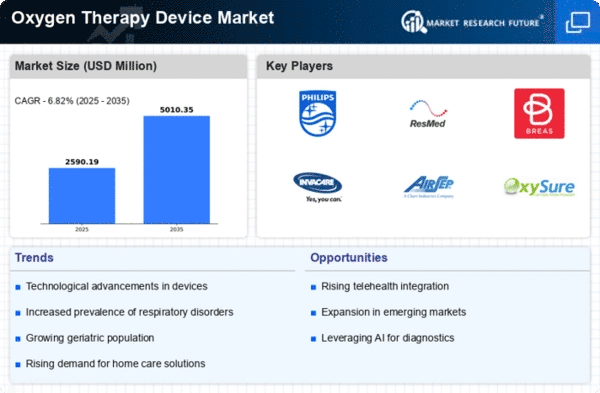
As per MRFR analysis, the Oxygen Therapy Device Market was estimated at 2424.82 USD Million in 2024. The Oxygen Therapy Device industry is projected to grow from 2590.2 USD Million in 2025 to 5010.35 USD Million by 2035, exhibiting a compound annual growth rate (CAGR) of 6.82 during the forecast period 2025 - 2035.

Key Market Trends & Highlights

The Oxygen Therapy Device Market is experiencing robust growth driven by technological advancements and increasing demand for home care solutions.

  • Technological advancements are enhancing the efficiency and effectiveness of oxygen delivery systems.
  • North America remains the largest market, while Asia-Pacific is recognized as the fastest-growing region in this sector.
  • Chronic Obstructive Pulmonary Disease represents the largest segment, whereas Sleep Apnea is the fastest-growing segment in the market.
  • Rising prevalence of respiratory disorders and increasing adoption of home healthcare services are key drivers propelling market growth.

Market Size & Forecast

2024 Market Size 2424.82 (USD Million)
2035 Market Size 5010.35 (USD Million)
CAGR (2025 - 2035) 6.82%
Largest Regional Market Share in 2024 North America

Major Players

Philips (NL), ResMed (AU), Breas Medical (SE), Invacare (US), AirSep Corporation (US), OxySure Systems (US), DeVilbiss Healthcare (US), Nidek Medical (JP), Fisher & Paykel Healthcare (NZ)

Market Trends

The Oxygen Therapy Device Market is currently experiencing notable transformations driven by advancements in technology and increasing awareness regarding respiratory health. The rise in chronic respiratory diseases, coupled with an aging population, appears to be propelling demand for oxygen therapy solutions. Innovations in portable devices and home care systems suggest a shift towards more user-friendly options, enabling patients to manage their conditions more effectively in their own environments. Furthermore, the integration of telehealth services into oxygen therapy is likely enhancing patient monitoring and adherence to treatment protocols, which could lead to improved health outcomes. In addition, regulatory bodies are increasingly focusing on ensuring the safety and efficacy of oxygen therapy devices. This regulatory scrutiny may foster a more competitive landscape, encouraging manufacturers to invest in research and development. As the market evolves, it seems that the emphasis on personalized medicine and tailored therapies will play a crucial role in shaping future offerings. Overall, the Oxygen Therapy Device Market is poised for growth, driven by technological advancements and a heightened focus on patient-centric care.

Technological Advancements

Recent innovations in oxygen therapy devices indicate a trend towards more sophisticated and efficient solutions. Developments in portable oxygen concentrators and smart devices suggest a growing preference for user-friendly options that enhance mobility and convenience for patients.

Home Care Solutions

The increasing shift towards home healthcare appears to be influencing the Oxygen Therapy Device Market significantly. Patients are likely to prefer devices that facilitate treatment in the comfort of their homes, leading to a rise in demand for home-based oxygen therapy solutions.

Regulatory Focus

There seems to be an intensified focus on regulatory compliance within the Oxygen Therapy Device Market. Stricter guidelines and standards may encourage manufacturers to prioritize safety and efficacy, potentially resulting in higher quality products for consumers.

Oxygen Therapy Device Market Market Drivers

Rising Prevalence of Respiratory Disorders

The Global Oxygen Therapy Device Market Industry is experiencing growth due to the increasing prevalence of respiratory disorders such as chronic obstructive pulmonary disease and asthma. According to health statistics, respiratory diseases are among the leading causes of morbidity and mortality worldwide. This trend is likely to drive the demand for oxygen therapy devices, as patients require supplemental oxygen to manage their conditions effectively. The market is projected to reach 3.27 USD Billion in 2024, indicating a robust need for innovative therapeutic solutions. As awareness of respiratory health continues to rise, the Global Oxygen Therapy Device Market Industry is expected to expand significantly.

Regulatory Support and Reimbursement Policies

Regulatory support and favorable reimbursement policies are crucial factors propelling the Global Oxygen Therapy Device Market Industry. Governments and health authorities are implementing regulations that facilitate the approval and distribution of oxygen therapy devices, ensuring they meet safety and efficacy standards. Additionally, reimbursement policies that cover the costs of these devices encourage healthcare providers to prescribe them more frequently. This supportive regulatory environment is likely to enhance patient access to oxygen therapy, thereby driving market growth. As the industry evolves, continued regulatory support will be essential for sustaining the momentum of the Global Oxygen Therapy Device Market.

Technological Advancements in Oxygen Therapy Devices

Technological innovations play a pivotal role in the Global Oxygen Therapy Device Market Industry. The introduction of portable oxygen concentrators and advanced delivery systems enhances patient mobility and comfort. These devices are designed to provide precise oxygen delivery, improving patient outcomes. Moreover, advancements in telemedicine and remote monitoring technologies allow healthcare providers to track patient progress in real-time. This integration of technology not only enhances the efficacy of oxygen therapy but also contributes to the overall growth of the market, which is anticipated to reach 5 USD Billion by 2035. The ongoing development of user-friendly devices is likely to attract a broader patient demographic.

Aging Population and Increased Healthcare Expenditure

The aging population is a significant driver of the Global Oxygen Therapy Device Market Industry. As individuals age, the likelihood of developing respiratory conditions increases, leading to a higher demand for oxygen therapy. Additionally, rising healthcare expenditure globally facilitates access to advanced medical technologies, including oxygen therapy devices. Governments and healthcare systems are investing in better healthcare infrastructure, which supports the adoption of these devices. The market is expected to grow at a CAGR of 3.94% from 2025 to 2035, reflecting the increasing need for effective respiratory care solutions among the elderly population.

Growing Awareness and Education on Respiratory Health

Increased awareness and education regarding respiratory health significantly influence the Global Oxygen Therapy Device Market Industry. Public health campaigns and educational initiatives are fostering a better understanding of respiratory diseases and the importance of oxygen therapy. This heightened awareness encourages individuals to seek medical advice and treatment, thereby driving demand for oxygen therapy devices. Healthcare professionals are also emphasizing the role of oxygen therapy in managing chronic respiratory conditions, which further supports market growth. As awareness continues to expand, the Global Oxygen Therapy Device Market Industry is poised for substantial development in the coming years.

Market Segment Insights

By Application: Chronic Obstructive Pulmonary Disease (Largest) vs. Sleep Apnea (Fastest-Growing)

The Oxygen Therapy Device Market showcases a distinct distribution of market share among its primary applications. Chronic Obstructive Pulmonary Disease (COPD) emerges as the largest segment, driven by a significant patient population and a growing awareness of respiratory ailments. Other segments, such as Asthma and Pneumonia, maintain notable shares, reflecting their prevalence and related healthcare expenditures. However, Sleep Apnea has garnered increased attention and investment, indicating a shift in therapeutic focus as awareness grows, making it a key player in the market.

Chronic Obstructive Pulmonary Disease (Dominant) vs. Sleep Apnea (Emerging)

Chronic Obstructive Pulmonary Disease (COPD) continues to dominate the Oxygen Therapy Device Market due to its widespread prevalence and the increasing number of patients diagnosed each year. This condition requires continuous management through oxygen therapy, solidifying its market position. Conversely, Sleep Apnea is emerging rapidly as a significant application area; driven by rising detection rates and enhanced diagnostic methods, it reflects a growing acknowledgment of the condition's prevalence. Innovative solutions and devices are entering the market, catering to the specific needs of these patients. As more healthcare providers recognize the importance of treating sleep-related breathing disorders, the demand for Oxygen Therapy devices specific to Sleep Apnea is set to grow judiciously.

By Device Type: Portable Oxygen Concentrators (Largest) vs. Stationary Oxygen Concentrators (Fastest-Growing)

In the Oxygen Therapy Device Market, the distribution of market share among segment values shows that Portable Oxygen Concentrators lead as the largest segment due to their convenience and mobility. They cater to a wide range of patients, providing flexibility in usage. In contrast, Stationary Oxygen Concentrators capture the attention with growing market share, appealing to patients who require consistent oxygen supply at home. Other segments such as Oxygen Cylinders, Liquid Oxygen Devices, and Oxygen Masks play supportive roles in the market, catering to specific needs and preferences. The growth trends indicate that the Oxygen Therapy Device segment is witnessing robust advancements due to increasing chronic respiratory diseases and an aging population. The rising awareness of therapeutic oxygen's benefits and an emphasis on home healthcare are driving sales for Portable Oxygen Concentrators. Meanwhile, Stationary Oxygen Concentrators are also expanding rapidly as they evolve with technological improvements, making them more user-friendly and efficient, thus appealing to a growing number of patients requiring continuous therapy.

Portable Oxygen Concentrators (Dominant) vs. Stationary Oxygen Concentrators (Emerging)

Portable Oxygen Concentrators hold a dominant position in the Oxygen Therapy Device Market due to their lightweight design and ease of transport, making them ideal for active patients. They offer the advantage of being powered by batteries, which allows users to maintain mobility without being tethered to electrical outlets. Conversely, Stationary Oxygen Concentrators are emerging as a favorable choice for users who need continuous therapy at home. These devices are often more powerful and can deliver higher flow rates, making them suitable for patients with severe respiratory conditions. Both segments cater to varying patient requirements, with Portable units favored for mobility and Stationary units for their operational efficiency in a home setting.

By End Use: Home Care (Largest) vs. Hospitals (Fastest-Growing)

The Oxygen Therapy Device Market is witnessing a significant distribution among various end-use sectors, with Home Care leading due to an increasing aging population and a rising prevalence of respiratory diseases. Home Care holds the largest market share as more patients prefer receiving therapy in the comfort of their homes. Following closely are Hospitals, which are rapidly adapting to advanced technologies to provide optimal treatment, making this segment the fastest-growing in the market.

Home Care (Dominant) vs. Hospitals (Emerging)

Home Care is the dominant segment in the Oxygen Therapy Device Market, driven by the preference for at-home treatment solutions that offer convenience and comfort to patients with chronic respiratory conditions. Increased healthcare expenditure and technological advancements in portable oxygen concentrators and other devices have bolstered this segment's growth. Conversely, the Hospitals segment is emerging rapidly as healthcare institutions expand their capacity and upgrade equipment to cater to a growing patient base. The integration of smart technology in hospitals is enhancing patient outcomes, thus contributing to significant growth in this segment.

Get more detailed insights about Oxygen Therapy Device Market Research Report- Forecast To 2035

Regional Insights

North America : Market Leader in Innovation

North America is poised to maintain its leadership in the Oxygen Therapy Device Market, with a market size of $1214.91M in 2025. The region's growth is driven by an aging population, increasing prevalence of respiratory diseases, and advancements in technology. Regulatory support from agencies like the FDA further catalyzes innovation and market expansion, ensuring that patients have access to the latest therapeutic options. The United States stands as the largest market, hosting key players such as Invacare, AirSep Corporation, and DeVilbiss Healthcare. The competitive landscape is characterized by continuous product development and strategic partnerships. Companies are focusing on enhancing user experience and integrating smart technologies into devices, which is expected to drive further growth in the coming years.

Europe : Emerging Market with Growth Potential

Europe's Oxygen Therapy Device Market is projected to reach $726.0M by 2025, driven by increasing healthcare expenditure and a growing awareness of respiratory health. The region benefits from robust regulatory frameworks that promote innovation and ensure patient safety. The European Medicines Agency (EMA) plays a crucial role in facilitating the approval of new devices, which is essential for market growth. Leading countries such as Germany, France, and the UK are at the forefront of this market, with significant contributions from companies like Philips and Breas Medical. The competitive landscape is marked by a mix of established players and emerging startups, all striving to meet the rising demand for advanced oxygen therapy solutions. The focus on home healthcare solutions is also gaining traction, further enhancing market dynamics.

Asia-Pacific : Rapidly Growing Market Segment

The Asia-Pacific region is witnessing rapid growth in the Oxygen Therapy Device Market, with a projected size of $396.91M by 2025. Factors such as rising pollution levels, increasing incidence of chronic respiratory diseases, and a growing elderly population are driving demand. Additionally, government initiatives aimed at improving healthcare infrastructure are expected to further boost market growth. Countries like Japan, Australia, and China are leading the market, with significant investments from key players such as Nidek Medical and ResMed. The competitive landscape is evolving, with a focus on affordable and portable solutions to cater to diverse patient needs. As awareness of respiratory health increases, the market is likely to see a surge in demand for innovative oxygen therapy devices.

Middle East and Africa : Emerging Market with Challenges

The Middle East and Africa region is gradually emerging in the Oxygen Therapy Device Market, with a market size of $86.0M projected for 2025. The growth is primarily driven by increasing healthcare investments and a rising prevalence of respiratory conditions. However, challenges such as regulatory hurdles and limited access to advanced healthcare facilities may impede faster growth. Governments are working to improve healthcare access, which is crucial for market expansion. Countries like South Africa and the UAE are leading the market, with a growing presence of international players. Companies are focusing on establishing distribution networks and partnerships to enhance market penetration. The competitive landscape is characterized by a mix of local and global players, all aiming to address the unique healthcare needs of the region.

Key Players and Competitive Insights

The Oxygen Therapy Device Market is characterized by a dynamic competitive landscape, driven by increasing demand for respiratory care solutions and advancements in technology. Key players such as Philips (NL), ResMed (AU), and Invacare (US) are strategically positioned to leverage innovation and expand their market presence. Philips (NL) focuses on enhancing patient outcomes through digital health solutions, while ResMed (AU) emphasizes cloud-connected devices that facilitate remote monitoring. Invacare (US) is concentrating on broadening its product portfolio to cater to diverse patient needs, thereby shaping a competitive environment that prioritizes technological advancement and patient-centric solutions.In terms of business tactics, companies are increasingly localizing manufacturing to reduce costs and enhance supply chain efficiency. The market appears moderately fragmented, with several players vying for market share. The collective influence of these key players fosters a competitive structure that encourages innovation and responsiveness to market demands, ultimately benefiting end-users.

In November Philips (NL) announced the launch of a new portable oxygen concentrator designed for enhanced mobility and user-friendliness. This strategic move is significant as it aligns with the growing trend of personalized healthcare, allowing patients greater freedom while managing their respiratory conditions. The introduction of this device is likely to strengthen Philips' position in the market by addressing the needs of an increasingly mobile patient demographic.

In October ResMed (AU) expanded its partnership with a leading telehealth provider to integrate its oxygen therapy devices with remote patient monitoring systems. This collaboration is pivotal, as it not only enhances the functionality of ResMed's products but also positions the company at the forefront of the digital health revolution. By facilitating real-time data sharing between patients and healthcare providers, ResMed is likely to improve patient outcomes and satisfaction.

In September Invacare (US) completed the acquisition of a smaller competitor specializing in innovative oxygen delivery systems. This acquisition is strategically important as it allows Invacare to diversify its product offerings and strengthen its market position. By integrating new technologies and expertise, Invacare is poised to enhance its competitive edge in the Oxygen Therapy Device Market.

As of December current competitive trends indicate a strong emphasis on digitalization, sustainability, and the integration of artificial intelligence (AI) in product development. Strategic alliances are increasingly shaping the landscape, enabling companies to pool resources and expertise. The shift from price-based competition to a focus on innovation, technology, and supply chain reliability is evident, suggesting that future differentiation will hinge on the ability to deliver advanced, patient-centered solutions.

Key Companies in the Oxygen Therapy Device Market include

Industry Developments

Recent changes in the Oxygen Therapy Device Market have shown that things are getting better because more people need respiratory care devices because of chronic diseases and an aging population. Philips talked about improvements in its home oxygen concentrator line in September 2023, focusing on how easy they are to move and how well patients follow the rules. ResMed also had a good third quarter in 2023, saying that its growing respiratory care portfolio was responsible for the growth.

As of August 2023, Inogen, a major player in portable oxygen concentrators, continued to gain market share with new products aimed at patients who can walk. 

There hasn't been an official announcement of an acquisition yet, but rumors of closer cooperation between companies like Breas Medical and Nidek Medical Products have made the competitive landscape more interesting. In July 2023, Masimo showed off improvements to its respiratory monitoring technologies, which made them work better with oxygen delivery systems. 

The market has also benefited from changing rules, especially in the U.S. and Europe, which have made it easier for new oxygen delivery devices to get approved faster. These changes show that the market is moving toward more personalized, home-based oxygen therapy, which will lead to more growth in the future.

Future Outlook

Oxygen Therapy Device Market Future Outlook

The Oxygen Therapy Device Market is projected to grow at a 6.82% CAGR from 2024 to 2035, driven by increasing respiratory diseases, technological advancements, and rising geriatric populations.

New opportunities lie in:

  • Expansion of telehealth services for remote oxygen monitoring.
  • Development of portable oxygen concentrators for home use.
  • Partnerships with healthcare providers for integrated therapy solutions.

By 2035, the market is expected to be robust, driven by innovation and increasing demand.

Market Segmentation

Oxygen Therapy Device Market End Use Outlook

  • Home Care
  • Hospitals
  • Ambulatory Surgical Centers
  • Long-term Care Facilities
  • Emergency Services

Oxygen Therapy Device Market Application Outlook

  • Chronic Obstructive Pulmonary Disease
  • Asthma
  • Pneumonia
  • Sleep Apnea
  • Cystic Fibrosis

Oxygen Therapy Device Market Device Type Outlook

  • Portable Oxygen Concentrators
  • Stationary Oxygen Concentrators
  • Oxygen Cylinders
  • Liquid Oxygen Devices
  • Oxygen Masks

Report Scope

MARKET SIZE 20242424.82(USD Million)
MARKET SIZE 20252590.2(USD Million)
MARKET SIZE 20355010.35(USD Million)
COMPOUND ANNUAL GROWTH RATE (CAGR)6.82% (2025 - 2035)
REPORT COVERAGERevenue Forecast, Competitive Landscape, Growth Factors, and Trends
BASE YEAR2024
Market Forecast Period2025 - 2035
Historical Data2019 - 2024
Market Forecast UnitsUSD Million
Key Companies ProfiledPhilips (NL), ResMed (AU), Breas Medical (SE), Invacare (US), AirSep Corporation (US), OxySure Systems (US), DeVilbiss Healthcare (US), Nidek Medical (JP), Fisher & Paykel Healthcare (NZ)
Segments CoveredApplication, Device Type, End Use
Key Market OpportunitiesIntegration of advanced telehealth solutions enhances accessibility in the Oxygen Therapy Device Market.
Key Market DynamicsRising demand for home healthcare drives innovation and competition in the oxygen therapy device market.
Countries CoveredNorth America, Europe, APAC, South America, MEA

FAQs

What is the projected growth of the Oxygen Therapy Device market?

The Oxygen Therapy Device market is the expected increase in total market value of 5.01 USD billion over a defined forecast period 2025–2035. It is driven by factors such as demand trends, technological advances, regulatory changes, and geographic expansion.

What is the size of the Oxygen Therapy Device market?

Oxygen Therapy Device market size was valued at approximately 2.42 billion USD in 2024. This figure will reach 5.01 billion USD covering all regions (America, Europe, Asia, MEA and ROW), focusing its segments / services / distribution channels till 2035.

What is the CAGR of the Oxygen Therapy Device market?

Oxygen Therapy Device market is expected to grow at a CAGR of 6.82% between 2025 and 2035.

How much will the Oxygen Therapy Device market be worth by 2035?

Oxygen Therapy Device market is expected to be worth of 5.01 billion USD, reflecting growth driven by usage, technology and global demands by the end of 2035.

How will the Oxygen Therapy Device market perform over the next 10 years?

Over the next 10 years the Oxygen Therapy Device market is expected to shift from usd billion 2.42 to 5.01 billion USD, led by adoption of advanced tech, demographic trends, regulatory approvals, with potential headwinds from 2025 to 2035.

What is the projected market size for the Oxygen Therapy Device Market by 2035?

By 2035, the Oxygen Therapy Device Market is projected to reach 5.0 billion USD.

Which region is expected to hold the largest market share in the Oxygen Therapy Device Market by 2035?

North America is expected to hold the largest market share, valued at 1.85 billion USD by 2035.

What is the market size of Oxygen Concentrators in 2024 and 2035?

Oxygen Concentrators are valued at 1.3 billion USD in 2024 and expected to reach 2.0 billion USD by 2035.

Who are the major players in the Oxygen Therapy Device Market?

Key players include Invacare, O2 Concepts, Breas Medical, Fisher & Paykel Healthcare, and Medtronic, among others.

What is the market value of Liquid Oxygen Systems in 2024 and 2035?

The market value for Liquid Oxygen Systems is expected to be 0.75 billion USD in 2024 and 1.2 billion USD by 2035.

  1. SECTION I: EXECUTIVE SUMMARY AND KEY HIGHLIGHTS
    1. | 1.1 EXECUTIVE SUMMARY
  2. SECTION II: SCOPING, METHODOLOGY AND MARKET STRUCTURE
    1. | 2.1 MARKET INTRODUCTION
    2. | 2.2 RESEARCH METHODOLOGY
  3. SECTION III: QUALITATIVE ANALYSIS
    1. | 3.1 MARKET DYNAMICS
    2. | 3.2 MARKET FACTOR ANALYSIS
  4. SECTION IV: QUANTITATIVE ANALYSIS
    1. | 4.1 Healthcare, BY Application (USD Million)
    2. | 4.2 Healthcare, BY Device Type (USD Million)
    3. | 4.3 Healthcare, BY End Use (USD Million)
    4. | 4.4 Healthcare, BY Region (USD Million)
  5. SECTION V: COMPETITIVE ANALYSIS
    1. | 5.1 Competitive Landscape
    2. | 5.2 Company Profiles
    3. | 5.3 Appendix

Oxygen Therapy Device Market Segmentation

Market Segmentation Overview

  • Detailed segmentation data will be available in the full report
  • Comprehensive analysis by multiple parameters
  • Regional and country-level breakdowns
  • Market size forecasts by segment
Infographic

Free Sample Request

Kindly complete the form below to receive a free sample of this Report

Get Free Sample

Customer Strories

Compare Licence

×
Features License Type
Single User Multiuser License Enterprise User
Price $4,950 $5,950 $7,250
Maximum User Access Limit 1 User Upto 10 Users Unrestricted Access Throughout the Organization
Free Customization
Direct Access to Analyst
Deliverable Format
Platform Access
Discount on Next Purchase 10% 15% 15%
Printable Versions