Request Free Sample ×

Kindly complete the form below to receive a free sample of this Report

* Please use a valid business email

Leading companies partner with us for data-driven Insights

clients tt-cursor
Hero Background
English
Chinese
French
Japanese
Korean
German
Spanish

Neurodiagnostics Market Analysis

ID: MRFR/MED/7290-HCR
90 Pages
Satyendra Maurya
April 2026

Neurodiagnostics Market Research Report Information By Product Type (Diagnostic Imaging Systems, Clinical Diagnostic Instruments, and Reagents and Consumables), By Condition (Neurodegenerative Diseases, Stroke, Epilepsy, Headache Disorders, Sleep Disorders, and Others), By End User (Hospitals and Surgical Centers, Diagnostic Laboratories and Imaging Centers, Neurology Centers, Ambulatory Care Centers, and Research Laboratories and Academic Institutes) And By Region (North America, Europe, Asia-Pacific, And Rest Of The World) - Growth & Industry Forecast 2025 To 2035

Share:
Download PDF ×

We do not share your information with anyone. However, we may send you emails based on your report interest from time to time. You may contact us at any time to opt-out.

Neurodiagnostics Market Infographic
Purchase Options

Market Analysis

In-depth Analysis of Neurodiagnostics Market Industry Landscape

Because neurological illnesses are becoming more widespread and early and precise identification is crucial, the neurodiagnostics industry is rising rapidly. Neurodiagnostics examine the nervous system's structure and function using cutting-edge technology. For overall neurological management, they are crucial. The market is affected by rising brain diseases such Alzheimer's, Parkinson's, epilepsy, and multiple sclerosis. Neurodiagnostic services and tools are required as the world population ages, growing the market. Technological advances continuously alter neurodiagnostics. PET, CT, and MRI show brain anatomy and function in detail. Doctors can improve diagnosis and therapy. NCS, EEG, and EMG make up a large component of the neurodiagnostics business. These technologies assist physicians diagnose epilepsy, muscular illnesses, and peripheral nerve injury by detecting electrical activity issues. Remote neurodiagnostic tracking is growing in popularity. Portable and wearable neural factor measurement devices are developed as technology advances. These gadgets provide real-time data for clinicians to diagnose and adjust therapy. Neurodiagnostics is driven by early brain illness detection. Governments, healthcare organizations, and support groups are promoting neurodiagnostic testing. People are encouraged to actively manage their brain health. DTI and fMRI are becoming increasingly prominent brain imaging methods. These approaches reveal how the brain operates, how it relates to other areas of the body, and when its structure is wrong. It helps us understand neurological illnesses and create appropriate therapies. Demographic fluctuations, especially aging, impact markets. Elderly people have greater neurological illnesses. Market rivals can provide this group's neurodiagnostic needs as demand rises. AI in neurodiagnostics is a notable trend. AI algorithms simplify complex brain data, improving diagnostic accuracy and speed. Machine learning in scanning and pattern recognition is transforming the industry. Even if neurodiagnostic services are easier and cheaper, concerns remain. We need to address these issues and discover affordable, functional neurodiagnostic techniques to ensure everyone has access. The neurodiagnostics industry depends on collaboration between healthcare businesses, technology providers, and research institutes. Partnerships combine resources and expertise to accelerate neurodiagnosis instrument and technique development. The neurodiagnostics market is predicted to develop due to improved technology, more disorders, and more individuals appreciating the need of having an accurate brain examination quickly. As the market develops, neurodiagnostic technologies must address issues easily and cheaply to be extensively adopted. Neurology patient outcomes will improve.

Author
Author Profile
Satyendra Maurya
Research Analyst

An accomplished research analyst with high proficiency in market forecasting, data visualization, competitive benchmarking, and others. He holds a pronounced track record in research and consulting projects for sectors such as life sciences, medical devices, and healthcare IT. His capabilities in qualitative and quantitative analysis have resulted in positive client outcomes. Working on niche market trends, opportunities, sales, and forecasted value is part of his skill set.

Leave a Comment

FAQs

What is the current valuation of themarket as of 2024?

The Neurodiagnostics Market was valued at 8.6 USD Billion in 2024.

What is the projected market size for the Neurodiagnostics Market in 2035?

<p>The market is projected to reach 18.96 USD Billion by 2035.</p>

What is the expected CAGR for the Neurodiagnostics Market during the forecast period 2025 - 2035?

The expected CAGR during the forecast period 2025 - 2035 is 7.45%.

Which segments are included in the Neurodiagnostics Market analysis?

<p>The market analysis includes segments such as Diagnostic Imaging Systems, Clinical Diagnostic Instruments, and Reagents and Consumables.</p>

What are the projected values for Diagnostic Imaging Systems by 2035?

<p>The projected value for Diagnostic Imaging Systems is expected to reach 5.5 USD Billion by 2035.</p>

How do neurodegenerative diseases impact the Neurodiagnostics Market?

<p>Neurodegenerative diseases are projected to contribute 5.5 USD Billion to the market by 2035.</p>

Which key players are leading the market?

Key players in the market include Medtronic, Siemens Healthineers, Philips, and GE Healthcare.

What is the expected market value for hospitals and surgical centers by 2035?

The expected market value for hospitals and surgical centers is projected to be 5.76 USD Billion by 2035.

What is the significance of reagents and consumables in the Neurodiagnostics Market?

Reagents and consumables are projected to reach 7.0 USD Billion by 2035, indicating their critical role in the market.

How does the market for epilepsy diagnostics evolve by 2035?

The market for epilepsy diagnostics is expected to grow to 2.8 USD Billion by 2035.

Market Summary

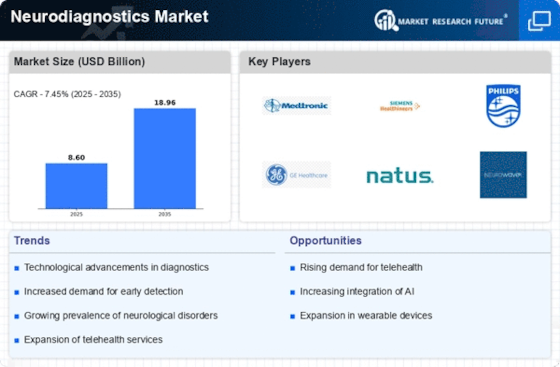
As per MRFR analysis, the Neurodiagnostics Market size was valued at USD 8.6 Billion in 2024. The market is projected to grow from USD 9.241 Billion in 2025 to USD 18.96 Billion by 2035, exhibiting a CAGR of 7.4% during the forecast period 2025–2035. North America led the market with over 45.35% share, generating around USD 3.9 Billion in revenue.
 
The Neurodiagnostics Market is primarily driven by the rising prevalence of neurological disorders and increasing demand for early and accurate diagnosis, supported by technological advancements that enhance imaging precision and enable timely intervention, improving patient outcomes and clinical decision-making globally.
 
According to the World Health Organization (WHO), neurological disorders affect over 1 billion people worldwide, with stroke and dementia among leading causes of disability. This growing burden significantly increases demand for advanced neurodiagnostic technologies, supporting early detection and improving treatment outcomes across healthcare systems.

Key Market Trends & Highlights

The Neurodiagnostics Market is experiencing robust growth driven by technological advancements and increasing demand for non-invasive techniques.

  • North America holds 45.35% share in 2024, driven by advanced healthcare infrastructure and innovation. Europe accounts for 30% share, valued at USD 2.58 billion in 2024. Diagnostic imaging systems dominate with 64% share, driven by increasing demand for precise neurological diagnostics globally. Neurodegenerative diseases lead with 57% share, supported by rising global prevalence of neurological disorders.

Market Size & Forecast

2024 Market Size 8.6 (USD Billion)
2035 Market Size 18.96 (USD Billion)
CAGR (2025 - 2035) 7.45%
Largest Regional Market Share in 2024 North America

Major Players

Companies such as Medtronic (US), Siemens Healthineers (DE), Philips (NL), GE Healthcare (US), Natus Medical (US), <a href="https://www.neurowave-diagnostics.info/">NeuroWave</a> (US), Compumedics (AU), BrainScope (US), Cerebrotech Medical Systems (US) are some of the major participants in the global market.

Market Trends

The Neurodiagnostics Market is currently experiencing a transformative phase, driven by advancements in technology and an increasing awareness of neurological disorders. The integration of artificial intelligence and machine learning into diagnostic tools appears to enhance the accuracy and efficiency of neurodiagnostic procedures. Furthermore, the growing prevalence of conditions such as epilepsy, Alzheimer's disease, and multiple sclerosis is likely to propel demand for innovative diagnostic solutions.

As healthcare systems evolve, there is a noticeable shift towards non-invasive techniques, which may provide patients with safer and more comfortable options for diagnosis. In addition, the market is witnessing a surge in research and development activities aimed at improving existing technologies and discovering novel diagnostic methods. Collaborations between academic institutions and industry players seem to foster innovation, potentially leading to breakthroughs in neurodiagnostic capabilities.

Moreover, the increasing focus on personalized medicine suggests that tailored diagnostic approaches could become more prevalent, allowing for more effective treatment plans. Overall, the market is poised for growth, driven by technological advancements and a heightened focus on neurological health.

Technological Advancements

The market is significantly influenced by rapid technological innovations. The emergence of advanced imaging techniques and portable diagnostic devices appears to enhance the precision of neurological assessments. These developments may lead to improved patient outcomes and greater accessibility to neurodiagnostic services.

The European Centre for Disease Prevention and Control (ECDC) highlights increasing adoption of advanced diagnostic technologies across Europe to strengthen disease surveillance and clinical outcomes. Innovations in imaging and portable diagnostics enhance accuracy, enable early detection, and improve accessibility of neurodiagnostic services, supporting overall healthcare system efficiency.

Rising Incidence of Neurological Disorders

An increasing prevalence of neurological conditions is driving the demand for neurodiagnostic solutions. As awareness of disorders such as epilepsy and dementia grows, healthcare providers are likely to seek more effective diagnostic tools to address these challenges, thereby expanding the neurodegenerative disease market.

According to the Institute for Health Metrics and Evaluation (IHME), neurological disorders are among the leading contributors to global disability, affecting millions annually. This rising incidence drives demand for advanced neurodiagnostic tools, enabling early detection, improved disease monitoring, and more effective treatment planning across healthcare systems.

Shift Towards Non-Invasive Techniques

There is a noticeable trend towards non-invasive diagnostic methods within the market. Patients and healthcare professionals seem to prefer these approaches due to their safety and comfort, which may lead to a broader acceptance and utilization of such technologies.

The Pan American Health Organization (PAHO) emphasizes increasing adoption of patient-friendly healthcare approaches across the Americas. Non-invasive diagnostic techniques enhance patient comfort, reduce procedural risks, and improve compliance, driving their widespread acceptance and accelerating growth in neurodiagnostic technologies globally.

Neurodiagnostics Market Market Drivers

Shift Towards Non-Invasive Techniques

The Neurodiagnostics Market is witnessing a notable shift towards non-invasive diagnostic techniques. Patients and healthcare providers alike are increasingly favoring methods that minimize discomfort and risk. Non-invasive techniques, such as EEG and advanced imaging modalities, are gaining traction due to their ability to provide critical insights without the need for surgical procedures.
 
This trend is supported by a growing body of evidence suggesting that non-invasive methods can yield comparable diagnostic accuracy to invasive alternatives. As a result, the market for non-invasive neurodiagnostic tools is projected to expand significantly, with a focus on enhancing patient experience and safety. The increasing adoption of these techniques is likely to reshape the market, driving innovation and investment in non-invasive technologies.

Growing Demand for Personalized Medicine

The Neurodiagnostics Market is increasingly influenced by the growing demand for personalized medicine. As healthcare shifts towards tailored treatment approaches, neurodiagnostic tools are becoming essential for understanding individual patient profiles. The ability to identify specific biomarkers and genetic predispositions allows for more effective treatment plans, particularly in managing complex neurological conditions.
 
Recent studies indicate that personalized medicine can lead to improved patient outcomes and reduced healthcare costs. Consequently, the market is likely to see a surge in the development of diagnostic tools that cater to personalized treatment strategies. This trend not only enhances the efficacy of interventions but also aligns with the broader movement towards precision medicine in healthcare.

Rising Incidence of Neurological Disorders

The increasing prevalence of neurological disorders is a critical driver for the Neurodiagnostics Market. Conditions such as Alzheimer's disease, Parkinson's disease, and epilepsy are becoming more common, necessitating advanced diagnostic tools. Recent statistics indicate that the number of individuals diagnosed with neurological disorders is expected to rise, with estimates suggesting that by 2030, the global burden of neurological diseases could reach unprecedented levels.
 
This surge in cases is prompting healthcare providers to invest in neurodiagnostic technologies to ensure timely and accurate diagnoses. As a result, the demand for neurodiagnostic services and products is likely to escalate, creating substantial growth opportunities within the market. The focus on early detection and intervention further underscores the importance of robust neurodiagnostic solutions.

Technological Advancements in Neurodiagnostics

The Neurodiagnostics Market is experiencing a transformative phase driven by rapid technological advancements. Innovations such as advanced imaging techniques, including functional MRI and PET scans, are enhancing diagnostic accuracy. The integration of artificial intelligence and machine learning algorithms is streamlining data analysis, allowing for quicker and more precise interpretations of neuroimaging results.
 
Furthermore, the development of portable and wearable neurodiagnostic devices is expanding access to testing, particularly in remote areas. According to recent data, the market for neuroimaging technologies is projected to grow significantly, with a compound annual growth rate of over 7% anticipated in the coming years. This technological evolution not only improves patient outcomes but also fosters a more efficient healthcare system, thereby propelling the market forward.

Increased Investment in Research and Development

Investment in research and development is a pivotal driver for the Neurodiagnostics Market. As the understanding of neurological disorders evolves, there is a corresponding need for innovative diagnostic solutions. Funding from both public and private sectors is being directed towards the development of advanced neurodiagnostic technologies.
 
This influx of capital is facilitating the exploration of novel methodologies, including biomarker discovery and the application of artificial intelligence in diagnostics. Recent reports suggest that R&D spending in the neurodiagnostics sector is on the rise, with projections indicating a substantial increase in funding over the next few years. This commitment to innovation is expected to yield breakthroughs that will enhance diagnostic capabilities and expand the market.

Market Segment Insights

By Type: Diagnostic Imaging Systems (Largest) vs. Clinical Diagnostic Instruments (Fastest-Growing)

The Neurodiagnostics Market displays a varied distribution among its primary segment types. <a title="diagnostic imaging" href="https://www.marketresearchfuture.com/reports/diagnostic-imaging-market-6765" target="_blank" rel="noopener">Diagnostic Imaging</a> Systems holds a significant portion of the market share of 64%, reflecting its established role in delivering precise neurodiagnostic information. Meanwhile, Clinical Diagnostic Instruments are gaining traction, equipped with advanced technology that offers improved accuracy and efficiency, appealing to modern medical practices. Growth trends indicate that while Diagnostic Imaging Systems continues to dominate due to its crucial importance in diagnosing neurological conditions, Clinical Diagnostic Instruments are emerging as the fastest-growing segment. This growth is driven by increased investments in healthcare infrastructure, rising awareness of neurological disorders, and the growing demand for rapid diagnostics in clinical settings.

Diagnostic Imaging Systems (Dominant) vs. Reagents and Consumables (Emerging)

Diagnostic Imaging Systems are characterized by their integral role in neurodiagnostics, employing advanced techniques such as MRI and CT scans to provide in-depth analysis of brain structures and functions. This segment remains dominant due to its established technology and extensive applications in the clinical environment. In contrast, Reagents and Consumables represent an emerging segment that supports diagnostic tests with essential materials needed for analysis. As research and development in neurological testing advance, the demand for quality reagents is on the rise, fostering innovation and growth in this segment, making it increasingly relevant in the landscape of neurodiagnostics.

By Condition: Neurodegenerative Diseases (Largest) vs. Stroke (Fastest-Growing)

In the Neurodiagnostics Market, Neurodegenerative Diseases hold a significant share of 57%, attributed to the rising prevalence of conditions like Alzheimer's and Parkinson's. This segment's enduring dominance is further strengthened by the need for advanced diagnostic tools to monitor disease progression and enhance treatment accuracy. In contrast, Stroke represents the fastest-growing segment as increasing awareness and improved access to neurodiagnostic technologies drive rapid adoption in clinical settings. As healthcare systems evolve, the integration of advanced imaging methods plays a crucial role in stroke management, propelling this segment to new heights.

Neurodegenerative Diseases (Dominant) vs. Stroke (Emerging)

Neurodegenerative Diseases are characterized by a gradual decline in the functioning of the nervous system, leading to significant long-term health issues. This segment benefits from ongoing research and technological advancements that cater to the diagnostic requirements of diseases such as Alzheimer's and Parkinson's, positioning it as a stable and lucrative area within the Neurodiagnostics Market. Conversely, the Stroke segment is emerging prominently due to heightened awareness among healthcare providers and patients alike. The increasing incidence rates of stroke, coupled with breakthroughs in neuroimaging techniques, are establishing this segment as a critical focus area for future investments and innovations in diagnostics.

By End User: Hospitals and Surgical Centers (Largest) vs. Neurology Centers (Fastest-Growing)

In the Neurodiagnostics Market, the segment distribution reveals that Hospitals and Surgical Centers hold the largest market share of 61%, attributed to their comprehensive diagnostic capabilities and the higher patient inflow they experience. Following closely are Diagnostic Laboratories and Imaging Centers, which provide specialized neurodiagnostic tests. On the other end, Neurology Centers, although smaller in share, are rapidly gaining attention due to their focused services and growing patient base, signaling shifts in the market dynamics. Growth trends in this segment are primarily driven by the increasing prevalence of neurological disorders and advancements in diagnostic technologies. The push for early and accurate diagnosis is fostering the expansion of not only Hospitals and Surgical Centers but also Ambulatory Care Centers and Research Laboratories. Notably, Neurology Centers are emerging as key players, driven by a surge in demand for specialized care and innovative diagnostic approaches tailored to neurological health challenges.

Hospitals and Surgical Centers (Dominant) vs. Research Laboratories (Emerging)

Hospitals and Surgical Centers dominate the Neurodiagnostics Market due to their advanced infrastructure, allowing for a wide range of neurology-related diagnostics and treatments. These facilities are equipped with cutting-edge technology and skilled personnel, enabling them to handle complex cases effectively. In contrast, Research Laboratories and Academic Institutes represent an emerging segment, characterized by their focus on innovation and research-driven diagnostics. They are increasingly contributing to the development of novel neurodiagnostic tests and methods, which reflect the evolving landscape of neurology research and patient care. As these laboratories collaborate with clinical settings, they enhance the overall diagnostic accuracy, catering to the growing need for specialized neurodiagnostic solutions.

Get more detailed insights about Neurodiagnostics Market Research Report-Forecast till 2035

Regional Insights

North America : Innovation and Market Leadership

North America leads in the Neuroscience Market Size, accounting for over 45.35% of the global revenue in 2024. The region benefits from advanced healthcare infrastructure, high investment in R&D, and a growing prevalence of neurological disorders. Regulatory support from agencies like the FDA accelerates the approval of innovative diagnostic technologies, driving Neurodiagnostics Market growth. The increasing demand for early diagnosis and personalized treatment options further fuels this expansion.

The United States is the leading country in this region, with major players such as Medtronic, GE Healthcare, and Natus Medical dominating the landscape. The competitive environment is characterized by continuous innovation and strategic partnerships among key players. Canada also contributes significantly to the market, focusing on enhancing healthcare access and improving diagnostic capabilities. The presence of advanced research institutions bolsters the region's competitive edge.

Growth is driven by advanced healthcare infrastructure, strong R&D investments, and increasing demand for early diagnosis and personalized neurological care. The Centers for Disease Control and Prevention (CDC) reports that approximately 795,000 people experience stroke annually in the U.S., highlighting the significant neurological disease burden. This drives demand for advanced neurodiagnostic solutions, supporting innovation and adoption of imaging technologies across North America.


Europe : Emerging Regulatory Frameworks

Europe Neuroscience Market size was valued at USD 2.58 billion in 2024, making it the second-largest regional market with 30% share. The region is witnessing growth driven by increasing investments in healthcare technology and a rising incidence of neurological disorders. Regulatory frameworks, such as the EU Medical Device Regulation, are enhancing the safety and efficacy of neurodiagnostic devices, fostering innovation. The demand for non-invasive diagnostic methods is also on the rise, contributing to market expansion.

Germany, France, and the UK are the leading countries in this market, with significant contributions from companies like Siemens Healthineers and Philips. The competitive landscape is marked by a mix of established players and emerging startups focusing on innovative solutions. Collaborative efforts between public and private sectors are enhancing research and development, ensuring that Europe remains at the forefront of neurodiagnostic advancements.

Growth is driven by increasing healthcare investments, strong regulatory frameworks, and rising adoption of non-invasive neurodiagnostic technologies. According to the World Health Organization (WHO), neurological disorders are a leading cause of disability in Europe, affecting millions each year. Rising investments in healthcare technology and adoption of advanced diagnostic solutions are enhancing early detection capabilities and driving neurodiagnostics market growth across the region.


Asia-Pacific : Rapid Growth and Adoption

Asia-Pacific is rapidly emerging as a significant player in the neurodiagnostics market, holding approximately 20% of the global share. The region's growth is driven by increasing healthcare expenditure, a rising prevalence of neurological disorders, and a growing awareness of advanced diagnostic technologies. Countries like China and India are investing heavily in healthcare infrastructure, which is expected to boost the demand for neurodiagnostic devices. Additionally, supportive government initiatives are catalyzing market growth.

China is the largest market in the region, followed by Japan and India. The competitive landscape features both global and local players, with companies like Compumedics and BrainScope making notable contributions. The presence of a large patient population and increasing healthcare access are key factors driving the adoption of neurodiagnostic technologies. As the region continues to develop, it presents significant opportunities for innovation and market expansion.

Middle East and Africa : Untapped Potential and Growth

The Middle East and Africa represent an emerging market in neurodiagnostics, holding about 5% of the global share. The growth in this region is primarily driven by increasing healthcare investments and a rising prevalence of neurological disorders. However, challenges such as limited healthcare infrastructure and varying regulatory environments can hinder market expansion. Governments are increasingly recognizing the importance of improving healthcare access, which is expected to catalyze growth in the neurodiagnostics sector.

Countries like South Africa and the UAE are leading the market, with a focus on enhancing healthcare services and adopting advanced technologies. The competitive landscape is characterized by a mix of local and international players, with opportunities for growth in both urban and rural areas. As healthcare systems evolve, the demand for neurodiagnostic solutions is anticipated to rise, presenting significant opportunities for market players.

Key Players and Competitive Insights

The Neurodiagnostics Market is currently characterized by a dynamic competitive landscape, driven by technological advancements and an increasing demand for precise diagnostic tools. Key players such as Medtronic (US), Siemens Healthineers (DE), and Philips (NL) are at the forefront, each adopting distinct strategies to enhance their market presence. Medtronic (US) focuses on innovation through the development of advanced neurostimulation devices, while Siemens Healthineers (DE) emphasizes digital transformation, integrating AI into their imaging solutions. Philips (NL) is strategically expanding its portfolio by investing in telehealth solutions, thereby addressing the growing need for remote diagnostics.
 
Collectively, these strategies not only enhance their competitive positioning but also contribute to a more integrated and technologically advanced market environment. In terms of business tactics, companies are increasingly localizing manufacturing to reduce costs and improve supply chain efficiency. This approach appears to be particularly relevant in the market, which is moderately fragmented, with several players vying for market share. The collective influence of these key players shapes a competitive structure that encourages innovation and responsiveness to market demands, fostering an environment where agility and adaptability are paramount.
 
In August 2025, Siemens Healthineers (DE) announced a strategic partnership with a leading AI firm to enhance its imaging capabilities. This collaboration aims to leverage machine learning algorithms to improve diagnostic accuracy and workflow efficiency. The strategic importance of this partnership lies in its potential to position Siemens Healthineers as a leader in AI-driven neurodiagnostics, thereby attracting healthcare providers seeking cutting-edge solutions. In September 2025, Medtronic (US) launched a new line of neurodiagnostic devices designed for outpatient settings. This initiative reflects a growing trend towards decentralizing healthcare services, allowing for more accessible and timely diagnostics.
 
The launch is significant as it aligns with the increasing demand for patient-centric care, potentially expanding Medtronic's market reach and enhancing its competitive edge. In October 2025, Philips (NL) unveiled a comprehensive telehealth platform aimed at improving remote patient monitoring for neurological conditions. This move underscores the company's commitment to digital health solutions, responding to the rising need for remote care options. The strategic importance of this platform lies in its ability to integrate various diagnostic tools, thereby streamlining patient management and enhancing overall care quality.
 
As of October 2025, the market is witnessing a shift towards digitalization, sustainability, and AI integration. These trends are reshaping competitive dynamics, with strategic alliances becoming increasingly vital for innovation and market penetration. The evolution of competitive differentiation appears to be moving away from traditional price-based competition towards a focus on technological advancement, reliability in supply chains, and the development of innovative solutions that meet the evolving needs of healthcare providers and patients alike.

Key Companies in the Neurodiagnostics Market include

Industry Developments

  • Q2 2024: NeuroOne Receives FDA 510(k) Clearance for OneRF Ablation Electrode System NeuroOne Medical Technologies announced it received FDA 510(k) clearance for its OneRF Ablation Electrode System, a device designed for brain tissue ablation in patients with neurological disorders.
  • Q2 2024: Nihon Kohden Launches New EEG-1200 Neurodiagnostic System in the U.S. Nihon Kohden America announced the commercial launch of its EEG-1200 Neurodiagnostic System, which offers advanced brain monitoring capabilities for hospitals and clinics in the United States.
  • Q2 2024: Ceribell Raises $70 Million in Series C Funding to Expand Rapid EEG Platform Ceribell, a neurodiagnostics company, secured $70 million in Series C funding to accelerate the adoption and development of its Rapid EEG platform for emergency neurological care.
  • Q2 2024: Philips Receives CE Mark for Next-Generation IntelliSpace Portal Neuro Applications Royal Philips announced it received CE Mark approval for its latest IntelliSpace Portal neuro applications, enhancing advanced visualization and analysis for neurological imaging in Europe.
  • Q1 2024: BioSerenity Acquires SleepMed’s Neurodiagnostics Market Business BioSerenity, a French medtech company, acquired the neurodiagnostics business of SleepMed, expanding its portfolio in EEG and sleep disorder diagnostics in the U.S. market.
  • Q1 2024: Natus Medical Announces Partnership with Blackrock Neurotech for Advanced Brain Monitoring Natus Medical entered a strategic partnership with Blackrock Neurotech to co-develop advanced brain monitoring solutions, integrating Blackrock’s neural interface technology with Natus’ diagnostic systems.
  • Q2 2024: Lifelines Neuro Opens New U.S. Manufacturing Facility for EEG Devices Lifelines Neuro announced the opening of a new manufacturing facility in Kentucky, USA, to increase production capacity for its EEG diagnostic devices.
  • Q2 2024: Compumedics Receives FDA Clearance for Somfit Home Sleep Diagnostic Device Compumedics Limited received FDA clearance for its Somfit device, a wearable neurodiagnostic tool for home-based sleep disorder diagnosis.
  • Q1 2024: GE HealthCare Launches SIGNA PET/MR AIR Neuro Suite GE HealthCare launched the SIGNA PET/MR AIR Neuro Suite, a new integrated imaging platform designed to improve neurodiagnostic accuracy and workflow in clinical settings.
  • Q2 2024: Siemens Healthineers Receives FDA Clearance for Magnetom Free.Max MRI System Siemens Healthineers received FDA clearance for its Magnetom Free.Max MRI system, which features advanced neuroimaging capabilities and a compact design for broader clinical use.
  • Q1 2024: NeuroPace Appoints New CEO to Drive Growth in Neurodiagnostics Market NeuroPace, a neurodiagnostics and neuromodulation company, announced the appointment of a new CEO to lead the company’s next phase of growth and innovation.
  • Q2 2024: Fujifilm Launches New Synapse 3D Neuro Imaging Software in Europe Fujifilm Healthcare Europe launched Synapse 3D Neuro, an advanced imaging software platform designed to enhance neurodiagnostic workflows and clinical decision-making.

Future Outlook

Neurodiagnostics Market Future Outlook

The Neurodiagnostics Market size is projected to reach USD 18.96 Billion by 2035, growing at a CAGR of 7.4%, driven by technological advancements, increasing neurological disorders, and rising healthcare expenditure.

New opportunities lie in:

  • <p>Development of portable neurodiagnostic devices for remote monitoring. Integration of AI algorithms for enhanced diagnostic accuracy. Expansion of telehealth services for neurodiagnostic consultations.</p>

By 2035, the Neurodiagnostics Market is expected to be robust, reflecting substantial growth and innovation.

Market Segmentation

Neurodiagnostics Market Type Outlook

  • Diagnostic Imaging Systems
  • Clinical Diagnostic Instruments
  • Reagents and Consumables

Neurodiagnostics Market End User Outlook

  • Hospitals and Surgical Centers
  • Diagnostic Laboratories and Imaging Centers
  • Neurology Centers
  • Ambulatory Care Centers
  • Research Laboratories and Academic Institutes

Neurodiagnostics Market Condition Outlook

  • Neurodegenerative Diseases
  • Stroke
  • Epilepsy
  • Headache Disorders
  • Sleep Disorders
  • Others

Report Scope

MARKET SIZE 2024 8.6(USD Billion)
MARKET SIZE 2025 9.241(USD Billion)
MARKET SIZE 2035 18.96(USD Billion)
COMPOUND ANNUAL GROWTH RATE (CAGR) 7.45% (2025 - 2035)
REPORT COVERAGE Revenue Forecast, Competitive Landscape, Growth Factors, and Trends
BASE YEAR 2024
Market Forecast Period 2025 - 2035
Historical Data 2019 - 2024
Market Forecast Units USD Billion
Key Companies Profiled Medtronic (US), Siemens Healthineers (DE), Philips (NL), GE Healthcare (US), Natus Medical (US), NeuroWave (US), Compumedics (AU), BrainScope (US), Cerebrotech Medical Systems (US)
Segments Covered Product Type, Condition, End User, Region
Key Market Opportunities Integration of artificial intelligence in diagnostic tools enhances accuracy and efficiency in the Neurodiagnostics Market.
Key Market Dynamics Technological advancements drive innovation in neurodiagnostics, enhancing diagnostic accuracy and patient outcomes.
Countries Covered North America, Europe, APAC, South America, MEA

FAQs

What is the current valuation of themarket as of 2024?

The Neurodiagnostics Market was valued at 8.6 USD Billion in 2024.

What is the projected market size for the Neurodiagnostics Market in 2035?

<p>The market is projected to reach 18.96 USD Billion by 2035.</p>

What is the expected CAGR for the Neurodiagnostics Market during the forecast period 2025 - 2035?

The expected CAGR during the forecast period 2025 - 2035 is 7.45%.

Which segments are included in the Neurodiagnostics Market analysis?

<p>The market analysis includes segments such as Diagnostic Imaging Systems, Clinical Diagnostic Instruments, and Reagents and Consumables.</p>

What are the projected values for Diagnostic Imaging Systems by 2035?

<p>The projected value for Diagnostic Imaging Systems is expected to reach 5.5 USD Billion by 2035.</p>

How do neurodegenerative diseases impact the Neurodiagnostics Market?

<p>Neurodegenerative diseases are projected to contribute 5.5 USD Billion to the market by 2035.</p>

Which key players are leading the market?

Key players in the market include Medtronic, Siemens Healthineers, Philips, and GE Healthcare.

What is the expected market value for hospitals and surgical centers by 2035?

The expected market value for hospitals and surgical centers is projected to be 5.76 USD Billion by 2035.

What is the significance of reagents and consumables in the Neurodiagnostics Market?

Reagents and consumables are projected to reach 7.0 USD Billion by 2035, indicating their critical role in the market.

How does the market for epilepsy diagnostics evolve by 2035?

The market for epilepsy diagnostics is expected to grow to 2.8 USD Billion by 2035.

  1. SECTION I: EXECUTIVE SUMMARY AND KEY HIGHLIGHTS |
    1. EXECUTIVE SUMMARY | |
      1. Market Overview | |
      2. Key Findings | |
      3. Market Segmentation | |
      4. Competitive Landscape | |
      5. Challenges and Opportunities | |
      6. Future Outlook 2
  2. SECTION II: SCOPING, METHODOLOGY AND MARKET STRUCTURE |
    1. MARKET INTRODUCTION | |
      1. Definition | |
      2. Scope of the study | | |
    2. RESEARCH METHODOLOGY | |
      1. Overview | |
      2. Data Mining | |
      3. Secondary Research | |
      4. Primary Research | | |
      5. Forecasting Model | |
      6. Market Size Estimation | | |
      7. Data Triangulation | |
      8. Validation 3
  3. SECTION III: QUALITATIVE ANALYSIS |
    1. MARKET DYNAMICS | |
      1. Overview | |
      2. Drivers | |
      3. Restraints | |
      4. Opportunities |
    2. MARKET FACTOR ANALYSIS | |
      1. Value chain Analysis | |
      2. Porter's Five Forces Analysis | | |
      3. COVID-19 Impact Analysis | | |
  4. SECTION IV: QUANTITATIVE ANALYSIS |
    1. Healthcare, BY Type (USD Billion) | |
      1. Diagnostic Imaging Systems | |
      2. Clinical Diagnostic Instruments | |
      3. Reagents and Consumables |
    2. Healthcare, BY Condition (USD Billion) | |
      1. Neurodegenerative Diseases | |
      2. Stroke | |
      3. Epilepsy | |
      4. Headache Disorders | |
      5. Sleep Disorders | |
      6. Others |
    3. Healthcare, BY End User (USD Billion) | |
      1. Hospitals and Surgical Centers | |
      2. Diagnostic Laboratories and Imaging Centers | |
      3. Neurology Centers | |
      4. Ambulatory Care Centers | |
      5. Research Laboratories and Academic Institutes |
    4. Healthcare, BY Region (USD Billion) | |
      1. North America | | |
      2. Europe | | |
      3. APAC | | |
      4. South America | | |
      5. MEA | | |
  5. SECTION V: COMPETITIVE ANALYSIS |
    1. Competitive Landscape | |
      1. Overview | |
      2. Competitive Analysis | |
      3. Market share Analysis | |
      4. Major Growth Strategy in the Healthcare | |
      5. Competitive Benchmarking | |
      6. Leading Players in Terms of Number of Developments in the Healthcare | |
      7. Key developments and growth strategies | | |
      8. Major Players Financial Matrix | | |
    2. Company Profiles | |
      1. Medtronic (US) | | |
      2. Siemens Healthineers (DE) | | |
      3. Philips (NL) | | |
      4. GE Healthcare (US) | | |
      5. Natus Medical (US) | | |
      6. NeuroWave (US) | | |
      7. Compumedics (AU) | | |
      8. BrainScope (US) | | |
      9. Cerebrotech Medical Systems (US) | | |
    3. Appendix | |
      1. References | |
      2. Related Reports 6 LIST OF FIGURES |
    4. MARKET SYNOPSIS |
    5. NORTH AMERICA MARKET ANALYSIS |
    6. US MARKET ANALYSIS BY TYPE |
    7. US MARKET ANALYSIS BY CONDITION |
    8. US MARKET ANALYSIS BY END USER |
    9. CANADA MARKET ANALYSIS BY TYPE |
    10. CANADA MARKET ANALYSIS BY CONDITION |
    11. CANADA MARKET ANALYSIS BY END USER |
    12. EUROPE MARKET ANALYSIS |
    13. GERMANY MARKET ANALYSIS BY TYPE |
    14. GERMANY MARKET ANALYSIS BY CONDITION |
    15. GERMANY MARKET ANALYSIS BY END USER |
    16. UK MARKET ANALYSIS BY TYPE |
    17. UK MARKET ANALYSIS BY CONDITION |
    18. UK MARKET ANALYSIS BY END USER |
    19. FRANCE MARKET ANALYSIS BY TYPE |
    20. FRANCE MARKET ANALYSIS BY CONDITION |
    21. FRANCE MARKET ANALYSIS BY END USER |
    22. RUSSIA MARKET ANALYSIS BY TYPE |
    23. RUSSIA MARKET ANALYSIS BY CONDITION |
    24. RUSSIA MARKET ANALYSIS BY END USER |
    25. ITALY MARKET ANALYSIS BY TYPE |
    26. ITALY MARKET ANALYSIS BY CONDITION |
    27. ITALY MARKET ANALYSIS BY END USER |
    28. SPAIN MARKET ANALYSIS BY TYPE |
    29. SPAIN MARKET ANALYSIS BY CONDITION |
    30. SPAIN MARKET ANALYSIS BY END USER |
    31. REST OF EUROPE MARKET ANALYSIS BY TYPE |
    32. REST OF EUROPE MARKET ANALYSIS BY CONDITION |
    33. REST OF EUROPE MARKET ANALYSIS BY END USER |
    34. APAC MARKET ANALYSIS |
    35. CHINA MARKET ANALYSIS BY TYPE |
    36. CHINA MARKET ANALYSIS BY CONDITION |
    37. CHINA MARKET ANALYSIS BY END USER |
    38. INDIA MARKET ANALYSIS BY TYPE |
    39. INDIA MARKET ANALYSIS BY CONDITION |
    40. INDIA MARKET ANALYSIS BY END USER |
    41. JAPAN MARKET ANALYSIS BY TYPE |
    42. JAPAN MARKET ANALYSIS BY CONDITION |
    43. JAPAN MARKET ANALYSIS BY END USER |
    44. SOUTH KOREA MARKET ANALYSIS BY TYPE |
    45. SOUTH KOREA MARKET ANALYSIS BY CONDITION |
    46. SOUTH KOREA MARKET ANALYSIS BY END USER |
    47. MALAYSIA MARKET ANALYSIS BY TYPE |
    48. MALAYSIA MARKET ANALYSIS BY CONDITION |
    49. MALAYSIA MARKET ANALYSIS BY END USER |
    50. THAILAND MARKET ANALYSIS BY TYPE |
    51. THAILAND MARKET ANALYSIS BY CONDITION |
    52. THAILAND MARKET ANALYSIS BY END USER |
    53. INDONESIA MARKET ANALYSIS BY TYPE |
    54. INDONESIA MARKET ANALYSIS BY CONDITION |
    55. INDONESIA MARKET ANALYSIS BY END USER |
    56. REST OF APAC MARKET ANALYSIS BY TYPE |
    57. REST OF APAC MARKET ANALYSIS BY CONDITION |
    58. REST OF APAC MARKET ANALYSIS BY END USER |
    59. SOUTH AMERICA MARKET ANALYSIS |
    60. BRAZIL MARKET ANALYSIS BY TYPE |
    61. BRAZIL MARKET ANALYSIS BY CONDITION |
    62. BRAZIL MARKET ANALYSIS BY END USER |
    63. MEXICO MARKET ANALYSIS BY TYPE |
    64. MEXICO MARKET ANALYSIS BY CONDITION |
    65. MEXICO MARKET ANALYSIS BY END USER |
    66. ARGENTINA MARKET ANALYSIS BY TYPE |
    67. ARGENTINA MARKET ANALYSIS BY CONDITION |
    68. ARGENTINA MARKET ANALYSIS BY END USER |
    69. REST OF SOUTH AMERICA MARKET ANALYSIS BY TYPE |
    70. REST OF SOUTH AMERICA MARKET ANALYSIS BY CONDITION |
    71. REST OF SOUTH AMERICA MARKET ANALYSIS BY END USER |
    72. MEA MARKET ANALYSIS |
    73. GCC COUNTRIES MARKET ANALYSIS BY TYPE |
    74. GCC COUNTRIES MARKET ANALYSIS BY CONDITION |
    75. GCC COUNTRIES MARKET ANALYSIS BY END USER |
    76. SOUTH AFRICA MARKET ANALYSIS BY TYPE |
    77. SOUTH AFRICA MARKET ANALYSIS BY CONDITION |
    78. SOUTH AFRICA MARKET ANALYSIS BY END USER |
    79. REST OF MEA MARKET ANALYSIS BY TYPE |
    80. REST OF MEA MARKET ANALYSIS BY CONDITION |
    81. REST OF MEA MARKET ANALYSIS BY END USER |
    82. KEY BUYING CRITERIA OF HEALTHCARE |
    83. RESEARCH PROCESS OF MRFR |
    84. DRO ANALYSIS OF HEALTHCARE |
    85. DRIVERS IMPACT ANALYSIS: HEALTHCARE |
    86. RESTRAINTS IMPACT ANALYSIS: HEALTHCARE |
    87. SUPPLY / VALUE CHAIN: HEALTHCARE |
    88. HEALTHCARE, BY TYPE, 2024 (% SHARE) |
    89. HEALTHCARE, BY TYPE, 2024 TO 2035 (USD Billion) |
    90. HEALTHCARE, BY CONDITION, 2024 (% SHARE) |
    91. HEALTHCARE, BY CONDITION, 2024 TO 2035 (USD Billion) |
    92. HEALTHCARE, BY END USER, 2024 (% SHARE) |
    93. HEALTHCARE, BY END USER, 2024 TO 2035 (USD Billion) |
    94. BENCHMARKING OF MAJOR COMPETITORS 7 LIST OF TABLES |
    95. LIST OF ASSUMPTIONS | |
      1. |
    96. North America MARKET SIZE ESTIMATES; FORECAST | |
      1. BY TYPE, 2025-2035 (USD Billion) | |
      2. BY CONDITION, 2025-2035 (USD Billion) | |
      3. BY END USER, 2025-2035 (USD Billion) |
    97. US MARKET SIZE ESTIMATES; FORECAST | |
      1. BY TYPE, 2025-2035 (USD Billion) | |
      2. BY CONDITION, 2025-2035 (USD Billion) | |
      3. BY END USER, 2025-2035 (USD Billion) |
    98. Canada MARKET SIZE ESTIMATES; FORECAST | |
      1. BY TYPE, 2025-2035 (USD Billion) | |
      2. BY CONDITION, 2025-2035 (USD Billion) | |
      3. BY END USER, 2025-2035 (USD Billion) |
    99. Europe MARKET SIZE ESTIMATES; FORECAST | |
      1. BY TYPE, 2025-2035 (USD Billion) | |
      2. BY CONDITION, 2025-2035 (USD Billion) | |
      3. BY END USER, 2025-2035 (USD Billion) |
    100. Germany MARKET SIZE ESTIMATES; FORECAST | |
      1. BY TYPE, 2025-2035 (USD Billion) | |
      2. BY CONDITION, 2025-2035 (USD Billion) | |
      3. BY END USER, 2025-2035 (USD Billion) |
    101. UK MARKET SIZE ESTIMATES; FORECAST | |
      1. BY TYPE, 2025-2035 (USD Billion) | |
      2. BY CONDITION, 2025-2035 (USD Billion) | |
      3. BY END USER, 2025-2035 (USD Billion) |
    102. France MARKET SIZE ESTIMATES; FORECAST | |
      1. BY TYPE, 2025-2035 (USD Billion) | |
      2. BY CONDITION, 2025-2035 (USD Billion) | |
      3. BY END USER, 2025-2035 (USD Billion) |
    103. Russia MARKET SIZE ESTIMATES; FORECAST | |
      1. BY TYPE, 2025-2035 (USD Billion) | |
      2. BY CONDITION, 2025-2035 (USD Billion) | |
      3. BY END USER, 2025-2035 (USD Billion) |
    104. Italy MARKET SIZE ESTIMATES; FORECAST | |
      1. BY TYPE, 2025-2035 (USD Billion) | |
      2. BY CONDITION, 2025-2035 (USD Billion) | |
      3. BY END USER, 2025-2035 (USD Billion) |
    105. Spain MARKET SIZE ESTIMATES; FORECAST | |
      1. BY TYPE, 2025-2035 (USD Billion) | |
      2. BY CONDITION, 2025-2035 (USD Billion) | |
      3. BY END USER, 2025-2035 (USD Billion) |
    106. Rest of Europe MARKET SIZE ESTIMATES; FORECAST | |
      1. BY TYPE, 2025-2035 (USD Billion) | |
      2. BY CONDITION, 2025-2035 (USD Billion) | |
      3. BY END USER, 2025-2035 (USD Billion) |
    107. APAC MARKET SIZE ESTIMATES; FORECAST | |
      1. BY TYPE, 2025-2035 (USD Billion) | |
      2. BY CONDITION, 2025-2035 (USD Billion) | |
      3. BY END USER, 2025-2035 (USD Billion) |
    108. China MARKET SIZE ESTIMATES; FORECAST | |
      1. BY TYPE, 2025-2035 (USD Billion) | |
      2. BY CONDITION, 2025-2035 (USD Billion) | |
      3. BY END USER, 2025-2035 (USD Billion) |
    109. India MARKET SIZE ESTIMATES; FORECAST | |
      1. BY TYPE, 2025-2035 (USD Billion) | |
      2. BY CONDITION, 2025-2035 (USD Billion) | |
      3. BY END USER, 2025-2035 (USD Billion) |
    110. Japan MARKET SIZE ESTIMATES; FORECAST | |
      1. BY TYPE, 2025-2035 (USD Billion) | |
      2. BY CONDITION, 2025-2035 (USD Billion) | |
      3. BY END USER, 2025-2035 (USD Billion) |
    111. South Korea MARKET SIZE ESTIMATES; FORECAST | |
      1. BY TYPE, 2025-2035 (USD Billion) | |
      2. BY CONDITION, 2025-2035 (USD Billion) | |
      3. BY END USER, 2025-2035 (USD Billion) |
    112. Malaysia MARKET SIZE ESTIMATES; FORECAST | |
      1. BY TYPE, 2025-2035 (USD Billion) | |
      2. BY CONDITION, 2025-2035 (USD Billion) | |
      3. BY END USER, 2025-2035 (USD Billion) |
    113. Thailand MARKET SIZE ESTIMATES; FORECAST | |
      1. BY TYPE, 2025-2035 (USD Billion) | |
      2. BY CONDITION, 2025-2035 (USD Billion) | |
      3. BY END USER, 2025-2035 (USD Billion) |
    114. Indonesia MARKET SIZE ESTIMATES; FORECAST | |
      1. BY TYPE, 2025-2035 (USD Billion) | |
      2. BY CONDITION, 2025-2035 (USD Billion) | |
      3. BY END USER, 2025-2035 (USD Billion) |
    115. Rest of APAC MARKET SIZE ESTIMATES; FORECAST | |
      1. BY TYPE, 2025-2035 (USD Billion) | |
      2. BY CONDITION, 2025-2035 (USD Billion) | |
      3. BY END USER, 2025-2035 (USD Billion) |
    116. South America MARKET SIZE ESTIMATES; FORECAST | |
      1. BY TYPE, 2025-2035 (USD Billion) | |
      2. BY CONDITION, 2025-2035 (USD Billion) | |
      3. BY END USER, 2025-2035 (USD Billion) |
    117. Brazil MARKET SIZE ESTIMATES; FORECAST | |
      1. BY TYPE, 2025-2035 (USD Billion) | |
      2. BY CONDITION, 2025-2035 (USD Billion) | |
      3. BY END USER, 2025-2035 (USD Billion) |
    118. Mexico MARKET SIZE ESTIMATES; FORECAST | |
      1. BY TYPE, 2025-2035 (USD Billion) | |
      2. BY CONDITION, 2025-2035 (USD Billion) | |
      3. BY END USER, 2025-2035 (USD Billion) |
    119. Argentina MARKET SIZE ESTIMATES; FORECAST | |
      1. BY TYPE, 2025-2035 (USD Billion) | |
      2. BY CONDITION, 2025-2035 (USD Billion) | |
      3. BY END USER, 2025-2035 (USD Billion) |
    120. Rest of South America MARKET SIZE ESTIMATES; FORECAST | |
      1. BY TYPE, 2025-2035 (USD Billion) | |
      2. BY CONDITION, 2025-2035 (USD Billion) | |
      3. BY END USER, 2025-2035 (USD Billion) |
    121. MEA MARKET SIZE ESTIMATES; FORECAST | |
      1. BY TYPE, 2025-2035 (USD Billion) | |
      2. BY CONDITION, 2025-2035 (USD Billion) | |
      3. BY END USER, 2025-2035 (USD Billion) |
    122. GCC Countries MARKET SIZE ESTIMATES; FORECAST | |
      1. BY TYPE, 2025-2035 (USD Billion) | |
      2. BY CONDITION, 2025-2035 (USD Billion) | |
      3. BY END USER, 2025-2035 (USD Billion) |
    123. South Africa MARKET SIZE ESTIMATES; FORECAST | |
      1. BY TYPE, 2025-2035 (USD Billion) | |
      2. BY CONDITION, 2025-2035 (USD Billion) | |
      3. BY END USER, 2025-2035 (USD Billion) |
    124. Rest of MEA MARKET SIZE ESTIMATES; FORECAST | |
      1. BY TYPE, 2025-2035 (USD Billion) | |
      2. BY CONDITION, 2025-2035 (USD Billion) | |
      3. BY END USER, 2025-2035 (USD Billion) |
    125. PRODUCT LAUNCH/PRODUCT DEVELOPMENT/APPROVAL | |
      1. |
    126. ACQUISITION/PARTNERSHIP | |

Healthcare Market Segmentation

Healthcare By Type (USD Billion, 2025-2035)

  • Diagnostic Imaging Systems
  • Clinical Diagnostic Instruments
  • Reagents and Consumables

Healthcare By Condition (USD Billion, 2025-2035)

  • Neurodegenerative Diseases
  • Stroke
  • Epilepsy
  • Headache Disorders
  • Sleep Disorders
  • Others

Healthcare By End User (USD Billion, 2025-2035)

  • Hospitals and Surgical Centers
  • Diagnostic Laboratories and Imaging Centers
  • Neurology Centers
  • Ambulatory Care Centers
  • Research Laboratories and Academic Institutes
Infographic

Free Sample Request

Kindly complete the form below to receive a free sample of this Report

Get Free Sample

Customer Strories

Compare Licence

×
Features License Type
Single User Multiuser License Enterprise User
Price $4,950 $5,950 $7,250
Maximum User Access Limit 1 User Upto 10 Users Unrestricted Access Throughout the Organization
Free Customization
Direct Access to Analyst
Deliverable Format
Platform Access
Discount on Next Purchase 10% 15% 15%
Printable Versions
%>