×
Hero Background
English
Chinese
French
Japanese
Korean
German
Spanish

Musculoskeletal System Disorders Market Size

ID: MRFR/HC/6760-HCR
111 Pages
Kinjoll Dey
October 2025

Musculoskeletal System Disorders Market Research Report Information By Type (Rheumatoid Arthritis, Osteoarthritis, Osteoporosis, Psoriatic Arthritis, Ankylosing Spondylitis), Treatment (Biologics, Corticosteroids, Physical Therapy, Protein Therapy, Composite Grafts) and End User (Hospitals and Clinics, Ambulatory Surgical Centers) - Forecast to 2035

Share:
Download PDF ×

We do not share your information with anyone. However, we may send you emails based on your report interest from time to time. You may contact us at any time to opt-out.

Musculoskeletal System Disorders Market Infographic
Purchase Options

Musculoskeletal System Disorders Size

Musculoskeletal System Disorders Market Growth Projections and Opportunities

The market for musculoskeletal system disorder treatments is significantly influenced by the rising prevalence of these disorders, particularly among the aging population. As people age, the likelihood of developing conditions such as osteoarthritis, rheumatoid arthritis, and osteoporosis increases, driving the demand for effective therapies.

Innovations in medical technology paved way for the market topography. With regard to that, advances in diagnostics equipment and imaging technologies as well minimally transferred surgeries are those factors which facilitate quicker diagnoses and higher effectiveness of treatment results. Such innovations are appealing to the providers of healthcare together with patients, promoting market development respectively. Research and development activities persist in the pharmaceutical sector leading to widening of treatment alternatives for musculoskeletal disorders. The availability of new drugs, biologics and targeted therapies presents the patients with more options ultimately benefiting research driven pharmaceutical companies to compete in this market evolution. Market availability of musculoskeletal disorders state directly depends on the development level of healthcare infrastructure in different regions. In areas that have well developed health systems, adoption would be higher for advanced treatments and surgical interventions; further differences in access to medicare also bring variations into the market. What takes the form of global economic conditions impact on musculoskeletal disorder market. A stable economic environment can lead to increased healthcare spending, thus making it possible for the highly innovative methods being incorporated. On the other hand, economic recession might restrict healthcare budgets which in turn influence patient affordability and market dynamics. Empowerment of patient on musculoskeletal disorders and treatment options is a major market accelerator. Educational approaches as well an awareness campaigns leads to the early detection and proactive approach. They affect patient preferences, demands for certain treatments etc The scope of insurance coverage in musculoskeletal disorder treatments deeply impacts the market trends. Therefore, all-inclusive medical insurance that includes diagnostics, therapies and surgeries which means better access to more treatments will lead to an improved picture for market growth. Changing the lifestyle such as sedentary habits and poor quality of food added to increase musculoskeletal disorders. The market responds to these, lifestyle trends with preventive approach both medic as well medical non-medic insights complemented by the rehabilitation services and lifestyle interventions. The market also responds to strict drug approval regulations, medical device rules as well prescriptions. Conformity to regulatory standards ensures the safety and effectiveness of musculoskeletal disorder treatments; efficient market entry procedure benefits high-performing innovative therapies. Alliances between drug-manufacturing companies, healthcare professionals and health research organizations are helpful in the knowledge transfer as well bedrive innovation. The adoption of partnerships can be seen as a great contributor to the development into effective integrated care pathway and encourage provision of sustainable holistic solutions in musculoskeletal disorder management.

The musculoskeletal disorder market is expanding in emerging economies due to improving healthcare infrastructure, rising disposable incomes, and increasing awareness. These markets present significant growth opportunities for companies entering with cost-effective and innovative solutions. Increasing emphasis on patient-centered care and improving quality of life shapes the musculoskeletal disorder market. Therapies that not only address symptoms but also enhance overall well-being gain traction, influencing treatment preferences and market trends.
Musculoskeletal System Disorders Market Size Graph
Author
Kinjoll Dey
Research Analyst Level I

He is an extremely curious individual currently working in Healthcare and Medical Devices Domain. Kinjoll is comfortably versed in data centric research backed by healthcare educational background. He leverages extensive data mining and analytics tools such as Primary and Secondary Research, Statistical Analysis, Machine Learning, Data Modelling. His key role also involves Technical Sales Support, Client Interaction and Project management within the Healthcare team. Lastly, he showcases extensive affinity towards learning new skills and remain fascinated in implementing them.

Leave a Comment

FAQs

At what CAGR is the musculoskeletal system disorders market projected to grow during the forecast period?

The musculoskeletal system disorders market is projected to grow at a 6.8% CAGR between 2024-2032.

Which region is predicted to have the largest share in the musculoskeletal system disorders market?

The Americas are predicted to have the largest share in the musculoskeletal system disorders market.

What will be the value of the musculoskeletal system disorders market during the forecast period?

The musculoskeletal system disorders market is predicted to touch USD 6.07 Billion by 2032.

Who are the key competitors in the musculoskeletal system disorders market?

Key competitors in the musculoskeletal system disorders market include GlaxoSmithKline PLC (UK), Baxter (US), AstraZeneca (UK), Astellas Pharma Inc. (Japan), Eisai Co., Ltd (Japan), PhytoHealth Corporation (Taiwan), Tarsa Therapeutics, Inc. (US), OrthoTrophix, Inc. (US), LG Chem (South Korea), Lexicon Pharmaceuticals, Inc. (US), Amgen Inc. (US), Alder BioPharmaceuticals,Inc. (US), AbGenomics International, Inc. (US), and AB Science (France).

Which factors may restrict the musculoskeletal system disorders market growth?

High surgery cost may restrict market growth.

Market Summary

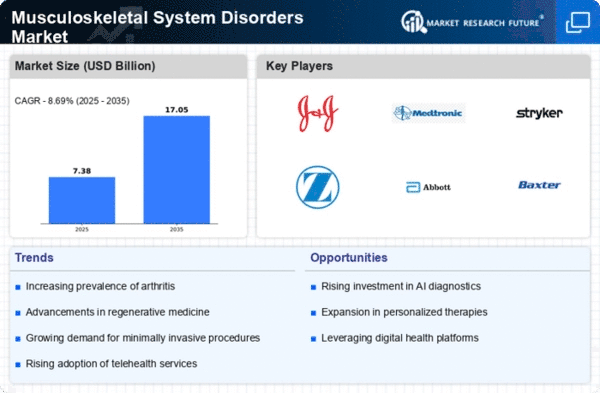
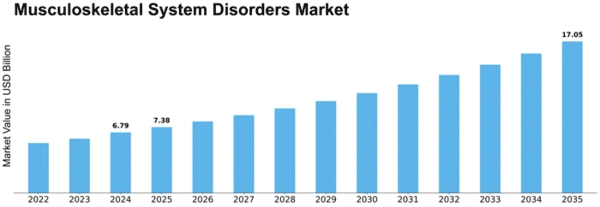
As per MRFR analysis, the Musculoskeletal System Disorders Market was estimated at 6.79 USD Billion in 2024. The Musculoskeletal System Disorders industry is projected to grow from 7.46 USD Billion in 2025 to 17.05 USD Billion by 2035, exhibiting a compound annual growth rate (CAGR) of 8.69 during the forecast period 2025 - 2035.

Key Market Trends & Highlights

The Musculoskeletal System Disorders Market is experiencing dynamic growth driven by technological advancements and an increasing focus on preventive care.

  • Technological advancements in treatment are reshaping the landscape of musculoskeletal care, particularly in North America.
  • The growing focus on preventive care is leading to increased patient engagement and proactive management of musculoskeletal disorders.
  • Personalized medicine is gaining traction, especially in the orthopedic surgery segment, which remains the largest market segment.
  • The aging population and rising healthcare expenditure are significant drivers, alongside the growing demand for non-invasive treatment options in the Asia-Pacific region.

Market Size & Forecast

2024 Market Size 6.79 (USD Billion)
2035 Market Size 17.05 (USD Billion)
CAGR (2025 - 2035) 8.69%
Largest Regional Market Share in 2024 North America

Major Players

<p>Johnson & Johnson (US), Medtronic (US), Stryker (US), Zimmer Biomet (US), Abbott Laboratories (US), Baxter International (US), Smith & Nephew (GB), DePuy Synthes (US), NuVasive (US)</p>

Market Trends

The Musculoskeletal System Disorders Market is currently experiencing notable transformations driven by advancements in medical technology and an increasing awareness of musculoskeletal health. The rise in the aging population, coupled with a growing prevalence of conditions such as arthritis and osteoporosis, appears to be propelling demand for innovative treatment options. Furthermore, the integration of telemedicine and digital health solutions is reshaping patient care, allowing for more accessible and efficient management of musculoskeletal disorders. This shift not only enhances patient engagement but also streamlines the delivery of healthcare services, potentially improving outcomes for individuals affected by these conditions. In addition, the Musculoskeletal System Disorders Market is witnessing a surge in research and development activities aimed at discovering novel therapies and interventions. Pharmaceutical companies and research institutions are increasingly focusing on biologics and regenerative medicine, which may offer promising alternatives to traditional treatments. As the landscape evolves, collaboration between stakeholders, including healthcare providers, researchers, and technology developers, is likely to foster innovation and drive growth in this sector. Overall, the Musculoskeletal System Disorders Market is poised for continued expansion, reflecting the urgent need for effective solutions to address the challenges posed by musculoskeletal conditions.

Technological Advancements in Treatment

The Musculoskeletal System Disorders Market is seeing a rise in the adoption of advanced technologies, such as minimally invasive surgical techniques and robotic-assisted surgeries. These innovations are enhancing precision in procedures, reducing recovery times, and improving patient outcomes. As healthcare providers increasingly embrace these technologies, the market is likely to benefit from enhanced treatment options.

Growing Focus on Preventive Care

There is a noticeable shift towards preventive care within the Musculoskeletal System Disorders Market. Healthcare professionals are emphasizing the importance of early diagnosis and lifestyle modifications to mitigate the risk of developing musculoskeletal disorders. This trend may lead to increased patient education initiatives and the promotion of wellness programs.

Rise of Personalized Medicine

The concept of personalized medicine is gaining traction in the Musculoskeletal System Disorders Market. Tailoring treatment plans to individual patient profiles, including genetic and environmental factors, appears to enhance the effectiveness of interventions. This trend suggests a move towards more targeted therapies, which could improve patient satisfaction and treatment adherence.

Musculoskeletal System Disorders Market Market Drivers

Market Growth Projections

The Global Musculoskeletal System Disorders Market Industry is projected to experience substantial growth over the next decade. The market is expected to reach 3.95 USD Billion in 2024 and is anticipated to grow to 7.39 USD Billion by 2035, indicating a robust upward trajectory. This growth is underpinned by a compound annual growth rate of 5.87% from 2025 to 2035, driven by various factors including technological advancements, demographic shifts, and increased healthcare spending. The market dynamics suggest a favorable environment for stakeholders, as the demand for innovative treatments and services continues to rise.

Growing Geriatric Population

The demographic shift towards an aging population is a significant driver of the Global Musculoskeletal System Disorders Market Industry. Older adults are more susceptible to musculoskeletal disorders due to age-related degeneration and decreased physical activity. According to projections, the global population aged 65 and older is expected to double by 2050, leading to an increased demand for healthcare services and interventions. This demographic trend is likely to contribute to a compound annual growth rate of 5.87% from 2025 to 2035, as healthcare systems adapt to the needs of this population, thereby expanding the market for musculoskeletal disorder treatments.

Rising Healthcare Expenditure

The increase in global healthcare expenditure is a notable factor influencing the Global Musculoskeletal System Disorders Market Industry. Governments and private sectors are investing more in healthcare infrastructure and services, particularly in developed regions. This trend is evident in the rising budgets allocated for orthopedic surgeries, rehabilitation services, and pain management therapies. As healthcare systems prioritize musculoskeletal health, the market is poised for expansion. The projected growth from 3.95 USD Billion in 2024 to 7.39 USD Billion by 2035 reflects this increasing investment in healthcare, which is likely to enhance access to necessary treatments for musculoskeletal disorders.

Increased Awareness and Education

There is a growing awareness of musculoskeletal disorders and their impact on quality of life, which is driving the Global Musculoskeletal System Disorders Market Industry. Educational campaigns and initiatives by healthcare organizations aim to inform the public about prevention, early detection, and treatment options. This heightened awareness encourages individuals to seek medical attention sooner, leading to earlier interventions and better outcomes. As a result, healthcare providers are witnessing an increase in patient consultations for musculoskeletal issues. This trend is expected to further stimulate market growth, as more individuals become proactive in managing their musculoskeletal health.

Advancements in Treatment Technologies

Technological innovations play a crucial role in shaping the Global Musculoskeletal System Disorders Market Industry. The development of minimally invasive surgical techniques, biologics, and advanced imaging technologies enhances treatment efficacy and patient outcomes. For example, the introduction of robotic-assisted surgeries has shown promising results in improving recovery times and reducing complications. As these technologies continue to evolve, they are expected to drive market growth significantly. The anticipated market value of 7.39 USD Billion by 2035 underscores the potential impact of these advancements on the industry, as they offer new avenues for addressing complex musculoskeletal conditions.

Rising Prevalence of Musculoskeletal Disorders

The Global Musculoskeletal System Disorders Market Industry is experiencing growth due to the increasing prevalence of musculoskeletal disorders. Conditions such as arthritis, osteoporosis, and back pain are becoming more common, particularly among aging populations. For instance, it is estimated that by 2024, the market will reach approximately 3.95 USD Billion, driven by the need for effective treatment options. The World Health Organization indicates that musculoskeletal disorders affect millions globally, leading to significant healthcare costs and loss of productivity. This rising burden necessitates advancements in treatment modalities, thereby propelling the market forward.

Market Segment Insights

By Application: Orthopedic Surgery (Largest) vs. Pain Management (Fastest-Growing)

<p>The Musculoskeletal System Disorders Market showcases a diverse array of applications, with Orthopedic Surgery currently leading the segment in market share. This segment is characterized by a substantial demand for surgical interventions for conditions like fractures, arthritis, and sports injuries. Meanwhile, Pain Management is gaining traction, positioning itself as the fastest-growing category as more patients seek relief through various therapeutic methods, highlighting a shift in focus towards non-invasive treatment options.</p>

<p>Rehabilitation: Dominant vs. Diagnostic Imaging: Emerging</p>

<p>Rehabilitation remains a dominant force in the Musculoskeletal System Disorders Market, playing a critical role in the recovery process post-surgery and during pain management. It encompasses a variety of therapies aimed at restoring function and mobility. Conversely, Diagnostic Imaging is emerging as an essential segment, facilitating the accurate identification and assessment of musculoskeletal disorders. As technological advancements in imaging techniques improve, this segment is becoming increasingly vital for effective diagnosis and treatment planning, influencing trends toward precision medicine.</p>

By Type of Disorder: Arthritis (Largest) vs. Osteoporosis (Fastest-Growing)

<p>In the Musculoskeletal System Disorders Market, Arthritis remains the largest segment, driven by its prevalent nature and the aging population that increasingly requires monitoring and treatment options. Following closely is Osteoporosis, which is gaining significant traction due to rising awareness about bone health and a growing elderly demographic, leading to increased preventive measures and therapies. Muscle Strain, Tendinitis, and Back Pain also contribute to the market but to a lesser extent, each representing specific challenges and treatment needs within the broader landscape of musculoskeletal disorders. The growth trends indicate a strong focus on early diagnosis and intervention for these disorders, as healthcare systems embrace more proactive treatment methodologies. Enhanced research and development efforts have led to innovative therapies and biologic treatments, particularly for Osteoporosis, marking it as the fastest-growing segment. Additionally, lifestyle changes, heightened sports activities, and an increased sedentary lifestyle among populations have contributed to the rise in incidences of Tendinitis and Muscle Strain, pushing these disorders into the spotlight. Overall, segment dynamics indicate a shift towards comprehensive management strategies for musculoskeletal disorders, reflecting broader healthcare trends.</p>

<p>Arthritis (Dominant) vs. Osteoporosis (Emerging)</p>

<p>Arthritis continues to dominate the Musculoskeletal System Disorders Market due to its widespread occurrence among various age groups, significantly impacting quality of life and mobility. The segment encompasses various types such as rheumatoid arthritis and osteoarthritis, each requiring tailored treatment approaches. Its entrenched position is supported by strong market presence and the continuous introduction of advanced medications. In contrast, Osteoporosis is an emerging segment that is increasingly recognized for its critical role in fracture prevention and bone health management. The rising incidence within aging populations, coupled with enhanced public awareness around the importance of bone density, is fuelling its growth. Unique characteristics of Osteoporosis treatments involve a blend of lifestyle modifications and pharmacological interventions, making it a focal point for future market strategies.</p>

By Treatment Method: Medication (Largest) vs. Surgery (Fastest-Growing)

<p>In the Musculoskeletal System Disorders Market, the treatment methods are diverse, with Medication holding the largest market share. This segment includes both over-the-counter and prescription medications aimed at alleviating pain and inflammation associated with various musculoskeletal disorders. Conversely, the Surgery segment, while smaller in comparison, is noted for its rapid growth due to advancements in surgical techniques and technologies, pushing its adoption higher among specialists and patients alike.</p>

<p>Medication (Dominant) vs. Surgery (Emerging)</p>

<p>Medication remains the dominant treatment method for musculoskeletal system disorders, offering a wide range of options from anti-inflammatory drugs, pain relievers, to disease-modifying agents. This segment caters to patients seeking immediate relief with minimal intervention. On the other hand, Surgery is an emerging segment that has gained traction due to technological innovations such as minimally invasive techniques and robotic-assisted surgery, which enhance recovery times and outcomes. This growth is further driven by an aging population and an increase in musculoskeletal conditions, making surgical options more appealing for lasting resolution of chronic issues.</p>

By Patient Demographics: Age Group (Largest) vs. Health Status (Fastest-Growing)

<p>The distribution of the Musculoskeletal System Disorders Market among different patient demographics reveals a significant presence among the aging population, particularly those aged 65 and older, who represent the largest age group impacted by these disorders. This demographic accounts for a substantial portion of the market due to the increased prevalence of conditions such as arthritis and osteoporosis. In contrast, the market for individuals with varying health statuses is emerging as a compelling trend, with a growing focus on preventive care and lifestyle management influencing younger populations grappling with musculoskeletal issues. Growth trends in the Musculoskeletal System Disorders Market are increasingly influenced by the rising awareness of health issues across all demographics. The fastest-growing segment, health status, indicates a notable shift towards proactive healthcare approaches, with a focus on fitness and overall well-being among younger individuals. As awareness spreads regarding the importance of maintaining musculoskeletal health, the market is expected to see further expansion, particularly as more people emphasize rehabilitation and preventive measures in everyday life.</p>

<p>Age Group (Dominant) vs. Health Status (Emerging)</p>

<p>In the Musculoskeletal System Disorders Market, the Age Group segment stands out as the dominant force, significantly influencing treatment protocols and healthcare strategies. Patients aged 65 and older showcase the highest prevalence of musculoskeletal disorders, demanding tailored interventions for management and therapy. Conversely, the Health Status segment is gaining traction as an emerging value, driven by younger populations adopting fitness regimes and wellness lifestyles. This group is increasingly aware of the importance of musculoskeletal health, contributing to a spike in preventive care measures. As such, healthcare providers are recalibrating their approaches to cater not only to the traditional aging demographic but also to younger individuals seeking proactive solutions to maintain optimal musculoskeletal health.</p>

By Healthcare Setting: Hospitals (Largest) vs. Outpatient Clinics (Fastest-Growing)

<p>The musculoskeletal system disorders market reveals a significant distribution of healthcare settings, with hospitals commanding the largest market share. This dominance is due to the extensive services and advanced technologies offered in hospital environments, providing comprehensive treatment options for musculoskeletal disorders. Meanwhile, outpatient clinics are emerging as a rapidly growing segment, appealing to patients seeking convenience and quicker service for less complex cases. Recent growth trends indicate that the demand for musculoskeletal care is increasing across all healthcare settings. Outpatient clinics are seeing a surge in patient volumes due to their accessibility and efficiency, while rehabilitation centers are gaining attention for their specialized post-surgery care. These dynamics highlight the evolving preferences of patients who are increasingly opting for minimally invasive treatments and quick recovery options, driving growth across both established and emerging healthcare settings.</p>

<p>Hospitals (Dominant) vs. Rehabilitation Centers (Emerging)</p>

<p>Hospitals remain the dominant players in the musculoskeletal system disorders market, offering a wide range of surgical and non-surgical treatments supported by advanced medical technologies. Their comprehensive healthcare services cater to complex musculoskeletal conditions, thereby capturing a large share of the patient population. In contrast, rehabilitation centers are gaining recognition as a vital emerging segment, focusing specifically on recovery and rehabilitation post-treatment. These centers emphasize personalized care plans and physiotherapy, attracting patients seeking targeted recovery solutions. As patient preferences shift towards specialized care and holistic recovery approaches, rehabilitation centers are poised for rapid growth, complementing the services offered by hospitals and enhancing the overall patient experience.</p>

Get more detailed insights about Musculoskeletal System Disorders Market Research Report - Forecast till 2035

Regional Insights

North America : Market Leader in Innovation

North America is poised to maintain its leadership in the Musculoskeletal System Disorders Market, holding a market size of $3.5B in 2025. Key growth drivers include an aging population, increasing prevalence of musculoskeletal disorders, and advancements in medical technology. Regulatory support from agencies like the FDA further catalyzes innovation and market expansion, ensuring that North America remains at the forefront of healthcare solutions. The competitive landscape is dominated by major players such as Johnson & Johnson, Medtronic, and Stryker, which are continuously innovating to meet the rising demand. The U.S. is the leading country in this region, accounting for a significant share of the market. The presence of advanced healthcare infrastructure and a strong focus on research and development further solidify North America's position as a hub for musculoskeletal solutions.

Europe : Emerging Market with Growth Potential

Europe's Musculoskeletal System Disorders Market is projected to reach $1.8B by 2025, driven by increasing healthcare expenditure and a growing elderly population. The region benefits from robust regulatory frameworks that promote innovation and ensure patient safety. Countries like Germany, France, and the UK are leading the charge, with a focus on enhancing healthcare access and improving treatment outcomes for musculoskeletal disorders. The competitive landscape features key players such as Smith & Nephew and Zimmer Biomet, which are actively expanding their product portfolios. The European market is characterized by a mix of established companies and emerging startups, fostering a dynamic environment for innovation. The European Medicines Agency (EMA) plays a crucial role in regulating new therapies, ensuring that advancements align with safety and efficacy standards.

Asia-Pacific : Rapidly Growing Healthcare Sector

The Asia-Pacific Musculoskeletal System Disorders Market is expected to reach $1.2B by 2025, fueled by rising healthcare investments and increasing awareness of musculoskeletal health. Countries like China and India are experiencing significant growth due to urbanization and a growing middle class, which drives demand for advanced medical solutions. Regulatory bodies in the region are also becoming more supportive of innovative treatments, further enhancing market potential. The competitive landscape is evolving, with both The Musculoskeletal System Disorders share. Companies like NuVasive and Abbott Laboratories are expanding their presence in this region, focusing on tailored solutions for diverse patient needs. The Asia-Pacific market is characterized by a mix of traditional and modern healthcare practices, creating unique opportunities for growth and innovation.

Middle East and Africa : Emerging Market with Challenges

The Middle East and Africa Musculoskeletal System Disorders Market is projected to reach $0.29B by 2025, driven by increasing healthcare investments and a rising prevalence of musculoskeletal disorders. However, challenges such as limited access to advanced healthcare facilities and varying regulatory environments can hinder growth. Countries like South Africa and the UAE are making strides in improving healthcare infrastructure, which is essential for market expansion. The competitive landscape is still developing, with a mix of local and international players. Companies are focusing on establishing partnerships to enhance their market presence. The region's unique demographic trends and increasing awareness of musculoskeletal health present opportunities for growth, but addressing regulatory challenges will be crucial for sustained success.

Key Players and Competitive Insights

The Musculoskeletal System Disorders Market is characterized by a dynamic competitive landscape, driven by an increasing prevalence of musculoskeletal disorders and a growing demand for innovative treatment solutions. Key players such as Johnson & Johnson (US), Medtronic (US), and Stryker (US) are strategically positioned to leverage their extensive product portfolios and technological advancements. Johnson & Johnson (US) focuses on innovation through its DePuy Synthes division, which emphasizes the development of advanced orthopedic solutions. Medtronic (US) is enhancing its market presence by integrating digital health technologies into its offerings, while Stryker (US) is pursuing aggressive mergers and acquisitions to expand its capabilities in surgical robotics and minimally invasive procedures. Collectively, these strategies contribute to a competitive environment that is increasingly centered on technological innovation and patient-centric solutions.

In terms of business tactics, companies are localizing manufacturing to reduce costs and improve supply chain efficiency. The market structure appears moderately fragmented, with several key players holding substantial market shares. This fragmentation allows for a diverse range of products and services, fostering competition that drives innovation. The collective influence of these major companies shapes market dynamics, as they continuously adapt to evolving consumer needs and regulatory requirements.

In November 2025, Stryker (US) announced the acquisition of a leading robotics company, which is expected to enhance its capabilities in surgical automation. This strategic move is likely to position Stryker at the forefront of the surgical robotics segment, enabling it to offer more precise and efficient solutions to healthcare providers. The integration of advanced robotics into its product line could significantly improve patient outcomes and operational efficiencies in surgical settings.

In October 2025, Medtronic (US) launched a new digital platform aimed at improving patient engagement and outcomes in musculoskeletal care. This platform utilizes AI-driven analytics to provide personalized treatment recommendations, which may enhance patient adherence to prescribed therapies. By focusing on digital transformation, Medtronic is not only addressing current market demands but also setting a precedent for future innovations in patient care.

In September 2025, Johnson & Johnson (US) unveiled a groundbreaking orthopedic implant that incorporates smart technology to monitor patient recovery in real-time. This innovation reflects a growing trend towards integrating technology into medical devices, potentially revolutionizing postoperative care. By investing in smart implants, Johnson & Johnson is likely to strengthen its competitive edge and appeal to a tech-savvy patient demographic.

As of December 2025, current competitive trends indicate a strong emphasis on digitalization, sustainability, and AI integration within the Musculoskeletal System Disorders Market. Strategic alliances among key players are increasingly shaping the landscape, fostering collaboration that enhances innovation and market reach. The shift from price-based competition to a focus on technological advancement and supply chain reliability is evident, suggesting that future competitive differentiation will hinge on the ability to deliver innovative, high-quality solutions that meet the evolving needs of patients and healthcare providers.

Key Companies in the Musculoskeletal System Disorders Market market include

Industry Developments

Future Outlook

Musculoskeletal System Disorders Market Future Outlook

<p>The Musculoskeletal System Disorders Market is projected to grow at an 8.69% CAGR from 2024 to 2035, driven by technological advancements, increasing prevalence, and rising healthcare expenditures.</p>

New opportunities lie in:

  • <p>Development of telehealth platforms for remote musculoskeletal consultations.</p>
  • <p>Investment in AI-driven diagnostic tools for early detection of disorders.</p>
  • <p>Expansion of personalized rehabilitation programs leveraging wearable technology.</p>

<p>By 2035, the market is expected to be robust, driven by innovation and increasing demand.</p>

Market Segmentation

Musculoskeletal System Disorders Market Application Outlook

  • Orthopedic Surgery
  • Pain Management
  • Rehabilitation
  • Diagnostic Imaging
  • Physical Therapy

Musculoskeletal System Disorders Market Treatment Method Outlook

  • Medication
  • Surgery
  • Physical Therapy
  • Alternative Therapies
  • Assistive Devices

Musculoskeletal System Disorders Market Type of Disorder Outlook

  • Arthritis
  • Osteoporosis
  • Muscle Strain
  • Tendinitis
  • Back Pain

Musculoskeletal System Disorders Market Healthcare Setting Outlook

  • Hospitals
  • Outpatient Clinics
  • Rehabilitation Centers
  • Home Care
  • Specialized Clinics

Musculoskeletal System Disorders Market Patient Demographics Outlook

  • Age Group
  • Gender
  • Activity Level
  • Occupation
  • Health Status

Report Scope

MARKET SIZE 20246.79(USD Billion)
MARKET SIZE 20257.46(USD Billion)
MARKET SIZE 203517.05(USD Billion)
COMPOUND ANNUAL GROWTH RATE (CAGR)8.69% (2024 - 2035)
REPORT COVERAGERevenue Forecast, Competitive Landscape, Growth Factors, and Trends
BASE YEAR2024
Market Forecast Period2025 - 2035
Historical Data2019 - 2024
Market Forecast UnitsUSD Billion
Key Companies ProfiledJohnson & Johnson (US), Medtronic (US), Stryker (US), Zimmer Biomet (US), Abbott Laboratories (US), Baxter International (US), Smith & Nephew (GB), DePuy Synthes (US), NuVasive (US)
Segments CoveredApplication, Type of Disorder, Treatment Method, Patient Demographics, Healthcare Setting
Key Market OpportunitiesAdvancements in regenerative medicine and digital therapeutics enhance treatment options in the Musculoskeletal System Disorders Market.
Key Market DynamicsRising demand for innovative therapies drives competition and technological advancements in the Musculoskeletal System Disorders Market.
Countries CoveredNorth America, Europe, APAC, South America, MEA

FAQs

At what CAGR is the musculoskeletal system disorders market projected to grow during the forecast period?

The musculoskeletal system disorders market is projected to grow at a 6.8% CAGR between 2024-2032.

Which region is predicted to have the largest share in the musculoskeletal system disorders market?

The Americas are predicted to have the largest share in the musculoskeletal system disorders market.

What will be the value of the musculoskeletal system disorders market during the forecast period?

The musculoskeletal system disorders market is predicted to touch USD 6.07 Billion by 2032.

Who are the key competitors in the musculoskeletal system disorders market?

Key competitors in the musculoskeletal system disorders market include GlaxoSmithKline PLC (UK), Baxter (US), AstraZeneca (UK), Astellas Pharma Inc. (Japan), Eisai Co., Ltd (Japan), PhytoHealth Corporation (Taiwan), Tarsa Therapeutics, Inc. (US), OrthoTrophix, Inc. (US), LG Chem (South Korea), Lexicon Pharmaceuticals, Inc. (US), Amgen Inc. (US), Alder BioPharmaceuticals,Inc. (US), AbGenomics International, Inc. (US), and AB Science (France).

Which factors may restrict the musculoskeletal system disorders market growth?

High surgery cost may restrict market growth.

  1. Market Introduction
    1. Definition
    2. Scope of the Study
      1. Assumptions
      2. Limitations
    3. Research Objective
    4. Chapter
  2. Research Methodology
    1. Introduction
    2. Primary Research
    3. Secondary Research
    4. Market Size Estimation
    5. Chapter 4. Market Dynamics
    6. Drivers
    7. Restrains
    8. Opportunities
    9. Challenges
    10. Chapter 5. Market Factor Analysis
    11. Porters Five Forces Analysis
      1. Bargaining Power of Buyers
      2. Threat of Substitutes
      3. Intensity of
    12. Bargaining Power of Suppliers
    13. Threat of New Entrants
    14. Rivalry
    15. Value Chain Analysis
    16. Chapter 6. Global Musculoskeletal System
  3. Disorders Market, by Type
    1. Introduction
    2. Rheumatoid Arthritis
    3. Osteoarthritis
    4. Osteoporosis
    5. Psoriatic Arthritis
    6. Ankylosing Spondylitis
    7. Fibromyalgia
    8. Others
    9. Chapter 7. Global
  4. Musculoskeletal System Disorders Market, by Treatment
    1. Introduction
    2. Biologics
    3. Corticosteroids
    4. Physical Therapy
    5. Extracorporeal
    6. Shock Wave Therapy
    7. Protein Therapy
    8. Synthetic Bone Graft
    9. Composite Grafts
    10. Demineralized Bone Matrix
    11. Others
    12. Chapter
  5. Global Musculoskeletal System Disorders Market, by End User
    1. Introduction
    2. Hospitals & Clinics
    3. Ambulatory Surgical Centers
    4. Others
  6. Chapter 10. Global Musculoskeletal System Disorders Market, by Region
    1. Introduction
    2. Americas
      1. North America
      2. Latin America
    3. Canada
    4. Europe
      1. Western Europe
      2. Eastern Europe
    5. Asia-Pacific
      1. Japan
      2. China
      3. India
      4. South Korea
      5. Rest of Asia-Pacific
    6. Australia
    7. Middle
    8. East & Africa
    9. Chapter 11. Competitive Landscape
    10. Introduction
    11. Market Share Analysis
    12. Key Developments & Strategies
      1. Key Developments
    13. Chapter 12 Company Profiles
    14. AB Science
      1. Company Overview
      2. Financial Overview
      3. Treatments
      4. Key Developments
      5. SWOT Analysis
      6. Key
    15. Offered
    16. Strategies
    17. AbGenomics International, Inc.
      1. Company Overview
      2. Financial Overview
      3. Treatments Offered
      4. Key
      5. SWOT Analysis
      6. Key Strategies
    18. Developments
    19. Alder
      1. Company Overview
      2. Financial Overview
      3. Treatments Offered
      4. Key Developments
      5. SWOT Analysis
      6. Key Strategies
    20. Biopharmaceuticals, Inc.
    21. Amgen Inc.
      1. Company Overview
      2. Financial Overview
      3. Treatments Offered
      4. Key Developments
      5. SWOT Analysis
      6. Key Strategies
    22. Lexicon Pharmaceuticals,
      1. Company Overview
      2. Financial Overview
      3. Treatments
      4. Key Developments
      5. SWOT Analysis
      6. Key
    23. Inc.
    24. Offered
    25. Strategies
    26. LG Chem
      1. Company Overview
      2. Financial
      3. Treatments Offered
      4. Key Developments
      5. Key Strategies
    27. Overview
    28. SWOT Analysis
    29. OrthoTrophix, Inc.
      1. Financial Overview
      2. Treatments Offered
      3. Key Developments
      4. SWOT Analysis
      5. Key Strategies
    30. Company Overview
    31. Tarsa Therapeutics, Inc.
      1. Company Overview
      2. Financial
      3. Treatments Offered
      4. Key Developments
      5. Key Strategies
    32. Overview
    33. SWOT Analysis
    34. PhytoHealth Corporation
      1. Financial Overview
      2. Treatments Offered
      3. Key Developments
      4. SWOT Analysis
      5. Key Strategies
    35. Company Overview
    36. Eisai Co., Ltd.
      1. Company Overview
      2. Financial Overview
      3. Treatments Offered
      4. Key Developments
      5. SWOT
      6. Key Strategies
    37. Analysis
    38. Astellas Pharma Inc
      1. Financial Overview
      2. Treatments Offered
      3. Key Developments
      4. SWOT Analysis
      5. Key Strategies
    39. Company Overview
    40. AstraZeneca
      1. Company Overview
      2. Financial Overview
      3. Treatments Offered
      4. Key Developments
      5. SWOT Analysis
      6. Key Strategies
    41. Baxter
      1. Company Overview
      2. Treatments Offered
      3. Key Developments
      4. SWOT Analysis
      5. Key Strategies
    42. Financial Overview
    43. GlaxoSmithKline
      1. Company Overview
      2. Financial Overview
      3. Key Developments
      4. SWOT Analysis
      5. Key Strategies
    44. PLC
    45. Treatments Offered
    46. Others
    47. Chapter 13. Appendix
    48. References
    49. Related Reports
  7. LIST OF TABLES
    1. Table
  8. Global Musculoskeletal System Disorders Synopsis, 2020-2027
  9. Global
    1. Musculoskeletal System Disorders Market Estimates & Forecast, 2020-2027, (USD
    2. Million)
  10. Global Musculoskeletal System Disorders Market, by Region,
  11. Global Musculoskeletal System Disorders Market,
    1. by Type, 2020-2027(USD Million)
  12. Global Musculoskeletal System Disorders
  13. Market, by Treatment, 2020-2027(USD Million)
  14. Global Musculoskeletal
  15. System Disorders Market, by End User, 2020-2027(USD Million)
  16. Americas:
  17. Musculoskeletal System Disorders Market, by Type, 2020-2027(USD Million)
    1. Table
  18. Americas: Musculoskeletal System Disorders Market, by Treatment, 2020-2027(USD
    1. Million)
  19. Americas: Musculoskeletal System Disorders Market, by End
    1. User, 2020-2027(USD Million)
  20. Americas: Musculoskeletal System Disorders
  21. Market, by Region, 2020-2027(USD Million)
  22. North America: Musculoskeletal
  23. System Disorders Market, by Type, 2020-2027(USD Million)
  24. North America:
  25. Musculoskeletal System Disorders Market, by Treatment, 2020-2027(USD Million)
  26. North America: Musculoskeletal System Disorders Market, by End User,
  27. Latin America: Musculoskeletal System Disorders
  28. Market, by Type, 2020-2027(USD Million)
  29. Latin America: Musculoskeletal
  30. System Disorders Market, by Treatment, 2020-2027(USD Million)
  31. Latin
  32. America: Musculoskeletal System Disorders Market, by End User, 2020-2027(USD Million)
  33. Europe: Musculoskeletal System Disorders Market, by Type, 2020-2027(USD
    1. Million)
  34. Europe: Musculoskeletal System Disorders Market, by Treatment,
  35. Europe: Musculoskeletal System Disorders Market,
    1. by End User, 2020-2027(USD Million)
  36. Europe: Musculoskeletal System
  37. Disorders Market, by Region, 2020-2027(USD Million)
  38. Western Europe:
  39. Musculoskeletal System Disorders Market, by Type, 2020-2027(USD Million)
    1. Table
  40. Western Europe: Musculoskeletal System Disorders Market, by Treatment, 2020-2027(USD
    1. Million)
  41. Western Europe: Musculoskeletal System Disorders Market,
    1. by End User, 2020-2027(USD Million)
  42. Eastern Europe: Musculoskeletal
  43. System Disorders Market, by Type, 2020-2027(USD Million)
  44. Eastern Europe:
  45. Musculoskeletal System Disorders Market, by Treatment, 2020-2027(USD Million)
  46. Eastern Europe: Musculoskeletal System Disorders Market, by End User,
  47. Asia-Pacific: Musculoskeletal System Disorders
  48. Market, by Type, 2020-2027(USD Million)
  49. Asia-Pacific: Musculoskeletal
  50. System Disorders Market, by Treatment, 2020-2027(USD Million)
  51. Asia-Pacific:
  52. Musculoskeletal System Disorders Market, by End User, 2020-2027(USD Million)
  53. Middle East & Africa: Musculoskeletal System Disorders Market, by
    1. Type, 2020-2027(USD Million)
  54. Middle East & Africa: Musculoskeletal
  55. System Disorders Market, by Treatment, 2020-2027(USD Million)
  56. Middle
  57. East & Africa: Musculoskeletal System Disorders Market, by End User, 2020-2027(USD
    1. Million)
  58. LIST OF FIGURES
  59. Research Process
  60. Segmentation of the Global Musculoskeletal System Disorders Market
  61. Market Dynamics for the Global Musculoskeletal System Disorders Market
  62. Global Musculoskeletal System Disorders Market Share, by Type, 2020
  63. Global Musculoskeletal System Disorders Market Share, by Treatment, 2020
  64. Global Musculoskeletal System Disorders Market Share, by End User, 2020
  65. Global Musculoskeletal System Disorders Market Share, by Region, 2020
  66. Americas: Musculoskeletal System Disorders Market Share, by Region, 2020
  67. North America: Musculoskeletal System Disorders Market Share, by Country,
  68. Latin America: Musculoskeletal System Disorders Market Share,
    1. by Country, 2020
  69. Europe: Musculoskeletal System Disorders Market
    1. Share, by Country, 2020
  70. Asia-Pacific: Musculoskeletal System Disorders
  71. Market Share, by Country, 2020
  72. Middle East & Africa: Musculoskeletal
  73. System Disorders Market Share, by Country, 2020
  74. Global Musculoskeletal
    1. System Disorders Market: Company Share Analysis, 2020 (%)
  75. AB Science:
    1. Key Financials
  76. AB Science: Segmental Revenue
  77. AB Science:
    1. Regional Revenue
  78. AbGenomics International: Key Financials
    1. Figure
  79. AbGenomics International: Segmental Revenue
  80. AbGenomics International:
    1. Regional Revenue
  81. Alder BioPharmaceuticals: Key Financials
    1. Figure
  82. Alder BioPharmaceuticals: Segmental Revenue
  83. Alder BioPharmaceuticals:
    1. Regional Revenue
  84. Amgen: Key Financials
  85. Amgen: Segmental
    1. Revenue
  86. Amgen: Regional Revenue
  87. Lexicon Pharmaceuticals:
    1. Key Financials
  88. Lexicon Pharmaceuticals: Regional Revenue
    1. Figure
  89. Lexicon Pharmaceuticals: Key Financials
  90. LG Life Sciences: Segmental
    1. Revenue
  91. LG Life Sciences: Regional Revenue
  92. LG Life
    1. Sciences: Key Financials
  93. OrthoTrophix: Segmental Revenue
    1. Figure
  94. OrthoTrophix: Regional Revenue
  95. OrthoTrophix: Key Financials
  96. Tarsa Therapeutics: Segmental Revenue
  97. Tarsa Therapeutics:
    1. Regional Revenue
  98. Tarsa Therapeutics: Key Financials
    1. Figure 39
    2. PhytoHealth Corporation: Segmental Revenue
  99. PhytoHealth Corporation:
    1. Regional Revenue
  100. PhytoHealth Corporation: Key Financials
    1. Figure
  101. Eisai Co., Ltd.: Segmental Revenue
  102. Eisai Co., Ltd.: Regional Revenue
  103. Eisai Co., Ltd.: Key Financials
  104. Astellas Pharma Inc :
    1. Segmental Revenue
  105. Astellas Pharma Inc : Regional Revenue
    1. Figure
  106. Astellas Pharma Inc : Key Financials
  107. AstraZeneca: Segmental Revenue
  108. AstraZeneca: Regional Revenue
  109. AstraZeneca: Key Financials
  110. Baxter International : Segmental Revenue
  111. Baxter International
    1. : Regional Revenue
  112. Baxter International : Key Financials
    1. Figure
  113. GlaxoSmithKline plc: Segmental Revenue
  114. GlaxoSmithKline plc: Regional
    1. Revenue
  115. GlaxoSmithKline plc: Key Financials

Musculoskeletal System Disorders Market Segmentation

Market Segmentation Overview

  • Detailed segmentation data will be available in the full report
  • Comprehensive analysis by multiple parameters
  • Regional and country-level breakdowns
  • Market size forecasts by segment
Infographic

Free Sample Request

Kindly complete the form below to receive a free sample of this Report

Get Free Sample

Customer Strories

Compare Licence

×
Features License Type
Single User Multiuser License Enterprise User
Price $4,950 $5,950 $7,250
Maximum User Access Limit 1 User Upto 10 Users Unrestricted Access Throughout the Organization
Free Customization
Direct Access to Analyst
Deliverable Format
Platform Access
Discount on Next Purchase 10% 15% 15%
Printable Versions