×
Hero Background
English
Chinese
French
Japanese
Korean
German
Spanish

Migraine Brainstem Aura Market Trends

ID: MRFR/Pharma/4944-HCR
100 Pages
Rahul Gotadki
October 2025

Migraine with Brainstem Aura Market Research Report By Diagnosis (Magnetic Resonance Imaging, Other), by Treatment (Abortive Medication, Other), by Distribution Channel (Retail Pharmacies, Other), End-User (Hospitals & Clinics, Other)– Forecast Till 2035

Share:
Download PDF ×

We do not share your information with anyone. However, we may send you emails based on your report interest from time to time. You may contact us at any time to opt-out.

Migraine Brainstem Aura Market Infographic
Purchase Options

Market Trends

Key Emerging Trends in the Migraine Brainstem Aura Market

As individuals understand more about migraine with brainstem aura, neurology research advances, and individualized treatment strategies are developed, migraine market trends are evolving. Basilar migraine, commonly known as migraine with brainstem aura, causes brainstem nerve signals. These include vision, balance, speech, and dizzy issues. The market is become aware of this migraine's differences. Since diagnostic criteria have evolved and clinicians are more aware of brainstem aura migraines, they are simpler to identify. This enhanced understanding ensures that these symptoms are diagnosed and treated properly. Markets are shifting toward brainstem aura-specific migraine treatments. Developing novel migraine medications that target this type's neurological symptoms is becoming more crucial. Brainstem aura migraines are getting personalized therapies as research continues. Pharmaceutical firms are developing brain-targeted migraine medications to give more effective and symptom-specific treatment. Neurology and headache specialists are increasingly needed to treat brainstem aura migraines. These doctors comprehend the cerebral elements of the illness, ensuring full, multidisciplinary treatment. New imaging approaches including functional MRI and PET scans can diagnose migraines with brainstem aura episodes. These advances help us understand the fundamental brain, which may inform treatment. Due to the trend toward individualized medication, migraine with brainstem aura is being treated individually. Because patients' symptoms vary, personalized treatment regimens are becoming increasingly prevalent. Patient support organizations and training initiatives help spread awareness about brainstem aura migraines. Understanding their ailment, treatment options, and lifestyle changes may help individuals improve their health. Telemedicine is being used to treat brainstem aura migraines, particularly for neurology consultations. This trend makes professional treatment simpler to get. Patients may now get timely advice from healthcare professionals from home. Pharmaceutical businesses, research institutes, and healthcare personnel are collaborating to understand and treat brainstem aura migraines. Information and resource sharing accelerates therapy development. Even while things are improving, brainstem aura migraine therapies are still expensive. The market is progressively solving these issues by making drugs more inexpensive and covered by more insurance plans so more individuals can obtain effective treatment. The market for brainstem aura migraines will undoubtedly rise as more is discovered about their complexity. Thanks to personalized therapy, increased awareness, and stakeholder collaboration, migraine and brainstem aura sufferers could have a brighter future.


Author
Rahul Gotadki
Assistant Manager

He holds an experience of about 7+ years in Market Research and Business Consulting, working under the spectrum of Life Sciences and Healthcare domains. Rahul conceptualizes and implements a scalable business strategy and provides strategic leadership to the clients. His expertise lies in market estimation, competitive intelligence, pipeline analysis, customer assessment, etc. In addition to the above, his other responsibility includes strategic tracking of high growth markets & advising clients on the potential areas of focus they could direct their business initiatives

Leave a Comment

FAQs

What are the major factors included in the Migraine with Brainstem Aura Market?

Growing awareness regarding migraine would be the dominating factor for Migraine with Brainstem Aura Market growth.

What could prevent the Migraine with Brainstem Aura Market growth?

Name segments related to a diagnosis that is a part of the Migraine with Brainstem Aura Market assessment. The segments of Migraine with Brainstem Aura Market are magnetic resonance imaging (MRI), computerized tomography (CT), and others.

What are the treatments included in the Migraine with Brainstem Aura Market study?

Migraine with Brainstem Aura Market study includes abortive medication and preventive medication.

What are the distribution channels mentioned in the Migraine with Brainstem Aura Market study?

The study of Migraine with Brainstem Aura Market includes retail pharmacies, hospital pharmacies, and others.

Which region would dominate the global Migraine with Brainstem Aura Market study?

The Americas would dominate global Migraine with Brainstem Aura Market study.

Market Summary

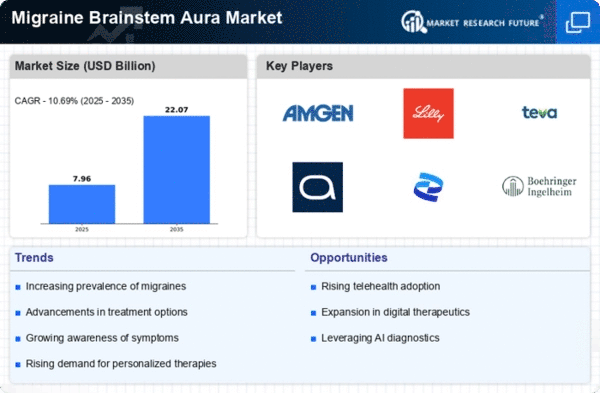
As per MRFR analysis, the Migraine Brainstem Aura Market Size was estimated at 7.19 USD Billion in 2024. The Migraine Brainstem Aura industry is projected to grow from 8.04 USD Billion in 2025 to 22.07 USD Billion by 2035, exhibiting a compound annual growth rate (CAGR) of 10.69 during the forecast period 2025 - 2035.

Key Market Trends & Highlights

The Migraine Brainstem Aura Market is experiencing a dynamic shift towards personalized and technologically integrated treatment options.

  • Rising awareness and education about migraine brainstem aura are enhancing patient engagement in North America.
  • Technological integration in treatment is becoming increasingly prevalent, particularly in the Asia-Pacific region.
  • The focus on personalized medicine is driving innovation in the headache segment, which remains the largest market.
  • The increasing prevalence of migraine brainstem aura and advancements in diagnostic techniques are key drivers of market growth.

Market Size & Forecast

2024 Market Size 7.19 (USD Billion)
2035 Market Size 22.07 (USD Billion)
CAGR (2025 - 2035) 10.69%
Largest Regional Market Share in 2024 North America

Major Players

<p>Amgen (US), Eli Lilly (US), Teva Pharmaceutical Industries (IL), AbbVie (US), Boehringer Ingelheim (DE), Novartis (CH), Pfizer (US), AstraZeneca (GB), GlaxoSmithKline (GB)</p>

Market Trends

The Migraine Brainstem Aura Market is currently experiencing notable developments, driven by a combination of increasing awareness and advancements in treatment options. As healthcare professionals and patients alike become more informed about the complexities of migraine brainstem aura, there appears to be a growing demand for effective therapies. This market is characterized by a diverse range of products, including pharmaceuticals and non-pharmaceutical interventions, which aim to alleviate symptoms and improve the quality of life for those affected. Furthermore, ongoing research into the underlying mechanisms of migraine brainstem aura is likely to yield innovative solutions, potentially reshaping treatment paradigms in the near future. In addition to advancements in treatment, the Migraine Brainstem Aura Market is influenced by evolving patient demographics and lifestyle factors. The increasing prevalence of migraine disorders, particularly among younger populations, suggests a need for tailored approaches to management. Moreover, the integration of technology in healthcare, such as telemedicine and mobile health applications, may enhance patient engagement and adherence to treatment regimens. As the market continues to evolve, stakeholders must remain vigilant to emerging trends and adapt strategies accordingly to meet the needs of this unique patient population.

Rising Awareness and Education

There is a noticeable increase in awareness regarding migraine brainstem aura, leading to better diagnosis and treatment options. Educational initiatives aimed at both healthcare providers and patients are fostering a deeper understanding of this condition, which may result in more individuals seeking appropriate care.

Technological Integration in Treatment

The incorporation of technology into treatment strategies is becoming more prevalent. Innovations such as telehealth services and mobile applications for symptom tracking are likely to enhance patient management and facilitate timely interventions, potentially improving outcomes.

Focus on Personalized Medicine

The trend towards personalized medicine is gaining traction within the Migraine Brainstem Aura Market. Tailoring treatment plans to individual patient profiles, including genetic and lifestyle factors, may lead to more effective management strategies and improved patient satisfaction.

Migraine Brainstem Aura Market Market Drivers

Market Growth Projections

The Global Migraine with Brainstem Aura Market Industry is projected to experience substantial growth over the next decade. With a market value of 6.95 USD Billion in 2024, it is expected to reach 12.5 USD Billion by 2035. This growth trajectory reflects the increasing demand for effective migraine treatments and the ongoing advancements in healthcare. The anticipated CAGR of 5.47% from 2025 to 2035 underscores the potential for innovation and expansion within the market. As new therapies emerge and awareness increases, the market is poised for significant development.

Rising Awareness and Education

There is a growing emphasis on awareness and education regarding migraines, particularly those with brainstem aura. Healthcare organizations and advocacy groups are actively promoting understanding of migraine disorders, which is likely to lead to earlier diagnosis and treatment. This increased awareness is crucial in the Global Migraine with Brainstem Aura Market Industry, as it encourages patients to seek medical help and adhere to treatment regimens. Educational initiatives are also fostering better communication between patients and healthcare providers, ultimately contributing to improved management of migraine symptoms and enhancing market growth.

Advancements in Treatment Options

Innovations in pharmacological and non-pharmacological treatments are significantly influencing the Global Migraine with Brainstem Aura Market Industry. New medications, including CGRP inhibitors and neuromodulation devices, are emerging as effective options for patients. These advancements not only improve patient outcomes but also enhance the quality of life for those affected by migraines. Furthermore, ongoing clinical trials and research are expected to yield additional treatment modalities. The market's growth trajectory suggests a potential increase to 12.5 USD Billion by 2035, driven by these advancements and the demand for more effective management strategies.

Increasing Prevalence of Migraines

The Global Migraine with Brainstem Aura Market Industry is experiencing growth due to the rising prevalence of migraines worldwide. Recent estimates indicate that approximately 15% of the global population suffers from migraines, with a notable percentage experiencing brainstem aura symptoms. This increase in prevalence is likely to drive demand for effective treatments and management strategies. As awareness of migraine disorders grows, healthcare providers are focusing on specialized care, contributing to market expansion. The market is projected to reach 6.95 USD Billion in 2024, reflecting the urgent need for innovative solutions in the management of migraine with brainstem aura.

Healthcare Infrastructure Improvements

Improvements in healthcare infrastructure across various regions are positively impacting the Global Migraine with Brainstem Aura Market Industry. Enhanced access to healthcare services, particularly in developing countries, is facilitating better diagnosis and treatment of migraines. Telemedicine and digital health solutions are also becoming increasingly prevalent, allowing patients to consult specialists remotely. This trend is likely to improve patient outcomes and adherence to treatment plans. As healthcare systems continue to evolve, the market is expected to benefit from these advancements, further driving growth in the coming years.

Growing Investment in Research and Development

Investment in research and development (R&D) for migraine treatments is a key driver of the Global Migraine with Brainstem Aura Market Industry. Pharmaceutical companies and research institutions are allocating significant resources to explore new therapeutic options and understand the underlying mechanisms of migraines. This focus on R&D is likely to yield innovative treatments that address unmet medical needs. As the market evolves, the anticipated compound annual growth rate (CAGR) of 5.47% from 2025 to 2035 indicates a robust pipeline of new therapies that could transform the landscape of migraine management.

Market Segment Insights

By Symptoms: Headache (Largest) vs. Nausea (Fastest-Growing)

<p>In the Migraine Brainstem Aura Market, the segment of symptoms presents a diverse landscape, with headache being the largest contributor to incidence rates. Visual disturbances, dizziness, and tinnitus also play significant roles, but they lag behind headache and nausea in prevalence. As patients experience acute migraines, headache symptoms typically dominate the experience, leading to higher reported cases within this segment. Therefore, the distribution of market share is heavily skewed towards headache, while nausea, though smaller, is increasingly recognized for its impact on overall patient wellness and experience. As awareness of migraine symptoms continues to grow, the market has begun to see notable shifts. Nausea is emerging as a significant symptom, gaining traction due to its debilitating nature and association with severe migraine attacks. Factors such as increased focus on comprehensive treatment plans, patient education, and improved diagnostic tools are driving the growth of both headache and nausea segments. Furthermore, there is a growing trend of understanding the holistic approach to migraine management, encouraging the exploration of all associated symptoms, thus boosting the recognition and treatment of nausea as a critical component of migraine's clinical picture.</p>

<p>Headache: (Dominant) vs. Nausea (Emerging)</p>

<p>Headache remains the dominant symptom in the Migraine Brainstem Aura Market, often characterized by its intensity and the profound effect it has on patients' daily lives. This symptom typically manifests as moderate to severe pain, frequently pulsating in quality and usually concentrated on one side of the head. It affects decision-making and productivity, making it a focal point for both diagnosis and treatment strategies. Conversely, nausea is rapidly emerging as a recognized symptom, often occurring alongside intensive headaches. It has significant implications for treatment approaches, as managing nausea can lead to improved patient outcomes. As more individuals report debilitating nausea alongside headache, the emphasis on targeted therapies to alleviate both symptoms is likely to grow, reshaping the treatment landscape over the coming years.</p>

By Treatment Options: Pharmacological Treatments (Largest) vs. Non-Pharmacological Treatments (Fastest-Growing)

<p>The Treatment Options segment in the Migraine Brainstem Aura Market is primarily dominated by pharmacological treatments, which include medications designed to relieve migraine symptoms effectively. These treatments comprise triptans, NSAIDs, and opioids, collectively holding a significant market share due to their established efficacy and rapid action. In contrast, non-pharmacological treatments have emerged as the fastest-growing category, incorporating therapies such as cognitive behavioral therapy, acupuncture, and lifestyle modification techniques. These alternatives are gaining traction, especially among patients seeking holistic approaches to migraine management.</p>

<p>Preventive Therapies (Dominant) vs. Acute Therapies (Emerging)</p>

<p>In the context of migraine management, preventive therapies are established as a dominant force in the market, aimed at reducing the frequency and severity of attacks through sustained medicinal or therapeutic intervention. They often include beta-blockers and antiepileptic drugs, catering to individuals with chronic migraine occurrences. Conversely, acute therapies, which focus on immediate relief during a migraine attack, are emerging rapidly as patients seek quick and effective solutions. Acute therapies such as certain triptans and rescue medications offer flexibility and rapid action, appealing to the growing segment of migraine sufferers looking for on-demand relief.</p>

By Patient Demographics: Age Group (Largest) vs. Gender (Fastest-Growing)

<p>In the Migraine Brainstem Aura Market, the Age Group segment displays the largest market share, with a significant proportion of patients diagnosed in the 30-40 age bracket. This group tends to express higher susceptibility due to lifestyle factors, increasing the prevalence of migraine with brainstem aura among this demographic. In comparison, the Gender segment has emerged as the fastest-growing, fueled by rising awareness and targeted therapies that address the unique migraine manifestations in men and women.</p>

<p>Age Group (Dominant) vs. Gender (Emerging)</p>

<p>The Age Group segment, particularly among individuals aged 30-40, remains dominant in the Migraine Brainstem Aura Market, representing a significant portion of diagnosed cases. This age demographic is particularly susceptible due to various lifestyle pressures, making them more likely to seek medical intervention. Conversely, the Gender segment, characterized by increased attention to male and female migraine experiences, is becoming increasingly relevant. With healthcare systems evolving and focusing more on gender-specific management strategies, this segment is rapidly emerging, highlighting the need for tailored treatments that recognize the differences in migraine presentation and response between genders.</p>

By Healthcare Providers: Neurologists (Largest) vs. Pain Management Specialists (Fastest-Growing)

<p>In the Migraine Brainstem Aura Market, healthcare providers play a crucial role, with neurologists holding the largest market share. Their specialized knowledge and focus on neurological disorders position them as the predominant option for patients experiencing migraine brainstem aura. Primary care physicians and psychiatrists also contribute considerable shares, yet they vary in focus and treatment approaches, leading to a diverse market landscape. Pain management specialists are gaining traction as well, addressing the growing need for tailored pain management solutions, thus expanding their presence in the market.</p>

<p>Neurologists (Dominant) vs. Pain Management Specialists (Emerging)</p>

<p>Neurologists are the dominant healthcare providers for migraine brainstem aura patients due to their expert training and familiarity with complex neurological conditions. They utilize advanced diagnostics and treatment plans, ensuring high levels of care and patient referrals. In contrast, pain management specialists are emerging rapidly, driven by an increasing demand for chronic pain therapies. They often adopt multidisciplinary approaches, including medication, physical therapy, and alternative treatments, to create comprehensive care plans. This evolution indicates a shift towards integrated care models in managing migraines, catering to a diverse patient population seeking relief from persistent pain.</p>

Get more detailed insights about Migraine with Brainstem Aura Market Research Report – Forecast to 2035

Regional Insights

North America : Market Leader in Innovation

North America continues to lead the Migraine Brainstem Aura market, holding a significant share of 3.59 billion. The region's growth is driven by increasing awareness of migraine disorders, advancements in treatment options, and supportive healthcare policies. Regulatory bodies are actively promoting innovative therapies, which enhances market dynamics and patient access to effective treatments. The rising prevalence of migraines among the population further fuels demand for specialized care and medications. The competitive landscape in North America is robust, featuring key players such as Amgen, Eli Lilly, and AbbVie. These companies are at the forefront of developing new therapies, leveraging cutting-edge research and technology. The U.S. remains the largest market, with Canada also showing promising growth. The presence of established pharmaceutical firms ensures a steady supply of innovative solutions, catering to the diverse needs of migraine patients across the region.

Europe : Emerging Market with Growth Potential

Europe's Migraine Brainstem Aura market is valued at 2.15 billion, reflecting a growing demand for effective treatments. The region benefits from strong regulatory frameworks that encourage the development and approval of new therapies. Increased healthcare spending and a focus on patient-centered care are key drivers of market growth. Additionally, the rising incidence of migraines in Europe is prompting healthcare providers to seek innovative solutions, thereby enhancing market dynamics. Leading countries in this region include Germany, France, and the UK, where major pharmaceutical companies like Boehringer Ingelheim and Novartis are actively involved. The competitive landscape is characterized by a mix of established players and emerging biotech firms, fostering innovation. The European Medicines Agency plays a crucial role in ensuring the safety and efficacy of new treatments, which is vital for market expansion. "The European market is witnessing a surge in demand for migraine therapies, driven by regulatory support and increasing patient awareness," European Medicines Agency.

Asia-Pacific : Rapidly Growing Market Segment

The Asia-Pacific region, with a market size of 1.25 billion, is experiencing rapid growth in the Migraine Brainstem Aura sector. Factors such as increasing urbanization, lifestyle changes, and rising stress levels contribute to the growing prevalence of migraines. Additionally, government initiatives aimed at improving healthcare access and awareness are driving demand for effective treatments. The region's diverse population presents unique challenges and opportunities for market players. Countries like Japan, China, and Australia are leading the charge in this market, with significant investments in healthcare infrastructure. Key players such as Teva Pharmaceutical and Pfizer are expanding their presence in the region, focusing on innovative therapies tailored to local needs. The competitive landscape is evolving, with both multinational corporations and local firms vying for market share, ensuring a dynamic environment for growth.

Middle East and Africa : Untapped Market Potential

The Middle East and Africa (MEA) region, with a market size of 0.2 billion, presents both challenges and opportunities in the Migraine Brainstem Aura market. Limited healthcare infrastructure and varying levels of access to treatment hinder growth. However, increasing awareness of migraine disorders and a push for better healthcare services are driving demand. Governments are beginning to recognize the importance of addressing migraine treatment, which could lead to regulatory improvements in the future. Countries like South Africa and the UAE are emerging as key players in the market, with local pharmaceutical companies starting to invest in migraine treatments. The competitive landscape is still developing, with opportunities for international firms to enter the market. As awareness grows and healthcare systems improve, the MEA region is poised for gradual growth in the migraine treatment sector.

Key Players and Competitive Insights

The Migraine Brainstem Aura Market is characterized by a competitive landscape that is increasingly shaped by innovation, strategic partnerships, and a focus on patient-centric solutions. Key players such as Amgen (US), Eli Lilly (US), and AbbVie (US) are actively engaged in developing novel therapies and expanding their market presence. Amgen (US) has positioned itself as a leader in biologics, emphasizing the development of targeted therapies that address the underlying mechanisms of migraine. Eli Lilly (US) has focused on expanding its portfolio through strategic acquisitions and partnerships, enhancing its capabilities in the migraine treatment space. AbbVie (US) has adopted a dual approach, investing in both research and development while also pursuing collaborations to enhance its product offerings. Collectively, these strategies contribute to a dynamic competitive environment, where innovation and collaboration are paramount.

In terms of business tactics, companies are increasingly localizing manufacturing and optimizing supply chains to enhance efficiency and responsiveness to market demands. The competitive structure of the Migraine Brainstem Aura Market appears moderately fragmented, with several key players exerting influence while also facing competition from emerging biotech firms. This fragmentation allows for a diverse range of treatment options, catering to varying patient needs and preferences.

In November 2025, Amgen (US) announced a collaboration with a leading digital health company to integrate AI-driven solutions into its migraine management programs. This strategic move is likely to enhance patient engagement and adherence to treatment protocols, thereby improving clinical outcomes. The integration of technology into traditional treatment paradigms signifies a shift towards more personalized and effective care.

In October 2025, Eli Lilly (US) launched a new migraine treatment that leverages a novel mechanism of action, which has shown promising results in clinical trials. This launch not only strengthens Eli Lilly's product portfolio but also positions the company as a frontrunner in the innovation race within the migraine treatment sector. The introduction of such therapies could potentially reshape treatment guidelines and patient management strategies.

In September 2025, AbbVie (US) expanded its global footprint by entering into a strategic partnership with a European pharmaceutical firm to co-develop a new class of migraine therapies. This collaboration is indicative of AbbVie's commitment to enhancing its research capabilities and accelerating the development of innovative treatments. Such partnerships are essential for navigating the complexities of drug development and regulatory approval processes.

As of December 2025, the competitive trends in the Migraine Brainstem Aura Market are increasingly defined by digitalization, sustainability, and the integration of AI technologies. Strategic alliances are playing a crucial role in shaping the current landscape, enabling companies to leverage complementary strengths and resources. Looking ahead, competitive differentiation is expected to evolve, with a notable shift from price-based competition towards innovation, technological advancements, and supply chain reliability. This evolution underscores the importance of agility and responsiveness in meeting the needs of patients and healthcare providers alike.

Key Companies in the Migraine Brainstem Aura Market market include

Industry Developments

Future Outlook

Migraine Brainstem Aura Market Future Outlook

<p>The Migraine Brainstem Aura Market is projected to grow at a 10.69% CAGR from 2024 to 2035, driven by increasing prevalence and advancements in treatment options.</p>

New opportunities lie in:

  • <p>Development of personalized treatment plans leveraging genetic profiling.</p>
  • <p>Expansion of telehealth services for remote patient monitoring.</p>
  • <p>Investment in AI-driven diagnostic tools for early detection.</p>

<p>By 2035, the market is expected to achieve substantial growth, reflecting evolving treatment paradigms.</p>

Market Segmentation

Migraine Brainstem Aura Market Symptoms Outlook

  • Visual Disturbances
  • Dizziness
  • Tinnitus
  • Nausea
  • Headache

Migraine Brainstem Aura Market Treatment Options Outlook

  • Pharmacological Treatments
  • Non-Pharmacological Treatments
  • Preventive Therapies
  • Acute Therapies

Migraine Brainstem Aura Market Healthcare Providers Outlook

  • Neurologists
  • Primary Care Physicians
  • Pain Management Specialists
  • Psychiatrists

Migraine Brainstem Aura Market Patient Demographics Outlook

  • Age Group
  • Gender
  • Socioeconomic Status
  • Comorbid Conditions

Report Scope

MARKET SIZE 20247.19(USD Billion)
MARKET SIZE 20258.04(USD Billion)
MARKET SIZE 203522.07(USD Billion)
COMPOUND ANNUAL GROWTH RATE (CAGR)10.69% (2024 - 2035)
REPORT COVERAGERevenue Forecast, Competitive Landscape, Growth Factors, and Trends
BASE YEAR2024
Market Forecast Period2025 - 2035
Historical Data2019 - 2024
Market Forecast UnitsUSD Billion
Key Companies ProfiledAmgen (US), Eli Lilly (US), Teva Pharmaceutical Industries (IL), AbbVie (US), Boehringer Ingelheim (DE), Novartis (CH), Pfizer (US), AstraZeneca (GB), GlaxoSmithKline (GB)
Segments CoveredSymptoms, Treatment Options, Patient Demographics, Healthcare Providers
Key Market OpportunitiesAdvancements in personalized treatment options for Migraine Brainstem Aura enhance patient outcomes and market potential.
Key Market DynamicsRising demand for innovative therapies drives competition and regulatory scrutiny in the Migraine Brainstem Aura Market.
Countries CoveredNorth America, Europe, APAC, South America, MEA

FAQs

What are the major factors included in the Migraine with Brainstem Aura Market?

Growing awareness regarding migraine would be the dominating factor for Migraine with Brainstem Aura Market growth.

What could prevent the Migraine with Brainstem Aura Market growth?

Name segments related to a diagnosis that is a part of the Migraine with Brainstem Aura Market assessment. The segments of Migraine with Brainstem Aura Market are magnetic resonance imaging (MRI), computerized tomography (CT), and others.

What are the treatments included in the Migraine with Brainstem Aura Market study?

Migraine with Brainstem Aura Market study includes abortive medication and preventive medication.

What are the distribution channels mentioned in the Migraine with Brainstem Aura Market study?

The study of Migraine with Brainstem Aura Market includes retail pharmacies, hospital pharmacies, and others.

Which region would dominate the global Migraine with Brainstem Aura Market study?

The Americas would dominate global Migraine with Brainstem Aura Market study.

  1. Definition
  2. Research
  3. Assumptions
  4. Limitations
  5. Research Methodology
    1. Introduction
    2. Primary Research
    3. Secondary Research
    4. Market Size
    5. Estimation
    6. Chapter 4. Market Dynamics
    7. Drivers
    8. Restraints
    9. Opportunities
    10. Challenges
    11. Macroeconomic Indicators
    12. Technology
    13. Trends & Assessment
    14. Chapter 5. Market Factor Analysis
    15. Porter’s Five Forces Analysis
      1. Bargaining
      2. Threat of New Entrants
      3. Threat of Substitutes
      4. Intensity of Rivalry
    16. Bargaining Power of Suppliers
    17. Power of Buyers
    18. Value Chain Analysis
    19. Investment Feasibility Analysis
    20. Pricing Analysis
    21. Chapter 6. Global
  6. Migraine with Brainstem Aura Market, by Diagnosis
    1. Introduction
    2. Magnetic Resonance Imaging (MRI)
  7. Market Estimates & Forecast, by Region,
    1. Market
    2. Estimates & Forecast, by Country, 2023–2030
    3. Computerized Tomography (CT)
  8. Market Estimates & Forecast, by Region,
  9. Market Estimates & Forecast, by Country,
    1. Others
    2. Chapter 7. Global
  10. Migraine with Brainstem Aura Market, by Treatment
    1. Introduction
    2. Abortive Medication
      1. Non-steroidal
    3. Anti-Inflammatory Drugs (NSAIDS)
    4. Market Estimates
    5. & Forecast, by Region, 2023–2030
  11. Market Estimates & Forecast, by Country, 2023–2030
  12. Others
  13. Anti-Nausea Medications
  14. Market Estimates & Forecast, by Region,
    1. Market
    2. Estimates & Forecast, by Country, 2023–2030
  15. Others
    1. Preventive Medication
      1. Botox Injections
  16. Market Estimates & Forecast, by Region, 2023–2030
    1. Market Estimates
    2. & Forecast, by Country, 2023–2030
    3. Antidepressants
  17. Market Estimates & Forecast, by Region, 2023–2030
    1. Market Estimates & Forecast,
    2. by Country, 2023–2030
    3. Chapter 8. Global
  18. Others
  19. Migraine with Brainstem Aura Market, by Distribution Channel
    1. Introduction
    2. Retail Pharmacies
    3. Market
    4. Estimates & Forecast, by Region, 2023–2030
    5. Market Estimates &
    6. Forecast, by Country, 2023–2030
    7. Hospital
    8. Pharmacies
  20. Market Estimates & Forecast, by Region, 2023–2030
    1. Market
    2. Estimates & Forecast, by Country, 2023–2030
    3. Others
    4. Chapter 9. Global Migraine with
  21. Brainstem Aura Market, by End-User
    1. Introduction
    2. Hospital & Clinics
    3. Market Estimates & Forecast,
    4. by Region, 2023–2030
  22. Market Estimates & Forecast, by Country, 2023–2030
    1. Diagnostic Centers
    2. Market Estimates &
    3. Forecast, by Region, 2023–2030
  23. Market Estimates & Forecast, by Country,
    1. Others
    2. Chapter
  24. Global Migraine with Brainstem Aura Market, by Region
    1. Introduction
    2. Americas
    3. North America
    4. Canada
    5. Spain
    6. of Western Europe
    7. Asia-Pacific
    8. South Korea
    9. Middle East & Africa
    10. Africa
    11. Chapter 11. Company Landscape
    12. Share Analysis
    13. Strategies
    14. Chapter 12. Company Profiles
    15. Overview
    16. Key Developments
    17. Overview
    18. Key Developments
    19. Company Overview
    20. Overview
    21. SWOT Analysis
    22. Product Overview
    23. Overview
    24. GlaxoSmithKline plc
    25. Financial overview
    26. Financial Overview
    27. Financial Overview
    28. Endo International Plc.
    29. SWOT Analysis
    30. Overview
    31. Key Developments
    32. Financials
    33. Johnson
    34. Product Overview
    35. SWOT Analysis
    36. Chapter 13 MRFR Conclusion
    37. From CEO’s Viewpoint
    38. Needs of the Market
    39. to Watch
    40. with Brainstem Aura Industry
    41. Chapter 14. Appendix
    42. LIST
  25. US
  26. South America
    1. Europe
      1. Western Europe
      2. Eastern Europe
      3. Japan
      4. China
      5. India
      6. Australia
      7. Rest of Asia-Pacific
      8. Middle East
    2. Introduction
    3. Market
    4. Key Development &
    5. Allergen Plc
      1. Company
      2. Product Overview
      3. Financials Overview
      4. SWOT Analysis
    6. Abbott Laboratories
      1. Company
      2. Product Overview
      3. Financial Overview
      4. SWOT Analysis
    7. Merck & Co., Inc.
      1. Product
      2. Financial Overview
      3. Key Development
    8. Pfizer, Inc.
      1. Company Overview
      2. Financial
      3. Key Development
      4. SWOT Analysis
      5. Company Overview
      6. Product Overview
      7. Key Developments
      8. SWOT Analysis
    9. AstraZeneca
      1. Company Overview
      2. Product Overview
      3. Key Developments
      4. SWOT Analysis
    10. Eisai Co., Ltd.
      1. Overview
      2. Product Overview
      3. Key Developments
      4. SWOT Analysis
      5. Overview
      6. Product Overview
      7. Financials
      8. Key Developments
    11. Impax Laboratories
      1. Product Overview
      2. Financials
      3. SWOT Analysis
    12. Eli Lily and Company
      1. Overview
      2. Product Overview
      3. Key Developments
      4. SWOT Analysis
    13. Johnson &
      1. Overview
      2. Financials
      3. Key Developments
    14. Key Findings
      1. Unmet
    15. Key Companies
    16. Predictions for the Migraine
  27. OF TABLES
  28. Global Migraine with
    1. Brainstem Aura Market Synopsis, 2023–2030
    2. Table 2
    3. Global Migraine with Brainstem Aura Market Estimates and Forecast, 2023–2030
    4. (USD Million)
  29. Global
  30. Migraine with Brainstem Aura Market, by Region, 2023–2030 (USD Million)
  31. Global Migraine with Brainstem Aura
  32. Market, by Diagnosis, 2023–2030(USD Million)
    1. Table 6
  33. Global Migraine with Brainstem Aura Market, by Treatment, 2023–2030
    1. (USD Million)
  34. Global Migraine
  35. with Brainstem Aura Market, by Distribution Channel, 2023–2030 (USD
    1. Million)
  36. Global Migraine with Brainstem
  37. Aura Market, by End-User, 2023–2030 (USD Million)
    1. Table 8
    2. North America: Migraine with Brainstem Aura Market, by
    3. Diagnosis, 2023–2030 (USD
    4. Million)
  38. North America: Migraine with Brainstem
  39. Aura Market, by Treatment, 2023–2030 (USD
    1. Million)
  40. North America: Migraine with Brainstem Aura Market,
    1. by Distribution Channel, 2023–
    2. Table
  41. North America: Migraine with Brainstem Aura Market, by End-User,
    1. Million)
  42. US:
  43. Migraine with Brainstem Aura Market, by Diagnosis, 2023–2030 (USD Million)
  44. US: Migraine with Brainstem Aura Market, by Treatment,
  45. US: Migraine with
  46. Brainstem Aura Market, by Distribution Channel, 2023–2030 (USD
    1. Million)
  47. US: Migraine with Brainstem Aura Market,
    1. by End-User, 2023–2030 (USD Million)
  48. Canada:
  49. Migraine with Brainstem Aura Market, by Diagnosis, 2023–2030 (USD Million)
  50. Canada: Migraine with Brainstem Aura Market, by Treatment,
  51. Canada: Migraine with
  52. Brainstem Aura Market, by Distribution Channel, 2023–2030
    1. (USD
    2. Million)
  53. Canada: Migraine with Brainstem Aura Market, by End-User,
  54. South America: Migraine
  55. with Brainstem Aura Market, by Diagnosis, 2023–2030 (USD
    1. Million)
  56. South America: Migraine with Brainstem
  57. Aura Market, by Treatment, 2023–2030 (USD
    1. Million)
  58. South America: Migraine with Brainstem Aura Market,
    1. by Distribution Channel, 2023–
    2. Table
  59. South America: Migraine with Brainstem Aura Market, by End-User,
    1. Million)
  60. Europe:
  61. Migraine with Brainstem Aura Market, by Diagnosis, 2023–2030 (USD Million)
  62. Europe: Migraine with
  63. Brainstem Aura Market, by Treatment, 2023–2030 (USD Million)
    1. Table 26
  64. Europe: Migraine with Brainstem Aura Market, by Distribution Channel, 2023–2030
    1. (USD
    2. Million)
  65. Western Europe: Migraine
  66. with Brainstem Aura Market, by Diagnosis, 2023–2030 (USD
    1. Million)
  67. Western Europe: Migraine with Brainstem
  68. Aura Market, by Treatment, 2023–2030 (USD
    1. Million)
  69. Western Europe: Migraine with Brainstem Aura Market,
    1. by Distribution Channel, 2023–
    2. Table 30
  70. Western Europe: Migraine with Brainstem Aura Market, by End-User, 2023–2030
    1. (USD Million)
  71. Eastern Europe:
  72. Migraine with Brainstem Aura Market, by Diagnosis, 2023–2030 (USD
    1. Million)
  73. Eastern Europe: Migraine with
  74. Brainstem Aura Market, by Treatment, 2023–2030 (USD
    1. Million)
  75. Eastern Europe: Migraine with Brainstem
  76. Aura Market, by Distribution Channel, 2023–
  77. Eastern Europe: Migraine with Brainstem Aura Market,
    1. by End-User, 2023–2030
    2. (USD Million)
    3. Table 35
  78. Asia-Pacific: Migraine with Brainstem Aura Market, by Diagnosis, 2023–2030
    1. (USD
    2. Million)
  79. Asia-Pacific: Migraine
  80. with Brainstem Aura Market, by Treatment, 2023–2030 (USD
    1. Million)
  81. Asia-Pacific: Migraine with Brainstem Aura
  82. Market, by Distribution Channel, 2023–2030
    1. (USD
    2. Million)
  83. Asia-Pacific: Migraine with Brainstem
  84. Aura Market, by End-User, 2023–2030 (USD
    1. Million)
  85. Middle
  86. East & Africa: Migraine with Brainstem Aura Market, by Diagnosis, 2023–2030
    1. (USD Million)
  87. Middle East & Africa:
  88. Migraine with Brainstem Aura Market, by Treatment, 2023–2030
    1. (USD Million)
  89. Middle East & Africa: Migraine
  90. with Brainstem Aura Market, by Distribution Channel,
    1. (USD Million)
  91. Middle East & Africa: Migraine
  92. with Brainstem Aura Market, by End-User, 2023–2030
    1. (USD
    2. Million)
  93. LIST OF FIGURES
  94. Research Process
  95. Segmentation for the Global Migraine with Brainstem
    1. Aura Market
  96. Segmentation Market Dynamics for Global
    1. Migraine with Brainstem Aura Market
  97. Global Migraine
  98. with Brainstem Aura Market Share, by Type, 2023
  99. Global
  100. Migraine with Brainstem Aura Market Share, by Diagnosis, 2023
    1. Figure 6
  101. Global Migraine with Brainstem Aura Market Share, by Treatment, 2023
    1. Figure
  102. Global Migraine with Brainstem Aura Market Share, by Distribution
    1. Channel, 2023
  103. Global Migraine with Brainstem Aura
  104. Market Share, by End-User, 2023
  105. Global Migraine
  106. with Brainstem Aura Market Share, by Region, 2023
  107. North
  108. America: Migraine with Brainstem Aura Market Share, by Country, 2023
    1. Figure
  109. Europe: Migraine with Brainstem Aura Market Share, by Country,
  110. Asia-Pacific: Migraine with Brainstem Aura
  111. Market Share, by Country, 2023
  112. Middle East &
  113. Africa: Migraine with Brainstem Aura Market Share, by Country, 2023
    1. Figure
  114. Global Migraine with Brainstem Aura Market: Company Share Analysis,
  115. Allergen Plc: Key Financials
    1. Figure
  116. Allergen Plc: Segmental Revenue
    1. Figure 17
    2. Allergen Plc: Geographical Revenue
    3. Figure 18
    4. Abbott Laboratories: Key Financials
  117. Abbott
    1. Laboratories: Segmental Revenue
  118. Abbott Laboratories:
    1. Geographical Revenue
  119. Merck & Co., Inc.: Key
    1. Financials
  120. Merck & Co., Inc.: Segmental Revenue
  121. Merck & Co., Inc.: Geographical Revenue
    1. Figure
  122. Pfizer, Inc.: Key Financials
  123. Pfizer,
    1. Inc: Segmental Revenue
  124. Pfizer, Inc: Geographical
    1. Revenue
  125. GlaxoSmithKline plc: Key Financials
  126. GlaxoSmithKline plc: Segmental Revenue
    1. Figure
  127. GlaxoSmithKline Plc. Geographical Revenue
    1. Figure 30
    2. AstraZeneca: Key Financials
  128. AstraZeneca:
    1. Segmental Revenue
  129. AstraZeneca:
    1. Geographical Revenue
  130. Eisai Co., Ltd.: Key Financials
  131. Eisai Co., Ltd.: Segmental Revenue
    1. Figure 35
    2. Eisai Co., Ltd.: Geographical Revenue
  132. Endo
    1. International Plc.: Key Financials
  133. Endo International
    1. Plc.: Segmental Revenue
  134. Endo International Plc.:
    1. Geographical Revenue
  135. Impax Laboratories: Key Financials
  136. Impax Laboratories: Segmental Revenue
  137. Impax Laboratories: Geographical Revenue
  138. Eli Lily and Company: Key Financials
    1. Figure 43
    2. Eli Lily and Company: Segmental Revenue
  139. Eli
    1. Lily and Company: Geographical Revenue
  140. Johnson
    1. & Johnson: Key Financials
  141. Johnson & Johnson:
    1. Segmental Revenue
  142. Johnson & Johnson: Geographical
    1. Revenue

Migraine with Brainstem Aura Market Segmentation

Market Segmentation Overview

  • Detailed segmentation data will be available in the full report
  • Comprehensive analysis by multiple parameters
  • Regional and country-level breakdowns
  • Market size forecasts by segment
Infographic

Free Sample Request

Kindly complete the form below to receive a free sample of this Report

Get Free Sample

Customer Strories

Compare Licence

×
Features License Type
Single User Multiuser License Enterprise User
Price $4,950 $5,950 $7,250
Maximum User Access Limit 1 User Upto 10 Users Unrestricted Access Throughout the Organization
Free Customization
Direct Access to Analyst
Deliverable Format
Platform Access
Discount on Next Purchase 10% 15% 15%
Printable Versions