Request Free Sample ×

Kindly complete the form below to receive a free sample of this Report

* Please use a valid business email

Leading companies partner with us for data-driven Insights

clients tt-cursor
Hero Background

Leather Goods Market

ID: MRFR/CG/9247-CR
90 Pages
Snehal Singh
May 2023

Leather Goods Market Size, Share, Industry Trend & Analysis Research Report Information By Type (Leather goods Anhydrous, and Leather goods Monohydrate), Form (Powder, Liquid/Syrup, and Crystalline), By Source (Corn, Wheat, and Others), By Application (Food, Beverages, Pharmaceutical, Personal Care, and Others), And By Region (North America, Europe, Asia-Pacific, Latin America, and Middle East and Africa) - Forecast Till 2030

Share:
Download PDF ×

We do not share your information with anyone. However, we may send you emails based on your report interest from time to time. You may contact us at any time to opt-out.

Leather Goods Market Infographic
Purchase Options

Leather Goods Market Summary

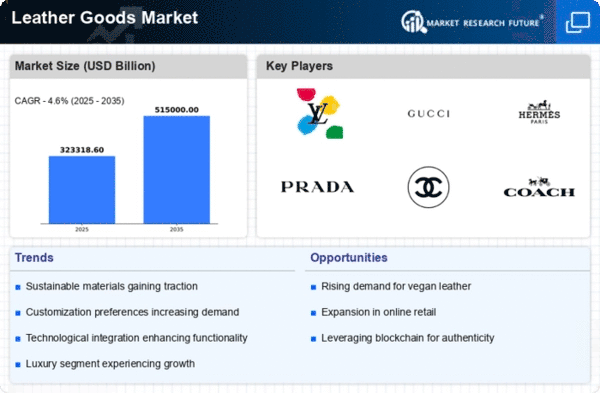
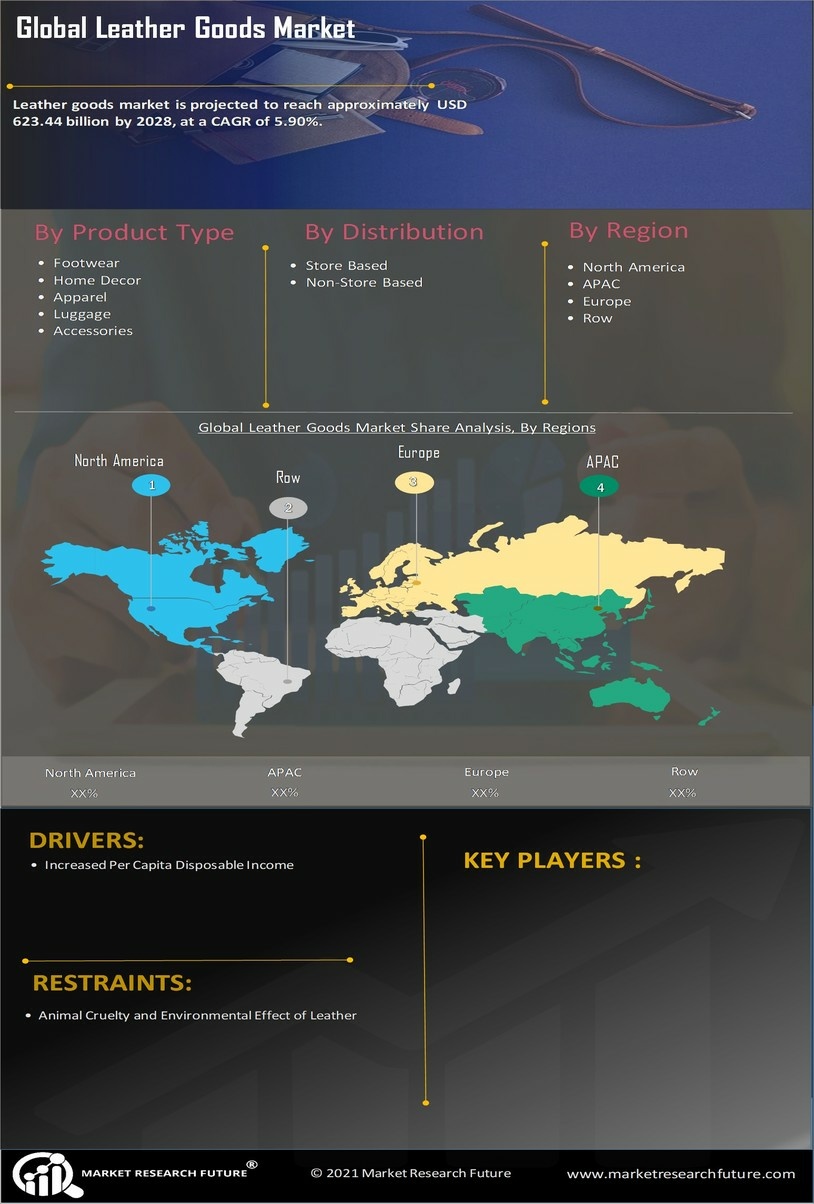
As per MRFR analysis, the Leather Goods Market Size was estimated at 309100.0 USD Billion in 2024. The Leather Goods industry is projected to grow from 330200.0 USD Billion in 2025 to 515000.0 USD Billion by 2035, exhibiting a compound annual growth rate (CAGR) of 4.6% during the forecast period 2025 - 2035.

Key Market Trends & Highlights

The Leather Goods Market is experiencing a dynamic shift towards sustainability and personalization, driven by evolving consumer preferences.

  • North America remains the largest market for leather goods, characterized by a strong demand for high-quality handbags.
  • Asia-Pacific is emerging as the fastest-growing region, with increasing interest in fashionable and affordable leather products.
  • Handbags dominate the market as the largest segment, while footwear is witnessing rapid growth due to changing consumer lifestyles.
  • Rising disposable income and e-commerce expansion are key drivers propelling the market forward, alongside sustainability trends.

Market Size & Forecast

2024 Market Size 309100.0 (USD Billion)
2035 Market Size 515000.0 (USD Billion)
CAGR (2025 - 2035) 4.6%

Major Players

Louis Vuitton (FR), Gucci (IT), Hermes (FR), Prada (IT), Chanel (FR), Coach (US), Michael Kors (US), Tory Burch (US), Fendi (IT)

Our Impact
Enabled $4.3B Revenue Impact for Fortune 500 and Leading Multinationals
Partnering with 2000+ Global Organizations Each Year
30K+ Citations by Top-Tier Firms in the Industry

Leather Goods Market Trends

The Leather Goods Market is currently experiencing a dynamic evolution, driven by shifting consumer preferences and increasing demand for sustainable products. As environmental consciousness rises, consumers are gravitating towards ethically sourced materials and eco-friendly production methods. This trend is reshaping the landscape of the industry, prompting brands to innovate and adapt their offerings to align with these values. Furthermore, the integration of technology into leather goods, such as smart features and enhanced durability, is becoming more prevalent, appealing to a tech-savvy demographic. In addition to sustainability and technological advancements, the Leather Goods Market is witnessing a growing inclination towards personalization. Consumers are seeking unique, customized products that reflect their individual styles and preferences. This desire for distinctiveness is encouraging brands to offer bespoke services and limited-edition collections, thereby enhancing customer engagement and loyalty. As the market continues to evolve, it appears poised for further growth, with opportunities for brands that can effectively respond to these emerging trends.

Sustainability Focus

The Leather Goods Market is increasingly prioritizing sustainable practices, as consumers demand products made from eco-friendly materials. Brands are exploring alternatives to traditional leather, such as plant-based options, and implementing responsible sourcing methods.

Technological Integration

The incorporation of technology into leather goods is gaining traction, with innovations such as smart wallets and bags featuring tracking devices. This trend caters to a modern audience that values functionality alongside style.

Personalization and Customization

A notable trend in the Leather Goods Market is the growing demand for personalized products. Consumers are looking for unique items that reflect their individual tastes, prompting brands to offer customization options and limited-edition releases.

Customization Demand

There is a growing consumer preference for personalized leather goods, reflecting individual style and identity. This trend is encouraging brands to innovate and offer bespoke options, thereby enhancing customer engagement and strengthening the target market for leather goods.

Leather Goods Market Drivers

E-commerce Growth

The rise of e-commerce significantly influences the Global Leather Goods Industry, providing consumers with unprecedented access to a wide range of products. Online platforms enable brands to reach global audiences, facilitating the sale of leather goods across borders. This trend is particularly beneficial for small and medium-sized enterprises that may not have the resources for traditional retail. As online shopping continues to gain traction, it is expected to drive sales in the leather goods sector. The convenience and variety offered by e-commerce platforms are likely to enhance consumer engagement, further propelling market growth.

Sustainability Trends

Sustainability has become a pivotal driver in the Global Leather Goods Industry, as consumers increasingly seek eco-friendly products. Brands are responding by adopting sustainable practices, such as sourcing leather report from responsible suppliers and utilizing vegetable tanning methods. This shift not only appeals to environmentally conscious consumers but also aligns with global efforts to reduce carbon footprints. As a result, companies that prioritize sustainability are likely to capture a larger market share. The industry's evolution towards sustainable leather goods may contribute to the projected growth, with the market expected to reach 540.1 USD Billion by 2035.

Rising Disposable Income

The Global Leather Goods Industry experiences a notable boost due to the increasing disposable income among consumers worldwide. As individuals have more financial freedom, they tend to invest in premium leather products, which are often perceived as status symbols. This trend is particularly evident in emerging economies, where a growing middle class is eager to purchase high-quality leather goods. In 2024, the market is valued at approximately 284.0 USD Billion, reflecting the strong demand for luxury items. This trend is expected to continue, driving the market further as disposable incomes rise, particularly in regions like Asia-Pacific.

Market Growth Projections

The Global Leather Goods Industry is projected to experience substantial growth over the next decade. With a current valuation of 284.0 USD Billion in 2024, the market is expected to reach 540.1 USD Billion by 2035, indicating a robust expansion trajectory. This growth is underpinned by a compound annual growth rate (CAGR) of 6.02% from 2025 to 2035. Such projections reflect the increasing consumer interest in leather products, driven by factors such as rising disposable incomes, sustainability trends, and technological advancements. The market's potential for growth suggests a vibrant future for the leather goods sector.

Fashion Industry Influence

The Global Leather Goods Industry is heavily influenced by the fashion sector, where leather products are often seen as essential components of stylish wardrobes. High-profile fashion shows and celebrity endorsements can create significant demand for leather goods, driving trends and consumer preferences. As fashion evolves, so does the appeal of leather items, which are frequently incorporated into seasonal collections. This dynamic relationship between fashion and leather goods suggests a continuous cycle of demand, with the market poised for growth as new styles emerge and consumer interest remains strong.

Technological Advancements

Technological innovations play a crucial role in shaping the Global Leather Goods Industry. The integration of advanced manufacturing techniques, such as 3D printing and automated cutting, enhances production efficiency and reduces waste. Additionally, digital platforms facilitate personalized shopping experiences, allowing consumers to customize their leather goods. These advancements not only improve product quality but also cater to the growing demand for unique and personalized items. As the industry embraces technology, it is likely to attract a broader consumer base, contributing to the anticipated CAGR of 6.02% from 2025 to 2035.

Market Segment Insights

By Product Type: Handbags (Largest) vs. Footwear (Fastest-Growing)

In the Leather Goods Market, the product type segment is characterized by a diverse range of categories, each contributing significantly to the overall market dynamics. Handbags hold the largest share, driven by continually evolving fashion trends and consumer preferences. Wallets, while important, follow closely, with footwear emerging as a vital contender as it caters to both style and function. Belts and jackets, although not at the forefront, add to the overall product diversity and meet niche market demands in the small leather goods market.

Handbags (Dominant) vs. Footwear (Emerging)

Handbags are renowned as the dominant force in the Leather Goods Market due to their broad appeal across various consumer demographics and their ability to combine functionality with luxury. Brands often leverage this segment by offering exclusive designs and premium quality, contributing to handbag's sustained popularity. In contrast, footwear represents an emerging trend as consumers increasingly seek comfort alongside style in their daily wear. With innovations in material and design, the demand for fashionable and practical leather footwear is rising, particularly among younger demographics who form an important target market for leather goods.

By Material Type: Genuine Leather (Largest) vs. Synthetic Leather (Fastest-Growing)

In the leather goods market, material type plays a crucial role in determining product preference and market dynamics. Genuine leather holds the largest market share, prized for its durability, luxury appeal, and natural aesthetic. Synthetic leather, on the other hand, is gaining traction, particularly among environmentally-conscious consumers seeking cruelty-free alternatives, contributing to the rapid growth of the vegan leather goods market. The shift in consumer behavior reflects broader trends towards sustainability, driving the rise of synthetic options in the market. The market is experiencing dynamic growth, especially in the synthetic leather segment, which is projected to expand rapidly due to technological advancements in production and a growing awareness of ethical consumption. Additionally, genuine leather's enduring appeal remains strong among high-end brands, balancing out the rapid rise of synthetic alternatives. The leather goods market is thus characterized by a diverse range of materials catering to evolving consumer preferences and sustainability trends.

Genuine Leather (Dominant) vs. Synthetic Leather (Emerging)

Genuine leather is recognized for its superior quality, timeless aesthetics, and long-lasting nature, making it a staple in high-end leather goods. Brands leverage its natural properties to convey luxury and durability. Conversely, synthetic leather is emerging strongly in the market, driven by changing consumer preferences that favor cruelty-free and environmentally sustainable options. It is increasingly used in a variety of products, particularly among younger demographics looking for stylish yet affordable alternatives. As manufacturing processes improve, synthetic leather is expected to capture a larger share, appealing to both fashion-conscious and eco-conscious consumers.

By End User: Women (Largest) vs. Men (Fastest-Growing)

The Leather Goods Market has exhibited a diverse market share distribution among its end-user segments. Currently, Women represent the largest segment, benefiting from a wide array of products ranging from handbags to leather apparel. This preference can be attributed to the growing trend of fashion-conscious women's spending on luxury leather goods. In contrast, the Men segment, while smaller in overall share, is rapidly gaining traction due to increasing interest in leather accessories such as wallets and belts, reflecting a shift towards upscale fashion among male consumers. Examining the growth trends reveals that the Women segment is driven primarily by brand loyalty and the appeal of high-quality leather items. Meanwhile, the Men segment's growth is fueled by changing habits, with younger males showing more willingness to spend on premium leather products. The rise of e-commerce also aids the overall accessibility of products for all end-user categories, contributing to this dynamic shift in market focus.

Women (Dominant) vs. Men (Emerging)

The Women segment in the Leather Goods Market showcases a dominant position owing to a combination of factors including the fashion industry's robust influence and women's increasing disposable incomes. This segment is characterized by a diverse range of products, including handbags, purses, and shoes, tailored specifically to meet the evolving preferences of female consumers. Women tend to prioritize aesthetics, durability, and brand reputation, leading to a high degree of brand loyalty. Meanwhile, the Men segment is emerging as a significant player, propelled by changing societal norms that encourage men to invest in leather goods such as bags and belts. This segment is characterized by a demand for functionality paired with style, often leaning towards minimalist designs that resonate with modern lifestyles. As brands increasingly target men's leather goods, growth opportunities within this segment are anticipated to expand significantly.

By Distribution Channel: Online Retail (Largest) vs. Wholesale (Fastest-Growing)

In the Leather Goods Market, the distribution of sales across channels reveals that online retail holds the largest market share. The sector has witnessed a surge due to the increasing preference for e-commerce over traditional shopping methods. Coupled with the convenience and broad selection offered by online platforms, consumers are increasingly turning to online channels for their leather good purchases. On the other hand, wholesale activities continue to play a vital role in the market, bolstered by partnerships with retailers and growing demand for bulk purchases.

Online Retail: Dominant vs. Wholesale: Emerging

Online retail stands as the dominant distribution channel within the leather goods market, capturing a significant share thanks to the speed and convenience it offers shoppers. Customers favor the ability to browse, compare, and purchase products from the comfort of their homes. This growth is further emphasized by evolving consumer behavior trends, which lean towards digital purchases and personalized online experiences. Conversely, wholesale distribution is emerging stronger, fueled by the demand from retailers seeking to stock popular brands at competitive prices. Wholesalers are innovating with improved delivery solutions and promotional strategies, thus fostering growth in their segment as more retail partners seek efficiencies through bulk purchasing.

Get more detailed insights about Leather Goods Market

Regional Insights

North America : Market Leader in Leather Goods

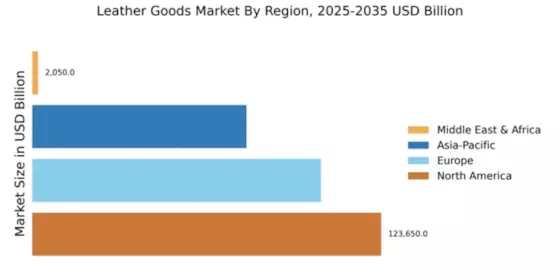
North America continues to lead the leather goods market, holding a significant share of 123650.0. The growth is driven by rising disposable incomes, a strong demand for luxury brands, and a growing trend towards sustainable and ethically sourced materials. Regulatory support for sustainable practices is also enhancing market dynamics, encouraging brands to innovate and adapt to consumer preferences. The United States is the primary market within this region, showcasing a competitive landscape with key players like Coach, Michael Kors, and Tory Burch. These brands are capitalizing on the growing trend of online shopping and personalized customer experiences. The presence of iconic luxury brands such as Louis Vuitton and Gucci further solidifies North America's position as a hub for high-end leather goods.

Europe : Heritage and Craftsmanship Hub

Europe, with a market size of 102300.0, is renowned for its rich heritage in leather craftsmanship. The region benefits from a strong demand for luxury goods, driven by both local and international consumers. Regulatory frameworks promoting sustainable practices are also influencing production methods, pushing brands to adopt eco-friendly materials and processes. This shift is expected to enhance market growth and consumer trust in luxury products. Leading countries like Italy and France dominate the market, housing iconic brands such as Gucci, Prada, and Chanel. The competitive landscape is characterized by a blend of traditional craftsmanship and modern innovation, with brands focusing on unique designs and quality. The presence of luxury fashion houses ensures that Europe remains a pivotal player in The Leather Goods.

Asia-Pacific : Emerging Market Potential

Asia-Pacific, with a market size of 75900.0, is witnessing rapid growth in the leather goods sector, fueled by increasing urbanization and rising disposable incomes. The demand for luxury and premium products is on the rise, particularly among the younger demographic. Regulatory initiatives aimed at promoting sustainable practices are also gaining traction, encouraging brands to innovate and cater to eco-conscious consumers. Countries like China and Japan are leading the market, with a growing presence of both international and local brands. The competitive landscape is evolving, with brands focusing on quality and craftsmanship to differentiate themselves. The influx of The Leather Goods dynamics, making Asia-Pacific a key player in the leather goods industry.

Middle East and Africa : Niche Market Development

The Middle East and Africa region, with a market size of 2050.0, is developing a niche market for leather goods, driven by increasing consumer interest in luxury products. The growth is supported by rising disposable incomes and a burgeoning middle class, particularly in urban areas. Regulatory frameworks are gradually evolving to support sustainable practices, which is expected to enhance market appeal and consumer trust. Countries like the UAE and South Africa are emerging as key players in this market, with a growing number of luxury brands establishing a presence. The competitive landscape is characterized by a mix of local artisans and international brands, focusing on quality and exclusivity. This unique blend is positioning the region as an attractive market for luxury leather goods.

Leather Goods Market Regional Image

Key Players and Competitive Insights

The Leather Goods Market is currently characterized by a dynamic competitive landscape, driven by factors such as evolving consumer preferences, sustainability initiatives, and technological advancements. Major players like Louis Vuitton (FR), Gucci (IT), and Hermès (FR) are strategically positioned to leverage these trends. Louis Vuitton (FR) focuses on innovation and luxury branding, while Gucci (IT) emphasizes digital transformation and sustainability in its product lines. Hermès (FR), known for its craftsmanship, continues to enhance its exclusivity through limited editions and bespoke services. Collectively, these strategies not only reinforce their market positions but also shape the competitive environment by setting high standards for quality and brand loyalty. In terms of business tactics, companies are increasingly localizing manufacturing to reduce lead times and enhance supply chain efficiency. This approach appears to be a response to the growing demand for faster delivery and customization. The market structure is moderately fragmented, with a mix of established luxury brands and emerging players. The influence of key players is substantial, as they set trends that smaller brands often follow, thereby creating a ripple effect throughout the market. In November 2025, Gucci (IT) announced a partnership with a leading tech firm to integrate AI into its design processes. This strategic move is likely to enhance product personalization and streamline operations, reflecting a broader trend towards digitalization in the industry. By harnessing AI, Gucci (IT) aims to not only improve efficiency but also to create unique customer experiences that resonate with tech-savvy consumers. In October 2025, Louis Vuitton (FR) unveiled a new sustainability initiative aimed at reducing its carbon footprint by 30% by 2030. This commitment underscores the brand's dedication to environmental responsibility, which is increasingly becoming a critical factor for consumers. By prioritizing sustainability, Louis Vuitton (FR) not only enhances its brand image but also aligns itself with the values of a growing segment of eco-conscious consumers. In September 2025, Hermès (FR) launched a limited-edition collection that celebrates artisanal craftsmanship, further solidifying its position as a leader in luxury leather goods. This strategic focus on exclusivity and craftsmanship is likely to attract affluent consumers who value heritage and quality over mass production. Such initiatives may also serve to differentiate Hermès (FR) from competitors who are more focused on volume and accessibility. As of December 2025, the Leather Goods Market is witnessing trends such as digitalization, sustainability, and AI integration, which are reshaping competitive dynamics. Strategic alliances are becoming increasingly important, as brands collaborate to enhance their technological capabilities and sustainability efforts. Looking ahead, competitive differentiation is expected to evolve, with a shift from price-based competition to a focus on innovation, technology, and supply chain reliability. This transition may redefine how brands engage with consumers, emphasizing quality and unique experiences over mere affordability.

Key Companies in the Leather Goods Market include

Industry Developments

February 2023 Rocko's Modern Life Footwear Collection by FILA is available only at Champs Sports, Foot Locker, and FILA.com.

September 2022 Samsonite has introduced Magnum Eco, a series of tough, lightweight luggage that makes use of Recyclex's cutting-edge innovations in India.

November 2021 Prada announced the launch of its new "Re-Nylon" collection, which uses recycled nylon and eco-friendly leather to create sustainable products such as bags and accessories.

Future Outlook

Leather Goods Market Future Outlook

The Leather Goods Market is projected to grow at a 4.6% CAGR from 2025 to 2035, driven by increasing consumer demand, sustainability trends, and technological advancements.

New opportunities lie in:

  • Expansion into eco-friendly leather alternatives Development of personalized leather goods through AI Integration of smart technology in leather products

By 2035, the Leather Goods Market is expected to achieve robust growth and innovation.

Market Segmentation

Leather Goods Market End Use Outlook

  • Fashion
  • Travel
  • Corporate
  • Sports
  • Everyday Use

Leather Goods Market Product Type Outlook

  • Handbags
  • Wallets
  • Footwear
  • Belts
  • Jackets

Leather Goods Market Material Type Outlook

  • Genuine Leather
  • Synthetic Leather
  • Suede
  • Nappa Leather
  • Patent Leather

Report Scope

MARKET SIZE 2024 309100.0(USD Billion)
MARKET SIZE 2025 330200.0(USD Billion)
MARKET SIZE 2035 515000.0(USD Billion)
COMPOUND ANNUAL GROWTH RATE (CAGR) 4.6% (2025 - 2035)
REPORT COVERAGE Revenue Forecast, Competitive Landscape, Growth Factors, and Trends
BASE YEAR 2024
Market Forecast Period 2025 - 2035
Historical Data 2019 - 2024
Market Forecast Units USD Billion
Key Companies Profiled Louis Vuitton (FR), Gucci (IT), Hermes (FR), Prada (IT), Chanel (FR), Coach (US), Michael Kors (US), Tory Burch (US), Fendi (IT)
Segments Covered Product Type, Material Type, End Use
Key Market Opportunities Integration of sustainable materials and practices in the Leather Goods Market presents a significant growth opportunity.
Key Market Dynamics Shifting consumer preferences towards sustainable materials drive innovation and competition in the leather goods market.
Countries Covered North America, Europe, APAC, South America, MEA

Market Highlights

Author
Author Profile
Snehal Singh LinkedIn
Manager - Research

High acumen in analyzing complex macro & micro markets with more than 6 years of work experience in the field of market research. By implementing her analytical skills in forecasting and estimation into market research reports, she has expertise in Packaging, Construction, and Equipment domains. She handles a team size of 20-25 resources and ensures smooth running of the projects, associated marketing activities, and client servicing.

Leave a Comment

FAQs

What is the current valuation of the Leather Goods Market as of 2024?

<p>The Leather Goods Market was valued at 309100.0 USD Billion in 2024.</p>

What is the projected market valuation for the Leather Goods Market in 2035?

<p>The Leather Goods Market is projected to reach a valuation of 515000.0 USD Billion by 2035.</p>

What is the expected CAGR for the Leather Goods Market during the forecast period 2025 - 2035?

<p>The expected CAGR for the Leather Goods Market during the forecast period 2025 - 2035 is 4.6%.</p>

Which product type segment has the highest valuation in the Leather Goods Market?

<p>Footwear has the highest valuation among product types, with a range from 92.73 to 150.0 USD Billion.</p>

How does the valuation of genuine leather compare to synthetic leather in the market?

<p>Genuine leather is valued between 123000.0 and 200000.0 USD Billion, whereas synthetic leather ranges from 102000.0 to 170000.0 USD Billion.</p>

What is the market valuation for women's leather goods compared to men's?

<p>Women's leather goods are valued between 102000.0 and 170000.0 USD Billion, while men's leather goods range from 123000.0 to 203000.0 USD Billion.</p>

Which distribution channel is expected to perform best in the Leather Goods Market?

Offline retail is anticipated to perform best, with a valuation range of 123.64 to 200.0 USD Billion.

What are the projected valuations for children's leather goods by 2035?

Children's leather goods are projected to reach a valuation between 30000.0 and 52000.0 USD Billion by 2035.

Which key players dominate the Leather Goods Market?

Key players in the Leather Goods Market include Louis Vuitton, Gucci, Hermes, Prada, Chanel, Coach, Michael Kors, Tory Burch, and Fendi.

What is the valuation range for leather jackets in the market?

Leather jackets are valued between 93.64 and 165.0 USD Billion.

Research Approach


Secondary Research

The secondary research process involved comprehensive analysis of trade databases, industry publications, regulatory filings, and authoritative fashion and leather organizations. Key sources included the International Council of Tanners (ICT), Confederation of National Associations of Tanners and Dressers of the European Community (COTANCE), Leather and Hide Council of America (LHCA), World Footwear Congress, International Trade Centre (ITC) Trade Map, UN Comtrade Database, US Customs and Border Protection (Import/Export Data), European Leather Federation, Food and Agriculture Organization (FAO) for livestock and raw material statistics, International Labour Organization (ILO) for manufacturing sector data, Council of Fashion Designers of America (CFDA), British Fashion Council, Centre for the Promotion of Imports (CBI) Ministry of Foreign Affairs of the Netherlands, India Council for Leather Exports (CLE), China Leather Industry Association (CLIA), and Comité Français de la Cuir, Maroquinerie, Chaussure (French Leather Goods Committee). These sources were utilized to collect production statistics, international trade flows, tannery capacity data, raw material pricing trends, regulatory compliance standards (REACH, ISO 17234 for azo dyes, chromium VI regulations), and sustainability certification patterns across genuine leather, synthetic leather, and alternative material categories.


Primary Research

During the primary research process, both supply-side and demand-side stakeholders were interviewed to get both qualitative and quantitative information. Supply-side sources were CEOs, Chief Sustainability Officers, VP of Manufacturing Operations, tannery owners, heads of raw material procurement, and product development directors from luxury leather goods companies, mass-market brands, and OEM/ODM manufacturers. Demand-side sources included fashion house creative directors, chief merchandising officers from department stores and luxury retail groups, e-commerce platform category managers, and procurement leads from specialty boutiques and duty-free stores. Primary research confirmed the splits between real and fake leather, confirmed the timelines for the transition to sustainability, and gathered information on how channels change, how prices change by tier, and how demand for handbags, shoes, small leather goods, and clothing changes by region.

Primary Respondent Breakdown:

By Designation: C-level Primaries (28%), Director Level (32%), Others (40%)

By Region: North America (32%), Europe (30%), Asia-Pacific (35%), Rest of World (3%)


Market Size Estimation

Global market valuation was derived through revenue mapping, production volume analysis, and trade flow reconciliation. The methodology included:

Identification of 60+ key manufacturers and luxury conglomerates across North America, Europe (Italy, France, Germany, Spain), Asia-Pacific (China, India, Vietnam, Japan), and Latin America (Brazil, Mexico)

Product mapping across handbags, footwear, small leather goods (wallets, belts, accessories), and apparel categories, with material split between genuine leather (cowhide, calf, exotic), synthetic leather (PU, PVC, microfiber), and innovative alternatives (mycelium, cactus, pineapple leather)

Analysis of reported and modeled annual revenues specific to leather goods portfolios, including captive tannery operations and third-party sourcing costs

Coverage of manufacturers and brands representing 65-70% of global market share in 2024

Extrapolation using bottom-up (production volume × ASP by country/segment) and top-down (conglomerate revenue validation and retail markup reconciliation) approaches to derive material-specific and category-specific valuations

Cross-validation against export statistics from key leather-producing nations (Italy, China, India, Vietnam) and import data from major consuming markets (US, EU, Japan, UAE) to ensure supply-side and demand-side alignment

Download Free Sample

Kindly complete the form below to receive a free sample of this Report

Compare Licence

×
Features License Type
Single User Multiuser License Enterprise User
Price $4,950 $5,950 $7,250
Maximum User Access Limit 1 User Upto 10 Users Unrestricted Access Throughout the Organization
Free Customization
Direct Access to Analyst
Deliverable Format
Platform Access
Discount on Next Purchase 10% 15% 15%
Printable Versions