Request Free Sample ×

Kindly complete the form below to receive a free sample of this Report

* Please use a valid business email

Leading companies partner with us for data-driven Insights

clients tt-cursor
Hero Background
English
Chinese
French
Japanese
Korean
German
Spanish

Kayak Accessories Market Size

ID: MRFR/CG/8878-HCR
90 Pages
Snehal Singh
April 2026

Kayak Accessories Market Size, Share, Industry Trend & Analysis Research Report Information By Product Type (Seats; Paddle/Paddlers; Apparels & Helmets; Storage Bags; Life Jackets & Safety Gears; and Others), Distribution Channel (Store-Based [Supermarkets & Hypermarkets, Specialty Stores and Others] and Non-Store-Based) and Region (North America, Asia-Pacific, Europe, and the Rest of the World) - Forecast till 2027

Share:
Download PDF ×

We do not share your information with anyone. However, we may send you emails based on your report interest from time to time. You may contact us at any time to opt-out.

Kayak Accessories Market Infographic
Purchase Options

Kayak Accessories Size

Kayak Accessories Market Growth Projections and Opportunities

Outdoor activity developments, technology, and kayakers' choices shape the kayaking gear niche market. As kayaking has become a popular water sport and active leisure activity, the kayak accessories industry has evolved dramatically. Kayakers of all abilities find these additions attractive because they improve pleasure and ease.

What consumers want affects how the market responds to this kind of need. Whether it’s comfort, storage, safety or making them suitable for different activities, people always pick the ones that fit their specific needs. It is worth noting that such accessories include but not limited to paddle leashes, kayak seats, waterproof storage options, fishing rod holders and safety gears among others for men and women in love with kayaking. Such inventories offer variety which enables shoppers to tailor their kayaking experience based on personal interests.

Much emphasis has been put on the impact of current thoughts regarding outdoor recreational activities upon kayak accessories markets’ dynamics. There is an increasing demand for durable high quality functional kayak accessories as more individuals choose outdoor activities either for pleasure or fitness purposes. The trend in specialty products like those meant for kayak fishing or touring and whitewater paddling has gained pace in the recent past years. Besides designs that boost performance and comfortability, there are other factors behind this change among kayak accessory manufacturers.

In competitive terms within global industry players it has proved difficult for new firms to enter into established markets due to existing brand recognition together with reputation based on quality aspects particularly at lower price segment but also can be achieved at higher prices segments through innovative differentiation strategies. This means that consumers may prefer buying products from trusted companies since they believe these firms produce key essentials thus guaranteeing some buyer loyalty amongst many others considerations. Nonetheless, some firms specializing in sustainable materials use or unique designs have been able to penetrate this market.

Kayak accessories have become more accessible and easier to distribute due to e-commerce. Consumers are able to get quality products from online platforms where they can compare different brands and their respective features before making informed decisions on what to buy. Thus, direct-to-consumer models have allowed new entrants to access the global market thereby increasing supply of choices and thus competition among suppliers.
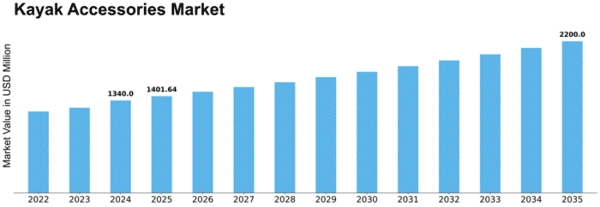

Kayak Accessories Market Size Graph
Author
Author Profile
Snehal Singh
Manager - Research

High acumen in analyzing complex macro & micro markets with more than 6 years of work experience in the field of market research. By implementing her analytical skills in forecasting and estimation into market research reports, she has expertise in Packaging, Construction, and Equipment domains. She handles a team size of 20-25 resources and ensures smooth running of the projects, associated marketing activities, and client servicing.

Leave a Comment

FAQs

What is the current valuation of the Kayak Accessories Market as of 2024?

<p>The Kayak Accessories Market was valued at 1340.0 USD Million in 2024.</p>

What is the projected market size for the Kayak Accessories Market in 2035?

<p>The market is projected to reach 2200.0 USD Million by 2035.</p>

What is the expected CAGR for the Kayak Accessories Market during the forecast period 2025 - 2035?

<p>The expected CAGR for the Kayak Accessories Market during 2025 - 2035 is 4.6%.</p>

Which segment of the Kayak Accessories Market had the highest valuation in 2024?

<p>Recreational Kayaking had the highest valuation at 402.0 USD Million in 2024.</p>

What are the projected valuations for Fishing Kayaking by 2035?

Fishing Kayaking is projected to reach 450.0 USD Million by 2035.

Which type of kayak accessory is expected to see the most growth in the coming years?

Life Jackets, valued at 400.0 USD Million in 2024, are expected to grow significantly.

What is the valuation range for Carbon Fiber materials in the Kayak Accessories Market?

Carbon Fiber materials are projected to range from 536.0 to 860.0 USD Million by 2035.

How does the valuation of Advanced user experience level accessories compare to others?

Advanced user experience level accessories had a valuation of 402.0 USD Million in 2024, indicating strong demand.

Which key players are leading the Kayak Accessories Market?

Key players include Yakima, Thule, NRS, and Wilderness Systems, among others.

What is the valuation of Safety Gear in the Kayak Accessories Market as of 2024?

Safety Gear was valued at 340.0 USD Million in 2024.

Market Summary

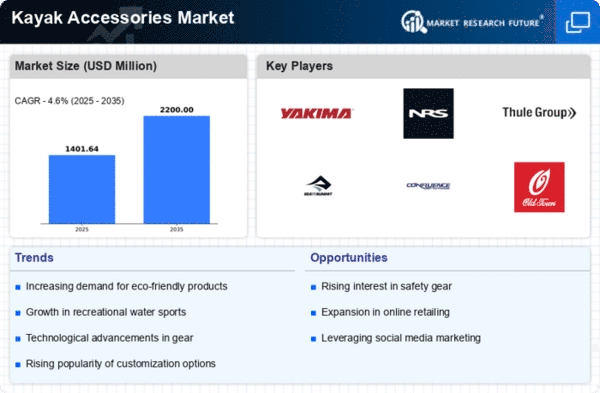
As per MRFR analysis, the Kayak Accessories Market Size was estimated at 1340.0 USD Million in 2024. The Kayak Accessories industry is projected to grow from 1410.0 in 2025 to 2200.0 by 2035, exhibiting a compound annual growth rate (CAGR) of 4.6% during the forecast period 2025 - 2035.

Key Market Trends & Highlights

The Kayak Accessories Market is experiencing a dynamic shift towards sustainability and technological innovation.

  • The market is increasingly emphasizing sustainability, with eco-friendly products gaining traction among consumers.
  • Technological integration is transforming kayak accessories, enhancing user experience and functionality.
  • Customization and personalization are becoming prevalent, allowing consumers to tailor products to their specific needs.
  • Increased participation in water sports and rising popularity of adventure tourism are driving growth, particularly in North America and the fishing segment.

Market Size & Forecast

2024 Market Size 1340.0 (USD Million)
2035 Market Size 2200.0 (USD Million)
CAGR (2025 - 2035) 4.6%
Largest Regional Market Share in 2024 North America

Major Players

Yakima (US), NRS (US), Harmon (US), Thule (SE), Sea to Summit (AU), Perception Kayaks (US), Old Town Canoe (US), Dagger Kayaks (US), Pelican International (CA)

Market Trends

The Kayak Accessories Market is currently experiencing a dynamic evolution, driven by a growing interest in outdoor recreational activities and water sports. This market encompasses a wide range of products designed to enhance the kayaking experience, including safety gear, storage solutions, and performance-enhancing accessories. As consumers increasingly prioritize safety and convenience, manufacturers are innovating to meet these demands, leading to a diverse array of offerings. Furthermore, the rise of eco-conscious consumers is prompting brands to explore sustainable materials and practices, which may reshape product development in the near future. In December 2025, the Kayak Accessories Market appears poised for continued growth, as more individuals seek to engage with nature and participate in water-based activities. The integration of technology into accessories, such as smart devices and tracking systems, suggests a shift towards more advanced and user-friendly products. Additionally, the expansion of e-commerce platforms is likely to facilitate greater accessibility for consumers, allowing them to explore and purchase a variety of accessories from the comfort of their homes. Overall, the market seems to be on a trajectory of innovation and adaptation, reflecting changing consumer preferences and environmental considerations.

Sustainability Focus

The Kayak Accessories Market is witnessing a notable shift towards sustainable practices. Manufacturers are increasingly utilizing eco-friendly materials and production methods, responding to consumer demand for environmentally responsible products. This trend not only aligns with global sustainability goals but also appeals to a growing demographic of eco-conscious consumers.

Technological Integration

There is a rising trend of incorporating technology into kayak accessories. Innovations such as GPS tracking devices, smart safety gear, and performance monitoring tools are becoming more prevalent. This integration enhances user experience and safety, catering to tech-savvy consumers who seek advanced functionalities in their outdoor gear.

Customization and Personalization

The demand for personalized kayak accessories is on the rise. Consumers are increasingly looking for products that reflect their individual styles and preferences. This trend encourages manufacturers to offer customizable options, allowing users to tailor their gear to meet specific needs and aesthetic desires.

Kayak Accessories Market Market Drivers

Growing Popularity of Kayaking

The Global Kayak Accessories Industry experiences a notable surge in demand due to the increasing popularity of kayaking as a recreational activity. As more individuals seek outdoor adventures, the market is projected to reach 3500 USD Million in 2024. This growth is fueled by a rising awareness of health benefits associated with kayaking, such as improved cardiovascular fitness and stress relief. Furthermore, the expansion of kayaking events and competitions globally encourages participation, thereby driving the demand for various accessories. The trend indicates a robust future, with projections suggesting the market could expand significantly by 2035.

Market Segment Insights

By Application: Recreational Kayaking (Largest) vs. Fishing Kayaking (Fastest-Growing)

<p>In the Kayak Accessories Market, the application segments show a distinctive distribution of market share. Recreational Kayaking occupies the largest portion of this segment, reflecting its widespread popularity among consumers seeking leisurely outdoor activities. Following closely, Fishing Kayaking is emerging as a significant contributor, capitalizing on the growing trend of outdoor sports and recreational fishing. As consumers increasingly take to the waters for leisure purposes, the demand for accessories that enhance these experiences is on the rise, signaling a promising outlook for both segments. Growth trends within the Kayak Accessories Market reveal that Fishing Kayaking is the fastest-growing segment, driven by a surge in participation in recreational fishing and the increasing availability of specialized kayaking gear designed for anglers. Factors such as the rise in eco-tourism and a greater focus on outdoor leisure activities significantly contribute to this growth trajectory. Brands are actively innovating to provide accessories that cater specifically to fishing kayakers, enhancing their overall experience on the water.</p>

<p>Recreational Kayaking (Dominant) vs. Touring Kayaking (Emerging)</p>

<p>Recreational Kayaking stands as the dominant segment in the Kayak Accessories Market, appealing to a wide demographic of casual users who engage in leisurely paddling experiences. This segment prioritizes comfort, convenience, and ease of use, leading to a diverse range of accessories designed for recreational purposes. In contrast, Touring Kayaking is recognized as an emerging segment that caters to more serious kayakers focused on extended trips and exploration. Accessories in this category often feature advanced functionality tailored for durability and efficiency during longer excursions. Touring Kayakers typically seek out specialized equipment, such as high-capacity dry <a href="https://www.marketresearchfuture.com/reports/bags-market-10573" target="_blank" title="bags">bags</a>, navigation tools, and performance-enhancing products, reflecting their unique needs and ambitions on the water. As these segments evolve, they continue to influence the overall dynamics of the Kayak Accessories Market.</p>

By Type: Paddles (Largest) vs. Life Jackets (Fastest-Growing)

<p>In the kayak accessories market, paddles dominate the market share due to their essential role in enhancing performance and control during kayaking. They represent the largest segment, reflecting the importance placed on high-quality paddles for both recreational and professional kayakers. <a href="https://www.marketresearchfuture.com/reports/life-jacket-market-33692" target="_blank" title="life jacket">Life jackets</a> follow closely as a vital component for safety, further solidifying their critical presence in the market. Storage solutions and safety gear also contribute positively, but they account for a smaller portion of the overall market share, primarily serving specialized needs rather than widespread consumer requirements. Examining growth trends, life jackets show the fastest growth rate, driven by increasing safety awareness and regulations around kayaking. The continual innovation in materials and designs is making life jackets more appealing, versatile, and comfortable, thereby attracting a broader audience. Likewise, paddles are benefiting from advancements in technology, leading to improvements in performance and weight reduction, which can entice more athletes to elevate their kayaking experiences.</p>

<p>Paddles (Dominant) vs. Safety Gear (Emerging)</p>

<p>Paddles, being the dominant segment in the kayak accessories market, are essential for enhancing paddling efficiency and performance. With advancements in materials such as carbon fiber and lightweight composites, paddles have become more durable and easier to handle. They come in various designs tailored to meet the needs of different kayaking styles, whether recreational or competitive. Conversely, safety gear is emerging as a vital segment as public awareness regarding water safety increases. This gear includes <a href="https://www.marketresearchfuture.com/reports/helmets-market-31414" target="_blank" title="helmets">helmets</a>, whistles, and lights, all designed to improve safety and visibility during kayaking. As regulations tighten and consumer consciousness grows, safety gear is seeing an uptick in demand and innovation, complementing the essential functionality of paddles.</p>

By Material: Plastic (Largest) vs. Carbon Fiber (Fastest-Growing)

<p>The kayak accessories market is predominantly driven by the use of plastic materials, which hold the largest market share due to their affordability, durability, and versatility in design. Among the various materials available, plastic accessories are widely preferred by consumers for their lightweight properties and cost-effectiveness, making them a staple in many kayakers' gear. Fiberglass and aluminum also play significant roles in the market, providing competitive options for performance-oriented users, although their shares are notably smaller compared to plastic. As the market evolves, carbon fiber emerges as the fastest-growing segment, appealing to high-performance enthusiasts willing to invest in premium accessories. This material’s lightweight yet robust characteristics make it ideal for specialized equipment, while increasing interest in sustainability and innovation drives demand for ecological alternatives, particularly in competitive kayaking events.</p>

<p>Plastic (Dominant) vs. Carbon Fiber (Emerging)</p>

<p>Plastic accessories are the dominant choice in the kayak accessories market, valued for their practical benefits such as resistance to corrosion and ease of maintenance. Their ability to be manufactured in various colors and designs further enhances their appeal to recreational paddlers. On the other hand, carbon fiber accessories are rapidly emerging due to their advanced structural integrity and weight advantages. As kayakers seek improved performance for competitive endeavors, carbon fiber products like paddles and boat components are becoming highly sought-after, despite their higher price point. This segment is particularly favored by professionals and serious enthusiasts, leading to a notable trend towards lightweight, high-strength materials that support efficiency and durability on the water.</p>

By User Experience Level: Beginner (Largest) vs. Advanced (Fastest-Growing)

<p>In the Kayak Accessories Market, the user experience level segment is diverse, comprising mainly of Beginners, Intermediates, and Advanced users. The Beginner category holds the largest share of the market as it includes a wide range of consumers who are just starting their kayaking journey and require various accessories from basic to moderate levels of complexity. Following closely is the Intermediate segment, which forms a substantial part of the market, catering to users who have gained some experience and are looking for better quality gear. Meanwhile, the Advanced segment, though smaller in market share, is notable for its rapid growth due to increasing interest in specialized and high-performance kayaking gear.</p>

<p>Beginner (Dominant) vs. Advanced (Emerging)</p>

<p>The Beginners segment is characterized by its demand for basic, entry-level kayak accessories such as paddles, life jackets, and cushioning. This group primarily seeks user-friendly products that are affordable and effective for casual outings. As this segment tends to have the largest market share, manufacturers focus on creating products that enhance safety and comfort for novices. In contrast, the Advanced segment is emerging rapidly, driven by enthusiasts who seek high-tech and performance-oriented accessories like specialized paddles, advanced safety gear, and customizable kayak accessories. This segment focuses on quality, durability, and performance, appealing to serious kayakers who are willing to invest more in their gear. As a result, the Advanced category is seeing increased innovation and product differentiation.</p>

By Price Range: Mid (Largest) vs. Premium (Fastest-Growing)

In the Kayak Accessories Market, the price range segment showcases a diverse distribution. The Mid range stands out as the largest segment, appealing to a broad customer base that balances quality and affordability. This segment captures a significant share of the market, reflecting consumers' preference for value-oriented products. In contrast, the Low price segment caters to budget-conscious buyers, while the High segment attracts niche markets interested in specific features and performance enhancements. The Premium segment, although smaller in share, indicates a shift towards high-quality, feature-rich accessories that meet the demands of serious kayakers. Growth trends within the price range segment reveal a dynamic landscape. The Premium segment is noted as the fastest-growing, driven by increasing consumer willingness to invest in high-end products that offer superior performance and durability. Additionally, innovations in material and technology contribute to the popularity of premium accessories, as they provide enhanced experiences on the water. The Mid range retains its dominance by optimizing quality at accessible price points, appealing to the recreational kayaker market, while the emerging interest in luxury items indicates a potential shift in consumer spending habits within the accessories market.

Mid (Dominant) vs. Premium (Emerging)

The Mid price range in the Kayak Accessories Market is characterized by its strong balance of performance, quality, and affordability, making it the most popular choice among everyday kayakers. This segment comprises versatile products that meet the basic needs of casual users while ensuring reliability and functionality. Consumers in this segment often prioritize value without compromising too much on features. On the other hand, the Premium segment is carving a niche for itself among serious enthusiasts who are willing to invest in high-cost, high-quality items that promise enhanced performance and innovative features. These premium products are often designed with advanced materials and technology, appealing to a discerning consumer base that values long-lasting performance and unique functionalities.

Get more detailed insights about Kayak Accessories Market Research Report -Forecast till 2027

Regional Insights

North America : Market Leader in Kayak Accessories

North America continues to lead the kayak accessories market, holding a significant share of 670.0M in 2024. The growth is driven by increasing outdoor recreational activities, rising consumer interest in kayaking, and supportive regulations promoting water sports. The region's robust infrastructure and accessibility to water bodies further enhance demand for kayak accessories, making it a key market for manufacturers and retailers alike. The competitive landscape in North America is characterized by the presence of major players such as Yakima, NRS, and Thule. These companies are innovating to meet consumer demands for quality and functionality. The U.S. remains the largest market, followed by Canada, with a growing interest in kayaking among younger demographics. The focus on sustainability and eco-friendly products is also shaping the market dynamics, encouraging brands to adopt greener practices.

Europe : Emerging Market with Growth Potential

Europe's kayak accessories market is valued at 400.0M, reflecting a growing interest in outdoor activities and eco-tourism. The region benefits from a diverse landscape, with numerous lakes and rivers, driving demand for kayaking. Regulatory support for water sports and environmental initiatives are key growth drivers, encouraging participation in recreational activities. The increasing popularity of adventure tourism is also contributing to market expansion. Leading countries in this region include Germany, France, and the UK, where consumer spending on outdoor gear is on the rise. The competitive landscape features established brands like Thule and emerging local players. The market is witnessing innovations in product design and functionality, catering to the evolving preferences of outdoor enthusiasts. "The European market for outdoor activities is expected to grow significantly, driven by increased consumer interest in sustainable practices and adventure tourism," European Outdoor Group.

Asia-Pacific : Growing Interest in Water Sports

The Asia-Pacific kayak accessories market, valued at 220.0M, is experiencing rapid growth due to rising interest in water sports and outdoor activities. Countries like Australia and New Zealand are leading the charge, supported by favorable weather conditions and a culture that embraces adventure. The increasing availability of kayaking facilities and events is also driving demand, alongside government initiatives promoting outdoor recreation. The competitive landscape is evolving, with both international and local brands vying for market share. Key players include Sea to Summit and local manufacturers who are focusing on affordability and accessibility. As more consumers engage in kayaking, the market is expected to expand, with innovations in product offerings catering to diverse consumer needs. The region's growth potential is significant, driven by a younger demographic seeking adventure and outdoor experiences.

Middle East and Africa : Niche Market with Untapped Potential

The Middle East and Africa kayak accessories market is valued at 50.0M, representing a niche segment with significant growth potential. The region's unique geography, featuring coastlines and rivers, offers opportunities for kayaking, yet the market remains underdeveloped. Increasing interest in outdoor activities and adventure tourism is driving demand for kayak accessories, supported by government initiatives promoting sports and recreation. Countries like South Africa and the UAE are emerging as key players in the market, with a growing number of kayaking events and facilities. The competitive landscape is still forming, with opportunities for both local and international brands to establish a presence. As awareness of kayaking grows, the market is expected to expand, driven by a younger population eager for outdoor experiences. "The Middle East is witnessing a gradual shift towards outdoor activities, with kayaking gaining traction among adventure seekers," Middle East Sports Council.

Key Players and Competitive Insights

The Kayak Accessories Market is currently characterized by a dynamic competitive landscape, driven by increasing consumer interest in outdoor recreational activities and a growing emphasis on sustainability. Key players such as Yakima (US), NRS (US), and Thule (SE) are strategically positioned to leverage these trends through innovation and product diversification. Yakima (US) focuses on enhancing its product line with eco-friendly materials, while NRS (US) emphasizes customer engagement through community-driven initiatives. Thule (SE) has adopted a global expansion strategy, targeting emerging markets to capture a broader customer base. Collectively, these strategies contribute to a moderately fragmented market structure, where competition is intensifying as companies seek to differentiate themselves through unique value propositions.In terms of business tactics, companies are increasingly localizing manufacturing to reduce lead times and enhance supply chain efficiency. This approach not only mitigates risks associated with global supply chain disruptions but also aligns with consumer preferences for locally sourced products. The competitive structure of the market remains moderately fragmented, with several key players exerting influence over pricing and product offerings. The collective actions of these companies shape a landscape where innovation and customer-centric strategies are paramount.

In November Yakima (US) launched a new line of sustainable kayak accessories made from recycled materials, reflecting a commitment to environmental responsibility. This strategic move not only aligns with current consumer preferences for eco-friendly products but also positions Yakima (US) as a leader in sustainability within the market. The introduction of these products is likely to enhance brand loyalty and attract environmentally conscious consumers, thereby strengthening its market position.

In October NRS (US) announced a partnership with a leading outdoor retailer to expand its distribution channels. This collaboration aims to enhance product visibility and accessibility, particularly in regions with growing interest in kayaking. By leveraging the retailer's established network, NRS (US) is poised to increase its market share and reach new customer segments, which could significantly impact its competitive standing.

In September Thule (SE) acquired a smaller kayak accessories manufacturer to bolster its product portfolio and enhance its innovation capabilities. This acquisition is indicative of Thule's (SE) strategy to consolidate its position in the market by integrating new technologies and expanding its product offerings. The move is expected to facilitate the development of cutting-edge accessories that cater to evolving consumer demands, thereby reinforcing Thule's (SE) competitive edge.

As of December the Kayak Accessories Market is witnessing trends such as digitalization, sustainability, and the integration of AI technologies. Companies are increasingly forming strategic alliances to enhance their competitive positioning and drive innovation. The shift from price-based competition to a focus on technological advancements and supply chain reliability is becoming evident. In this evolving landscape, differentiation through innovation and sustainability will likely define future competitive dynamics, as companies strive to meet the changing preferences of consumers.

Key Companies in the Kayak Accessories Market include

Industry Developments

Future Outlook

Kayak Accessories Market Future Outlook

The Kayak Accessories Market is projected to grow at a 4.6% CAGR from 2025 to 2035, driven by increasing outdoor recreational activities and technological advancements in product design.

New opportunities lie in:

  • Development of eco-friendly kayak accessories to attract environmentally conscious consumers.
  • Integration of smart technology in accessories for enhanced user experience and safety.
  • Expansion of e-commerce platforms to reach a broader customer base globally.

By 2035, the market is expected to exhibit robust growth, positioning itself as a leader in outdoor recreational products.

Market Segmentation

Kayak Accessories Market Material Outlook

  • Plastic
  • Fiberglass
  • Aluminum
  • Carbon Fiber
  • Wood

Kayak Accessories Market Application Outlook

  • Recreational
  • Fishing
  • Touring
  • Whitewater
  • Expedition

Kayak Accessories Market Price Range Outlook

  • Low
  • Mid
  • High
  • Premium

Kayak Accessories Market Accessory Type Outlook

  • Paddles
  • Life Jackets
  • Storage Solutions
  • Safety Gear
  • Repair Kits

Kayak Accessories Market User Experience Level Outlook

  • Beginner
  • Intermediate
  • Advanced
  • Professional

Report Scope

MARKET SIZE 2024 1340.0(USD Million)
MARKET SIZE 2025 1410.0(USD Million)
MARKET SIZE 2035 2200.0(USD Million)
COMPOUND ANNUAL GROWTH RATE (CAGR) 4.6% (2025 - 2035)
REPORT COVERAGE Revenue Forecast, Competitive Landscape, Growth Factors, and Trends
BASE YEAR 2024
Market Forecast Period 2025 - 2035
Historical Data 2019 - 2024
Market Forecast Units USD Million
Key Companies Profiled Yakima (US), NRS (US), Harmon (US), Thule (SE), Sea to Summit (AU), Perception Kayaks (US), Old Town Canoe (US), Dagger Kayaks (US), Pelican International (CA)
Segments Covered Application, Material, Accessory Type, User Experience Level, Price Range
Key Market Opportunities Integration of smart technology in Kayak Accessories enhances user experience and safety.
Key Market Dynamics Rising consumer interest in eco-friendly materials drives innovation in kayak accessories and enhances market competitiveness.
Countries Covered North America, Europe, APAC, South America, MEA

FAQs

What is the current valuation of the Kayak Accessories Market as of 2024?

<p>The Kayak Accessories Market was valued at 1340.0 USD Million in 2024.</p>

What is the projected market size for the Kayak Accessories Market in 2035?

<p>The market is projected to reach 2200.0 USD Million by 2035.</p>

What is the expected CAGR for the Kayak Accessories Market during the forecast period 2025 - 2035?

<p>The expected CAGR for the Kayak Accessories Market during 2025 - 2035 is 4.6%.</p>

Which segment of the Kayak Accessories Market had the highest valuation in 2024?

<p>Recreational Kayaking had the highest valuation at 402.0 USD Million in 2024.</p>

What are the projected valuations for Fishing Kayaking by 2035?

Fishing Kayaking is projected to reach 450.0 USD Million by 2035.

Which type of kayak accessory is expected to see the most growth in the coming years?

Life Jackets, valued at 400.0 USD Million in 2024, are expected to grow significantly.

What is the valuation range for Carbon Fiber materials in the Kayak Accessories Market?

Carbon Fiber materials are projected to range from 536.0 to 860.0 USD Million by 2035.

How does the valuation of Advanced user experience level accessories compare to others?

Advanced user experience level accessories had a valuation of 402.0 USD Million in 2024, indicating strong demand.

Which key players are leading the Kayak Accessories Market?

Key players include Yakima, Thule, NRS, and Wilderness Systems, among others.

What is the valuation of Safety Gear in the Kayak Accessories Market as of 2024?

Safety Gear was valued at 340.0 USD Million in 2024.

  1. SECTION I: EXECUTIVE SUMMARY AND KEY HIGHLIGHTS
    1. | 1.1 EXECUTIVE SUMMARY
    2. | | 1.1.1 Market Overview
    3. | | 1.1.2 Key Findings
    4. | | 1.1.3 Market Segmentation
    5. | | 1.1.4 Competitive Landscape
    6. | | 1.1.5 Challenges and Opportunities
    7. | | 1.1.6 Future Outlook
  2. SECTION II: SCOPING, METHODOLOGY AND MARKET STRUCTURE
    1. | 2.1 MARKET INTRODUCTION
    2. | | 2.1.1 Definition
    3. | | 2.1.2 Scope of the study
    4. | | | 2.1.2.1 Research Objective
    5. | | | 2.1.2.2 Assumption
    6. | | | 2.1.2.3 Limitations
    7. | 2.2 RESEARCH METHODOLOGY
    8. | | 2.2.1 Overview
    9. | | 2.2.2 Data Mining
    10. | | 2.2.3 Secondary Research
    11. | | 2.2.4 Primary Research
    12. | | | 2.2.4.1 Primary Interviews and Information Gathering Process
    13. | | | 2.2.4.2 Breakdown of Primary Respondents
    14. | | 2.2.5 Forecasting Model
    15. | | 2.2.6 Market Size Estimation
    16. | | | 2.2.6.1 Bottom-Up Approach
    17. | | | 2.2.6.2 Top-Down Approach
    18. | | 2.2.7 Data Triangulation
    19. | | 2.2.8 Validation
  3. SECTION III: QUALITATIVE ANALYSIS
    1. | 3.1 MARKET DYNAMICS
    2. | | 3.1.1 Overview
    3. | | 3.1.2 Drivers
    4. | | 3.1.3 Restraints
    5. | | 3.1.4 Opportunities
    6. | 3.2 MARKET FACTOR ANALYSIS
    7. | | 3.2.1 Value chain Analysis
    8. | | 3.2.2 Porter's Five Forces Analysis
    9. | | | 3.2.2.1 Bargaining Power of Suppliers
    10. | | | 3.2.2.2 Bargaining Power of Buyers
    11. | | | 3.2.2.3 Threat of New Entrants
    12. | | | 3.2.2.4 Threat of Substitutes
    13. | | | 3.2.2.5 Intensity of Rivalry
    14. | | 3.2.3 COVID-19 Impact Analysis
    15. | | | 3.2.3.1 Market Impact Analysis
    16. | | | 3.2.3.2 Regional Impact
    17. | | | 3.2.3.3 Opportunity and Threat Analysis
  4. SECTION IV: QUANTITATIVE ANALYSIS
    1. | 4.1 Consumer and Retail, BY Application (USD Million)
    2. | | 4.1.1 Recreational Kayaking
    3. | | 4.1.2 Fishing Kayaking
    4. | | 4.1.3 Touring Kayaking
    5. | | 4.1.4 Whitewater Kayaking
    6. | 4.2 Consumer and Retail, BY Type (USD Million)
    7. | | 4.2.1 Paddles
    8. | | 4.2.2 Life Jackets
    9. | | 4.2.3 Storage Solutions
    10. | | 4.2.4 Safety Gear
    11. | 4.3 Consumer and Retail, BY Material (USD Million)
    12. | | 4.3.1 Plastic
    13. | | 4.3.2 Fiberglass
    14. | | 4.3.3 Aluminum
    15. | | 4.3.4 Carbon Fiber
    16. | 4.4 Consumer and Retail, BY User Experience Level (USD Million)
    17. | | 4.4.1 Beginner
    18. | | 4.4.2 Intermediate
    19. | | 4.4.3 Advanced
    20. | 4.5 Consumer and Retail, BY Region (USD Million)
    21. | | 4.5.1 North America
    22. | | | 4.5.1.1 US
    23. | | | 4.5.1.2 Canada
    24. | | 4.5.2 Europe
    25. | | | 4.5.2.1 Germany
    26. | | | 4.5.2.2 UK
    27. | | | 4.5.2.3 France
    28. | | | 4.5.2.4 Russia
    29. | | | 4.5.2.5 Italy
    30. | | | 4.5.2.6 Spain
    31. | | | 4.5.2.7 Rest of Europe
    32. | | 4.5.3 APAC
    33. | | | 4.5.3.1 China
    34. | | | 4.5.3.2 India
    35. | | | 4.5.3.3 Japan
    36. | | | 4.5.3.4 South Korea
    37. | | | 4.5.3.5 Malaysia
    38. | | | 4.5.3.6 Thailand
    39. | | | 4.5.3.7 Indonesia
    40. | | | 4.5.3.8 Rest of APAC
    41. | | 4.5.4 South America
    42. | | | 4.5.4.1 Brazil
    43. | | | 4.5.4.2 Mexico
    44. | | | 4.5.4.3 Argentina
    45. | | | 4.5.4.4 Rest of South America
    46. | | 4.5.5 MEA
    47. | | | 4.5.5.1 GCC Countries
    48. | | | 4.5.5.2 South Africa
    49. | | | 4.5.5.3 Rest of MEA
  5. SECTION V: COMPETITIVE ANALYSIS
    1. | 5.1 Competitive Landscape
    2. | | 5.1.1 Overview
    3. | | 5.1.2 Competitive Analysis
    4. | | 5.1.3 Market share Analysis
    5. | | 5.1.4 Major Growth Strategy in the Consumer and Retail
    6. | | 5.1.5 Competitive Benchmarking
    7. | | 5.1.6 Leading Players in Terms of Number of Developments in the Consumer and Retail
    8. | | 5.1.7 Key developments and growth strategies
    9. | | | 5.1.7.1 New Product Launch/Service Deployment
    10. | | | 5.1.7.2 Merger & Acquisitions
    11. | | | 5.1.7.3 Joint Ventures
    12. | | 5.1.8 Major Players Financial Matrix
    13. | | | 5.1.8.1 Sales and Operating Income
    14. | | | 5.1.8.2 Major Players R&D Expenditure. 2023
    15. | 5.2 Company Profiles
    16. | | 5.2.1 Yakima (US)
    17. | | | 5.2.1.1 Financial Overview
    18. | | | 5.2.1.2 Products Offered
    19. | | | 5.2.1.3 Key Developments
    20. | | | 5.2.1.4 SWOT Analysis
    21. | | | 5.2.1.5 Key Strategies
    22. | | 5.2.2 Thule (SE)
    23. | | | 5.2.2.1 Financial Overview
    24. | | | 5.2.2.2 Products Offered
    25. | | | 5.2.2.3 Key Developments
    26. | | | 5.2.2.4 SWOT Analysis
    27. | | | 5.2.2.5 Key Strategies
    28. | | 5.2.3 NRS (US)
    29. | | | 5.2.3.1 Financial Overview
    30. | | | 5.2.3.2 Products Offered
    31. | | | 5.2.3.3 Key Developments
    32. | | | 5.2.3.4 SWOT Analysis
    33. | | | 5.2.3.5 Key Strategies
    34. | | 5.2.4 Perception (US)
    35. | | | 5.2.4.1 Financial Overview
    36. | | | 5.2.4.2 Products Offered
    37. | | | 5.2.4.3 Key Developments
    38. | | | 5.2.4.4 SWOT Analysis
    39. | | | 5.2.4.5 Key Strategies
    40. | | 5.2.5 Dagger (US)
    41. | | | 5.2.5.1 Financial Overview
    42. | | | 5.2.5.2 Products Offered
    43. | | | 5.2.5.3 Key Developments
    44. | | | 5.2.5.4 SWOT Analysis
    45. | | | 5.2.5.5 Key Strategies
    46. | | 5.2.6 Ocean Kayak (US)
    47. | | | 5.2.6.1 Financial Overview
    48. | | | 5.2.6.2 Products Offered
    49. | | | 5.2.6.3 Key Developments
    50. | | | 5.2.6.4 SWOT Analysis
    51. | | | 5.2.6.5 Key Strategies
    52. | | 5.2.7 Wilderness Systems (US)
    53. | | | 5.2.7.1 Financial Overview
    54. | | | 5.2.7.2 Products Offered
    55. | | | 5.2.7.3 Key Developments
    56. | | | 5.2.7.4 SWOT Analysis
    57. | | | 5.2.7.5 Key Strategies
    58. | | 5.2.8 Hurricane Kayaks (US)
    59. | | | 5.2.8.1 Financial Overview
    60. | | | 5.2.8.2 Products Offered
    61. | | | 5.2.8.3 Key Developments
    62. | | | 5.2.8.4 SWOT Analysis
    63. | | | 5.2.8.5 Key Strategies
    64. | | 5.2.9 Bending Branches (US)
    65. | | | 5.2.9.1 Financial Overview
    66. | | | 5.2.9.2 Products Offered
    67. | | | 5.2.9.3 Key Developments
    68. | | | 5.2.9.4 SWOT Analysis
    69. | | | 5.2.9.5 Key Strategies
    70. | 5.3 Appendix
    71. | | 5.3.1 References
    72. | | 5.3.2 Related Reports
  6. LIST OF FIGURES
    1. | 6.1 MARKET SYNOPSIS
    2. | 6.2 NORTH AMERICA MARKET ANALYSIS
    3. | 6.3 US MARKET ANALYSIS BY APPLICATION
    4. | 6.4 US MARKET ANALYSIS BY TYPE
    5. | 6.5 US MARKET ANALYSIS BY MATERIAL
    6. | 6.6 US MARKET ANALYSIS BY USER EXPERIENCE LEVEL
    7. | 6.7 CANADA MARKET ANALYSIS BY APPLICATION
    8. | 6.8 CANADA MARKET ANALYSIS BY TYPE
    9. | 6.9 CANADA MARKET ANALYSIS BY MATERIAL
    10. | 6.10 CANADA MARKET ANALYSIS BY USER EXPERIENCE LEVEL
    11. | 6.11 EUROPE MARKET ANALYSIS
    12. | 6.12 GERMANY MARKET ANALYSIS BY APPLICATION
    13. | 6.13 GERMANY MARKET ANALYSIS BY TYPE
    14. | 6.14 GERMANY MARKET ANALYSIS BY MATERIAL
    15. | 6.15 GERMANY MARKET ANALYSIS BY USER EXPERIENCE LEVEL
    16. | 6.16 UK MARKET ANALYSIS BY APPLICATION
    17. | 6.17 UK MARKET ANALYSIS BY TYPE
    18. | 6.18 UK MARKET ANALYSIS BY MATERIAL
    19. | 6.19 UK MARKET ANALYSIS BY USER EXPERIENCE LEVEL
    20. | 6.20 FRANCE MARKET ANALYSIS BY APPLICATION
    21. | 6.21 FRANCE MARKET ANALYSIS BY TYPE
    22. | 6.22 FRANCE MARKET ANALYSIS BY MATERIAL
    23. | 6.23 FRANCE MARKET ANALYSIS BY USER EXPERIENCE LEVEL
    24. | 6.24 RUSSIA MARKET ANALYSIS BY APPLICATION
    25. | 6.25 RUSSIA MARKET ANALYSIS BY TYPE
    26. | 6.26 RUSSIA MARKET ANALYSIS BY MATERIAL
    27. | 6.27 RUSSIA MARKET ANALYSIS BY USER EXPERIENCE LEVEL
    28. | 6.28 ITALY MARKET ANALYSIS BY APPLICATION
    29. | 6.29 ITALY MARKET ANALYSIS BY TYPE
    30. | 6.30 ITALY MARKET ANALYSIS BY MATERIAL
    31. | 6.31 ITALY MARKET ANALYSIS BY USER EXPERIENCE LEVEL
    32. | 6.32 SPAIN MARKET ANALYSIS BY APPLICATION
    33. | 6.33 SPAIN MARKET ANALYSIS BY TYPE
    34. | 6.34 SPAIN MARKET ANALYSIS BY MATERIAL
    35. | 6.35 SPAIN MARKET ANALYSIS BY USER EXPERIENCE LEVEL
    36. | 6.36 REST OF EUROPE MARKET ANALYSIS BY APPLICATION
    37. | 6.37 REST OF EUROPE MARKET ANALYSIS BY TYPE
    38. | 6.38 REST OF EUROPE MARKET ANALYSIS BY MATERIAL
    39. | 6.39 REST OF EUROPE MARKET ANALYSIS BY USER EXPERIENCE LEVEL
    40. | 6.40 APAC MARKET ANALYSIS
    41. | 6.41 CHINA MARKET ANALYSIS BY APPLICATION
    42. | 6.42 CHINA MARKET ANALYSIS BY TYPE
    43. | 6.43 CHINA MARKET ANALYSIS BY MATERIAL
    44. | 6.44 CHINA MARKET ANALYSIS BY USER EXPERIENCE LEVEL
    45. | 6.45 INDIA MARKET ANALYSIS BY APPLICATION
    46. | 6.46 INDIA MARKET ANALYSIS BY TYPE
    47. | 6.47 INDIA MARKET ANALYSIS BY MATERIAL
    48. | 6.48 INDIA MARKET ANALYSIS BY USER EXPERIENCE LEVEL
    49. | 6.49 JAPAN MARKET ANALYSIS BY APPLICATION
    50. | 6.50 JAPAN MARKET ANALYSIS BY TYPE
    51. | 6.51 JAPAN MARKET ANALYSIS BY MATERIAL
    52. | 6.52 JAPAN MARKET ANALYSIS BY USER EXPERIENCE LEVEL
    53. | 6.53 SOUTH KOREA MARKET ANALYSIS BY APPLICATION
    54. | 6.54 SOUTH KOREA MARKET ANALYSIS BY TYPE
    55. | 6.55 SOUTH KOREA MARKET ANALYSIS BY MATERIAL
    56. | 6.56 SOUTH KOREA MARKET ANALYSIS BY USER EXPERIENCE LEVEL
    57. | 6.57 MALAYSIA MARKET ANALYSIS BY APPLICATION
    58. | 6.58 MALAYSIA MARKET ANALYSIS BY TYPE
    59. | 6.59 MALAYSIA MARKET ANALYSIS BY MATERIAL
    60. | 6.60 MALAYSIA MARKET ANALYSIS BY USER EXPERIENCE LEVEL
    61. | 6.61 THAILAND MARKET ANALYSIS BY APPLICATION
    62. | 6.62 THAILAND MARKET ANALYSIS BY TYPE
    63. | 6.63 THAILAND MARKET ANALYSIS BY MATERIAL
    64. | 6.64 THAILAND MARKET ANALYSIS BY USER EXPERIENCE LEVEL
    65. | 6.65 INDONESIA MARKET ANALYSIS BY APPLICATION
    66. | 6.66 INDONESIA MARKET ANALYSIS BY TYPE
    67. | 6.67 INDONESIA MARKET ANALYSIS BY MATERIAL
    68. | 6.68 INDONESIA MARKET ANALYSIS BY USER EXPERIENCE LEVEL
    69. | 6.69 REST OF APAC MARKET ANALYSIS BY APPLICATION
    70. | 6.70 REST OF APAC MARKET ANALYSIS BY TYPE
    71. | 6.71 REST OF APAC MARKET ANALYSIS BY MATERIAL
    72. | 6.72 REST OF APAC MARKET ANALYSIS BY USER EXPERIENCE LEVEL
    73. | 6.73 SOUTH AMERICA MARKET ANALYSIS
    74. | 6.74 BRAZIL MARKET ANALYSIS BY APPLICATION
    75. | 6.75 BRAZIL MARKET ANALYSIS BY TYPE
    76. | 6.76 BRAZIL MARKET ANALYSIS BY MATERIAL
    77. | 6.77 BRAZIL MARKET ANALYSIS BY USER EXPERIENCE LEVEL
    78. | 6.78 MEXICO MARKET ANALYSIS BY APPLICATION
    79. | 6.79 MEXICO MARKET ANALYSIS BY TYPE
    80. | 6.80 MEXICO MARKET ANALYSIS BY MATERIAL
    81. | 6.81 MEXICO MARKET ANALYSIS BY USER EXPERIENCE LEVEL
    82. | 6.82 ARGENTINA MARKET ANALYSIS BY APPLICATION
    83. | 6.83 ARGENTINA MARKET ANALYSIS BY TYPE
    84. | 6.84 ARGENTINA MARKET ANALYSIS BY MATERIAL
    85. | 6.85 ARGENTINA MARKET ANALYSIS BY USER EXPERIENCE LEVEL
    86. | 6.86 REST OF SOUTH AMERICA MARKET ANALYSIS BY APPLICATION
    87. | 6.87 REST OF SOUTH AMERICA MARKET ANALYSIS BY TYPE
    88. | 6.88 REST OF SOUTH AMERICA MARKET ANALYSIS BY MATERIAL
    89. | 6.89 REST OF SOUTH AMERICA MARKET ANALYSIS BY USER EXPERIENCE LEVEL
    90. | 6.90 MEA MARKET ANALYSIS
    91. | 6.91 GCC COUNTRIES MARKET ANALYSIS BY APPLICATION
    92. | 6.92 GCC COUNTRIES MARKET ANALYSIS BY TYPE
    93. | 6.93 GCC COUNTRIES MARKET ANALYSIS BY MATERIAL
    94. | 6.94 GCC COUNTRIES MARKET ANALYSIS BY USER EXPERIENCE LEVEL
    95. | 6.95 SOUTH AFRICA MARKET ANALYSIS BY APPLICATION
    96. | 6.96 SOUTH AFRICA MARKET ANALYSIS BY TYPE
    97. | 6.97 SOUTH AFRICA MARKET ANALYSIS BY MATERIAL
    98. | 6.98 SOUTH AFRICA MARKET ANALYSIS BY USER EXPERIENCE LEVEL
    99. | 6.99 REST OF MEA MARKET ANALYSIS BY APPLICATION
    100. | 6.100 REST OF MEA MARKET ANALYSIS BY TYPE
    101. | 6.101 REST OF MEA MARKET ANALYSIS BY MATERIAL
    102. | 6.102 REST OF MEA MARKET ANALYSIS BY USER EXPERIENCE LEVEL
    103. | 6.103 KEY BUYING CRITERIA OF CONSUMER AND RETAIL
    104. | 6.104 RESEARCH PROCESS OF MRFR
    105. | 6.105 DRO ANALYSIS OF CONSUMER AND RETAIL
    106. | 6.106 DRIVERS IMPACT ANALYSIS: CONSUMER AND RETAIL
    107. | 6.107 RESTRAINTS IMPACT ANALYSIS: CONSUMER AND RETAIL
    108. | 6.108 SUPPLY / VALUE CHAIN: CONSUMER AND RETAIL
    109. | 6.109 CONSUMER AND RETAIL, BY APPLICATION, 2024 (% SHARE)
    110. | 6.110 CONSUMER AND RETAIL, BY APPLICATION, 2024 TO 2035 (USD Million)
    111. | 6.111 CONSUMER AND RETAIL, BY TYPE, 2024 (% SHARE)
    112. | 6.112 CONSUMER AND RETAIL, BY TYPE, 2024 TO 2035 (USD Million)
    113. | 6.113 CONSUMER AND RETAIL, BY MATERIAL, 2024 (% SHARE)
    114. | 6.114 CONSUMER AND RETAIL, BY MATERIAL, 2024 TO 2035 (USD Million)
    115. | 6.115 CONSUMER AND RETAIL, BY USER EXPERIENCE LEVEL, 2024 (% SHARE)
    116. | 6.116 CONSUMER AND RETAIL, BY USER EXPERIENCE LEVEL, 2024 TO 2035 (USD Million)
    117. | 6.117 BENCHMARKING OF MAJOR COMPETITORS
  7. LIST OF TABLES
    1. | 7.1 LIST OF ASSUMPTIONS
    2. | | 7.1.1
    3. | 7.2 North America MARKET SIZE ESTIMATES; FORECAST
    4. | | 7.2.1 BY APPLICATION, 2025-2035 (USD Million)
    5. | | 7.2.2 BY TYPE, 2025-2035 (USD Million)
    6. | | 7.2.3 BY MATERIAL, 2025-2035 (USD Million)
    7. | | 7.2.4 BY USER EXPERIENCE LEVEL, 2025-2035 (USD Million)
    8. | 7.3 US MARKET SIZE ESTIMATES; FORECAST
    9. | | 7.3.1 BY APPLICATION, 2025-2035 (USD Million)
    10. | | 7.3.2 BY TYPE, 2025-2035 (USD Million)
    11. | | 7.3.3 BY MATERIAL, 2025-2035 (USD Million)
    12. | | 7.3.4 BY USER EXPERIENCE LEVEL, 2025-2035 (USD Million)
    13. | 7.4 Canada MARKET SIZE ESTIMATES; FORECAST
    14. | | 7.4.1 BY APPLICATION, 2025-2035 (USD Million)
    15. | | 7.4.2 BY TYPE, 2025-2035 (USD Million)
    16. | | 7.4.3 BY MATERIAL, 2025-2035 (USD Million)
    17. | | 7.4.4 BY USER EXPERIENCE LEVEL, 2025-2035 (USD Million)
    18. | 7.5 Europe MARKET SIZE ESTIMATES; FORECAST
    19. | | 7.5.1 BY APPLICATION, 2025-2035 (USD Million)
    20. | | 7.5.2 BY TYPE, 2025-2035 (USD Million)
    21. | | 7.5.3 BY MATERIAL, 2025-2035 (USD Million)
    22. | | 7.5.4 BY USER EXPERIENCE LEVEL, 2025-2035 (USD Million)
    23. | 7.6 Germany MARKET SIZE ESTIMATES; FORECAST
    24. | | 7.6.1 BY APPLICATION, 2025-2035 (USD Million)
    25. | | 7.6.2 BY TYPE, 2025-2035 (USD Million)
    26. | | 7.6.3 BY MATERIAL, 2025-2035 (USD Million)
    27. | | 7.6.4 BY USER EXPERIENCE LEVEL, 2025-2035 (USD Million)
    28. | 7.7 UK MARKET SIZE ESTIMATES; FORECAST
    29. | | 7.7.1 BY APPLICATION, 2025-2035 (USD Million)
    30. | | 7.7.2 BY TYPE, 2025-2035 (USD Million)
    31. | | 7.7.3 BY MATERIAL, 2025-2035 (USD Million)
    32. | | 7.7.4 BY USER EXPERIENCE LEVEL, 2025-2035 (USD Million)
    33. | 7.8 France MARKET SIZE ESTIMATES; FORECAST
    34. | | 7.8.1 BY APPLICATION, 2025-2035 (USD Million)
    35. | | 7.8.2 BY TYPE, 2025-2035 (USD Million)
    36. | | 7.8.3 BY MATERIAL, 2025-2035 (USD Million)
    37. | | 7.8.4 BY USER EXPERIENCE LEVEL, 2025-2035 (USD Million)
    38. | 7.9 Russia MARKET SIZE ESTIMATES; FORECAST
    39. | | 7.9.1 BY APPLICATION, 2025-2035 (USD Million)
    40. | | 7.9.2 BY TYPE, 2025-2035 (USD Million)
    41. | | 7.9.3 BY MATERIAL, 2025-2035 (USD Million)
    42. | | 7.9.4 BY USER EXPERIENCE LEVEL, 2025-2035 (USD Million)
    43. | 7.10 Italy MARKET SIZE ESTIMATES; FORECAST
    44. | | 7.10.1 BY APPLICATION, 2025-2035 (USD Million)
    45. | | 7.10.2 BY TYPE, 2025-2035 (USD Million)
    46. | | 7.10.3 BY MATERIAL, 2025-2035 (USD Million)
    47. | | 7.10.4 BY USER EXPERIENCE LEVEL, 2025-2035 (USD Million)
    48. | 7.11 Spain MARKET SIZE ESTIMATES; FORECAST
    49. | | 7.11.1 BY APPLICATION, 2025-2035 (USD Million)
    50. | | 7.11.2 BY TYPE, 2025-2035 (USD Million)
    51. | | 7.11.3 BY MATERIAL, 2025-2035 (USD Million)
    52. | | 7.11.4 BY USER EXPERIENCE LEVEL, 2025-2035 (USD Million)
    53. | 7.12 Rest of Europe MARKET SIZE ESTIMATES; FORECAST
    54. | | 7.12.1 BY APPLICATION, 2025-2035 (USD Million)
    55. | | 7.12.2 BY TYPE, 2025-2035 (USD Million)
    56. | | 7.12.3 BY MATERIAL, 2025-2035 (USD Million)
    57. | | 7.12.4 BY USER EXPERIENCE LEVEL, 2025-2035 (USD Million)
    58. | 7.13 APAC MARKET SIZE ESTIMATES; FORECAST
    59. | | 7.13.1 BY APPLICATION, 2025-2035 (USD Million)
    60. | | 7.13.2 BY TYPE, 2025-2035 (USD Million)
    61. | | 7.13.3 BY MATERIAL, 2025-2035 (USD Million)
    62. | | 7.13.4 BY USER EXPERIENCE LEVEL, 2025-2035 (USD Million)
    63. | 7.14 China MARKET SIZE ESTIMATES; FORECAST
    64. | | 7.14.1 BY APPLICATION, 2025-2035 (USD Million)
    65. | | 7.14.2 BY TYPE, 2025-2035 (USD Million)
    66. | | 7.14.3 BY MATERIAL, 2025-2035 (USD Million)
    67. | | 7.14.4 BY USER EXPERIENCE LEVEL, 2025-2035 (USD Million)
    68. | 7.15 India MARKET SIZE ESTIMATES; FORECAST
    69. | | 7.15.1 BY APPLICATION, 2025-2035 (USD Million)
    70. | | 7.15.2 BY TYPE, 2025-2035 (USD Million)
    71. | | 7.15.3 BY MATERIAL, 2025-2035 (USD Million)
    72. | | 7.15.4 BY USER EXPERIENCE LEVEL, 2025-2035 (USD Million)
    73. | 7.16 Japan MARKET SIZE ESTIMATES; FORECAST
    74. | | 7.16.1 BY APPLICATION, 2025-2035 (USD Million)
    75. | | 7.16.2 BY TYPE, 2025-2035 (USD Million)
    76. | | 7.16.3 BY MATERIAL, 2025-2035 (USD Million)
    77. | | 7.16.4 BY USER EXPERIENCE LEVEL, 2025-2035 (USD Million)
    78. | 7.17 South Korea MARKET SIZE ESTIMATES; FORECAST
    79. | | 7.17.1 BY APPLICATION, 2025-2035 (USD Million)
    80. | | 7.17.2 BY TYPE, 2025-2035 (USD Million)
    81. | | 7.17.3 BY MATERIAL, 2025-2035 (USD Million)
    82. | | 7.17.4 BY USER EXPERIENCE LEVEL, 2025-2035 (USD Million)
    83. | 7.18 Malaysia MARKET SIZE ESTIMATES; FORECAST
    84. | | 7.18.1 BY APPLICATION, 2025-2035 (USD Million)
    85. | | 7.18.2 BY TYPE, 2025-2035 (USD Million)
    86. | | 7.18.3 BY MATERIAL, 2025-2035 (USD Million)
    87. | | 7.18.4 BY USER EXPERIENCE LEVEL, 2025-2035 (USD Million)
    88. | 7.19 Thailand MARKET SIZE ESTIMATES; FORECAST
    89. | | 7.19.1 BY APPLICATION, 2025-2035 (USD Million)
    90. | | 7.19.2 BY TYPE, 2025-2035 (USD Million)
    91. | | 7.19.3 BY MATERIAL, 2025-2035 (USD Million)
    92. | | 7.19.4 BY USER EXPERIENCE LEVEL, 2025-2035 (USD Million)
    93. | 7.20 Indonesia MARKET SIZE ESTIMATES; FORECAST
    94. | | 7.20.1 BY APPLICATION, 2025-2035 (USD Million)
    95. | | 7.20.2 BY TYPE, 2025-2035 (USD Million)
    96. | | 7.20.3 BY MATERIAL, 2025-2035 (USD Million)
    97. | | 7.20.4 BY USER EXPERIENCE LEVEL, 2025-2035 (USD Million)
    98. | 7.21 Rest of APAC MARKET SIZE ESTIMATES; FORECAST
    99. | | 7.21.1 BY APPLICATION, 2025-2035 (USD Million)
    100. | | 7.21.2 BY TYPE, 2025-2035 (USD Million)
    101. | | 7.21.3 BY MATERIAL, 2025-2035 (USD Million)
    102. | | 7.21.4 BY USER EXPERIENCE LEVEL, 2025-2035 (USD Million)
    103. | 7.22 South America MARKET SIZE ESTIMATES; FORECAST
    104. | | 7.22.1 BY APPLICATION, 2025-2035 (USD Million)
    105. | | 7.22.2 BY TYPE, 2025-2035 (USD Million)
    106. | | 7.22.3 BY MATERIAL, 2025-2035 (USD Million)
    107. | | 7.22.4 BY USER EXPERIENCE LEVEL, 2025-2035 (USD Million)
    108. | 7.23 Brazil MARKET SIZE ESTIMATES; FORECAST
    109. | | 7.23.1 BY APPLICATION, 2025-2035 (USD Million)
    110. | | 7.23.2 BY TYPE, 2025-2035 (USD Million)
    111. | | 7.23.3 BY MATERIAL, 2025-2035 (USD Million)
    112. | | 7.23.4 BY USER EXPERIENCE LEVEL, 2025-2035 (USD Million)
    113. | 7.24 Mexico MARKET SIZE ESTIMATES; FORECAST
    114. | | 7.24.1 BY APPLICATION, 2025-2035 (USD Million)
    115. | | 7.24.2 BY TYPE, 2025-2035 (USD Million)
    116. | | 7.24.3 BY MATERIAL, 2025-2035 (USD Million)
    117. | | 7.24.4 BY USER EXPERIENCE LEVEL, 2025-2035 (USD Million)
    118. | 7.25 Argentina MARKET SIZE ESTIMATES; FORECAST
    119. | | 7.25.1 BY APPLICATION, 2025-2035 (USD Million)
    120. | | 7.25.2 BY TYPE, 2025-2035 (USD Million)
    121. | | 7.25.3 BY MATERIAL, 2025-2035 (USD Million)
    122. | | 7.25.4 BY USER EXPERIENCE LEVEL, 2025-2035 (USD Million)
    123. | 7.26 Rest of South America MARKET SIZE ESTIMATES; FORECAST
    124. | | 7.26.1 BY APPLICATION, 2025-2035 (USD Million)
    125. | | 7.26.2 BY TYPE, 2025-2035 (USD Million)
    126. | | 7.26.3 BY MATERIAL, 2025-2035 (USD Million)
    127. | | 7.26.4 BY USER EXPERIENCE LEVEL, 2025-2035 (USD Million)
    128. | 7.27 MEA MARKET SIZE ESTIMATES; FORECAST
    129. | | 7.27.1 BY APPLICATION, 2025-2035 (USD Million)
    130. | | 7.27.2 BY TYPE, 2025-2035 (USD Million)
    131. | | 7.27.3 BY MATERIAL, 2025-2035 (USD Million)
    132. | | 7.27.4 BY USER EXPERIENCE LEVEL, 2025-2035 (USD Million)
    133. | 7.28 GCC Countries MARKET SIZE ESTIMATES; FORECAST
    134. | | 7.28.1 BY APPLICATION, 2025-2035 (USD Million)
    135. | | 7.28.2 BY TYPE, 2025-2035 (USD Million)
    136. | | 7.28.3 BY MATERIAL, 2025-2035 (USD Million)
    137. | | 7.28.4 BY USER EXPERIENCE LEVEL, 2025-2035 (USD Million)
    138. | 7.29 South Africa MARKET SIZE ESTIMATES; FORECAST
    139. | | 7.29.1 BY APPLICATION, 2025-2035 (USD Million)
    140. | | 7.29.2 BY TYPE, 2025-2035 (USD Million)
    141. | | 7.29.3 BY MATERIAL, 2025-2035 (USD Million)
    142. | | 7.29.4 BY USER EXPERIENCE LEVEL, 2025-2035 (USD Million)
    143. | 7.30 Rest of MEA MARKET SIZE ESTIMATES; FORECAST
    144. | | 7.30.1 BY APPLICATION, 2025-2035 (USD Million)
    145. | | 7.30.2 BY TYPE, 2025-2035 (USD Million)
    146. | | 7.30.3 BY MATERIAL, 2025-2035 (USD Million)
    147. | | 7.30.4 BY USER EXPERIENCE LEVEL, 2025-2035 (USD Million)
    148. | 7.31 PRODUCT LAUNCH/PRODUCT DEVELOPMENT/APPROVAL
    149. | | 7.31.1
    150. | 7.32 ACQUISITION/PARTNERSHIP
    151. | | 7.32.1

Consumer and Retail Market Segmentation

Consumer and Retail By Application (USD Million, 2025-2035)

  • Recreational Kayaking
  • Fishing Kayaking
  • Touring Kayaking
  • Whitewater Kayaking

Consumer and Retail By Type (USD Million, 2025-2035)

  • Paddles
  • Life Jackets
  • Storage Solutions
  • Safety Gear

Consumer and Retail By Material (USD Million, 2025-2035)

  • Plastic
  • Fiberglass
  • Aluminum
  • Carbon Fiber

Consumer and Retail By User Experience Level (USD Million, 2025-2035)

  • Beginner
  • Intermediate
  • Advanced
Infographic

Free Sample Request

Kindly complete the form below to receive a free sample of this Report

Get Free Sample

Customer Strories

Compare Licence

×
Features License Type
Single User Multiuser License Enterprise User
Price $4,950 $5,950 $7,250
Maximum User Access Limit 1 User Upto 10 Users Unrestricted Access Throughout the Organization
Free Customization
Direct Access to Analyst
Deliverable Format
Platform Access
Discount on Next Purchase 10% 15% 15%
Printable Versions
%>