×
Hero Background
English
Chinese
French
Japanese
Korean
German
Spanish

Hyperhidrosis Treatment Market Size

ID: MRFR/Pharma/7003-HCR
140 Pages
Rahul Gotadki
October 2025

Hyperhidrosis Treatment Market Research Report Information By Treatment (Botulinum Toxin Injections, Topical Treatment, Surgical Treatment, Oral Medication and Microwave Therapy), By Type (Primary Hyperhidrosis and Secondary Generalized Hyperhidrosis), By End-User (Dermatology Clinics, Ambulatory Surgery Centers and Payers/Patients), And By Region (North America, Europe, Asia-Pacific, And Rest Of The World) –Market Forecast Till 2035

Share:
Download PDF ×

We do not share your information with anyone. However, we may send you emails based on your report interest from time to time. You may contact us at any time to opt-out.

Hyperhidrosis Treatment Market Infographic
Purchase Options

Hyperhidrosis Treatment Size

Market Size Snapshot

Year Value
2025 USD 1.07 Billion
2034 USD 1.79 Billion
CAGR (2025-2034) 5.9 %

Note – Market size depicts the revenue generated over the financial year

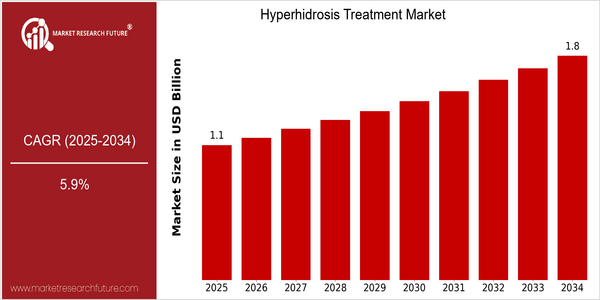
In the meantime, the market for the treatment of hyperhidrosis is booming, with a forecast for 2025 of $1.07 billion, and $1.79 billion by 2034. A compound annual growth rate (CAGR) of 5.9 per cent. The increase in the prevalence of hyperhidrosis, and the increased knowledge and acceptance of treatment, are the main reasons for this. Also, the development of new treatment methods, such as minimally invasive procedures and new topical solutions, further boosts the market. Allergan, Galderma and Ipsen are among the active players in this market, and they are working on strategic initiatives to strengthen their position. This includes collaboration in research and development, investments in clinical trials and the launch of new products that meet the various needs of the patient. These companies are committed to the development of new botulinum toxin formulations and advanced iontophoresis devices, which contribute to the growth of the market.
home-ubuntu-www-mrf_ne_design-batch-6-cp-hyperhidrosis-treatment-market size

Regional Market Size

Regional Deep Dive

The hyperhidrosis treatment market is expected to grow at a substantial rate in the coming years, driven by the increasing awareness of the condition and the development of new treatment options. In North America, the market is characterized by a high prevalence of hyperhidrosis and a strong focus on new treatment methods such as botulinum toxin injections and laser treatments. In Europe, the market is characterized by a wide variety of treatments and a growing acceptance of minimally invasive procedures. The Asia-Pacific region is experiencing a high level of demand, driven by the rising purchasing power and the growing awareness of aesthetic treatments. The Middle East and Africa are characterized by a lack of access to modern treatments, but also by a high growth potential, as the healthcare system develops. Latin America is gradually increasing its demand for treatments, which are influenced by cultural attitudes to aesthetics and personal care.

Europe

  • The European Medicines Agency (EMA) has streamlined the approval process for new hyperhidrosis treatments, encouraging innovation and faster market entry for new therapies.
  • Countries like Germany and the UK are leading in the adoption of advanced laser treatments, with clinics increasingly offering combination therapies that enhance treatment efficacy.

Asia Pacific

  • The rise of medical tourism in countries like Thailand and India is boosting the hyperhidrosis treatment market, as patients seek affordable and high-quality care.
  • Local companies are developing cost-effective treatment options tailored to the regional market, which is expected to increase accessibility for patients in emerging economies.

Latin America

  • Brazil is witnessing a growing trend in aesthetic treatments, including hyperhidrosis therapies, driven by a cultural emphasis on beauty and personal care.
  • Local regulatory bodies are beginning to recognize and approve new treatment modalities, which is expected to expand the market and improve patient access.

North America

  • The U.S. Food and Drug Administration (FDA) has recently approved new formulations of botulinum toxin specifically for hyperhidrosis, enhancing treatment options for patients and driving market growth.
  • Key players like Allergan and Galderma are investing in extensive marketing campaigns to raise awareness about hyperhidrosis, which is expected to increase patient consultations and treatment uptake.

Middle East And Africa

  • Healthcare initiatives in the UAE are focusing on improving dermatological services, which is expected to enhance the availability of hyperhidrosis treatments in the region.
  • Cultural attitudes towards personal grooming and aesthetics are evolving, leading to increased demand for hyperhidrosis treatments, particularly among younger populations.

Did You Know?

“Approximately 3% of the global population suffers from hyperhidrosis, yet many remain undiagnosed and untreated due to lack of awareness.” — International Hyperhidrosis Society

Segmental Market Size

The hyperhidrosis market is experiencing steady growth, driven by an increasing awareness of the condition and the availability of effective treatment options. The high prevalence of hyperhidrosis, which affects a significant proportion of the population, is also a major growth driver. New treatment options such as botulinum toxin injections and laser therapy are also driving demand. The regulatory support for the development of new therapies is also increasing the market’s momentum, encouraging more companies to invest in research and development. The market is currently at a mature stage of development, with botulinum toxin products from Allergan and Galderma attracting the most interest. The main applications are for treating hyperhidrosis in the clinical setting, primarily underarms, palms and feet. The market is also benefitting from a growing focus on hygiene and self-care, and the influence of telemedicine. Also, the development of new technology, such as iontophoresis and microwave therapy, is shaping the market’s evolution and offering patients a wide choice of treatments that can be tailored to their needs.

Future Outlook

The Hyperhidrosis Market is set to grow significantly from 2025 to 2034. The market is expected to grow at a CAGR of 5.9 per cent from $1.07 billion in 2025 to $1.79 billion in 2034. The main reason for this growth is the increasing awareness of hyperhidrosis as a medical condition, which is leading to an increase in the diagnosis of the disease and a subsequent increase in the use of treatments. Among those diagnosed with hyperhidrosis, the use of treatments is expected to increase from 20 per cent in 2025 to 30 per cent in 2034. The development of new treatment methods, such as minimally invasive procedures and novel drug formulations, is expected to improve the effectiveness of the treatment and the satisfaction of the patient. In addition, supportive regulatory frameworks and an increase in healthcare expenditure in various regions will increase access to these treatments. The use of telemedicine for consultations and follow-ups is also expected to facilitate access to care. The market will evolve, and it is important for all the actors to follow these developments closely in order to be able to benefit from the growing demand for hyperhidrosis treatments.
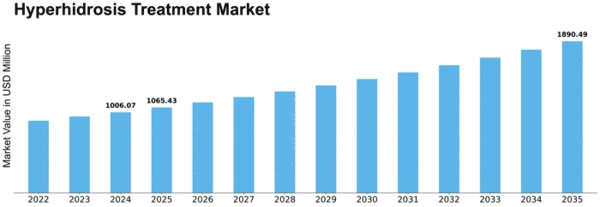

Hyperhidrosis Treatment Market Size Graph
Author
Rahul Gotadki
Assistant Manager

He holds an experience of about 7+ years in Market Research and Business Consulting, working under the spectrum of Life Sciences and Healthcare domains. Rahul conceptualizes and implements a scalable business strategy and provides strategic leadership to the clients. His expertise lies in market estimation, competitive intelligence, pipeline analysis, customer assessment, etc. In addition to the above, his other responsibility includes strategic tracking of high growth markets & advising clients on the potential areas of focus they could direct their business initiatives

Leave a Comment

FAQs

What is the projected growth of the Hyperhidrosis Treatment market?

The Hyperhidrosis Treatment market is the expected increase in total market value of 1.89 USD billion over a defined forecast period 2025–2035. It is driven by factors such as demand trends, technological advances, regulatory changes, and geographic expansion.

What is the size of the Hyperhidrosis Treatment market?

Hyperhidrosis Treatment market size was valued at approximately 1.01 billion USD in 2024. This figure will reach 1.89 billion USD covering all regions (America, Europe, Asia, MEA and ROW), focusing its segments / services / distribution channels till 2035.

What is the CAGR of the Hyperhidrosis Treatment market?

Hyperhidrosis Treatment market is expected to grow at a CAGR of 5.9% between 2025 and 2035.

How much will the Hyperhidrosis Treatment market be worth by 2035?

Hyperhidrosis Treatment market is expected to be worth of 1.89 billion USD, reflecting growth driven by usage, technology and global demands by the end of 2035.

How will the Hyperhidrosis Treatment market perform over the next 10 years?

Over the next 10 years the Hyperhidrosis Treatment market is expected to shift from usd billion 1.01 to 1.89 billion USD, led by adoption of advanced tech, demographic trends, regulatory approvals, with potential headwinds from 2025 to 2035.

Which region held the largest market share in the hyperhidrosis treatment market?

North America had the largest share in the market

Market Summary

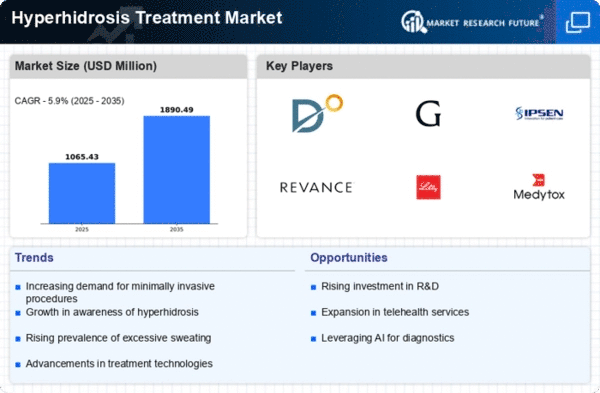
As per Market Research Future analysis, the Hyperhidrosis Treatment Market Size was estimated at 1006.07 USD Million in 2024. The Hyperhidrosis Treatment industry is projected to grow from USD 1065.45 Million in 2025 to USD 1890.49 Million by 2035, exhibiting a compound annual growth rate (CAGR) of 5.9% during the forecast period 2025 - 2035

Key Market Trends & Highlights

The Hyperhidrosis Treatment Market is experiencing notable growth driven by technological advancements and increasing awareness.

  • North America remains the largest market for hyperhidrosis treatments, driven by rising awareness and diagnosis.
  • Botulinum toxin injections dominate the market, while topical treatments are emerging as the fastest-growing segment.
  • Axillary hyperhidrosis continues to be the largest segment, whereas palmar hyperhidrosis is witnessing rapid growth.
  • The increasing prevalence of hyperhidrosis and advancements in treatment technologies are key drivers of market expansion.

Market Size & Forecast

2024 Market Size 1006.07 (USD Million)
2035 Market Size 1890.49 (USD Million)
CAGR (2025 - 2035) 5.9%
Largest Regional Market Share in 2024 North America

Major Players

<p>Dermira (US), Galderma (CH), Eli Lilly and Company (US), Ipsen S.A. (FR), Revance Therapeutics (US), Medytox (KR), Hugel (KR), Bausch Health Companies Inc. (CA)</p>

Market Trends

The Hyperhidrosis Treatment Market is currently experiencing a notable evolution, driven by increasing awareness of the condition and the growing demand for effective solutions. Hyperhidrosis, characterized by excessive sweating, affects a significant portion of the population, leading to both physical discomfort and psychological distress. As a result, there is a rising interest in various treatment modalities, including topical agents, oral medications, and advanced procedures such as botulinum toxin injections and surgical interventions. The market appears to be expanding as healthcare providers and patients alike seek innovative therapies that can enhance quality of life. Moreover, the landscape of the Hyperhidrosis Treatment Market is being shaped by technological advancements and the introduction of new products. Pharmaceutical companies are investing in research and development to create more effective and longer-lasting treatments. Additionally, the increasing prevalence of hyperhidrosis among diverse demographics suggests a potential for growth in this sector. As awareness campaigns and educational initiatives continue to proliferate, it is likely that more individuals will seek treatment, further propelling market expansion. Overall, the Hyperhidrosis Treatment Market seems poised for continued growth, driven by a combination of patient needs and advancements in treatment options.

Rising Awareness and Diagnosis

There is a growing recognition of hyperhidrosis as a medical condition, leading to increased diagnosis rates. This trend is likely to encourage more individuals to seek treatment, thereby expanding the market.

Technological Innovations in Treatments

Advancements in medical technology are paving the way for new treatment options. Innovative therapies, including minimally invasive procedures, are becoming more accessible, which may enhance patient outcomes.

Shift Towards Personalized Medicine

The Hyperhidrosis Treatment Market is witnessing a shift towards personalized approaches. Tailoring treatments to individual patient needs could improve efficacy and satisfaction, indicating a potential trend in future therapies.

Hyperhidrosis Treatment Market Market Drivers

Market Growth Projections

The Global Hyperhidrosis Treatment Market Industry is poised for substantial growth, with projections indicating an increase from 1.01 USD Billion in 2024 to 1.9 USD Billion by 2035. This growth trajectory reflects a compound annual growth rate (CAGR) of 5.89% from 2025 to 2035. Factors contributing to this expansion include rising awareness of hyperhidrosis, advancements in treatment options, and increased demand for non-invasive therapies. The market's potential is further bolstered by regulatory support for new treatments and a growing emphasis on patient education. These dynamics collectively suggest a robust future for the hyperhidrosis treatment sector.

Regulatory Support and Approval

Regulatory support and approval for new hyperhidrosis treatments are pivotal in driving the Global Hyperhidrosis Treatment Market Industry. Government agencies are increasingly recognizing the need for effective therapies, leading to expedited approval processes for innovative treatments. This regulatory environment fosters research and development, encouraging pharmaceutical companies to invest in new solutions. As a result, the market is likely to benefit from a steady influx of approved products, enhancing treatment options for patients. The projected growth trajectory, with the market expected to reach 1.9 USD Billion by 2035, underscores the significance of regulatory support in facilitating advancements in hyperhidrosis treatment.

Advancements in Treatment Options

Technological advancements in treatment modalities are significantly influencing the Global Hyperhidrosis Treatment Market Industry. New therapies, including botulinum toxin injections, iontophoresis, and microwave therapy, offer patients effective alternatives to traditional methods. These innovations not only enhance treatment efficacy but also improve patient satisfaction. As the market evolves, the introduction of minimally invasive procedures is likely to attract a broader patient base. The anticipated growth from 1.01 USD Billion in 2024 to 1.9 USD Billion by 2035, with a CAGR of 5.89% from 2025 to 2035, underscores the importance of these advancements in meeting diverse patient needs.

Increased Awareness and Education

There is a notable increase in awareness and education regarding hyperhidrosis, which serves as a crucial driver for the Global Hyperhidrosis Treatment Market Industry. Campaigns aimed at educating both healthcare professionals and the public about the condition are gaining traction. This heightened awareness encourages individuals to seek treatment, thereby expanding the patient population. Furthermore, educational initiatives help to destigmatize hyperhidrosis, promoting open discussions about the condition. As more people recognize the availability of effective treatments, the market is likely to see a surge in demand, contributing to its projected growth in the coming years.

Rising Prevalence of Hyperhidrosis

The increasing prevalence of hyperhidrosis globally is a primary driver for the Global Hyperhidrosis Treatment Market Industry. It is estimated that approximately 3% of the population suffers from this condition, leading to a growing demand for effective treatments. As awareness of hyperhidrosis rises, more individuals seek medical intervention, contributing to market growth. The industry is projected to reach 1.01 USD Billion in 2024, reflecting the urgent need for innovative solutions. This trend is likely to continue, as more healthcare providers recognize the impact of hyperhidrosis on quality of life, thus expanding treatment options and accessibility.

Growing Demand for Non-Invasive Treatments

The growing preference for non-invasive treatment options is shaping the Global Hyperhidrosis Treatment Market Industry. Patients increasingly favor procedures that minimize recovery time and reduce the risk of complications. Non-invasive therapies, such as topical treatments and oral medications, are becoming more popular, as they align with patient desires for convenience and safety. This shift in patient preferences is likely to drive market growth, as healthcare providers adapt to meet these demands. The anticipated market expansion from 1.01 USD Billion in 2024 to 1.9 USD Billion by 2035 highlights the potential for non-invasive treatments to capture a significant share of the market.

Market Segment Insights

By Treatment Type: Botulinum Toxin Injections (Largest) vs. Topical Treatments (Fastest-Growing)

<p>The Hyperhidrosis Treatment Market showcases a diversity of treatment types, each holding a unique market share. Botulinum toxin injections are currently the largest segment due to their proven effectiveness and growing acceptance among healthcare professionals. They are followed by topical treatments, which cater to mild to moderate cases of hyperhidrosis. Oral medications, iontophoresis, and surgical options also contribute to the market but occupy smaller shares, reflecting more targeted and invasive approaches to treatment. As the market evolves, the growth trends indicate a significant uptick in the popularity of topical treatments, driven by patients' increasing preference for non-invasive solutions. Additionally, the awareness surrounding hyperhidrosis is rising, leading to a surge in demand for various treatments, particularly botulinum toxin injections, which are increasingly viewed as a first-line approach. This trend is influenced by ongoing research and advancements that enhance efficacy and reduce side effects, driving healthcare adoption and patient satisfaction.</p>

<p>Botulinum Toxin Injections (Dominant) vs. Iontophoresis (Emerging)</p>

<p>Botulinum toxin injections stand out as the dominant treatment for hyperhidrosis, recognized for their ability to effectively reduce excessive sweating in targeted areas such as the underarms, palms, and feet. Their popularity is attributed to quick results and minimal downtime, making them the preferred choice for many patients. In contrast, iontophoresis is an emerging treatment gaining traction due to its non-invasive nature. Used primarily for palmar and plantar hyperhidrosis, it involves the application of a mild electrical current to reduce sweat gland activity. While not as widely recognized as botulinum toxin injections, iontophoresis is increasingly being recommended as a suitable alternative for patients seeking less invasive treatments, thus expanding its market presence.</p>

By Indication: Axillary Hyperhidrosis (Largest) vs. Palmar Hyperhidrosis (Fastest-Growing)

<p>The Hyperhidrosis Treatment Market exhibits a diverse range of indications, with Axillary Hyperhidrosis commanding the largest share due to its prevalence and significant impact on quality of life. This segment is well-established, offering numerous treatment options, and benefits from higher awareness among patients and healthcare providers. Conversely, Palmar Hyperhidrosis is the fastest-growing segment, driven by increasing recognition of the condition's impact and advancements in treatment methodologies, which cater specifically to those affected. As more individuals seek effective solutions for excessive sweating, the demand for treatments in Palmar Hyperhidrosis is expected to rise. Factors such as technological innovations in minimally invasive procedures, greater patient education, and a growing emphasis on personalized healthcare strategies are driving growth across these segments. Companies are increasingly focusing on expanding their product offerings to address the specific needs of patients suffering from these conditions, enhancing both market reach and treatment efficacy.</p>

<p>Hyperhidrosis Indication: Axillary Hyperhidrosis (Dominant) vs. Craniofacial Hyperhidrosis (Emerging)</p>

<p>Axillary Hyperhidrosis stands out as the dominant indication within the Hyperhidrosis Treatment Market due to its prevalence and the wide array of available treatment options, including topical treatments, medications, and surgical interventions. Patients often experience significant emotional and psychological distress, prompting higher demand for effective management solutions. In contrast, Craniofacial Hyperhidrosis is an emerging segment. Although less common, it has gained increasing attention due to growing awareness of its impact on individuals' social interactions and self-esteem. The development of specialized treatments and improved diagnostic criteria for Craniofacial Hyperhidrosis is fostering its growth, as patients are becoming more proactive in seeking help for this condition. This dynamic creates opportunities for new entrants and existing players to innovate and invest in tailored therapeutic options.</p>

By Patient Demographics: Adults (Largest) vs. Adolescents (Fastest-Growing)

<p>The patient demographics segment in the hyperhidrosis treatment market showcases a varied distribution, with adults representing the largest share. The prevalence of hyperhidrosis in this group has been increasingly recognized, leading to significant demand for treatment options tailored for adults. Following closely, adolescents are emerging as a key demographic, reflecting a growing awareness of hyperhidrosis among younger populations, resulting in a swift rise in treatment adoption within this age group. Growth trends in the hyperhidrosis treatment market are driven by rising awareness, increasing diagnoses, and innovations in treatment methods. As adult patients continue to seek effective solutions, the market witnesses a shift towards younger demographics, highlighting the importance of addressing the needs of adolescents. Social media and educational initiatives play a crucial role, fostering awareness and acceptance of treatments among youth, thus propelling the market forward.</p>

<p>Adults (Dominant) vs. Adolescents (Emerging)</p>

<p>The adult segment of the hyperhidrosis treatment market remains dominant thanks to the high recognition and acceptance of hyperhidrosis as a prevalent condition requiring effective management. Adults often experience more severe symptoms, prompting a stronger demand for advanced therapeutic options. In contrast, the adolescent segment is emerging rapidly, characterized by a younger population becoming increasingly aware of their hyperhidrosis symptoms. Their growing participation in social environments heightens the urgency for treatment, driving manufacturers to develop age-appropriate solutions. This market segment shows promise for targeted marketing strategies, leveraging social media influence and peer discussions that encourage adolescents to seek help, thus solidifying its place as a vital and expanding demographic within the overall market.</p>

Get more detailed insights about Hyperhidrosis Treatment Market Research Report - Forecast till 2035

Regional Insights

North America : Market Leader in Treatments

North America continues to lead the Hyperhidrosis Treatment Market, holding a significant share of 503.0M in 2024. The growth is driven by increasing awareness of hyperhidrosis, advancements in treatment options, and supportive regulatory frameworks. The demand for effective solutions is further fueled by rising healthcare expenditures and a focus on quality of life improvements for patients. Regulatory bodies are actively promoting innovative therapies, enhancing market dynamics. The competitive landscape in North America is robust, featuring key players such as Dermira, Eli Lilly, and Revance Therapeutics. The U.S. is the primary market, benefiting from a well-established healthcare infrastructure and a high prevalence of hyperhidrosis. Companies are investing in research and development to introduce novel therapies, ensuring a steady pipeline of innovative products to meet the growing demand.

Europe : Emerging Market with Potential

Europe's Hyperhidrosis Treatment Market is valued at 300.0M, reflecting a growing recognition of the condition and the need for effective treatments. The region is witnessing an increase in treatment accessibility due to favorable regulations and a rise in healthcare investments. Countries are implementing policies to improve patient access to innovative therapies, which is expected to drive market growth. The demand for non-invasive treatment options is also on the rise, contributing to market expansion. Leading countries in this region include Germany, France, and the UK, where key players like Galderma and Ipsen S.A. are actively involved. The competitive landscape is characterized by a mix of established companies and emerging players, all striving to capture market share. The presence of strong healthcare systems and increasing public awareness are pivotal in shaping the market dynamics in Europe.

Asia-Pacific : Rapidly Growing Market

The Asia-Pacific region, with a market size of 150.0M, is experiencing rapid growth in the Hyperhidrosis Treatment Market. Factors such as increasing urbanization, rising disposable incomes, and growing awareness of hyperhidrosis are driving demand for effective treatments. Regulatory bodies are beginning to recognize the need for better treatment options, leading to a more favorable environment for market growth. The region is also seeing a shift towards minimally invasive procedures, which are gaining popularity among patients. Key countries in this region include South Korea, Japan, and Australia, where companies like Medytox and Hugel are making significant strides. The competitive landscape is evolving, with both local and international players vying for market share. The increasing prevalence of hyperhidrosis in urban populations is prompting healthcare providers to seek innovative solutions, further enhancing market dynamics.

Middle East and Africa : Niche Market with Opportunities

The Middle East and Africa region, valued at 53.07M, presents a niche market for hyperhidrosis treatments. The growth is primarily driven by increasing awareness of the condition and the availability of new treatment options. Regulatory bodies are beginning to address the need for effective therapies, which is expected to enhance market accessibility. The rising prevalence of hyperhidrosis in urban areas is also contributing to the demand for treatments, as more individuals seek solutions to manage their condition. Countries like South Africa and the UAE are leading the way in adopting new treatment modalities. The competitive landscape is characterized by a mix of local and international players, with companies exploring partnerships to expand their reach. As healthcare systems in the region evolve, the potential for growth in the hyperhidrosis treatment market is significant, offering opportunities for innovative solutions.

Key Players and Competitive Insights

The Hyperhidrosis Treatment Market is characterized by a dynamic competitive landscape, driven by increasing awareness of the condition and the growing demand for effective treatment options. Key players such as Dermira (US), Galderma (CH), and Revance Therapeutics (US) are strategically positioned to leverage innovation and expand their market presence. Dermira (US) focuses on developing novel therapies, while Galderma (CH) emphasizes a broad portfolio of dermatological products, including treatments for hyperhidrosis. Revance Therapeutics (US) is notable for its commitment to advanced drug delivery systems, which enhances patient compliance and treatment efficacy. Collectively, these strategies contribute to a competitive environment that is increasingly focused on innovation and patient-centric solutions.

In terms of business tactics, companies are localizing manufacturing and optimizing supply chains to enhance operational efficiency. The market structure appears moderately fragmented, with several players vying for market share. This fragmentation allows for diverse treatment options, but also intensifies competition among key players, who are compelled to differentiate themselves through unique offerings and strategic partnerships.

In November 2025, Dermira (US) announced the launch of a new clinical trial aimed at evaluating the efficacy of its latest hyperhidrosis treatment. This strategic move underscores the company's commitment to innovation and its focus on addressing unmet medical needs. By investing in clinical research, Dermira (US) aims to solidify its position as a leader in the market, potentially expanding its product offerings and enhancing its competitive edge.

In October 2025, Galderma (CH) entered into a partnership with a leading technology firm to integrate AI-driven analytics into its product development processes. This collaboration is expected to streamline research and development efforts, allowing Galderma (CH) to bring new treatments to market more efficiently. The integration of AI not only enhances operational capabilities but also positions the company to respond more adeptly to evolving consumer demands.

In September 2025, Revance Therapeutics (US) secured a strategic acquisition of a smaller biotech firm specializing in innovative drug delivery systems. This acquisition is likely to bolster Revance's product pipeline and enhance its competitive positioning by providing access to cutting-edge technologies. The move reflects a broader trend in the industry where companies are seeking to enhance their capabilities through strategic acquisitions, thereby fostering innovation and expanding their market reach.

As of December 2025, the Hyperhidrosis Treatment Market is witnessing trends such as digitalization and sustainability, which are reshaping competitive dynamics. Strategic alliances are increasingly prevalent, enabling companies to pool resources and expertise to drive innovation. The competitive differentiation is expected to evolve, with a shift from price-based competition towards a focus on technological advancements and supply chain reliability. This transition suggests that companies that prioritize innovation and patient-centric solutions will likely emerge as leaders in the market.

Key Companies in the Hyperhidrosis Treatment Market market include

Industry Developments

  • Q2 2024: Journey Medical Receives FDA Approval for QBREXZA® (glycopyrronium) Cloth for the Treatment of Primary Axillary Hyperhidrosis in Pediatric Patients Aged 9 Years and Older Journey Medical announced that the U.S. FDA approved an expanded indication for QBREXZA® (glycopyrronium) cloth, now including pediatric patients aged 9 years and older for the treatment of primary axillary hyperhidrosis.
  • Q2 2024: Brickell Biotech Announces FDA Acceptance of New Drug Application for Sofpironium Bromide Gel, 15%, for the Treatment of Primary Axillary Hyperhidrosis Brickell Biotech reported that the FDA accepted its New Drug Application for sofpironium bromide gel, 15%, for the treatment of primary axillary hyperhidrosis in adults and children aged 9 years and older.
  • Q1 2024: Candesant Biomedical Announces FDA Clearance of Brella™ SweatControl Patch for the Treatment of Primary Axillary Hyperhidrosis Candesant Biomedical received FDA clearance for its Brella™ SweatControl Patch, a novel, non-invasive treatment for primary axillary hyperhidrosis.
  • Q2 2024: Dermira Announces European Commission Approval of QBREXZA® (glycopyrronium) for the Treatment of Primary Axillary Hyperhidrosis Dermira received approval from the European Commission for QBREXZA® (glycopyrronium) for the treatment of primary axillary hyperhidrosis in adults and children aged 9 years and older.
  • Q1 2024: Candesant Biomedical Raises $35 Million in Series B Financing to Support Commercial Launch of Brella™ SweatControl Patch Candesant Biomedical closed a $35 million Series B funding round to support the commercial launch and scale-up of its FDA-cleared Brella™ SweatControl Patch for hyperhidrosis.
  • Q2 2024: Journey Medical Announces Commercial Launch of QBREXZA® (glycopyrronium) Cloth for Pediatric Hyperhidrosis Patients Journey Medical launched QBREXZA® (glycopyrronium) cloth for pediatric patients with primary axillary hyperhidrosis following FDA approval of the expanded indication.
  • Q1 2024: Brickell Biotech Enters Strategic Partnership with Kaken Pharmaceutical for Commercialization of Sofpironium Bromide Gel in Japan Brickell Biotech entered a strategic partnership with Kaken Pharmaceutical to commercialize sofpironium bromide gel for hyperhidrosis in Japan.
  • Q2 2024: Candesant Biomedical Announces U.S. Commercial Launch of Brella™ SweatControl Patch Candesant Biomedical announced the U.S. commercial launch of its FDA-cleared Brella™ SweatControl Patch for the treatment of primary axillary hyperhidrosis.
  • Q1 2024: Dermira Appoints New Chief Commercial Officer to Lead Hyperhidrosis Franchise Dermira appointed a new Chief Commercial Officer to oversee the commercial strategy and expansion of its hyperhidrosis treatment portfolio.
  • Q2 2024: Journey Medical Expands Manufacturing Facility to Increase QBREXZA® Production Capacity Journey Medical expanded its manufacturing facility to increase production capacity for QBREXZA® (glycopyrronium) cloth, supporting growing demand in the hyperhidrosis market.

Future Outlook

Hyperhidrosis Treatment Market Future Outlook

<p>The Hyperhidrosis Treatment Market is projected to grow at a 5.9% CAGR from 2024 to 2035, driven by increasing awareness, technological advancements, and rising demand for effective treatments.</p>

New opportunities lie in:

  • <p>Development of personalized treatment plans leveraging AI technology.</p>
  • <p>Expansion of telehealth services for remote consultations and follow-ups.</p>
  • <p>Introduction of combination therapies to enhance treatment efficacy and patient satisfaction.</p>

<p>By 2035, the Hyperhidrosis Treatment Market is expected to achieve substantial growth and innovation.</p>

Market Segmentation

Hyperhidrosis Treatment Market Indication Outlook

  • Palmar Hyperhidrosis
  • Axillary Hyperhidrosis
  • Craniofacial Hyperhidrosis
  • Generalized Hyperhidrosis
  • Plantar Hyperhidrosis

Hyperhidrosis Treatment Market Treatment Type Outlook

  • Topical Treatments
  • Oral Medications
  • Botulinum Toxin Injections
  • Iontophoresis
  • Surgery

Hyperhidrosis Treatment Market Patient Demographics Outlook

  • Adults
  • Adolescents
  • Elderly
  • Gender Specific
  • Occupational

Report Scope

MARKET SIZE 20241006.07(USD Million)
MARKET SIZE 20251065.45(USD Million)
MARKET SIZE 20351890.49(USD Million)
COMPOUND ANNUAL GROWTH RATE (CAGR)5.9% (2024 - 2035)
REPORT COVERAGERevenue Forecast, Competitive Landscape, Growth Factors, and Trends
BASE YEAR2024
Market Forecast Period2025 - 2035
Historical Data2019 - 2024
Market Forecast UnitsUSD Million
Key Companies ProfiledDermira (US), Galderma (CH), Eli Lilly and Company (US), Ipsen S.A. (FR), Revance Therapeutics (US), Medytox (KR), Hugel (KR), Bausch Health Companies Inc. (CA)
Segments CoveredTreatment Type, Indication, Patient Demographics
Key Market OpportunitiesAdvancements in minimally invasive procedures enhance treatment options in the Hyperhidrosis Treatment Market.
Key Market DynamicsRising demand for innovative treatments drives competition and technological advancements in the Hyperhidrosis Treatment Market.
Countries CoveredNorth America, Europe, APAC, South America, MEA

FAQs

What is the projected growth of the Hyperhidrosis Treatment market?

The Hyperhidrosis Treatment market is the expected increase in total market value of 1.89 USD billion over a defined forecast period 2025–2035. It is driven by factors such as demand trends, technological advances, regulatory changes, and geographic expansion.

What is the size of the Hyperhidrosis Treatment market?

Hyperhidrosis Treatment market size was valued at approximately 1.01 billion USD in 2024. This figure will reach 1.89 billion USD covering all regions (America, Europe, Asia, MEA and ROW), focusing its segments / services / distribution channels till 2035.

What is the CAGR of the Hyperhidrosis Treatment market?

Hyperhidrosis Treatment market is expected to grow at a CAGR of 5.9% between 2025 and 2035.

How much will the Hyperhidrosis Treatment market be worth by 2035?

Hyperhidrosis Treatment market is expected to be worth of 1.89 billion USD, reflecting growth driven by usage, technology and global demands by the end of 2035.

How will the Hyperhidrosis Treatment market perform over the next 10 years?

Over the next 10 years the Hyperhidrosis Treatment market is expected to shift from usd billion 1.01 to 1.89 billion USD, led by adoption of advanced tech, demographic trends, regulatory approvals, with potential headwinds from 2025 to 2035.

Which region held the largest market share in the hyperhidrosis treatment market?

North America had the largest share in the market

  1. EXECUTIVE SUMMARY
    1. Market Attractiveness Analysis
      1. Global Hyperhidrosis Treatment Market, by Type
      2. Global Hyperhidrosis Treatment Market, by Treatment
      3. Global Hyperhidrosis Treatment Market, by End User
  2. MARKET INTRODUCTION
    1. Definition
    2. Scope of the Study
      1. Research Objective
      2. Assumptions
      3. Limitations
  3. RESEARCH METHODOLOGY
    1. Overview
    2. Data Mining
    3. Secondary Research
    4. Primary Research
    5. Breakdown of Primary Respondents
    6. Forecasting Techniques
    7. Research Methodology for Market Size Estimation
    8. Bottom-Up Approach
    9. Top-Down Approach
    10. Data Triangulation
    11. Validation
  4. MARKET DYNAMICS
    1. Overview
    2. Drivers
    3. Restraints
    4. Opportunities
  5. MARKET FACTOR ANALYSIS
    1. Porter’s Five Forces Analysis
      1. Bargaining Power of Suppliers
      2. Bargaining Power of Buyers
      3. Threat of New Entrants
      4. Threat of Substitutes
      5. Intensity of Rivalry
    2. Value Chain Analysis
      1. R&D and Designing
      2. Manufacturing
      3. Distribution & Sales
      4. Post Sales Services
    3. Pipeline Product Analysis
  6. GLOBAL HYPERHIDROSIS TREATMENT MARKET, BY TYPE
    1. Overview
    2. Primary Hyperhidrosis
  7. Market Estimates & Forecast, by Region, 2020–2027
  8. Market Estimates & Forecast, by Country, 2020–2027
    1. Secondary Generalized Hyperhidrosis
  9. Market Estimates & Forecast, by Region, 2020–2027
  10. Market Estimates & Forecast, by Country, 2020–2027
  11. GLOBAL HYPERHIDROSIS TREATMENT MARKET, BY TREATMENT
    1. Overview
    2. Botulinum Toxin Injections
  12. Market Estimates & Forecast, by Region, 2020–2027
  13. Market Estimates & Forecast, by Country, 2020–2027
    1. Topical Treatment
  14. Market Estimates & Forecast, by Region, 2020–2027
  15. Market Estimates & Forecast, by Country, 2020–2027
    1. Surgical Treatment
  16. Market Estimates & Forecast, by Region, 2020–2027
  17. Market Estimates & Forecast, by Country, 2020–2027
    1. Oral Medication
  18. Market Estimates & Forecast, by Region, 2020–2027
  19. Market Estimates & Forecast, by Country, 2020–2027
    1. Microwave Therapy
  20. Market Estimates & Forecast, by Region, 2020–2027
  21. Market Estimates & Forecast, by Country, 2020–2027
    1. Others
  22. Market Estimates & Forecast, by Region, 2020–2027
  23. Market Estimates & Forecast, by Country, 2020–2027
  24. GLOBAL HYPERHIDROSIS TREATMENT MARKET, BY END USER
    1. Overview
    2. Dermatology Clinics
  25. Market Estimates & Forecast, by Region, 2020–2027
  26. Market Estimates & Forecast, by Country, 2020–2027
    1. Ambulatory Surgery Centers
  27. Market Estimates & Forecast, by Region, 2020–2027
  28. Market Estimates & Forecast, by Country, 2020–2027
    1. Payers/Patients
  29. Market Estimates & Forecast, by Region, 2020–2027
  30. Market Estimates & Forecast, by Country, 2020–2027
    1. Others
  31. Market Estimates & Forecast, by Region, 2020–2027
  32. Market Estimates & Forecast, by Country, 2020–2027
  33. GLOBAL HYPERHIDROSIS TREATMENT MARKET, BY REGION
    1. Overview
    2. Americas
      1. North America
      2. Latin America
    3. Europe
      1. Western Europe
      2. Eastern Europe
    4. Asia-Pacific
      1. Japan
      2. China
      3. India
      4. Australia
      5. South Korea
      6. Rest of Asia-Pacific
    5. Middle East & Africa
      1. Middle East
      2. Africa
  34. COMPANY LANDSCAPE
    1. Overview
    2. Competitor Dashboard
    3. Major Growth Strategy in the Global Hyperhidrosis Treatment Market
    4. Competitive Benchmarking
    5. The Leading Player in terms of Number of Developments in the Global Hyperhidrosis Treatment Market
    6. Key Developments & Growth Strategies
    7. Major Players Financial Matrix & Market Ratio
  35. COMPANY PROFILE
    1. Allergan PLC
      1. Company Overview
      2. Products/Services Offered
      3. Financial Overview
      4. Key Developments
      5. SWOT Analysis
      6. Key Strategies
    2. Brickell Biotech Inc.
    3. Cynosure
    4. Dermadry Laboratories lnc.
    5. Dermira Inc.
    6. GlaxoSmithKline PLC
    7. Miramar Labs, Inc.
    8. Sesderma
    9. Ulthera Inc.
    10. Others
  36. APPENDIX
    1. References
    2. Related Reports
  37. LIST OF TABLES
  38. GLOBAL HYPERHIDROSIS TREATMENT MARKET SYNOPSIS, 2020–2027
  39. GLOBAL HYPERHIDROSIS TREATMENT MARKET ESTIMATES & FORECAST, 2020–2027 (USD MILLION)
  40. GLOBAL HYPERHIDROSIS TREATMENT MARKET, BY TYPE, 2020–2027 (USD MILLION)
  41. GLOBAL HYPERHIDROSIS TREATMENT MARKET, BY TREATMENT, 2020–2027 (USD MILLION)
  42. GLOBAL HYPERHIDROSIS TREATMENT MARKET, BY END USER, 2020–2027 (USD MILLION)
  43. GLOBAL HYPERHIDROSIS TREATMENT MARKET, BY REGION, 2020–2027 (USD MILLION)
  44. NORTH AMERICA: HYPERHIDROSIS TREATMENT MARKET, BY TYPE, 2020–2027 (USD MILLION)
  45. NORTH AMERICA: HYPERHIDROSIS TREATMENT MARKET, BY TREATMENT, 2020–2027 (USD MILLION)
  46. NORTH AMERICA: HYPERHIDROSIS TREATMENT MARKET, BY END USER, 2020–2027 (USD MILLION)
  47. US: HYPERHIDROSIS TREATMENT MARKET, BY TYPE, 2020–2027 (USD MILLION)
  48. US: HYPERHIDROSIS TREATMENT MARKET, BY TREATMENT, 2020–2027 (USD MILLION)
  49. US: HYPERHIDROSIS TREATMENT MARKET, BY END USER, 2020–2027 (USD MILLION)
  50. CANADA: HYPERHIDROSIS TREATMENT MARKET, BY TYPE, 2020–2027 (USD MILLION)
  51. CANADA: HYPERHIDROSIS TREATMENT MARKET, BY TREATMENT, 2020–2027 (USD MILLION)
  52. CANADA: HYPERHIDROSIS TREATMENT MARKET, BY END USER, 2020–2027 (USD MILLION)
  53. LATIN AMERICA: HYPERHIDROSIS TREATMENT MARKET, BY TYPE, 2020–2027 (USD MILLION)
  54. LATIN AMERICA: HYPERHIDROSIS TREATMENT MARKET, BY TREATMENT, 2020–2027 (USD MILLION)
  55. LATIN AMERICA: HYPERHIDROSIS TREATMENT MARKET, BY END USER, 2020–2027 (USD MILLION)
  56. EUROPE: HYPERHIDROSIS TREATMENT MARKET, BY TYPE, 2020–2027 (USD MILLION)
  57. EUROPE: HYPERHIDROSIS TREATMENT MARKET, BY TREATMENT, 2020–2027 (USD MILLION)
  58. EUROPE: HYPERHIDROSIS TREATMENT MARKET, BY END USER, 2020–2027 (USD MILLION)
  59. WESTERN EUROPE: HYPERHIDROSIS TREATMENT MARKET, BY TYPE, 2020–2027 (USD MILLION)
  60. WESTERN EUROPE: HYPERHIDROSIS TREATMENT MARKET, BY TREATMENT, 2020–2027 (USD MILLION)
  61. WESTERN EUROPE: HYPERHIDROSIS TREATMENT MARKET, BY END USER, 2020–2027 (USD MILLION)
  62. EASTERN EUROPE: HYPERHIDROSIS TREATMENT MARKET, BY TYPE, 2020–2027 (USD MILLION)
  63. EASTERN EUROPE: HYPERHIDROSIS TREATMENT MARKET, BY TREATMENT, 2020–2027 (USD MILLION)
  64. EASTERN EUROPE: HYPERHIDROSIS TREATMENT MARKET, BY END USER, 2020–2027 (USD MILLION)
  65. ASIA-PACIFIC: HYPERHIDROSIS TREATMENT MARKET, BY TYPE, 2020–2027 (USD MILLION)
  66. ASIA-PACIFIC: HYPERHIDROSIS TREATMENT MARKET, BY TREATMENT, 2020–2027 (USD MILLION)
  67. ASIA-PACIFIC: HYPERHIDROSIS TREATMENT MARKET, BY END USER, 2020–2027 (USD MILLION)
  68. MIDDLE EAST & AFRICA: HYPERHIDROSIS TREATMENT MARKET, BY TYPE, 2020–2027 (USD MILLION)
  69. MIDDLE EAST & AFRICA: HYPERHIDROSIS TREATMENT MARKET, BY TREATMENT, 2020–2027 (USD MILLION)
  70. MIDDLE EAST & AFRICA: HYPERHIDROSIS TREATMENT MARKET, BY END USER, 2020–2027 (USD MILLION)
  71. LIST OF FIGURES
  72. RESEARCH PROCESS
  73. MARKET STRUCTURE FOR THE GLOBAL HYPERHIDROSIS TREATMENT MARKET
  74. MARKET DYNAMICS FOR THE GLOBAL HYPERHIDROSIS TREATMENT MARKET
  75. GLOBAL HYPERHIDROSIS TREATMENT MARKET SHARE, BY TYPE, 2020 (%)
  76. GLOBAL HYPERHIDROSIS TREATMENT MARKET SHARE, BY TREATMENT, 2020 (%)
  77. GLOBAL HYPERHIDROSIS TREATMENT MARKET SHARE, BY END USER, 2020 (%)
  78. GLOBAL HYPERHIDROSIS TREATMENT MARKET SHARE, BY REGION, 2020 (%)
  79. AMERICAS: HYPERHIDROSIS TREATMENT MARKET SHARE BY REGION, 2020 (%)
  80. NORTH AMERICA: HYPERHIDROSIS TREATMENT MARKET SHARE, BY COUNTRY, 2020 (%)
  81. EUROPE: HYPERHIDROSIS TREATMENT MARKET SHARE, BY REGION, 2020 (%)
  82. WESTERN EUROPE: HYPERHIDROSIS TREATMENT MARKET SHARE, BY COUNTRY, 2020 (%)
  83. ASIA-PACIFIC: HYPERHIDROSIS TREATMENT MARKET SHARE, BY COUNTRY, 2020 (%)
  84. MIDDLE EAST & AFRICA: HYPERHIDROSIS TREATMENT MARKET SHARE, BY COUNTRY, 2020 (%)
  85. GLOBAL HYPERHIDROSIS TREATMENT MARKET: COMPANY SHARE ANALYSIS, 2020 (%)
  86. ALLERGAN PLC: KEY FINANCIALS
  87. ALLERGAN PLC: SEGMENTAL REVENUE
  88. ALLERGAN PLC: REGIONAL REVENUE
  89. BRICKELL BIOTECH INC.: KEY FINANCIALS
  90. BRICKELL BIOTECH INC.: SEGMENTAL REVENUE
  91. BRICKELL BIOTECH INC.: REGIONAL REVENUE
  92. CYNOSURE: KEY FINANCIALS
  93. CYNOSURE: SEGMENTAL REVENUE
  94. CYNOSURE: REGIONAL REVENUE
  95. DERMIRA INC.: KEY FINANCIALS
  96. DERMIRA INC.: SEGMENTAL REVENUE
  97. DERMIRA INC.: REGIONAL REVENUE
  98. GLAXOSMITHKLINE PLC: KEY FINANCIALS
  99. GLAXOSMITHKLINE PLC: SEGMENTAL REVENUE
  100. GLAXOSMITHKLINE PLC: REGIONAL REVENUE
  101. MIRAMAR LABS, INC.: KEY FINANCIALS
  102. MIRAMAR LABS, INC.: SEGMENTAL REVENUE
  103. MIRAMAR LABS, INC.: REGIONAL REVENUE
    1. "

Market Segmentation

Hyperhidrosis Treatment Treatment Outlook (USD Billion, 2018-2034)

Botulinum Toxin Injections

Topical Treatment

Surgical Treatment

Oral Medication

Microwave Therapy

Hyperhidrosis Treatment Type Outlook (USD Billion, 2018-2034)

Primary Hyperhidrosis

Secondary Generalized Hyperhidrosis

Hyperhidrosis Treatment End-User Outlook (USD Billion, 2018-2034)

Dermatology Clinics

Ambulatory Surgery Centers

Payers/Patients

Hyperhidrosis Treatment Regional Outlook (USD Billion, 2018-2034)

North America Outlook (USD Billion, 2018-2034)

North America Hyperhidrosis Treatment by Treatment

Botulinum Toxin Injections

Topical Treatment

Surgical Treatment

Oral Medication

Microwave Therapy

North America Hyperhidrosis Treatment by Type

Primary Hyperhidrosis

Secondary Generalized Hyperhidrosis

North America Hyperhidrosis Treatment by End-User

Dermatology Clinics

Ambulatory Surgery Centers

Payers/Patients

US Outlook (USD Billion, 2018-2034)

US Hyperhidrosis Treatment by Treatment

Botulinum Toxin Injections

Topical Treatment

Surgical Treatment

Oral Medication

Microwave Therapy

US Hyperhidrosis Treatment by Type

Primary Hyperhidrosis

Secondary Generalized Hyperhidrosis

US Hyperhidrosis Treatment by End-User

Dermatology Clinics

Ambulatory Surgery Centers

Payers/Patients

Canada Outlook (USD Billion, 2018-2034)

Canada Hyperhidrosis Treatment by Treatment

Botulinum Toxin Injections

Topical Treatment

Surgical Treatment

Oral Medication

Microwave Therapy

Canada Hyperhidrosis Treatment by Type

Primary Hyperhidrosis

Secondary Generalized Hyperhidrosis

Canada Hyperhidrosis Treatment by End-User

Dermatology Clinics

Ambulatory Surgery Centers

Payers/Patients

Europe Outlook (USD Billion, 2018-2034)

Europe Hyperhidrosis Treatment by Treatment

Botulinum Toxin Injections

Topical Treatment

Surgical Treatment

Oral Medication

Microwave Therapy

Europe Hyperhidrosis Treatment by Type

Primary Hyperhidrosis

Secondary Generalized Hyperhidrosis

Europe Hyperhidrosis Treatment by End-User

Dermatology Clinics

Ambulatory Surgery Centers

Payers/Patients

Germany Outlook (USD Billion, 2018-2034)

Germany Hyperhidrosis Treatment by Treatment

Botulinum Toxin Injections

Topical Treatment

Surgical Treatment

Oral Medication

Microwave Therapy

Germany Hyperhidrosis Treatment by Type

Primary Hyperhidrosis

Secondary Generalized Hyperhidrosis

Germany Hyperhidrosis Treatment by End-User

Dermatology Clinics

Ambulatory Surgery Centers

Payers/Patients

France Outlook (USD Billion, 2018-2034)

France Hyperhidrosis Treatment by Treatment

Botulinum Toxin Injections

Topical Treatment

Surgical Treatment

Oral Medication

Microwave Therapy

France Hyperhidrosis Treatment by Type

Primary Hyperhidrosis

Secondary Generalized Hyperhidrosis

France Hyperhidrosis Treatment by End-User

Dermatology Clinics

Ambulatory Surgery Centers

Payers/Patients

UK Outlook (USD Billion, 2018-2034)

UK Hyperhidrosis Treatment by Treatment

Botulinum Toxin Injections

Topical Treatment

Surgical Treatment

Oral Medication

Microwave Therapy

UK Hyperhidrosis Treatment by Type

Primary Hyperhidrosis

Secondary Generalized Hyperhidrosis

UK Hyperhidrosis Treatment by End-User

Dermatology Clinics

Ambulatory Surgery Centers

Payers/Patients

Italy Outlook (USD Billion, 2018-2034)

Italy Hyperhidrosis Treatment by Treatment

Botulinum Toxin Injections

Topical Treatment

Surgical Treatment

Oral Medication

Microwave Therapy

Italy Hyperhidrosis Treatment by Type

Primary Hyperhidrosis

Secondary Generalized Hyperhidrosis

Italy Hyperhidrosis Treatment by End-User

Dermatology Clinics

Ambulatory Surgery Centers

Payers/Patients

Spain Outlook (USD Billion, 2018-2034)

Spain Hyperhidrosis Treatment by Treatment

Botulinum Toxin Injections

Topical Treatment

Surgical Treatment

Oral Medication

Microwave Therapy

Spain Hyperhidrosis Treatment by Type

Primary Hyperhidrosis

Secondary Generalized Hyperhidrosis

Spain Hyperhidrosis Treatment by End-User

Dermatology Clinics

Ambulatory Surgery Centers

Payers/Patients

Rest Of Europe Outlook (USD Billion, 2018-2034)

Rest Of Europe Hyperhidrosis Treatment by Treatment

Botulinum Toxin Injections

Topical Treatment

Surgical Treatment

Oral Medication

Microwave Therapy

Rest Of Europe Hyperhidrosis Treatment by Type

Primary Hyperhidrosis

Secondary Generalized Hyperhidrosis

Rest Of Europe Hyperhidrosis Treatment by End-User

Dermatology Clinics

Ambulatory Surgery Centers

Payers/Patients

Asia-Pacific Outlook (USD Billion, 2018-2034)

Asia-Pacific Hyperhidrosis Treatment by Treatment

Botulinum Toxin Injections

Topical Treatment

Surgical Treatment

Oral Medication

Microwave Therapy

Asia-Pacific Hyperhidrosis Treatment by Type

Primary Hyperhidrosis

Secondary Generalized Hyperhidrosis

Asia-Pacific Hyperhidrosis Treatment by End-User

Dermatology Clinics

Ambulatory Surgery Centers

Payers/Patients

China Outlook (USD Billion, 2018-2034)

China Hyperhidrosis Treatment by Treatment

Botulinum Toxin Injections

Topical Treatment

Surgical Treatment

Oral Medication

Microwave Therapy

China Hyperhidrosis Treatment by Type

Primary Hyperhidrosis

Secondary Generalized Hyperhidrosis

China Hyperhidrosis Treatment by End-User

Dermatology Clinics

Ambulatory Surgery Centers

Payers/Patients

Japan Outlook (USD Billion, 2018-2034)

Japan Hyperhidrosis Treatment by Treatment

Botulinum Toxin Injections

Topical Treatment

Surgical Treatment

Oral Medication

Microwave Therapy

Japan Hyperhidrosis Treatment by Type

Primary Hyperhidrosis

Secondary Generalized Hyperhidrosis

Japan Hyperhidrosis Treatment by End-User

Dermatology Clinics

Ambulatory Surgery Centers

Payers/Patients

India Outlook (USD Billion, 2018-2034)

India Hyperhidrosis Treatment by Treatment

Botulinum Toxin Injections

Topical Treatment

Surgical Treatment

Oral Medication

Microwave Therapy

India Hyperhidrosis Treatment by Type

Primary Hyperhidrosis

Secondary Generalized Hyperhidrosis

India Hyperhidrosis Treatment by End-User

Dermatology Clinics

Ambulatory Surgery Centers

Payers/Patients

Australia Outlook (USD Billion, 2018-2034)

Australia Hyperhidrosis Treatment by Treatment

Botulinum Toxin Injections

Topical Treatment

Surgical Treatment

Oral Medication

Microwave Therapy

Australia Hyperhidrosis Treatment by Type

Primary Hyperhidrosis

Secondary Generalized Hyperhidrosis

Australia Hyperhidrosis Treatment by End-User

Dermatology Clinics

Ambulatory Surgery Centers

Payers/Patients

Rest of Asia-Pacific Outlook (USD Billion, 2018-2034)

Rest of Asia-Pacific Hyperhidrosis Treatment by Treatment

Botulinum Toxin Injections

Topical Treatment

Surgical Treatment

Oral Medication

Microwave Therapy

Rest of Asia-Pacific Hyperhidrosis Treatment by Type

Primary Hyperhidrosis

Secondary Generalized Hyperhidrosis

Rest of Asia-Pacific Hyperhidrosis Treatment by End-User

Dermatology Clinics

Ambulatory Surgery Centers

Payers/Patients

Rest of the World Outlook (USD Billion, 2018-2034)

Rest of the World Hyperhidrosis Treatment by Treatment

Botulinum Toxin Injections

Topical Treatment

Surgical Treatment

Oral Medication

Microwave Therapy

Rest of the World Hyperhidrosis Treatment by Type

Primary Hyperhidrosis

Secondary Generalized Hyperhidrosis

Rest of the World Hyperhidrosis Treatment by End-User

Dermatology Clinics

Ambulatory Surgery Centers

Payers/Patients

Middle East Outlook (USD Billion, 2018-2034)

Middle East Hyperhidrosis Treatment by Treatment

Botulinum Toxin Injections

Topical Treatment

Surgical Treatment

Oral Medication

Microwave Therapy

Middle East Hyperhidrosis Treatment by Type

Primary Hyperhidrosis

Secondary Generalized Hyperhidrosis

Middle East Hyperhidrosis Treatment by End-User

Dermatology Clinics

Ambulatory Surgery Centers

Payers/Patients

Africa Outlook (USD Billion, 2018-2034)

Africa Hyperhidrosis Treatment by Treatment

Botulinum Toxin Injections

Topical Treatment

Surgical Treatment

Oral Medication

Microwave Therapy

Africa Hyperhidrosis Treatment by Type

Primary Hyperhidrosis

Secondary Generalized Hyperhidrosis

Africa Hyperhidrosis Treatment by End-User

Dermatology Clinics

Ambulatory Surgery Centers

Payers/Patients

Latin America Outlook (USD Billion, 2018-2034)

Latin America Hyperhidrosis Treatment by Treatment

Botulinum Toxin Injections

Topical Treatment

Surgical Treatment

Oral Medication

Microwave Therapy

Latin America Hyperhidrosis Treatment by Type

Primary Hyperhidrosis

Secondary Generalized Hyperhidrosis

Latin America Hyperhidrosis Treatment by End-User

Dermatology Clinics

Ambulatory Surgery Centers

Payers/Patients

Infographic

Free Sample Request

Kindly complete the form below to receive a free sample of this Report

Get Free Sample

Customer Strories

Compare Licence

×
Features License Type
Single User Multiuser License Enterprise User
Price $4,950 $5,950 $7,250
Maximum User Access Limit 1 User Upto 10 Users Unrestricted Access Throughout the Organization
Free Customization
Direct Access to Analyst
Deliverable Format
Platform Access
Discount on Next Purchase 10% 15% 15%
Printable Versions