×
Hero Background
English
Chinese
French
Japanese
Korean
German
Spanish

Hydrocephalus Market Trends

ID: MRFR/MED/1187-CR
139 Pages
Rahul Gotadki
August 2019

Hydrocephalus Market Research Report Information by Type (Congenital Hydrocephalus, Acquired Hydrocephalus, Normal-Pressure Hydrocephalus, Ex-Vacuo Hydrocephalus), Diagnostic (CT scan – head, MRI, Head Ultrasound), Treatment (Surgery – Shunt Insertion, Ventriculostomy, Medication), End User (Hospitals & Clinics, Diagnostic Centres, Academic Institutions and Research Organizations) and Region - Forecast till 2035

Share:
Download PDF ×

We do not share your information with anyone. However, we may send you emails based on your report interest from time to time. You may contact us at any time to opt-out.

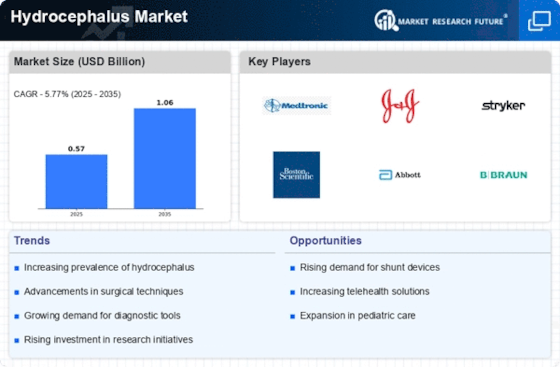
Hydrocephalus Market Infographic
Purchase Options

Market Trends

Key Emerging Trends in the Hydrocephalus Market

 Hydrocephalus, a condition characterized by an accumulation of cerebrospinal fluid within the brain's ventricles, presents a complex landscape within the medical market. Over the past decade, market trends within the hydrocephalus sector have shown significant evolution, driven by advancements in technology, shifting demographics, and emerging treatment modalities.

One prominent trend in the hydrocephalus market is the increasing prevalence of the condition globally. With an aging population and improved diagnostics, more cases of hydrocephalus are being identified, particularly among older adults. Additionally, the rising incidence of congenital hydrocephalus in infants underscores the need for effective treatments and management strategies across all age groups.

Technological innovation plays a pivotal role in shaping market dynamics within the hydrocephalus sector. Advances in neuroimaging techniques, such as magnetic resonance imaging (MRI) and computed tomography (CT) scans, enable more accurate diagnosis and monitoring of hydrocephalus progression. Furthermore, the development of minimally invasive surgical techniques, including endoscopic third ventriculostomy (ETV) and ventriculoperitoneal (VP) shunting, has revolutionized treatment options, offering improved outcomes and reduced risks for patients.

Another notable trend in the hydrocephalus market is the growing emphasis on personalized medicine and patient-centric care. As healthcare systems strive to optimize treatment outcomes and minimize healthcare costs, there is a greater recognition of the importance of tailoring treatment plans to individual patient needs. This trend has fueled research efforts aimed at identifying biomarkers, genetic factors, and other predictors of hydrocephalus progression, facilitating more targeted interventions and improved patient outcomes.

Market dynamics within the hydrocephalus sector are also influenced by regulatory factors and healthcare policies. Increasing regulatory scrutiny surrounding medical devices and surgical procedures underscores the importance of compliance and adherence to stringent quality standards. Moreover, reimbursement policies and healthcare reimbursement reforms play a critical role in shaping market access and adoption rates for hydrocephalus treatments and devices.

The landscape of the hydrocephalus market is further characterized by a diverse range of stakeholders, including healthcare providers, medical device manufacturers, research institutions, and patient advocacy groups. Collaborative partnerships and interdisciplinary approaches are essential for driving innovation, fostering knowledge exchange, and addressing unmet needs within the hydrocephalus community.

Looking ahead, several emerging trends are poised to shape the future of the hydrocephalus market. The integration of artificial intelligence (AI) and machine learning algorithms holds promise for enhancing diagnostic accuracy, predicting treatment outcomes, and optimizing patient management strategies. Additionally, advancements in bioengineering and biomaterials offer new avenues for developing next-generation implantable devices and biocompatible materials for shunt systems, reducing the risk of complications and improving long-term patient outcomes.


Author
Rahul Gotadki
Assistant Manager

He holds an experience of about 7+ years in Market Research and Business Consulting, working under the spectrum of Life Sciences and Healthcare domains. Rahul conceptualizes and implements a scalable business strategy and provides strategic leadership to the clients. His expertise lies in market estimation, competitive intelligence, pipeline analysis, customer assessment, etc. In addition to the above, his other responsibility includes strategic tracking of high growth markets & advising clients on the potential areas of focus they could direct their business initiatives

Leave a Comment

FAQs

What is the current valuation of the Hydrocephalus Market as of 2024?

The Hydrocephalus Market was valued at 0.5712 USD Billion in 2024.

What is the projected market size for Hydrocephalus by 2035?

The market is projected to reach 1.059 USD Billion by 2035.

What is the expected CAGR for the Hydrocephalus Market during the forecast period 2025 - 2035?

The expected CAGR for the Hydrocephalus Market during 2025 - 2035 is 5.77%.

Which companies are considered key players in the Hydrocephalus Market?

Key players include Medtronic, Johnson & Johnson, Stryker, Boston Scientific, Abbott Laboratories, B. Braun Melsungen AG, Integra LifeSciences, and NeuroPace.

What are the main types of Hydrocephalus and their market valuations?

Congenital Hydrocephalus was valued at 0.34272 USD Billion, while Acquired Hydrocephalus was valued at 0.22848 USD Billion.

Market Summary

As per MRFR analysis, the Hydrocephalus Market Size was estimated at 0.5712 USD Billion in 2024. The Hydrocephalus industry is projected to grow from 0.6041 in 2025 to 1.059 by 2035, exhibiting a compound annual growth rate (CAGR) of 5.77 during the forecast period 2025 - 2035.

Key Market Trends & Highlights

The Hydrocephalus Market is experiencing notable growth driven by technological advancements and increased awareness.

  • Technological advancements in treatment are reshaping the Hydrocephalus Market, particularly in North America. Increased awareness and education about hydrocephalus are contributing to a rise in diagnosis and treatment options in the Asia-Pacific region. Research and development initiatives are focusing on congenital hydrocephalus, which remains the largest segment in the market. Rising incidence of hydrocephalus and advancements in surgical techniques are key drivers propelling market growth.

Market Size & Forecast

2024 Market Size 0.5712 (USD Billion)
2035 Market Size 1.059 (USD Billion)
CAGR (2025 - 2035) 5.77%
Largest Regional Market Share in 2024 North America

Major Players

<p><a href="https://www.medtronic.com/en-us/l/patients/treatments-therapies/hydrocephalus-shunt/what-is-it.html">Medtronic</a> (US), Johnson &amp; Johnson (US), Stryker (US), Boston Scientific (US), Abbott Laboratories (US), B. Braun Melsungen AG (DE), Integra LifeSciences (US), NeuroPace (US)</p>

Market Trends

The Hydrocephalus Market is currently experiencing notable transformations driven by advancements in medical technology and increasing awareness of neurological disorders. The rise in diagnostic capabilities, particularly through imaging techniques, has enhanced the identification of hydrocephalus cases, leading to earlier interventions. Furthermore, the growing prevalence of conditions that contribute to hydrocephalus, such as brain tumors and congenital malformations, underscores the necessity for effective treatment options. As healthcare systems evolve, there is a concerted effort to improve patient outcomes through innovative therapies and surgical techniques. In addition, the Hydrocephalus Market is influenced by a surge in research initiatives aimed at understanding the underlying mechanisms of the condition. This research is likely to foster the development of novel treatment modalities, including minimally invasive procedures and advanced shunt technologies. The collaboration between academic institutions and industry stakeholders appears to be pivotal in driving these innovations. Moreover, the increasing focus on patient-centered care suggests a shift towards personalized treatment plans, which may enhance the overall management of hydrocephalus. As the market continues to evolve, stakeholders must remain vigilant to emerging trends and adapt strategies accordingly.

Technological Advancements in Treatment

The Hydrocephalus Market is witnessing a wave of technological innovations that enhance treatment efficacy. New surgical techniques and devices are being developed, which may lead to improved patient outcomes. Minimally invasive procedures are gaining traction, potentially reducing recovery times and complications associated with traditional surgeries.

Increased Awareness and Education

There is a growing emphasis on raising awareness about hydrocephalus among healthcare professionals and the general public. Educational campaigns are likely to improve early diagnosis and treatment, which could positively impact patient prognosis. This trend suggests a shift towards proactive management of the condition.

Research and Development Initiatives

Ongoing research efforts are crucial in the Hydrocephalus Market, focusing on understanding the condition's complexities. Collaborative projects between research institutions and healthcare providers may lead to breakthroughs in treatment options. This trend indicates a commitment to advancing knowledge and improving therapeutic strategies.

Hydrocephalus Market Market Drivers

Rising Incidence of Hydrocephalus

The rising incidence of hydrocephalus is a notable driver in the Hydrocephalus Market. Recent data indicates that the prevalence of this condition is increasing, particularly among newborns and the elderly. This trend is attributed to factors such as improved diagnostic techniques and greater awareness among healthcare professionals. As more cases are identified, the demand for effective treatment options and management strategies is likely to grow. This surge in incidence not only highlights the need for innovative therapies but also emphasizes the importance of ongoing research and development within the Hydrocephalus Market. Consequently, healthcare providers are compelled to invest in advanced medical technologies and treatment modalities to address this growing patient population.

Advancements in Surgical Techniques

Advancements in surgical techniques represent a critical driver in the Hydrocephalus Market. Innovations such as minimally invasive procedures and the development of new shunt systems have transformed the landscape of hydrocephalus treatment. These advancements not only enhance patient outcomes but also reduce recovery times, thereby increasing the overall efficiency of healthcare systems. For instance, the introduction of endoscopic third ventriculostomy has shown promising results in managing hydrocephalus, leading to a shift in treatment paradigms. As surgical techniques continue to evolve, the Hydrocephalus Market is likely to witness a surge in demand for these advanced solutions, ultimately improving the quality of care for patients.

Emerging Technologies in Diagnostics

Emerging technologies in diagnostics are playing a pivotal role in shaping the Hydrocephalus Market. Innovations such as advanced imaging techniques, including MRI and CT scans, have significantly improved the accuracy of hydrocephalus diagnosis. These technologies enable healthcare providers to identify the condition at earlier stages, which is crucial for effective management. Additionally, the integration of artificial intelligence in diagnostic processes is streamlining patient assessments and enhancing decision-making capabilities. As these technologies become more widely adopted, the Hydrocephalus Market is expected to experience growth driven by the demand for precise diagnostic tools that facilitate timely interventions and improve patient outcomes.

Increased Focus on Pediatric Healthcare

An increased focus on pediatric healthcare is emerging as a vital driver in the Hydrocephalus Market. With a significant proportion of hydrocephalus cases occurring in children, there is a growing recognition of the need for specialized pediatric care. This focus has led to the establishment of dedicated pediatric neurology departments and specialized clinics, which are better equipped to address the unique challenges associated with treating hydrocephalus in younger populations. Furthermore, initiatives aimed at educating parents and caregivers about the condition are gaining traction, thereby fostering early diagnosis and intervention. As pediatric healthcare continues to evolve, the Hydrocephalus Market is likely to benefit from enhanced treatment options and increased awareness.

Growing Investment in Healthcare Infrastructure

Growing investment in healthcare infrastructure is a significant driver influencing the Hydrocephalus Market. Governments and private entities are increasingly allocating resources to enhance healthcare facilities, particularly in regions with high incidences of hydrocephalus. This investment is crucial for improving access to diagnostic tools and treatment options, which are essential for effective management of the condition. Enhanced healthcare infrastructure facilitates the implementation of advanced technologies and training for healthcare professionals, thereby fostering a more robust healthcare environment. As a result, the Hydrocephalus Market is poised for growth, as improved infrastructure directly correlates with better patient outcomes and increased demand for hydrocephalus management solutions.

Market Segment Insights

By Type: Congenital Hydrocephalus Market (Largest) vs. Acquired Hydrocephalus Market (Fastest-Growing)

<p>In the Hydrocephalus Market, Congenital Hydrocephalus Market holds the largest market share, attributed to the early diagnosis and treatment options available. This condition, which is present at birth and often associated with genetic factors, has effectively shaped a significant percentage of the market. On the other hand, Acquired Hydrocephalus Market, while having a smaller share, has been increasing as more cases related to head injuries, infections, or tumors are being diagnosed. The awareness of acquired conditions is driving heightened demand for treatment solutions.</p>

<p>Hydrocephalus Market: Congenital (Dominant) vs. Acquired (Emerging)</p>

<p>Congenital Hydrocephalus Market is widely regarded as the dominant type in the Hydrocephalus Market, primarily due to its prevalent nature and long-term management strategies that are in place for affected individuals. This type is often identified in infancy or early childhood, leading to an established pipeline of treatment options such as shunt placement and endoscopic procedures. In contrast, Acquired Hydrocephalus Market is considered an emerging segment, with its growth driven by rising incidences of traumatic brain injuries and infections. Innovative treatment methods and increased public awareness of symptoms are contributing to the expansion of this segment, paving the way for advancements in patient care.</p>

By Diagnostic: MRI (Largest) vs. CT Scan (Fastest-Growing)

<p>In the Hydrocephalus Market, the diagnostic segment is primarily characterized by three key modalities: MRI, CT Scan, and Head Ultrasound. Among these, MRI holds the largest market share due to its high accuracy and detailed imaging capabilities, making it the preferred choice for diagnosing hydrocephalus. The CT Scan, while not as widely used as MRI, has been gaining traction as a fast-growing alternative due to its speed and accessibility in emergency settings. Head Ultrasound remains a viable option, especially in pediatric cases, but does not command a significant share of the market compared to MRI and CT.</p>

<p>MRI (Dominant) vs. CT Scan (Emerging)</p>

<p>MRI stands out in the Hydrocephalus Market diagnostic market as the dominant modality, renowned for its unparalleled ability to provide high-resolution images of brain structures. This capability is crucial for accurately diagnosing hydrocephalus, as it allows for the detection of subtle abnormalities that may be missed by other methods. In contrast, CT Scans are emerging as a more accessible option in certain contexts, particularly in urgent care situations where rapid diagnosis is necessary. Though generally less detailed than MRI, CT technology has seen improvements in image quality, making it increasingly preferred for initial assessments. The distinction between MRI and CT reflects a broader trend towards balancing advanced imaging technology with practicality in the healthcare environment.</p>

By Surgery: Shunt Insertion Procedure (Largest) vs. Ventriculostomy (Fastest-Growing)

<p>In the Hydrocephalus Market, the Shunt Insertion Procedure holds the largest market share among the surgical options available. This procedure is widely recognized and utilized due to its effectiveness in managing the condition by directing cerebrospinal fluid (CSF) to an alternative site for absorption. Conversely, Ventriculostomy, while smaller in market share, is witnessing rapidly growing adoption, owing to its minimally invasive nature and ability to treat patients who may not qualify for a shunt. As a result, the competitive landscape is evolving as healthcare providers increasingly integrate both options into their treatment protocols.</p>

<p>Surgery: Shunt Insertion Procedure (Dominant) vs. Ventriculostomy (Emerging)</p>

<p>The Shunt Insertion Procedure is positioned as the dominant surgical intervention for hydrocephalus, primarily due to its extensive historical usage and well-established protocols among neurosurgeons. This approach involves placing a shunt system to redirect CSF, significantly alleviating pressure. On the other hand, Ventriculostomy is regarded as an emerging trend in treatment, characterized by its less invasive technique which involves creating an opening in the ventricles of the brain to facilitate natural CSF flow. Recent advancements in surgical techniques and equipment have fueled the adoption of ventriculostomy, positioning it as a preferred choice for specific patient demographics seeking effective alternatives.</p>

By End-User: Hospitals (Largest) vs. Clinics (Fastest-Growing)

<p>In the Hydrocephalus Market, the distribution of end-users reveals that hospitals hold the largest share due to their comprehensive facilities and specialist teams. Hospitals are equipped with advanced medical technology for hydrocephalus treatment, positioning them as a primary choice for patients. Clinics, while smaller in comparison, are experiencing significant growth as they provide more accessible care, resulting in an increasing number of patients seeking outpatient services for hydrocephalus management. Growth trends in this segment are driven by the rising prevalence of hydrocephalus, particularly among pediatric populations, leading to increased patient admissions in hospitals. Clinics are emerging rapidly due to the demand for convenient, cost-effective treatment options, with advancements in telemedicine and outpatient procedures further facilitating their growth. This shift indicates a changing landscape where both hospitals and clinics will play crucial roles in managing hydrocephalus patients effectively.</p>

<p>Hospitals (Dominant) vs. Clinics (Emerging)</p>

<p>Hospitals remain the dominant end-user in the Hydrocephalus Market, primarily due to their ability to provide extensive care and access to multi-disciplinary teams, which are essential for complex cases. They have the necessary infrastructure and resources to handle severe cases, offering a range of services from diagnosis to post-operative care. The technological advancements integrated into hospitals enhance their service delivery, ensuring higher patient satisfaction. In contrast, clinics are emerging as a vital part of the healthcare ecosystem, focusing on outpatient care and follow-up services for patients with hydrocephalus. These clinics are often more accessible, providing efficient care at reduced costs. They are capitalizing on advancements in treatment techniques and patient management to attract more patients, particularly as awareness about hydrocephalus increases.</p>

Get more detailed insights about Hydrocephalus Market Research Report - Forecast till 2035

Regional Insights

Key Companies in the Hydrocephalus Market market include

Industry Developments

The key competitors of the Market are investing in research and development of new, advanced Hydrocephalus Market treatment approaches. The Hydrocephalus Market forecast also predicts that the key players also take up a lot of mergers, collaborations, and acquisitions to achieve a common goal of supporting the Market of Hydrocephalus Market collectively. The research and development in the area of Hydrocephalus Market treatments will benefit all the major players of the Market.


Future Outlook

Hydrocephalus Market Future Outlook

<p>The Hydrocephalus Market is projected to grow at a 5.77% CAGR from 2024 to 2035, driven by advancements in treatment technologies and increasing awareness.</p>

New opportunities lie in:

  • <p>Development of minimally invasive surgical techniques for hydrocephalus treatment.</p><p>Expansion of telehealth services for <a href="https://www.marketresearchfuture.com/reports/remote-patient-monitoring-market-10905">remote patient monitoring</a> and consultations.</p><p>Investment in innovative shunt technologies to improve patient outcomes.</p>

<p>By 2035, the Hydrocephalus Market is expected to achieve substantial growth and innovation.</p>

Market Segmentation

Hydrocephalus Market Type Outlook

  • Congenital Hydrocephalus
  • Acquired Hydrocephalus

Hydrocephalus Market Surgery Outlook

  • Shunt Insertion Procedure
  • Ventriculostomy
  • Medication to Balance CSF

Hydrocephalus Market End-User Outlook

  • Hospitals
  • Clinics
  • Diagnostics Centers

Hydrocephalus Market Diagnostic Outlook

  • MRI
  • CT Scan
  • Head Ultrasound

Report Scope

MARKET SIZE 20240.5712(USD Billion)
MARKET SIZE 20250.6041(USD Billion)
MARKET SIZE 20351.059(USD Billion)
COMPOUND ANNUAL GROWTH RATE (CAGR)5.77% (2024 - 2035)
REPORT COVERAGERevenue Forecast, Competitive Landscape, Growth Factors, and Trends
BASE YEAR2024
Market Forecast Period2025 - 2035
Historical Data2019 - 2024
Market Forecast UnitsUSD Billion
Key Companies ProfiledMarket analysis in progress
Segments CoveredMarket segmentation analysis in progress
Key Market OpportunitiesAdvancements in minimally invasive surgical techniques enhance treatment options in the Hydrocephalus Market.
Key Market DynamicsRising demand for innovative treatment options drives competitive dynamics in the Hydrocephalus Market.
Countries CoveredNorth America, Europe, APAC, South America, MEA

FAQs

What is the current valuation of the Hydrocephalus Market as of 2024?

The Hydrocephalus Market was valued at 0.5712 USD Billion in 2024.

What is the projected market size for Hydrocephalus by 2035?

The market is projected to reach 1.059 USD Billion by 2035.

What is the expected CAGR for the Hydrocephalus Market during the forecast period 2025 - 2035?

The expected CAGR for the Hydrocephalus Market during 2025 - 2035 is 5.77%.

Which companies are considered key players in the Hydrocephalus Market?

Key players include Medtronic, Johnson & Johnson, Stryker, Boston Scientific, Abbott Laboratories, B. Braun Melsungen AG, Integra LifeSciences, and NeuroPace.

What are the main types of Hydrocephalus and their market valuations?

Congenital Hydrocephalus was valued at 0.34272 USD Billion, while Acquired Hydrocephalus was valued at 0.22848 USD Billion.

  1. SECTION I: EXECUTIVE SUMMARY AND KEY HIGHLIGHTS
    1. EXECUTIVE SUMMARY
      1. Market Overview
      2. Key Findings
      3. Market Segmentation
      4. Competitive Landscape
      5. Challenges and Opportunities
      6. Future Outlook 2 SECTION II: SCOPING, METHODOLOGY AND MARKET STRUCTURE
    2. MARKET INTRODUCTION
      1. Definition
      2. Scope of the study
    3. RESEARCH METHODOLOGY
      1. Overview
      2. Data Mining
      3. Secondary Research
      4. Primary Research
      5. Forecasting Model
      6. Market Size Estimation
      7. Data Triangulation
      8. Validation 3 SECTION III: QUALITATIVE ANALYSIS
    4. MARKET DYNAMICS
      1. Overview
      2. Drivers
      3. Restraints
      4. Opportunities
    5. MARKET FACTOR ANALYSIS
      1. Value chain Analysis
      2. Porter's Five Forces Analysis
      3. COVID-19 Impact Analysis
    6. Healthcare, BY Type (USD Billion)
      1. Congenital Hydrocephalus
      2. Acquired Hydrocephalus
    7. Healthcare, BY Diagnostic (USD Billion)
      1. MRI
      2. CT Scan
      3. Head Ultrasound
    8. Healthcare, BY Surgery (USD Billion)
      1. Shunt Insertion Procedure
      2. Ventriculostomy
      3. Medication to Balance CSF
    9. Healthcare, BY End-User (USD Billion)
      1. Hospitals
      2. Clinics
      3. Diagnostics Centers
    10. Healthcare, BY Region (USD Billion)
      1. North America
      2. Europe
      3. APAC
      4. South America
      5. MEA
    11. Competitive Landscape
      1. Overview
      2. Competitive Analysis
      3. Market share Analysis
      4. Major Growth Strategy in the Healthcare
      5. Competitive Benchmarking
      6. Leading Players in Terms of Number of Developments in the Healthcare
      7. Key developments and growth strategies
      8. Major Players Financial Matrix
    12. Company Profiles
      1. Medtronic (US)
      2. Johnson & Johnson (US)
      3. Stryker (US)
      4. Boston Scientific (US)
      5. Abbott Laboratories (US)
      6. B. Braun Melsungen AG (DE)
      7. Integra LifeSciences (US)
      8. NeuroPace (US)
    13. Appendix
      1. References
      2. Related Reports 6 LIST OF FIGURES
    14. MARKET SYNOPSIS
    15. NORTH AMERICA MARKET ANALYSIS
    16. US MARKET ANALYSIS BY TYPE
    17. US MARKET ANALYSIS BY DIAGNOSTIC
    18. US MARKET ANALYSIS BY SURGERY
    19. US MARKET ANALYSIS BY END-USER
    20. CANADA MARKET ANALYSIS BY TYPE
    21. CANADA MARKET ANALYSIS BY DIAGNOSTIC
    22. CANADA MARKET ANALYSIS BY SURGERY
    23. CANADA MARKET ANALYSIS BY END-USER
    24. EUROPE MARKET ANALYSIS
    25. GERMANY MARKET ANALYSIS BY TYPE
    26. GERMANY MARKET ANALYSIS BY DIAGNOSTIC
    27. GERMANY MARKET ANALYSIS BY SURGERY
    28. GERMANY MARKET ANALYSIS BY END-USER
    29. UK MARKET ANALYSIS BY TYPE
    30. UK MARKET ANALYSIS BY DIAGNOSTIC
    31. UK MARKET ANALYSIS BY SURGERY
    32. UK MARKET ANALYSIS BY END-USER
    33. FRANCE MARKET ANALYSIS BY TYPE
    34. FRANCE MARKET ANALYSIS BY DIAGNOSTIC
    35. FRANCE MARKET ANALYSIS BY SURGERY
    36. FRANCE MARKET ANALYSIS BY END-USER
    37. RUSSIA MARKET ANALYSIS BY TYPE
    38. RUSSIA MARKET ANALYSIS BY DIAGNOSTIC
    39. RUSSIA MARKET ANALYSIS BY SURGERY
    40. RUSSIA MARKET ANALYSIS BY END-USER
    41. ITALY MARKET ANALYSIS BY TYPE
    42. ITALY MARKET ANALYSIS BY DIAGNOSTIC
    43. ITALY MARKET ANALYSIS BY SURGERY
    44. ITALY MARKET ANALYSIS BY END-USER
    45. SPAIN MARKET ANALYSIS BY TYPE
    46. SPAIN MARKET ANALYSIS BY DIAGNOSTIC
    47. SPAIN MARKET ANALYSIS BY SURGERY
    48. SPAIN MARKET ANALYSIS BY END-USER
    49. REST OF EUROPE MARKET ANALYSIS BY TYPE
    50. REST OF EUROPE MARKET ANALYSIS BY DIAGNOSTIC
    51. REST OF EUROPE MARKET ANALYSIS BY SURGERY
    52. REST OF EUROPE MARKET ANALYSIS BY END-USER
    53. APAC MARKET ANALYSIS
    54. CHINA MARKET ANALYSIS BY TYPE
    55. CHINA MARKET ANALYSIS BY DIAGNOSTIC
    56. CHINA MARKET ANALYSIS BY SURGERY
    57. CHINA MARKET ANALYSIS BY END-USER
    58. INDIA MARKET ANALYSIS BY TYPE
    59. INDIA MARKET ANALYSIS BY DIAGNOSTIC
    60. INDIA MARKET ANALYSIS BY SURGERY
    61. INDIA MARKET ANALYSIS BY END-USER
    62. JAPAN MARKET ANALYSIS BY TYPE
    63. JAPAN MARKET ANALYSIS BY DIAGNOSTIC
    64. JAPAN MARKET ANALYSIS BY SURGERY
    65. JAPAN MARKET ANALYSIS BY END-USER
    66. SOUTH KOREA MARKET ANALYSIS BY TYPE
    67. SOUTH KOREA MARKET ANALYSIS BY DIAGNOSTIC
    68. SOUTH KOREA MARKET ANALYSIS BY SURGERY
    69. SOUTH KOREA MARKET ANALYSIS BY END-USER
    70. MALAYSIA MARKET ANALYSIS BY TYPE
    71. MALAYSIA MARKET ANALYSIS BY DIAGNOSTIC
    72. MALAYSIA MARKET ANALYSIS BY SURGERY
    73. MALAYSIA MARKET ANALYSIS BY END-USER
    74. THAILAND MARKET ANALYSIS BY TYPE
    75. THAILAND MARKET ANALYSIS BY DIAGNOSTIC
    76. THAILAND MARKET ANALYSIS BY SURGERY
    77. THAILAND MARKET ANALYSIS BY END-USER
    78. INDONESIA MARKET ANALYSIS BY TYPE
    79. INDONESIA MARKET ANALYSIS BY DIAGNOSTIC
    80. INDONESIA MARKET ANALYSIS BY SURGERY
    81. INDONESIA MARKET ANALYSIS BY END-USER
    82. REST OF APAC MARKET ANALYSIS BY TYPE
    83. REST OF APAC MARKET ANALYSIS BY DIAGNOSTIC
    84. REST OF APAC MARKET ANALYSIS BY SURGERY
    85. REST OF APAC MARKET ANALYSIS BY END-USER
    86. SOUTH AMERICA MARKET ANALYSIS
    87. BRAZIL MARKET ANALYSIS BY TYPE
    88. BRAZIL MARKET ANALYSIS BY DIAGNOSTIC
    89. BRAZIL MARKET ANALYSIS BY SURGERY
    90. BRAZIL MARKET ANALYSIS BY END-USER
    91. MEXICO MARKET ANALYSIS BY TYPE
    92. MEXICO MARKET ANALYSIS BY DIAGNOSTIC
    93. MEXICO MARKET ANALYSIS BY SURGERY
    94. MEXICO MARKET ANALYSIS BY END-USER
    95. ARGENTINA MARKET ANALYSIS BY TYPE
    96. ARGENTINA MARKET ANALYSIS BY DIAGNOSTIC
    97. ARGENTINA MARKET ANALYSIS BY SURGERY
    98. ARGENTINA MARKET ANALYSIS BY END-USER
    99. REST OF SOUTH AMERICA MARKET ANALYSIS BY TYPE
    100. REST OF SOUTH AMERICA MARKET ANALYSIS BY DIAGNOSTIC
    101. REST OF SOUTH AMERICA MARKET ANALYSIS BY SURGERY
    102. REST OF SOUTH AMERICA MARKET ANALYSIS BY END-USER
    103. MEA MARKET ANALYSIS
    104. GCC COUNTRIES MARKET ANALYSIS BY TYPE
    105. GCC COUNTRIES MARKET ANALYSIS BY DIAGNOSTIC
    106. GCC COUNTRIES MARKET ANALYSIS BY SURGERY
    107. GCC COUNTRIES MARKET ANALYSIS BY END-USER
    108. SOUTH AFRICA MARKET ANALYSIS BY TYPE
    109. SOUTH AFRICA MARKET ANALYSIS BY DIAGNOSTIC
    110. SOUTH AFRICA MARKET ANALYSIS BY SURGERY
    111. SOUTH AFRICA MARKET ANALYSIS BY END-USER
    112. REST OF MEA MARKET ANALYSIS BY TYPE
    113. REST OF MEA MARKET ANALYSIS BY DIAGNOSTIC
    114. REST OF MEA MARKET ANALYSIS BY SURGERY
    115. REST OF MEA MARKET ANALYSIS BY END-USER
    116. KEY BUYING CRITERIA OF HEALTHCARE
    117. RESEARCH PROCESS OF MRFR
    118. DRO ANALYSIS OF HEALTHCARE
    119. DRIVERS IMPACT ANALYSIS: HEALTHCARE
    120. RESTRAINTS IMPACT ANALYSIS: HEALTHCARE
    121. SUPPLY / VALUE CHAIN: HEALTHCARE
    122. HEALTHCARE, BY TYPE, 2024 (% SHARE)
    123. HEALTHCARE, BY TYPE, 2024 TO 2035 (USD Billion)
    124. HEALTHCARE, BY DIAGNOSTIC, 2024 (% SHARE)
    125. HEALTHCARE, BY DIAGNOSTIC, 2024 TO 2035 (USD Billion)
    126. HEALTHCARE, BY SURGERY, 2024 (% SHARE)
    127. HEALTHCARE, BY SURGERY, 2024 TO 2035 (USD Billion)
    128. HEALTHCARE, BY END-USER, 2024 (% SHARE)
    129. HEALTHCARE, BY END-USER, 2024 TO 2035 (USD Billion)
    130. BENCHMARKING OF MAJOR COMPETITORS 7 LIST OF TABLES
    131. LIST OF ASSUMPTIONS
    132. North America MARKET SIZE ESTIMATES; FORECAST
      1. BY TYPE, 2025-2035 (USD Billion)
      2. BY DIAGNOSTIC, 2025-2035 (USD Billion)
      3. BY SURGERY, 2025-2035 (USD Billion)
      4. BY END-USER, 2025-2035 (USD Billion)
    133. US MARKET SIZE ESTIMATES; FORECAST
      1. BY TYPE, 2025-2035 (USD Billion)
      2. BY DIAGNOSTIC, 2025-2035 (USD Billion)
      3. BY SURGERY, 2025-2035 (USD Billion)
      4. BY END-USER, 2025-2035 (USD Billion)
    134. Canada MARKET SIZE ESTIMATES; FORECAST
      1. BY TYPE, 2025-2035 (USD Billion)
      2. BY DIAGNOSTIC, 2025-2035 (USD Billion)
      3. BY SURGERY, 2025-2035 (USD Billion)
      4. BY END-USER, 2025-2035 (USD Billion)
    135. Europe MARKET SIZE ESTIMATES; FORECAST
      1. BY TYPE, 2025-2035 (USD Billion)
      2. BY DIAGNOSTIC, 2025-2035 (USD Billion)
      3. BY SURGERY, 2025-2035 (USD Billion)
      4. BY END-USER, 2025-2035 (USD Billion)
    136. Germany MARKET SIZE ESTIMATES; FORECAST
      1. BY TYPE, 2025-2035 (USD Billion)
      2. BY DIAGNOSTIC, 2025-2035 (USD Billion)
      3. BY SURGERY, 2025-2035 (USD Billion)
      4. BY END-USER, 2025-2035 (USD Billion)
    137. UK MARKET SIZE ESTIMATES; FORECAST
      1. BY TYPE, 2025-2035 (USD Billion)
      2. BY DIAGNOSTIC, 2025-2035 (USD Billion)
      3. BY SURGERY, 2025-2035 (USD Billion)
      4. BY END-USER, 2025-2035 (USD Billion)
    138. France MARKET SIZE ESTIMATES; FORECAST
      1. BY TYPE, 2025-2035 (USD Billion)
      2. BY DIAGNOSTIC, 2025-2035 (USD Billion)
      3. BY SURGERY, 2025-2035 (USD Billion)
      4. BY END-USER, 2025-2035 (USD Billion)
    139. Russia MARKET SIZE ESTIMATES; FORECAST
      1. BY TYPE, 2025-2035 (USD Billion)
      2. BY DIAGNOSTIC, 2025-2035 (USD Billion)
      3. BY SURGERY, 2025-2035 (USD Billion)
      4. BY END-USER, 2025-2035 (USD Billion)
    140. Italy MARKET SIZE ESTIMATES; FORECAST
      1. BY TYPE, 2025-2035 (USD Billion)
      2. BY DIAGNOSTIC, 2025-2035 (USD Billion)
      3. BY SURGERY, 2025-2035 (USD Billion)
      4. BY END-USER, 2025-2035 (USD Billion)
    141. Spain MARKET SIZE ESTIMATES; FORECAST
      1. BY TYPE, 2025-2035 (USD Billion)
      2. BY DIAGNOSTIC, 2025-2035 (USD Billion)
      3. BY SURGERY, 2025-2035 (USD Billion)
      4. BY END-USER, 2025-2035 (USD Billion)
    142. Rest of Europe MARKET SIZE ESTIMATES; FORECAST
      1. BY TYPE, 2025-2035 (USD Billion)
      2. BY DIAGNOSTIC, 2025-2035 (USD Billion)
      3. BY SURGERY, 2025-2035 (USD Billion)
      4. BY END-USER, 2025-2035 (USD Billion)
    143. APAC MARKET SIZE ESTIMATES; FORECAST
      1. BY TYPE, 2025-2035 (USD Billion)
      2. BY DIAGNOSTIC, 2025-2035 (USD Billion)
      3. BY SURGERY, 2025-2035 (USD Billion)
      4. BY END-USER, 2025-2035 (USD Billion)
    144. China MARKET SIZE ESTIMATES; FORECAST
      1. BY TYPE, 2025-2035 (USD Billion)
      2. BY DIAGNOSTIC, 2025-2035 (USD Billion)
      3. BY SURGERY, 2025-2035 (USD Billion)
      4. BY END-USER, 2025-2035 (USD Billion)
    145. India MARKET SIZE ESTIMATES; FORECAST
      1. BY TYPE, 2025-2035 (USD Billion)
      2. BY DIAGNOSTIC, 2025-2035 (USD Billion)
      3. BY SURGERY, 2025-2035 (USD Billion)
      4. BY END-USER, 2025-2035 (USD Billion)
    146. Japan MARKET SIZE ESTIMATES; FORECAST
      1. BY TYPE, 2025-2035 (USD Billion)
      2. BY DIAGNOSTIC, 2025-2035 (USD Billion)
      3. BY SURGERY, 2025-2035 (USD Billion)
      4. BY END-USER, 2025-2035 (USD Billion)
    147. South Korea MARKET SIZE ESTIMATES; FORECAST
      1. BY TYPE, 2025-2035 (USD Billion)
      2. BY DIAGNOSTIC, 2025-2035 (USD Billion)
      3. BY SURGERY, 2025-2035 (USD Billion)
      4. BY END-USER, 2025-2035 (USD Billion)
    148. Malaysia MARKET SIZE ESTIMATES; FORECAST
      1. BY TYPE, 2025-2035 (USD Billion)
      2. BY DIAGNOSTIC, 2025-2035 (USD Billion)
      3. BY SURGERY, 2025-2035 (USD Billion)
      4. BY END-USER, 2025-2035 (USD Billion)
    149. Thailand MARKET SIZE ESTIMATES; FORECAST
      1. BY TYPE, 2025-2035 (USD Billion)
      2. BY DIAGNOSTIC, 2025-2035 (USD Billion)
      3. BY SURGERY, 2025-2035 (USD Billion)
      4. BY END-USER, 2025-2035 (USD Billion)
    150. Indonesia MARKET SIZE ESTIMATES; FORECAST
      1. BY TYPE, 2025-2035 (USD Billion)
      2. BY DIAGNOSTIC, 2025-2035 (USD Billion)
      3. BY SURGERY, 2025-2035 (USD Billion)
      4. BY END-USER, 2025-2035 (USD Billion)
    151. Rest of APAC MARKET SIZE ESTIMATES; FORECAST
      1. BY TYPE, 2025-2035 (USD Billion)
      2. BY DIAGNOSTIC, 2025-2035 (USD Billion)
      3. BY SURGERY, 2025-2035 (USD Billion)
      4. BY END-USER, 2025-2035 (USD Billion)
    152. South America MARKET SIZE ESTIMATES; FORECAST
      1. BY TYPE, 2025-2035 (USD Billion)
      2. BY DIAGNOSTIC, 2025-2035 (USD Billion)
      3. BY SURGERY, 2025-2035 (USD Billion)
      4. BY END-USER, 2025-2035 (USD Billion)
    153. Brazil MARKET SIZE ESTIMATES; FORECAST
      1. BY TYPE, 2025-2035 (USD Billion)
      2. BY DIAGNOSTIC, 2025-2035 (USD Billion)
      3. BY SURGERY, 2025-2035 (USD Billion)
      4. BY END-USER, 2025-2035 (USD Billion)
    154. Mexico MARKET SIZE ESTIMATES; FORECAST
      1. BY TYPE, 2025-2035 (USD Billion)
      2. BY DIAGNOSTIC, 2025-2035 (USD Billion)
      3. BY SURGERY, 2025-2035 (USD Billion)
      4. BY END-USER, 2025-2035 (USD Billion)
    155. Argentina MARKET SIZE ESTIMATES; FORECAST
      1. BY TYPE, 2025-2035 (USD Billion)
      2. BY DIAGNOSTIC, 2025-2035 (USD Billion)
      3. BY SURGERY, 2025-2035 (USD Billion)
      4. BY END-USER, 2025-2035 (USD Billion)
    156. Rest of South America MARKET SIZE ESTIMATES; FORECAST
      1. BY TYPE, 2025-2035 (USD Billion)
      2. BY DIAGNOSTIC, 2025-2035 (USD Billion)
      3. BY SURGERY, 2025-2035 (USD Billion)
      4. BY END-USER, 2025-2035 (USD Billion)
    157. MEA MARKET SIZE ESTIMATES; FORECAST
      1. BY TYPE, 2025-2035 (USD Billion)
      2. BY DIAGNOSTIC, 2025-2035 (USD Billion)
      3. BY SURGERY, 2025-2035 (USD Billion)
      4. BY END-USER, 2025-2035 (USD Billion)
    158. GCC Countries MARKET SIZE ESTIMATES; FORECAST
      1. BY TYPE, 2025-2035 (USD Billion)
      2. BY DIAGNOSTIC, 2025-2035 (USD Billion)
      3. BY SURGERY, 2025-2035 (USD Billion)
      4. BY END-USER, 2025-2035 (USD Billion)
    159. South Africa MARKET SIZE ESTIMATES; FORECAST
      1. BY TYPE, 2025-2035 (USD Billion)
      2. BY DIAGNOSTIC, 2025-2035 (USD Billion)
      3. BY SURGERY, 2025-2035 (USD Billion)
      4. BY END-USER, 2025-2035 (USD Billion)
    160. Rest of MEA MARKET SIZE ESTIMATES; FORECAST
      1. BY TYPE, 2025-2035 (USD Billion)
      2. BY DIAGNOSTIC, 2025-2035 (USD Billion)
      3. BY SURGERY, 2025-2035 (USD Billion)
      4. BY END-USER, 2025-2035 (USD Billion)
    161. PRODUCT LAUNCH/PRODUCT DEVELOPMENT/APPROVAL
    162. ACQUISITION/PARTNERSHIP

Hydrocephalus Market Segmentation

Market Segmentation Overview

  • Detailed segmentation data will be available in the full report
  • Comprehensive analysis by multiple parameters
  • Regional and country-level breakdowns
  • Market size forecasts by segment
Infographic

Free Sample Request

Kindly complete the form below to receive a free sample of this Report

Get Free Sample

Customer Strories

Compare Licence

×
Features License Type
Single User Multiuser License Enterprise User
Price $4,950 $5,950 $7,250
Maximum User Access Limit 1 User Upto 10 Users Unrestricted Access Throughout the Organization
Free Customization
Direct Access to Analyst
Deliverable Format
Platform Access
Discount on Next Purchase 10% 15% 15%
Printable Versions