×
Request Free Sample ×

Kindly complete the form below to receive a free sample of this Report

* Please use a valid business email

Leading companies partner with us for data-driven Insights

clients tt-cursor
Hero Background
English
Chinese
French
Japanese
Korean
German
Spanish

Heart Transplant Market Analysis

ID: MRFR/MED/1304-HCR
80 Pages
Rahul Gotadki
October 2025

Heart Transplant Market Research Report Information By Type (Ventricular Assisted Device, Total Artificial hearts and Others), By End User (Hospitals, Cardiac Institutes, and Others), and By Region (North America, Europe, Asia-Pacific, and Rest Of The World) - Growth & Industry Forecast 2025 To 2035

Share:
Download PDF ×

We do not share your information with anyone. However, we may send you emails based on your report interest from time to time. You may contact us at any time to opt-out.

Heart Transplant Market Infographic
×
Heart Transplant Market Infographic Full View
Purchase Options

Market Analysis

In-depth Analysis of Heart Transplant Market Industry Landscape

The market dynamics of heart transplants mirror the elaborate interplay between scientific advancements, organ availability, and the growing demand for existence-saving cardiac interventions. As a critical treatment for end-stage coronary heart failure, heart transplants represent a complicated healthcare panorama with multifaceted impacts. A main element shaping the heart transplant market is the chronic shortage of donor organs. The demand for heart transplants far exceeds the to-had delivery, mainly due to a rigorous organ allocation method. Advances in organ maintenance technology and allocation algorithms are pivotal in optimizing the usage of restricted assets. Technological innovations drastically inspire the heart transplant market in surgical strategies, immunosuppressive treatment options, and organ upkeep methods. Minimally invasive approaches and novel organ protection strategies make contributions to stepped-forward patient outcomes, reduced recovery instances, and expanded eligibility standards, driving the market in the direction of extra on-hand and green answers. The monetary elements of heart transplants play a pivotal position in market dynamics. The high prices related to the whole transplant technique, along with surgery, submit-operative care, and lifetime immunosuppressive medications, pose challenges for both sufferers and healthcare systems. Efforts to deal with cost boundaries and explore financial models for sustainable healthcare shipping contribute to shaping the market. The heart transplant market is issued stringent regulatory oversight to ensure the affected person's safety and the efficacy of procedures. Regulatory frameworks affect the approval tactics for new technology, pills, and scientific devices associated with heart transplants. Compliance with evolving regulations is essential for market players and affects the overall landscape. Ongoing research in regenerative remedy, tissue engineering, and xenotransplantation is a driving force behind the evolving dynamics of the heart transplant market. Breakthroughs in these areas may want to potentially address organ scarcity troubles and revolutionize the field of cardiac transplantation, paving the way for brand-spanking new treatment modalities. The market dynamics are trended by way of affected person schooling and recognition projects that aim to demystify the heart transplant system, encourage organ donation, and foster a proactive technique for cardiac fitness. Informed sufferers play a crucial position in selection-making, and heightened attention contributes to accelerated organ donation charges. Collaboration among transplant centers, pharmaceutical organizations, and study institutions is a superb issue in the heart transplant market. Partnerships facilitate the alternate of understanding, assets, and know-how, fostering collaborative surroundings that hurry up improvements in transplantation technological know-how and definitely impact market dynamics.


Author
Rahul Gotadki
Assistant Manager

He holds an experience of about 7+ years in Market Research and Business Consulting, working under the spectrum of Life Sciences and Healthcare domains. Rahul conceptualizes and implements a scalable business strategy and provides strategic leadership to the clients. His expertise lies in market estimation, competitive intelligence, pipeline analysis, customer assessment, etc. In addition to the above, his other responsibility includes strategic tracking of high growth markets & advising clients on the potential areas of focus they could direct their business initiatives

Leave a Comment

FAQs

What is the projected growth of the Heart Transplant market?

The Heart Transplant market is the expected increase in total market value of 35.54 USD billion over a defined forecast period 2025–2035. It is driven by factors such as demand trends, technological advances, regulatory changes, and geographic expansion.

What is the size of the Heart Transplant market?

Heart Transplant market size was valued at approximately 12.33 billion USD in 2024. This figure will reach 35.54 billion USD covering all regions (America, Europe, Asia, MEA and ROW), focusing its segments / services / distribution channels till 2035.

What is the CAGR of the Heart Transplant market?

Heart Transplant market is expected to grow at a CAGR of 10.1% between 2025 and 2035.

How much will the Heart Transplant market be worth by 2035?

Heart Transplant market is expected to be worth of 35.54 billion USD, reflecting growth driven by usage, technology and global demands by the end of 2035.

How will the Heart Transplant market perform over the next 10 years?

Over the next 10 years the Heart Transplant market is expected to shift from usd billion 12.33 to 35.54 billion USD, led by adoption of advanced tech, demographic trends, regulatory approvals, with potential headwinds from 2025 to 2035.

Which region held the largest market share in the Heart Transplant market?

North America had the largest share in the global market

Market Summary

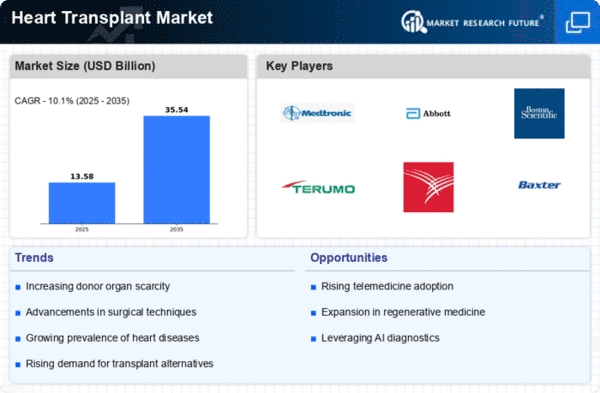
As per MRFR analysis, the Heart Transplant Market Size was estimated at 12.33 USD Billion in 2024. The Heart Transplant industry is projected to grow from 13.58 USD Billion in 2025 to 35.54 USD Billion by 2035, exhibiting a compound annual growth rate (CAGR) of 10.1 during the forecast period 2025 - 2035.

Key Market Trends & Highlights

The Heart Transplant Market is experiencing robust growth driven by technological advancements and increasing demand for organ transplantation.

  • North America remains the largest market for heart transplants, driven by advanced healthcare infrastructure and high patient awareness.
  • The Asia-Pacific region is emerging as the fastest-growing market, fueled by increasing healthcare investments and a rising population with heart diseases.
  • Cardiac failure represents the largest segment in the heart transplant market, while coronary artery disease is noted as the fastest-growing segment.
  • Key market drivers include the increasing prevalence of heart diseases and advancements in surgical techniques, which are enhancing transplant outcomes.

Market Size & Forecast

2024 Market Size 12.33 (USD Billion)
2035 Market Size 35.54 (USD Billion)
CAGR (2025 - 2035) 10.1%
Largest Regional Market Share in 2024 North America

Major Players

Medtronic (US), Abbott Laboratories (US), Boston Scientific (US), Terumo Corporation (JP), Cardinal Health (US), Baxter International (US), Edwards Lifesciences (US), Janssen Pharmaceuticals (US), Sorin Group (IT)

Market Trends

The Heart Transplant Market is currently experiencing a dynamic evolution, driven by advancements in medical technology and an increasing understanding of transplant immunology. As healthcare systems worldwide strive to enhance patient outcomes, there is a notable emphasis on improving organ preservation techniques and post-operative care. This focus not only aims to increase the longevity of transplanted organs but also seeks to minimize complications associated with heart transplants. Furthermore, the growing prevalence of heart diseases necessitates a more robust approach to organ transplantation, thereby propelling research and development in this sector. In addition, the Heart Transplant Market is witnessing a shift towards personalized medicine, where treatment plans are tailored to individual patient profiles. This trend is indicative of a broader movement within healthcare, emphasizing the importance of patient-centric approaches. As the market continues to evolve, collaboration among healthcare providers, researchers, and regulatory bodies appears essential to address the challenges of organ shortages and to enhance the overall efficacy of heart transplantation. The future landscape of this market seems promising, with ongoing innovations likely to reshape the way heart transplants are conducted and managed.

Technological Advancements in Transplant Procedures

The Heart Transplant Market is increasingly influenced by technological innovations that enhance surgical techniques and patient monitoring. These advancements may lead to improved surgical outcomes and reduced recovery times, thereby attracting more patients to consider transplantation as a viable option.

Growing Demand for Organ Transplantation

There is a rising need for heart transplants due to the increasing incidence of cardiovascular diseases. This trend suggests that healthcare systems must adapt to meet the growing demand, potentially leading to more efficient organ allocation processes and improved patient access.

Focus on Post-Transplant Care

The emphasis on post-operative care is becoming more pronounced within the Heart Transplant Market. Enhanced follow-up protocols and patient education initiatives may contribute to better long-term outcomes, indicating a shift towards comprehensive care models that prioritize patient well-being after surgery.

Heart Transplant Market Market Drivers

Aging Population

The aging population is a significant driver of the Global Heart Transplant Market Industry. As individuals age, the risk of developing heart-related conditions increases, leading to a higher demand for heart transplants. In many countries, the demographic shift towards an older population necessitates enhanced healthcare services, including transplant programs. This trend is particularly evident in developed nations where life expectancy is rising. Consequently, the market is poised for growth as healthcare systems adapt to meet the needs of an aging population. The increasing number of elderly patients requiring heart transplants underscores the urgency for effective healthcare solutions.

Market Growth Projections

The Global Heart Transplant Market Industry is projected to experience substantial growth over the next decade. With a market valuation of 12.3 USD Billion in 2024, it is anticipated to reach 35.5 USD Billion by 2035. This growth trajectory suggests a CAGR of 10.1% from 2025 to 2035, indicating a robust demand for heart transplant procedures and related technologies. Factors contributing to this growth include advancements in medical technology, increasing awareness of organ donation, and a rising incidence of heart diseases. These projections highlight the potential for significant developments within the industry, shaping the future of heart transplantation.

Advancements in Medical Technology

Technological innovations play a pivotal role in the Global Heart Transplant Market Industry. The development of advanced surgical techniques, improved immunosuppressive therapies, and enhanced organ preservation methods have significantly increased transplant success rates. For instance, the introduction of minimally invasive surgical procedures has reduced recovery times and improved patient outcomes. As a result, the market is projected to grow at a CAGR of 10.1% from 2025 to 2035, reaching an estimated 35.5 USD Billion by 2035. These advancements not only facilitate more successful transplants but also encourage more patients to consider heart transplantation as a viable treatment option.

Rising Incidence of Heart Diseases

The Global Heart Transplant Market Industry is experiencing growth driven by the increasing prevalence of heart diseases. Factors such as sedentary lifestyles, unhealthy diets, and rising obesity rates contribute to this trend. In 2024, the market is valued at 12.3 USD Billion, reflecting the urgent need for heart transplants. The World Health Organization indicates that cardiovascular diseases remain the leading cause of death globally, prompting healthcare systems to prioritize transplant procedures. This rising incidence not only highlights the demand for heart transplants but also emphasizes the need for advanced medical technologies and improved healthcare infrastructure.

Regulatory Support and Funding Initiatives

Regulatory support and funding initiatives are crucial for the Global Heart Transplant Market Industry. Governments and health organizations are increasingly recognizing the importance of heart transplantation as a life-saving procedure. This recognition has led to the establishment of funding programs aimed at supporting transplant research and improving healthcare infrastructure. Additionally, regulatory bodies are streamlining the approval processes for new transplant technologies and therapies, facilitating quicker access to innovative solutions. Such support not only enhances the overall transplant landscape but also encourages investment in research and development, ultimately benefiting patients awaiting heart transplants.

Growing Awareness and Acceptance of Organ Donation

The Global Heart Transplant Market Industry benefits from increasing awareness and acceptance of organ donation. Public health campaigns and educational initiatives have played a crucial role in changing perceptions about organ donation. As more individuals recognize the importance of donating organs, the number of available hearts for transplantation is likely to rise. This shift in societal attitudes could lead to a more robust supply of organs, thereby supporting the growth of the market. Furthermore, government policies promoting organ donation are expected to enhance the overall transplant ecosystem, ultimately benefiting patients in need of heart transplants.

Market Segment Insights

By Application: Cardiac Failure (Largest) vs. Coronary Artery Disease (Fastest-Growing)

In the Heart Transplant Market, Cardiac Failure holds the largest share among the application segments, significantly leading due to its high prevalence in the aging population. This condition necessitates heart transplants as a primary treatment option, which subsequently drives the market's robustness in this category. Conversely, Coronary Artery Disease is emerging as the fastest-growing segment, propelled by increasing rates of obesity and lifestyle-related health issues. Its growth can also be attributed to advancements in diagnosis and treatment that enhance patients' survival rates and increase the demand for transplants.

Cardiac Failure (Dominant) vs. Congenital Heart Defects (Emerging)

Cardiac Failure, the dominant application segment, is characterized by its alarming rates within the elderly demographic, necessitating immediate and advanced medical interventions, including heart transplants. This segment remains crucial as it encompasses a wide range of heart-related dysfunctions that lead to extreme cases requiring transplant solutions. In contrast, Congenital Heart Defects, labeled as an emerging segment, are witnessing heightened attention due to increasing awareness and diagnostic strategies that allow for earlier intervention and management of heart defects, significantly impacting patient outcomes. As both segments align with evolving healthcare practices and patient demographics, they underscore the dynamic nature of the Heart Transplant Market.

By Type of Donor: Deceased Donor (Largest) vs. Living Donor (Fastest-Growing)

In the Heart Transplant Market, the distribution between Deceased Donor and Living Donor segments showcases a significant variation in preference. Currently, Deceased Donor transplants hold the largest share of the market, largely due to the established procedures and protocols surrounding organ retrieval and transplant. This segment benefits from extensive infrastructure and trained personnel, contributing to its dominance. However, the Living Donor segment is increasingly gaining traction, owing to the rising awareness among potential donors and advancements in medical techniques that facilitate safer living donations.

Organ Transplantation: Deceased Donor (Dominant) vs. Living Donor (Emerging)

The Deceased Donor segment remains the dominant force in the Heart Transplant Market, driven by an established network of organ donation programs and a robust supply chain ensuring organ availability. These transplants are typically associated with higher success rates due to comprehensive screening processes. Conversely, the Living Donor segment is emerging as a promising alternative, especially as social awareness and education around organ donation increase. Living donors provide heart transplants that often lead to better outcomes due to lower wait times and the potential for better organ compatibility. Both segments play vital roles in addressing the increasing demand for heart transplants, yet they cater to different patient needs and scenarios.

By Age Group: Adult (Largest) vs. Pediatric (Fastest-Growing)

In the Heart Transplant Market, the age group segment is primarily divided into Pediatric, Adult, and Geriatric categories. The Adult segment holds the largest market share, driven by the significant need for heart transplants among adults with conditions such as coronary artery disease and heart failure. Meanwhile, the Pediatric segment, though smaller, is experiencing rapid growth, as advancements in surgical techniques and pediatric cardiac care have increased the success rate of transplants in younger patients. The growth trends within these age segments are influenced by demographic factors and medical advancements. The Adult segment is supported by a high prevalence of heart disease among adults, resulting in a steady demand for transplants. Conversely, the Pediatric segment is emerging quickly, thanks to increasing awareness about congenital heart disorders and the importance of early intervention, leading to an increase in transplants for children.

Adult (Dominant) vs. Pediatric (Emerging)

The Adult segment in the Heart Transplant Market is characterized by a higher prevalence of heart conditions, leading to a substantial demand for transplant procedures. Adults often suffer from chronic heart diseases due to lifestyle factors, making this demographic the dominant player. On the other hand, the Pediatric segment represents an emerging market, driven by advancements in pediatric medicine and surgical techniques. While historically less prioritized, the Pediatric segment is gaining traction due to increased awareness of congenital heart defects and the establishment of specialized pediatric transplant programs. This growth highlights a significant shift towards recognizing the unique needs of younger patients and providing tailored treatments.

By Surgical Technique: Orthotopic Transplantation (Dominant) vs. Minimally Invasive Surgery (Fastest-Growing)

In the Heart Transplant Market, Orthotopic Transplantation remains the dominant surgical technique, contributing significantly to the overall market share. Its established reputation for efficacy in heart replacement procedures has reinforced its position as the go-to method among surgeons. Heterotopic Transplantation, while used less frequently, offers unique advantages in specific cases, yet it does not rival the sheer number of Orthotopic procedures. Meanwhile, Minimally Invasive Surgery is gaining traction, appealing to both surgeons and patients due to its reduced recovery times and lower complication rates.

Surgical Technique: Orthotopic Transplantation (Dominant) vs. Minimally Invasive Surgery (Emerging)

Orthotopic Transplantation stands as the dominant technique in the Heart Transplant Market, offering a complete structural replacement of the heart, which ensures optimal function and longevity for recipients. Its long-term success rate and the ability to match donor hearts to recipients contribute to its widespread acceptance. In contrast, Minimally Invasive Surgery is emerging as a strong contender, particularly appealing to patients due to its less invasive nature, which lowers the risk of post-operative complications and shortens hospital stays. Surgeons are increasingly adopting this innovative approach, recognizing its potential to enhance patient outcomes while addressing the growing demand for less traumatic surgical options.

By Post-Transplant Care: Immunosuppressive Therapy (Largest) vs. Cardiac Rehabilitation (Fastest-Growing)

The Post-Transplant Care segment in the Heart Transplant Market showcases a detailed distribution of market share. Immunosuppressive Therapy stands out as the largest segment, driven by the critical need to prevent organ rejection among recipients. On the other hand, Cardiac Rehabilitation has been gaining traction due to an increasing emphasis on comprehensive recovery programs aimed at enhancing patients' quality of life. Long-term Monitoring also plays a significant role, focusing on tracking patient health post-transplant, but it holds a relatively smaller share in the market when compared to the two primary segments.

Immunosuppressive Therapy (Dominant) vs. Cardiac Rehabilitation (Emerging)

Immunosuppressive Therapy is a cornerstone of post-transplant care, ensuring that the heart transplant is embraced by the recipient's body, thus becoming a dominant player in this market segment. It encompasses a variety of medications designed to inhibit the immune response. In contrast, Cardiac Rehabilitation is emerging as a vital aspect of patient recovery, focusing on physical fitness and psychological support, thereby enhancing overall health outcomes. This growing trend is attributed to a shift towards integrated patient care paradigms, where the emotional and physical rehabilitation of heart transplant patients is increasingly recognized as essential for long-term survival and well-being.

Get more detailed insights about Heart Transplant Market Research Report - Global Forecast till 2035

Regional Insights

North America : Market Leader in Heart Transplants

North America is poised to maintain its leadership in the heart transplant market, holding a significant market share of 6.5 billion in 2025. Key growth drivers include advanced healthcare infrastructure, increasing prevalence of cardiovascular diseases, and robust regulatory support for transplant procedures. The region's focus on innovation and research in transplant technologies further fuels demand, ensuring a steady growth trajectory. The competitive landscape in North America is characterized by the presence of major players such as Medtronic, Abbott Laboratories, and Boston Scientific. These companies are at the forefront of developing cutting-edge technologies and therapies that enhance transplant outcomes. The U.S. remains the leading country, supported by favorable policies and a high rate of organ donation, which collectively contribute to the region's dominance in the heart transplant market.

Europe : Emerging Market with Growth Potential

Europe's heart transplant market is valued at 3.5 billion, reflecting a growing demand driven by an aging population and increasing awareness of heart health. Regulatory frameworks across countries are evolving to support organ donation and transplantation, which is crucial for market expansion. The European Union's initiatives to harmonize transplant regulations are expected to further boost market growth, enhancing patient access to life-saving procedures. Leading countries in this region include Germany, France, and the UK, where healthcare systems are increasingly investing in transplant technologies. Key players like Sorin Group and Edwards Lifesciences are actively involved in this market, focusing on innovative solutions to improve transplant success rates. The competitive landscape is dynamic, with ongoing collaborations and partnerships aimed at enhancing patient care and outcomes in heart transplantation.

Asia-Pacific : Rapidly Growing Heart Transplant Market

The Asia-Pacific region, with a market size of 2.5 billion, is witnessing rapid growth in the heart transplant sector. Factors such as rising healthcare expenditure, increasing prevalence of heart diseases, and improving healthcare infrastructure are driving demand. Additionally, government initiatives aimed at enhancing organ donation awareness are expected to catalyze market growth, making this region a focal point for future investments in heart transplantation. Countries like Japan, China, and Australia are leading the charge in this market, supported by a growing number of healthcare facilities specializing in transplant procedures. Key players such as Terumo Corporation and Baxter International are expanding their presence in the region, focusing on innovative technologies and therapies. The competitive landscape is evolving, with a surge in collaborations aimed at improving transplant outcomes and patient care.

Middle East and Africa : Emerging Market with Challenges

The Middle East and Africa (MEA) heart transplant market, valued at 0.83 billion, is gradually emerging, driven by increasing healthcare investments and a growing awareness of heart health. However, challenges such as limited organ donation rates and varying healthcare infrastructure across countries hinder rapid growth. Regulatory bodies are working to improve organ donation frameworks, which is essential for market development in this region. Countries like South Africa and the UAE are at the forefront of heart transplant initiatives, with healthcare systems gradually adopting advanced transplant technologies. The presence of key players is limited, but companies are beginning to explore opportunities in this market. As awareness and healthcare access improve, the MEA region is expected to see gradual growth in heart transplantation, albeit at a slower pace compared to other regions.

Key Players and Competitive Insights

The Heart Transplant Market is characterized by a dynamic competitive landscape, driven by advancements in medical technology, increasing prevalence of heart diseases, and a growing demand for innovative treatment options. Key players such as Medtronic (US), Abbott Laboratories (US), and Edwards Lifesciences (US) are strategically positioned to leverage their expertise in medical devices and therapies. Medtronic (US) focuses on innovation through its extensive research and development initiatives, while Abbott Laboratories (US) emphasizes partnerships to enhance its product offerings. Edwards Lifesciences (US) is dedicated to advancing heart valve therapies, which positions it favorably in a market that increasingly prioritizes minimally invasive procedures. Collectively, these strategies contribute to a competitive environment that is both collaborative and competitive, fostering rapid advancements in heart transplant technologies.In terms of business tactics, companies are increasingly localizing manufacturing to reduce costs and enhance supply chain efficiency. This approach is particularly relevant in a moderately fragmented market where multiple players vie for market share. The collective influence of key players is significant, as they not only drive innovation but also set industry standards that smaller companies often follow. The competitive structure is evolving, with larger firms acquiring smaller entities to bolster their technological capabilities and market reach.

In November Medtronic (US) announced a strategic partnership with a leading biotechnology firm to develop next-generation heart transplant solutions. This collaboration is expected to enhance Medtronic's product pipeline, particularly in the realm of bioengineered tissues, which could revolutionize transplant procedures. The strategic importance of this partnership lies in its potential to accelerate innovation and improve patient outcomes, thereby solidifying Medtronic's leadership position in the market.

In October Abbott Laboratories (US) launched a new heart monitoring device that integrates AI technology to provide real-time data analytics for transplant patients. This device not only enhances patient monitoring but also allows for timely interventions, which is crucial in post-transplant care. The introduction of this technology underscores Abbott's commitment to digital transformation and positions the company as a frontrunner in the integration of AI within heart transplant care.

In September Edwards Lifesciences (US) expanded its product line with the introduction of a novel transcatheter heart valve designed for patients with specific anatomical challenges. This innovation reflects Edwards' focus on addressing unmet clinical needs and demonstrates its agility in responding to market demands. The strategic importance of this expansion lies in its potential to capture a niche segment of the market, thereby enhancing the company's competitive edge.

As of December current trends in the Heart Transplant Market are increasingly defined by digitalization, sustainability, and the integration of AI technologies. Strategic alliances are becoming more prevalent, as companies recognize the value of collaboration in driving innovation. Looking ahead, competitive differentiation is likely to evolve from traditional price-based competition to a focus on technological advancements, supply chain reliability, and the ability to deliver superior patient outcomes. This shift indicates a transformative phase in the market, where innovation and strategic partnerships will play pivotal roles in shaping the future landscape.

Key Companies in the Heart Transplant Market include

Industry Developments

2021:To carry out an Early Feasibility Study (EFS) of its TAH in the US, CARMAT received FDA permission.

2020:The HeartMate 3 Heart Pump's modified labelling for use in paediatric patients with advanced, refractory left ventricular heart failure has been approved by the FDA.

2020:The Impella CP Heart Pumps from Abiomed were given the green light by the Ministry of Health, Labour, and Welfare (MHLW) in Japan.

Future Outlook

Heart Transplant Market Future Outlook

The Heart Transplant Market is projected to grow at a 10.1% CAGR from 2024 to 2035, driven by advancements in surgical techniques, increasing donor organ availability, and rising prevalence of heart diseases.

New opportunities lie in:

  • Development of advanced immunosuppressive therapies to enhance transplant success rates.
  • Implementation of telemedicine platforms for post-transplant patient monitoring.
  • Expansion of organ preservation technologies to increase transplant viability and efficiency.

By 2035, the Heart Transplant Market is expected to be robust, reflecting significant advancements and increased accessibility.

Market Segmentation

Heart Transplant Market Age Group Outlook

  • Pediatric
  • Adult
  • Geriatric

Heart Transplant Market Application Outlook

  • Cardiac Failure
  • Coronary Artery Disease
  • Congenital Heart Defects
  • Valvular Heart Disease

Heart Transplant Market Type of Donor Outlook

  • Deceased Donor
  • Living Donor

Heart Transplant Market Surgical Technique Outlook

  • Orthotopic Transplantation
  • Heterotopic Transplantation
  • Minimally Invasive Surgery

Heart Transplant Market Post-Transplant Care Outlook

  • Immunosuppressive Therapy
  • Cardiac Rehabilitation
  • Long-term Monitoring

Report Scope

MARKET SIZE 202412.33(USD Billion)
MARKET SIZE 202513.58(USD Billion)
MARKET SIZE 203535.54(USD Billion)
COMPOUND ANNUAL GROWTH RATE (CAGR)10.1% (2025 - 2035)
REPORT COVERAGERevenue Forecast, Competitive Landscape, Growth Factors, and Trends
BASE YEAR2024
Market Forecast Period2025 - 2035
Historical Data2019 - 2024
Market Forecast UnitsUSD Billion
Key Companies ProfiledMedtronic (US), Abbott Laboratories (US), Boston Scientific (US), Terumo Corporation (JP), Cardinal Health (US), Baxter International (US), Edwards Lifesciences (US), Janssen Pharmaceuticals (US), Sorin Group (IT)
Segments CoveredApplication, Type of Donor, Age Group, Surgical Technique, Post-Transplant Care
Key Market OpportunitiesAdvancements in organ preservation techniques enhance donor heart viability in the Heart Transplant Market.
Key Market DynamicsTechnological advancements and regulatory changes are reshaping the competitive landscape of the heart transplant market.
Countries CoveredNorth America, Europe, APAC, South America, MEA

FAQs

What is the projected growth of the Heart Transplant market?

The Heart Transplant market is the expected increase in total market value of 35.54 USD billion over a defined forecast period 2025–2035. It is driven by factors such as demand trends, technological advances, regulatory changes, and geographic expansion.

What is the size of the Heart Transplant market?

Heart Transplant market size was valued at approximately 12.33 billion USD in 2024. This figure will reach 35.54 billion USD covering all regions (America, Europe, Asia, MEA and ROW), focusing its segments / services / distribution channels till 2035.

What is the CAGR of the Heart Transplant market?

Heart Transplant market is expected to grow at a CAGR of 10.1% between 2025 and 2035.

How much will the Heart Transplant market be worth by 2035?

Heart Transplant market is expected to be worth of 35.54 billion USD, reflecting growth driven by usage, technology and global demands by the end of 2035.

How will the Heart Transplant market perform over the next 10 years?

Over the next 10 years the Heart Transplant market is expected to shift from usd billion 12.33 to 35.54 billion USD, led by adoption of advanced tech, demographic trends, regulatory approvals, with potential headwinds from 2025 to 2035.

Which region held the largest market share in the Heart Transplant market?

North America had the largest share in the global market

  1. SECTION I: EXECUTIVE SUMMARY AND KEY HIGHLIGHTS
    1. | 1.1 EXECUTIVE SUMMARY
  2. SECTION II: SCOPING, METHODOLOGY AND MARKET STRUCTURE
    1. | 2.1 MARKET INTRODUCTION
    2. | 2.2 RESEARCH METHODOLOGY
  3. SECTION III: QUALITATIVE ANALYSIS
    1. | 3.1 MARKET DYNAMICS
    2. | 3.2 MARKET FACTOR ANALYSIS
  4. SECTION IV: QUANTITATIVE ANALYSIS
    1. | 4.1 Healthcare, BY Application (USD Billion)
    2. | 4.2 Healthcare, BY Type of Donor (USD Billion)
    3. | 4.3 Healthcare, BY Age Group (USD Billion)
    4. | 4.4 Healthcare, BY Surgical Technique (USD Billion)
    5. | 4.5 Healthcare, BY Post-Transplant Care (USD Billion)
    6. | 4.6 Healthcare, BY Region (USD Billion)
  5. SECTION V: COMPETITIVE ANALYSIS
    1. | 5.1 Competitive Landscape
    2. | 5.2 Company Profiles
    3. | 5.3 Appendix

Heart Transplant Market Segmentation

Market Segmentation Overview

  • Detailed segmentation data will be available in the full report
  • Comprehensive analysis by multiple parameters
  • Regional and country-level breakdowns
  • Market size forecasts by segment
Infographic

Free Sample Request

Kindly complete the form below to receive a free sample of this Report

Get Free Sample

Customer Strories

Compare Licence

×
Features License Type
Single User Multiuser License Enterprise User
Price $4,950 $5,950 $7,250
Maximum User Access Limit 1 User Upto 10 Users Unrestricted Access Throughout the Organization
Free Customization
Direct Access to Analyst
Deliverable Format
Platform Access
Discount on Next Purchase 10% 15% 15%
Printable Versions