×
Request Free Sample ×

Kindly complete the form below to receive a free sample of this Report

* Please use a valid business email

Leading companies partner with us for data-driven Insights

clients tt-cursor
Hero Background
English
Chinese
French
Japanese
Korean
German
Spanish

Glycoprotein Market Size

ID: MRFR/CnM/9052-HCR
180 Pages
Anshula Mandaokar
October 2025

Glycoprotein Market Research Report - by Product Type (N-linked and O-linked), by Application (Hospital, Research Institutes, Other) by Region (North America, Europe, Asia Pacific, Latin America) - Forecast till 2035

Share:
Download PDF ×

We do not share your information with anyone. However, we may send you emails based on your report interest from time to time. You may contact us at any time to opt-out.

Glycoprotein Market Infographic
Purchase Options

Glycoprotein Size

Glycoprotein Market Growth Projections and Opportunities

Many are the determinants of glycoprotein market which take its form and growth trajectory. One of the determining factor is escalating prevalence of long term illnesses, for example cancers, diabetes and autoimmune disorders. These health conditions continue to rise at global scale thus demand for therapeutic interventions like glycoprotein based drugs has increased as well. Additionally, biotechnology and genetic engineering advancements also drive the market.

Manipulating and engineering glycoproteins for specific therapeutic purposes improves their efficiencies hence expanding the markets in general.

The size Glycoprotein Market Size is estimated to reach USD 5320 Million by end of 2028 at CAGR of about 2.6%

Competitive landscape and consolidation are other factors that influence this industry. Mergers and acquisitions, partnerships or collaborations among major stakeholders shape how the market looks like. This affects companies’ shares as well as driving forces behind R&D activities in this market as well whole strategies concerned with it. To search for new treatments or technologies on the basis of glycoproteins it often has to be done collectively through collaboration which means pooling resources together with exchange of knowledge that result in desirable outcomes more efficiently.

Technological breakthroughs and research advances are critical in influencing the direction taken by this industry known as the glycoprotein market. On-going research initiatives regarding structure and functions of these molecules bring fresh ideas for innovative products development process to life. Cutting-edge technological integration like CRISPR-Cas9 gene editing allows precise modification of particular aspects within glycoproteins making them more effective medicaments possibly curing different diseases completely rather than merely mitigating them. Continuous stream of discoveries due to science’s dynamism keeps pushing this field forward.

The affordability and accessibility are key factors determining penetration into this product segment consisting of drugs developed on the basis of these complex compounds like glycoproteins. Disparities in healthcare provision together with lack access to advanced medical treatment can affect adoption rates of glycoprotein-based medications in different regions. To ensure an all-inclusive and sustainable market growth, there are initiatives to improve healthcare facilities, reduce treatment costs and increase the accessibility of patients.

Finally, environmental as well as ethical concerns are coming to the fore within the field of glycoproteins’ use. Various aspects such as sourcing raw materials or production processes used in production of these glycoprotein based products have increasingly been put under scrutiny for their environmental implications and whether they adhere to ethical standards. Sustainable socially responsible practices that align with societal expectations are eco-friendly thus help maintain a market in the long run where consumers and stakeholders prefer more eco-friendly solutions.
Glycoprotein Market Size Graph
Author
Anshula Mandaokar
Team Lead - Research

Anshula Mandaokar holds an academic degree in Chemical Engineering and has been contributing to the field for more than 5 years. She has expertise in Market Research and Business Consulting and serves as a Team Lead for a reputed Market Research firm under the Chemicals and Materials domain spectrum. She has worked on multiple projects, generating explicit results in a quick turnaround time. Her understanding of data interpretation justifies her role as a leader.

Leave a Comment

FAQs

At what CAGR is the Glycoprotein Market predicted to grow during the forecast period?

Glycoprotein Market is predicted to grow at 2.6% through forecast period of 2020-2035.

What is the forecast period of Glycoprotein Market research report?

The forecast period for Glycoprotein Market research report is 2025-2035.

Which region will lead the global Glycoprotein Market?

Global Glycoprotein Market is dominated by APAC region.

Market Summary

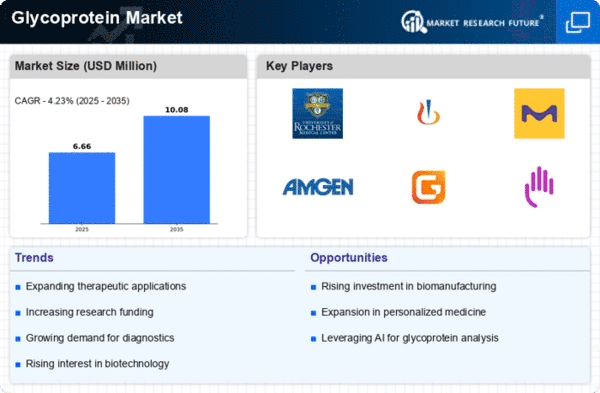
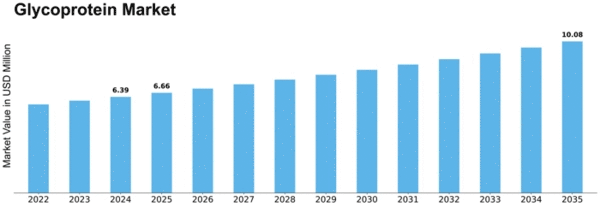
As per MRFR analysis, the Glycoprotein Market Size was estimated at 6.39 USD Million in 2024. The Glycoprotein industry is projected to grow from 6.66 in 2025 to 10.08 by 2035, exhibiting a compound annual growth rate (CAGR) of 4.23 during the forecast period 2025 - 2035.

Key Market Trends & Highlights

The Glycoprotein Market is poised for substantial growth driven by advancements in biotechnology and increasing applications in therapeutics.

  • The demand for glycoproteins in biopharmaceuticals continues to rise, particularly in North America, which remains the largest market.
  • Asia-Pacific emerges as the fastest-growing region, reflecting a burgeoning interest in biotechnology and personalized medicine.
  • Therapeutics dominate the market, while drug development is recognized as the fastest-growing segment, indicating a shift towards innovative treatment solutions.
  • Key drivers include the increasing applications in diagnostics and rising demand in therapeutics, supported by regulatory advancements in biopharmaceutical development.

Market Size & Forecast

2024 Market Size 6.39 (USD Million)
2035 Market Size 10.08 (USD Million)
CAGR (2025 - 2035) 4.23%
Largest Regional Market Share in 2024 North America

Major Players

Roche (CH), Novartis (CH), Merck KGaA (DE), Amgen (US), GSK (GB), Bristol-Myers Squibb (US), AbbVie (US), Sanofi (FR), Pfizer (US)

Market Trends

The Glycoprotein Market is currently experiencing a notable evolution, driven by advancements in biotechnology and increasing applications across various sectors. The demand for glycoproteins is expanding in pharmaceuticals, diagnostics, and research, as these biomolecules play crucial roles in cell recognition, signaling, and immune response. This growth is further fueled by the rising prevalence of chronic diseases, which necessitates innovative therapeutic solutions. As a result, companies are investing in research and development to harness the potential of glycoproteins in drug formulation and targeted therapies. Moreover, the Glycoprotein Market is witnessing a shift towards personalized medicine, where tailored treatments are becoming more prevalent. This trend is likely to enhance the efficacy of therapies, as glycoproteins can be engineered to meet specific patient needs. Additionally, the increasing focus on biopharmaceuticals is propelling the market forward, as these products often rely on glycoprotein components for their functionality. Overall, the Glycoprotein Market appears poised for substantial growth, with ongoing innovations and a heightened emphasis on health and wellness driving its trajectory.

Rising Demand in Biopharmaceuticals

The Glycoprotein Market is experiencing heightened interest from the biopharmaceutical sector. As companies seek to develop novel therapies, glycoproteins are increasingly recognized for their therapeutic potential. This trend suggests a growing reliance on glycoproteins in drug formulation, particularly for biologics and monoclonal antibodies.

Advancements in Biotechnology

Technological innovations in biotechnology are significantly influencing the Glycoprotein Market. Enhanced methods for glycoprotein production and purification are emerging, which may lead to improved efficiency and cost-effectiveness. These advancements could facilitate broader applications in various industries, including healthcare and diagnostics.

Focus on Personalized Medicine

The shift towards personalized medicine is becoming more pronounced within the Glycoprotein Market. Tailored therapies that utilize glycoproteins are likely to enhance treatment outcomes for patients. This trend indicates a growing recognition of the importance of individualized approaches in healthcare.

Glycoprotein Market Market Drivers

Market Growth Projections

The Global Glycoprotein Market Industry is projected to experience robust growth over the coming years. With a market value of 3.83 USD Billion in 2024, it is anticipated to reach 6.37 USD Billion by 2035, indicating a compound annual growth rate of 4.72% from 2025 to 2035. This growth trajectory reflects the increasing applications of glycoproteins across various sectors, including pharmaceuticals, diagnostics, and biotechnology. The expanding understanding of glycoprotein functions and their significance in health and disease further underscores the market's potential for expansion.

Regulatory Support for Biologics

Regulatory support for biologics is a crucial driver of the Global Glycoprotein Market Industry. Regulatory agencies are increasingly recognizing the importance of glycoproteins in therapeutic applications and are streamlining approval processes for glycoprotein-based products. This supportive regulatory environment encourages investment and innovation within the sector. As more glycoprotein therapeutics gain approval, the market is expected to experience accelerated growth. The alignment of regulatory frameworks with scientific advancements in glycoprotein research further enhances the industry's potential, paving the way for new treatments and therapies.

Growing Applications in Diagnostics

The expanding applications of glycoproteins in diagnostics are driving growth in the Global Glycoprotein Market Industry. Glycoproteins are increasingly utilized in the development of biomarkers for various diseases, including cancer and autoimmune disorders. Their ability to provide specific and sensitive detection methods enhances diagnostic accuracy. As healthcare systems worldwide prioritize early disease detection and personalized medicine, the demand for glycoprotein-based diagnostics is expected to rise. This trend not only supports the market's growth but also emphasizes the critical role glycoproteins play in advancing healthcare outcomes.

Rising Demand for Biopharmaceuticals

The increasing demand for biopharmaceuticals is a primary driver of the Global Glycoprotein Market Industry. Glycoproteins play a crucial role in the development of therapeutic proteins and monoclonal antibodies, which are essential in treating various diseases. As the biopharmaceutical sector expands, the market for glycoproteins is projected to grow significantly. In 2024, the market is valued at approximately 3.83 USD Billion, and it is expected to reach 6.37 USD Billion by 2035. This growth indicates a compound annual growth rate of 4.72% from 2025 to 2035, reflecting the increasing reliance on glycoproteins in drug development.

Advancements in Glycoprotein Research

Ongoing advancements in glycoprotein research contribute significantly to the Global Glycoprotein Market Industry. Innovations in glycoprotein analysis techniques, such as mass spectrometry and high-performance liquid chromatography, enhance the understanding of glycoprotein structures and functions. These advancements facilitate the development of more effective therapeutic agents and diagnostic tools. As researchers uncover new applications for glycoproteins, the market is likely to experience substantial growth. The increasing number of research publications and patents related to glycoproteins further underscores the potential for innovation and expansion within this sector.

Increased Investment in Biotechnology

Increased investment in biotechnology is a significant factor propelling the Global Glycoprotein Market Industry. Governments and private sectors are channeling funds into biotechnological research and development, particularly in the field of glycoproteins. This influx of capital fosters innovation and accelerates the development of new glycoprotein-based therapies and products. As biotechnology continues to evolve, the market for glycoproteins is likely to expand, driven by the need for novel therapeutic solutions. The collaboration between academic institutions and industry players further enhances the potential for breakthroughs in glycoprotein applications.

Market Segment Insights

By Application: Therapeutics (Largest) vs. Drug Development (Fastest-Growing)

In the Glycoprotein Market, the application segments demonstrate varied market share distribution, with Therapeutics leading as the largest segment. This dominance is driven by the increasing use of glycoproteins in the treatment of various diseases, particularly autoimmune disorders and cancers. Diagnostics and Research follow, reflecting their essential roles in clinical applications, while Biotechnology and Drug Development are also significant but with smaller shares. Growth trends indicate a robust expansion of the Drug Development segment, fueled by advancements in personalized medicine and a rising focus on targeted therapies. Factors such as increased R&D investments and the enhanced efficacy of glycoprotein-based drugs propel growth in this area. Diagnostics and Research segments are also witnessing steady growth, supported by the growing demand for innovative diagnostic tools and techniques, which utilize glycoproteins for better outcomes.

Therapeutics (Dominant) vs. Biotechnology (Emerging)

The Therapeutics segment stands out as the dominant force within the Glycoprotein Market, largely attributable to its critical role in developing treatments for prevalent health conditions. Therapeutic glycoproteins provide targeted action, thereby improving treatment efficacy and reducing side effects. On the other hand, the Biotechnology segment, although emerging, is gaining momentum due to increased investments in biopharmaceutical innovations. This segment focuses on leveraging glycoproteins in various biotechnological applications, including vaccine development and therapeutic delivery systems. As the biotechnology landscape evolves, the integration of glycoproteins is likely to yield novel solutions, fostering significant advancements in healthcare.

By End Use: Pharmaceuticals (Largest) vs. Biotechnology (Fastest-Growing)

In the Glycoprotein Market, the end-use distribution reveals that the pharmaceutical sector holds the largest share, reflecting its significant reliance on glycoproteins for drug formulation and development. Pharmaceuticals leverage glycoproteins for therapeutic purposes, driving demand and stability within this segment. Conversely, the biotechnology sector emerges as the fastest-growing area, spurred by innovations and advancements in biopharmaceuticals and personalized medicine, which increasingly incorporate glycoproteins into their solutions.

End Use: Pharmaceuticals (Dominant) vs. Biotechnology (Emerging)

The pharmaceutical segment is characterized by its robust and established presence in the glycoprotein market, with extensive utilization of these biomolecules in drug development, monoclonal antibodies, and vaccines. This sector benefits from stringent regulatory approvals and a growing demand for biologics. In contrast, the biotechnology sector represents an emerging opportunity, fueled by rapid advancements in recombinant technology and increased investment in biopharma. Companies in this segment are focusing on developing novel therapeutics utilizing glycoproteins, targeting rare diseases and enhancing therapeutic efficacy, thereby distinguishing themselves in a competitive landscape.

By Source: Animal Derived (Largest) vs. Plant Derived (Fastest-Growing)

The glycoprotein market is characterized by a diverse distribution of sources. Among the various segments, animal-derived glycoproteins hold the largest market share due to their long-standing application in pharmaceuticals and research. This category includes proteins sourced from mammalian or avian products, which are widely recognized for their complex structures and functional benefits. On the other hand, plant-derived glycoproteins are rapidly gaining traction, supported by the growing demand for vegan and vegetarian options, which enhances their appeal across several sectors, including food and cosmetics.

Animal Derived (Dominant) vs. Plant Derived (Emerging)

Animal-derived glycoproteins are well-established in the market, offering unparalleled functional potential and a rich profile of post-translational modifications. They are primarily utilized in therapeutic applications, enhancing the efficacy of drug formulations. Conversely, plant-derived glycoproteins are emerging as a significant force, with advancements in biotechnology facilitating their production. They serve as a promising alternative to animal sources, catering to the increasing consumer preferences for sustainable and ethical products. As demand for plant-based solutions escalates, the growth potential for this segment of glycoproteins is robust, driving innovations and expanding their application scope.

By Type: Glycoprotein Antibodies (Largest) vs. Glycoprotein Enzymes (Fastest-Growing)

The Glycoprotein Market is witnessing a substantial distribution of market share across various segment values. Glycoprotein Antibodies lead the market as the largest segment, driven by their critical applications in diagnostics and therapeutics. Following closely is the Glycoprotein Enzymes segment, which is rapidly gaining traction due to an increasing demand for biocatalysts in various industries. The presence of these key players underscores the dynamic nature of this market, indicating a diverse landscape where various types of glycoproteins serve different, yet essential, roles in biological processes. Growth trends for the Glycoprotein Market are influenced by innovation in biotechnology and an increasing focus on personalized medicine. The Glycoprotein Enzymes area, in particular, is expected to be the fastest-growing segment, propelled by advancements in enzyme engineering and growing applications in pharmaceuticals. Likewise, the robust demand for Glycoprotein Antibodies can be attributed to their essential role in immunotherapy and vaccine development, paving the way for continuous expansion in the market. This growth signifies the increasing reliance on glycoproteins in various health and industrial applications, indicating a promising future for this segment.

Glycoprotein Antibodies (Dominant) vs. Glycoprotein Hormones (Emerging)

In the context of the Glycoprotein Market, Glycoprotein Antibodies are recognized as the dominant force, largely due to their unparalleled applications in both therapeutic and diagnostic measures. These antibodies exhibit high specificity and affinity, making them indispensable in targeted drug delivery systems and cancer immunotherapeutics. Meanwhile, Glycoprotein Hormones represent an emerging segment with significant potential. Their regulatory roles in various physiological processes, such as metabolism and growth, are fueling research and development efforts. While still developing market dynamics, Glycoprotein Hormones are being recognized for their therapeutic potentials and are gaining increasing attention for their roles in treating endocrine disorders. This juxtaposition of a dominant and an emerging segment illustrates the diverse opportunities within the Glycoprotein Market, catering to a wide range of applications.

Get more detailed insights about Glycoprotein Market Research Report - Forecast till 2035

Regional Insights

North America : Market Leader in Glycoproteins

North America continues to lead the glycoprotein market, holding a significant share of 3.19 billion in 2024. The region's growth is driven by advanced healthcare infrastructure, increasing R&D investments, and a rising prevalence of chronic diseases. Regulatory support from agencies like the FDA further catalyzes innovation and market expansion, ensuring a robust pipeline of glycoprotein therapeutics. The competitive landscape is characterized by major players such as Amgen, AbbVie, and GSK, who are actively engaged in developing novel glycoprotein-based therapies. The U.S. remains the largest market, supported by a strong pharmaceutical sector and significant funding for biotechnology research. This environment fosters collaboration between industry and academia, enhancing the region's position as a global leader in glycoprotein development.

Europe : Emerging Market with Growth Potential

Europe's glycoprotein market is valued at 1.91 billion, reflecting a growing demand for innovative therapies. Key growth drivers include an aging population, increased healthcare spending, and supportive regulatory frameworks from the European Medicines Agency (EMA). The region is witnessing a surge in clinical trials and research initiatives aimed at developing glycoprotein-based treatments, which are crucial for addressing unmet medical needs. Leading countries such as Germany, France, and the UK are at the forefront of this market, hosting numerous pharmaceutical companies and research institutions. Major players like Roche and Merck KGaA are investing heavily in R&D to enhance their product offerings. The competitive landscape is dynamic, with a focus on collaboration and partnerships to accelerate the development of glycoprotein therapies, positioning Europe as a key player in the global market.

Asia-Pacific : Rapidly Growing Market Landscape

The Asia-Pacific region is emerging as a significant player in the glycoprotein market, valued at 1.05 billion. Factors contributing to this growth include increasing healthcare investments, rising awareness of biopharmaceuticals, and a growing patient population. Countries like China and India are enhancing their healthcare infrastructure, which is expected to drive demand for glycoprotein therapies in the coming years. The competitive landscape is evolving, with local and international companies vying for market share. Key players such as Amgen and GSK are expanding their presence in the region through strategic partnerships and collaborations. The focus on research and development is intensifying, as companies aim to innovate and meet the rising demand for effective glycoprotein-based treatments, positioning Asia-Pacific as a vital market in the global landscape.

Middle East and Africa : Emerging Market with Challenges

The Middle East and Africa (MEA) region represents a nascent glycoprotein market, valued at 0.24 billion. Growth is hindered by limited healthcare infrastructure and regulatory challenges. However, increasing investments in healthcare and rising awareness of biopharmaceuticals are expected to drive future demand. Governments are beginning to recognize the importance of biotechnology, which may lead to more supportive policies and regulations. Countries like South Africa and the UAE are showing potential for growth, with efforts to enhance their pharmaceutical sectors. The competitive landscape is still developing, with few key players currently active in the region. However, as healthcare systems improve and investment increases, the MEA region may become a more attractive market for glycoprotein therapies in the future.

Key Players and Competitive Insights

The Glycoprotein Market is characterized by a dynamic competitive landscape, driven by innovation, strategic partnerships, and a focus on therapeutic applications. Major players such as Roche (CH), Novartis (CH), and Merck KGaA (DE) are at the forefront, leveraging their extensive research capabilities and established market presence. Roche (CH) emphasizes innovation in biopharmaceuticals, particularly in oncology and immunology, while Novartis (CH) focuses on expanding its portfolio through strategic acquisitions and collaborations. Merck KGaA (DE) is enhancing its operational focus on bioprocessing technologies, which is crucial for the efficient production of glycoproteins. Collectively, these strategies contribute to a competitive environment that is increasingly shaped by technological advancements and collaborative efforts.Key business tactics within the Glycoprotein Market include localizing manufacturing and optimizing supply chains to enhance efficiency and reduce costs. The market structure appears moderately fragmented, with several key players exerting significant influence. This fragmentation allows for niche players to emerge, yet the collective strength of major companies ensures a competitive balance that drives innovation and market growth.

In November Roche (CH) announced a strategic partnership with a leading biotechnology firm to develop novel glycoprotein-based therapies for rare diseases. This collaboration is expected to enhance Roche's research capabilities and accelerate the development of targeted treatments, thereby reinforcing its position in the market. The strategic importance of this partnership lies in its potential to expand Roche's therapeutic offerings and address unmet medical needs.

In October Novartis (CH) completed the acquisition of a biotech company specializing in glycoprotein research, which is anticipated to bolster its pipeline of innovative therapies. This acquisition reflects Novartis's commitment to enhancing its research capabilities and diversifying its product portfolio. The strategic move is likely to provide Novartis with a competitive edge in the rapidly evolving market, enabling it to respond more effectively to emerging healthcare challenges.

In September Merck KGaA (DE) launched a new bioprocessing platform designed to streamline the production of glycoproteins, significantly reducing manufacturing costs. This initiative underscores Merck's focus on operational efficiency and its commitment to supporting the biopharmaceutical industry. The introduction of this platform is expected to enhance Merck's market position by providing clients with innovative solutions that meet the growing demand for glycoprotein-based therapies.

As of December current competitive trends in the Glycoprotein Market are increasingly defined by digitalization, sustainability, and the integration of artificial intelligence (AI) in research and development processes. Strategic alliances are playing a pivotal role in shaping the landscape, as companies seek to leverage complementary strengths to drive innovation. Looking ahead, competitive differentiation is likely to evolve from traditional price-based competition to a focus on technological advancements, innovation, and supply chain reliability, positioning companies to better meet the demands of a rapidly changing market.

Key Companies in the Glycoprotein Market include

Industry Developments

    • One of the primary factors driving the growth of the North American market is advancements in pharmaceutical and medical research activities in the area. During the projected period, North America is estimated to have the greatest glycoprotein market share of more than 40%.

Future Outlook

Glycoprotein Market Future Outlook

The Glycoprotein Market is projected to grow at a 4.23% CAGR from 2025 to 2035, driven by advancements in biotechnology, increasing demand in pharmaceuticals, and rising applications in diagnostics.

New opportunities lie in:

  • Development of targeted glycoprotein therapeutics for rare diseases.
  • Expansion of glycoprotein-based diagnostics in personalized medicine.
  • Investment in automated glycoprotein production technologies for efficiency.

By 2035, the Glycoprotein Market is expected to achieve substantial growth, reflecting its critical role in healthcare advancements.

Market Segmentation

Glycoprotein Market Type Outlook

  • Glycoprotein Antibodies
  • Glycoprotein Enzymes
  • Glycoprotein Hormones
  • Glycoprotein Vaccines
  • Glycoprotein Carbohydrates

Glycoprotein Market Source Outlook

  • Animal Derived
  • Plant Derived
  • Microbial Derived
  • Synthetic
  • Recombinant

Glycoprotein Market End Use Outlook

  • Pharmaceuticals
  • Biotechnology
  • Academic Research
  • Clinical Laboratories
  • Contract Research Organizations

Glycoprotein Market Application Outlook

  • Therapeutics
  • Diagnostics
  • Research
  • Biotechnology
  • Drug Development

Report Scope

MARKET SIZE 20246.39(USD Million)
MARKET SIZE 20256.66(USD Million)
MARKET SIZE 203510.08(USD Million)
COMPOUND ANNUAL GROWTH RATE (CAGR)4.23% (2025 - 2035)
REPORT COVERAGERevenue Forecast, Competitive Landscape, Growth Factors, and Trends
BASE YEAR2024
Market Forecast Period2025 - 2035
Historical Data2019 - 2024
Market Forecast UnitsUSD Million
Key Companies ProfiledRoche (CH), Novartis (CH), Merck KGaA (DE), Amgen (US), GSK (GB), Bristol-Myers Squibb (US), AbbVie (US), Sanofi (FR), Pfizer (US)
Segments CoveredApplication, End Use, Source, Type
Key Market OpportunitiesAdvancements in biopharmaceuticals drive demand for innovative glycoprotein therapeutics and diagnostics.
Key Market DynamicsRising demand for biopharmaceuticals drives innovation and competition in the glycoprotein market.
Countries CoveredNorth America, Europe, APAC, South America, MEA

FAQs

At what CAGR is the Glycoprotein Market predicted to grow during the forecast period?

Glycoprotein Market is predicted to grow at 2.6% through forecast period of 2020-2035.

What is the forecast period of Glycoprotein Market research report?

The forecast period for Glycoprotein Market research report is 2025-2035.

Which region will lead the global Glycoprotein Market?

Global Glycoprotein Market is dominated by APAC region.

  1. SECTION I: EXECUTIVE SUMMARY AND KEY HIGHLIGHTS
    1. | 1.1 EXECUTIVE SUMMARY
    2. | 1.1.1 Market Overview
    3. | 1.1.2 Key Findings
    4. | 1.1.3 Market Segmentation
    5. | 1.1.4 Competitive Landscape
    6. | 1.1.5 Challenges and Opportunities
    7. | 1.1.6 Future Outlook
  2. SECTION II: SCOPING, METHODOLOGY AND MARKET STRUCTURE
    1. | 2.1 MARKET INTRODUCTION
    2. | 2.1.1 Definition
    3. | 2.1.2 Scope of the study
    4. |-- 2.1.2.1 Research Objective
    5. |-- 2.1.2.2 Assumption
    6. |-- 2.1.2.3 Limitations
    7. | 2.2 RESEARCH METHODOLOGY
    8. | 2.2.1 Overview
    9. | 2.2.2 Data Mining
    10. | 2.2.3 Secondary Research
    11. | 2.2.4 Primary Research
    12. |-- 2.2.4.1 Primary Interviews and Information Gathering Process
    13. |-- 2.2.4.2 Breakdown of Primary Respondents
    14. | 2.2.5 Forecasting Model
    15. | 2.2.6 Market Size Estimation
    16. |-- 2.2.6.1 Bottom-Up Approach
    17. |-- 2.2.6.2 Top-Down Approach
    18. | 2.2.7 Data Triangulation
    19. | 2.2.8 Validation
  3. SECTION III: QUALITATIVE ANALYSIS
    1. | 3.1 MARKET DYNAMICS
    2. | 3.1.1 Overview
    3. | 3.1.2 Drivers
    4. | 3.1.3 Restraints
    5. | 3.1.4 Opportunities
    6. | 3.2 MARKET FACTOR ANALYSIS
    7. | 3.2.1 Value chain Analysis
    8. | 3.2.2 Porter's Five Forces Analysis
    9. |-- 3.2.2.1 Bargaining Power of Suppliers
    10. |-- 3.2.2.2 Bargaining Power of Buyers
    11. |-- 3.2.2.3 Threat of New Entrants
    12. |-- 3.2.2.4 Threat of Substitutes
    13. |-- 3.2.2.5 Intensity of Rivalry
    14. | 3.2.3 COVID-19 Impact Analysis
    15. |-- 3.2.3.1 Market Impact Analysis
    16. |-- 3.2.3.2 Regional Impact
    17. |-- 3.2.3.3 Opportunity and Threat Analysis
  4. SECTION IV: QUANTITATIVE ANALYSIS
    1. | 4.1 Chemicals and Materials, BY Application (USD Million)
    2. | 4.1.1 Therapeutics
    3. | 4.1.2 Diagnostics
    4. | 4.1.3 Research
    5. | 4.1.4 Biotechnology
    6. | 4.1.5 Drug Development
    7. | 4.2 Chemicals and Materials, BY End Use (USD Million)
    8. | 4.2.1 Pharmaceuticals
    9. | 4.2.2 Biotechnology
    10. | 4.2.3 Academic Research
    11. | 4.2.4 Clinical Laboratories
    12. | 4.2.5 Contract Research Organizations
    13. | 4.3 Chemicals and Materials, BY Source (USD Million)
    14. | 4.3.1 Animal Derived
    15. | 4.3.2 Plant Derived
    16. | 4.3.3 Microbial Derived
    17. | 4.3.4 Synthetic
    18. | 4.3.5 Recombinant
    19. | 4.4 Chemicals and Materials, BY Type (USD Million)
    20. | 4.4.1 Glycoprotein Antibodies
    21. | 4.4.2 Glycoprotein Enzymes
    22. | 4.4.3 Glycoprotein Hormones
    23. | 4.4.4 Glycoprotein Vaccines
    24. | 4.4.5 Glycoprotein Carbohydrates
    25. | 4.5 Chemicals and Materials, BY Region (USD Million)
    26. | 4.5.1 North America
    27. |-- 4.5.1.1 US
    28. |-- 4.5.1.2 Canada
    29. | 4.5.2 Europe
    30. |-- 4.5.2.1 Germany
    31. |-- 4.5.2.2 UK
    32. |-- 4.5.2.3 France
    33. |-- 4.5.2.4 Russia
    34. |-- 4.5.2.5 Italy
    35. |-- 4.5.2.6 Spain
    36. |-- 4.5.2.7 Rest of Europe
    37. | 4.5.3 APAC
    38. |-- 4.5.3.1 China
    39. |-- 4.5.3.2 India
    40. |-- 4.5.3.3 Japan
    41. |-- 4.5.3.4 South Korea
    42. |-- 4.5.3.5 Malaysia
    43. |-- 4.5.3.6 Thailand
    44. |-- 4.5.3.7 Indonesia
    45. |-- 4.5.3.8 Rest of APAC
    46. | 4.5.4 South America
    47. |-- 4.5.4.1 Brazil
    48. |-- 4.5.4.2 Mexico
    49. |-- 4.5.4.3 Argentina
    50. |-- 4.5.4.4 Rest of South America
    51. | 4.5.5 MEA
    52. |-- 4.5.5.1 GCC Countries
    53. |-- 4.5.5.2 South Africa
    54. |-- 4.5.5.3 Rest of MEA
  5. SECTION V: COMPETITIVE ANALYSIS
    1. | 5.1 Competitive Landscape
    2. | 5.1.1 Overview
    3. | 5.1.2 Competitive Analysis
    4. | 5.1.3 Market share Analysis
    5. | 5.1.4 Major Growth Strategy in the Chemicals and Materials
    6. | 5.1.5 Competitive Benchmarking
    7. | 5.1.6 Leading Players in Terms of Number of Developments in the Chemicals and Materials
    8. | 5.1.7 Key developments and growth strategies
    9. |-- 5.1.7.1 New Product Launch/Service Deployment
    10. |-- 5.1.7.2 Merger & Acquisitions
    11. |-- 5.1.7.3 Joint Ventures
    12. | 5.1.8 Major Players Financial Matrix
    13. |-- 5.1.8.1 Sales and Operating Income
    14. |-- 5.1.8.2 Major Players R&D Expenditure. 2023
    15. | 5.2 Company Profiles
    16. | 5.2.1 Roche (CH)
    17. |-- 5.2.1.1 Financial Overview
    18. |-- 5.2.1.2 Products Offered
    19. |-- 5.2.1.3 Key Developments
    20. |-- 5.2.1.4 SWOT Analysis
    21. |-- 5.2.1.5 Key Strategies
    22. | 5.2.2 Novartis (CH)
    23. |-- 5.2.2.1 Financial Overview
    24. |-- 5.2.2.2 Products Offered
    25. |-- 5.2.2.3 Key Developments
    26. |-- 5.2.2.4 SWOT Analysis
    27. |-- 5.2.2.5 Key Strategies
    28. | 5.2.3 Merck KGaA (DE)
    29. |-- 5.2.3.1 Financial Overview
    30. |-- 5.2.3.2 Products Offered
    31. |-- 5.2.3.3 Key Developments
    32. |-- 5.2.3.4 SWOT Analysis
    33. |-- 5.2.3.5 Key Strategies
    34. | 5.2.4 Amgen (US)
    35. |-- 5.2.4.1 Financial Overview
    36. |-- 5.2.4.2 Products Offered
    37. |-- 5.2.4.3 Key Developments
    38. |-- 5.2.4.4 SWOT Analysis
    39. |-- 5.2.4.5 Key Strategies
    40. | 5.2.5 GSK (GB)
    41. |-- 5.2.5.1 Financial Overview
    42. |-- 5.2.5.2 Products Offered
    43. |-- 5.2.5.3 Key Developments
    44. |-- 5.2.5.4 SWOT Analysis
    45. |-- 5.2.5.5 Key Strategies
    46. | 5.2.6 Bristol-Myers Squibb (US)
    47. |-- 5.2.6.1 Financial Overview
    48. |-- 5.2.6.2 Products Offered
    49. |-- 5.2.6.3 Key Developments
    50. |-- 5.2.6.4 SWOT Analysis
    51. |-- 5.2.6.5 Key Strategies
    52. | 5.2.7 AbbVie (US)
    53. |-- 5.2.7.1 Financial Overview
    54. |-- 5.2.7.2 Products Offered
    55. |-- 5.2.7.3 Key Developments
    56. |-- 5.2.7.4 SWOT Analysis
    57. |-- 5.2.7.5 Key Strategies
    58. | 5.2.8 Sanofi (FR)
    59. |-- 5.2.8.1 Financial Overview
    60. |-- 5.2.8.2 Products Offered
    61. |-- 5.2.8.3 Key Developments
    62. |-- 5.2.8.4 SWOT Analysis
    63. |-- 5.2.8.5 Key Strategies
    64. | 5.2.9 Pfizer (US)
    65. |-- 5.2.9.1 Financial Overview
    66. |-- 5.2.9.2 Products Offered
    67. |-- 5.2.9.3 Key Developments
    68. |-- 5.2.9.4 SWOT Analysis
    69. |-- 5.2.9.5 Key Strategies
    70. | 5.3 Appendix
    71. | 5.3.1 References
    72. | 5.3.2 Related Reports

Chemicals and Materials Market Segmentation

Chemicals and Materials By Application (USD Million, 2025-2035)

  • Therapeutics
  • Diagnostics
  • Research
  • Biotechnology
  • Drug Development

Chemicals and Materials By End Use (USD Million, 2025-2035)

  • Pharmaceuticals
  • Biotechnology
  • Academic Research
  • Clinical Laboratories
  • Contract Research Organizations

Chemicals and Materials By Source (USD Million, 2025-2035)

  • Animal Derived
  • Plant Derived
  • Microbial Derived
  • Synthetic
  • Recombinant

Chemicals and Materials By Type (USD Million, 2025-2035)

  • Glycoprotein Antibodies
  • Glycoprotein Enzymes
  • Glycoprotein Hormones
  • Glycoprotein Vaccines
  • Glycoprotein Carbohydrates
Infographic

Free Sample Request

Kindly complete the form below to receive a free sample of this Report

Get Free Sample

Customer Strories

Compare Licence

×
Features License Type
Single User Multiuser License Enterprise User
Price $4,950 $5,950 $7,250
Maximum User Access Limit 1 User Upto 10 Users Unrestricted Access Throughout the Organization
Free Customization
Direct Access to Analyst
Deliverable Format
Platform Access
Discount on Next Purchase 10% 15% 15%
Printable Versions